As African nations sell and lease its land, and birthright, to the world’s super-powers, and arguably “dangerous” countries like Saudi Arabia who support Islamic fundamentalism, we are seeing a brand new kind of neo-colonial land-grab, and it scares me.
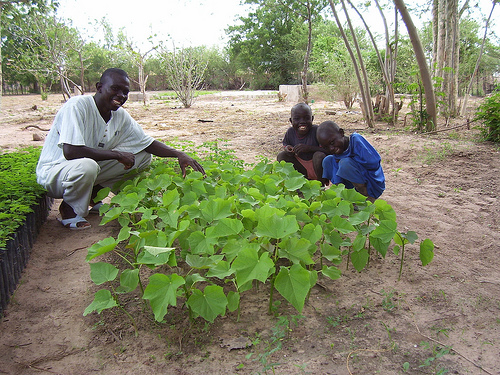
I’d reported on Galten’s Jatropha seeds for biofuel here, and also on the Israeli conglomerate Ormat, Evogene and Leviev in Namibia planting castor seeds for biofuel, and came out thinking, naively perhaps, that land development for biofuels in Africa was a beautiful thing: Israel doesn’t have much arable land, and the projects create jobs for Africans as well.
Israel is not the only Western country buying into Africa:
- Britain‘s Sun Biofuels plans to grow about 5,500 hectares of jatropha in Tanzania. The company also grows jatropha in Ethiopia and has similar projects in Mozambique.
- Sweden‘s Sekab Group, one of Europe’s leading ethanol producers, plans to produce 100 million litres of ethanol a year in Tanzania by 2012 at a cost of $200 – $300 million.
- British-based energy firm CAMS Group said in September it planned to produce 240 million litres of ethanol a year from sweet sorghum in Tanzania at a cost of up to $600 million.
- British biofuel company, D1-BP Fuel Crops is also actively planting Jatropha in Swaziland and Zambia, and also has plantings in Madagascar.
- In November 2008, South Korea’s Daewoo Logistics secured a 99-year lease on 1.3m hectares of land, an area roughly half the size of Belgium, from the government of Madagascar. (This equals about half of Madagascar’s arable land!)
- Flora EcoPower of Germany, through a local subsidiary, of 8,000 hectares in Oromia province in Ethiopia for the cultivation of castor seeds.
Now I am not a huge follower of crazy conspiracy theories, but something has me a little paranoid about new and aggressive land buying and leasing in Africa, especially when I hear countries like Saudi Arabia (15 of the 19 9/11 hijackers were Saudis), are buying up land in Sudan for agricultural development. Gulf nations are cash-heavy, but water-poor and are looking to secure food and fuel resources on Africa’s land for the coming decades.


 A Bangladesh developer in the
 Whether or not you’re a fan of the overly commercialized holiday of love, Valentine’s Day, we think everyone would agree that when giving your special someone a loving gift you want it to be something that doesn’t cause potential harm to them. Candy and flowers are the traditional Valentine’s Day gifts, so why not show your loved one that you really care with handmade organic candy and a potted flower plant?