Home Blog Page 715

Al Qaeda Terrorist Drop-Out, And Champion Skier, Builds "Green" Ski Slopes On Sand Dunes In Qatar

4

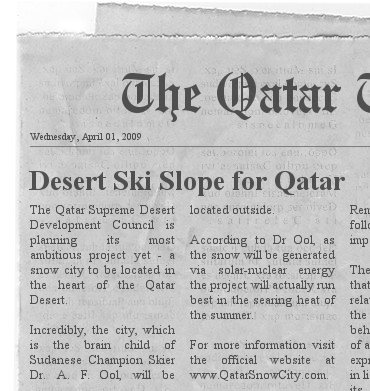
ool-snow-qatar april fool joke
Have those people in the Gulf Emirate state of Qatar gone mad? Or have they simply gotten a case of heat stroke while smoking their nargilas in Qatar’s normally 50+ Celsius heat?

Well, it appears that neither is the case as plans are being made to develop a giant refrigerated ski slope on the sand dunes by using a combination of carbon friendly solar energy and nuclear power.

The idea is being promoted by A.F. Ool, a Sudanese nuclear energy scientist who just happens to have a passion for snow skiing as well.

“Growing up as a young skier in a nomadic tribe in the deepest desert of Sudan, it was always hard to find places to practice my ski jumping. Now, Thanks be to God, we have the technology to power our dreams,” says Ool who plans to harness the nuclear energy power from Tehran to fuel his dreams.

Dr. Ool’s own background is about as unique as the project itself. Coming from a remote Bedouin village in the heart of Sudan, he learned how to ski when visiting the French Alps. From there, the story gets even more bizarre when he was recruited by Al Qaeda and wound in a terrorist training camp, where they taught him the basics of nuclear technology.

India's Tata Nano Could Change the Mobility of Millions

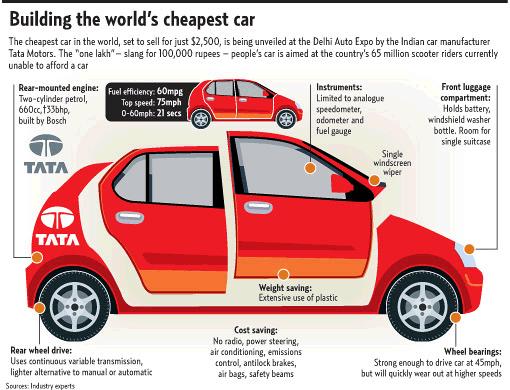
tata-nano-india-photo-diagram

Green Prophet first met Gal Luft, an Israeli-American lobbyist and alternative energy educator in Washington for the Set America Free Coalition, when Karin covered a profile of Luft on ISRAEL21c. Today, Luft talks about the launch of India’s Tata Nano, the cheapest car in the world and one that could change the entire industry, he says.

But first, a little more on Luft: he advises American senators and presidents on how America can end its dangerous dance with foreign oil. Growing up in Haifa, Israel where he was born, and later South Africa, Luft became all too aware of how oil is used as a weapon for war.

Newsweek Magazine has called Luft a “tireless and independent advocate of energy security,” while Esquire Magazine bestowed upon him the title of one of America’s Best and Brightest, in 2007. He is the most hated man in several U.S. cities, including Detroit.

Here are his thoughts on the new Tata Nano:

It’s 2 feet shorter than a Mini Cooper, presents an almost cartoonish appearance and weighs less than the four passengers it seats.

But for the 350-million-plus middle class of India, the just-launched Tata Nano, the world’s cheapest car at $2,000, is a cause for exhilaration. And for the first 100,000 lucky customers drawn via lottery, it’s a dream come true.

A century after Henry Ford put America on wheels with the Model T, the affordable Tata Nano is doing the same to the less privileged of the world. What is now dismissed by many as a “toy car” could soon reveal itself to be the mouse that roared, one of the most transformational consumer products of the century.

Roughly 100,000 Indians lose their lives on the road every year, seven times the rate of the developed world. In a country where it is not uncommon to see entire families overflowing a rickshaw or women in saris sitting side-saddle on a bike with small children on their laps, moving one’s family from an unsafe bike into a plastic capsule is a sensible $2,000 investment.

We Stand Corrected: Daniel Pourkesali From the Persian Gulf Organization On The Importance of Names

4

pourkesali daniel persian gulf photoReporting on a story about the coral monitoring stations in the Persian Gulf, Green Prophet mistakenly labeled the major Middle East waterway the Arabian Gulf. A reader wrote us asking for a correction on the name which has deep historical and new political roots. Today we interview Daniel M. Pourkesali, an Iranian-American who is working to preserve the heritage of the Persian Gulf.

Tell us a little about you, who you are, where you come from, where you live now and what you do.

I live in Northern Virginia near Washington, DC working as a Manufacturing Electrical Engineer for an Aerospace company specializing in development and production of flight dynamics, engineering and control systems.

I was born in Babol, a city in the Mazandaran Province in Northern Iran and grew up in Tehran where I attended Andisheh Don Bosco School. I moved to the United States in 1978 to pursue my higher education in field of Aeronautics. I currently serve as the U.S. chapter President for the Campaign Against Sanctions and Military Intervention (CASMII) and hold membership in Persian Gulf Online, National Iranian American Council (NIAC), Iran Heritage organizations.

Tell us about the name preservation project you are part of and what this organization does.

Persian Gulf Organization (PGO) is made of many volunteer individuals across the globe dedicated to the defense and preservation of the historic name of the Persian Gulf through monitoring of electronic and other published media and news articles.

Why are names important to preserve from an environmental point of view?

Elias Messinas Builds On Green Education From Israel and Practice in Greece

7

elias-messinas-israel-architect photoThere’s a phenomenon that’s hit the world, and Israel is no exception: designers, restaurants, grocery stores, companies and architects “in the green know” are talking about sustainability.

Gone are the days when a soup company can paint a “recyclable” logo on a tin can and call itself environmentally friendly.

Like in America, Israelis too have evolved the important concept of sustainability, where green practices are woven through the entire fabric of a product, building or community.

Sustainability has no hard and fast rules, but works on logic, and aims to create a balance and harmony between what us humans create, and the environment we live in.

In the area of green architecture, there are about 20 architects scattered throughout Israel who envision sustainable building, where for example, buildings could create more energy than they consume. Some architects like Joseph Cory of Geotectura in Haifa develop futuristic and conceptual projects, and others like Gil Peled in Jerusalem, work to “green” old buildings from the inside out.

One of the most experienced in the green architecture field in Israel is the 44-year-old Greek-Israeli architect and consultant Elias Messinas, a veteran to the field who divides his time between Israel and Greece. His philosophies and practices are impacting green construction everywhere. He believes that educating a community about eco-issues is just as important as creating a green habitat to live inside.

Yoko Ono Greens the Passover Atmosphere at the Ecosphere Festival in Israel

3

yoko ono ecosphere photo logo israel eco artWith Passover coming up so soon many of us are preparing in a variety of ways, whether it be purging our homes of every last remaining bread crumb or learning how to make that special family haroset recipe. 

But when the cleaning is done, the seder dinner is eaten, and the afikoman is found – then what?  What do you do for the rest of the holiday, other than try to find new ways to make matzah more edible?

A variety of Israeli environmental organizations – such as the Jewish National Fund, the Society for the Protection of Nature in Israel, the Ministry of the Environment, the Parks Authority, “Adam Teva VaDin”, the Council for a Beautiful Israel, Life & Environment, Greenpeace, and the Heschel Center – have all joined forces to bring us Ecosphere

So what is Ecosphere?

Ecosphere is the first green festival in Israel for art and the environment, and it will take place in the open, natural surroundings at the foot of the artist’s village of Ein Hod.  It will be held from Sunday, April 12th to Tuesday, April 14th from 10am-5pm.

Ecosphere will offer a variety of content, activities, and theater for families and children in the Eco Park – including activities about existence, environmental preservation, the importance of forest and trees, animals, waste, global warming, organic garbage and compost. 

There will be creativity workshops, children’s plays, short films about green issues, meetings with environmentalists, guided nature walks, and other activities in open areas and the Carmel beach area.

Angel's Tips for “Making” Your Clothes Friendly to the Environment

vintage-angel-dressIsrael is only just catching on to the eco clothing trend, and for the environmentally conscious it can be a gut-wrenching, guilt-inducing dilemma just to go clothes shopping.

 So I’ve compiled a list of different eco clothing options.

Firstly, there’s the Internet, and ordering of organic clothes from shops like Edun and Made online. However there is a set back involved here: either the shops won’t ship to the Middle East or Israel, or they ship by air.

So you may be buying organic clothing, but you’re negating any green good you’ve done by having it flown to you and emitting tons of carbon emissions.

Looking at eco friendly clothing options closer to home leaves you with Israeli organic clothing manufacturers, second hand clothing or making your own clothes.

The Israeli organic clothing industry is only just starting to take off, with shops such as Tinok Yarok, Cotton, and Delta Galil now offering a green line, however the choice is still limited.

Buying second hand or vintage in Israel is a much easier affair (see my last post on vintage shopping here). Not only can you find a WIZO Bigdia in nearly every town but a large selection of other shops are popping up all the time.

Not to mention the growing trend for collectors to start their own business by doing house sales.

Middle East Countries Partner With Europe on Water Through EMWIS

0

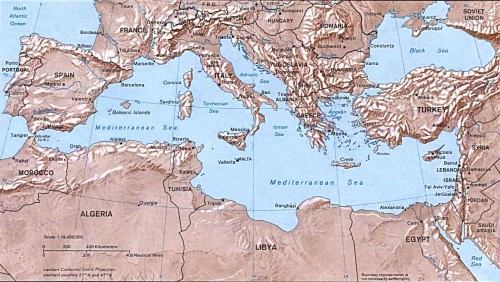
mediterranean-sea-map-israel-lebanon-jordan(Countries along the Mediterranean Sea basin)

Water policy people will like to know about this initiative: Most countries in what is known as the Mediterranean Sea basin have agreed to form a combined group to deal with issues dealing with water reserves for the region.

Based on the Mediterranean Water Charter, adopted in Rome in 1992, the EMWIS is a partnership between 10 Mediterranean member countries (Algeria, Egypt, Israel, Jordan, Lebanon, Morocco, Palestinian Authority, Syria, Tunisia, and Turkey) in partnership with the 27 EU member states.

The purpose is to enable the exchange of information and know-how in a rationalized manner and make this information available to all participating countries.

Working together in three languages, English, French, and Arabic, some of the EMWIS groups activities include the maintaining of data storage and sharing websites, annual committee meetings and conferences to discuss developments in water systems, including desalination and waste water reclamation.

Turkey Water Exports To Iraq Will Double Thanks To Biblical Rivers From "Garden of Eden"

10

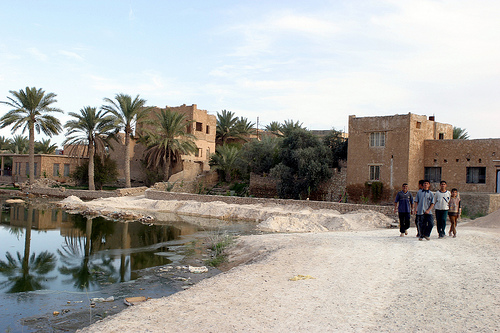
euphrates-river-iraq-photo
Iraqi boys walk along the Euphrates River

New water cooperation could be a new beginning for tensions between Turkey and Iraq: Turkey has promised to give neighboring Iraq and Syria a larger share of water from both Tigress and Euphrates rivers; it was announced by Turkish President Abdullah Gul. Gul, on a state visit to Iraq, the first in 33 years by a Turkish head of state, said that his country will divert more water from these mighty rivers, both of which originate in Turkey.

Turkey undertook a massive project a few years back which included a series of dams on both rivers, to bring more water to its Anatolia region which was then affected by drought.This created several large reservoirs which seriously reduced to flow of the Tigress into Iraq and the Euphrates into Syria, both of which suffered from severe water shortages for both agriculture and human consumption.

Green Prophet of the Week: Avi Kuzi Is Israel's Animal Guardian Angel

4

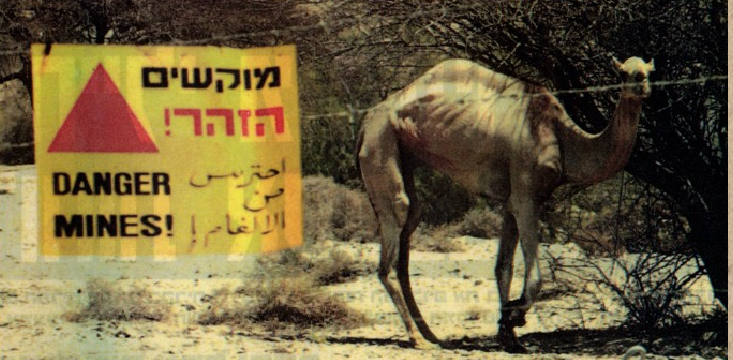
avi-kuzi-mines-camel

Do Israeli animals in distress have a guardian angel?

If a young man named Avi Kuzi has anything to say about this, they certainly do! If any of you Green Prophet readers caught the article in last Friday’s Jerusalem Post, you must have been touched, as well as impressed by the tireless work of this guy who has done so much save and relieve the suffering of so many of this country’s furry and feathered friends.

Whether it has involved rappelling down a ten story elevator shaft to extract a stuck cat, hoisting a dehydrated and emaciated camel out of certain death in the Arava desert, or retrieving a lost monkey from a high eucalyptus tree, Kuzi has literally saved thousands of animals in his 15 year career as an animal rescuer.

Kuzi must have been endowed with his special gift at an early age, as he used to bring home sick and wounded animals and secretly nurse them back to health before releasing them later when they could fend for themselves.

His parents never let him have a dog or cat or his own, so he made up for this by temporarily “adopting” them while tending to their health problems.

Switzerland’s 2000 Watt Society And Swiss Energy-Saving Practices Introduced To Israel

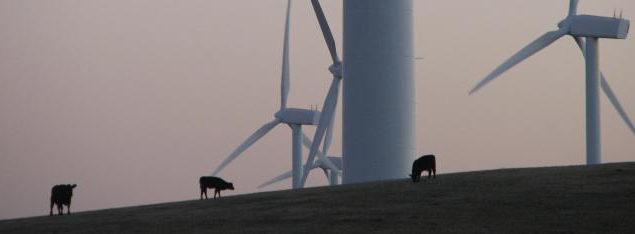
israel-cow-switzerland-energy

Who would think that Switzerland and Israel have anything in common?

Switzerland brings to mind lush mountains, flowing streams and delicious chocolate. Israel has the well known (and personally loved) chocolad para but it doesn’t quite compare.

I guess it takes a diplomat to make the connection.

Monika Schmutz-Kirgöz, the Deputy Head of Mission of the Swiss Embassy, found ways to link Israel and Switzerland when she opened the international conference on “Green Architecture and Urban Sustainability: From Switzerland to Tel Aviv” at Tel Aviv University last week.

Apparently, the two nations have the same number of people, a lack of natural resources, and a strong R&D record. Also, the Swiss Federal Institute of Technology (ETH Zurich) has built an eco-building on their campus, as will TAU’s Porter School of Environmental Studies.

EcoBaladi Sprouts Organic Vegetables From the West Bank Valley of Thorns (Wadi Fuqin)

4

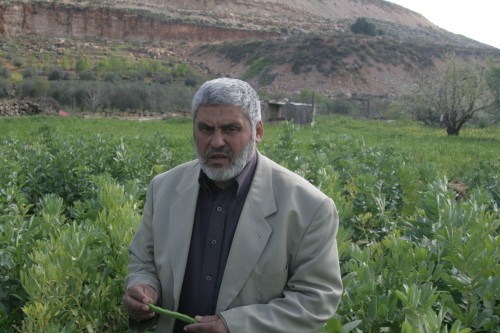
 abu-ibrahim organic eco-baladi farm west bank palestinian
(Abu Ibrahim, 53, in a field of fava beans. Photo: Daniella Cheslow)

One of the most compelling parts of the West Bank is its Biblical landscape, shaped by the small villages and terraced farm plots that dot the rolling hillsides.

Yesterday, I saw that landscape up close on a visit to Wadi Fuqin (Valley of Thorns) a village of about 1,200 southwest of Jerusalem nestled in a valley under the brow of the apartment blocks of the neighboring Beitar Illit settlement. The 100 village farmers use old and new techniques to raise chemical-free vegetables for themselves, for Bethlehemites and for idealistic Jewish residents of neighboring Tzur Hadassah, Jerusalem and Tel Aviv through the EcoBaladi Web site.

Haaretz writer Ronit Vered recently waxed poetic about Wadi Fuqin here.

My host was Abu Ibrahim, 53, a school teacher who helps his 73-year-old father farm about 5 dunams (1.25 acres) on the valley floor. Abu Ibrahim has a wife and eight children.

Stephen Colbert on Israel’s National Bird

0

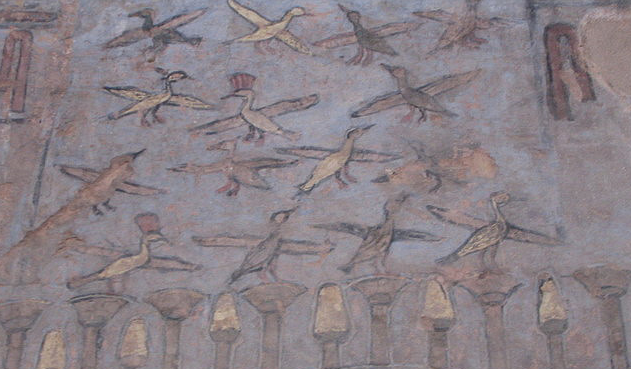
When Israel declared its new national bird, the hoopoe, Green Prophet was on the story. Little did we know that so was American fake newscaster Stephen Colbert, complete with Hebrew pronunciation.

“Congratulations, Israel. Just as America soars like the might eagle, may you emulate the noble long-billed hoopoe by squirting fecal matter at intruders,” says Colbert.

Colbert also had some exciting news about the kosher status of the giraffe.

In other online green news, “Stuff White People Like” author Christian Lander has written a five-part guide to “Stuff Environmentalists Like” for Plenty magazine:

“While many environmentalists are vegan or vegetarian, others can talk for hours about how it is possible to eat meat and still be green. Their requirement of course is that the animal is raised on a small farm and allowed to run around and eat grass.

“If you are hoping to impress a host in the latter camp, tell a story about how you are raising a few chickens in your backyard. For extra points, use the following terms: free-range, factory farm, and antibiotics.”

Cormac McCarthy’s The Road, a Review

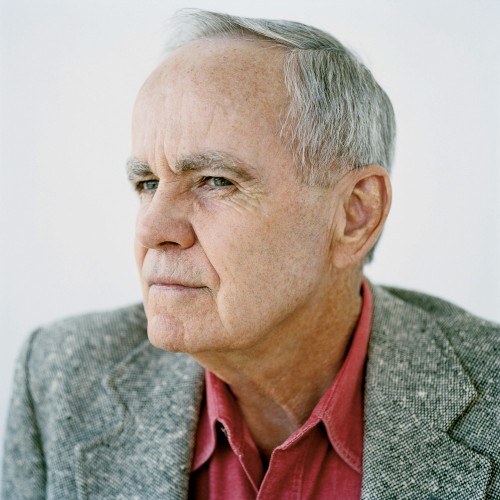
cormac mmcarthy the-road photo

Harvey Stein waxes lyrical on American author Cormac McCarthy’s soon to be filmed epic, post-apocalypse novel, ‘The Road’ :

“When he woke in the woods in the dark and the cold of the night he’d reach out to touch the child sleeping beside him. Nights dark beyond darkness and the days more gray each one than what had gone before. Like the onset of some cold glaucoma dimming away the world. His hand rose and fell softly with each precious breath.”

I couldn’t put it down.The novel “The Road” is an amazing, humbling, breathtaking book, containing both the most horrible nightmares you can imagine, and small moments of heartbreaking intimacy.

An “environmental” novel but not intentionally so, far from ideology, it fully deserves the Pulitzer Prize it won in 2007. (McCarthy has also won a Macarthur “genius grant” and has written 10 novels.) McCarthy has created a metaphorical world, but one that is so real we can taste, smell, gasp at it.
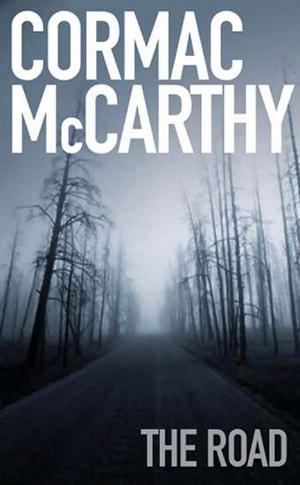
cormac-mccarthy-the-roadIt is post-apocalyptic, taking place somewhere in the Eastern seaboard of the United States, after a disaster that is never made totally clear: post-nuclear, post-global warming.

In almost biblical cadence, the nameless man and boy walk, and walk, every morning the same:

“Are you okay? he said. The boy nodded. Then they set along the blacktop in the gunmetal light, shuffling through the ash, each the other’s world entire.”

Nature is everywhere in this novel, but it is almost entirely dead. Remember, ash is what has been burned. Many charred trees and plants stand, but if touched, fall to the ground. Rivers still twist and flow, but grey and lifeless.

One day, they find a small dam, by a lake.

The boy asks, “Will the dam be there for a long time?

I think so. It’s made of concrete. It will probably be there for hundreds of years. Thousands, even.

Do you think there could be fish in the lake?

No. There’s nothing in the lake.”

Nothing grows anymore in this world – their desperate daily search, in abandoned homes and cellars, is for the only food left – cans and preserved food packed away before the disaster. Once, by an abandoned orchard, they find an apple:

“He picked it up and held it to the light. Hard and brown and shriveled. He wiped it with the cloth and bit into it. Dry and almost tasteless…He ate it entire, seeds and all.”

The specific cause is not painted out, but it is starkly clear this dead world is man-caused. And in this world, the sight or signs of other humans is almost always a sign of mortal danger, because this world contains the worst of man: bands of cannibalistic survivors march down the roads.

There are daily moral dilemmas, which they must confront as any father and son would. One day, in a house they were exploring, they had found some chained humans.

That night, “The boy lay with his head in the man’s lap. After a while he said:

They’re going to kill those people, arent they?

Yes.

Why do they have to do that?

I dont know.

Are they going to eat them?

I dont know.

They’re going to eat them, arent they?

Yes.

And we couldnt help them because then they’d eat us too.

Yes.

And that’s why we couldnt help them.

Yes.

Okay.”

Through the story, man and boy push their metal cart, with a few tools, some “stinking robes and blankets,” a can or two, and a pistol. They travel with the vague purpose, besides survival, of somehow reaching the sea eastward.

There is no single climax in “The Road.” They do finally reach the sea, but it is just as lifeless as what has come before. The man’s cough gets worse and worse, blood coming up now. The boy realizes that the man will be gone soon, and he will have to somehow learn from all the things they have experienced together.

The man advises his son,

“You need to keep going…Just don’t give up. Okay?

Okay.

Okay.

I’m really scared Papa.

I know. But you’ll be okay. You’re going to be lucky. I know you are. I’ve got to stop talking. I’m going to start coughing again.

It’s okay, Papa. You don’t have to talk. It’s okay.”

On the final page of “The Road,” a memory of a time when nature still lived, and had magic:

“Once there were brook trout in the streams in the mountains. You could see them standing in the amber current…on their backs were vermiculate patterns that were maps of the world in its becoming.”

Why did I reread passages of this book over and over, why did scenes haunt me for weeks? The struggle for survival is boiled down, elemental: two humans, trying to find enough food for surviving another day, trying to avoid becoming food for the human beasts.

Can we create a world that will sustain us in return? Or will we slowly destroy our world – nature and other humans around us – that in its turn will create our own excruciating end? That is the question asked in “The Road.”

The answers seems to be found in day by day efforts, day by day choices. To gaze at, in one hand, the black nightmares that are already happening around us, to feel the hopelessness and despair that are impossible to ignore sometimes.

Or to feel our responsibility, like kin, towards the entire natural world, and towards each other. Because in the other hand are the utterly delicate seedlings of care and love, the only things that can grow life.

harveycubest
Harvey Stein is a filmmaker and writer, originally from New York, who moved to Israel in 2006. He is currently working on two feature length documentaries, “RxCannabis – a Freedom Tale” and “Heart of the Other,” and can be reached through either of these sites.

Innowattech's Coming To Sidewalks and Electric Avenues, Near You

innowattech-israel
Prof. Haim Abramovich, from the Faculty of Aerospace Engineering at the Technion Israel Institute of Technology.

We’d written about the energy harvesting company Innowattech earlier on Green Prophet, and not long ago, I got to interview the company about their latest news.

Here’s a feature story I wrote for ISRAEL21c on the Israeli company that’s planning to harvest energy, as you walk and bop down the street, in your car, and while eating Big Macs:

Eddy Grant’s song Electric Avenue has come to life: An Israeli company Innowattech has built a technology that allows us to collect the mechanical energy created by cars, planes, and trains, and our feet walking on the surface of a sidewalk. 

Now building a pilot plant in Israel, which will be ready within two to three months, Innowattech is testing its technology on real roads, and is also, the company says, developing a system to harvest energy generated by pedestrians walking through New York City subways and busy shopping malls. 

While the energy collected by people walking over a specially developed system called IPEG for Piezo Electric Generator, amounts to little, about .0002 joules per step — maybe enough to power streetlights — the energy harvested by cars on the street system, could power homes in an entire neighborhood. 

Innowattech’s track, made from piezoelectric crystals on the road, can harness energy from the vibration of moving vehicles, or the temperature changes that take place on the road. A stretch of road less than a mile long, four lanes wide and trafficked by about 1,000 vehicles per hour can create about 0.4 Megawatts of power, enough to power 600 homes. 

Eco Rabbi Explores Passover Cleaning To Reduce, Reuse, Recycle

13

cleaning hands

In last week’s Eco Rabbi I discussed aspects of vegetarianism and Judaism. This week’s Eco-Rabbi post I discuss cleaning for the holiday of Passover.

This week Jews all over the world are cleaning up their homes in preparation for the festival of Passover (Pessach in Hebrew).

On Passover one cannot own, in their home, an edible amount of leavened bread.

What is chametz or unleavened bread?

Take one of the five following grains, wheat, barley, spelt oats and rye, and let it sit in moisture for longer than 18 minutes. This includes any derivative of any of these products, so no beer either.

So if you think about it, what can you eat? Well, if you mix up a dough and before 18 minutes have passed you bake it in such a way that it does not rise, you get matza, a cardboard-like wafer with little taste. But is pretty good with butter.

Because one cannot own any leavened bread over Passover, for the month before Passover, religious Jews comb through their house for any remnants of leavened bread, which is a good opportunity for regular spring cleaning. I think it’s a good chance to think about reducing, reusing and recycling…

One can find a beautiful prayer in the Tractate Berakhot (17a) which explains that man sins as a result of the leavening of his heart. When a man’s heart becomes to full of hot air, that’s when we sin. One spiritual explanation of this Passover ritual is that for one week we abstain for eating leavened bread in order to contemplate the leavening of our hearts that takes place throughout the year.

sam barsky knits for passover
Sam Barsky knits matzas for Passover

In this vein I personally find that cleaning anything is a good way to not only put my home in order, but also to put my thoughts in order. I find myself cleaning up when I need to figure out a difficult problem (my wife LOVES that).

In lieu of that thought, I would like to suggest that while you are cleaning your house this year for Passover, take stock of your home, and life. See how you can include ways to heal our planet in your day-to-day life, specifically, how you can implement the three ‘R’s of environmental awareness: Reduce, Reuse, Recycle.

When cleaning out your closet (figuratively) it is a good time to look through your house and see where you can do a little better, and when have you been shovelling junk under the carpet.

Is there any way you can reuse things that you normally would throw out?

Can you cut costs anywhere by using less? You can save money and water in the laundry? But what else? Do you know where your nearest recycling bins are?

Happy Cleaning!