Home Blog Page 698

Sunday Energy and Carmey Avdat Winery Helping Produce Israel's First Solar Powered Wine

16

carmey avdat vineyard solar israelGreen Prophet has already reported on Kibbutz Tzuba switching to wine production because of the decreased water needs of grapes.  Now Israeli wine is going even greener, with solar power.  This past Monday, Sunday Energy Ltd. (Isra’el’s leading solar energy service provider) announced that it had completed installing a 50 kW Peak solar system on the roof of the Carmey Avdat winery located in the Israeli Negev desert.

Since the winery is located in an area that consistently gets a lot of sun, the installation on the 200 square meter roof of the winery is expected to meet approximately 65 percent of Carmey Avdat’s annual energy needs.

Thus making them Israel’s first solar powered wine producer.

Eyal Izrael, co-founder of the Carmey Avdat winery, said that the company intended to put the solar power to immediate use and that “thanks to Sunday’s excellent work installing our solar roof, our winery, starting with the 2009 vintage, will produce wine with the help of solar energy.  As a socially-responsible company, producing “green” wine was always a goal, and is an important step for us in reducing our carbon footprint and contributing to the reduction of greenhouse gasses emitted into the atmosphere each year.”

Taco Bell Goes Green with All Unnatural Ingredients

2

taco-bell-greenLoyal GP readers know that there are many ways to cut a burger out of your life, from being a part-time vegetarian to vegging out on Meatless Mondays at Israel’s gourmet restaurants.

The Onion reports one more: the American fast food chain Taco Bell is going green by replacing all its ingredients with those grown in laboratories.

A “spokesperson” for the company told the fake news program that “At Taco Bell we have a long tradition of taking as little as possible from the natural world. Our ground beef for example has always been environmentally friendly. It’s 85% gluten filler, 8% petroleum based grease flavoring, but it’s always had 4% meat, real livestock… But with Taco Bells new green initiative, we’ve actually been able to replace that 4% meat with a simple chemical adhesive.”

Follow the link below to check the video out.

Taco Bell’s New Green Menu Takes No Ingredients From Nature

Anthropogenic — What Does THAT Mean?

3

car exhaustWhen conversing with the “greenies” you may have come across the word “Anthropogenic” and wonder what it means…

anthropogenic |ˌanθrəpōˈjenik| is an adjective that describes something as a pollutant, chiefly environmental, that originates in human activity. So the CO2 from your car can be described as “Anthropogenic”, whereas the CO2 from your neighborhood Volcano is not.

Green Prophet Sees Aora's Solar Flower Power Fire Up in the Desert

21

aora-flower-solar-energy

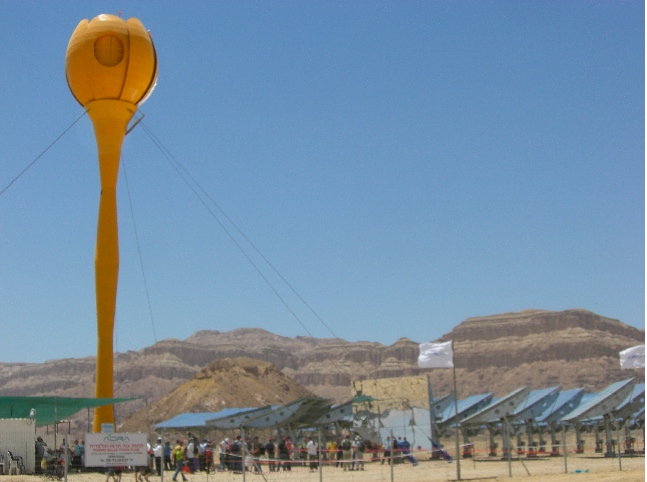
“In Jewish tradition, if someone has a coin, half will be used to buy bread and the other half for a flower. The gesture of giving a flower is nice, and soon we hope to provide many flowers in a variety of colors,” announced Haim Dotan, the architect of AORA’s new “Power Flower” at Kibbutz Samar.

On June 24, AORA Solar had its Kibbutz Samar Launch Event, to show off “flowery” new technology that generates 100kW of electrical power and 170kW of thermal power.

With an audience of around 250 journalists, investors, scientists, and curious individuals from around the world, the AORA team showed off their site and later signed agreements with Spanish and Australian firms to start introducing their technology outside of Israel.

Cell Phone Towers Can Help Predict the Next Big Flood

1

cell-phone-tower-image

Hurricane Katrina: Phone home –– If you have a cell phone tower planted somewhere near your home or your kid’s daycare, you’ll probably think they are evil, but new research finds that cell phone towers can give precious information to help us understand climate change patterns, and floods.

Though New Orleans residents were told to evacuate days before the arrival of Hurricane Katrina, no one could have predicted the real extent of the devastation.

Researchers from Tel Aviv University say they have found a novel and reliable way to help predict the intensity of the next big flood, using common cell phone towers. Their model, which analyzes cell phone signals, adds a critical component to weather forecasting never before available.

Beer Sheva Getting 100,000 Sq. Meters of Greenwash

3

mall-lahav-beer-shevaBeer Sheva, the long-suffering capital of Israel’s Negev desert, just broke ground on the biggest shopping mall in Israel. Like the other seven malls of Beer Sheva, this $180.5 million complex will continue to suck business out of the dilapidated but walkable Old City. Unlike the others, this one claims to be green. Architect rendering, on the left, from Ynet.

According to Ynet News, “The mall’s main entrance will have three waterfalls. “The water expresses prosperity and life,” explained [architect Shem Tov] Tzruya. In addition, the mall will include a pool for collecting rain water and air-conditioner water and reusing it for irrigation, as well as use of natural illumination and solar energy.”

Developer Eli Lahav said he will also put up an 8,000 meter green park with bike lanes beside the mall, in addition to solar panels on the roof. He plans on having classes, a meeting center for youth and soldiers, and a club for elderly citizens.

In May, we reported on newly elected mayor Rubik Danilovitch’s efforts to rebrand the city. The new mall comes on the heels of a Palestinian mall trend reported in this post.

While Lahav is to be commended for getting green construction and mixed uses  into his project, they are afterthoughts tacked onto an environmentally destitute concept. The green mall will be 2 kilometers from the Old City, 3 km from the Central Bus Station and about 5 km from the heart of the major strip mall concentration on the eastern perimeter of the city. Even in places that aren’t stiflingly hot, people don’t generally walk more than a quarter of a kilometer before getting into a car if they’ve got one. Since the plan doesn’t include any housing but rather is another aiport-like flat-roofed sprawler, you can bet that its customers will likely drive there.

You can see what I’m talking about in the map below, created with Google. Point A is the new mall. B is the Negev Mall, within an easy walk of the Central Bus Station. The BIG shopping center and its neighboring strip malls are around point C, and D is the Old City.

map-beer-sheva israel photo city

The article in Ynet did not investigate any of these environmental issues but rather took a jovial tone of bringing money and investment to the Negev. However, in 2007 Haaretz covered the looming mall by talking to dismayed store owners in the Old City, like shoe seller Amos Peretz.

“Each new mall hurts us,” Peretz said as he arranged shoes on his store’s shelves. “The city does not need more malls. We can invest resources to improve the situation in the Old City and increase the number of parking lots, repave sidewalks, build a roof over the pedestrian zone, place more lights and connect the facades of all the businesses. We talked about it a million times already but it is not being done.”

Similar to other aspirational projects like Masdar City, this is another greenwash attempt that covers its inherent flaws with expensive technology. At the least, I would have hoped Lahav would have been more tactful than to suggest three man-made waterfalls as an environmentally sound program for a desert city in a country with a water crisis.

Desalination and 7 Israel-related Cleantech Headlines, Week of June 28, 2009

2

West Bank Sewage

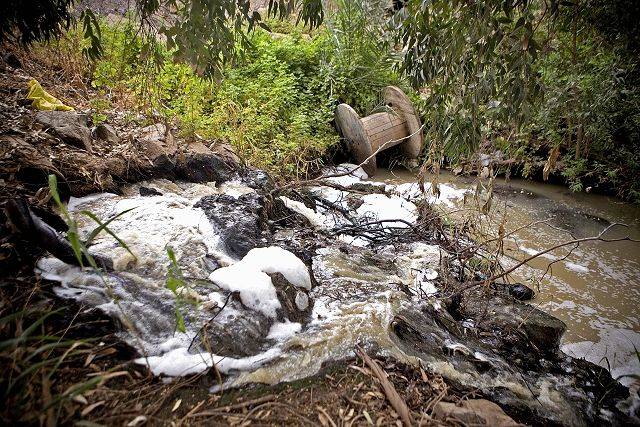
During the week of June 28, 2009, news was reported that cleantech investments during the second quarter improved. Israel’s Cleantech 2009 took place and focused on water projects and renewable energy while Israeli researchers are desainating sewage for agricultural use. For these stories and the rest of this week’s 7 cleantech headlines, see below.

Investing

Cleantech investment rebounds in Q2

Why Israeli Stocks and Currency Should Outperform Now

Israel Cleantech 2009

Israel’s Cleantech 2009 Emphasizes Water Projects and Renewable Energy

Environment

Eco-friendly Sewage Treatment Comes to the West Bank

Toyota considering Israeli high-tech investments

Israeli researchers desalinating sewage for agricultural use

Miscellaneous

No more crying over spilt milk

Lebanon Running Out of Fish

lebanon-fish(Lebanese fishermen in southern Tyre clean their catch. Photo from AFP.)

Southern Lebanese fishermen say their catch has slumped from 88 pounds a day in the 60s and 70s to a measly three or four-pound daily take because of aggressive dynamite fishing, overfishing and pollution.

According to a report published by AFP, the Lebanese marine life is all but wiped out. Successive governments have been so concerned with civil war, wars with Israel and political turmoil that they didn’t regulate the ocean. The people who might do it – the Ministry of Agriculture – don’t even have patrol boats.

(GWP) Global Warming Potential — What is it?

0

MIDEAST ISRAEL ENERGYProbably one of the most important green living tips I could suggest would be to educate yourself. Know what everyone is talking about. So, when greenhouse gases are being discussed you may have seen GWP mentioned…

Carbon dioxide isn’t the only greenhouse gas, although it  is but the one of primary concern presently. There are quite a few other gases that can contribute to global warming. Gases also have differing lifespans to. So how do you measure their damage against one another?

GWP is the ratio of heat trapped by one unit of a greenhouse gas compared to one unit of CO2 over a specified time period. By comparing them all against CO2 it is like measuring distances using Kilometers or Miles instead less accurate terms like “long” or “far”.

Shop for Social and Environmental Meaning in the Old City of Acco

shop environment acco israelThis coming Tuesday, July 7th a new store will be opening up in the Old City of Acco in northern Israel.  A store that invites its customers to “Shop For Meaning.”
Stocked with products carrying both social and environmental messages, the Shop for Meaning will also function as a center for professional apprenticeship for young adults with sensory and/or motor special needs.  The participants in the apprenticeship will learn about sales and trade through their hands-on experience.  At the end of their apprenticeship, participants will get help finding employment in the job market.

The store is a joint project of Kivunim (an organization that supports Israeli youth with special needs) and the Institute for National Insurance.

In Jordan and Israel There is a Desert Plant That Waters Itself

desert-rhubarb-israel-jordan-photo

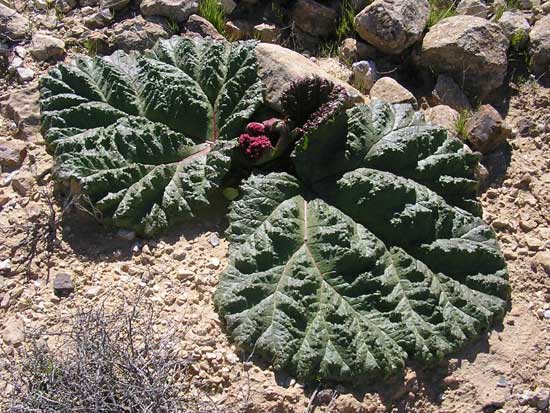
A team of researchers from the University of Haifa have stumbled upon a rare desert plant living in Israel’s mountainous Negev desert, which can irrigate itself.

The plant, the desert rhubarb, Rheum palaestinum, was first classified by a local Israeli botanist about 70 years ago. It has adapted to harsh desert climates by developing specially designed leaves — broad and with grooves and channels — to funnel even the slightest bit of rainwater directly to its roots.

It is the only known plant of its kind in the world, and could teach science — and people — new ways for maximizing water distribution in agriculture, especially in extremely arid regions. Locals say it is found only in Israel and nearby Jordan.

Israeli Politicians Wrangle over Drought Tax

water-golanIsrael’s aquifers may be overdrawn and the Dead Sea is dying, but that isn’t stopping legislators from trying to take the teeth out of a pending drought tax on water overconsumption.

According to the Jewish Telegraphic Agency, a scaled water levy was supposed to go into effect on July 1. Israeli water bills fall into three tiers, with different rates for the amount of water used. The drought tax would jack up the cost of the highest use, 15 cubic meters a month. Bigger families would get higher allowances. But for now, the legislation has been postponed until August 1.

Israel and China and clean tech

china-israel-clean-technology-photo

It’s always been natural for Israel to look to the West or Europe to capitalize on its clean technologies, through sales or investments. Recognizing the growing potential to the East, Israel recently launched a consulate general in the Guangzhou province of South China, the economic powerhouse of China.

Avraham Nir from Israel who will open the new center told China Daily that he hopes Israel’s presence there will strengthen ties between his country and South China. Besides high-tech, he sees Israel working with China on clean energy, water recycling and agriculture. Despite its dependence on coal for fuel, just this weekend China announced its desire to invest in clean technology, so the timing couldn’t be better.

Israel already has 2 other consulates in China — in Shanghai and Hong Kong. The Guangzhou consulate will cover the provinces of Guangdong, Hainan and Fujian, and the Guangxi Zhuang autonomous region.

Nir pointed out Israel’s good track record in the water industry (even with China)– citing Israel as the world’s most efficient recycled water user touted in a recent United Nations report.

Israel is also advanced in dairy farming and solar technology, he said. And despite the economic downturn, trade between Israel and Guangdong increased this year, he added.

In 2007, trade between Israel and Guangdong was at about $1.3 billion.

::China Daily

More green news on Israel and China:
Israel and China Build Israel’s Largest Solar Power Plant
Israeli Architects Build Agro-Housing in China
Israel and China Make a Water Pact

Algae Biofuel To Send Astronauts to Space? Israel’s Seambiotic Partners With NASA

11

astronaut-space-biofuel-nasa-seambiotic-photo-thumb

Algae could be a viable source of biofuel if it can be produced efficiently. Read our recent story on Algaenesis. Now Seambiotic, an Israeli company that develops marine microalgae for the nutraceutical and biofuel industries, has just announced that it will work with the NASA Glenn Research Center to develop an on-going collaborative R&D program for optimization of open-pond microalgae growth processes.

Under the Agreement, NASA Glenn and Seambiotic USA will work together to improve production processes and to study and qualify algae oil from alternative species and production processes as candidate aviation fuel at NASA’s test facilities.

“Under a Space Act Agreement, NASA is partnering with Seambiotic USA to model growth processes for microalgae for use as aviation biofuel feedstock,” said Prof. Ami Ben-Amotz, Chief Scientific adviser to Seambiotic.


“The goal of the agreement is to make use of NASA’s expertise in large-scale computational modeling and combine it with Seambiotic’s biological process modeling to make advances in biomass process cost reduction.”

The NASA research center is one of NASA’s 10 field centers, with the resources for developing cutting-edge technologies and advancing scientific research that address NASA’s mission to pioneer the future in space exploration, scientific discovery and aeronautics research.

Working in partnership with government, industry and academia, the center serves to maintain the U.S. economy’s global leadership while benefiting the lives of people around the world.

Seambiotic was founded in 2003 to grow and process marine microalgae for the nutraceutical and biofuel industries. Its research efforts include a pilot study at an Israeli Electric Corporation power station near the city Ashkelon, Israel, where various species of marine microalgae have been successfully cultivated using the power station’s CO2 emissions released directly from their smokestacks; the microalgae are in turn used as feedstock for biofuel. According to the website in 2023, it does not look like the company is operating.

GreenFuel, founded by Isaac Berzin in Israel was also on the path to commercialising algae as biofuel, but failed.

isaac berzin, algae pioneer
Isaac Berzin started a company called GreenFuel to turn algae into biofuel. The company failed to launch.

Seambiotic technology reduces the cost of microalgae production significantly while lowering global warming by reducing industrial CO2 emissions. The company is currently in transition from the pilot plant stage to large scale industrial algae cultivation and production.

More on algae for biofuel:

  1. Isaac Berzin Enlists Israelis Into The Business of Algae for Biofuel
  2. Expanding the Role of Algae: Algaenesis
  3. Algae-For-Biofuel Isaac Berzin’s New Advert Touting the Importance of this Alternative Energy Source
  4. Squeezing Energy From a Plant’s Metabolism at Hebrew University

[image via pahudson]

New Israel Fund Starts Tackling Environmental Issues

5

israel environmentThe New Israel Fund (NIF) has been the leading organization committed to democratic change, social justice, and equality in Israel since 1979.  Having been active in these fields for 30 years, it is now expanding its reach to environmental matters and becoming a partner in the Green Environment Fund.

The NIF explains on its reasons for joining the green cause on its website:

“Israelis have long had to balance growth with preservation of the country’s ancient archaeological treasures, as well as developing both industry and agriculture in an arid landscape where water is precious and scarce.  Today, environmental concerns in Israel, as in the rest of the world, are multiplying and becoming more urgent with the passage of time.”