Creators who want to influence people for good should also think carefully about tone. Environmental storytelling does not need to lecture or shame audiences. It can invite curiosity instead.
The company's Next Generation Process (NGP) Pilot Plant in London, Ontario, has officially moved into initial operating campaigns, generating the kind of structured, repeatable data that separates laboratory promise from commercial viability.
In the modern nutrition universe, that level of commitment deserves an applause. But for those who don’t live in a Nordic fishing village, the nutrition company Zinzino has built its omega-3 research and formulations around these principles, combining biomarker testing, antioxidant protection and traceable sourcing across both sustainably harvested small-fish oils and a vegan marine-microalgae alternative.
Dubai Municipality has set up 12 AI-powered "Ehsan Stations" to safely and officially feed strays. The city also officially supports Trap-Neuter-Return (TNR) programs.
Creators who want to influence people for good should also think carefully about tone. Environmental storytelling does not need to lecture or shame audiences. It can invite curiosity instead.
The company's Next Generation Process (NGP) Pilot Plant in London, Ontario, has officially moved into initial operating campaigns, generating the kind of structured, repeatable data that separates laboratory promise from commercial viability.
In the modern nutrition universe, that level of commitment deserves an applause. But for those who don’t live in a Nordic fishing village, the nutrition company Zinzino has built its omega-3 research and formulations around these principles, combining biomarker testing, antioxidant protection and traceable sourcing across both sustainably harvested small-fish oils and a vegan marine-microalgae alternative.
Dubai Municipality has set up 12 AI-powered "Ehsan Stations" to safely and officially feed strays. The city also officially supports Trap-Neuter-Return (TNR) programs.
Creators who want to influence people for good should also think carefully about tone. Environmental storytelling does not need to lecture or shame audiences. It can invite curiosity instead.
The company's Next Generation Process (NGP) Pilot Plant in London, Ontario, has officially moved into initial operating campaigns, generating the kind of structured, repeatable data that separates laboratory promise from commercial viability.
In the modern nutrition universe, that level of commitment deserves an applause. But for those who don’t live in a Nordic fishing village, the nutrition company Zinzino has built its omega-3 research and formulations around these principles, combining biomarker testing, antioxidant protection and traceable sourcing across both sustainably harvested small-fish oils and a vegan marine-microalgae alternative.
Dubai Municipality has set up 12 AI-powered "Ehsan Stations" to safely and officially feed strays. The city also officially supports Trap-Neuter-Return (TNR) programs.
Creators who want to influence people for good should also think carefully about tone. Environmental storytelling does not need to lecture or shame audiences. It can invite curiosity instead.
The company's Next Generation Process (NGP) Pilot Plant in London, Ontario, has officially moved into initial operating campaigns, generating the kind of structured, repeatable data that separates laboratory promise from commercial viability.
In the modern nutrition universe, that level of commitment deserves an applause. But for those who don’t live in a Nordic fishing village, the nutrition company Zinzino has built its omega-3 research and formulations around these principles, combining biomarker testing, antioxidant protection and traceable sourcing across both sustainably harvested small-fish oils and a vegan marine-microalgae alternative.
Dubai Municipality has set up 12 AI-powered "Ehsan Stations" to safely and officially feed strays. The city also officially supports Trap-Neuter-Return (TNR) programs.
Creators who want to influence people for good should also think carefully about tone. Environmental storytelling does not need to lecture or shame audiences. It can invite curiosity instead.
The company's Next Generation Process (NGP) Pilot Plant in London, Ontario, has officially moved into initial operating campaigns, generating the kind of structured, repeatable data that separates laboratory promise from commercial viability.
In the modern nutrition universe, that level of commitment deserves an applause. But for those who don’t live in a Nordic fishing village, the nutrition company Zinzino has built its omega-3 research and formulations around these principles, combining biomarker testing, antioxidant protection and traceable sourcing across both sustainably harvested small-fish oils and a vegan marine-microalgae alternative.
Dubai Municipality has set up 12 AI-powered "Ehsan Stations" to safely and officially feed strays. The city also officially supports Trap-Neuter-Return (TNR) programs.
Creators who want to influence people for good should also think carefully about tone. Environmental storytelling does not need to lecture or shame audiences. It can invite curiosity instead.
The company's Next Generation Process (NGP) Pilot Plant in London, Ontario, has officially moved into initial operating campaigns, generating the kind of structured, repeatable data that separates laboratory promise from commercial viability.
In the modern nutrition universe, that level of commitment deserves an applause. But for those who don’t live in a Nordic fishing village, the nutrition company Zinzino has built its omega-3 research and formulations around these principles, combining biomarker testing, antioxidant protection and traceable sourcing across both sustainably harvested small-fish oils and a vegan marine-microalgae alternative.
Dubai Municipality has set up 12 AI-powered "Ehsan Stations" to safely and officially feed strays. The city also officially supports Trap-Neuter-Return (TNR) programs.
Creators who want to influence people for good should also think carefully about tone. Environmental storytelling does not need to lecture or shame audiences. It can invite curiosity instead.
The company's Next Generation Process (NGP) Pilot Plant in London, Ontario, has officially moved into initial operating campaigns, generating the kind of structured, repeatable data that separates laboratory promise from commercial viability.
In the modern nutrition universe, that level of commitment deserves an applause. But for those who don’t live in a Nordic fishing village, the nutrition company Zinzino has built its omega-3 research and formulations around these principles, combining biomarker testing, antioxidant protection and traceable sourcing across both sustainably harvested small-fish oils and a vegan marine-microalgae alternative.
Dubai Municipality has set up 12 AI-powered "Ehsan Stations" to safely and officially feed strays. The city also officially supports Trap-Neuter-Return (TNR) programs.
Creators who want to influence people for good should also think carefully about tone. Environmental storytelling does not need to lecture or shame audiences. It can invite curiosity instead.
The company's Next Generation Process (NGP) Pilot Plant in London, Ontario, has officially moved into initial operating campaigns, generating the kind of structured, repeatable data that separates laboratory promise from commercial viability.
In the modern nutrition universe, that level of commitment deserves an applause. But for those who don’t live in a Nordic fishing village, the nutrition company Zinzino has built its omega-3 research and formulations around these principles, combining biomarker testing, antioxidant protection and traceable sourcing across both sustainably harvested small-fish oils and a vegan marine-microalgae alternative.
Dubai Municipality has set up 12 AI-powered "Ehsan Stations" to safely and officially feed strays. The city also officially supports Trap-Neuter-Return (TNR) programs.
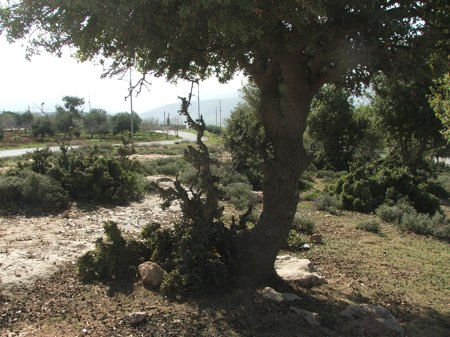
Putting picnic trash in the can or taking it home with you for disposal is a type of education a lot of people in Middle Eastern countries are lacking.
I’ve seen families at city parks and in the forests leave behind mountains of trash after their BBQs, shaking out the picnic cloth to leave behind bags, meat wrappers and plastic bottles.
Oh and my favorite: dirty diapers. I’ve seen it in Syria, and Israel, and according to the Jordan Times littering is a big problem there too.
Environmentalists in Jordan have just launched a campaign to preserve the Kingdom’s forests from litterbugs and vandals. The new initiative, “Save the Forests”, according to the Jordan Times, was launched from one of the country’s forests where plastic bags and all kinds of garbage left by irresponsible picnickers are spoiling the scenery.
If you are in the California area this winter and you care about food issues, consider heading to Hazon‘s annual food conference, from December 24-27. This is the same group running the sustainable food tour coming up in Israel.
Hazon runs a yearly biking trip in Israel and engages in the same debates on vegetarianism, organic farming and compost that we’ve run our mouths on here. Sign up before October 16th for the early-bird $60 discount.
We’ve already written about how Friends of the Earth Middle East (FoEME) has joined forces with 350.org, an international campaign that hopes to inspire the world to create a sense of urgency among world leaders for changing policies that would effect climate change. They have been organizing a climate change protest to take place at the Dead Sea on October 24th, the day designated by 350.org as an international day to protest climate change.
The campaign is focused on the number 350 – the level of parts per million that scientists have determined to be the safe maximum for CO2 levels in our atmosphere.
But the entire Middle East has taken notice. A couple weeks before the actual protest, now, there are tens of climate change protests registered all over Jordan, Egypt, Israel, Lebanon and Syria.
With the UN climate change summit taking place in Copenhagen in just a few months, these protests are extremely significant.
Keep on reading for a list of protests sorted by country. And if there isn’t one near you, then it’s not too late to start a protest of your own – 350.org’s website provides a lot of support and advice for starting your own October 24th protest:
Since its founding in 1917, the Jewish Telegraphic Agency, usually known as the JTA, has been a leading international journalistic source for communicating news and projects dealing with the world-wide Jewish community. Many JTA news articles have dealt with various developments in Israel and the Middle East, including those which are beneficial to the cause of peace.
A recent JTA article on clean technology, published on October 1 by Dina Kraft (also a New York Times reporter), takes a good look at a number of projects by Israeli clean tech industries and Israel’s military branches in the realm of renewable and alternative energy.
“Beating swords into green plowshares in Israel,” the article talks about solar energy energy companies such as Bright Source Energy Inc, which is involved in building solar energy plants in California’s Mojave Desert and other locations; and Rotem, which utilizes technologies developed in Israel’s aeronautical defense industry.
Rotem (we covered their work with the solar power company Aora here) is working on a number of commercial renewable energy projects involving solar and wind power, hydrogen fuel power, and biofuels. Some of Rotem’s many projects involving the environment and renewable energy are a hydrogen storage research center, a center for geology and hydrology applied research, a center for environmental sciences, and a thermal solar energy applications technology center.
Karin Kloosterman grows her own basil and grows a bonanza of pesto!
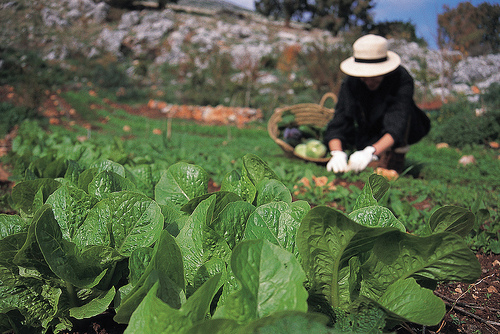
Basil grows like a weed. That’s my conclusion after planting a sprig of it 4 months ago. It’s late summer, early fall now here in Jaffa, Israel, and the basil (or basilicum as locals call it) is ripe for the picking. But how many leaves of basil can you garnish your salad with? Or eat in pasta? I had a plan to make pesto.
Now when I cook, I rarely make sure I have the right ingredients. And I practically never use a recipe. You could say that I like to swing it. Most of the time, the food turns out pretty good, but often quite “wow” as my friends say (no I don’t pay them), so I urge you to take a little chance when cooking. In the worst case you can downgrade your stir-fry to a soup or mix it with eggs for a casserole (recycling right?). In the very worst case, feed it to your dog or compost heap.
Pesto isn’t something I grew up eating in my small town in Canada, but something I grew to love as a spread working at the Liberty Cafe on King West in Toronto. Later, in Switzerland, I admired how one of my co-workers Esther (at an environmental research institute I was working at), prepared small jars of pesto for all her friends when basil was in season. She didn’t give me one, so maybe some latent jealously inspired me to create my own last week.
Onto the recipe: Normally pesto calls for pine nuts. Those things actually grow on pine trees over here in Israel and I am assuming in Lebanon and Syria too — wherever conifers tolerant to this Mediterranean climate can grow. Pine nuts are really expensive, and not something that I normally stock in the kitchen. But we did have walnuts (egozim or California nuts as Israelis call them), so I thought why not. A substitute couldn’t hurt.
I went to the garden and twisted off a few branches of basil, and proceeded to soak it in salty water, using chunky coarse salt. Since my herb garden is organic (I am not using pesticides), there is no need to wash well. But keeping in the tradition of kashrut , or kosher for Jewish dietary laws, I soaked the basil in salt so any creepy crawlies in the basil would float to the surface.
Salting the basil to remove insects
When it’s possible to save them, I do –– releasing the insects outside. Most of the time the small flies in lettuce and other leafy greens are already dead, so they flush down the drain. I did find a dead 8-legged spider in the basil. So good I checked. Jewish dietary laws say that Jews can’t eat insects, and I think most of the rest of the world agrees –– Muslims and Christians alike –– that that this rule is not such a bad one to enforce.
Once I ate a whole bowl of my mother’s soup thinking the small bits were vermicelli. While pouring out a ladle for my cousin, I realized the soup was full of larvae. Probably beetle. Needless to say, I inspect all dried noodles and soup mix before adding them to the pot.
Religious Jews tend to be extra-vigilant with the insect thing, so if you are preparing even just a salad for someone who is religious, consider giving it a thorough check and salting (you can rinse it off), before cutting and chopping.
Onto the recipe:
Using a $25 hand blender, I stuffed the soaked, salted, rinsed and cleaned basil into a jar, along with 1/4 cup of olive oil, 1/4 cup of walnuts, 2 cloves of garlic, some salt to taste and started blending.
Remove the leaves from the stalks and use just the leaves in the pesto. I didn’t have Romano cheese, as some recipes call, but no matter. One of my friends can’t eat bad cholesterol food, and there’s nothing wrong with keeping it vegan to reduce our carbon footprint. So voila, a vegan pesto recipe was born. Easy to do, and great to eat.
I used mine as a spread on bread, and then on a big pasta meal I cooked for eating in our sukka.
Here’s a recap on ingredients. Feel free to add more or less of each depending on consistency and taste. I also like to top the pesto up with olive oil so it doesn’t oxidize. It should keep about 2 weeks in the fridge. Keep it in a small glass jar or give it away to friends.
Homemade Pesto Recipe:
3 bunches of basil (green or purple)
2 cloves of garlic (not frozen)
1/4 to 1/2 cup of olive oil
1/4 to 1/2 cup of walnuts (or pine nuts)
Salt to taste
A large squeeze of lemon juice
Make it extra delicious by adding in 100g of parmesan
Make it extra healthy by adding in a handful of nettles.
Enjoy!
Want more recipes from Israel and the Middle East?
The Alberta oil sands, or tar sands as some people call them, are top on the list of Greenpeace’s agenda. The same people who climb trees to stop loggers from chopping down Old Growth forests, are looking to stop the oil extraction operations in the Canadian province. The oil is located under Boreal forest, and some say that the amount of greenhouse gases emitted from the extraction process, will make China’s coal factories look like child’s play. The processing will also damage water and the air, not to mention birds and waterfowl (which have been killed in the thousands) say Greenpeace activists.
But not everyone thinks like an environmental activist. Giving another angle, a Green Prophet reader, Michael Wittig, a stay-at-home father from Juneau, Alaska, sees the involvement of an Israeli company Opti Canada (TSE:OPC), a daughter company of Ormat, as using technologies that minimize the damage. You can follow our first post on the issue here for background (Ormat’s Opti Takes On Oil Sands in Canada) and read on for Michael’s commentary:
Near Fort McMurray, in the northern part of the province of Alberta, Canada, a piece of equipment designed and supplied by an Israeli company, Ormat Industries, is refining bitumen extracted from oil sands. This equipment, and the process it enables, represents a substantial improvement over existing oil sand extraction and refining techniques.
Going on a pilgrimage to the Holy Land doesn’t mean you have to stay in a stable. Catering to the rich and famous, including celebrities like Sharon Stone and Donna Karan, Mizpe Hayamim (“Lake View” in English) is Israel’s most luxurious hotel, spa and organic restaurant located on Mount Canaan between the mystical city of Safed and the picturesque art town of Rosh Pina.
Mizpe Hayamim (Karen wrote about the organic restaurant and hotel earlier this summer) is a perfect base from which to explore the Galilee region, biblical lore and a healthy organic lifestyle while enjoying total pampering. Local health-conscious celebrities visit in abundance as well, with guests including Israel’s top politicians, models, singers, actors and doctors.
Local pop stars like Shlomo Artzi and even Israel’s Prime Minister Benjamin Netanyahu (before he took office) have stayed at the hotel, says sales manager Adi Kaplan. She won’t reveal the names of additional VIP guests: “We have to protect their privacy, but I can tell you that we had a lot of celebrities here last weekend.”
We’ve all seen them – those tall, ugly masts holding any number of cellular transmitter/receivers. Without them we wouldn’t have the modern convenience of the cell, or mobile, phone in Israel or the rest of the Middle East. Are these cell phone towers simply eye-sores, or cause for real concern? Are the NIMBY’S – Not In My Back Yard’ers – just hysterical alarmists?
In order for our cell phones to operate everywhere and anywhere, the towers must be numerous enough and spaced such that the cells – the area of communication/interaction must overlap. The transmitters create a 360 degree radius of low frequencies, generally in the ranges of 4.26 hertz, 8.33 hertz, 217 hertz and 1.73 KHz.
Microcells, which appear as boxes attached to buildings and located less than 10 meters above the ground radiate no more than 5 watts of energy. Next time you’re out and about town, see if you can spot these.
Radio waves of these frequencies in and of themselves pose no threat. What makes cellular frequencies a hazard to human health is that they are pulsing, microwave, Information Carrying Waves (ICW). The frequencies carry packets of information, converting radio signals to voice and voice to radio and sending these packets of information along in pulsing waves in order to carry as much information as possible. These waves, unlike many other frequencies we’re exposed to day-in and day-out, do not pass undetected by the human body.
It looks like yet another investment firm has set up to power solar energy in Israel, taking advantage of Israel’s guaranteed feed-in tariff rates for the next 20 years. According to the business paper Globes, Enlight Renewable Energy (yet with no website in English), is looking to secure financing, yet has won the rights to “BOT” (build, operate, transfer) in 25 solar energy installation projects.
Setting up and operating the solar projects with its investors, the company plans on selling the energy back to the Israel Electric Corporation (IEC) (TASE: ELEC.B22) over 20 years. This rule applies to photovoltaic systems of up to 50 kilowatts. (This is what Globes reports, but I think they mean 50 megawatts – see Jonathan Shapira’s post on new feed-in rates for wind and solar power.)
This is a sure thing investment in uncertain times. And it’s good for the planet. It’s not clear if smaller private investors can bring capital to the project, but it might be worth contacting the company if you are interested in investing in solar power.
“The systems will be installed at locations on the Golan Heights, Jezreel Valley, and Carmiel in the north, in Arad and Beersheva in the Negev, and elsewhere.
The company already has a deal to install a photovoltaic system on the roof of the dairy of Moshav Yonatan on the Golan, which has one of the largest cowsheds in the north, with an area of over 10,000 square meters,” according to Globes (links to site not article).
Being an environmentally-conscious website, many articles posted here on Green Prophet have tried to show the bad side of the overuse of fossil fuels and the damage they have done to our planet – especially in regards to global warming and climate change. This is especially true in respect to my last article where I tried to bring to light the “downside” of trying to produce high grade petroleum from oil sands located deep beneath the ground in a place called Long Lake, in Alberta Canada.
In our present-day energy situation, the need for large quantities of oil for energy is still very much a fact of life. Whether it is found in the Middle East, the North Sea, South America, or even “trapped” inside underground mineral deposits such as oil shale, coal, oil sands or tar deposits like the La Bera tar pits in Los Angeles California, oil company geologists and scientists will continue to find ways to “free” these underground fossilized remains of prehistoric earth for years to come.
Although the use of oil for energy is raising concern among environmentalists (Peak Oil), it wasn’t so long ago that oil was the driving force behind the industrial and commercial innovations that most of us now take for granted. I grew up in Oklahoma where drilling for “crude” was an important part of an economy that otherwise was mostly agrarian in nature, with wheat, cotton, and cattle raising being some of the important “cash crops”.
(Waiting for flights at Ben Gurion Airport in Israel).
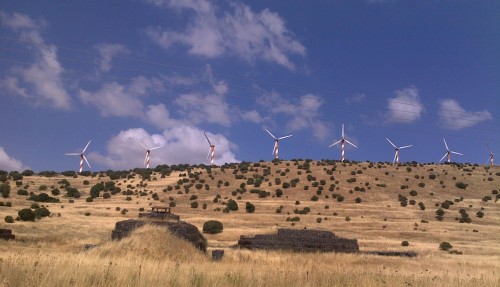
There’s no denying that wall of Mediterranean heat that hits you like a brick when you disembark at Ben Gurion Airport outside Tel Aviv. Soon, Israel’s major international airport will take advantage of all that sun and be partially powered by solar energy. That will make Israel one of the first countries in the world to generate renewable energy sources at its airport, and the first to do so in the Middle East.
The 50-kilowatt solar energy pilot project slated for 2010 will be 5,382 square feet in area. An array of solar panels that will convert the sun’s energy into electricity will be installed above the airport’s long-term park-and-fly parking lots, in the most impressive of the many new green ideas from airport executives.
Vegans, vegetarians, and vegawarians make a difference every day by not eating meat. The meat industry is one of the leading industries responsible for fossil fuel consumption and a 2006 UN report found that the global meat industry produces more greenhouse gases than all of the world’s SUVs, cars, trucks, planes and ships combined.
If done incorrectly, though, vegans and vegetarians can be left without a lot of important nutrients. Protein can be substituted easily enough through tofu, soy, seitan, eggs, dairy and legumes (click here for a wonderful protein-rich quinoa salad recipe). But other important nutrients such as Omega-3, which usually comes in the form of fish oil, are a little tougher to find in vegetarian form.
V-Pure , an EPA and DHA based Omega 3 supplement that is extracted from algae instead of fish, responds to this vegan and vegetarian need (as well as to the needs of Jews and Muslims who observe dietary restrictions). The supplement functions a little like vegetarianism itself by sourcing the nutrients directly from the algae that fish eat (just as vegetarians get their nutrition directly from the sources that livestock animals eat).
Great for vegans and vegetarians, V-Pure’s supplement is also pretty great for the environment. Avoiding the use of fish oil means preserving a biodiverse fish population. The algae that is used instead of fish oil is organically grown and 100% free from toxins and contaminants. The supplement also comes in recyclable packaging.
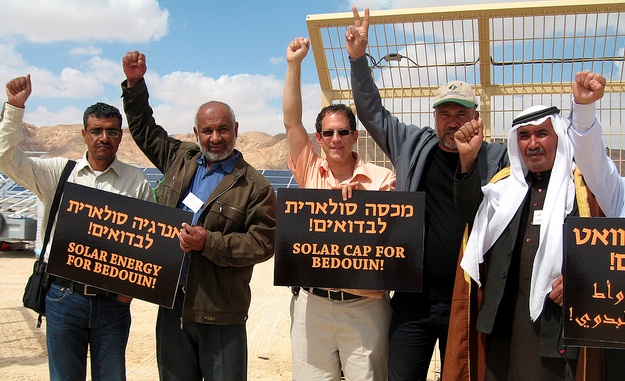
Lots of people are rooting for Bedouin in Israel, this man is greening his culture from the inside.
The first thing visitors to the Bedouin town of Rahat notice is the litter. Household garbage lies strewn at the sides of treeless streets. When the wind picks up, plastic bags, newspapers and sacks billow across the surrounding desert wasteland. Discarded construction materials mar the landscape.
“First you have to understand why they throw litter everywhere,” says environmentalist Ahmed Amrani, who was recently appointed municipal chief of staff of Rahat. “They don’t see it as a crime. Awareness is the key – not punishment. I regularly lecture to local teenagers on ‘Islam and the environment,’ when I emphasize the need to protect the land from a religious perspective,” he tells Green Prophet.
The Bedouin of Israel’s southern Negev desert are a society in transition, whose lifestyle transformed from nomadic to sedentary in little more than a generation. Their situation is roughly akin to that of Native Americans or Aboriginal Australians.
Think Againis a series that provides fun ideas for how to reuse items in your home that you would normally throw out or recycle. Reusing is higher on the “green” food chain than recycling, because getting another use out of an object is always more effective than spending the energy to recycle it. Plus, trying to reuse can force us to be creative!
Since we’ve featured so many plastic bag upcycling designers here on Green Prophet lately (such as Inbal Limor whose work is shown above, Limor Matityahoo, and Tali Gordon Bleicher), we thought you may be itching to learn this technique yourself.
Of course, having no plastic bags lying around your house is ideal. But even the strictest cloth bag carrying environmentalist probably has a few. By fusing them and making them sturdier, you can extend their life and make sure they stay out of the landfill for a longer period of time.
The technique is surprisingly VERY easy. Fusing the plastic bags doesn’t require any special equipment other than an iron and once you’ve fused the bags you have a cloth-like material that you can do pretty much anything with. If you’re struggling for ideas, you could use the fused plastic to make a drawstring bag such as the one we featured on Think Again last week.
Clean tech investor David Anthony from 21Ventures explains how clean tech entrepreneurs get funding.
A plucky little country, is how the late Princess Diana once described Israel to Shimon Peres. About the size of New Jersey, Israel has a disproportionate number of clean tech companies and investment in clean technology compared to its size. And now businessman and investor David Anthony from 21Ventures in the US is about to reveal his trade secrets and insider information about clean tech investing in Israel. These tips, of course, can apply anywhere. If you are itching to become a clean tech entrepreneur, this is must-read information.
Unlike Silicon Valley and the high-tech industry, the clean tech market today has no center of excellence, Anthony tells Green Prophet. In the last 50 years of venture capital investing there has been a saying: Never fly over your company –– meaning one shouldn’t invest in a company that isn’t within a 60 mile radius of the office. But without a center for clean technology, explains Anthony, a VC fund now has to dig into new territory to find the golden investment egg. Investors need to cross borders and turn over new stones.
To help Green Prophet readers better understand what American investors are looking for, we’ve asked Anthony for some tips. Compared to any other country in the Middle East, Israel is a clear and defined leader in this market, so we’ve focused on Israel. Most of Anthony’s tips could work in other non-US locales as well.

 Putting picnic trash in the can or taking it home with you for disposal is a type of education a lot of people in Middle Eastern countries are lacking.













 Think Again is a series that provides fun ideas for how to reuse items in your home that you would normally throw out or recycle. Reusing is higher on the “green” food chain than recycling, because getting another use out of an object is always more effective than spending the energy to recycle it. Plus, trying to reuse can force us to be creative!