Creators who want to influence people for good should also think carefully about tone. Environmental storytelling does not need to lecture or shame audiences. It can invite curiosity instead.
The company's Next Generation Process (NGP) Pilot Plant in London, Ontario, has officially moved into initial operating campaigns, generating the kind of structured, repeatable data that separates laboratory promise from commercial viability.
In the modern nutrition universe, that level of commitment deserves an applause. But for those who don’t live in a Nordic fishing village, the nutrition company Zinzino has built its omega-3 research and formulations around these principles, combining biomarker testing, antioxidant protection and traceable sourcing across both sustainably harvested small-fish oils and a vegan marine-microalgae alternative.
Dubai Municipality has set up 12 AI-powered "Ehsan Stations" to safely and officially feed strays. The city also officially supports Trap-Neuter-Return (TNR) programs.
Creators who want to influence people for good should also think carefully about tone. Environmental storytelling does not need to lecture or shame audiences. It can invite curiosity instead.
The company's Next Generation Process (NGP) Pilot Plant in London, Ontario, has officially moved into initial operating campaigns, generating the kind of structured, repeatable data that separates laboratory promise from commercial viability.
In the modern nutrition universe, that level of commitment deserves an applause. But for those who don’t live in a Nordic fishing village, the nutrition company Zinzino has built its omega-3 research and formulations around these principles, combining biomarker testing, antioxidant protection and traceable sourcing across both sustainably harvested small-fish oils and a vegan marine-microalgae alternative.
Dubai Municipality has set up 12 AI-powered "Ehsan Stations" to safely and officially feed strays. The city also officially supports Trap-Neuter-Return (TNR) programs.
Creators who want to influence people for good should also think carefully about tone. Environmental storytelling does not need to lecture or shame audiences. It can invite curiosity instead.
The company's Next Generation Process (NGP) Pilot Plant in London, Ontario, has officially moved into initial operating campaigns, generating the kind of structured, repeatable data that separates laboratory promise from commercial viability.
In the modern nutrition universe, that level of commitment deserves an applause. But for those who don’t live in a Nordic fishing village, the nutrition company Zinzino has built its omega-3 research and formulations around these principles, combining biomarker testing, antioxidant protection and traceable sourcing across both sustainably harvested small-fish oils and a vegan marine-microalgae alternative.
Dubai Municipality has set up 12 AI-powered "Ehsan Stations" to safely and officially feed strays. The city also officially supports Trap-Neuter-Return (TNR) programs.
Creators who want to influence people for good should also think carefully about tone. Environmental storytelling does not need to lecture or shame audiences. It can invite curiosity instead.
The company's Next Generation Process (NGP) Pilot Plant in London, Ontario, has officially moved into initial operating campaigns, generating the kind of structured, repeatable data that separates laboratory promise from commercial viability.
In the modern nutrition universe, that level of commitment deserves an applause. But for those who don’t live in a Nordic fishing village, the nutrition company Zinzino has built its omega-3 research and formulations around these principles, combining biomarker testing, antioxidant protection and traceable sourcing across both sustainably harvested small-fish oils and a vegan marine-microalgae alternative.
Dubai Municipality has set up 12 AI-powered "Ehsan Stations" to safely and officially feed strays. The city also officially supports Trap-Neuter-Return (TNR) programs.
Creators who want to influence people for good should also think carefully about tone. Environmental storytelling does not need to lecture or shame audiences. It can invite curiosity instead.
The company's Next Generation Process (NGP) Pilot Plant in London, Ontario, has officially moved into initial operating campaigns, generating the kind of structured, repeatable data that separates laboratory promise from commercial viability.
In the modern nutrition universe, that level of commitment deserves an applause. But for those who don’t live in a Nordic fishing village, the nutrition company Zinzino has built its omega-3 research and formulations around these principles, combining biomarker testing, antioxidant protection and traceable sourcing across both sustainably harvested small-fish oils and a vegan marine-microalgae alternative.
Dubai Municipality has set up 12 AI-powered "Ehsan Stations" to safely and officially feed strays. The city also officially supports Trap-Neuter-Return (TNR) programs.
Creators who want to influence people for good should also think carefully about tone. Environmental storytelling does not need to lecture or shame audiences. It can invite curiosity instead.
The company's Next Generation Process (NGP) Pilot Plant in London, Ontario, has officially moved into initial operating campaigns, generating the kind of structured, repeatable data that separates laboratory promise from commercial viability.
In the modern nutrition universe, that level of commitment deserves an applause. But for those who don’t live in a Nordic fishing village, the nutrition company Zinzino has built its omega-3 research and formulations around these principles, combining biomarker testing, antioxidant protection and traceable sourcing across both sustainably harvested small-fish oils and a vegan marine-microalgae alternative.
Dubai Municipality has set up 12 AI-powered "Ehsan Stations" to safely and officially feed strays. The city also officially supports Trap-Neuter-Return (TNR) programs.
Creators who want to influence people for good should also think carefully about tone. Environmental storytelling does not need to lecture or shame audiences. It can invite curiosity instead.
The company's Next Generation Process (NGP) Pilot Plant in London, Ontario, has officially moved into initial operating campaigns, generating the kind of structured, repeatable data that separates laboratory promise from commercial viability.
In the modern nutrition universe, that level of commitment deserves an applause. But for those who don’t live in a Nordic fishing village, the nutrition company Zinzino has built its omega-3 research and formulations around these principles, combining biomarker testing, antioxidant protection and traceable sourcing across both sustainably harvested small-fish oils and a vegan marine-microalgae alternative.
Dubai Municipality has set up 12 AI-powered "Ehsan Stations" to safely and officially feed strays. The city also officially supports Trap-Neuter-Return (TNR) programs.
Creators who want to influence people for good should also think carefully about tone. Environmental storytelling does not need to lecture or shame audiences. It can invite curiosity instead.
The company's Next Generation Process (NGP) Pilot Plant in London, Ontario, has officially moved into initial operating campaigns, generating the kind of structured, repeatable data that separates laboratory promise from commercial viability.
In the modern nutrition universe, that level of commitment deserves an applause. But for those who don’t live in a Nordic fishing village, the nutrition company Zinzino has built its omega-3 research and formulations around these principles, combining biomarker testing, antioxidant protection and traceable sourcing across both sustainably harvested small-fish oils and a vegan marine-microalgae alternative.
Dubai Municipality has set up 12 AI-powered "Ehsan Stations" to safely and officially feed strays. The city also officially supports Trap-Neuter-Return (TNR) programs.
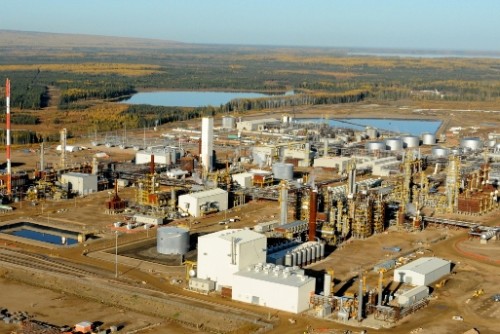
Israel’s ORMAT Industries Ltd (NASDAQ:ORA) has joined with its subsidiary Opti Canada Inc (TSE:OPC) in a project in extract and produce a high grade of petroleum from oil sands located in northern Alberta Canada. ORMAT is a world leader in producing energy from unconventional sources, including geo-thermal energy from volcanoes and hot springs under the earth’s surface.
The company that likes to brand itself as a clean technology company the world over is not so quick to reveal that it is involved in what could be the dirtiest deal ever for the planet:
The northern-Alberta tar sands venture involves Ormat’s technology to use high pressure steam to extract the crude oil, presently trapped in the sands located deep below the earth’s surface. The process is known as steam assisted gravity drainage, or SAGD for short. It’s a dirty process, and some environmentalists say it will make current levels of greenhouse gases look meagre compared to what gets released during tar sands processing.
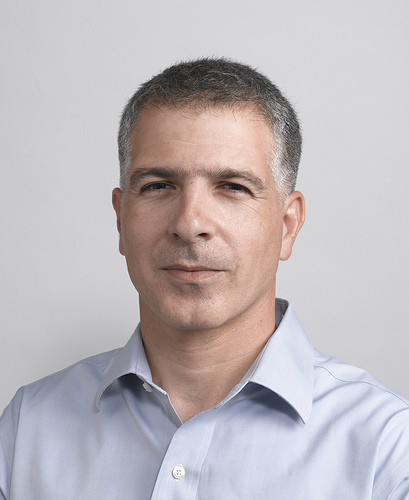
If the Swiss do business with them, they must be doing something right, reasons Eran Tagor, CEO of PowerSines. Founded in 1980 it’s doing more than impressing the discriminating Swiss.
With a staff of 55, the company supplies two main products to municipalities and businesses across the globe: the LEC (Lighting Efficient Controller) for retail and street lighting, and the SinuMEC (Sinusoidal Motor Efficiency Controller) that reduces the operating and electrical costs for electric motors in machines and technology.
FedEx, Macy’s, Pepperidge Farms and TimBar are just a few US clients who have adopted PowerSines’ energy saving solutions for lighting and for machines.
We’ve seen the upcycled wallets that Tel Aviv-based designer, Amit Brilliant, creates out of product packaging. And just a couple weeks ago we saw how Limor Matityahoo (aka EcobyLimitz) is exploring the use of fused plastic bags and plastic yarn to create mobiles and finger puppets and lots of other things. And now we will meet another Israeli designer who is combining the efforts of both of those designers.
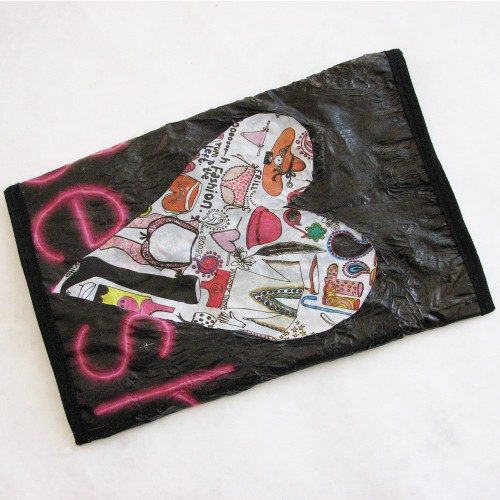
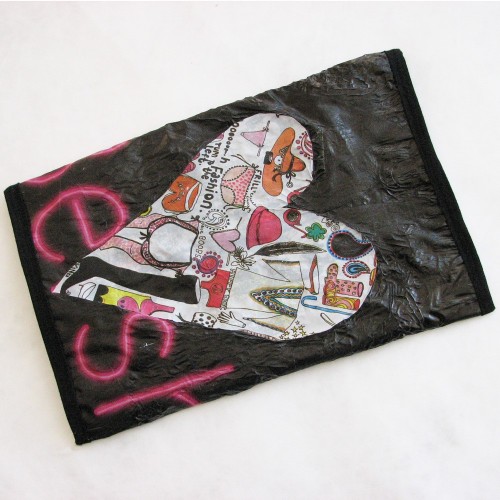
Tali Gordon Bleicher, a product and graphic designer as well as a teacher, makes beautiful wallets out of fused plastic bags. Called arnakologis (or, “ecological wallets”), all of her wallets are handmade, one of a kind, and feature a unique collage design.
Tali uses the ubiquitous plastic bag as her base material, saying that “I find inspiration in the materials that are around me.”
Tangy star fruits or carambola can be great ground cover in orchards as an alternate crop or just a way to keep the soil healthy and vital in citrus orchards.
According to climate change experts, our planet has a fever — melting glaciers are just one stark sign of the radical changes we can expect. But global warming’s effects on farming and water resources is still a mystery.
A new Tel Aviv University invention, a real-time “Optical Soil Dipstick” (OSD), may help solve the mystery and provide a new diagnostic tool for assessing the health of our planet.
According to Prof. Eyal Ben-Dor of TAU’s Department of Geography, his soil dipstick will help scientists, urban planners and farmers understand the changing health of the soil, as well as its agricultural potential and other associated concerns.
“I was always attracted to drug development and diagnostics, which spurred the development of this OSD device,” he says. “It’s like a diagnostic device that measures soil health. Through a small hole in the surface of the earth, we can assess what lies beneath it.”
As climate change alters our planet radically, Prof. Ben-Dor explains, this dipstick could instantly tell geographers what parts of the U.S. are best — or worst — for farming. For authorities in California, it is already providing proof that organic farms are chemical-free, and it could be used as a whistle-blower to catch environmental industrial polluters.
The efficacy of the OSD was recently reported in the Soil Science Society of America Journal.
“Precision agriculture”
Today, there is no simple and inexpensive way to test for soil health in the field. Soil maps of individual states are only compiled every 10 or 20 years, and each one costs millions. One testing process even requires the use of a bulldozer, which dredges up large tracts of land to be sampled and analyzed in a laboratory.
Testing can be much simpler with Prof. Ben-Dor’s dipstick, which can be used by non-professionals. The thin catheter-like device is inserted into a small hole in the soil to give real-time, immediately accurate and reliable information on pollution and the all-round health of the soil.
Analyzing chemical and physical properties, the dipstick outputs its data to a handheld device or computer. “To optimize production and save costs, farmers need to know if their crops are getting the right blend of minerals. This tool could permit them to pursue ‘precision agriculture,'” says Prof. Ben-Dor.
The OSD, which is expected to cost about $10,000 per unit per application, allows technicians to determine if the soil needs water or is contaminated. It also provides information about the condition of root zones where crops are growing.
And the quality of information, the researchers explain, is identical to that provided by large government laboratories. Prof. Ben-Dor says that these dipsticks can also be remotely and wirelessly networked to airplanes and satellites, providing the most detailed, comprehensive and reliable soil map of the U.S.
Replacing soil maps
Soil maps are important tools of the trade for land developers, city planners, farmers and environmental prosecutors. Those employed today tend to be outdated, rendering them useless for many applications, and only about 30% of the planet has been mapped in this way.
Soil maps for the Far East, the Arctic, and Africa, which can be more readily developed with Prof. Ben-Dor’s dipstick, will better tell scientists, researchers and government agencies how climate change and population growth are affecting our planet and its resources.
“Soil mapping is a national undertaking,” Prof. Ben-Dor observes. “It takes years and millions of dollars worth of manual labor and laboratory analysis, not to mention exhausting headaches with government authorities and ministries.
For a fraction of that energy and money, and with a staff that has minimal training, the OSD could do the same job, and could continue doing it on a yearly, monthly, and possibly even a daily basis. The headaches would be gone, and we would finally get an accurate picture of the earth’s crust in these environmentally critical years.”
The OSD is currently in a prototype stage and is set for commercialization. If the right strategic partner is found, a new device could be on the shelves, and in the ground, within the year.
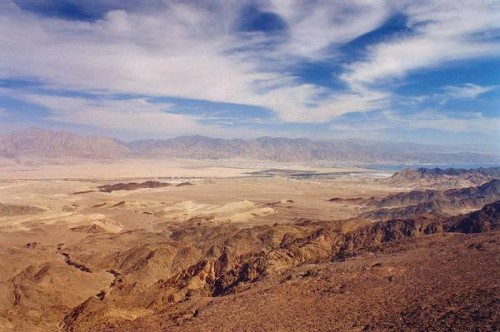
In what was formerly thought to be a three way cooperation between Israel, Jordan, and the Palestinian Authority, the Kingdom of Jordan has decided to unilaterally undertake the first stage of construction of a canal between the Gulf of Aqaba in the Red Sea, and the Dead Sea, with which Jordan has the entire eastern boundary.
The plan to build an elaborate system of pumps, pipelines and actual canals, has been mentioned several times on Green Prophet, including an article last August which noted that an agreement had been made between representatives of the three governments to jointly undertake the construction of this project.
Now it appears, however, that Jordan, one of the driest countries in the world, according to an article published Tuesday, September 29, in Globes, The Kingdom simply can’t wait for Israel and the P.A. to dedicate monies and resources to begin the fist stage of the project.
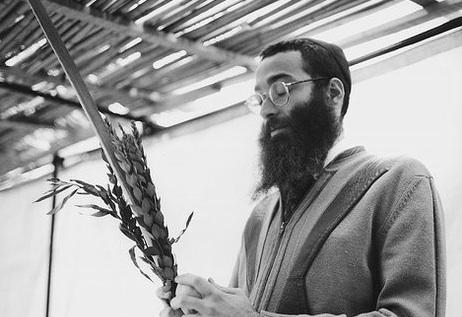
For Jews in Israel, there is probably no better time to reflect on one’s place in nature and the health of the environment than during Sukkot, the Festival of Booths or the Jewish harvest festival.
When I lived in Jerusalem, I could see the small make-shift sukkahs (huts) erected everywhere outside my window – each one has at least three walls made from wooden clapboard or cloth with a simple roof made from plant cuttings (skakh).
Here in Jaffa, a mixed Jewish-Arab city, the effect of the holiday is less profound, because half of the population won’t be building a sukkah, but I am hoping to get a chance to sleep in ours to remember Sinai – physically and metaphorically.
We’ve already written about the annual Green Sukkah conference being held again this year at Kibbutz Ein Shemer, but if an all day conference isn’t your idea of fun then keep on reading. There are plenty of other green Sukkot events out there.
Live Solar Powered Music Sponsored by Greenpeace: Greenpeace will be participating in an international protest called “The Global March for Peace and Non-Violence” which will be held in many cities around the world between October 1st and October 12th. Greenpeace Israel’s protest will be held today, October 1st, in the plaza in front of the Tel Aviv Cinematheque.
Live solar powered music will be part of the protest, as well as storytelling and activities for kids. October 1st at the Tel Aviv Cinematheque (2 Shprintsek Street, Tel Aviv) from 2pm to 6pm.Check out the facebook event.
From a press release: “BrightSource Energy, Inc., developer of large-scale solar thermal power plants, announced recently that it has reached a preliminary agreement with Nevada’s Coyote Springs Land Company to provide the sites for up to 960 megawatts of clean and reliable solar thermal energy to the California and Nevada markets.
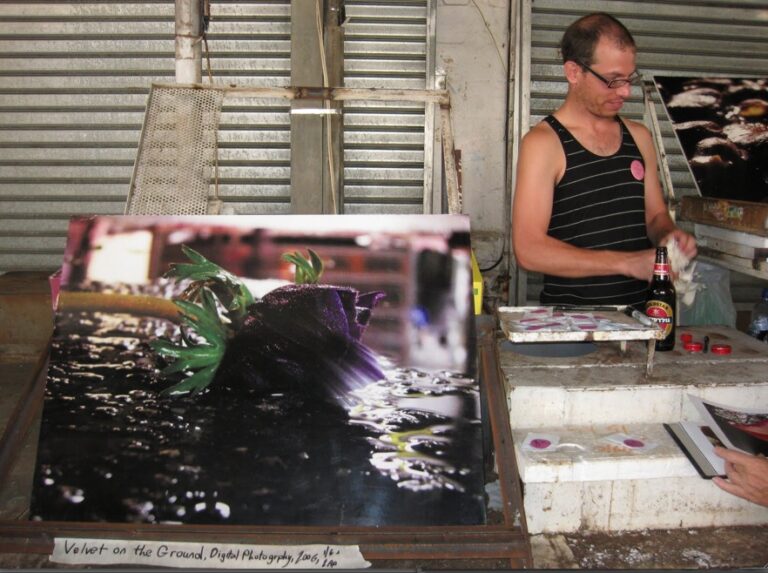
(“Secret Artist” and his “Velvet on the Ground” photo at the Tel Aviv Carmel Market recycled art installation. Photo credit Asaf Ravid. )
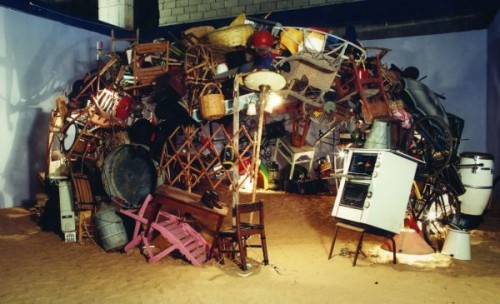
A few weeks ago, on a hot Tel Avivian Saturday, I visited the closed Shuk Ha Carmel (the Carmel Market) on the occasion of the Cucumber Season exhibition. I usually really try to avoid the shuk when it is closed as I find it scary, but it intrigued me to see how the artists were going to use this public yet closed space to display their work.
Once at the event we found among the cats and garbage, works of art which were displayed on the different stalls and on the floor.
During the week of September 20, 2009, Tigo Energy made headlines for its solution to monitor power from the Sun. BioPetroClean announced its partnership with Dow and a new Tel Aviv University-developed sensor called “Dust Alert” can help monitor air quality around us. For these stories and more, check this week’s 7 Israel-related cleantech headlines below.
Would you guess that the lamp above is made out of 80% recycled materials? Just one of the many light fixtures that Tel Aviv-based Studio Mesila (mesila being the Hebrew word for “track”) makes, the lamp was created out of wood veneer remnants from a carpentry shop in Kibbutz Beit Alfa.
Studio Mesila – a sustainable design studio aiming “to pave a path to design as a way of life, and life as a way of design” – is happy to share the stories behind all of their products, which include light fixtures, home accessories, and furniture.
Founded by Shlomit Levy, Avital Levy and Ifat Zvirin, the studio creates one-of-a-kind creations that all contain between 30%-100% recycled content. In the interest of transparency and sharing the story of the materials’ past lives with their future consumers, the studio publishes the recycled content percentage as well as where the materials came from for every product on their website.
Boycotting and destabilizing a country’s business heart for political reasons is fine in my books. But boycotting art, schools, or the environment? Spain, with which Israel has a number of high profile collaborative environmental projects in solar energy and in water, have decided to boycott a solar science project from an Israeli academic team because their college is in the West Bank region of Judea and Samaria.
The Israeli team was to have participated in the Madrid-hosted Solar Decathalon to take place next year. A similar event is happening the second week in October in the US.
According to Spanish News, “On Wednesday Spain disqualified academics from Israeli [sic] from competing in a solar power design event, due to the fact that their university falls into the West Bank region. This is part of a new set of sanctions against Israel relating to its current settlement policy.”
Think Againis a series that provides fun ideas for how to reuse items in your home that you would normally throw out or recycle. Reusing is higher on the “green” food chain than recycling, because getting another use out of an object is always more effective than spending the energy to recycle it. Plus, trying to reuse can force us to be creative!
Last week we wrote about Lebanese fashion designer Ziad Ghanem who turns reclaimed clothing from second hand stores into high fashion. For those of us out there who are also inspired to do something creative with used clothing, keep on reading.
Got a bunch of old t-shirts and tank tops in the back of your closet that are stained, no longer in fashion, or just don’t fit right anymore? Are they in the back of your closet because you love them anyway and can’t bring yourself to get rid of them? This project will allow you to upcycle those items, exercise your creative muscles, and keep the nostalgic t-shirts in your life in a functional, eco-friendly way.
In under an hour and with some very basic tools you can transform that old garment into a drawstring bag – to be used instead of plastic bags when shopping or instead of wrapping paper when wrapping a gift.
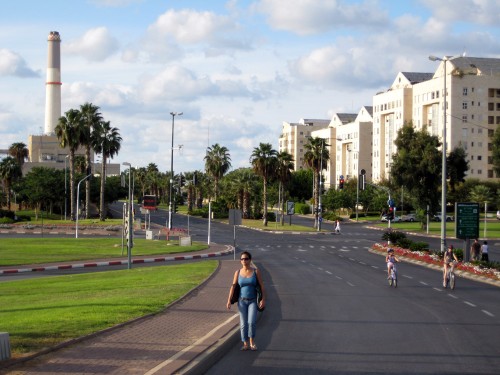
Yom Kippur, which starts tomorrow evening, is a time of reflection, atonement, and looking forward to the year ahead. It is also the only day of the year in Israel when everyone universally powers down – no cars are driven, no TV is broadcast, the radio waves are silent and no businesses are open. It is also, then, Israel’s greenest day of the year.
It is a day that reminds us of simpler ways of living that connect us more deeply to those around us rather than the machines around us. Yom Kippur is a day that families go for walks and ride bikes together, spend time reading together, and stay close to home. (Check out the photo above taken by fellow Green Prophet Jesse Fox from Yom Kippur 2008 in Tel Aviv.)
While this powering down might not be sustainable over an extended period of time, Yom Kippur can certainly remind us that being green by steering away from electronic distractions can improve our quality of life.

![Long_Lake_Site__Oct_08_[1]](https://www.greenprophet.com/wp-content/uploads/2009/10/Long_Lake_Site__Oct_08_1-500x334.jpg)
 We’ve seen the

 After a

 (“Secret Artist” and his “Velvet on the Ground” photo at the Tel Aviv Carmel Market recycled art installation. Photo credit





 Think Again is a series that provides fun ideas for how to reuse items in your home that you would normally throw out or recycle. Reusing is higher on the “green” food chain than recycling, because getting another use out of an object is always more effective than spending the energy to recycle it. Plus, trying to reuse can force us to be creative!