Home Blog Page 675

Jennifer C. Daniels Asks if Farming and City Intersect in the Middle East?

4

city-gardens-algae-middle-eastJennifer C. Daniels is a visionary and artist in Florida who poses a good question for the world today — can farms and cities intersect in this modern world? Much of what she discusses applies to life in the Middle East as well.

“The increase of population – a strong argument for urban living – has required 1.2 acres of farmland per average person (to sustain dietary requirements),” she says.

“In addition, the equivalent to 1 acre is lost per person increase in population. This consumption of land will result in the devastation of arable land by 2050.

What is the resolution? Can farm and city intersect? Can there be efficiency in this intersection?”

A Model "Garden Library" For Urban Environments in Transition

7

garden-library-tel-avivAn art collective in Tel Aviv has built a new library in a park for migrant workers, making the city more sustainable.

Green architects and urban planning experts will like this new community project in Tel Aviv. It’s got green written all over it because this new library (set up in a park where refugees collect), gets marginalized people out of the house and engaged in learning, sharing and breathing something more than stale indoor air. Okay, Tel Aviv air is not that hot… but this project could serve a model in cities everywhere.

Jews are known as ‘people of the book,’ and many Israeli Jews put special emphasis on reading and education. But when refugees and migrant workers come to Israel, they tend to fall through the cracks. Their kids attend Israeli schools and learn Hebrew, but with limited or no access to the public library these marginalized people aren’t exposed to literature and the power of the written word.

When a collective of Israeli artist types was looking to express itself in the urban environment, it dreamed up the Garden Library. Now open on Saturdays and Sundays in the south Tel Aviv neighborhood of Neve Sha’anan, where a majority of refugees and foreign workers live, the Arteam collective created two outdoor garden libraries in Levinsky Garden – one for small children, and one for adults.

Can the American-Danish MethaEnergy Compete With Better Place?

1

methaenergy fuel cellIs a Serenus methenol fuel cell package the best one going?

With the opening Monday of the 15th meeting of the Conference of Parties (COP15) in Copenhagen, some of the discussions taking place there will deal with finding “greener” solutions to ground transportation, particularly automobiles and other vehicles which are now considered as being one of the major forms or air polluters on our planet.

Car companies in particular, like Better Place and MethaEnergy,  plan to promote products at the conference.

MethaEnergy’s technology is based on a unique fuel cell design using methanol, a highly flammable compound that is produced from the combination of carbon monoxide gas with hydrogen, and is often produced from natural gas, a very available commodity in some parts of the Middle East, including Qatar – and in the near future, Israel.

The UN Tells Israel to Produce More Solar Power

3

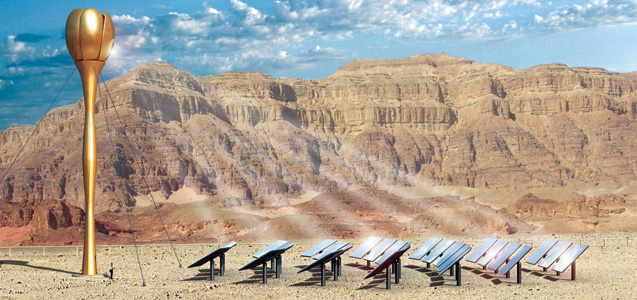
aora-solar-power-pictureAora fires up its “sun” flower in the desert. But Israel is not doing enough for itself, says UN.

Despite successful companies like Solel and BrightSource, Israel itself is not producing enough power from solar energy, says Cristophe Bouvier, the regional director for Europe at the UN Environment Program, who recently summoned an Israeli delegate to complain about Israel.

What’s new about that?

Ecomum Scratches Her Head From…Lice!

9

head-lice-ecomum-naturalThe kid’s got head lice, again? Ecomum offers her natural tips.

Oh the joys of back to school, done with all the holidays (for now), found bliss in returning to a routine and actually drinking my tea while it’s still hot. Then being a mum and thinking this is just too good to be true (because you know it is), you see your child having a veritably good scratch of her head.

On closer inspection head lice are the culprit and action is demanded. Living in the Middle East, there always seems to be rounds of head live thriving at schools. There are healthy ways to do it.

Conventional treatment for head lice is not an inviting option, the off-the-shelf shampoos and treatments from your pharmacy all contain insecticides. These shampoos are recommended to be left on the hair for several minutes: they might be killing the critters but they can also be absorbed through your child’s scalp into their bodies – a big no, no!

Denmark Set to Spotlight Electric Car Initiative at Global Climate Change Conference

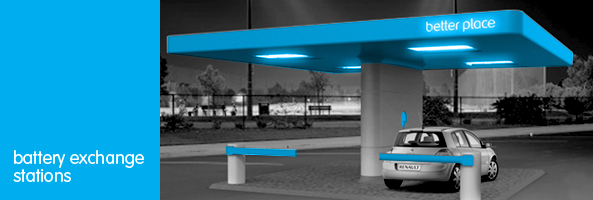
battery-exchange-israel-better-place

For 25 years Denmark has supported the adoption of electric vehicles by excluding them from the hefty 200% tax levied on new cars.

However, due to the limited capabilities of the models available, only 497 electric cars are registered in the entire country, as the New York Times pointed out in a recent article. All eyes are now on Palo Alto-based Better Place, which has an ambitious plan to re-engineer the electric car market. The company is now in Copenhagen allowing reporters to test-drive its platform.

Jordan Asks Thailand to be a Rainmaker

4

china-cloud-seedingCloud seeding in Beijing, where silver iodide is fired with canons into the clouds to induce rain. (Photo from Howstuffworks.com)

As the fourth driest country in the world, Jordan is desperate for a water solution. This week, the Jordan Times anounced that Amman asked Thailand for help in cloud seeding to open the skies. It’s one of many Jordanian projects to get more water, such as the Red-Dead Canal and the Edama conservation campaign.

Greenpeace Petition Calls on Netanyahu to Attend Copenhagen Climate Change Summit

3

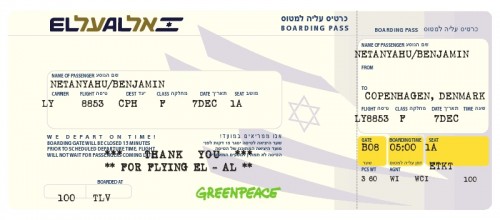
netanyahu copenhagen greenpeaceLebanon’s Prime Minister is going, but Israel’s won’t. Locals sign petition to get its PM to Copenhagen.

Sick of Israeli Prime Minister Benjamin Netanyahu’s excuses for not attending the international Cophenhagen summit on climate change, Greenpeace has been circulating a petition in order to urge him to attend.  Apparently, many Israelis agreed with Greenpeace.  Within three weeks over 6,000 Israelis signed the petition.

The petition was presented to Netanyahu on Sunday morning, with a request that the Prime Minister confirm his attendance at the conference.

Nili Grossman, the director of Greenpeace Israel’s energy campaign, said that “we call upon the Prime Minister to stand at the interest of the Israeli public, to promote Israeli solar technology and join the group of developed countries to reduce the use of coal.”

Reflecting on Copenhagen and Climate Change Effects In Morocco

3

[youtube width=”560″ height=”475″]http://www.youtube.com/watch?v=1CBejL7dgv0&feature=player_embedded[/youtube]

As the world seeks a deal on global warming in Copenhagen, the Middle East and North Africa remain one of the most vulnerable regions in the world to climate change.

The region is one of the worlds’ most water-scarce and driest, with a high dependency on climate-sensitive agriculture and a large share of its population and economic activity in flood-prone urban coastal zones. Morocco is one North African country where the effects of climate change are becoming increasingly apparent.

For a comprehensive view on what’s happening in MENA region countries, please visit Daniella’s report: The Middle Eastern View of Copenhagen

::NTV

The Middle Eastern View of Copenhagen

28

copenhagenToday opens the two-week round of climate change negotiations in Copenhagen, Denmark. From this corner of the world the conference is a meeting of giants – literally, the giant polluters like the U.S. and China, which make it seem like there is little the small countries of the Middle East can do to stop global warming. But Middle East policy makers still have serious goals for reducing dependence on fossil fuels at home. Here’s a brief of the messages coming out of Lebanon, Jordan, Israel and Egypt on the opening day of the 192-country Copenhagen conference. Statistics are from the International Energy Agency.

Greening Hajj and Madina for the Muslim World

4

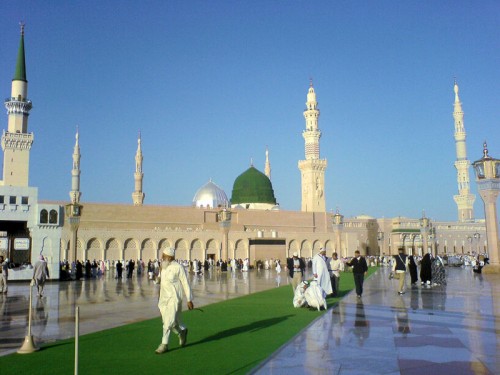
sustainable hajj

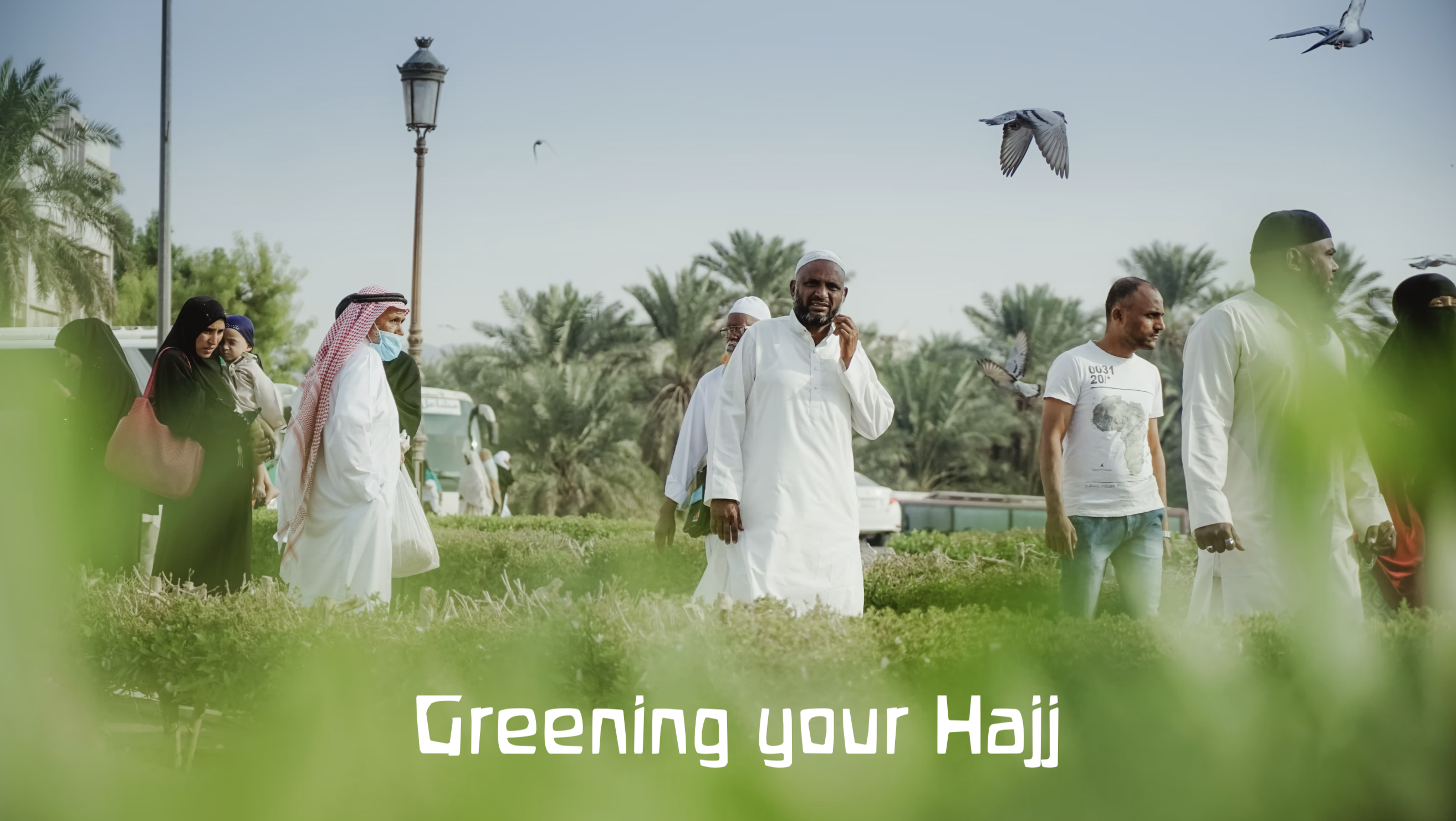
Hajj is either starting or it’s already over, and millions of participants have returned to their countries of origin or are starting to prepare to travel to Saudi Arabia.

But even before the pilgrimage began, representatives of major world religions met in London to try to use the power of faith to help reverse the effects of climate. Muslim leaders who were present at the November 3rd meeting, brought with them the idea of turning the Arabian holy city of Madinah into a green oasis; not only for future pilgrimages but as an example to the Muslim world to abide by the principles of Islam which is said to instruct Muslims to protect the earth.

The London event called Faith Commitment for a Living Planet, met at Windsor Castle, and speakers included UN Assistant Secretary General Olav Kjorven, HRH Prince Phillip, Nigel Savage, founder of the environmental Jewish charity Hazon, and others representing various religious faiths, including Islam, Sikhism and Hinduism, Taoism, and various Christian faiths.

Muslims in attendance brought with them ideas to create a number of green cities in Saudi Arabia, beginning with Madinah; according to an address by the Grand Mufti of Egypt, Sheikh Mufti Ali Gomaa,  who told the audience that a number of measures are to be taken to improve the city’s environment, including reducing exhaust emissions for public transport, and reducing the number of plastic bottles used by pilgrims by improving the quality of tap drinking water.

We’d written last years already about the fast train to Hajj to reduce congestion and pollution.

“Pollution and global warming pose an even greater threat than war; and the fight to preserve the environment could be the most positive way of bringing humanity together”, said Mufti Ali Gomaa.

As we wrote earlier this year, there was much concern that this year’s Hajj pilgrimage could result in large scale outbreaks of contagious diseases such as the H1N1 flu virus; which was fortunately not as serious as Saudi health officials feared, due to a number of precautions taken before and during the week-long event.

In regards to making cities like Madinah more environmentally friendly, solving the transport problem in and out of the two main holy cites of Mecca and Madinah may be greatly benefited by the completion of a planned high speed train network which will link both locations with the main arrival and departure cities of Riyadh and Jeddah that will help reduce to large numbers of busses and private vehicles which carry pilgrims to and from the holy sites.

The Windsor event is said to have been one the major events dealing with climate change prior to the upcoming Copenhagen Climate Change Conference, otherwise known as COP 15,  scheduled to begin today.

Even though various projects have already been created in the Kingdom in regards to improving the environment, it should be pointed out that Saudi Arabia is still one of the world’s major suppliers of petroleum oil which is said to be one of the major causes of global warming and climate change.

It is without doubt that this will be brought up during the COP 15 Climate Change Conference next week (Lebanon’s IndyACT will probably be on the scene); and both Saudi religious and governmental leaders (including the Saudi Royal Family) should be aware of this fact when instituting measures to make cities like Mecca and Medinah more green.

Photo via www.googleimages.com
::www.bt.com.
:: www.windsor2009.org

A Green Party Grows in Lebanon

2

philippe-skaffThe newly formed Green Party of Lebanon (GPL) is planning its debut with the May 2010 municipal elections. The Daily Star reports that the GPL is a secular, environmental, human-rights oriented party bent on slashing corruption and recovering burnt forests.

GPL President Philippe Skaff (left) told the Star that focusing only on the immediate political crises inside Lebanon and the region is the wrong strategy:

“This is ignorance and shortsightedness because the repercussions of our long-term lack of focus on the degradation of our [environment], resources, and our cultural heritage … cannot be undone. There’s no winner and loser in this scenario – everybody loses forever.”

Majadra Means Lentils and Rice

26

image-majadra-lentils-riceIn every Middle Eastern country, people eat Majadra, the working man’s dish of lentils and rice topped with fried onions. The basic recipe is the same in Syria, Egypt, Lebanon, and Israel, with variations evolving from the local tradition or the taste of the cook.

Some might cook the grains in stock instead of water. A variation exists that calls for cooking the lentils till they explode and then mashing them.

Then again, some cooks stick to the basic lentils, rice and onions, while others add layers of flavors with cinnamon and paprika. Medieval recipes included ground lamb.

Even the name varies from region to region: I’ve heard the dish called Majadra, Majadehra, and Mujaderah. My Moroccan relatives call it Majadra, so I do too.

To save fuel, many people cook the rice and lentils together. But the dish looks more attractive with the fluffy white rice and firm, dark-green lentils distinct from each other. And I like to taste each separate ingredient: pungent, earthy lentils and light white rice aromatic with garlic, all the flavors united under a light cover of carmelized onions.

Planned City “Rawabi” Draws on Palestinian Enterprise and Israeli Experience

4

rawabi, palestinian suburb

Green Prophet had reported on Rawabi (for Hills), the first “planned” city for Palestinians back in 2007; We are not sure if the Israeli or American urban-style mortgage model is the one to follow for a sustainable community (as Daniella asks in her article about Palestinian malls).

Now Felice Friedson editor of The Media Line, the Mideast News Source, looks at new developments in the project:

For many Palestinians, the norm is tight-quartered living with barely a garden in sight, no defined sidewalks and a poor water system. But this is about to change with an ambitious plan for a new way of living.
rawabi-palestine

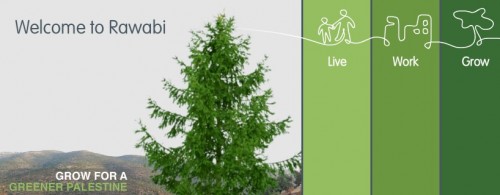
Just six miles north of Ramallah, Palestinians have begun planting thousands of evergreen tree saplings as part of a major greening project to grow a forest to hug the edges of what will be the first planned Palestinian city.

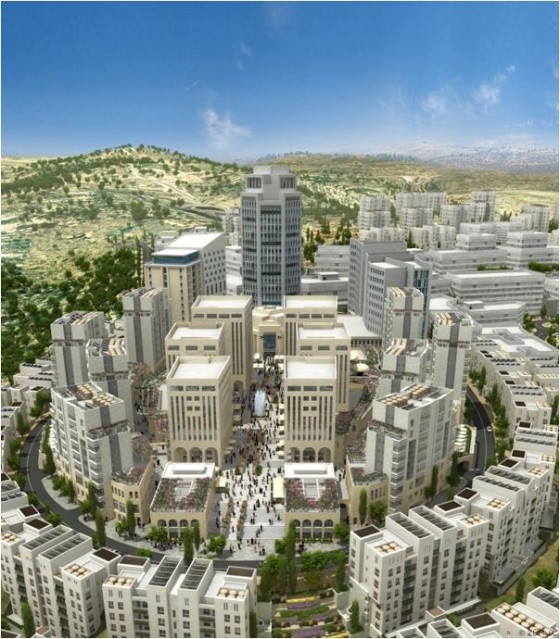
The city is already named Rawabi, Arabic for “hills”. For Palestinians it presents a new kind of urbanism, which aims to draw middle-class professionals away from smoggy towns and villages towards a better way of life.

Besides being the first planned city, it also marks the first planting of a major forest by Palestinians in the territories since Israel took control 42 years ago. It is also the first time serious arrangements are being made to provide Palestinians with American-style mortgages.

Palestinian entrepreneur Bashar Masri is the force behind Rawabi. A chemical engineer by training, he is the human bulldozer who aims to turn his vision into a reality and modernize the heart of the Palestinian territories.

Building a sustainable city from scratch

“There is a great shortage of housing in Palestine,” Masri said during a tour of the planned site. “As you can see there is hardly anything here. That required setting the city up from scratch, which made the project much bigger and much more sophisticated and complicated, but we love it.”

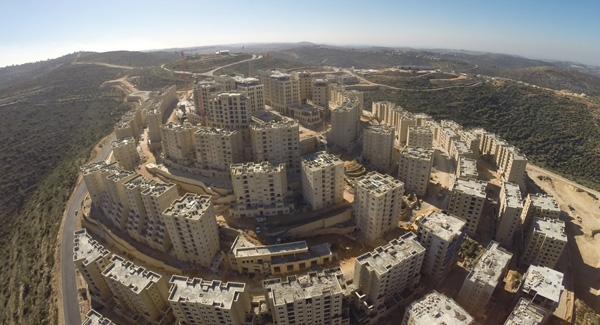
It will be home to about 40,000 residents who aspire to own an affordable apartment. Neighborhoods will be spacious and green. They’ll have sidewalks and parking garages, something unheard of in most Palestinian communities. The town center will be a hub of high tech, mainly IT businesses, to provide jobs for the educated but underemployed Palestinian work force.

“A project like this can create 8,000 to 10,000 jobs in construction alone,” Masri said. “In addition, we are working on creating permanent jobs (in Rawabi) so this won’t be a bedroom community […] dependent on political closures and checkpoints.”

According to Rawabi’s main designer, architect Shireen Nazeer, the city is breaking away from old urban traditions in many ways.

“Really we are creating history and we are also creating affordable houses for a new generation of Palestine,” Nazeer said. “We have integrated this new idea of how we can live in neighborhoods and how to share all the public and open spaces inside the neighborhoods”

Just as Israeli apartment dwellers in crowded cities like Tel Aviv opted for suburban living in areas that came under Israeli control after the 1967 war, Palestinians are looking for a more rural existence in Rawabi, where 60% of the town will be green areas.

Although not quick to admit it, several aspects of the Rawabi package, from environmental awareness to mortgages, mirror Israeli urban planning. Recently Moshe Safdie, the Israeli architect who designed Israel’s planned city, Modi’in escorted Masri’s staff around Modi’in to learn about the failure and successes of his city.

Agreeing to work on water cooperation

But Rawabi collegial cooperation with Israelis is not entirely a matter of benevolence. The city itself is to be constructed on land in Area A, which according to the Oslo Agreement is completely under the Palestinian Authority’s control and therefore needs no Israeli approval. Still, the city rests on Israeli permits to move forward, particularly regarding water allocation and access routes that pass through Area C, which is controlled by Israel.

According to Bayti Real Estate Investments Company, which oversees the Rawabi project, Israel’s Civil Administration in the West Bank has granted the permits necessary for the “Grow-for-Greener Palestine” project, which will see the planting of 25,000 trees.

The first 3,000 trees were provided by the Jewish National Fund, who also provided consultants on growing forests – an area the Palestinians have been unable to develop experience in.

“There are 170,000 dunams of (existing) forest in the West Bank and it has been illegal for Palestinians to plant until now” said Oren Blonder, Director of Agriculture, Water & Environment for the Peres Center for Peace.

Construction has yet to begin as Masri waits for Israel’s permission to move the jurisdiction of the necessary access road to the Palestinian Authority, a road that currently winds through Israeli controlled Area C.

Masri is open to Israeli co-operation on a business to business level.

“We realize Israel is one of the most advanced nations in the area, especially in technology and we will co-operate with them,” he said.

But that stops cold when it comes to Jewish settlers in the West Bank. Looking out across the valley Masri points out the Jewish community of Ataret.

“The only exception to that is Israelis who are settlers,” Masri said. “We will not deal with settlements. We will not work with settlements. Hopefully, that settlement will one day be a suburb of Rawabi and will be inhabited by Palestinians and will be welcome to Jews who want to live in a Palestinian state.”

This ambitious $800 million project is the largest to have been undertaken by Palestinians. It is funded by Qatari Diar Real Estate Investment Company and Massar International, of which Masri is chairman.

Five thousand inhabitants are expected to move in during the first phase. At that point a local mayor and council will be elected. Massar’s role ends here with the exception of the leasing of the town center.

Masri is trying to woo back Palestinians living abroad, which he estimates will account for 10% of the potential buyers of deluxe homes and boarding school places. Real estate prices will range from $140,000-$150,000.

Middle East mortgages, American-style
rawabi under construction
The home sales plan aims to transform the Palestinian clan based culture, which has traditionally seen men steadfast in their hometowns. The Middle East Investment Initiative is setting up the first American-style mortgage company to provide young Palestinians the opportunity to purchase affordable homes. With 10% down, the average monthly cost of a mortgage will be about $700 – approximately one-quarter of a typical monthly middle-class wage.

Mahmoud and Nora Ibrahim, potential Rawabi buyers, are look to the futures of their two young boys.

“Living in a crowded city like Ramallah it is not safe for us to keep our children anywhere, but we feel that Rawabi will mean a bigger home for us, having our children in safe places and public gardens,” Mahmoud Ibrahim said, but added he hoped the mortgage terms would be adequate.

“I hope we will find good offers from Rawabi that can meet our needs and capabilities as an average family in Palestinian society. I hope to see affordable prices and affordable payments,” he said.

Rawabi is home to a number of “firsts” for Palestinians — the first planned city, the first attempt at reforestation, and the first mortgage program for buyers – none of which come without risks.

“There are risks all over the project. There are political risks, commercial risks, and social risks,” Masri said.

Masri cautioned that lack of progress on the political front could deter investors, but that the project will continue regardless.

But Masri is betting that the lure of suburban life which is markedly safer and infinitely more aesthetically appealing will make Rawabi another “first” – the first of many planned cities to follow.

More on urban planning for Palestinians:
Rawabi Is First Planned City for Palestinians
Palestinian Mall in Jenin Could Bring Suburbia to the West Bank

::Rawabi website

(This story is printed with permission from The Media Line)

Expats claim UAE is diet-proof

4

exercise-UAEExercise in the United Arab Emirates: If more people did it, maybe the UAE wouldn’t be the 18th fattest country in the world. Photo by The National.

With the United Arab Emirates boasting one of the world’s highest obesity rates, expatriates working there complain that their adopted country is packing on their pounds. Abu Dhabi-based The National reports that nearly 40 percent of women and 25 percent of men in the UAE are obese.

Expats with growing waistlines told The National that their extra tire came from spending too much time in the car, as investment banker JD said:

“It is easy to put on weight here, especially since people have to drive to wherever they want to get to, and because there is a culture of big meals in the country.”