Home Blog Page 671

Book Review of Precycle! by Paul Peacock: So You Can Do Better Than Recycling

Recycling uses up the planet’s resources. You can do better than to recycle: consume less to begin with.

That’s the premise of this short book by British self-sufficiency expert Paul Peacock, who has written 14 books on topics ranging from seasonal cooking to keeping poultry for town dwellers.

Peacock dips into the question of what “quality of life” and “currency” really mean:  money to afford supermarket jam, or the satisfaction derived from cooking up jam from fresh fruit?

A dilemma for the modern Western reader, who has little time to enjoy family, hobbies or just relaxing, but who’s compelled to get up each morning knowing that the best of her time and energy will be spent at the office.

Go Wild With Edible Weeds and Seasonal Veggies in Two Winter Salad Recipes

11

winter salads beets

Winter salads are as colorful and appetizing as warm-weather ones. Miriam shares two recipes here.

The word “salad” evokes a warm afternoon, sunshine streaming in through the kitchen window and a big ceramic bowl filled with chopped tomatoes and cucumbers.

At least, it does to me. But it’s the wrong season for that picture right now. In winter, tomatoes and cucumbers are expensive. I turn to root vegetables, sprouts, and wild edibles to satisfy the yearning for salad and to round out a hot meal. These winter salads are so flavorful that they need little more than olive oil and vinegar as dressing.

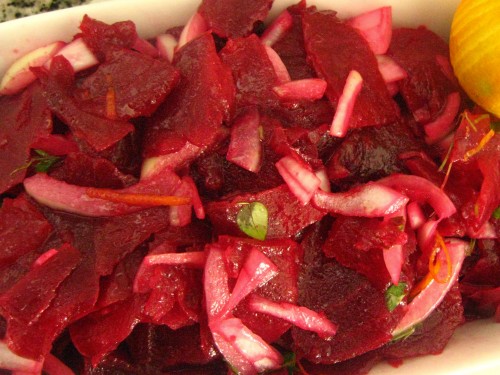
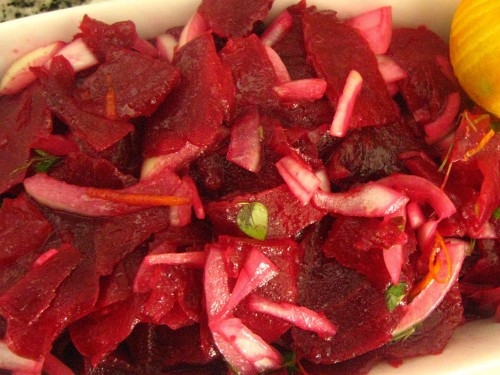
Beet Salad with Orange Peel

Thin strips of orange peel make the difference between a boring salad and one that wakes your taste buds up. A light vinaigrette dressing offsets the earthiness of the beets.

How to zest an orange: the little hand-held lemon zester is a great device, but lacking one, just grate the orange lightly, turning it often so as to avoid the bitter white pith. Wash the orange well with warm water and soap before removing the zest, unless it’s organic.

Ingredients:

1 large beet, or two smaller ones. There should be about 3 cups of cooked, sliced beets.
1 small onion, thinly sliced
The zest of a small orange
3 tablespoons of chopped parsley, or chickweed
2 tablespoons of vinegar
2 tablespoons of sugar or honey
1 tablespoon of olive oil
½ teaspoon salt, or more to taste.

1. Put the sliced onion into a small bowl. To it add the orange zest, olive oil, vinegar, honey, and salt. Cover and allow the onion to marinate while you’re cooking the beets.

2. Quarter the beet (halve two smaller ones) and cook the pieces in water to cover till tender.

3. Allow the beets to cool slightly and peel them. Grate them into a bowl or cut them by hand to the size and thickness you desire (thinner is better).

4. Mix the marinated onions, with all their juice, with the beets. Add the chopped parsley or chickweed.

5. Allow the salad to rest, covered and in the fridge, for at least an hour before serving.

edible weeds saladCarrot and Sunflower Sprout Salad

Chickweed, a tasty wild edible, plays a larger role in this salad. The hearty taste of sunflower seed sprouts complements the sweetness of the carrots.

Ingredients:

2 medium carrots, peeled if not organic, and grated

1 cup chopped sunflower seed sprouts

½ cup clean chickweed

Just mix everything up together gently. This salad needs no more than a drizzle of good olive oil, salt, and a little lemon juice as dressing.
Bon apetit!

More salads from Green Prophet:

"Bird's Eye View" Raw Sewage Sighting off Beirut's Coast

5

raw sewage beirut lebanonBeirut, the “Paris of the Middle East,” is pouring raw sewage into Mediterranean Sea.

It’s not just the Sidon garbage dump that’s polluting the Mediterranean Coast of Lebanon. Irrelevant Combinations blog shows airplane view pictures of raw sewage being dumped into the sea off the coast of Beirut. Although the weather outside may be frightful in the northern hemisphere, hearty winter types best avoid swimming off Beirut’s coast –– especially later in summer –– until the situation is remedied.

“Someone told me that most of Beirut’s sewage gets dumped in the Mediterranean,” writes Mohammad Zaher. “I didn’t believe her, but thought if this is true I will definitely be able to see it from the airplane when we take off. And I did. The scene was horrendous. My intention with this post is to warn you should you ever decide to go to Beirut in summer to enjoy the beach. You need to watch where you jump.”

You might also want to consult this swim guide to Lebanon beaches, Green Prophet posted earlier.

::Irrelevant Combinations

Lebanon’s Sidon Garbage Dump More Serious Than Just the Smell

12

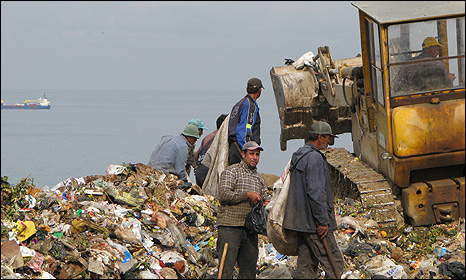
sidon garbage dump lebanon“You smell it before you can see it,” says Mohammad who talks of Lebanon’s utterly toxic dumping ground by the sea. Image: BBC.

We’ve written about Israel’s infamous garbage (sh*t) mountain and national “landmark” Hirira outside of Tel Aviv.

We learn that another large regional garbage mound, the Sidon Rubbish Dump or the Saida dump is attracting a lot of “attention” off Lebanon’s sea coast these days – and the “attention” is all bad. Or smelly, rather, reports the BBC: “It’s horrible isn’t it? You smell it before you can see it,” Mohammad, a fisherman, as his fishing boat nears it. It takes another 10 minutes for the source of the stench to appear- a giant mountain of rubbish, as tall as a four floor building. It seems to rise out of the sea outside one of Lebanon’s most ancient cities.

The Saida dump has been there since the 1982 war with Israel, when remains of buildings and other property destroyed during the war were dumped there. Later, personal garbage and other rubbish was dumped there as well, including items thrown out from local hospitals.

Mohammad, who blames the dump on his thinning fish catches, says the eyesore is also very dangerous from an ecological standpoint. Last year 150 tons from the mound ripped off and sank into the sea. Today some brave the stench and use it as a means to scrape together a living. But be careful, swimming near the Sidon dump can put you in the hospital; and avoid the medical syringes washing out with the tide.

In addition to construction wastes, medical trash, and garbage, all kinds of toxic materials get dumped there too. But according to people such as Mohammad Hamdan, a Palestinian refugee who makes a bare living by scavenging for bottles metals, and plastic materials in the dump the hospital wastes are the worst as “it full of syringes, blood, human flesh – even kidneys,” he claims.

Although solutions to this ecological nightmare are available, including moving the dump inland to another location (where it will pollute the ground water in the new location) the Sidon dump is now partially in the sea and could contaminate large sections of the Mediterranean coastline.

As noted in another article, at the environmental website Spacedaily.com Lebanon looses as much as $500 million or EU 350 million annually to pollution, much of it due to losses in the health, tourism and agricultural industries. Garbage mounds like the one outside Sidon create their share of this pollution, and contribute to global warming in Lebanon, which may cause temperatures to rise by as much as 2 degrees C in the next 40 years and by as much as 5 degrees C by the end of the century.

As to the future of the Sidon garbage mound, a lack of “political will,” due to the country’s divisive political system and weakness in the central government, there is no way of knowing if the mound will ever be moved. The plan (to move it) is in place, and money is there; the only thing that’s missing is a political decision. But until these politicians start thinking about the benefit of people and the ecosystem, this issue will not be solved,” says Mr Garabed Kazanjian, a campaigner for Greenpeace.

More on garbage and pollution:
Pollution Costs Lebanon $500 Million a Year
Arrow Ecology Sorts Through Garbage for Gold
Going on a Picnic at Tel Aviv’s Garbage Mountain

Middle East/Med Region Could Solar Power World 3 Times Over

20

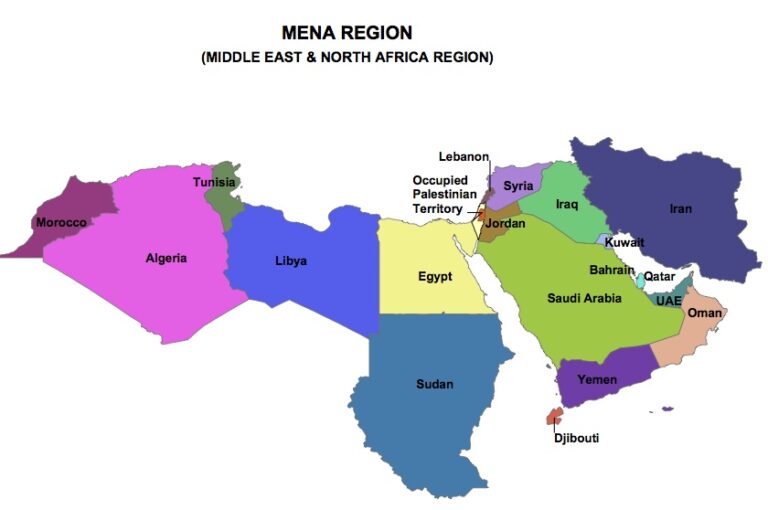
solar energy mena middle east map imageThe sunny MENA (Middle East- North Africa) region and its associated countries could solar power the world, Maurice reports. This map-maker left out Israel.

Middle Eastern and North African countries, often referred to under the umbrella term MENA countries, have the potential to create more than 3 times the world’s power needs, according to a new study reported in the Dubai-based Khaleej Times.

Countries that move fast, the study suggests, could have the competitive advantage. Who could take the lead: MENA countries, especially ones located on the Arabian Peninsula, as well as others like Jordan, Lebanon, and Israel could be. These countries are no strangers to the notion of solar energy, and Green Prophet has covered countless articles touting solar energy in the Middle East.

One of the region’s leading solar energy development countries, Israel, has even been asked by the UN to increase its development of solar energy. Despite being an instrumental innovator through companies such as BrightSource or Solel, Israel’s own use of solar power at home more closely resembles that of a developing nation.

Green Prophet's Top 10 Middle East Environment News Stories of 2009

4

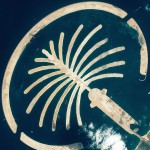
z5 air filterdubai artificial world islandsdavid de rothschildWant to read the most popular green stories of 2009 on your favourite Middle East environment blog? Read on.

Every blog and news site does it as a way to gain perspective: Whether you’ve celebrated the Muslim New Year more than a week ago, or the Jewish New Year a couple of months ago, our global calendar is about to tack on another year. 2010 is around the corner. Before we get there, Green Prophet looks back at the top 10 most popular stories concerning the Middle East in the year 2009. We’ve chosen these stories based on the number of hits they’ve registered on our site.

Read on to enjoy!

Turkey Aims to Become World’s Second Largest Olive Oil Producer

4

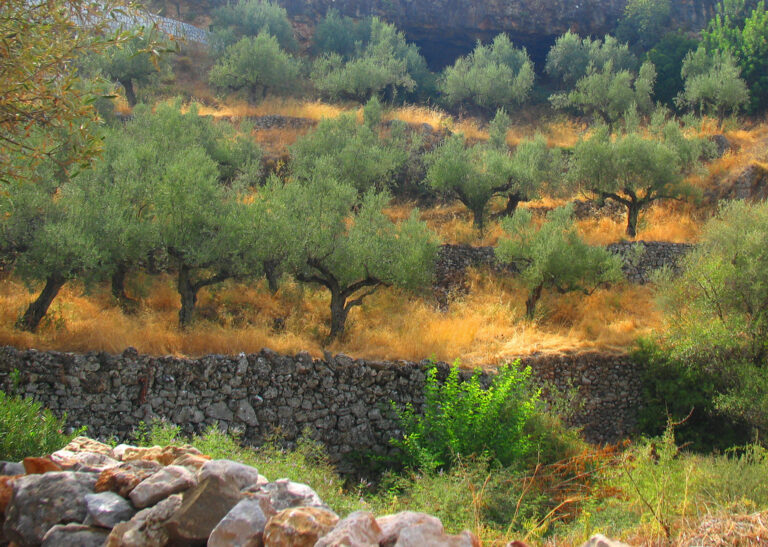
olive trees in greece photoKnown for its health benefits, olive oil is such a defining part of the food culture in the Levant and Mediterranean region. Turkey aims to be #2, reports Arieh O’Sullivan.

Government incentives and intensive planting of vast new plantations hope to set Turkey on path to topple rivals Italy, Greece and Tunisia for number two olive producing slot in the world.

Turkey is working hard on overtaking its Mediterranean neighbors to become the world’s second largest producer of olive oil.

Currently the world’s fifth largest producer, Turkey is expected to cater to the growing global market for olive oil in North America and the Far East, while leaving Spain, Italy and Greece to sell in Europe.

Cross-border Conservation Efforts Could Save Billions in the Mediterranean Region, New Study Finds

10

biodiversity pictures hebrew universityBillions could be saved if Mediterranean countries combined conservation efforts, finds new Israeli-Australian study. Picture via Hebrew University.

We already know that rodents suffer from human-made boundaries between Israel and Jordan: Coordination of conservation efforts across national boundaries could achieve significantly higher results and at less cost than conservation actions planned within individual states, researchers at the Hebrew University of Jerusalem and in Australia have found. This could be the kind of news that spurs more cooperation among countries in the MENA-Middle East region. This is the kind of news that Green Prophet loves most!

Mekorot's Water Tech Makes a Splash in California's Dry Valley

11

“Water is energy. If you give me the energy I will give you water.” Eli Ronen, chairman of Mekorot. Photo via Olivier Fitoussi /FLASH90.

It is almost mind-boggling that Israel, a country with such a dearth of fresh water resources, has become a leader in water technologies. That is, until you learn about Mekorot.

Most of Israel’s $1.4 billion in water tech exports last year wouldn’t have been possible if it weren’t for the government-owned water carrier and water tech company, chairman Eli Ronen tells ISRAEL21c. Mekorot transformed Israel into a global water leader by making water research and policy a national priority decades ago.

VIDEO: The Battle Against Coal Power Stations Heats up in Israel

8

[youtube width=”560″ height=”425″]http://www.youtube.com/watch?v=frgGERC6zbU&feature=player_embedded[/youtube]

The battle against the construction of the coal-fired power station in Ashkelon, Israel, last month, reached its peak. At 8 pm promptly, thousands of residents of southern Israel extinguished their lights for an hour, in order to protest against the construction of coal-fired station in their region. The residents were not standing alone in the battle: It’s been years that the green organizations in Israel have been fighting against the construction of the station.

Collecting dew from thin air

3


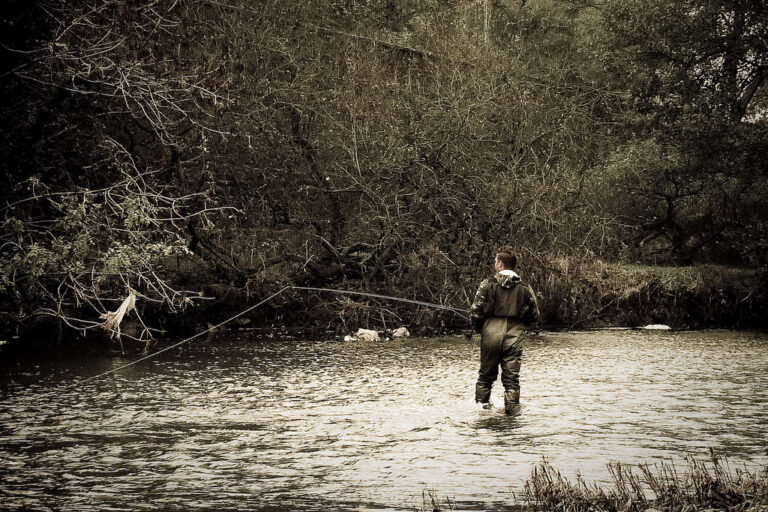
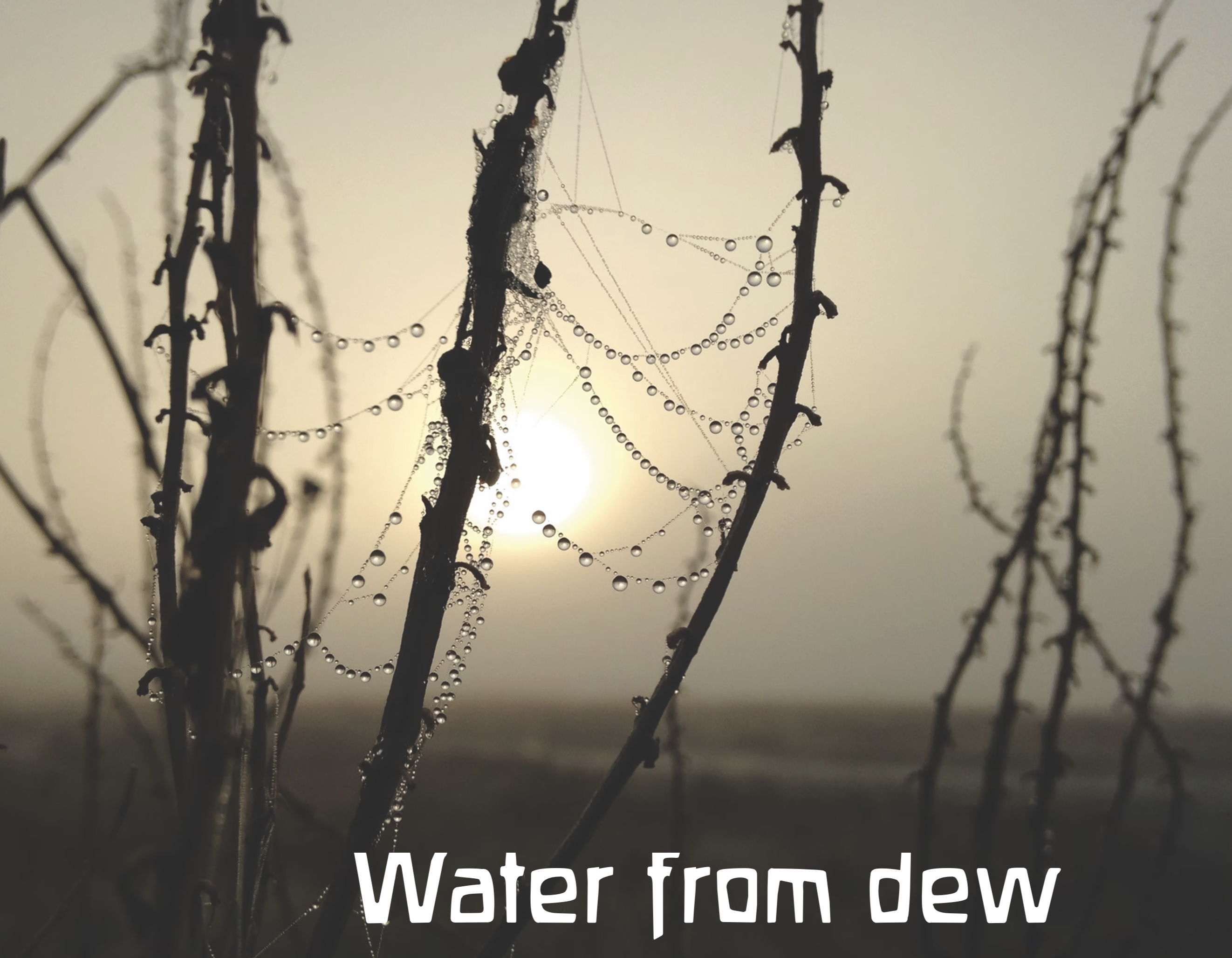
Some companies like Tal Ya are making the most of dew in irrigating farmers’ fields. Others like EWA are squeezing water out of thin air. Although this comes at an enormous cost of energy and greenhouse gas emissions. Passive solutions that happen with nature’s help are what we want. Faced with an extremely dry winter last year, Israeli researchers tried collecting water with fishing line.

tal ya tal-ya, plastic trays in  a line collecting dew
Tal-Ya collects water from dew

According to the country’s Export Institute where the news was summed up, dew “captured” by simple fishing wire can add up to 10% to irrigation water in desert areas.

Last winter’s study was done by Yehuda Research and Development Center as a means to find more solutions for years where rainfall is quite low. This approach could help farmers use every bit of water for irrigating their fields.

Dew is formed when atmospheric moisture condenses on surfaces as a result of temperature differences. In the study, fishing wire was used because its surface area, when out under vegetables, captures the most moisture than any other material, the researchers said. In the study, the wire increased soil moisture about three times, yet the practical application of using this solution still needs some looking into.

It’s likely that ancient Nabatean farmers and others in the area thousands of years ago used dew for their harvest. In Jewish prayers, which have a distinct connection to the land, there is a prayer for dew. It is also considered “kosher” to make the special Jewish challa bread using dew.

We’d like to see more applications of this dewy phenomenon. It could have a meaningful impact in the dry Middle East.

nabateans collect water from flash floods
Nabateans collected flash flood waters, in Petra

More on water technologies:
EWA Squeezes Water Out of Thin Air
Tal Ya Water Trays Make The Most of Dew
Yemen Makes Freshwater Out of Watercone

The Vertical Wind Turbines of Coriolis

14
Cowsheds can help generate energy

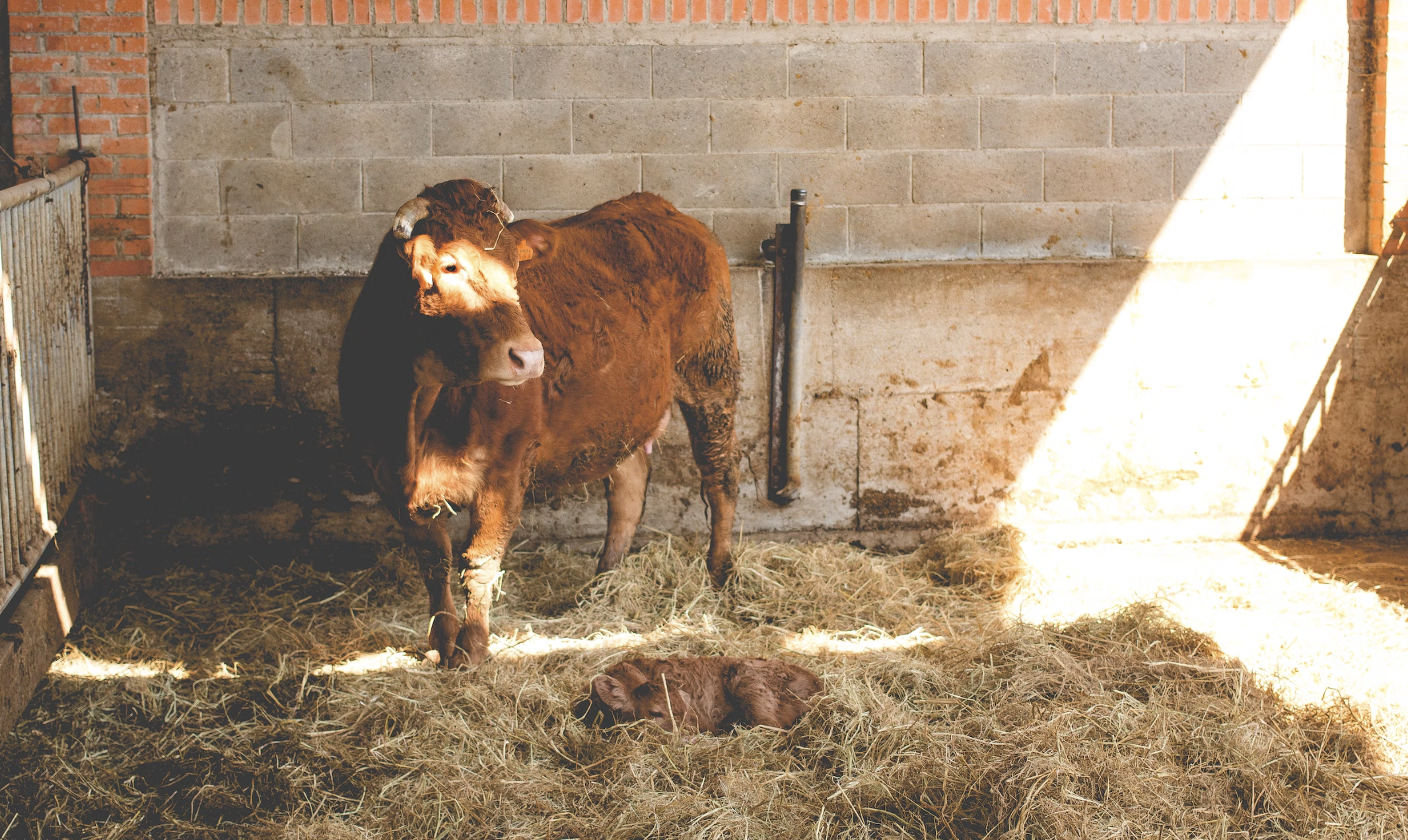
Who would ever have thought that wind blower fans in a cow barn would spark an idea to create innovated vertical wind turbines?

It turns out that a small, clean technology startup company located in a kibbutz near Ramat Hasharon, Israel may be developing a new stackable wind turbine that could compete with the giant propeller ones currently in use around the world.

Coriolis Wind (now out of business) is the brain child of its 3 co-founders Rafi Gidron, an entrepreneur  from Precede Technologies, an entrepreneurship and investment firm focused on high growth markets such as alternative energy; Orni Petruschka, also with Preclude; and Shuki Sheinman, formerly connected with NASA, Scitex and El Op.

The basis of the technology comes from a scientific phenomenon known as the Coriolis effect named after a French mathematician, Gaspard Gustave de Coriolis who wrote a treatise in 1835 about how the earth’s rotation affects the direction and force of  wind. It’s also called the “toilet flush effect.”

Using the Coriolis Effect to generate wind energy:


This theory resulted in Gidron and his partners coming up with a very different type of vertical wind turbine that can utilize the earth’s rotational effect of winds to create the most efficient energy. The “wind testing” idea they use is even more unique as it revolves around a using cow barn at Kibbutz Kfar Hayarok, outside Tel Aviv to create a wind tunnel for testing their vertical  wind turbines.

The “wind” used in their initial experiments does not come from the cows themselves but from the fans used to ventilate the areas the dairy cattle are living in (which can be quite smelly for obvious reasons).

According to Dr. Sheinman, who used his experience with NASA to help design the special rotary turbine blades, the main idea is to capitalize on what is known as the minimum wind “cut-in speed”; below which no useable power can be produced by a wind force.

By experimenting with different wind speeds in their “cow barn wind tunnel” they found that the minimum cut-in speed is 3.5 meters per second or 12 km per hour. Their idea is to capitalize on using minimum wind velocities, as influenced by the Coriolis effect to create the most energy and with a much lighter weighted smaller turbine device than the standard wind turbines we are all reading about.

By developing very light weight vertical turbine blades of only 2 meters in length, and made from a light weight plastic molding material, the turbines are then placed in a “pod” of three turbine fans, which are then linked together to form a module. The desired wind power is then created by combining enough modules which are mounted on vertical stands, which utilize less space than the large propeller turbines “that are the size of a 747 aircraft and very heavy” according to Dr. Sheinman.

Rafi Gidron is banking on the financial potential that his company’s new wind turbine concept may create. He says that with wind turbines already being a multi-million dollar business around the world, their new design should be able to capture “at least 12-15% of the total market” when put into full production. With the idea of  “building a better mouse trap” as the old innovation saying goes, this new wind energy concept may very well accomplish this feat, once they get past the “cow barn” testing stage, that is. And it looks like they have.

By 2023 when this post was edited the company’s website was down and not functioning. 

With Marda as the Model: Be the Change for a Global Green Palestine

16

marda green palestinia global green waelWael looks into the horizon (on Mount Nebo, Jordan) and sees a new “green” economy that could radically improve life for Palestinians.

The Marda Permaculture Farm is a working farm and a demonstration site for permaculture principles, techniques and strategies in the West Bank, Palestinian Authority. Based in the community of Marda, the project promotes food security, health, self-reliance and empowerment. This is accomplished through modeling of water harvesting and conservation, energy conservation and home-scale garden production with readily available and locally-appropriate materials.

Wael Al Saad, who is promoting and developing the venture, blogs today about his hopes and dreams for a new kind of economy and social structure for the Palestinian Authority, and the world. He was one of the 19 bloggers and activists who met at the international Blogging for the Environment meeting held recently in Madaba.

As a Palestinian, we are challenged to change a system in crisis which at present cannot solve our issues. So I began to think deeply and intensively about how to be the change for Palestinians, and which realistic model could work for our entire complex environment, including our fragmented geographical and political system.

The question of Palestine covers a large amount of issues in a corrupted environment: socially, ecologically, and for sure politically. Eighteenth century politics of partition and the power of elites over others in a developing world allows one to discover new lessons.

From the Eyes of an Open-minded “Green” Tourist: Transportation in Jordan

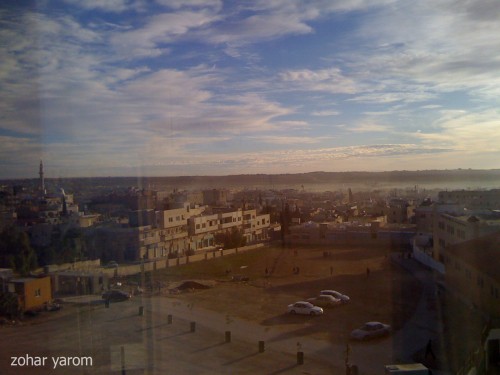
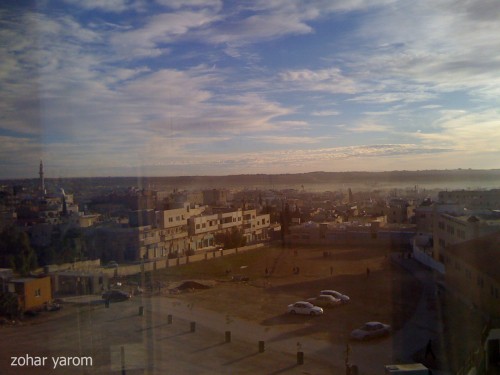
transportation in jordan, madabaLooking out the hotel window to the streets of Madaba, Jordan.

As the average tourist I received my first impression of Jordan with glimpses through the car window. I passed the border from Israel to Jordan through the northern border at Beit Shean.

The experience was very different from what I am used to: the experience was earthy, with an aroma of a simpler time. Narrow roads with no separation from the life alongside it; a variety of pedestrians, human and animal, market stands on the sides of the road with piles of seasonal vegetables and fruits. Imagine: I’m 32 year-old and today I got to meet Jordan, a neighboring country of mine, for the first time!

Before judging the sights and throwing a western point of view on what I saw, I decided to observe, smell, listen and pay attention to Jordan.

Turkey Plays the Environment Card to Gain EU Favour and Status

6

Turkey opens environment chapter in the hopes that EU will accept them as full member in the European Union.

Turkey desperately wants to join the European Union. And it’s been playing different hands of cards to make it happen. Some say that the recent cancelling of the Israel Air Force in the NATO air drill with Turkey was a way for Turkey to assert itself in the East, in fading hopes that it would join the EU any time soon. Turkey wanted to show the EU and the West that if they don’t play nice with Turkey, Turkey will be friends with less than rational characters like those leading Syria and Iran’s regimes. (Don’t get me wrong – I like Syrians and Iranians. It’s their dictators that scare me.)

As we see from the media frenzy at Copenhagen’s COP15 climate event with 5,000 plus journalists and bloggers at the event (some with questionable press creds), the environment has become a pretty hot and trendy topic. Green Prophet has known this for years already, otherwise we wouldn’t be Green Prophets, would we? Now, according to the EU Observer Turkey plans on paying a lot more attention to its environmental issues in a bid to get acceptance in the European Union (hey EU they’ve already banned 74 pesticides!). This past Monday it opened an environment chapter in order to join the EU bloc.