Home Blog Page 670

Water Security in the Middle East? From the Desk of Israel's Water Commission

16

israel water commission logo hebrewIf you’ve been following Green Prophet, you’ll know we’re running a water series on Israeli water experts.

And we love the idea of hydro-diplomacy.

Hoping for some sustainable changes in the water sector for Israel and its neighbours, we’ve partnered with the Strategic Foresight Group to interview those people and organizations at the heart of Israel’s water industry.

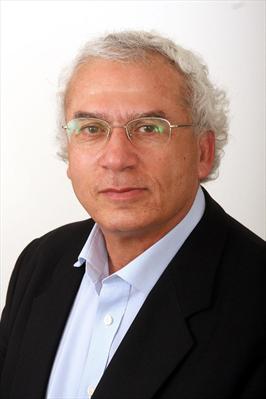
Last week: Shimon Tal, the past Water Commissioner of Israel. Today from the office of Dr. Uri Shani, Israel’s current water commissioner. Responsible for the overall management of the nation’s water resources, this interview with the Israeli Water Commission office (Ministry of Infrastructure), includes information that policy makers, journalists and those following the Middle East water story, will love.

Read about how Israel formulates its water policy, the planning and development of the water economy, how it prevents the pollution of water sources, how Israel regulates streams and flood prevention; uses its overflow water, develops new water sources, uses waste water, and promotes the efficient use of water. See our questions below and read on for the answers.
Green Drinks for eco geeks in Israel

8

The international green networking phenomenon, Green Drinks, re-opens its Tel Aviv chapter.

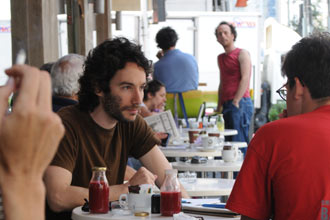
After a great start and a long “holiday” Green Drinks Tel Aviv has kick-started again. This time organizers hope to make it a regular monthly event. Rather than at a bar, this time Green Drinks will be at LovEat Cafe in south Tel Aviv.

It’s optimal for those looking for a chance to network in the environmental field in activism and in industry (looking for jobs and causes); and for those looking to meet similarly green-minded friends. You might just want to stop by and enjoy a delicious cup of organic coffee.

Green Drinks TLV will meet every monday of the month; this year January 4, 2010. For now the venue will be LoveEat until further notice.

When: 7:30 pm at LovrEat on the corner of Barzilai and Mikve Yisrael, Tel Aviv. No need to RSVP, just show up and bring your friends!

To find out more about Green Drinks international (now active in 641 cities worldwide), visit www.greendrinks.org. It’s an international happening and you can be a part of it!

More on Green Drinks from international website:
Every month people who work in the environmental field meet up at informal sessions known as Green Drinks.

We have a lively mixture of people from NGOs, academia, government and business. Come along and you’ll be made welcome. Just say, “are you green?” and we will look after you and introduce you to whoever is there. It’s a great way of catching up with people you know and also for making new contacts. Everyone invites someone else along, so there’s always a different crowd, making Green Drinks an organic, self-organising network.

These events are very simple and unstructured, but many people have found employment, made friends, developed new ideas, done deals and had moments of serendipity. It’s a force for the good and we’d like to help it spread to other cities. Contact your local node to get the latest info about coming along.

12 Million Egyptians to be Affected by Climate Change

11

A study conducted by the Center for Remote Sensing at Boston University, commissioned by the Arab Forum for Environment and Development, warned that Egypt would be one of the Arab countries most affected by climate change. The study analyzed a variety of scenarios of climate change impact, particularly on coastal areas, based on satellite images of the region, and showed that Egypt would be the most affected Arab country due to a rise in sea levels.

The study stated that, “at least 12 million Egyptians will be forces to migrate from their area of residence in parts of Nile Delta and that with a rise in sea level by 5 meters, almost one third of the total affected Arab population would be Egyptian.

Turkey Blowing and Going on Wind Energy

23

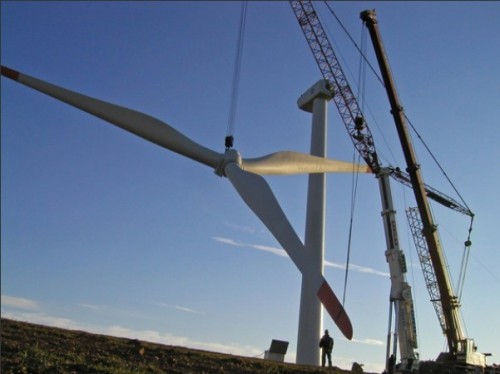
wind energy turkey imageWind turbines are big, but built to catch the wind in Turkey
Turkey’s got some renewable energy projects brewing see our recent article on renewable energy prospects for Turkey. Competing with oil from the Middle East, it now appears that the Turkish government has decided to favor more projects dealing with wind and other renewable energy programs. In an abstract for an article in the Turkish Digest called “On Wind Energy in Turkey,” the article had some positive points in favor of wind.

“As wind energy is an alternative clean energy source compared to the fossil fuels that pollute the atmosphere, systems that convert wind energy to electricity have developed rapidly.”

"Petrified Bike" Metaphor for a Shrinking Dead Sea?

7

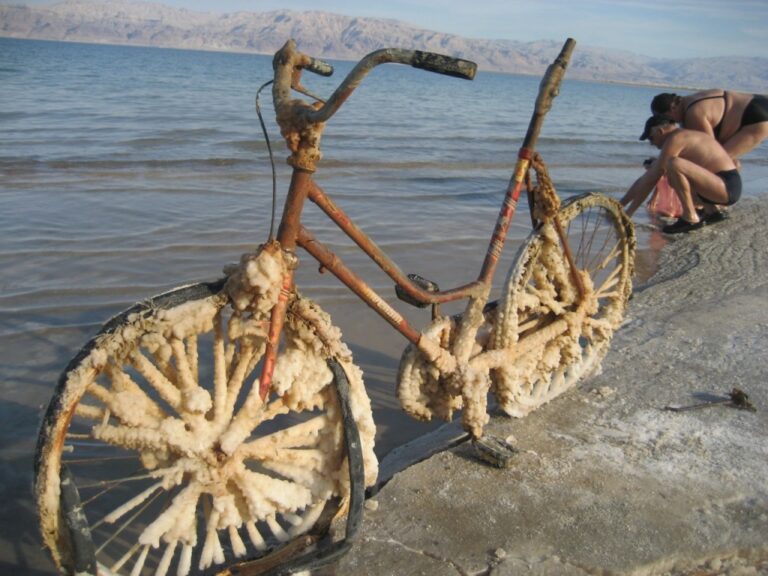
dead sea bike salt photoEverything’s dead at the Dead Sea; even bikes that get left behind.
It’s pretty shocking when you are out there to see for yourself how this world’s natural wonder is shrinking year by year. It makes you want to scream. Here are some pictures from my visit to the Dead Sea about 6 weeks ago. From the Dead Sea Spa we took a few minutes bus ride to the Dead Sea edge. The spa, about half a kilometre away used to be on the Dead Sea’s shore. The spa didn’t move, so what does that say?

Cigarette Cones, So You Don't Butt Out on the Beach

16

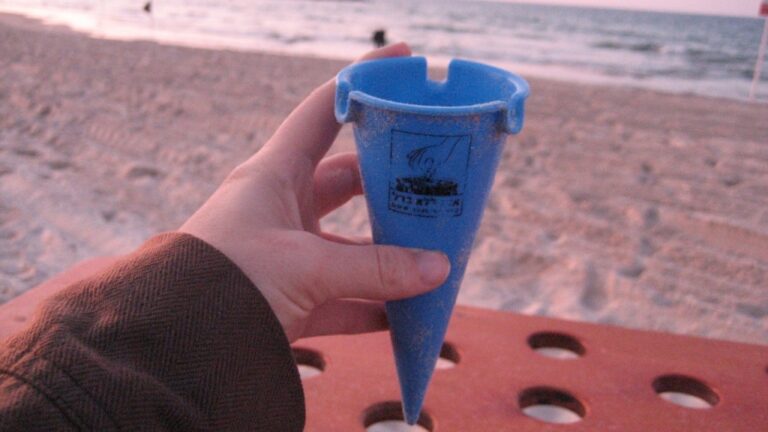
beach butt cone tel avivNew efforts to get smokers to butt out in special ashtrays at the beach in Tel Aviv look all for naught.

The City of Tel Aviv has made a stellar offer to help its resident smoking addicts (about 3/4 of the city) to stop butting out at the beach. A recent walk along the North Tel Aviv beach introduced me to cigarette cones, stacked neatly in the tray for smokers to butt out in. Nice idea, but hard habits die hard. Israelis love them smokes and cafe ha fouchs at the beach. Case in point: most of the cones were missing from the tray (the beach was empty). Either they were turned into sand castles, or taken home.

The Weeds We Eat – Karin Forages in her Backyard

18
edible weeds photo, Karin Kloosterman wearing a hat and glasses eating a dandelion
Karin Kloosterman eats a dandelion leaf (weed) she foraged for in her backyard in Jaffa, Israel

Karin tries urban foraging and eating weeds from her garden. What are the chances she will live after this experiment?

Taking cues from the Arab women foraging for mallows in the kindergarten in front of my house, and Miriam’s latest winter salad recipe, I decided to do a little urban foraging myself.

(That’s me above sampling what tastes like dandelion leaves, but it could be roquet.)

This time of the year is perfect for leafy greens – ones we can find growing just about anywhere in the Levant region getting rain. Find them in a neglected city park, out in a forest, or in your background, here I present some of the greens I found in my backyard. Next week I am going to tell you (with the help of an expert), which ones you are allowed to eat and how.

Meanwhile, look through the pictures and let us know in the comments section which ones you’d eat (if you dare), and how they’d taste yummy.

A. I don’t think these are fit for human consumption, but my pooch Tasha loves eating winter grass. She is munching on some here in this picture.

B. Would you eat generic looking weeds?
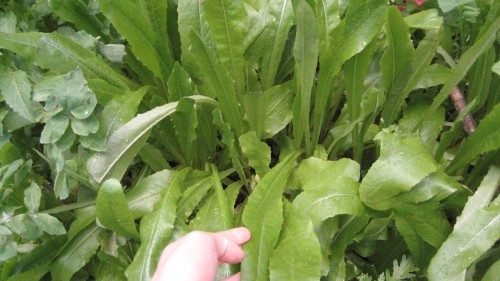
edible weeds levant

C. These ones have potential. Heard they taste good stuffed.
edible leaves

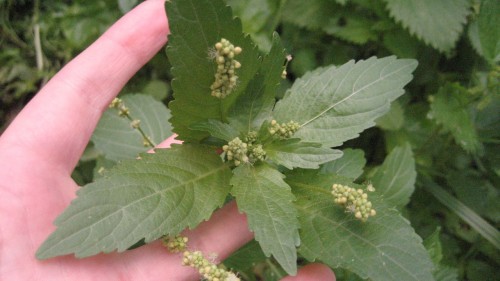
D. These ones look kind of poisonous. Do you think they’d work in salad?

E. These are the weeds in my mouth above. I am growing crops of these things without even trying. I think they are dandelion.

F. These weeds look poisonous and not something I feel like biting into. But maybe they have some medicinal purpose.

G. Another weed better left in the garden? Or can we forage it?

H. These ones look like carrot tops. But they don’t smell like carrots.

So what weeds would you eat? Leave your ideas in the comments section, please!

UAE's SAG Group: Middle East – Take the Environment Seriously or Suffer

5

middle east environment issues photo dry middle eastCould this “dry” setting be the entire Middle East one day if we don’t take environment issues seriously?

Business concerns in the Middle East, especially real estate developers in countries like the UAE,  Kuwait, Qatar, and Saudi Arabia are not being concerned enough about the environment, according to a study just released by the UAE branch of the Sustainable Advisory Group (SAG) as reported in the UAE’s The National.

Companies, especially those located in the Middle East, are risking their economic prosperity by not taking enough care for the environment.

According to the article, due to the impact of water scarcity and climate change on the region:

“There is a significant amount of work ahead for public policy leaders and scientists to encourage businesses to appreciate the full scope of the impacts of climate change and water scarcity on economic prosperity and business opportunity.”

Shimon Tal, Israel’s Former Water Commissioner

6

shimon tal water commissioner IsraelAs we introduced yesterday, Green Prophet and the Strategic Foresight Group have been interviewing key water leaders from Israel’s water industry to understand what contributions the country can make for sustainable solutions in the region. Today we interview Shimon Tal, the former Water Commissioner in Israel and the president of the Israeli Water Association.

As the CEO of Tal Content – Consulting & Enterprise Ltd, Tal (whose surname means “dew” in Hebrew) has over 30 years of experience in professional and executive duties in Israel’s water resources management and water supply sectors. In the following interview, Tal gives us a brief and comprehensive summary of Israel’s water situation, the regional water situation and the potential for regional water cooperation. We’d sent Tal five questions, but he answered us in a letter.

Here’s his response: The five questions you sent me touch the real problems of water in our region. I will provide you with some facts and personal conclusions that might answer your questions: Water shortage is a common property of all the parties in our region (Jordan, PA and Israel). We also share mutual natural water resources. Therefore it is impossible to manage the water sector in one country separately from the regional water problems. The region is actually on the edge of the desert and extreme changes in the climate are common. A series of drought years should be taken into consideration in planning water supply and the use of natural water resources (“dryness routine”). The affect of climate change on water in our region is neglected in comparison to the affect of population growth.

On All the Water in Israel: Interviews With Government, Analysts and Researchers

15

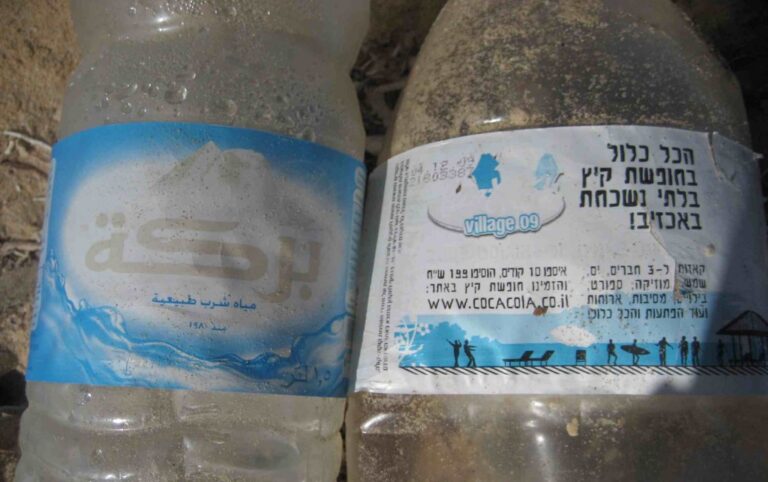
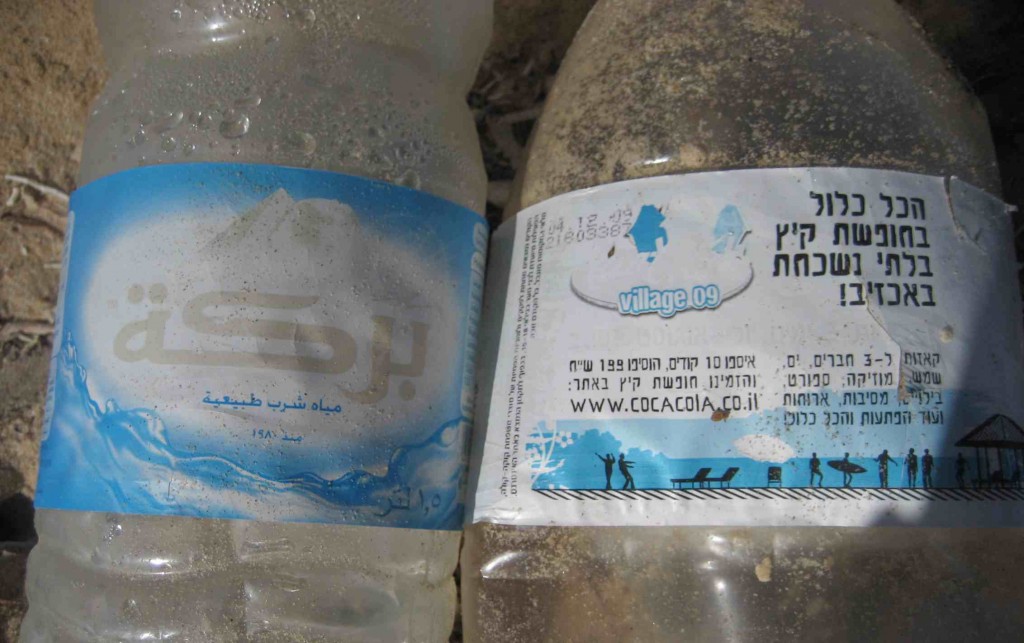
water bottles in hebrew and Arabix writing on Sinai beach imagePlastic bottles (in Hebrew and Arabic) wash up on the shore of the Red Sea in Sinai, Egypt. In this region water and pollution knows no boundaries. How can Israel be part of the change?

Is Israel a water hog, unjustly siphoning aquifers from its neighbours? Does it take more than its share? Or does it have political justification for managing its resources? Can water resources be developed so that all in the region have water security, with Israel as an instigator of change, perhaps?

With a leading spot in the water industry – from desalination technology to water saving technology – Israel has been getting a bad rap from the media and NGO reports, despite the fact that the country is attempting to cooperate on water issues despite the difficulties.

Dropping deep into the well of water experts in Israel, Green Prophet was asked by the Strategic Foresight Group (SFG) based in Mumbai to interview the country’s top experts in water. The aim is to find ways Israel could help promote water security in the region. And to take this information to high level policy makers. We’ve interviewed the country’s Water Commissioner’s office, the heads of top NGOs like Friends of the Earth Middle East, and researchers who know Israel’s water story from working in the field.

Over the next week or so, Green Prophet will be highlighting these different experts, who were posed with five questions directed to long term sustainable solutions. We hope this series will be an invaluable tool for local and international journalists, and international policy makers involved in the Middle East region. Green Prophet will be happy to give contacts to these people to those who ask.

We also hope it will be interesting for Green Prophet readers who know that ‘water’ is one of, if not the most important issue, in the Middle East-MENA region. To know more about the project, we’ve collected more from the Strategic Foresight group, below. This is the same group that penned the report on the Cost of Conflict on the Environment in the Middle East.

Oil Find Outside Tel Aviv: A Blessing or Ecological Nightmare?

2

oil found in israel

Does Rosh Ha’Ayin, Israel, have its future in oil?

Finding oil in Israel near the Dead Sea is one thing, but finding significant amounts of the black, un-environmentally friendly stuff right outside of the already polluted city of Tel Aviv may wind up being something entirely else altogether.

This scenario may very well be happening, following an announcement to the Tel Aviv Stock Exchange (TASE)  that the Givot Olam Oil Company has located what appears to be “significant quantities of oil” in its Meged 5 well, located near the community of Rosh Ha’Ayin, a few kilometers north-east of Tel Aviv.

Michigan Batteries and 7 Israel-related Headlines, Week of December 20, 2009

3

batteries israel

During the week of December 20, 2009, the IDF revealed that it is adopting solar energy field rechargers. The Copenhagen summit was analyzed and Israel and Michigan are teaming up to revive Michigan’s economy through the battery business. For these stories and the rest of this week’s 7 headlines, see below.

Renewable Energy
Michigan Looks to Israel to Rev Up Automotive Battery Business

Solar
SunPower and SolarPower Ltd. Dedicate 50-Kilowatt Solar Power System for HP in Israel
The IDF Adopts Solar Energy Field Rechargers in Army Practices

COP15
Failures of the UN Climate Conference will be solved by science

Environment
Cleaner fuels don’t necessarily cause less air pollution
Where will the water go?
Drought Levy to be put on hold for winter

"Hope Tree" of Bottles for the Sea of Galilee

8

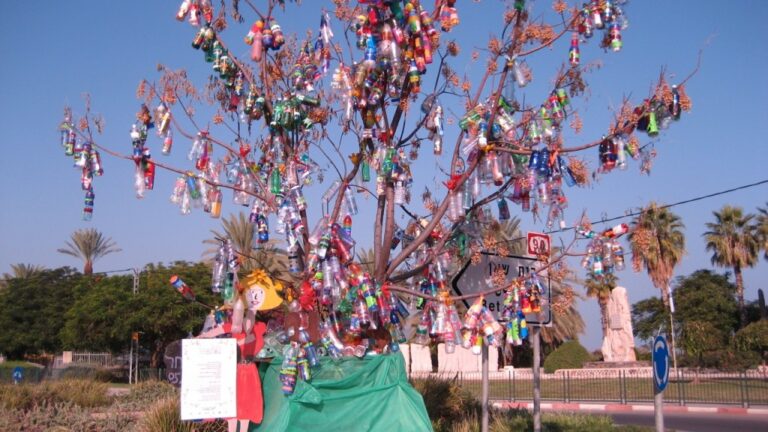
sea of galilee israel photo treeA “Hope Tree” planted outside Sea of Galilee incites eco-awareness in Israeli kids and public.

Israel’s only freshwater body of water, the Sea of Galilee (known locally as the Kinneret) is about the only thing every Israeli can agree needs to be repaired. Every year the water line sinks lower and lower, as more water is pulled from the lake for showers, agriculture and a growing population. But “Hope Tree” aspires to create a little more awareness to the problem.

VIDEO: Meteor's Netting Keeps the Bugs from Bugging Your Crops

4

[youtube width=”560″ height=”425″]http://www.youtube.com/watch?v=qAN5S0I7a58&feature=player_embedded[/youtube]Bug off, eh? When a virus carried by the whitefly almost destroyed Israel’s tomato crop, Meteor developed an innovative new anti-insect net to keep the bugs out.

Meet Avi Klayman. He’s the man who saved Israel’s tomato crop and in the process stumbled onto a multi-million dollar industry that is now creating a green revolution in agriculture. Thanks to his invention – an innovative anti-insect netting – far fewer bugs are making their way into the vegetables we eat, enabling us to enjoy fresh, wholesome produce that is nearly pesticide-free.

Vegetable greenhouse netting may not be as “sexy” a high-tech innovation as, say, the invention of instant messaging (also credited to Israel, via ICQ), but the nets created by Klayman’s company, Meteor Agricultural Nets – which are patented in Israel and around the world – are just as revolutionary.

It all began in 1988 when much of Israel’s tomato crop was lost to yellow curl virus, a destructive disease carried by whitefly that attacks the DNA of plants, causing them to shrivel up and die.

VIDEO: James Interviews Hussein Tarabeih on Arabic Building Project in Israel

3

[youtube width=”560″ height=”425″]http://www.youtube.com/watch?v=nB2yceJvSI0[/youtube]

We’ve covered the work of the Israeli Arab eco-pioneer Hussein Tarabeih before for his work on solar power in Palestinian schools. Green Prophet’s own James has created a short film exploring the new TAEQ (Towns Association for Environmental Quality) Environment Centre, in the town of Sakhnin, Northern Israel.

It includes an interview with the NGO’s director, Hussein Tarabeih, and footage of inside and outside this remarkable building built on ancient Arabic building techniques which also happen to be eco-compatable.

::TAEQ website