Home Blog Page 663

Kawar and Italian Solar Energy Plan "Shams Ma'an" Solar Plant for South Jordan

13

jordan solar energy projectA solar project established in Jordan. New financing and a partnership with Italian company aims to solar up southern Jordan. Image via Arabcrunch.

With no massive oil reserves like neighbouring Saudi, Jordan is one of the poorer countries in the Middle East, relying on USAID and other foreign support to keep its economy intact. But Jordan is on its way to solving some of its energy problems, according to a press release by the Kawar Group of Companies, a Middle East consortium involved in clean energy projects.

According to the release, the Shams Ma’an solar energy project has secured a 2 sq kilometer tract of land in southern Jordan to build a photovoltaic (PV) solar energy plant, that will cost around $400 million and at the outset will produce about 100 megawatts of electric power that can be expanded to 200 megawatts. The news of this project was originally announced last October in a press release by Kawar in Milan Italy where the Italian solar energy company, Solar Ventures SRl ,  agreed to be a partner in the Jordanian solar energy venture.

Animals Cope With Climate Change At the Dinner Table

10

fat squirrel global warming eating photo

Some animals, it seems, are going on a diet, while others have expanding waistlines.

It’s likely these are reactions to rapidly rising temperatures due to global climate change, speculates Prof. Yoram Yom-Tov of Tel Aviv University, who has been measuring the evolving body sizes of birds and animals in areas where climate change is most extreme.

Changes are happening primarily in higher latitudes, where Prof. Yom-Tov has identified a pattern of birds getting smaller and mammals getting bigger, according to most of the species he’s examined. The change, he hypothesizes, is likely a strategy for survival. Prof. Yom-Tov, who has spent decades measuring and monitoring the body sizes of mammals and small birds, says that these changes have been happening more rapidly.

MS Tech Keeps Food Safe from Farm to Fork

3

How can you be sure that bacteria are not festering in your food? Dangerous pathogens like Salmonella, E. coli, Listeria and chemical contaminants are responsible for more than 76 million food-borne illnesses a year in the US alone, according to the Center for Disease Control. Bacteria, viruses and toxins thrive on food that is undercooked, inadequately refrigerated or prepared in places where hygiene standards are lax.

One Israeli company, however, hopes to make your food safe from the farm to your fork. Herzliya-based MS Tech has developed advanced smart sensor technology that can detect the presence of contaminants and related chemicals in just three seconds, in the field.

Bin Laden Blames the US For Climate Climate Change: Arab Countries Getting Drier

6

climate change arab countries The Arab world is getting dryer; Bin Laden blames the US and western globalization for climate change.

We’ve covered this topic before: the effects of climate change on a region of the world that in even normal weather periods is not exactly flowing with fresh water. In one article we noted acute water crises problems in Middle East countries like Jordan. We’ve explored how Yemen’s capital, Sanaa, may well become the world’s first waterless capital, much of which is being caused by mismanagement, wars, and climate change

An article posted on the Arab Environment Watch blog notes sadly that in the nearly 45 days since the end of the COP 15 climate change conference ended in Copenhagen, little appears to be being done in the Arab world to deal with the environmental problems being caused by global warming.

The article states that the watered down “Copenhagen Accord” agreement that was drafted by some of the major participants, does not really commit any of them to make efforts to keeping world temperatures from rising more than 2 degrees C. Many of the media representatives reporting on the conference even said that as are as they are concerned, the conference was a failure.

But perhaps the most earthshaking message that this article reprinted on the blog wanted to relate was that of all the entities in the Arab world, including both Arab governments and NGO’s, one of the few groups to voice their concern for the environmental of the Middle East appeared to be coming from none other than the world’s most arch Arab villain: the spiritual leader of the terrorist organization Al Qaeda’s Osama bin Laden.

Reporting An Obvious Absence from the World Future Energy Summit

7

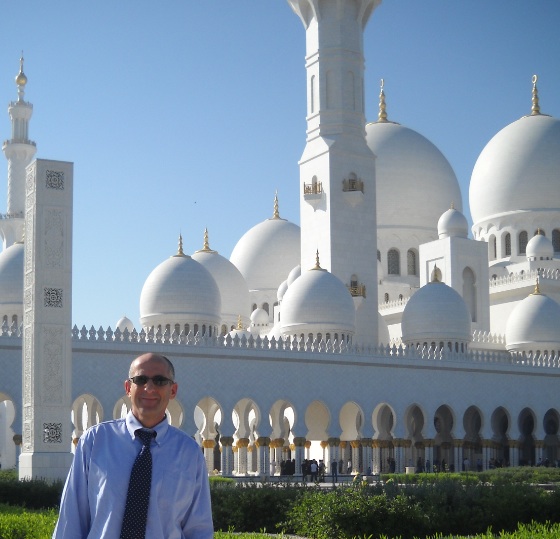
abu dhabi mosqueIra reports on the World Future Energy Summit which he attended this January. The event hosted by Abu Dhabi is arguably the most important environment conference to fuel green change among Arab nations.

Israel was not among the 36 countries to officially participate in the World Future Energy Summit in Abu Dhabi in January. Some 2,000 delegates gathered from around the world to discuss strategies and to exhibit technologies for a sustainable global economy and environment.

In light of the numerous Israeli ventures in clean-tech technologies, Israel was conspicuous in its absence when a roundtable of energy ministers discussed regional cooperation at the conference.

However, Israel’s minister of national infrastructure, Uzi Landau, was in Abu Dhabi to participate in a pre-summit meeting of the International Renewable Energy Agency (IRENA). Israel is one of some 140 member states of the organization, which was established last year to advocate for renewable energy and to facilitate international collaboration in this field. IRENA is headquartered in Abu Dhabi and is slated to move to the emirate’s carbon-neutral Masdar City next year.

KAPARA's Upcycled Gift Tags and a Green Prophet Giveaway!

16

You’ve selected your gift (which is hopefully local, handmade, and made out of sustainable materials), you’ve written a card (hopefully on recycled paper), but the presentation still needs that extra touch?  KAPARA (also known as Viktoria Slutsky), runs a cute little shop on Etsy that specializes in upcycled paper gift tags.

When you are making upcycled paper gift tags, the possibilities are almost endless.  Unlike gift bows (which you can read a tutorial on how to make here), gift tags are, by nature, tiny little things, and do not require large areas of paper.  Gift tags can be made from cereal boxes, old envelopes, you name it (and you will later on… keep reading).

But Viktoria’s paper sources have a great story.  When Viktoria first became an Etsy seller a few years ago, she decided that she wanted to include cute, colorful gift tags with her sold items.  She decided to make them herself to reduce packaging costs, and conveniently had a neighbor at the time who worked in a printing house.  She asked her neighbor if they ever threw away cardboard or other papers, and sure enough the next day he brought home some leftovers.

IsraWinexpo In Tel Aviv Showcases Israeli Wines

6

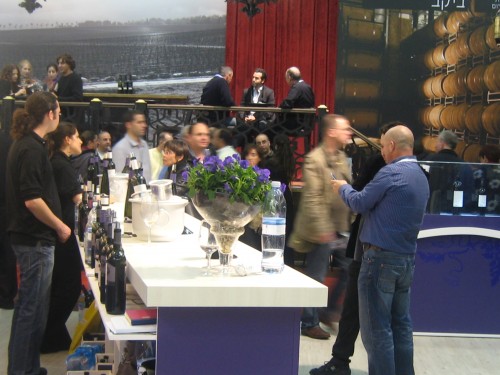
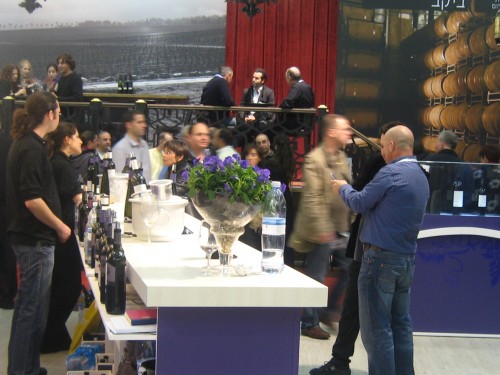
IsraWinexpo 2010 opened last night to journalists, critics, and wine industry representatives. The exhibition opens to the public today and tomorrow, Feb. 10-11, from 16:00 -22:00 hours. It takes place at the Tel Aviv Exhibition Center.

Green Prophet attended. Glass in hand, we circulated between the attractive, well-organized stands, which were staffed by friendly, knowledgeable servers. At the stands of boutique wineries, the owners and winemakers were available for chat and to answer questions. As always at wine tastings, there was a cheerful hubbub, people clinking their glasses together,  and the perceptible aroma of fine wine hovering in the air. While we happily tasted wines from many different sources, we were hot on the trail of organic wines.

Arava Power to "Electrify" the Negev Desert After Signing 15 Solar Energy Deals

12

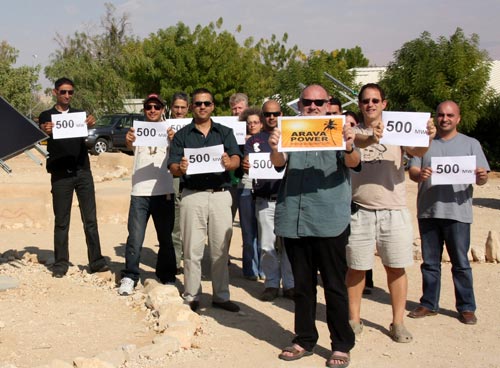
arava powerArava Power Team: “We Are The Power!”

Israel’s Arava Power Company (APC) one of the country’s top solar energy producers, is now working towards supplying solar powered electricity to 15 Negev Desert kibbutzes and agricultural villages following the signing of an agreement with these communities, as reported in the JPost.

Arava was in the news a few months back when the German industry giant, Siemens, was reported as being interested in Arava Power. A short time later an announcement followed that Siemens had indeed purchased a 40% stake through Siemens Project Ventures for $15 million, which gave Avara about $37.5 million valuation.

This new venture with the 15 Negev region settlements will provide the communities with 100 MW of solar produced electricity — about a third of the 300 MW Public Utility Authority’s electricity quota that is being allocated for solar energy for what is known as “medium sized solar energy plants.”

Arava made its announcement to coincide with the beginning of the 2010 Eilat-Eilot Renewable Energy Conference, scheduled to open in Israel’s southernmost city next week.  

GlobalTap Offers Water Refilling Stations in North America, Bringing Better Water a la "Better Place"

3

As with any good idea, it doesn’t mean a thing if you don’t find a convenient, easy, and preferably aesthetic way to bring it to the masses.  Shai Agassi, founder of the electric car company Better Place, understood this when he hired industrial designer Gadi Amit to design the company’s electric car charging ports.

And apparently this is a mode of operation that makes sense to other entrepreneurs worldwide.  Daniel Whitman, a Chicago architect and social entrepreneur, recently founded GlobalTap – a for-profit social enterprise with the dual mission of selling/installing tap water refilling stations in public places in North America and Europe, and then using the revenues to fund much needed water projects in developing countries.

Basically, using the funding coming from privileged places to fund water projects in considerably less privileged places.  “Water should be free and accessible to everybody,” Whitman says.

Za’atar Pesto Recipe From Israel’s Slow Food Chef

15

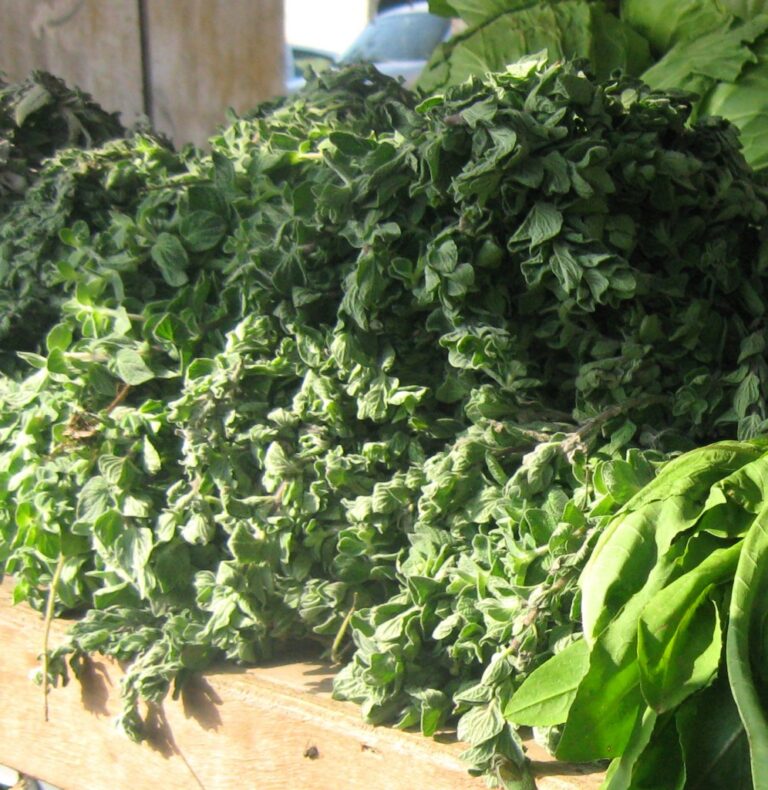
za'atarFresh za’atar at Ramla Open-Air Market

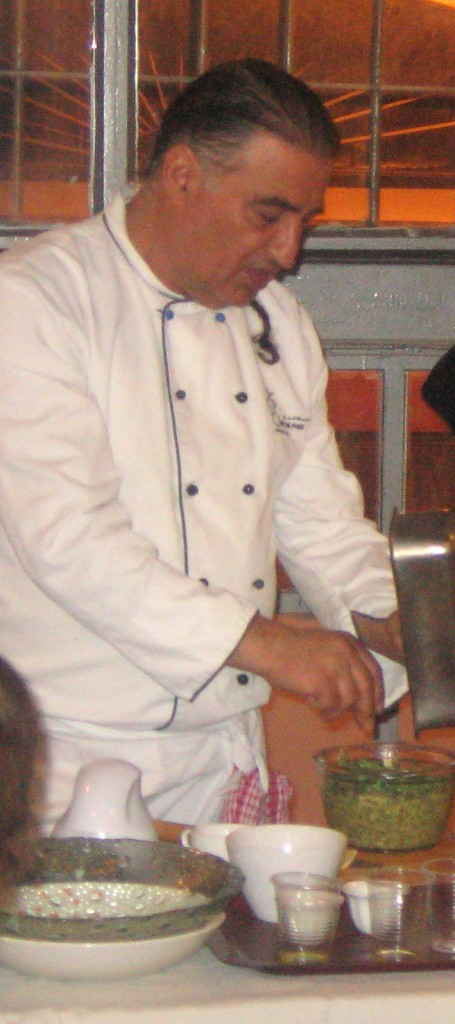
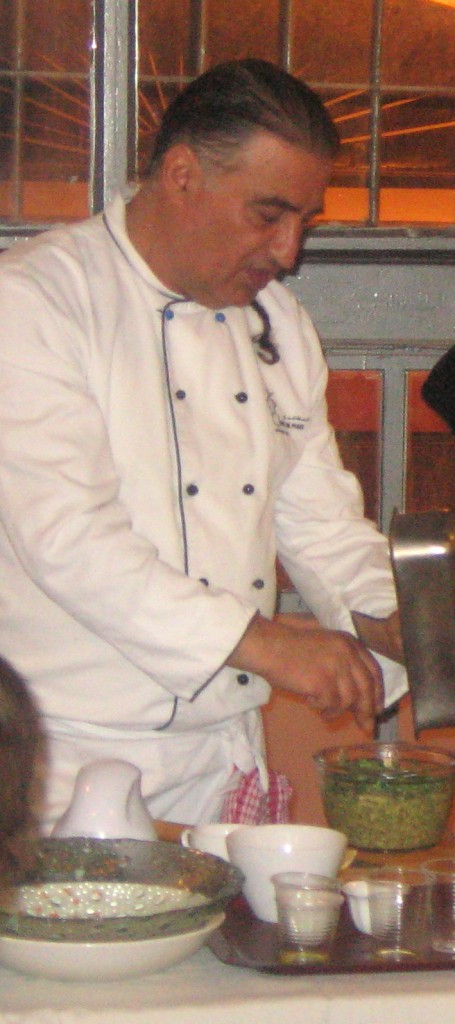
Chef Moshe Basson created this pungent, chunky pesto in just a few minutes, right under our eyes.

Za’atar (Arabic: زعتر‎, also romanized as zaatar, za’tar, zatar, zatr, zahatar or satar) is a generic name for a family of related Middle Eastern herbs from the genera oregano, calamintha, thyme, and savory.

It is also the name for a condiment made from the dried herbs, mixed together with sesame seeds, and often salt, as well as other spices and enjoyed as a seasoning or like salt in Middle Eastern cuisine. Used in Arab cuisine since medieval times, both the herb and spice mixture are popular throughout the Middle East and Levant. Today, Slow Food chef, Basson gives us his surprising and mouth-watering alternative: a recipe for za’atar pesto.

Za’atar Pesto Recipe

Ingredients:

1 cup toasted, blanched almonds

3/4 cup fresh, rinsed, za’atar leaves (in season right now at open-air markets), patted dry and  stripped off the stalks

1 teaspoon salt

1 teaspoon powdered sumac (rhus coriaria, an edible Middle-Eastern variety of sumac with a lemony flavor)

2 large, fresh garlic cloves

1 cup olive oil

1/4 cup lemon juice

Method:

1. Place the almonds in a food processor. Whizz till they’re coarsely ground, not pasty.

2. Add the za’atar next. This sequence is important: if you grind the za’atar first, it will liquify too much. Process for a few seconds.

3. Add the salt, sumac, garlic cloves, olive oil, and lemon juice. Process for a few minutes, till you have obtained a spreadable pesto.

Enjoy it as a flavorful shmear on sandwiches, to top pasta as with basil pesto, or as a dip for raw vegetables.

And remember…za’atar is a protected plant in the wild, so buy it from a farmed source.

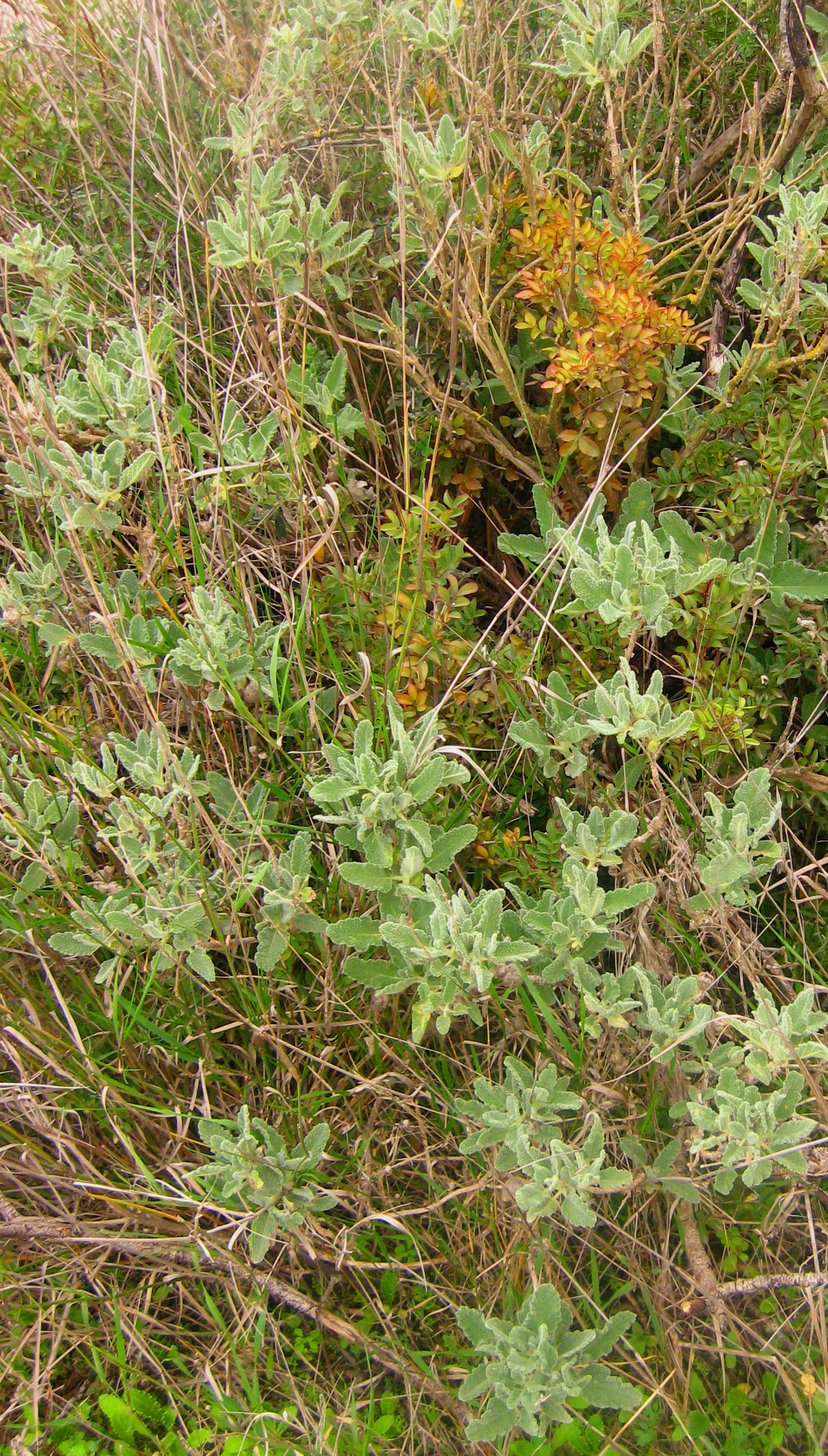
wild za'atarWild Za’atar

More about pesto and sustainable agriculture in Israel here:

UK's Al-Maghrib Institute Plants Olive Trees for Palestine

5

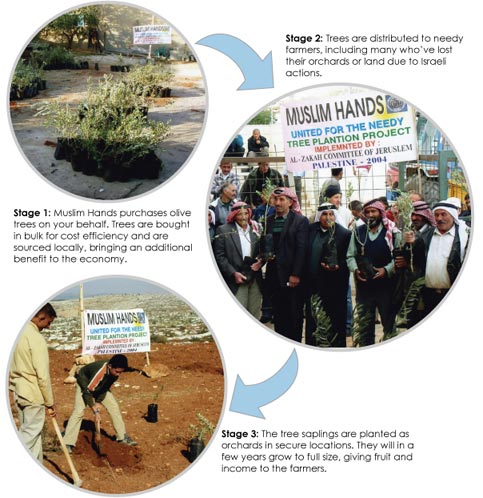
olive trees palestine

For the past two weekends I attended a Quran study seminar hosted by the Al-Maghrib Institute in Bradford, UK. Throughout the course the staff and speakers directed our attention to the environmental schemes that they ran.

As a representative of Green Prophet I seized the opportunity to look into the ways British citizens were contributing towards a greener secure future for Middle Eastern countries.

In between breaks a stall displayed a Muslim Hands scheme called Plant an Olive Tree in Palestine. Middle Eastern countries are mostly arid; the lack of water and rain in Palestine means the main sources of agricultural development are the rivers Rubin and al-‘Ajwa.

Masdar "Greens" Egyptian Sugar Co. With Fuel Switch from Mazut Oil to Natural Gas

6

kenafeh sweet arab dessert photoIf you enjoy sweet treats from Cairo, they are about to get sweeter: Cairo sugar co is now greening its emissions by switching to natural gas.

Abu Dhabi’s Masdar energy and development company is helping to further make the Middle East more green by signing a 10 year CO2 Emissions Control Agreement with Egyptian Sugar and Integrated Industries Company (ESIIC) to reduce 57,200 tons of its CO2 gas emissions per year for a ten year period.

Masdar, a part of the Abu Dhabi Future Energy Company (ADFEC), and whose Masdar Clean Tech Fund recently raised more than $265 billion in funding, will replace Egyptian Sugar’s consumption of Mazut heavy fuel oil with natural gas, which is expected to reduce carbon emissions by an equivalent of 57,200 tons of carbon dioxide (CO2) over 10 years.

According to Wikpedia, Mazut is a heavy, low quality fuel oil, used in generating plants and similar applications. In the United States and Western Europe mazut is blended or broken down with the end product being diesel.
Mazut may be used for heating houses in former USSR and in countries of Far East that do not have the facilities to blend or break it down into more traditional petro-chemicals. In the west, furnaces that burn Mazut are commonly called “waste oil” heaters or “waste oil” furnaces.

The agreement for the Cairo company to stop using this popular, cheap and polluting fuel could not have come too soon for a company which supplies refined sugar and other food products for much of Egypt’s 80 million population, and whose present CO2 greenhouse gas emissions help contribute to Egypt’s growing pollution problems which make its largest city, Cairo, one of the most polluted cities in the world. For a recap, we talked about the emissions problems in Cairo in the article:  Egypt Takes Smog Prize Aheard of 2009 Under 20 World Cup.

New Geo-Archaeological Study Reveals 2,500 Years of Mediterranean Sea Level Fluctuations

7

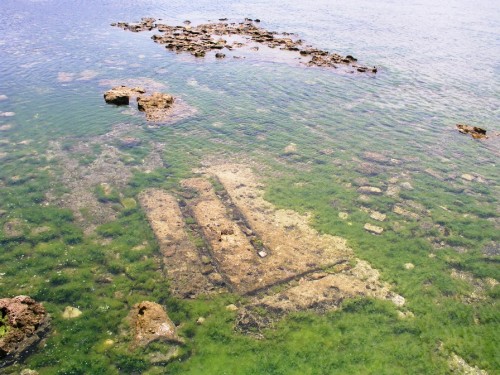
sea-level-rising-falling-2500-yearsThe Templar palace ruins in Akko (Acre), one of the sites where a geo-archaeological study was carried out. New research finds that short-term rising and falling of sea levels may not say much about global warming patterns.
Rising sea level, one of many climate change-related phenomena expected to occur in the coming years, is a major environmental concern for many Middle Eastern countries where coastlines are long and water resources are scarce.

However, a recent study headed by Dr Dorit Sivan, Head of the Department of Maritime Civilizations at the University of Haifa, shows that showed that sea level rise (and fall) is nothing new “under the sun” here in Israel.  According to the study, the sea level in Israel has been rising and falling over the past 2,500 years, with a one-meter difference between the highest and lowest levels, most of the time below the present-day level.

“Rises and falls in sea level over relatively short periods do not testify to a long-term trend. It is early yet to conclude from the short-term increases in sea level that this is a set course that will not take a change in direction,” explained Dr. Sivan.

Qatar Establishing Gene Bank of Local Animals and Plants for Conservation

10

In a step towards preserve the wealth of its national animal and plant populations, Qatar will be setting up a gene bank of local species.  Dr. Sheikh Faleh bin Nasser Al Thani, the Director General for Research and Agricultural Development of Qatar’s Environmental Ministry, said that “Qatar has a precious legacy of flora and fauna that must be preserved and handed over to future generations.  Conservin the genetic characteristics isa must; if we lose them, then it is forever.”

Before any “deposits” are made, though, the Biotechnology Center at the Ministry of the Environment recently held a workshop explaining the role of gene banks and the mechanisms and methods of collection, conservation, and classification of animal and plant genetic materials.

Since many varieties of plants have been improved with science over the years, the traditional strains often tend to fall into disuse and are in danger of becoming endangered or extinct.  “It is the need of the hour to ensure the continued existence of these varieties to ensure our own existence.  Also these are the basic materials upon which the local communities and researchers look to improve food production, quality and quantity.  Hence the conservation of the basic gene pool is needed,” Dr. bin Nasser Al Thani said.

Chef Moshe Basson Revives Biblical Food Traditions In Israel

25

Chef Basson makes za’atar pesto

Moshe Basson’s culinary roots stretch back through time from 200 CE, when the collection of Jewish oral law known as the Mishnah began to take shape – to the Jewish presence in Iraq, where his family lived till the 1950s – to the present time in Jerusalem.

He takes his deep knowledge of foods mentioned in the Bible and other Jewish sources, adds kitchen wisdom garnered from grandmothers of all ethnic streams, and distills the essence of Biblical cooking in his Jerusalem restaurant, Eucalyptus, every day.

Basson’s passion for the land and its native edibles began when he was a small boy roaming the hillsides and abandoned gardens between Jerusalem and Bethlehem. Arab women taught him to forage wild herbs; his father taught him the names and uses of culinary and medicinal plants growing in the home garden.

His fascination with the authentic, historic foods of Israel eventually led him to establish a restaurant and to become a founding member of Chefs for Peace. His involvement with the Slow Food movement brought him the Slow Food Award in Bologna, the “Nobel Prize for chefs,” and honorary citizenship to that city. Today, he’s a respected food historian and his restaurant, Eucalyptus, is rightly famous.

You’d think Basson would be too important or too busy to catch for an interview, but Green Prophet found him accessible and down-to-earth.

Who were your first culinary influences?

My mother, a great cook. My father, who owned a bakery and grew herbs and vegetables in our family garden. Then, old ladies. Arab, Druze, Iraqi, Syrian – whatever their background, women are the ones who cook native seasonal foods and serve them to their families.They keep the tradition alive.

Can you tell us a little about native herbs and how you cook them?

Let’s take chicory – olesh in Arabic. It’s related to endive, and like endive is slightly bitter. It’s in season in late winter till early spring and was used as maror, the bitter herb eaten at the Passover Seder. I pre-boil chicory leaves for a few minutes to take the bitterness away, then cook them with olive oil, garlic, and lemon.

Most people don’t know that the common cyclamen also has edible leaves. They are slightly toxic, but pre-boiling and then rinsing them makes them safe to eat. In Iraq, they are served stuffed with minced lamb and rice. Never eat a cyclamen root! Only the leaves can be made edible.

Do you know of medicinal uses for wild herbs?

Oh, Yes. One of my workers wasn’t feeling well today, so I clipped some twigs off an olive tree growing near the restaurant and simmered the leaves for 10 minutes. Olive leaves lower blood pressure and blood sugar, as well as being antiseptic, antiviral, and antibiotic. My worker drank several cups of this tea over the day and felt better by the time we closed than when she first came to work.

How do you know so much about food in Jewish historical sources?

I’ve studied Tanach (Bible) and the Mishnah all my life. Keeping my eyes and ears open, I draw logical conclusions. For example, the Arabs maintain a tradition of smoking green wheat (frika). It’s an historical ingredient with common roots in Jewish law; the Mishnah mentions it with regard to Passover and Shavuot. The wheat is green, but ready to be harvested exactly at Lag B’omer time (33 days after Passover).

Before then, farmers worry over the safety of their harvest because late rains could ruin it. They harvest and smoke it over bonfires before it’s entirely ripe, while the grain is still green and “milky. I think the Lag B’Omer fires traditional in Israel have to do with a memory of this procedure, which has been kept intact by the Arab population.

The smoking kills mice, insects, and insect eggs in the wheat. I believe that our forefather Yosef (Joseph) used this method to store the abundance of seven year’s wheat harvest against the seven-year famine he foresaw.

It’s like a puzzle, an endlessly fascinating way of putting together a picture of how our ancestors lived and ate. I love to fit the pieces together, then cook what I know. At some point, the search and the knowledge became a part of me. It’s something I need to do.”

We see that you’ve spent a considerable amount of time traveling in Europe and the Far East. How do you manage to communicate when you’re abroad?

Apart from Hebrew, I speak Arabic, English, a little French, Italian, and Spanish – and a smattering of Yiddish. No, really, Yiddish. I learned it from my late father, who owned a bakery and learned to bake Israeli breads with Ashkenazi bakers. When it comes to cooking, I can give a recipe over in any of those languages, spontaneously, even if I’m not fluent in it.

What do you consider your finest achievement?

I’m proud of having returned Israeli cuisine to its roots, and of having made this authentic style of cooking known to the outside world. To be authentic, by the way, it has to be kosher. Even Christian tourists insist on that.

We took a quick tour of the spic-and-span kitchen at Eucalyptus restaurant. Basson uncovered a pot – the most appetizing aroma of potatoes cooking in the pan juices from roast lamb wafted up. Three vividly-colored soups in espresso cups stood on a tray: just enough for a taste of each. (We know from experience how delicious those soups are, the Jerusalem artichoke soup especially.)

A young worker rolled out dough for pitta bread to cover the chicken stew – it bakes on top of the ceramic stew pot, sealing the food inside. And we saw no waste in Basson’s kitchen (“Leftovers go to the chickens or to the compost.”). The entire place spoke of the chef’s fine palate and respect for the food.

Food historian and Jerusalem restauranteur, this is Chef Moshe Basson.

Continue reading: