Home Blog Page 662

A Nature Peace Park

3

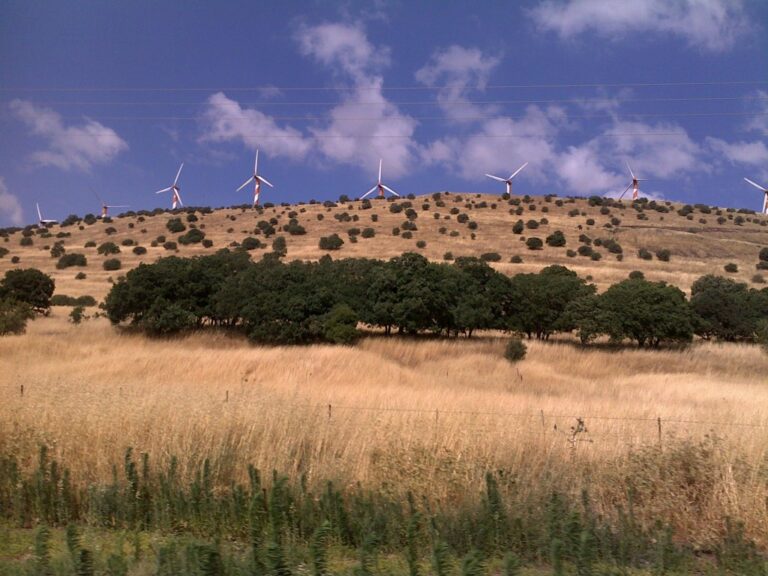
wind farm energy israel golan heights photoIsraeli-built wind farm on the Israeli-occupied Golan Heights. Israeli Syrian expert skeptical that nature Peace Park on Golan Heights would bring peace.

We’d reported last month on the Peace Parks conference hosted by Tel Aviv University. The idea is to create a nature reserve out of the occupied Golan Heights now under Israel sovereignty, and to return the land to Syria, of which one third would be a peace park and nature reserve open to both Syrians and Israelis.

Could a Peace Park use nature and our natural environment to broker peace between Syria and Israel? Tel Aviv University’s Syrian expert Prof. Eyal Zisser doesn’t think so. Here’s a Q&A from Prof. Eyal Zisser, head Moshe Dayan Center for Middle Eastern and African Studies, thinks about the concept:

Rounds of indirect talks between Syria and Israel ended without resolution in 2008. To re-open a channel, Tel Aviv University hosted a conference last month to explore the possibility of a Syrian-Israeli Peace Park.

The proposed park would turn one-third of the disputed Golan Heights into a nature reserve to be managed by Syria and enjoyed by both Syrians and Israelis. The remaining two-thirds, now under Israeli sovereignty, would be returned to Syria. Sponsored by the U.S. Embassy in Israel, the conference sessions attracted a full house of academics, politicians, NGO leaders and diplomats from countries across a diverse spectrum of opinion and expertise.

Prof. Eyal Zisser, head of Tel Aviv University’s influential think tank The Moshe Dayan Center for Middle Eastern and African Studies, appeared at the conference. He approves the positive thinking of proponents of the Peace Park, but finds it hard to see the project becoming a reality. An internationally renowned analyst of Syrian-Israel relations, Prof. Zisser explained why in a recent conversation:

Q: What makes you so skeptical about the prospects for a Peace Park?A: While it’s a positive and creative idea, remember that the two countries have had no diplomatic relations since Israel was established in 1948. The Syrians and Israelis have vastly different mentalities. For the Syrians, national pride is important and complete sovereignty over land is crucial.

In Israel, there are politicians, academics and NGOs are seeking a way to convince the public to return the Golan Heights to Syria, but that kind of one-sided negotiation is destined to fail in the current political climate.

Q: What would it take to make the concept a reality?
A: The whole idea behind a Peace Park would work after you’ve established peace, to help normalize relations. It would help develop warm bonds between the two peoples. But that’s not the sequence that’s being explored — and escalating security concerns between Israel and Syria mean that it could take years before the conditions are ripe for a peaceful resolution.

In Israel, the public well remembers a decade of brutal attacks with Syrians firing at civilians without provocation, a prelude to the Syrian assault in 1967. For us, giving back the land of the Golan Heights comes with a huge security risk that most Israelis would hesitate to take.
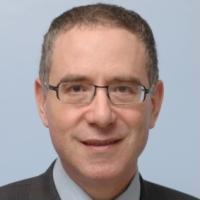
eyal zisser dayan center photoQ: So after 10 years of discussion, why is there is a renewed interest in a Peace Park now?
A: Researchers, non-governmental organizations, and those involved in the peace talks — including some Americans — think that a peace park would be a confidence-building measure among the Israeli public, a simple way make peace with Syria by giving back some acreage.

I think that’s naive. If there were the possibility of real public diplomacy between Israel and Syria, we wouldn’t need this park to cement our relationship.

Syria’s position is simple — they want the Golan Heights back. Period. They are not showing any signs they are willing to make real, warm peace for this kind of exchange, or even to pursue real public diplomacy, and for their part, Israelis are not interested in compromising with Syria for an empty photo op.

Another aspect of the proposed park is that two countries have exhibited very different levels of environmental protection and awareness. Syria is a third world country with a growing population that has very low environmental awareness.

Q: So why the U.S. interest in establishing a peace park?
A: The American government funded the recent conference as a friendly gesture — but there is no real U.S. interest. Some years ago, well before there was any diplomatic activity, a geographer who is currently a member of the Mitchell team suggested a peace park as an option.

The conference attendance and recent support from the U.S. government was really just a gesture. And the whole idea has progressed with no involvement at all from the Syrian side.

Q: If not a park, what might move the parties forward?
A: In order for there to be peace with Syria, the Israelis would need to see a radical about-face from the leader of Syria. They’d need a leader like Sadat to make a dramatic, historical move. That’s not who Bashar is, and it’s not going to happen. The only other conceivable game-changer would be Israel electing a prime minister who is willing to give up the Golan Heights — but without a change in Syria’s behavior, that’s unlikely.

Q: So is it fair to call the Golan Heights “occupied land”?
A: For all intents and purposes in the eyes of the international community, that’s true — but the occupation by Israel is very similar to the way the U.S. occupied Japan. That wasn’t a greedy colonial take-over to occupy more territory, nor is that the case for Israel in the Golan.

The “occupation” is situational and pragmatic: there was Syrian aggression towards Israel, and the 1967 War was the result. Israel defended itself, captured the Golan Heights, and remains there today because there is no peace with Syria.

It would be nice if a Peace Park were the mechanism to change that — but I’m quite certain it isn’t.

The international conference “Peace parks on Israel’s borders: The Syrian case study from theory to reality”, which took place on January 7th , 2010, was organized cooperatively by the Porter School of Environmental Studies, the Moshe Dayan Center for Middle Eastern and African Studies, the Tami Steinmetz Center for Peace Research, the S. Daniel Abraham Center for International and Regional Studies, and the University Institute for Diplomacy and Regional Cooperation of Tel Aviv University.

Webinar on Concentrated Solar Thermal Power Technology

0

solar panels energy coursesA free and universally accessible five-session “webinar” on Concentrated Solar Thermal Power (CSTP) technology is being offered by Seville University and will be taught by Manuel Silva (one of the “fathers” of CSTP in Spain).

Manuel Silva is a PhD Industrial Engineer with 24 years of engineering experience, together with 10 years as Associate Professor at the Engineering School of Seville University. He is responsible for Solar Thermal Concentrating Systems and Solar Radiation Projects at the Group of Thermodynamics and Renewable Energy at Seville University.

As a professor, he teaches the modules of Solar Radiation and Solar Thermal Concentrating Systems in the course of Renewable Energy at the Department of Energy Engineering, Seville University since 2001. He also teaches other graduate and postgraduate courses at different institutions, such as the University of Colorado at Boulder (USA), UNIA (Universidad Internacional de Andalucía, Spain), ESPE (Escuela Politécnica Superior del Ejército, Ecuador) and others.

Seville University holds a long tradition in Concentrated Solar Thermal Power (CSTP) research. Its students become key players at research centers and in the solar energy departments of companies.

The hour-long sessions will be spread out over two months, from the beginning of March until the beginning of May.  The session dates and their topics are as follows:

March 3, 2010: General Principles of CSTP technology

March 16, 2010: Linear Focus Technologies: Parabolic Trough and Linear Fresnel Reflectors

April 14, 2010: Point Focus Technologies: Parabolic Dish and Central Receiver

April 27, 2010: Thermal Storage and Hybridization

May 5, 2010: Assessing the Solar Resource for CSTP plants

Read more about solar power and upcoming conferences in the Middle East:
Want to Solar Power the Middle East? Attend the 2nd Annual MENASOL Solar Conference in Cairo
World Future Energy Summit: Wean UAE and Other Countries off Fossil Fuel Reliance
Middle East/Med Region Could Solar Power World 3 Times Over

Café Louise Serves Organic, Healthy Fare in Haifa and North Tel Aviv

3

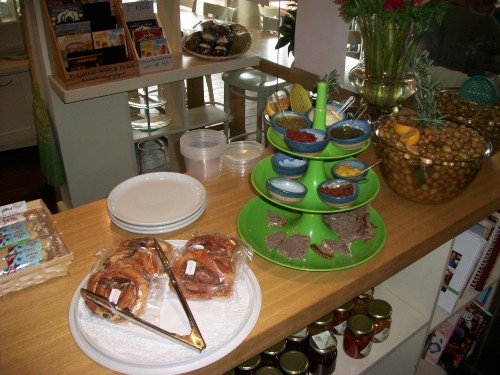
cafe-louise-haifa-organic-healthy-restaurantA variety of healthy, homemade, organic spreads and olives at Cafe Louise in Haifa.

Israel has no shortage of organic cuisine.  From LovEAT café in Tel Aviv to Mizpe Hayamim in the Galilee and Negev Nectars in the south, this country is chock-full of good organic eatin’.

And here’s one more to add to the list!  Café Louise opened in Haifa in 2007 with a vision to offer a natural, healthy culinary experience.

“At the beginning, people didn’t visit because they said ‘It’s healthy, so it must be not be tasty,’” explained founding partner and manager Shay Hamzani.  “We wanted to show people that healthy food can be good too.”

Terra Venture Partners Billed Israel's Most Active Venture Capital Investor in 2009

3

terra venture partnersTerra Venture Partners ramps up on clean tech investments in Israel.
It’s no secret that Israel has one of the world’s most prolific venture capital markets in the world. Not only is this fact true in the realm of advanced technology fields: it is also true in the areas of clean technology as well.

It now appears that the foremost VC fund dealing with clean energy and related fields is Terra Venture Partners, a Jerusalem-based venture capital fund (we’ve covered Terra Ventures here) focused on seed and early-stage cleantech investments.

This company, which made six first clean tech investments in 2009, was previously mentioned in Green Prophet last July by Marcus Sopher, in which this fund was reported to have had funding and investing in promising seed and early-stage start-ups led by top entrepreneurs in energy, water and other environmental sectors.

American eSolar Company and Germany's Ferrostaal to Build Solar Projects in the UAE

0

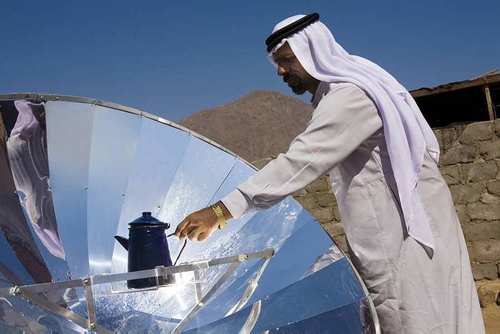
A Simplified Thermal Solar Power Unit in the UAE: Turkish Coffee Anyone?

The United Arab Emirate’s hot sunshine will soon be providing energy as well, thanks to an agreement the American solar energy company eSolar and the German industrial services Company Ferrostaal. As noted in the UAE news site The National, the consortium will also build solar energy power plants in South Africa and Spain.

The agreement goes beyond just building the solar energy plants themselves, since Ferrostaal Ferrostaal is 70 per cent owned by Abu Dhabi’s government-owned International Petroleum Investment Company (IPIC).

Egypt Teams With Abu Dhabi on 200MW Wind Farm Near Suez

7

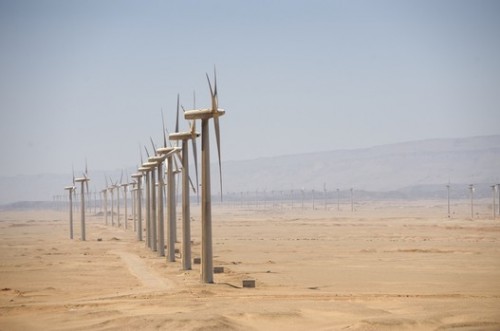
egypt abu dhabi wind farmWind farm in Egyptian desert at Zafarana. (Image via windpowerworks.net)
The Egyptian New and Renewable Energy Authority (NREA) and Abu Dhabi’s green energy company, Masdar, signed a framework agreement on February 18th for a 200 megawatt wind power plant, slated for Egypt’s eastern coast near Suez. 

The project is the first collaborative venture between Egypt and the UAE in the field of renewable energy, noted Aktham Aboul Ela, a senior official at Egypt’s Electricity and Energy Ministry. “The agreement will allow for the construction and start of implementation of the first 200 megawatt wind farm in the country,” Aboul Ela told Reuters.

Brigitte Cartier and Hiria Searching for Volunteer Upcycling Arts and Crafters

0

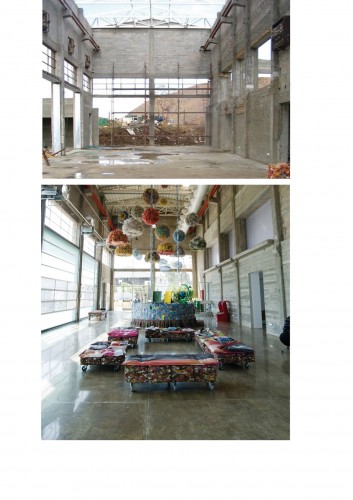
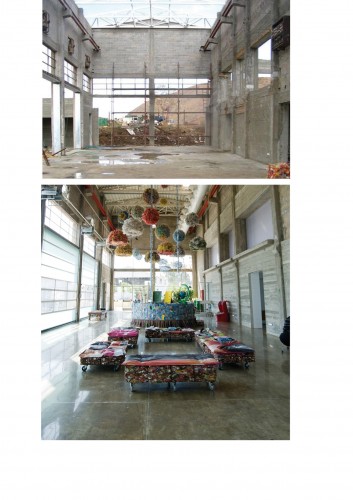
Brigitte Cartier, a French-born artist who has been living and creating in Tel Aviv for the past 15 years and who now comfortably tackles Israeli roads in her pick-up truck alongside her trusty dog, is the magician responsible for transforming the Hiria garbage dump into an upcycling design Mecca.  Just check out the before and after shots of the Hiria Environmental Education Visitor’s Center to the left.

With her imagination and crafty hands, plastic bags turn into chandelier-like pom poms that hang from the ceiling, other plastic bags are fused into curtains with a beautiful stained glass effect (see bottom left photo), shopping carts turn into armchairs, blocks of condensed aluminum cans turn into benches that seat children who come to Hiria for recycling workshops (check out the close-up below).

No material is too base, too odd.  The main objective is that materials are reused instead of thrown away because Hiria’s garbage mountain doesn’t need to grow any larger.

Brigitte’s next project is to design and create a line of “Hiria Made” products: handmade items that are created from reclaimed materials and upcycled into something better.  And she’s looking for volunteers!

Volunteers will meet with Brigitte, learn her crafting techniques and recreate one of her prototypes, and have fun while helping Hiria’s environmental education mission in the process. 

Israel Creates Anti-Fur Import and Trade Bill, Shtreimels Excluded

10

An act of redemption for family sins: Etti Altman co-founder and spokesperson of Let the Animals Live is pushing for anti-fur law she hopes will be passed this February 24. Israel would be the first in the world to ban fur.

While fur was in vogue in the 1950s and ’60s and some people still cling to the desire to drape a fur stole or coat across their body, today many people around the world have rejected the cruelty of the industry and opt not to buy fur. In Israel, a full 86 percent of the population believes that killing animals for their fur is immoral.

In what she calls “an act of redemption for her family’s sins,” Etti Altman, daughter of a furrier based in New York City and co-founder and spokesperson of the Israel branch of the animal rights’ group Let the Animals Live, is spearheading efforts to pass into law in Israel a bill that would ban the sale and import of most fur and fur items.

Egyptian "Sonar" Bats Have Very Positive Environmental Roles

2

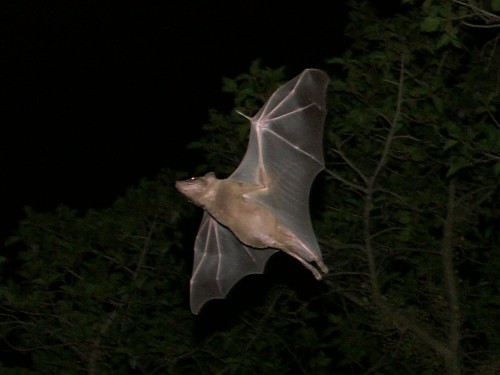
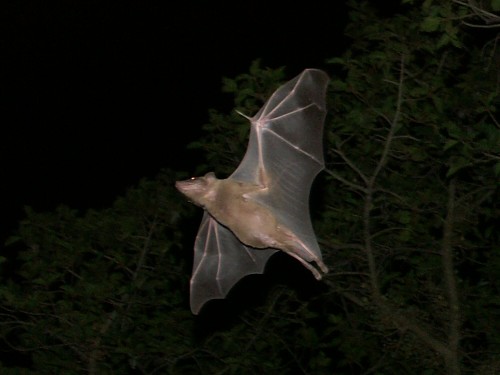
bats environment clearnBats can eat their weight in mosquitos. Some, 1,200 mosquitos every night, making them man’s best night flying friend.
Have you ever noticed those night flying creatures that seem to flitter endlessly among date palm trees in the Middle East at night while making distinctive clicking sounds? If you have, chances are these creatures are not birds but Egyptian fruit bats which have been found to have an amazing ability to find their “target” by not aiming their vocal sonar beams directly but by pointing their “sound beams” to either side of the target.

A recent study was made by researchers at Israel’s Weizman Institute of Science, together with the University of Maryland in the USA, and found that their bats emit paired clicking sounds and that the sonar beam created by each click alternated to the left and right of a target. This alternating pattern effectively directed the inside edge, or maximum slope, of each sonar beam onto the target. As a result, any change in the relative position of the target to the bat reflected that large sonar edge back at the bat, delivering the largest possible change in echo intensity.

Sticky Liquid in Carnivorous Plant Could be Organic Fungus Fighter in Hospitals

1

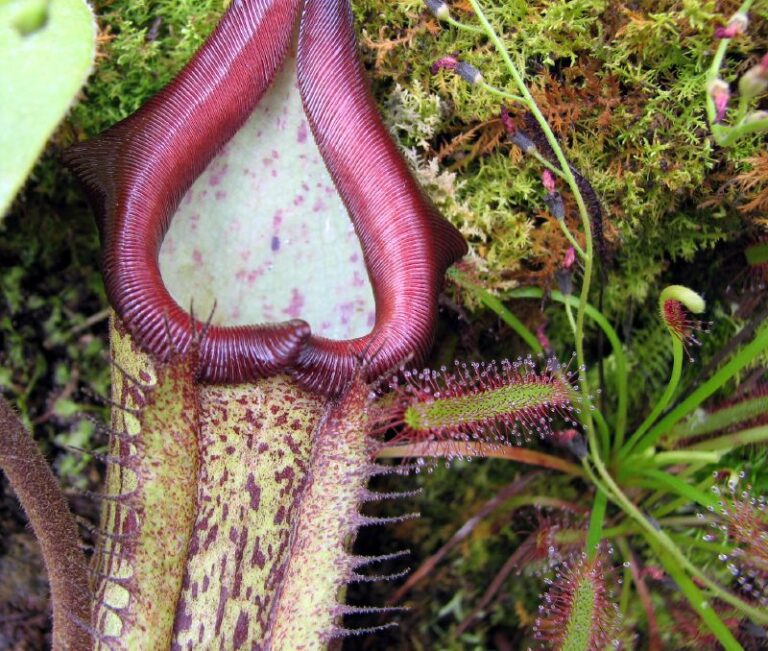
New Tel Aviv University research investigates anti-fungal agents in the sticky “pitchers” of carnivorous plants. Biomimicry at its best. 

In the tropics, carnivorous plants trap unsuspecting prey in a cavity filled with liquid known as a “pitcher.”

The moment insects like flies, ants and beetles fall into a pitcher, the plant’s enzymes are activated and begin dissolving their new meal, obtaining nutrients such as carbon and nitrogen which are difficult to extract from certain soils. Carnivorous plants also possess a highly developed set of compounds and secondary metabolites to aid in their survival.

These compounds could serve as a new class of anti-fungal drugs for use in human medicine, says Prof. Aviah Zilberstein of Tel Aviv University’s Department of Plant Sciences. In a study conducted together with Dr. Haviva Eilenberg from her lab, Prof. Esther Segal from the Sackler Faculty of Medicine and Prof. Shmuel Carmeli from the School of Chemistry, the unusual components from the plants’ pitchers were found effective as anti-fungal drugs against human fungal infections widespread in hospitals. The primary results are encouraging.

“To avoid sharing precious food resources with other micro-organisms such as fungi, the carnivorous plant has developed a host of agents that act as natural anti-fungal agents,” says Prof. Zilberstein. “In the natural habitat of the tropics, competition for food is fierce, and the hot, moist environment is perfect for fungi, which would also love to eat the plant’s insect meal.”

Highly resistant and 100% organic

After initial tests of the plant proteins and enzymes that dissolve the chitin of fungi, Prof. Zilberstein assumes that, in the right clinical conditions, the pitcher secondary metabolites can be developed to effective anti-fungal drugs, that may avoid the evolution of new resistant infective strains.

The collaborating team has just published a paper exploring that potential in the Journal of Experimental Biology, based on the biology of the carnivorous plant Nepenthes khasiana. This plant species is originally found in India but is also being reared in Tel Aviv University greenhouses.

Currently there is a need for additional broadly effective anti-fungal drugs. Even mildly severe forms of athlete’s foot or other skin fungal infections lack effective treatments. The problem becomes more dire at hospitals, where thousands of Americans die each year from secondary fungal infections they acquire during their stay as patients.

Forging a “wild” pathway in drug discovery

The collaborating team has determined plant secondary metabolites that function as anti-fungal agents. “The pitcher of the carnivorous plant produces these compounds in a gland,” says Prof. Zilberstein. Until now, no one has published or discussed the anti-fungal metabolites found in the trap liquid of this plant, she says.

“We’re hoping that these metabolites are working together to keep fungus at bay. Our aim now is to get funding for pre-clinical tests of these compounds in an animal model, so we can investigate their effectiveness against the two very acute fungal pathogens found in hospitals worldwide,” she says.

The idea that liquid from a plant pitcher could stave off infection has been documented in the folk literature of India, where people drink carnivorous plant pitcher juice as a general elixir. “There is a lot of room for developing compounds from nature into new drugs,” says Prof. Zilberstein. “The one we are working on is not toxic to humans. Now we hope to show how this very natural product can be further developed as a means to overcome some basic problems in hospitals all over the world.”

Doha Bank and UNESCO Join Together to Green the Middle East

1

sahara desert shotGreening the Desert? A Qatar bank and the UN are now partners.

Parts of the Middle East, especially in the Persian Gulf area will get a bigger environmental boost thanks to an alliance between Qatar’s Doha Bank and the UN’s Educational, Scientific and Cultural Organization, UNESCO.

In an article published in the Eye of Dubai news site, the Doha Bank, one of the Qatar Emirate’s largest, has entered into a formal alliance with the UN organization to work together on various environmental programs to promote a greener environment.

Ecomum Throws a Green Birthday Party

2

Birthday parties can be delightful events but they can also be stressful and very unhealthy for your children and the earth. With the stress on many parents these days to invite whole classes of children, to entertain, feed and send them home with a party bag, it is no wonder that we are left with piles of left over junk food, plastic plates and cups and plastic party bags filled with cheap, made in china toys, that usually break the same day and are full with chemical packed candies.

So how to keep your little ones smiling and the earth green?

Well it is easier and often cheaper than you may believe, it’s all about changing your perspective and being a little radical, and not conforming.

Entertainment

There are so many ideas out there for all age groups. The traditional games are still loved by every child, the delight and anticipation of pass the parcel is one of my favorites, add an extra twist with questions, forfeits and games between each layer. Musical chairs or statues, gets them dancing and burns that energy off. A treasure hunt gets their minds working too and is good for all ages, for the young ones use picture clues.

Parties are not just about games, I took my daughter to a party recently where they all decorated their own cakes, it kept them all very busy and very happy for about half an hour, heaven for us nattering mums! If you don’t want to go the sweet route, let them make their own pizzas, this is a definite winner for everybody, as you are also cutting out the stress of preparing food.

If you really want to you can have a green theme for the party too, get your children’s creative juices flowing and get recycling all the wrapping paper from presents, you can make giant paper pompoms (this is another great cheat as it also gives them something to take home too!).

Food & Party Bags

Fast, convenient, junk food is very tempting and I do understand time is precious but there are options just as easy, sometimes more fun for the children and you, and definitely healthier. The pizza option we’ve already mentioned, other options that the kids can get involved in too, are making burgers, fruit smoothies and a taco bar. My daughter’s last birthday cake was made from organic wholewheat flour, organic cocoa, organic eggs and goat’s milk, and the kids loved it.

As for the party favors, well we’ve covered the present with a make your own craft, and harking back to my childhood, a piece of scrummy birthday cake wrapped in a paper napkin (and no bag!). An idea I think I might use next year is a plant pot and a packet of seeds, they paint and decorate the pot in the party, then just pop a slice of cake in there with some flower or veggie seeds. If you feel you need to add some more bulk, try dried fruits and fruit leathers, fresh popcorn is always a winner too.

“I always recommend to friends and family to send eco-friendly ecards for birthdays, so as not to be left with a big pile of paper cards. But at the end of a party, you could be left with heaps of disposable plates, cups and burst balloons, all very unfriendly to the environment.

I keep a stack of plastic cups, plates and bowls at home all year round, as they are supremely handy when friends come to play and they are the best for parties too. If you really can’t get your head around washing up after, there are plenty of greener, biodegradable options available today.

As for decorations, balloons are quite nasty things, when you dig a bit deeper you discover a plethora of chemicals, there are eco-options made from latex but as yet I have only found them sold to performers here in Israel. So no balloons, big deal, get creative with your kids, paper chains, paper pompoms, all made with old wrapping paper, newspapers, enjoy!

Israel, Egypt Considering Joint Solar Energy Project in Sinai

9

israel egypt solar energyIsraeli Minister Ben-Eliezer addressing the Eilat energy conference this morning. (photo by Daniel Cherrin).

Israel and Egypt are discussing a possible collaborative solar energy project in the Sinai desert, Israel’s Minister of Industry, Trade and Labor Binyamin Ben-Eliezer announced this morning at the third annual Eilat-Eilot Renewable Energy Conference.

According to Ben-Eliezer, he and Prime Minister Benjamin Netanyahu discussed the issue with Egyptian President Hosni Mubarak on a recent visit to Egypt. According to the plan, Israel would supply the technology, with Egypt supplying the land required for the project. The electricity produced from the project would power both states, with excess energy being sold to other countries. President Mubarak reportedly expressed his interest in the idea, and agreed to explore the issue.

If carried out, the project could go a long way toward solving one of the major obstacles to the development of renewable energy in Israel: land. Much of the discussion this week at the 3-day conference has revolved around the need to develop renewable energy projects, especially solar energy, that utilize limited land resources in an efficient manner.

Organic Supermarket in Dubai Brings Organic (but not local) Trend to UAE

6

Organic Foods & Cafe, an organic supermarket and cafe in Dubai, brings a range of organic products to the United Arab Emirates and defines part of its mission as “furthering learning about what is healthy for us and our world and environment around us and promote it.”

The supermarket attempts to create a welcoming and warm environment where customers learn that eating organic doesn’t have to be scary or strange.  The cafe offers delicious organic dishes (many of which are vegetarian), such as brie & apple omelettes, mushroom and turkey ham pizza, roasted pumpkin salad, an ostrich special, and freshly squeezed pineapple and cucumber juices.

While their organic values are in the right and their menu sounds delicious, many of their organic products are sourced from overseas and it seems as though very few products are local.  In the “Meet the Growers” section of their website, farms are located in countries such as South Africa and Austria.  (The one “local” Middle Eastern farm seemed to be Sekem in Egypt.)

Which leads us back to the big green food question: what’s more important – organic or local?

EU Gives $4 Million Grant to Med and Red Sea Coral Reef Studies

2

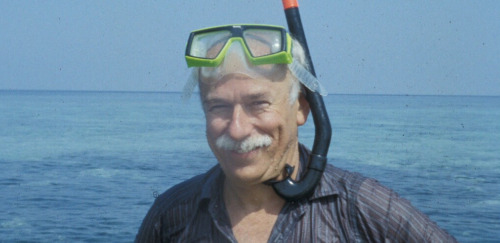
Getting close to his subject: marine biologist Prof. Zvy Dubinsky hopes to understand the changes global warming will cause to the world’s delicate coral reefs. A new EU grant will give the corals a chance.

Israeli marine biologist Zvy Dubinksy is worried. Coral reefs all over the world – from the Great Barrier Reef in Australia to the Red Sea in Israel – are dying, and global warming is the culprit.

Now the professor from Bar Ilan University in Israel hopes to do something about it. He and his team of researchers from the Faculty of Life Sciences have just been awarded a prestigious $4 million grant from the European Research Council to study the effects of global warming on corals in the Mediterranean and Red Seas in the hope that they can come up with data that will help scientists bio-engineer remedies to global warming in advance.