Home Blog Page 661

BrightSource Gets a Billion

brightsource billion solar energy solar thermalBrightSource gets more than a billion in loan guarantees to shine its solar lights brightly and power California homes.

We reported on BrightSource, the solar thermal energy company, and its nearly $1.5 billion in loan guarantee from the US Department of Energy last week. This was the biggest clean tech news in March. I spoke with Israel Kroizer from BrightSource, just after the news broke, and here’s a piece I wrote for ISRAEL21c:

They clinked glasses and toasted for two seconds, and then it was back to work and business as usual, says Israel Kroizer from BrightSource Energy, a VC-funded solar thermal energy company, which has just received $1.37 billion in loan guarantees from the US government.

It was a well-planned process that took three years to roll out, Kroizer, the chief operating officer for BrightSource tells ISRAEL21c, and one that will put BrightSource, the US and Israeli solar energy entrepreneurs, on the solar energy map. It will be the first new solar thermal plant built in the state of California in about 20 years, and when completed by 2013 it will be the world’s largest solar energy project, nearly doubling the amount of solar thermal electricity produced in the US today.

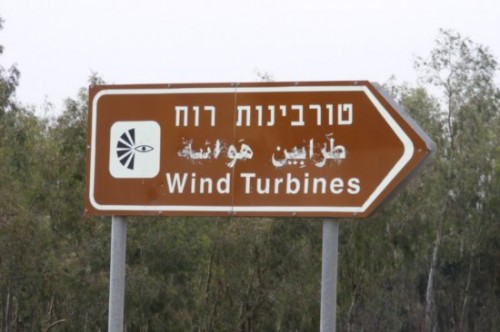
Can Israel’s Wind Power Sector Compete with Solar?

4


Photo by sla514 via Travelpod.

In Israel, renewable energy has become almost synonymous with solar energy in its various forms.

But what about that other renewable resource – the wind? Worldwide, the wind energy industry is booming, with a $63 billion global market as of 2009, and half a million people employed in wind power-related jobs. China has been doubling its wind power capacity every year for the past five years.

Egypt and Abu Dhabi’s Masdar have just announced plans to build a 200MW wind farm, which would supplement an existing 430MW in Sinai. Jordan is also expected to set up its first wind farm soon.

And in Israel? Currently, the country’s entire wind power sector boils down to 10 outdated wind turbines on the Golan Heights. But that may be about to change, as old turbines are replaced with more advanced models, and a handful of other wind energy projects attempt to make their way through a cumbersome bureaucratic process.

Iran and Qatar Align to Help the Environment

4

iran iraq sign environment dealWhile the world sees Iran up to nuclear arms, Qatar and Iran have signed a memorandum of understanding regarding helping to preserve the environment. Qatar’s  Gulf Times reported that a memorandum of understanding was signed on February 22 by Qatar’s Minister for the Environment, Abdullah bin Mubarak bin Aboud al-Midhadhi, and by Iran’s environment head Mohamed Javad Mohamedi Zadeh. In the understanding, the two countries agree to be involved together in a number of environmental areas:

Managing green reserves, green spaces, plant growth and animal husbandry,  in addition to the environmental management of coastal areas, desertification control and the exchange of experiences and expertise between the two countries.

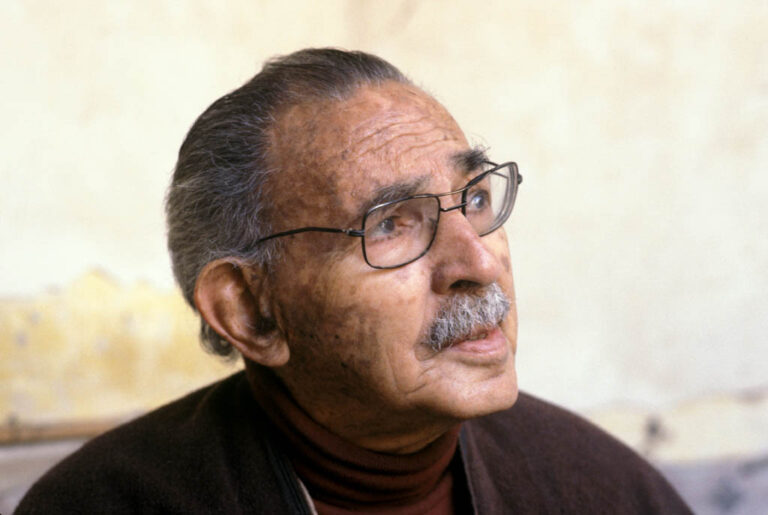
Hassan Fathy is the Middle East’s father of sustainable architecture

65
hassan, hasan fathy, Egypt, green sustainable architect
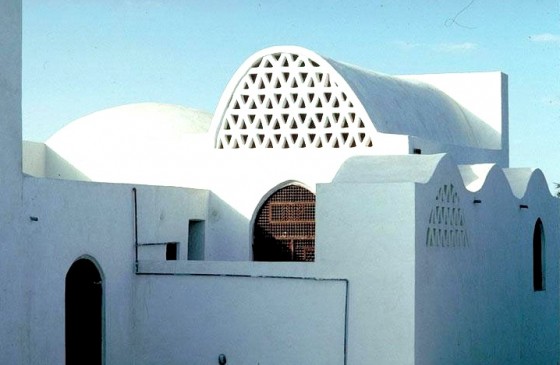
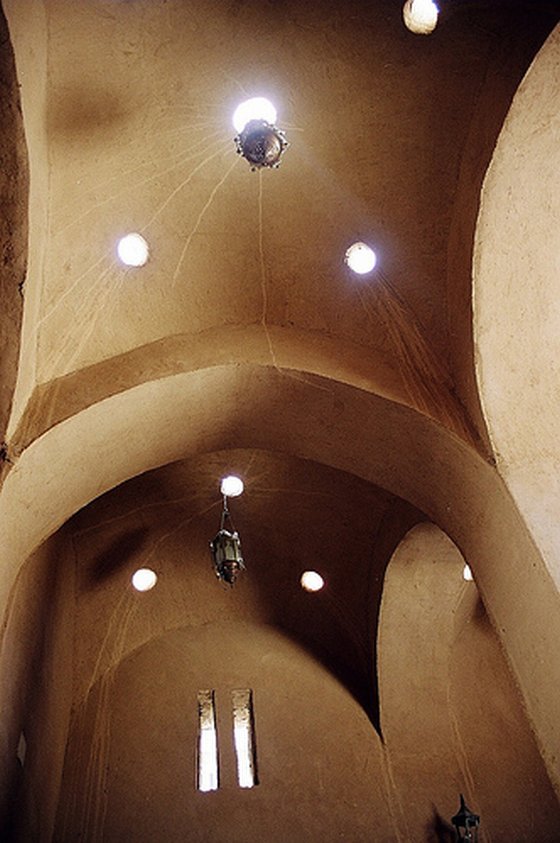
Climatic conditions, public health considerations, and ancient craft skills also affected his design decisions. Based on the structural massing of ancient buildings, Fathy incorporated dense brick walls and traditional courtyard forms to provide passive cooling.

Hassan Fathy, an Egyptian architect saw the value of natural building long before it became a fad in the west.

Green Prophet has railed against projects like Dubai Burj Tower.  We have pounded our chests at the audacity of Masdar City’s “zero” footprint claim, and we have decried the potential consequences of unsustainable approaches to building and planning: $22 billion USD for a building project and “sustainable” simply don’t belong in the same sentence. 

What we really need is a compassionate and sensible voice, a voice that calls for affordable and authentic building practices. Hassan Fathy was that voice.

hassan fathy

Egyptian architect Hassan Fathy died in 1989 but left behind a legacy of 160 building projects ranging from small projects to large-scale communities complete with mosques and schools.  His impact can still be felt from Egypt to Greece and even New Mexico, where in 1981 he designed the Dar Ar-Salam community.  Fathy received several awards for his work, including the Aga Khan Award for Architecture in 1980, and founded The International Institute for Appropriate Technology in 1977.

Hassan Fathy and Architecture for the Poor

One of his first assignments after graduating in 1926 from what is now the University of Cairo was to build a school at Talkha, a small town along the Nile in Northern Egypt.  The absolute squalor of the place “haunted” Fathy: the streets were littered with rotten food and filthy water, the buildings were dilapidated, and the peasants who lived there had accepted their depressing lot.  This experience inspired him to improve the lives of those who were powerless to do so without help.

hassan fathy

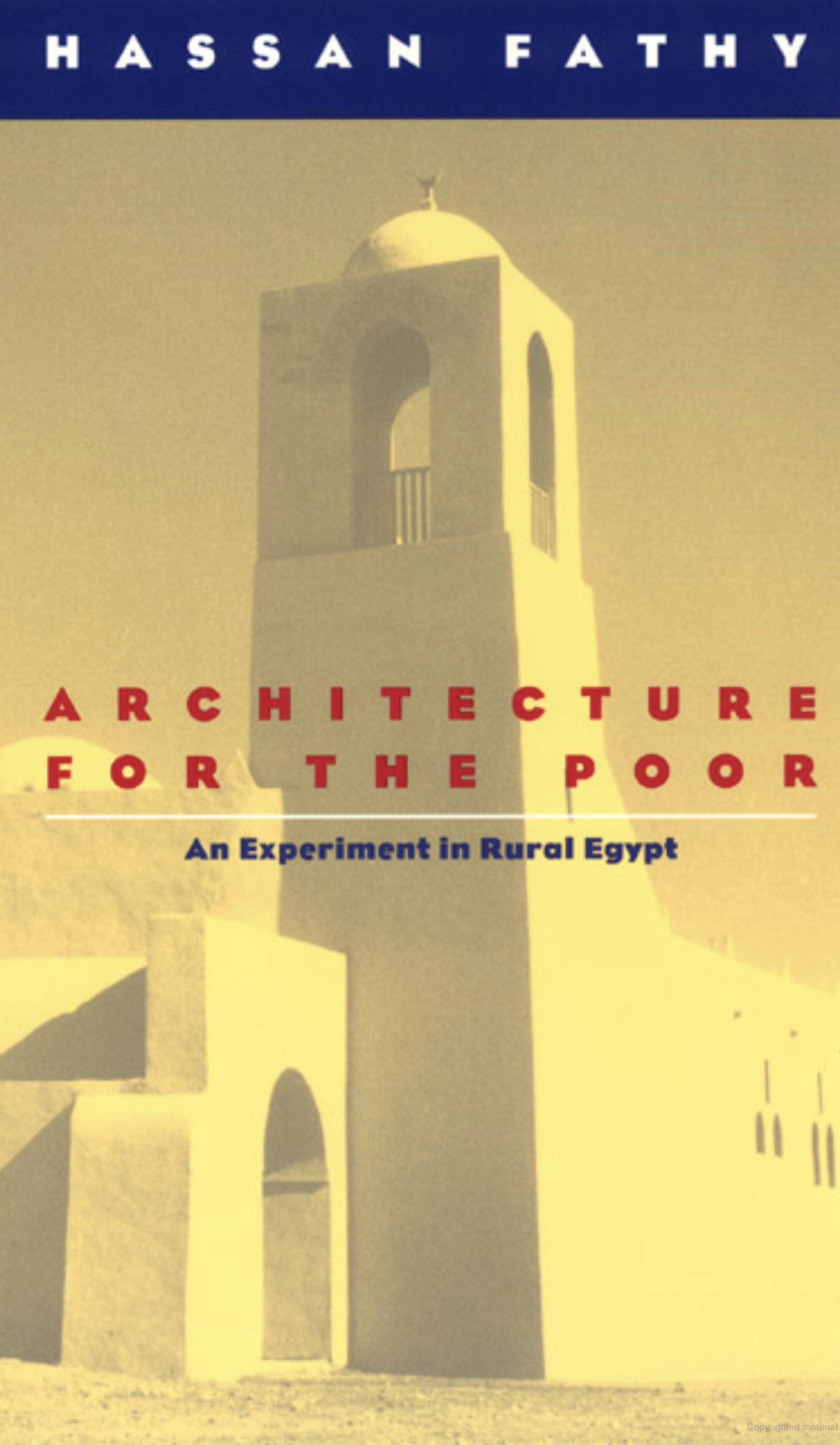
Fathy wrote in his book Architecture for the Poor (links to PDF): “They needed decent houses, but houses are expensive. In large towns capitalists are attracted by the returns from investment in housing, and public bArchitecture for the Poor (odies…frequently provide extensive accommodation for the citizens, but neither capitalists nor the state seem willing to undertake the provision of peasant houses…”

Architecture for the Poor cover
 

Traditional design using mud

While other architects were seeking fame and fortune, Hassan Fathy saw the genius of incorporating traditional design and building materials.  He wrote “here, for years, for centuries, the peasant had been wisely and quietly exploiting the obvious building material, while we, with our modern school-learned ideas, never dreamed of using such a ludicrous substance as mud for so serious a creation as a house.”

locatat, local materials, architecture, design, sustainable, green building, eco building

Fathy cared more about improving the standard of living for the people he served than he did about fancy western materials and technology.

hassan fathy

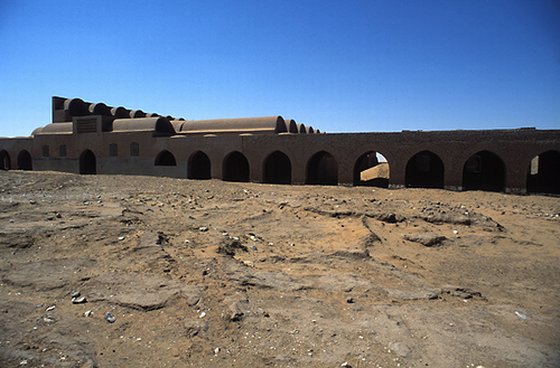
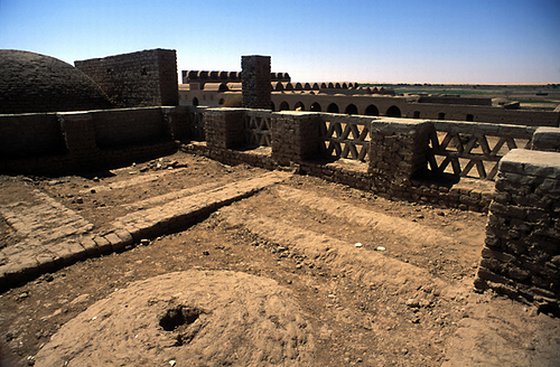
In 1946 he was commissioned by Egypt’s Antiquities Department to build New Gourna Village for 3,000 families who were raiding the ruins at Luxor.  The villagers weren’t so excited about being displaced, but Fathy committed to smoothing their transition.

hassan fathy

He built thick brick walls and traditional courtyards, which both supported cultural values and created passive cooling (see design above), and enlisted the villagers as builders of their own homes. This not only reduced labor costs and created jobs, but also helped the villagers to connect with what Fathy considered a sacred space. Home for him was a place to seek solace and comfort from the outside world.

hassan fathy

Finally, Hassan Fathy respected that nature should take precedence in the design of new structures. “Architectural form should consider the forces in nature of wind, rain, even how an earthquake shaking it would make it fall in a pattern that follows the geological formation of a mountain,” he once wrote.

No doubt Dubai’s artificial World Islands would have seemed preposterous to him.

hassan fathy

In short, Fathy’s designs were affordable, congruent with nature, elevated the human condition, and they were sustainable.  We think this is a model that would better serve the Middle East than other lavish projects taking place.

More on Architecture, Middle East:
Recent Jerusalem Seminar in Architecture Focused on Green Design
Can An Ecological Peace Park Catalyze Peace Between Syria and Israel?
AECOM Teams Up with Ellerbe Beckett to Create More Sustainable Building In The Middle East

Middle East Water Security Worries the Prince of Jordan

24

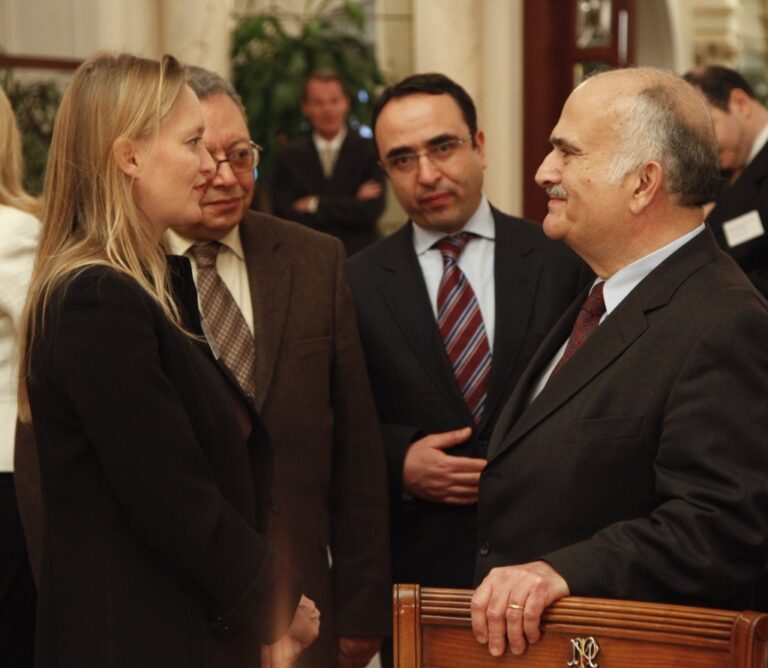
prince hassan karin kloosterman photoKarin meets Prince Hassan of Jordan at a water security conference in Switzerland last week.

It was a meeting of minds, water minds. Water consultants, ambassadors who’ve built water treaties, and government specialists and negotiators from around the Middle East and Europe gathered in Montreux, Switzerland for a two-day workshop on Water Security in the Middle East last week. Green Prophet was invited to attend. The object was to explore sustainable and cooperative solutions to water security, and to use the problem of water and turn it into an instrument of peace.

Organized by the Strategic Foresight Group, the same India-based firm that brought us the Cost of Conflict to the Environment in the Middle East report, the event included a gala supper, and meeting with the Prince of Jordan, sponsored by the Swiss and Swedish governments. Both peace-loving and humanitarian nations are eager to ease future conflicts in the Middle East, with all fingers pointing to water conflict being the fuel for the next big one, many believe. But how can it be done?

Make Some Creative, Reused, Green Noise This Purim

0

Purim, one of the most colorful and popular holidays in Judaism (probably because it is a mitzva to get, ahem, inebriated), is coming up this Saturday evening.  Colorful because it involves getting dressed up in costume, and popular because it’s fun to see everyone else’s creative costume ideas, eat delicious pastries, hear the story from the Book of Esther, and have a little something to drink.

Unfortunately, all of those activities carry potential for a lot of waste.  But they don’t have to.

Want to dress up but don’t want to be covered in cheap, disposable costumes, or plastic?  Here are some creative do-it-yourself costume ideas made with stuff mostly from around the house:

Make a mask out of items in your recycling bin.  Cereal boxes are great for this.  Just outline the shape you want, cut out holes for eyes, and then punch a hole in each side so that you can attach a string or rubber band to your mask.

Dress up as a Compact Florescent Lightbulb by wearing all (or mostly) white.  If you have a white turtleneck, that would be great for this.  Then inflate around a dozen long, white balloons and tie them end to end.  Wrap them around you in a spiral shape along your torso for a light bulb look.

Become a Greek god or goddess by draping a white sheet over yourself, cinching it with a belt or some rope, and putting on some sandals.  For an extra touch, grab a branch from outside and wrap it around your head.

Middle-Eastern Spices and Medicines Guide (A through C)

12

Middle East Spice Rack
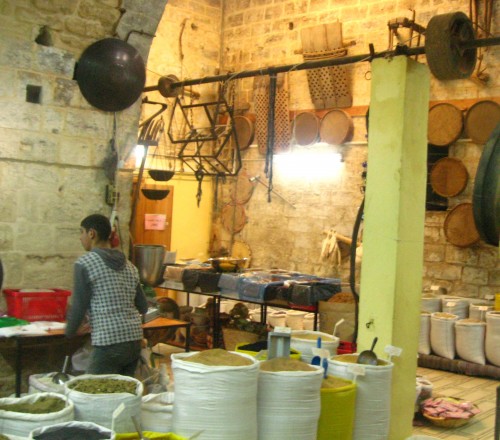
What’s on the mysterious Middle East spice rack

In the Middle East, aromatic traditional foods are regarded as medicine. Soup made with basil and thyme warms the body. Traditional Moroccan mint tea, or tea with a sprig of wormwood in it, aid digestion after a rich meal. Arab grandmothers well know the value of za’atar as a cough remedy.

Food well-seasoned with spices arouse the appetite. Those little dishes of spicy mezze set on the table aren’t enough to satisfy a good lunch-time hunger, but nibbling on them makes you cheerful, looking forward to the main dish.  Spicy foods make you aware you’re thirsty, and drinking plenty is a good thing in hot, dry climates where dehydration can happen quickly. And spices provide trace minerals that some populations, especially impoverished or vegetarian ones, depend on to maintain health.

"Cold Peace" May Keep Proposed Egyptian-Israeli Solar Project On Ice

1

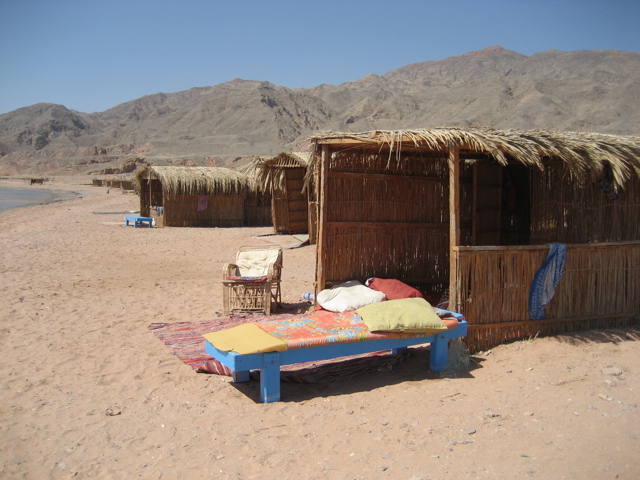
sinai desert hooshas photo kumkum 3

An Israeli-Egyptian solar project in the Sinai Desert? Not on Egypt’s account.

It was the sunniest news to come out of the Eilat Energy conference last week: that Israel and Egypt would be cooperating on solar energy projects in the Sinai Desert, now under Egyptian sovereignty.

While Israel and Egypt, thanks to Sadat now have peace, we have to realize once again, it’s probably a cold peace at best. So don’t get really too excited about Israel and Egypt  embarking on a joint solar energy project in the Sinai! Despite the fanfare in Jesse Fox’s February 18 post; there doesn’t appear to be much of a chance of this happening – at least in the foreseeable future.

According to Egyptian Energy Ministry sources, reported on Arutz Sheva, the Egyptian Ministry of Electricity and Energy spokesman Aktham Abul Ela was quoted in Arabic by the Al Masry Al Youm, and translated by the Independent Media Review Analysis (IMRA) saying that there would be no dealings with Israel, “not now or in the future”.

Tel Aviv Jewelery Designer Lilyja Does Her Share With Recycled Silver

1

recycled silver jewelry glass ohotoApparently if you put your mind to it, you can recycle any kind of material.  This Green Prophet had never heard of recycling silver, but thankfully it is not a foreign concept to jewelry designers who use it everyday and who don’t want to let any resource go to waste.

Like Lily (or Lilyja) who lives, creates, and recycles in Tel Aviv.

Lily collects all of the silver scraps that she generates while creating her handmade jewelry line and takes them to a friend’s studio, where they are all melded together and rendered useful again.  Certain items in her Etsy shop are made entirely out of recycled silver (like the ocean sky recycled sterling silver hoop earrings shown above – who knew?).

Will Solar Fields Cover Israel's Last Open Spaces?

0

Empty land in Israel’s Arava desert. (photo by Jesse Fox)

A conflict may be brewing between an emerging renewable energy industry and environmentalists over land preservation in Israel. The heart of the controversy has to do with where to put the massive solar installations that are expected to be built in the arid Negev and Arava regions in the south of the country.

To the untrained eye, Israel’s southern deserts are a vast expanse of empty land, largely uninhabited and ostensibly a perfect setting for solar energy initiatives, something which the country’s environmental movement has been pushing for quite some time. Now, however, when the country seems on the brink of setting up an extensive system of solar power plants both large and small, green organizations are expressing concern that covering large swaths of land with solar energy infrastructure could disrupt desert ecosystems.

Israeli Start-up GreenRoad Technologies Gets Boost from Al Gore

3

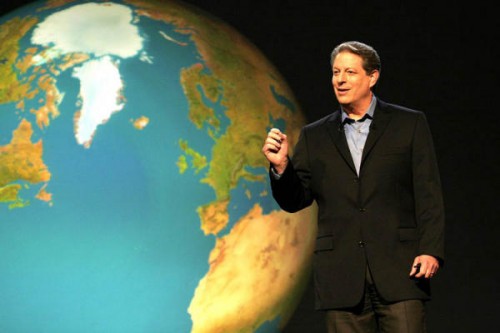
al gore israel green roadsImage of Al Gore via BusinessWeek

Former US Vice President and Nobel Prize winner Al Gore’s Generation Investment Management cleantech fund led a $10 million financing round for the Israeli start-up GreenRoad Technologies, the Globes business newspaper reported on Monday.

GreenRoad Technologies will use the new injection of capital to accelerate the deployment of its GreenRoad 360 service among existing and new customers. GreenRoad 360 provides drivers and fleet managers with real-time feedback and analysis of drivers’ abilities and driving patterns.

But what is green about GreenRoad Technologies?

5 Tips for Cleantech Companies to use PR to Gain Credibility in the Marketplace

0

Cutting your teeth in the PR business of clean technology? David Goldman from Expansion Media offers 5 tips that can help you and your clients get noticed.

On the heels of the Brightsource announcement today as well as the 60 Minutes segment that focused on stealthy and well-funded Bloom Energy and the flood of news coverage that will ensue followed closely by the likely increase in the Israeli Solar company’s valuation, I am reminded of the power of Public Relations.
david goldman pr tipsMost clean technology companies that are based in the Middle East might not have hard news just yet of the likes of Brightsource or Bloom Energy, but they can still use the power of the media/blogosphere to generate credibility and a sense of traction within their industries and work at a cleantech PR firm.

No other sector in the economy grew as fast last year and none is projected to grow as much this year as cleantech. This was due, in large part, to the stimulus money from around the world that flowed freely (even in a down economy) into the growing clean or green technology sector.

I’m sure we all noticed that nearly every magazine featured a “green” issue last year.

Consequently, larger PR firms have been launching cleantech practices and smaller boutique firms have emerged to manage the flood of new technologies ranging from electric vehicles to biomass, smart grid players, green building technologies and too many others to list here.

Furthermore, even larger traditional consumer brands are now demanding to have a “green” strategy in their communications plan. That is great news. The only question is: From where will all of these communications professionals come to manage these new accounts? My guess is that biotech, healthcare and technology PR practitioners will initially service cleantech accounts.

My background was in emerging consumer tech PR, which I thought would prepare me for cleantech. Let’s just say I had a rude awakening. Not only are the technologies completely different, but the clients themselves proved to be equally mystifying. It took me a while to get used to the world of cleantech as a communications professional, but eventually I did. I thought it might be useful to share some of the insights I picked up along the way. As a good friend once told me, “Why live and learn when we can learn and then live?”

Want to learn some tricks of the trade? Here are 5 tips for clean tech public relations companies and reps to follow:

US Gov. Guarantees $1.4 Billion in Loans For BrightSource and World's Largest Solar Thermal Plant

4

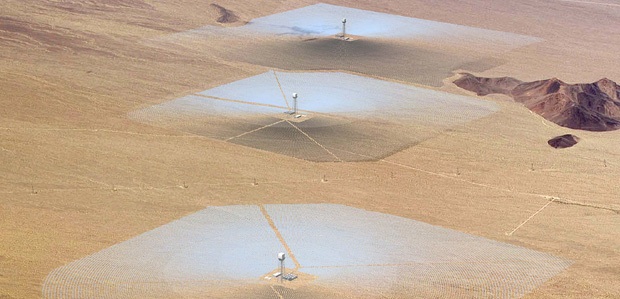
brightsource us department of energy california loans photoControversy loomed over coyote land, but now BrightSource with a US Gov guarantee will create largest solar energy project in the world, in Ivanpah CA.

BrightSource Energy, a privately held company with operations in the United States, Israel, and Australia, announced today that the US Department of Energy has conditionally committed to provide $1.37 billion in loan guarantees to support the financing of BrightSource’s Ivanpah Solar Electric Generating System. BrightSource, recently financed by PG&E, is a developer of utility-scale solar thermal power plants,

The commitment to provide loan guarantees marks a key milestone in the development of the Ivanpah project, California’s first large-scale commercial solar thermal power plant in nearly two decades. When constructed, Ivanpah will be the world’s largest solar energy project, nearly doubling the amount of solar thermal electricity produced in the US today.

Going On A Test Drive With the Better Place "Renault Fluence" Electric Car

2

[youtube width=”560″ height=”400″]http://www.youtube.com/watch?v=MnoliGpUtNg&feature=player_embedded[/youtube]

Green Prophet’s Karin was at the Better Place public education facility opening in Israel a couple of Sunday’s ago, where she met Sara from ISRAEL21c who made a video of the public debut. A little video of the center’s opening and Sara is enjoying the ride, is featured above.

A Nature Peace Park

3

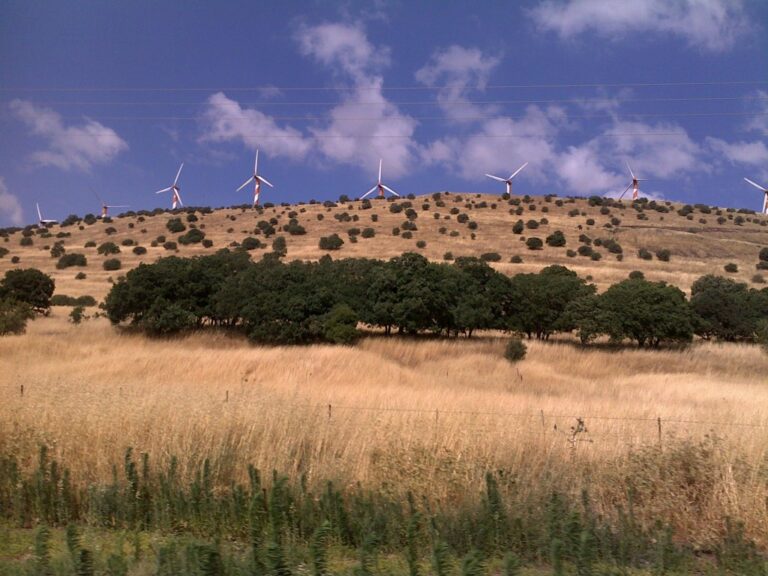
wind farm energy israel golan heights photoIsraeli-built wind farm on the Israeli-occupied Golan Heights. Israeli Syrian expert skeptical that nature Peace Park on Golan Heights would bring peace.

We’d reported last month on the Peace Parks conference hosted by Tel Aviv University. The idea is to create a nature reserve out of the occupied Golan Heights now under Israel sovereignty, and to return the land to Syria, of which one third would be a peace park and nature reserve open to both Syrians and Israelis.

Could a Peace Park use nature and our natural environment to broker peace between Syria and Israel? Tel Aviv University’s Syrian expert Prof. Eyal Zisser doesn’t think so. Here’s a Q&A from Prof. Eyal Zisser, head Moshe Dayan Center for Middle Eastern and African Studies, thinks about the concept:

Rounds of indirect talks between Syria and Israel ended without resolution in 2008. To re-open a channel, Tel Aviv University hosted a conference last month to explore the possibility of a Syrian-Israeli Peace Park.

The proposed park would turn one-third of the disputed Golan Heights into a nature reserve to be managed by Syria and enjoyed by both Syrians and Israelis. The remaining two-thirds, now under Israeli sovereignty, would be returned to Syria. Sponsored by the U.S. Embassy in Israel, the conference sessions attracted a full house of academics, politicians, NGO leaders and diplomats from countries across a diverse spectrum of opinion and expertise.

Prof. Eyal Zisser, head of Tel Aviv University’s influential think tank The Moshe Dayan Center for Middle Eastern and African Studies, appeared at the conference. He approves the positive thinking of proponents of the Peace Park, but finds it hard to see the project becoming a reality. An internationally renowned analyst of Syrian-Israel relations, Prof. Zisser explained why in a recent conversation:

Q: What makes you so skeptical about the prospects for a Peace Park?A: While it’s a positive and creative idea, remember that the two countries have had no diplomatic relations since Israel was established in 1948. The Syrians and Israelis have vastly different mentalities. For the Syrians, national pride is important and complete sovereignty over land is crucial.

In Israel, there are politicians, academics and NGOs are seeking a way to convince the public to return the Golan Heights to Syria, but that kind of one-sided negotiation is destined to fail in the current political climate.

Q: What would it take to make the concept a reality?
A: The whole idea behind a Peace Park would work after you’ve established peace, to help normalize relations. It would help develop warm bonds between the two peoples. But that’s not the sequence that’s being explored — and escalating security concerns between Israel and Syria mean that it could take years before the conditions are ripe for a peaceful resolution.

In Israel, the public well remembers a decade of brutal attacks with Syrians firing at civilians without provocation, a prelude to the Syrian assault in 1967. For us, giving back the land of the Golan Heights comes with a huge security risk that most Israelis would hesitate to take.
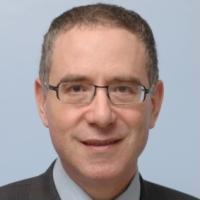
eyal zisser dayan center photoQ: So after 10 years of discussion, why is there is a renewed interest in a Peace Park now?
A: Researchers, non-governmental organizations, and those involved in the peace talks — including some Americans — think that a peace park would be a confidence-building measure among the Israeli public, a simple way make peace with Syria by giving back some acreage.

I think that’s naive. If there were the possibility of real public diplomacy between Israel and Syria, we wouldn’t need this park to cement our relationship.

Syria’s position is simple — they want the Golan Heights back. Period. They are not showing any signs they are willing to make real, warm peace for this kind of exchange, or even to pursue real public diplomacy, and for their part, Israelis are not interested in compromising with Syria for an empty photo op.

Another aspect of the proposed park is that two countries have exhibited very different levels of environmental protection and awareness. Syria is a third world country with a growing population that has very low environmental awareness.

Q: So why the U.S. interest in establishing a peace park?
A: The American government funded the recent conference as a friendly gesture — but there is no real U.S. interest. Some years ago, well before there was any diplomatic activity, a geographer who is currently a member of the Mitchell team suggested a peace park as an option.

The conference attendance and recent support from the U.S. government was really just a gesture. And the whole idea has progressed with no involvement at all from the Syrian side.

Q: If not a park, what might move the parties forward?
A: In order for there to be peace with Syria, the Israelis would need to see a radical about-face from the leader of Syria. They’d need a leader like Sadat to make a dramatic, historical move. That’s not who Bashar is, and it’s not going to happen. The only other conceivable game-changer would be Israel electing a prime minister who is willing to give up the Golan Heights — but without a change in Syria’s behavior, that’s unlikely.

Q: So is it fair to call the Golan Heights “occupied land”?
A: For all intents and purposes in the eyes of the international community, that’s true — but the occupation by Israel is very similar to the way the U.S. occupied Japan. That wasn’t a greedy colonial take-over to occupy more territory, nor is that the case for Israel in the Golan.

The “occupation” is situational and pragmatic: there was Syrian aggression towards Israel, and the 1967 War was the result. Israel defended itself, captured the Golan Heights, and remains there today because there is no peace with Syria.

It would be nice if a Peace Park were the mechanism to change that — but I’m quite certain it isn’t.

The international conference “Peace parks on Israel’s borders: The Syrian case study from theory to reality”, which took place on January 7th , 2010, was organized cooperatively by the Porter School of Environmental Studies, the Moshe Dayan Center for Middle Eastern and African Studies, the Tami Steinmetz Center for Peace Research, the S. Daniel Abraham Center for International and Regional Studies, and the University Institute for Diplomacy and Regional Cooperation of Tel Aviv University.