Home Blog Page 654

Rethinking Climate Change Under the Middle East Sun

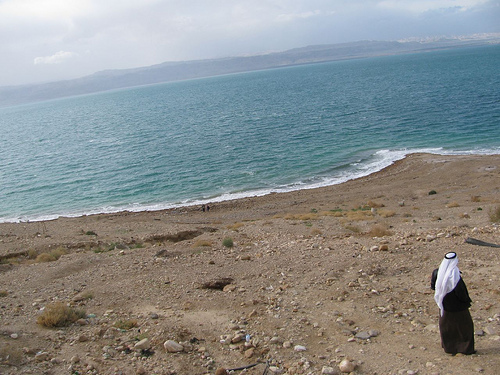
Sea levels off Israel’s coast have been rising and falling over the last 2,500 years suggesting that short-term trends of rising sea levels may not necessarily reveal a long-term trend.

Researchers around the world are putting their minds together, focusing on both global and local patterns to find symptoms of climate change. Is there going to be global warming or cooling, from climate change? How can confusing statistics leaked to the media, set the record straight so limits can be set? From coring into ice samples at the North Pole, to measuring coral reef damage in the Red Sea, scientists want to know how man-made global warming will affect nature, and our place in it. With the basic tools of science, I’ve dug up three new studies from Israel: These researchers are looking to the past and present to understand climate in the Middle East — evidence which could be useful on the global scale.

PART III: The ABCs of Middle-Eastern Spice Medicines from Hyssop to Nutmeg

3

photo of garlic
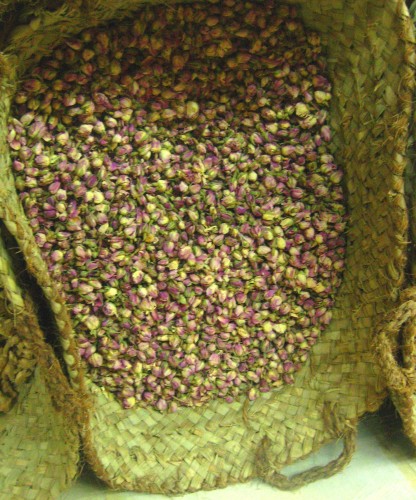
Kitchen spices as medicine are a green way to get a useful, and always on hand supply, when you need it. Choose organic when you can.

This is the third post in a series on medicinal spices. You can read Part I and Part II by following the above links. If you’re a Green Prophet, you know that simplifying your life and using less chemicals can be good on you and the environment. Heading through the alphabet, today, we’re discovering the surprising properties of H to N: the value of hyssop, juniper berries, nigella, and nutmeg/mace.

SolarEdge and Flextronics Create Solar Energy Products – and Jobs

solaredge flextronic solar energy middle east
Israeli startup SolarEdge partners with NASDAQ-traded Flextronics (FLEX) to ramp up solar energy harvesting systems.

Solar energy projects in Israel’s northern sectors are sure to get a boost from a signed agreement between SolarEdge Technologies Ltd and   Flextronics Inc to produce  systems for improving the efficiency of photovoltaic panels at Flextronics’ plant in Migdal Ha’Emek – to be sold all over the world.

SolarEdge which develops a system that maximizes power harvesting from PV installations (PowerBoxes – which are power optimizers that connect to the solar panels, as well as a DC-AC inverter and a monitoring portal), aims to ramp up production of solar power harvesting systems. The company was mentioned by Green Prophet back in August, 2008, in the article A Quick Guide to Israel Solar Energy Companies. And was recently voted by FAST as a Top 10 innovative company. SolarEdge is expecting sales of over 45MW (Mega Watts) of its products for 2010.

Egypt Tries to Attract Eco-Tourists to Sharm el-Sheikh With Promises of Carbon Neutrality

2

[image via: robert_hornung]

Sharm el-Sheikh, in the Sinai region of Egypt, has been a thriving tourist location for decades due to its incredible beaches and vast coral reefs.  Its great attraction to tourists has also been its downfall, however.  The reefs are currently under threat due to the dust caused by erosion.

With tourism accounting for a major part of Egypt’s GDP, something had to be done to protect Egypt’s natural (and money-making) resource, and grant it legitimacy in a world that increasingly wants to see environmental conservation efforts.

Egypt therefore recently announced its plan to become completely carbon neutral by 2020.  The $238 million project hopes to accomplish this through the introduction of renewable energy, reduction of water use, improvement of waste management, and, in the future, the use of electric boats and hybrid buses.

The green initiatives are planned to start this month and be completed by the end of 2010.  These early initiatives include new diving restrictions to help preserve already damaged reefs, and the powering of street lights with solar energy.

Selçuklu Evi Eco-ish Boutique Hotel in Turkey

12

From a heritage building in the historic region of Cappadocia, Turkey, this hotel works with local crafts and craftsmen.

It is important to apply eco-friendly labeling carefully.  This is especially true of the tourism industry that is often guilty of green-washing potential patrons to lure them to their site.  We have written about eco-lodges such Feynan in Jordan and Al Karm Ecolodge in Egypt that deserve their “eco-friendly” status given their strident conservation efforts.  Now we’d like to draw your attention to a boutique hotel in Ürgüp, Turkey that has partial claims to eco-friendliness and full claim to a fascinating architectural history.

Last Call for Israeli Clean Tech Companies: Meet Dream Teams In California

If you were an aspiring actor, it would be like getting an invitation to a wine and cheese Hollywood party with the industry’s top directors. Or an aspiring chef, getting some in-person training with Le Cordon Bleu masters in Paris. If you are an Israeli clean technology entrepreneur in focus areas of renewable energy, water, or smart grid technologies, now is your time to shine under the sun of California’s hottest clean tech investors, potential partners and utilities companies.

The California Israel Chamber of Commerce (CICC) is making its last call for Israeli companies to apply to its prestigious 3-day event, promising to open doors to some of the best opportunities America has to offer. Will your company open that door on April 26 to 28 this year?

Polyamory and Sex Could Save The Planet, Author Argues

magritte lovers rene photoThe Middle East is conservative. But could increased “polyamory” open people up to practices that could save the environment?

At first glance, sex and the environment don’t make obvious bedfellows.  How can the answer to our environmental problems – global warming, access to fresh water, ecological sustainability, and the use of fossil fuels  – possibly be found between the satin sheets of lovers? According to a growing number of greenies, free love may just save the world. In her newest book, Gaia: The New Politics of Love, author Serena Anderlini-D’Onofrio attempts to lay the groundwork for this premise.

Sheikh Abdul Aziz: A Green Sheikh Who Cares About Our Planet

6

green sheik Abdulaziz bin Ali bin Rashed Al Nuaimi, The rich folk from the United Arab Emirates are known for their over-the-top cars and wealth. Like gold-plated mercedes. Faux or real, the oil-rich Arab countries, even when they make green initiatives do it in such a bombastic way, counter-intuitive to the gentler, earth-friendly approaches most of us Green Prophets would stand behind.

But all might not be lost if the United Arab Emirate’s “Green Sheikh” gets his way: Sheikh Abdul Aziz bin Ali Al-Nuaimi (who we interviewed on Green Prophet), a member of the ruling Ajman Royal Family is now being known not just for his wealth. Locals are calling him the “Green Sheikh” and “Down to Earth Sheikh” as a result of his concern for his local and the world’s environment as a result of pollution and climate change. His concern started young, says his family.

According to the National, Sheikh Al Nuaimi has embarked on a journey to Antarctica as part of a 70 member team to study the effects of global warming and climate change on what was once considered to be the world’s coldest place on earth.

South Korea Looks to Collaborate With Israel on Renewable Energy

south korea and israel renewable

Shimon Peres from Israel and Lee Myung-bak from South Korea at Davos. (Image via Israeli Ministry of Foreign Affairs.)

A high-ranking delegation from South Korea is currently visiting Israel to explore possibilities for collaboration between the two countries on renewable energy. The 37-member delegation represents 22 companies, as well as local authorities and R&D centers, according to a report published in the Globes newspaper.

During the extensive 10-day visit, the delegation will visit 13 Israel companies: Zenith Solar, Heliofocus, GreenSun Energy, BrightSource, Better Place, Seambiotic, IQWind, Arrow Ecology, ETV Motors, Ormat Industries, EnStorage, CellEra and Aqwise. The delegation will also meet with officials at Israel’s National Infrastructure Ministry, Industry Trade and Labor Ministry, and Foreign Ministry, and will visit Tel Aviv University and the Technion – Israel Institute of Technology.

Join the Campaign to Get Facebook to Use 100% Renewable Energy

2

For the next week, your friends’ profile pictures might look a little different on Facebook.  A little greener.  Don’t worry, they’re not sick – they’re just concerned.  They’ve joined Greenpeace’s campaign to get Facebook to use 100% renewable energy and you should too.

Starting tomorrow, Facebook protesters will be changing their profiles to icons such as the one below in order to urge the social networking site to go green.

Why now?  Because Facebook recently announced that it will be building a massive data center in Oregon in order to serve the millions of people currently using the site.  Facebook proudly noted that the center will be full of energy efficient computers… but the company plans to run the site on coal-generated electricity.  (So what’s the point, right?)

Since Facebook is one of the largest (and therefore one of the most energy guzzling) social networking sites in the world, having them go sustainable would make a big impact.

The campaign is calling for Facebook to:

Commit to stop using polluting coal power.

Use its purchasing power to choose only clean, renewable sources of electricity.

Advocate for strong climate and energy policy changes at the local, national and international level to ensure that as the IT industry’s energy demand increases, so does the supply of renewable energy.

Share this information publicly on its website so its millions of users know the company is a climate leader.

'Zendegi' in Neve Tzedek Offers Highest Quality Organic, Fair Trade Clothes

3

zendegi-neve-tzedek-organic-cotton-boots-fair-tradeThe first time I entered Zendegi, a natural and organic clothing shop in Tel Aviv’s historic Neve Tzedek neighborhood, a particularly unique pair of boots caught my eye.  I picked up the boots to take a closer look, but quickly realized that they were out of my intern-activist-blogger budget range.

“But you have to understand why!” exclaimed Shirly Askary, the store’s proprietor.  Shirly explained that the boots are made of 100% organic cotton and natural rubber soles.  Furthermore, they are hand-sewn by a Palestinian man in Hebron, who receives a fair wage for his labor.

The boots, as well as the organic, hand-loomed cotton clothing, hand-crafted gemstone jewelry, and natural bath and body products reflect Shirly’s ambitious vision for her store.

Is Moshe Safdie’s Habitat ’67 for Middle Eastern Urban Housing?

2

moshe-safdie-habitat-1

Habitat ’67 was a model for sustainable village living, in the city. Based on the model city Haifa, does it translate to the Middle East today?

We recently profiled Moshe Safdie’s LEED certified Peace Building as a call to bring more sustainable building to the Middle East. In it, we briefly mentioned Habitat, Safdie’s debut project, which was also his Master Thesis for McGill University.

Built for the 1967 World Fair in Montreal, we wondered whether this controversial cube complex, conceived long before today’s flurry of climate concerns, could enhance other Middle Eastern development projects such as REAL Housing in the Negev Desert in Israel.

Moshe safdie, Habitat 67, Montreal, Karin Kloosterman, 2021

The scaled-down village

Habitat ’67 is a thirteen level housing complex comprised of 354 modular construction units making up 158 houses.  Each of these, molded with precast concrete, is 38’6” x 17’6” x 10’ high and can be put together in 20 different combinations ranging from 600sq ft single roomed units to 1700sq ft four bedroom homes.

The top eleven floors consist of housing, the second floor shelters a pedestrian plaza complete with walkways and bridges, while parking facilities and a road system connecting the service areas are on the ground level.  One family’s roof is another family’s garden.

moshe-safdie-habitat-6

Creating a garden was an extension of the greater plan to make apartment habitation more like life outside the city.  The young graduate modeled Habitat as an affordable, egalitarian housing unit reminiscent of Arab villages and the hills of Haifa, where he was born and raised. He hoped that his design would give families a sense of belonging, identity, and individuality often lacking in crude block apartments sprouting elsewhere.

moshe-safdie-habitat-2

Habitat should have been a village for 5,000 residents, but the World Fair treasury balked at the idea and the original design was scaled down to 1/6th of its planned size.

Safdie’s village would have included shops, services, a school, and a clinic, and the high population density would have kept rents affordable.  Instead, according to Pierre Berton, because the treasury minimized Safdie’s project, residents feel isolated from amenities and today only the wealthy can afford the high rent prices.

moshe-safdie-habitat-3

Is concrete sustainable?

Sustainable Cities considers pre-fabricated housing to be one of five feasible approaches to city building, which puts Habitat in good standing.  However, though concrete is more sustainable than steel, according to tests conducted by the University of Illinois, mining, heating, and breaking down concrete can be energy intensive.

moshe safdie habitat 67

Concrete is also a mediocre insulator and heat conductor, even though its large thermal mass enables it to store energy efficiently.  So, while we think that Safdie’s original plan could be re-visited as a decent model for urban housing in the Middle East, the actual complex, which is neither affordable nor necessarily sustainable, is less than ideal.

moshe-safdie-habitat-5

::Habitat 67 website

Melt-in-your-mouth tehina cookie recipe

8
tehina cookies
You can only go right with cookies made from tehina. So good with black tea or a cup of milk.

You won’t be able to keep these halvah-like cookies around for long. And they couldn’t be simpler to make.

We never thought to use tehina (or tehini as you might know it) in baking, but this recipe produces the most meltingly delicious cookies you can imagine.

If you’re looking for ways to use up your flour before the Jewish Passover holiday coming up, try them. It takes only 25 minutes and six steps from raw ingredients to placing them in the cookie jar. Advice: hide a few for yourself before they disappear.

Tehina Cookies Recipe
Yield: about 3 dozen cookies

Ingredients:

200 grams soft margarine or butter

1 cup sugar
2 tsp. vanilla
1 cup tehina. If there’s a layer of oil floating on top of the jar, stir in back in.
2 cups plus 4 tbsp. flour
1 tsp. baking powder
Optional: 2 tbsp. pine nuts and powdered sugar

Method:
Preheat the oven to 160 C – 325 F.

1. Cream the margarine and the sugar together.

2. Add the vanilla and the tehina and blend again.

3. Combine the flour and the baking powder; add to the tehina mixture.

4. Form balls the size of walnuts and place them on a greased baking sheet. The dough is dry and crumbly, so squeeze it together to make the balls.

If adding the optional pine nuts, do it like this: form one cookie ball; take 2 or 3 pine nuts into your left palm, and with your right hand, press the ball onto them. Reverse it onto the baking sheet. If the ball crumbles slightly, just squeeze it back into shape with your fingertips.

Bake for 13-15 minutes. Do not bake longer. The cookies need a little moisture to retain their shape and not crumble. Cool the baking tray on a rack, and don’t touch the cookies for at least 5 minutes. If they’re handled while hot, they will fall apart.

Dust with powdered sugar when they’re cool.

Enjoy!

Other green-inspired recipes you’ll enjoy:

Photo of Tehina Cookies by Miriam Kresh

The Middle East Will Remain "LEAF" – Less as Nissan Puts Electric Car Efforts Elsewhere

nissan electric car

Nissan’s all-electric LEAF gives a run for Volt’s and Better Place’s money. Nissan has no plans, however, to target infrastructure-poor Middle East.

The battle over which company will market the first practical electric car is becoming more intense with the introduction of Nissan’s new total electric LEAF model. The Japanese carmaker is marketing this new entry into the electric car market as being one which is totally electric, as compared to hybrids and GM’s Volt model (which also has two engines, even though the gasoline one is only used for charging the batteries for the electric engine).  I’ve compared the Chevy Volt to Better Place’s Renault prototype model, and pointed out the differences between the two concepts.

Get a Ride and Reduce Carbon Emissions with Egypt Carpoolers

If you’ve ever braved the streets of Cairo, you know that every time you cross the street there as a pedestrian an adventure is in store.  Cairo, unfortunately, is almost synonymous with traffic congestion, and all those drivers want to get where they’re going – fast.

But if there were less cars on the road (and fewer people riding alone in their cars), those drivers really could get where they wanted fast.

Five young Egyptians who got sick of sitting in traffic during their morning and evening commutes decided something had to be done.  They started Egypt Carpoolers for those who are “fed up with traffic, pollution, gas prices and stress related to driving in Egypt.”

How does Egypt Carpoolers work?

It is a website where ride offerers and ride wanters can meet.  The steps are simple: register on the website for free, offer/request a ride, and start carpooling.  (Or, in other words, start reducing carbon emissions, saving money, meeting new people, and hopefully getting to work faster.)