Home Blog Page 64

Real-life Moana “Shiny” sponge collects glitter to stop from being eaten

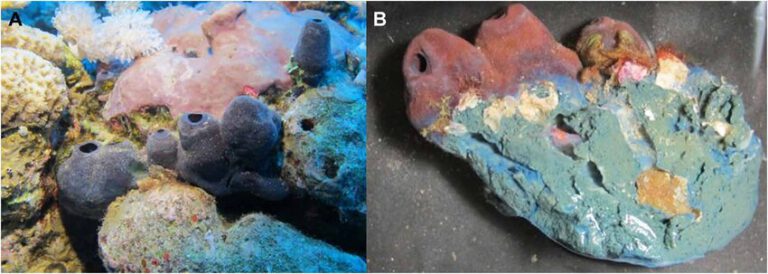
T. conica from the Red Sea. (A) the sponge seen in the Gulf of Aqaba at 30 m in depth before sampling. (B) image showing the sponge's external maroon (ectosome) and interior blue (endosome) parts following sample removal.
T. conica from the Red Sea. (A) the sponge seen in the Gulf of Aqaba at 30 m in depth before sampling. (B) image showing the sponge’s external maroon (ectosome) and interior blue (endosome) parts following sample removal.

We know the giant clam from the Disney film Moana. He collects diamonds and pearls. But in a new real life discovery, scientists working at the Red Sea have found sea sponges use glittery metal to ward off predation.

The study found that sponges in the Gulf of Eilat on the Red Sea have developed an original way to keep predators away. The researchers found that the sponges contain an unprecedented concentration of the highly toxic mineral molybdenum (Mo). In addition, they identified the bacterium that enables sponges to store such high concentrations of this precious metal and unraveled the symbiosis between the two organisms.

The study was led by PhD student Shani Shoham and Prof. Micha Ilan from TAU’s School of Zoology. The paper was published in the leading journal Science Advances.

The researchers explain that sponges are the earliest multicellular organisms known to science. They live in marine environments and play an important role in the earth’s carbon, nitrogen, and silicon cycles. A sponge can process and filter seawater 50,000 times its body weight every day.

With such enormous quantities of water flowing through them, they can accumulate various trace elements – and scientists try to understand how they cope with toxic amounts of materials like arsenic and molybdenum.

Twenty to 30 years ago, researchers from a lab collected samples of a rare sponge called Theonella conica from the coral reef of Zanzibar in the Indian Ocean and found in them a high concentration of molybdenum. Molybdenum is a trace element, important for metabolism in the cells of all animals including humans, and widely used in industry.

“In my research, I wanted to test whether such high concentrations are also found in this sponge species in the Gulf of Eilat, where it grows at depths of more than 27 meters,” says PhD student Shani Shoham: “Finding the sponge and analyzing its composition I discovered that it contained more molybdenum than any other organism on earth: 46,793 micrograms per gram of dry weight.”

She notes: “Like all trace elements, molybdenum is toxic when its concentration is higher than its solubility in water. But we must remember that a sponge is essentially a hollow mass of cells with no organs or tissues. Specifically in Theonella conica, up to 40% of the body volume is a microbial society – bacteria, viruses, and fungi living in symbiosis with the sponge.

One of the most dominant bacteria, called Entotheonella sp.serves as a ‘detoxifying organ’ for accumulating metals inside the body of its sponge hosts. Hoarding more and more molybdenum, the bacteria convert it from its toxic soluble state into a mineral. We are not sure why they do this. Perhaps the molybdenum protects the sponge, by announcing: “I’m toxic! Don’t eat me!”, and in return for this service the sponge does not eat the bacteria and serves as their host.”

No sponge farming for rare metals

Molybdenum is in high demand, mostly for alloys (for example, to make high-strength steel), but according to Shoham, it would be impracticable to retrieve it from sponges: “The concentration is very high, but when translated into weight we could only get a few grams from every sponge, and the sponge itself is relatively rare.

“Sponges are grown in marine agriculture, mostly for the pharmaceutical industry, but this is quite a challenging endeavor. Sponges are very delicate creatures that need specific conditions.

“On the other hand, future research should focus on the ability of Entotheonella sp. bacteria to accumulate toxic metals. A few years ago, our lab discovered huge concentrations of other toxic metals, arsenic (As) and barium (Ba), in a close relative of Theonella conica, called Theonella swinhoei, which is common in the Gulf of Eilat.

“In this case, too, Entotheonella was found to be largely responsible for hoarding the metals and turning them into minerals, thereby neutralizing their toxicity. Continued research on the bacteria can prove useful for treating water sources polluted with arsenic, a serious hazard which directly affects the health of 200 million people worldwide.”

Transform Your Restaurant with Eco- Friendly Food Packaging: The Benefits of Going Compostable

sustainable packaging

Switching to ecological food packaging is one of the most effective steps restaurants can take towards sustainability. As the environmental movement rises, more and more conscious consumers look to do business with companies that reflect their values through ethical means.

Many consumers seek packaging options that help reduce physical waste. Compostable packaging checks all the boxes—enticing new patrons could also give you an edge over competitors.

Due to the petroleum-based material that traditional plastic and foam serving ware are constructed from, these items have been polluting our oceans, lands, and, ultimately, the planet for centuries as they NEVER biodegrade.

Yet, as numerous brands are now manufacturing compostable alternatives, there is no excuse for any more establishments in the food industry to destroy our environment further. With more sustainable offerings to restaurants, they can operate more ethically and reach an electorally responsible market as well.

Why Choose Eco-Friendly Food Packaging?

Environmental Benefits

Swapping to compostable food packaging comes with substantial environmental benefits. These are often made out of traditional, nonrenewable plastics that take millions of years to break down and pollute wildlife and habitats.

Compostable containers are made of a plant-based source, such as sugarcane, bamboo-or even paper or bagasse-and completely biodegrade within 3 months when disposed of correctly.

Yet, for true decay to occur and for the material to be utilized in an environmentally friendly manner, a commercial composting facility would be needed to help it decompose properly.

When the Earth is kept clean from plastic/foam litter, it prevents dustbins from building up with foam/plastic waste for endless decades or spreading into oceans/lakes/waterways and the wilderness of forests and lands beyond.

Restaurants can take a hint and reduce their footprint by choosing eco-friendly options like sturdy, water-resistant, and sustainable kraft paper, which offers the greenest solution for saving our forests.

Cost-Effectiveness

Restaurant owners may find it daunting to consider retiring existing packaging and transitioning to more sustainable choices. They worry that swapping out one thing for another will hike up costs in the long term. Recyclable materials like glass, kraft paper, metal, and cardboard can also be cost-effective and eco-friendly, offering potential energy savings from recycling processes.

However, compostable products can frequently cost the same or actually less than their traditional plastic and foam counterparts, as many communities have reduced expensive trash disposal costs.

As an illustration, published landfill dumping fees suffice to make a 32-oz compostable cup price the very same or moderately less than a 32-ounce foam disposable cup.

Some state and county financial incentive programs encouraging eco-innovation may provide energy subsidies, which can lead to even further savings on compostable supplies. Green Paper Products enables customers to go green without losing out on profit margins thanks to cost-wise packaging front-of-back switching.

Customer Appeal

Data from a 2019 investigation into how companies use sustainable practices to care for their environment showed that Americans consider it more important than food quality to patronize higher-end eating places with eco-friendly packaging and policies.

As diners, this is indicative of a high enough percentage of thoughtful consumers who were willing to pay more for the brands they support to preach their social responsibility loudly.

Compostable packaging, which resonates with this fraction of Earth’s inhabitants, allows restaurants to attract these eco-friendly consumers and cultivate goodwill in communities. The utilization of green choices supplies services with a competitive benefit and also awards existing customers for supporting companies that straighten with their wish to lower waste.

Sustainability also plays well with a growing cohort of Gen Z and millennial consumers who are demanding that brands align themselves, if not entirely, then at least in part, around their values. Shifting operations allow restaurants to target conscientious consumers who influence them from liberal patrons.

Read More: The Easiest Ways For Businesses To Improve Their Reputation For Sustainability

How to Transition to Compostable Packaging

Assess Your Current Packaging

First and foremost, the process should start by evaluating whatever items are used to ensure they comply with environmental standards. It is also important to assess the use of recyclable materials to enhance sustainability.

Review what types of disposables you have and how many containers, wrappers, cutlery, or other disposables you have.

Record the brand and which part of the restaurant uses each item. Identify a process for substituting plastic or foam offerings that perform the same function with certified compostable alternatives.

This will prove useful later on when you need to switch over. Record the findings clearly! Conducting a holistic evaluation, which identifies savings throughout the operations, makes it easier to adopt sustainable alternatives.

Selecting the Right Compostable Products

Then, check out the options of packaging suppliers that deal with food-related items. These include authentic plant-based containers, plates, cups, wraps, utensils, and so on. They are made from Sugarcane bagasse, bamboo paper, and bioplastic renewable sources.

Plant-based packaging is made from renewable resources and is biodegradable using sources like corn and cornstarch, which in turn make them cost-effective and earth-friendly for food companies.

Do your research on compostability certifications (Ex, ASTM D6400) and BPI-endorsed products, which say items will break down completely in 180 days. Ask for free sample packs to fondle quality and judge the value before paying in bulk.

For fast-casual restaurants and catering events, renewable materials like bagasse molded fiber food containers are a must to reduce their environmental impact.

Always verify compostability by reviewing materials, logos, and specifications to ensure that they can be processed at your local facility- regional standards vary. Prescribe with reps for best eco-products costs and inventory requirements. Ensure that selected products can be processed at a commercial composting facility to maximize their environmental benefits.

Implementing the Change

Once they have researched and selected eco-friendly packaging options, restaurants must then effectively transition by educating their entire staff about why making more sustainable choices is important, as well as instructing them on how to use them correctly.

Increased in-store visibility through clear signage, leveraged social media campaigns and communicated new commitments with team members through community outreach newsletters or flyers. This, in turn, required customers to be educated to explain how packaging changes lead to less waste and land pollution.

Think about temporary menu markdowns encouraging customers to use refillable containers, which will result in more savings on food costs over the long term. Switching to these green operations is not easy; the transition stage often feels a bit painful initially, but if tried persistently, its results are worth all the trouble.

Read More: 4 Simple Swaps You Can Make to Live a More Eco-Friendly Life

Using Social Media to Get the Word Out

Social platforms constantly have free tools to help you tell your sustainability story far and wide. Highlight your use of eco-friendly packaging by posting significant milestone transitions on Facebook, BTS images from the changeover, and visually appealing graphics in support of eco-values on Instagram & Twitter.

Show happy reactions from customers about your change and ask followers how exactly you can green up next. Incentivize preferred sustainable choices by geo-targeting social ads for picturesque locations and promoting special discounts.

Collaborate with influencers, feeding them comp items that lead to organic posts from local figures. Then, demonstrate your commitment to those areas you feel most strongly about to cultivate loyalty among followers.

Read More: What is meant by the decarbonization of industry?

Benefits Beyond Packaging

Containers do not need to be the end of a sea change complete rewrite. Think beyond solar and other efficiency-boosting technologies, low-flow fixtures, bulk condiment dispensers, or digital menus (say goodbye to laminated Petri dishes a menu). Embrace sustainable packaging to support food service operators in creating successful businesses while contributing positively to the environment.

Conduct a carpool promotion on employee greening, put reusable dishware in break rooms, and put it in waste to make it worthwhile: conduct donation drives that keep usable items out of landfills.

Work with local farms to compost food waste and join consortia purchasing networks for the lowest natural cleaners prices. Globally, a 360 Vision of being fully Sustainable affects Triple Bottom Lines; environmental, social, and financial returns at a large scale.

Conclusion and Insights

These practical examples present a good case as to why eco-friendly packaging is advantageous for the environment and business. In doing so, compostable products reduce waste and attract environmentally-conscious modern consumers with community-minded choices.

This will only reinforce the call for all industries to ‘green up’ from consumer demand, competition, and tougher laws. For now, restaurants adopting sustainability are seeing a first-mover lift to break from larger competitors dragging their feet on progress.

By packing up with notorious suppliers, the process of flipping to certified offerings is sped up and more efficiently compasses brands stewardly. Transform your operations today and make a significant impact on goodwill in the community with Green Paper Products. The future seems bleak, but we can always build it to be brighter, one takeout container at a time.

Read More: Microplastics from brushing your teeth and wearing plastic aligners?

Green Paper Products a Greener Future

More customers, especially young diners, prefer indulging in restaurants that act purposefully regarding the environmental choices that they make during operations, including the use of sustainable packaging. Early adopters moving to compostable solutions are dominant over the laggards, thus placing them ahead in environmental position.

Transitioning operations takes some tweaks in the short term, but working with an experienced supplier makes the process easier. Green Paper Products has years of experience helping the food industry switch over to certified compostable products.

All their containers, cutlery, and plates are fully tested to be compliant with the ASTM compostability standard. Their products provide an alternative to traditional plastic and foam items, as sustainability properties along with a cost efficiency benchmark against comparable performance.

When staging your restaurant for eco-packaging solutions, contact Green Paper Products. Find out more about your needs and book a free consultation today! Their in-house packaging expert can assess your current supplies, offer compostable options or sustainable paper alternatives, and create a made-to-measure switch plan.

Take advantage of this – sign up now to receive exclusive, introductory pricing for your first order. Green Paper Products is here to help bring your business closer than ever to sustainability.

 

Industrial wastewater treatment for food and beverage mastered by BioprocessH2O

0
BioprocessH20
BioprocessH20 works with nature to reduce effluent and pollution in the food and beverage industry.

Food processors specializing in dairy, meat, confectionery, and beverage production are restricted from disposing of animal byproducts or wastewater through standard drainage systems. All forms of waste, whether liquid or solid, require specialized treatment methods before disposal.  

The world leader in the sustainable space of wastewater treatment is BioprocessH2O, an American company from Rhode Island that mimics nature in their system designs. ​​

The company offers sustainable water filtration devices that help their clients become EPA-compliant. Their products are adaptable to different industries and global locations. 

The company is currently focused on expanding its partnerships within the global food and beverage manufacturing sector, specifically targeting firms that face challenges in managing liquid waste. They are already helping large companies and publicly-traded entities future-proof their factories to meet evolving environmental standards and by doing this the company assists both their clients and the environment.

Current clients include giants like Haribo, Coca Cola and Kraft Heinz. Even the US Border Services trust BioprocessH2O with treating wastewater at their facilities in the US. 

BioprocessH20 and Coca Cola

The food and beverage industry faces unique challenges in wastewater management, because effluent produced is diverse and can include biological and organic elements that have special health and environmental risks.

A common theme is the need to reduce biochemical oxygen demand, BOD, in effluent across industries. 

Other pollutants vary on whether or not they are present and may include nitrogen and phosphorus, inorganic contaminants, pathogens and antibiotic-resistant bacteria. Companies that show traces of such problematic pollutants can be met with heavy fines, negative press, environment lawsuits and risks to shareholders. 

Current success stories include Hood, which reduced biochemical oxygen (BOD) demand by more than 90% with BioprocessH2O’s sustainable treatment solution. Coca-Cola also upgraded a failing treatment system, to a new MBR system, reducing BOD from 25,000 mg/L to less than 50 mg/L; and Guggisberg Cheese which achieved over 90% BOD reduction for permit compliance.

BioprocessH2O’s main products are a Membrane Bioreactor (MBR) and a Moving Bed Biofilm Reactor (MBBR).

Consider the case study of Kraft Heinz which needed to meet new permit limits while accommodating increased production capacity. Consulting with BioprocessH2O Kraft Heinz implemented a comprehensive wastewater treatment system that included an equalization tank, screening, and a Moving Bed Biofilm Reactor (MBBR), achieving effluent quality well within permit limits, with BOD levels below 250 mg/L and TSS levels below 5 mg/L.

How does an MBBR Work? Understanding the Basics

The Moving Bed Biofilm Reactor (MBBR) at its core uses the power of microorganisms to effectively treat wastewater. The solution is made up of biofilm carriers, which are small plastic elements that provide a large surface area for microorganisms to grow on. These are matched with an aeration system that gives oxygen to the biofilm, breaking down pollution using the power of nature. 

Current competitors in this space include Ecologix Systems, World Water Works, and Evoqua. BioprocessH2O stands out for deep industry knowledge, customer support, and competitive pricing, says a company spokesperson.

Founded in 2007 with 2 guys and a dog, the company has grown to 20 people to include satellite offices in Western Massachusetts and Florida. The ROI varies from project to project. The quickest ROI, the company notes, was for a product recovery case and was 8 months until they broke even.

Who needs BioprocessH2O?  Services are ideal for industries with varying wastewater compositions from landfills, food and beverage, manufacturing, pulp and paper, petrochemical, all the way to mining and cities that need wastewater management. After treatment, the clean water is separated from the carriers and discharged.

When companies work with the leading experts in wastewater management they not only ensure operational sustainability but also set standards among the competition. 

::BioprocessH20


Nature’s Path and regenerative agriculture: interview with Arjan Stephens

0
 
regenerative organic agriculture
What is the the difference between Regenerative Agriculture – which still allows the use of RoundUp and pesticides – and Regenerative Organic Ag? Nature’s Path explains. 

On the surface, it appears like American industries are finally making some needed shift to mitigate climate change – or at least using the appropriate “green” vernacular and 2030 projections in their branding and communications.

Is it enough?

From an environmental science perspective, the answer is a resounding no. Still, as we incentivize and engage industries to curb their impacts, aren’t baby steps still better than no change at all? Some reluctant industries – where change is synonymous with profit loss – need to be courted and lured into semblance of responsibility: a foot in the door vs. door in the face approach. Or should we demand giant leaps and sweeping reform as the only way out of the climate change spiral?

 With question, let’s consider one of the biggest climate change contributors: agriculture.

I experienced a sweet bubble of hope after watching the documentary on regenerative agriculture film brought to us by Woody Harrelson and Kiss the Ground in LA

Despite a few gratuitous celebrity plugs, the film cracked opened the numerous win-win possibilities that could be achieved an agricultural approach that removes tilling and uses the power of photosynthesis in plants to sequester carbon in the soil while improving soil health, yields, water resilience, and nutrient density. HOORAY, the earth’s soil (when managed right) can actually draw down carbon from the atmosphere, reduce the greenhouse effect, and make for better farming products and profits.

What is regenerative agriculture?

Kiss the Ground is not just a movie, it’s a non-profit that is fostering the shift of commercial farms to the regenerative agriculture approach. Yet, their mission falls short on one critical front: pesticides. Regenerative Agriculture without the word “organic” would still allow the use of RoundUp.   

I wanted to explore this concept with industry leaders, who are taking a harder stance on farming, namely Regenerative Organic Certified partners.

I first encountered Nature’s Path’s cereal about 15 years ago. The brand is led by its founders Ratana Stephens and Arran Stephens and now their son Arjan, general manager. Arjan is the President of Que Pasa Mexican Foods and the Executive VP for Nature’s Path Foods

“Leave the earth better than you found it,” was what Arjan’s grandfather Rupert told his dad as a child growing up on Vancouver Island in Canada where they ran an organic berry farm, founded in 1949.

Rupert also wrote songs which he brought to LA. Back then the “no poisons used” was an early warning call for Rachel Carson’s Silent Spring. People in the farming industry knew chemicals were bad, but few, unlike the Stephens, were speaking up. Speaking up or farming differently usually isn’t good for business. 

Today the “leave the earth better than you found it,” mantra is the guiding force behind the business.

Today we speak with Arjan about the business his parents started, Nature’s Path, and how his company is shepherding the food industry into the path of regenerative agriculture.

Green Prophet: Sustainable, organic, non-GMO is what people at health shops look for today. Will sustainable be replaced with regenerative? Explain.

Arjan: First, I would like to clarify that there is a massive difference between Regenerative and Regenerative Organic Agriculture. We at Nature’s Path are passion advocates for Regenerative Organic Agriculture.

Regenerative alone doesn’t go far enough. Although Regenerative aims to enrich the soil, it lacks any standards prohibiting the use of conventional pesticides, herbicides, synthetic fertilizers and GMOs.

Regenerative Organic by contrast, is rooted in organic farming, and abides by a high standard of land management to not only enrich the soil, but also sequester carbon in the soil, prioritize the welfare of farm animals and fairness for farmers and workers.

Regenerative, without the word Organic partnered with it, is greenwashing. 

Regenerative Organic Agriculture is the next level in sustainable, organic and non-GMO, it’s a kind of farming that goes beyond sustainable. 

Green Prophet: I have a theory that the wildest, boldest, most common-sense ideas about shifting planetary consciousness in the last 30 years has moved from the east to Canada. For instance, the raw water movement seems to be led by Canadians. Can you agree with this, or not? Explain. Or tell us about what you know.

Robert Rodale coined the term “Regenerative Organic” more than thirty years ago to describe a holistic approach to farming that encourages continuous innovation and improvement of environmental, social and economic measures. Rodale was American, so this movement did not start in Canada.

The Rodale Institute introduced a new high-bar standard for agriculture certification in 2018. Regenerative Organic Certification is maintained by the Regenerative Organic Alliance (ROA), a non-profit made up of experts in farming, ranching, soil health, animal welfare and farmer and worker fairness. And our farm, Legend Organic Farm in Saskatchewan is the first farm in Canada to be ROC certified, so maybe that is the Canadian connection! The aim of our farm is to bring us closer to our goal of building a food movement that helps to heal the soil, land, water and air,

Green Prophet: Tell us about your support at the University of Victoria. What do you plan to achieve?

The University of Victoria has a unique culture which draws students interested in sustainability and regenerative food systems, and our relationship goes back many years.

In 2015, my sister met a recent graduate of the University who said that she was passionate about organic agriculture but that there were no grants she could apply for that could sustain her interest. In 2016, seeking to address this lack of funding, my family set up a series of grants.  

To date, we have supported 8 graduate students and 2 undergraduates for a total of $90,000. Diverse studies have ranged from quantifying the importance of farmer’s markets, the intertidal gardens of Lekwungen and ‘Namgis First Nations, and important ecological restoration projects.

Our gifts to the University of Victoria help passionate students carry out meaningful research on Organic and Sustainable Food Systems.  Our overall goal is to inspire others to quantify and elaborate a truly sustainable-organic agricultural paradigm. 

Green Prophet: Where are the best places to source regenerative raw materials? Are you having an easier time in Europe where farms are already set up that way? How can things change in Canada and the United States? Ideally you will want raw materials to be close to production.

Nature’s Path launched the first Regenerative Organic breakfast product on the market, our Regenerative Organic Certified (ROC) Oats, and we source all our ROC oats from our very own farm (Legend Organic Farm) in Saskatchewan. We do not source raw materials from anywhere else.

But we are hopeful more farmers will shift to regenerative organic practices. We hope to help lead the transformation process through our own farm first and share what we learn with others, with the transition of agriculture from the worst practices to the best regenerative practices as the goal. We also hope to introduce other Regenerative Organic products in the future. 

Why is regenerative farming the future?

Regenerative Organic farming is the future because sustaining current forms of agricultural practices is not enough to regenerate soils beyond their current condition. We must focus on regenerative organic practices that heal and enrich the soil that supports us. It is this kind of soil that can capture carbon from the atmosphere and sequester it in the ground, helping to reverse climate change. More than ever, farmers have a very important role to play in climate change. That in a nutshell is why regenerative organic farming is the future.

Do you see any shift since Covid among young people and how they consume, or in farming? Back to the land?

I see more young people being interested in what nature can provide and less interested in what human interventions can. Post-Covid, I feel more people (young people included) are wanting to be more connected to their food, to understand where it comes from. To avoid more processed foods. To eat more fresh, nutrient rich produce. Eat more plant-based. Non-GMO. Non-refined sugars. Even the Keto and Paleo diets are part of this trend. 

Tell us about consumer demands. Where are their tastes shifting? And as a brand do you find you are following or leading them forward? 

As a brand, we have always prided ourselves on leading. We were organic 35 years ago, before anyone was talking about it, before organics became a multi-billion-dollar global industry. My grandfather pioneered organic farming at his berry farm. My father opened the first vegetarian restaurant in Canada in 1967. He then opened the first natural food store in Canada a few years later. This was before there were Whole Foods across cities, before organic agriculture entered popular culture. We hope to continue to lead for many more years to come.

arran and ratana stephens
Ratana and Arran stephens

Tell us how your family-rooted business is important for the planet. 

Being a family owned and operated business means we can make decisions without being beholden to external pressures. We have always operated from the triple bottom line: socially responsible, environmentally sustainable, financially viable, and we would never make a business decision at the expense of people or the planet. That is the wonderful thing about being a family business.

Sustainable hair care tips from a dermatologist

0

hair type routine

It’s tempting to take advice from a TikTok video but hair is as unique as its wearer, making care an important aspect in one’s overall health and wellness routine. From understanding your hair type to learning the best shampooing technique (yes, there is one!), proper care and your diet can prevent certain types of hair loss and leave your hair looking healthier than ever.

Related: 5 reasons to ditch shampoo and go no-poo

“An optimal hair care routine isn’t just about keeping your hair looking its best,” says Dr. Deeptej Singh, a board-certified dermatologist in Albuquerque, NM. “It also prevents damage and promotes growth, ensuring your hair stays strong and resilient.”

Related: Caring for Muslim hijab hair

To keep your hair healthy and looking good, Dr. Singh suggests following these tips:

  • Learn your hair type. Whether you have curly, straight, coarse, fine, or another type of hair, there are products and routines that will work for you. Choose hair care products that say they’re made for your hair type. You may see hair types described by numbers and letters, going from fine, straight hair to thick, tightly coiled hair.
  • Wash your hair based on how often it gets dirty or oily. If you have straight hair and an oily scalp, you may want to shampoo every day. If your hair is dry, textured, curly, or thick, shampoo when needed — at least once every 2 to 3 weeks as needed. If you see flakes in your hair, common reasons could be not shampooing frequently enough, or not using the right conditioner, oil, or scalp moisturizer for your hair type.
  • Apply shampoo to your scalp, instead of the entire length of your hair. This way, you cleanse and wash away built-up products, dead skin, and excess oil, but avoid drying your hair too much.
  • Use conditioner after washing. Conditioner moisturizes and detangles your hair and makes it easier to manage. If you have fine or straight hair, apply conditioner to the ends of your hair. However, if your hair is dry or curly, apply conditioner to the entire length of your hair.
  • Be gentle with your hair. Hair is delicate when it’s wet, so use a wide-tooth comb instead of a brush to detangle wet hair. Slowly comb the ends of your hair first then keep combing higher to detangle your hair with minimal damage.
    • If you have thick or curly hair, the best time to comb is in the shower before rinsing out your conditioner.
    • Wrap your hair with a towel or t-shirt to gently absorb the moisture, as roughly rubbing your hair dry can cause damage.
  • Protect your hair from heat — no matter your hair type, excessive heat can cause damage. Limit blow drying and use of tools like flat or curling irons. Use low or medium heat settings and a product to protect your hair from the heat.

Related: 10 most shades of purple hair

“If you notice any issues with your hair health, a board-certified dermatologist can recommend personalized hair care routines based on a person’s hair type, scalp condition, and any underlying medical issues or conditions,” said Dr. Singh. “We can advise patients on the effectiveness and safety of various types of products and ingredients, helping them to choose the best options for their needs.”

Make your own shampoo? It’s easy if you start with a basic soap, like Dr. Bronner’s castille soap. We love their regeneratively farmed chocolates too!

Make your own shampoo:

1/4 cup Castile soap (we used Dr. Bronner’s Peppermint)

1/4 cup coconut milk, (from a carton)

1/2 tsp jojoba oil (can use olive oil), but may create a more oily feel)

10 drops essential oils, optional (we love bergamot)

How to make your own homemade shampoo:

  1. This is a no cook recipe! Mix all room-temp ingredients together in a measuring cup or something with an easy pour spout and then pour it into your desired bottle.
  2. Shake well before use and apply about 1 tablespoon each time you wash your hair.

https://www.greenprophet.com/2024/01/unibrow-januhairy-body-hair/


The dangers of water beads: experts call for a ban on the toxic product

If swallowed, water beads can continue to grow in the body and cause potentially fatal intestinal or bowel obstructions, according to Health Canada.

Water beads are superabsorbent polymer chemicals, water beads are also known as jelly beads, hydro orbs, crystal soil and gel beads. They are also called sensory beads, used as play tools for children with autism and other developmental conditions. They can be found in the dollar store and may be a marvel to touch and play with but have become a serious health hazard for young children. Parents may buy them by the hundreds or thousands and misplaced beads which are ingested can lead to death. Orbeez is a common name brand.

Researchers in the United States reported 8000 hospital visits related to water beads in a one-year period from from 2007 through 2022 and found the number of these visits increased rapidly by more than 130% from 2021 to 2022. Many cases were probably not reported.

According to Greenmatch, a consumer environmental watchdog, Orbeez beads are damaging to nature and they are a risk to wildlife who might swallow them. Due to growing concerns about their impact, retailers like Amazon, Walmart, and Target have stopped selling water beads marketed towards children. But they are easily found elsewhere and marketed for different purposes such as floral arrangements.

Orbeez are made of sodium polyacrylate (a type of polymer), composed of acrylic acid, sodium hydroxide and some coloured pigment – and water, once added to increase the size.

While the ingredients that make up water beads are not directly considered to be harmful to the environment, and sodium polyacrylate is technically biodegradable – the issue is that it can take an incredibly long time to break down naturally and is the reason, therefore, that many consider this a non-degradable substance, according to Greenmatch.

There are some things on this planet we can live without

Researchers from the Center for Injury Research and Policy and Central Ohio Poison Center at Nationwide Children’s Hospital published a study on the polluting water beads in the in American Journal of Emergency Medicine where they have asked for regulations to prevent water bead-associated injuries.

Water beads are made from super-absorbent material that can swell to hundreds of times their original size when exposed to fluids. They are commonly sold as child sensory products, gel projectiles for toy “gel blaster” guns, and decorations. If swallowed, they can expand in the gastrointestinal tract and cause intestinal blockage and even death. They can also cause injury if placed in the ear canal or nose.

According to Consumer Reports the beads are also toxic and dangerous to the environment. The watchdog said that the US Consumer Product Safety Commission (CPSC)  warned parents and caregivers about water beads this past fall, it cited a panoply of potential risks to children. The tiny, superabsorbent and super-expanding Dollar Store item toys can cause intestinal obstruction if swallowed, lung damage if inhaled, or hearing loss if put in the ear, the agency said.

But there is another potential harm to consider, aside from what the beads’ growth inside the body can do. The beads themselves may be toxic. A mechanical engineer at the CPSC has tested a number of brands of water beads for acrylamide. Acrylamide is a known carcinogen that is also toxic to the nervous system, reproductive system, and brain.

The letter comes following a Consumer Reports investigation into water beads, which featured the stories of several children who were severely injured after they swallowed or inhaled water beads—and, in one case, died.

CR safety experts urged the CPSC to move as quickly as possible to ban them and called on retailers and online platforms to stop selling them. Lawmakers in Congress are also now pushing for a national ban. Consider that about half of all Dollar Store items have tested for toxic materials.

According to the recent study on the dangers of water beads, there were an estimated 8,159 visits to U.S. emergency departments from 2007 through 2022 involving water beads among people younger than 20 years.

More than half (55%) of cases involved children younger than 5 years. Most emergency department visits in this study involved children swallowing water beads (46%), followed by putting water beads in the ear (33%) or nose (12%). Eye injuries made up 9% of cases in this study.

Most patients were treated and released (92%). The proportion of cases admitted was highest among children younger than 5 years (10%), and this age group accounted for most (90%) of admissions in this study. All admissions among children younger than 5 years involved swallowing water beads.

“The number of pediatric water bead-related emergency department visits is increasing rapidly,” said Gary Smith, MD, DrPH, senior author of the study and director of the Center for Injury Research and Policy at Nationwide Children’s. “Although swallowing objects and putting them into an ear or the nose are common among children, water beads pose a unique increased risk of harm because of their expanding properties, and they’re hard to detect with X-rays,” he says.

Water beads in dehydrated form are often sold in sets of tens of thousands, which makes it more likely that misplaced water beads in the home will not be noticed until found by a young child, a group known for exploring their environment by placing objects in their mouth – especially objects like water beads that look like candy.

Water bead toy safety is covered in the ASTM toy safety standard, ASTM F963. The standard addresses bowel obstruction by limiting the size of water beads to the narrowest part of the gastrointestinal tract of a small 18-month-old child. “The current safety standard is inadequate,” said Dr. Smith. “Serious outcomes have occurred to children younger than 18 months, and one-fifth of the water beads swallowed in this study were among children younger than 18 months with the youngest child being 7 months old. Therefore, using intestinal measurements for 18-month-olds is not adequate.”

The ASTM F963 toy safety standard also does not address water beads marketed to individuals 14 years or older as gel blasters or used for home decoration or other purposes.

Legislation introduced in the U.S. Senate (S.4298, Esther’s Law) in May 2024 would ban water beads that expand by 50% or more with hydration or expand to a size of 3 millimeters or larger. This legislation followed a similar bill introduced in the U.S. House of Representatives (H.R.6468) in November 2023, titled the “Ban Water Beads Act,” and applies to water beads marketed not only as toys, but as educational materials, art materials or art material products, or sensory stimulation materials or sensory tools.

The U.S. Consumer Product Safety Commission is also considering regulation of water bead safety. Major U.S. retailers have stopped selling water bead toys in stores and online.

“Many parents are not aware that water beads can be harmful to children,” said Marcel Casavant, MD, co-author of this study and physician at Nationwide Children’s Hospital. “If children younger than six years or with developmental delays live in or visit your home, keep water beads out of your home and talk with your childcare directors, preschool teachers, therapists, and others who may be using water beads with young children.”

Sustainable Savings with Eco-Friendly Deals

0

Eco cabin off grid, sea

Looking to save money and the environment simultaneously? Embrace sustainable living with deals that are both economical and eco-friendly. Swap wasteful practices for resourceful ones without sacrificing your comfort or budget.

EarthWeb.com is your ultimate guide to green savings by turning everyday purchases into easy and efficient efforts towards a greener future.

The advantages of sustainable savings are twofold – you’re able to stretch your dollar further, while also reducing your personal ecological footprint.

AAA Eco-Friendly Discounts

Did you know AAA Living offers an advantageous discount guide specifically for eco-friendly purchases?

Eco-Friendly Purchases Made Affordable

This marvelous tool assists AAA members in their transition towards environmental preservation, promoting cost-effectiveness at the same time.

All about ‘Going Green’

Ready to “go green” but worried about costs? Their comprehensive guide ensures both your budget and planet remain healthy.

Genuine Savings, Genuine Care

This helpful resource not just aids in making wise choices, it also enhances your efficiency and broadens your knowledge base.

Value-Adding to User Experience

The reliability of this guide enables users to make informed decisions, ensuring a valuable and enriching user experience.

SeaWorld Sustainable Initiatives

coral reef woman neom Red Sea

SeaWorld is dedicated to nurturing the environment while motivating people to follow suit. They actively collaborate in efforts to conserve the environment.

Through a combination of financial support and scientific backing, SeaWorld Orlando contributes to organizations aimed at animal rescuing, rehabilitation, and nature focused education.

Additionally, protecting habitats and researching species are part of their environmental concern. They also show considerable effort towards maintaining clean oceans and healthy coral reefs.

SeaWorld & Busch Gardens Conservation Fund has currently donated over $19 million, fuelling animal conservation projects worldwide on every continent.

  1. Contributing to Coral Reef Restoration: They emphasize on preserving underwater ecosystems like coral reefs.
  2. Preventing Coastline Erosion: Efforts are put into preventing coastal erosion thereby preserving the fast depleting natural resource.
  3. Habitat Shielding: Taking in-depth measures to safeguard varying ecosystems.
  4. Promoting Clean Oceans: SeaWorld keeps promoting efforts for maintaining the health of our oceans, sustaining life within them.

Prioritizing sustainability, they seek eco-friendly food sources for their park guests and rescued animals. Placing high importance on ongoing animal rescues is vital for them.

Their initiative extends well beyond their park parameters; it resonates with broader environmental conservation goals. SeaWorld’s contribution provides a valuable example for other large-scale organizations to emulate.

Organic Mattress Deals

Looking for eco-friendly mattress options? Explore deals from leading organic mattress brands that prioritize your comfort alongside the planet’s wellbeing.

The Nuvanna Organic Mattress offers a 100-night trial, and is made from GOTS certified organic cotton and natural latex. It features adjustable firmness and advanced cooling technology.

  • Avocado Eco Organic Mattress: $999, 100-night trial, certified organic material, climate-neutral product. It blends hybrid design with coil support for ultimate comfort.
  • PlushBeds Natural Bliss Mattress: At $1,099, enjoy a 100-night trial of this hypoallergenic mattress that uses certified organic cotton and natural latex for breathability and cooling.
  • Tuft & Needle Hybrid Mattress: Priced at $1,425 offering 100-night trial. The mattress features adaptive foam and a removable cover made of organic cotton.
  • Loom & Leaf Mattress: For $1,799, you get a 120-night trial, featuring natural latex and organic cotton. A hybrid design with coil support enhances breathability.

You can also opt for Zenhaven or Saatva Zenhaven mattresses with 180-night trials. They use natural latex materials and have a flippable design.

Eco-friendly memory foam mattresses like Nectar or hybrid options like Leesa are also available providing year-long trials for your convenience while helping the planet.

Fitness and Health Offers

Engaging in regular exercise is paramount for your health. It aids in appetite control, mood enhancement, and restful sleep, granting a wealth of short-term benefits.

Strengthening Seniors

Physical fitness is crucial for seniors to maintain healthy blood pressure and improve blood sugar levels. Additionally, it strengthens bones and keeps depression at bay.

Furthermore, habitual exercise can significantly enhance the quality of your sleep and sex life. Studies have also linked regular physical activity to extended lifespan.

Raising the Bar

The recommended start is 150 minutes of moderate-intensity exercise weekly. If this seems daunting, you can gradually build up to it.

However, if you’re dealing with notable health issues such as osteoporosis, heart disease, or diabetes, it’s advisable to consult your doctor before starting any regimen.

Vary Your Routine

Endurance exercises tremendously benefit your overall wellness physically and mentally. Incorporating strength training into your program helps sustain wholesome vital stats.

Bone-strengthening activities aid in preventing falls, particularly essential for older individuals. To achieve wholesome heart health, incorporate both aerobic and strength-training into your routine.

Eco-Friendly Household Products

If you’re passionate about protecting the environment, consider using products from Ecovative. They provide eco-friendly microbial-based cleaning solutions including countertop cleaners and laundry detergent.

Parket is another great brand, known for reusable cleaning cloths. You can use their clothes with water or a plant-based cleaning solution as a paper towel substitute.

“Reduce waste and improve household sustainability with eco-friendly cleaning products.”

Do check out Blueland for a variety of plant-based cleaning products. They include plastic minimizing options like toilet bowl cleaners and multi-surface solutions.

With Clean Planet, you get refillable and compostable cleaning products. From all-purpose cleaners to hand soap, their product range is impressively green.

There’s also Grove Collaborative that delivers wide-ranging eco-friendly cleaning goods such as laundry detergent and dish soap. You’ll find many products matching your household needs.

Finally, Btak offers environmentally friendly cleaning solutions that are not only free from harsh chemicals but also come in refillable containers for maximal utility.

Sustainable Travel Accessories

Travel accessories are essential. It’s important to consider sustainability when choosing these items. Here are some eco-friendly options for your travel necessities.

What is a Sustainable Travel Backpack?

The Solgaard Shore-Tex Lifepack is a backpack made from recycled plastic. It also features anti-theft measures and a solar-charging battery pack.

How is Solgaard Contributing to the Environment?

They commit to remove 5 pounds of ocean plastic for every item sold. Products come in reusable tote bags instead of single-use plastics.

What’s a Convenient, Sustainable Power Charger Option?

Nimble’s 10-day fast portable charger packs a week and a half worth of power. It’s compatible with several devices and charges swiftly.

How Can I Store Snacks Sustainably?

Etee offers reusable snack bags and wraps. These organic-cotton containers, infused with beeswax, can help reduce your reliance on plastic bags.

Where Can I Get Affordable Travel Bottles?

Pack your toiletries in soft silicone travel bottles, available at Package Free Shop. They’re a cheap yet sustainable choice.

What are Essential Reusable Items for Travel?

Reusable Nation recommends items like water bottles, coffee cups, straws, containers and cutlery. Packing these items reduces waste when traveling.

Healthy Personal Care Products

Introducing the luscious dry body oil that absorbs in seconds and leaves no greasy residue. Chock-full of antioxidants, it enhances your skin’s natural glow.

This luxurious oil also creates a moisture-barrier, for long-lasting hydration. Its gentle formula is fragrance-free and non-irritating, making it perfect for sensitive skin.

  • Postbiotic Body Lotion: Ultra-hydrating, this product nourishes your skin barrier and protects against premature aging caused by free radicals.
  • Postbiotic Hand Cream: Infused with advanced biotics, this hand cream offers long-lasting hydration and nourishment while maintaining your skin’s natural pH balance.
  • Postbiotic Hand Wash: Keep your hands soft and supple without any risk of drying out. Fortified with hydrating extracts, biome-friendly ingredients, and antioxidants.
  • Dream Mist: Unwind and prepare for restful sleep with mood-enhancing ingredients like lavender and sandalwood.

Your daily skincare routine needs the replenishing qualities of our quarterly dry body oil. This product is rich, fast-absorbing, and intensely nourishing.

The lightweight, non-greasy formula boasts sunflower oil, organic safflower oils, squalene, prickly pear, and vitamin E to bring out your skin’s radiance.

Embrace Sustainable Savings

As you journey towards eco-friendliness, remember 86% of consumers are swayed by a coupon. Don’t hesitate to seize eco-friendly deals. Your wallet and our planet will thank you for your sustainable purchases.

Nick Millican and Greycoat: Addressing Real Estate’s Global Carbon Impact

0

NIck Millican
NIck Millican

Modern society owes much of its progress and functionality to the way we have approached building and construction. From ancient times when the first settlements began to take shape, to today’s skyscraper-laden skylines, buildings have not only mirrored our progress but have been fundamental catalysts in shaping human civilization.

The architecture of our buildings reflects more than just the aesthetic tastes of an era; it encapsulates the technological advancements, social changes, and economic conditions of its time. The advent of modern cement in the 19th century revolutionized construction methods, enabling the creation of stronger, more durable structures. This innovation laid the foundation for modern architecture and urban development. With the ability to build more resilient and taller structures, cities began to expand vertically rather than just horizontally. This transformation allowed for greater population density in urban centers, enhancing economic interactions and accelerating societal growth. 

Despite the invaluable contributions of advancements in construction and architecture to modern society, the real estate sector has also emerged as a significant contributor to global carbon emissions due to unsustainable practices. While pivotal in the development of infrastructure, cement alone is responsible for about 8% of global carbon emissions, and overall the real estate sector accounts for approximately 40% of global carbon dioxide emissions when considering both embodied emissions (from construction materials and processes) and operational emissions (from energy used in buildings). 

Mitigating the environmental impact of real estate developments is not just a matter of regulatory compliance or corporate social responsibility; it is an essential component of global efforts to combat climate change. Sustainable practices in real estate offer a path to reducing carbon emissions, and as such there is a growing importance placed on sustainable development to ensure that the real estate sector contributes positively to the health of our planet. 

Real Estate’s Contribution to Carbon Emissions

The real estate sector’s role in the global carbon footprint stems from various sources that encompass the entire lifecycle of buildings. The most significant emissions arise from three primary areas: 

Construction Processes

The construction phase of real estate development is a major contributor to carbon emissions, largely due to the methods employed and the materials used. Traditional construction techniques, which often involve extensive use of energy-intensive materials like steel and concrete, significantly amplify a building’s carbon footprint. Moreover, the construction process itself, involving heavy machinery and often lengthy build times, contributes further to the sector’s emissions.

Building Operations

Once constructed, the operation of buildings becomes the next significant phase of carbon emissions. This phase is dominated by the energy consumption patterns for heating, cooling, and lighting, which together account for a substantial portion of the energy used in commercial and residential buildings. Older buildings, or those designed without modern energy-saving technologies, are particularly prone to high levels of energy consumption due to inefficient HVAC systems and poor insulation. 

Urban Development and Infrastructure

The broader impacts of real estate on carbon emissions can be seen in the patterns of urban development and infrastructure. Urban sprawl, the expansion of cities into outlying areas, typically leads to increased carbon emissions as it encourages dependency on automobiles, leading to higher gasoline consumption and traffic congestion. This sprawl often results in longer commutes and less efficient public transportation systems. Conversely, well-planned urban development that prioritizes density and mixed-use spaces can reduce the need for long commutes, encourage the use of public transport, and support more sustainable lifestyles. 

Case Study: Greycoat Real Estate’s Sustainable Approach

The London real estate sector faces unique challenges in mitigating carbon emissions, primarily due to its dense urban environment and the historical significance of many of its buildings. London’s strict regulatory frameworks aimed at preserving historical architecture often limit the extent to which existing buildings can be modified, making it difficult to implement modern energy-efficient technologies. Additionally, the city’s compact urban layout, while beneficial for reducing transportation emissions, complicates large-scale construction projects and limits opportunities for incorporating green spaces and renewable energy installations like solar panels. The high cost of property in London also influences decisions about sustainable investments, as stakeholders balance the financial implications of green upgrades against potential returns. These factors necessitate innovative approaches to sustainability, 

Greycoat Real Estate offers a compelling case study in the London real estate sector’s efforts to mitigate carbon emissions. Founded in 1976, Greycoat has been under the leadership of Nick Millican since 2012. The company launched its sustainability program in 2020, and has since set ambitious targets aligned with the Paris Agreement’s goal of achieving net-zero carbon emissions by 2050. According to a representative for Greycoat, rather than being driven by external mandates, this proactive approach has been fueled by a deeply ingrained corporate ethos that prioritizes a responsible legacy for future generations.

Comprehensive Assessment and Planning: Greycoat undertook an extensive and meticulous evaluation of its carbon footprint, examining both operational impacts and those related to its real estate assets. This process included a thorough analysis of daily operations, such as travel and energy use, and the specifics of building refurbishments. The evaluation, which took up to two years, aimed to craft a robust and actionable sustainability plan. This iterative approach ensured that sustainability considerations were deeply embedded in the company’s operations and development projects.

High Environmental Standards: The company has adopted stringent environmental standards for its portfolio, mandating EPC A ratings and BREEAM Excellent certifications for new developments. Greycoat’s sustainability framework includes a detailed sustainable development brief with around 60 environmental targets covering water usage, embodied carbon, and energy efficiency. These rigorous standards are applied to both new builds and refurbishments, setting high benchmarks for sustainability in the industry.

Operational Improvements and Infrastructure Upgrades: In terms of infrastructure, Greycoat transitioned to high-performance office spaces that significantly reduce environmental impact through superior energy performance and sustainable design. The company’s commitment to ongoing environmental performance optimization involves annual reviews to refine and enhance sustainability strategies.

Tracking and Accountability: Rigorous tracking and performance accountability are also integral to Greycoat’s strategy. Detailed data from operations and asset management are used to ensure adherence to sustainability goals and to drive continuous improvements. This rigorous approach underscores the company’s commitment to achieving and surpassing its environmental targets.

Focus on Large Refurbishment Projects: A notable aspect of Greycoat’s sustainability strategy is its focus on large refurbishment projects. By retaining much of the original building structure and opting for extensive renovations rather than demolitions, Greycoat significantly reduces the carbon emissions associated with new constructions. According to Nick Millican, this approach not only preserves architectural heritage but also aligns with increasing regulatory pressures in London, where permissions for demolitions are becoming more stringent.

Nick Millican’s strategy for Greycoat exemplifies how integrating sustainability can lead to substantial improvements in environmental performance. By deeply embedding sustainability into every facet of company operations and development projects, Greycoat ensures that it is not just a one-time checklist but a continuous journey of improvement. The systematic approach to performance optimization and the focus on refurbishment projects further highlight Greycoat’s effective strategy in mitigating carbon emissions, setting a benchmark for others in the London real estate sector.

The real estate sector plays a pivotal role in global carbon emissions, significantly impacting environmental sustainability through both construction practices and building operations. As one of the largest contributors to greenhouse gas emissions, the sector’s activities—from the carbon-intensive processes of constructing new buildings to the ongoing energy demands of maintaining existing ones—underscore the urgency of reducing its carbon footprint. As more companies adopt similar comprehensive approaches to sustainability, the real estate sector can make significant strides in reducing its environmental impact, ultimately contributing to a more sustainable and resilient future.

How doTERRA, like its name, is offering gifts of the Earth

0

natural building cruise

Unwrap the ways doTERRA, which means “gift of the Earth,” is giving back through humanitarian causes.

DoTERRA, derived from the Latin phrase “donum terrae,” meaning “gift of the Earth,” is rooted in intention when creating its essential oils. Since its inception in 2008, doTERRA has dedicated itself to providing the highest-quality essential oils. To date, doTERRA has helped more than 1.5 million people through its charitable projects, according to its 2023 impact report.

It all began with a group of health care and business professionals who recognized the extraordinary benefits of essential oils. They embarked on a mission to introduce these natural gifts to the world, establishing a new standard of quality in the industry: CPTG Certified Pure Tested Grade. 

Emily Wright, a founding executive and chair of the board at doTERRA, had spent a decade working in the essential oil industry but had a desire to go deeper and source better oils.

“Reflecting on the beginning of doTERRA is a humbling exercise, and one that always brings me powerful insight. In the early days, funds were tight. As owners, we did not pay ourselves a salary, living instead off our savings. Extra expenses were out of the question!” Wright posted on LinkedIn.

As doTERRA continued to grow, and as we navigated challenges and setbacks, that quote became a source of reassurance,” Wright said. “We believed in the beauty of what we could create, and so we pushed forward.”

The doTERRA founders began to dream and eventually turned their vision into reality.

Empowering Communities Through Essential Oils

Today, doTERRA’s commitment extends to environmental efforts, including a reforestation project in Hawaii, and a focus on achieving carbon neutrality by reducing emissions and increasing efficiency.

The entity’s impact extends beyond individual wellness to global community support and environmental sustainability. Through its Co-Impact Sourcing initiatives, the company partners with local growers worldwide, supporting ethical practices and enhancing the livelihoods of communities. 

“Central to our Co-Impact Sourcing mission is the protection of the environment and the fair treatment of harvesters and growers within our sourcing areas,” Ben Platt, director of strategic sourcing development, said in a press release. “By sourcing our essential oils from regions where plants thrive naturally, we strive to preserve biodiversity and work to foster sustainable livelihoods for communities around the world. We are immensely grateful to our sourcing partners who share our commitment to the Earth and its gifts.”

How the doTERRA Healing Hands Foundation Is a Force For Positive Change

There is also the doTERRA Healing Hands Foundation, which funds projects focused on empowering communities such as helping children in Kenya gain access to clean drinking water.

The situation is dire in Kenya, where many rely on surface water, shallow wells, and hand pumps. The water sources often prove unreliable, time-consuming, and unsafe, often burdening children who should be attending school with the task of fetching water for their families. Through a partnership with Fairoils, doTERRA Healing Hands provided Mwamose Primary School in doTERRA’s tea tree and lemon eucalyptus sourcing area with a reliable drinking water source. A reverse osmosis system funded by the brand’s European market now offers desalinated water to 1,250 students and the broader community.

The brand is also helping people in rural Nepal get potable water. The high costs of constructing and maintaining clean water sources force many, especially women, to fetch water from public taps, consuming much of their time. To address this, doTERRA Healing Hands collaborated with Choice Humanitarian. This partnership has led to over 200 homes receiving private water connections, the construction of reservoirs, and improved access to affordable, safe drinking water for two villages. This ongoing collaboration continues to empower Nepalese communities toward health, safety, and self-reliance.

From replanting trees in Maui, Hawaii, after the island was ravaged by fires, to increasing medical care in Madagascar and helping blind students in Thailand, the doTERRA Healing Hands Foundation is doing its part to make a difference.

“From the very beginning, doTERRA wanted to establish a pattern of giving,” said Mark Wolfert, doTERRA founding executive. “The doTERRA culture begins with the desire to give, help, and empower others. We accomplish this through our daily business operations, Co-Impact Sourcing, and the doTERRA Healing Hands Foundation.”

3 Unexpected Culprits That Cause Mental Health Problems

0

mental health sign in New York over asbestos exposure

Mental health disorders are on the rise in the US. Over 1 in 5 adults in America live with a mental condition. Women are at risk of depression, post-traumatic stress disorder (PTSD), and specific phobias that interfere with their daily lives. Conversely, men are at risk of alcohol abuse, specific phobias, and depression. 

Genetics, stress, and trauma contribute to mental health problems. But they aren’t the only culprits. There are several unexpected factors that can affect our mental well-being significantly. We’ll discuss some of them in this article. 

#1 Poor Gut Health

Your gut health has a direct impact on your brain chemistry as well as mood—did you know that? An imbalance of bacteria in the gut microbiome can increase your risk of depression as well as anxiety. 

An article published in Harvard Health Publishing has disclosed that the gastrointestinal system and the brain are interrelated. Thus, intestinal distress can cause stress, depression, and anxiety. 

Another study published by NIH has revealed that gastrointestinal problems can increase the risk of depression in 7% of people and anxiety problems in 8.8%. 

Changes and imbalances in the gut microbiome are also linked to attention deficit hyperactivity disorder (ADHD), autism, Alzheimer’s disease, bipolar disorder, autism, dementia, and schizophrenia.

A professor of medicine and psychiatry at Johns Hopkins, Dr. Glenn Treisman, states that gut microbes produce chemicals that affect the brain. These chemicals are carried to the brain through blood or nerves connecting to the brain. Conversely, your brain can also alter the microbes in your gut. 

If you want to improve your focus and energy and support your mental well-being, you can shop Fenix Health for natural supplements designed to boost cognitive function and improve mood.

#2 Heavy Metals

When it comes to heavy metals, the brain is most affected by them. You’re at a high risk of developing mental health issues if you’re exposed to heavy metals. 

Heavy metals are toxic at all levels. They can induce severe oxidative stress, interfere with neurotransmitter release, destroy neurons, and eventually damage the central nervous system. Research links exposure to heavy metals, such as lead or cadmium, with mental illnesses, including bipolarity, cognitive dysfunction, anxieties, and depression. 

Asbestos is another substance that can have a negative effect on the mental health of individuals. Whether the exposure is direct or secondary, asbestos can trigger a range of emotional and psychological responses. Those exposed to asbestos might experience heightened fear, anxiety, and stress. 

Some occupations at risk of asbestos exposure include construction workers, shipyard workers, boiler makers, plumbers and pipefitters, and textile workers. Others, however, are exposed to it by inhaling airborne fibers, often during the demolition or renovation of the building. 

There has been an ongoing asbestos lawsuit. People who have been exposed to asbestos and suffered mental health issues are filing asbestos lawsuits. These suits are being filed against the manufacturers of asbestos products as well as employers who failed to provide adequate protection from asbestos to their employees. 

The exact asbestos lawsuit settlement amount is hard to determine. But lawyers estimate that it could range between $250,000 and $1.5 million. Factors such as the severity of the illness and the number of defendants involved influence the settlement amount. 

#3 Social Media Overload

The birth of social media platforms like Instagram and Facebook ushered in a world of digital addiction. While these platforms help people stay connected with their loved ones, they can affect their mental health. 

Using social media is strongly correlated with the development of psychological problems like anxiety, depression, stress, insomnia, and a sense of mental deprivation. Most literature cited forecasts the chance of social media-induced mental health issues is related to the frequency of usage and amount of time people spend on these sites. 

Endless scrolling through idealized images and curated lifestyles can lead to anxiety, depression, and feelings of inadequacy.  

Overuse of social media platforms can lead to excessive screen time. This can disrupt sleep patterns and reduce time spent on face-to-face interactions, physical activities, and other fulfilling activities. The phenomenon of “doomscrolling”—endlessly consuming negative news—can further exacerbate feelings of helplessness and anxiety.

To sum things up, a myriad of factors influence your mental health beyond the usual suspects. Be it poor gut health, exposure to heavy metals, or social media overload, each of these unexpected culprits can significantly impact your well-being. However, there are several measures you can take to improve it. 

Try maintaining a healthy gut by eating a balanced diet rich in fiber and probiotics. To limit your exposure to heavy metals, switch to organic foods and use air purifiers. Establishing boundaries and limiting social media use to no more than two hours a day can reduce feelings of inadequacy and anxiety. All these measures will foster a healthier mind and enhance your overall quality of life.

If you are a student of Law, consider specializing in environmental law to protect people and planet.


Harnessing Power: The Future of Green Electricity

0

solar energy in the trees

Are you ready to take a step towards sustainable living by transitioning to green electricity? As we begin to feel the effects of climate change, converting to renewable energy sources becomes critical.

Green electricity can be harnessed from the sun, wind, water and other natural resources. Offering not only a cleaner environment, it also promises considerable savings on utility bills over time.

If you’re considering this switch, let The Local Electrician be your partner in setting up environmentally friendly power solutions for your home.

Renewable Energy: Future Projections

Between 2023-2028, almost 3,700 GW of new renewable capacity is expected to be operational. Predominant contributors will be solar PV and wind.

Come 2024, wind and solar PV generation will noticeably surpass hydropower.

By 2025, renewables are forecasted to dethrone coal as the largest electricity supplier. Progressively, wind and solar PV will outshine nuclear power.

Expectations are that by 2028, over 42% of global electricity supply will come from renewable energy sources.

Year Renewable Source Electricity Generation (%)
2024 Solar PV and Wind Greater than Hydropower
2025 Rewables overall Larger than Coal
2025 to 2026 Solar PV and Wind alone Above Nuclear
2028 Renewables overall Above 42%
Note: Data based on projected figures.

In terms of heat consumption, renewables have encountered a rising demand with a global increase of 6% from 2017-2022.

The buildings sector accounted for the majority of the renewable requirements. And over three quarters of it was catered by China, the EU and the US.

On the other hand, the industrial sector saw a significant rise in renewable consumption in India.

It is forecasted that renewable heat usage will accelerate by 40% from 2023-2028.

In 2023, renewable electricity capacity additions increased by around 50% and reached 507 GW, largely due to solar PV and wind.

Renewable electricity capacity is forecasted to rise continuously over the next five years with record-breaking figures each year.

Solar Energy: A Bright Future

North Carolina’s recent stride in the green energy revolution was marked by the completion of the Brighter Future Solar Project in February 2022.

Mighty Capacity

Handling a hefty capacity of 15.7 MW, developed by Ecoplexus, its mesmerizing field of 37,000 solar panels extends over 120 acres.

It’s set to produce an estimated annual energy output of around 27,700 MWh.

A Sustainable Choice

The project’s energy yield is enough to sustainably meet the power requirements of about 2,500 homes. That’s impactful!

This sun-rich power station contributes extensive environmental benefits too.

Fighting Emissions

The expected CO2 emissions reduction with this venture is around 21,000 tons – a significant step in combating climate change.

This installation epitomizes Ecoplexus’ enduring expansion into solar energy and works towards achieving long-term carbon reduction strategies.

Onshore Wind Energy Expansion

With an impressive 25.5 GW installed in 2022, wind energy has proven to be the third-largest year for clean energy deployment.

How many wind turbines currently generate clean power?

Across the United States, over 72,000 wind turbines are diligently generating clean and reliable power, contributing to a greener future.

What wind speed is required to generate electricity from wind turbines?

Wind turbines start generating electricity at wind speeds ranging between 6-9 mph. However, they cease operations if wind speeds exceed 55 mph to prevent damage.

How often do modern turbines generate usable electricity?

Modern turbines are incredibly efficient, generating usable amounts of electricity over 90% of the time. This constant production helps maintain a steady power supply.

Does wind energy significantly increase total power system variability?

No, wind energy only marginally influences total power system variability due to incremental and predictable fluctuations in wind output.

Future of Hydroelectric Power

Hydropower stands as a significant entity in the U.S. energy mix, offering a sustainable, low-cost, and low-carbon renewable energy source.

This energy powerhouse supports grid flexibility while maintaining its commitment to environmental sustainability.

  • Innovative technologies and strategic plans are needed to boost hydropower’s economic competitiveness and cater to environmental sustainability needs.
  • Pumped storage hydropower showcases promising potential for growth, serving as a key player in grid reliability services.
  • Economic and societal merits of hydropower include job creation, health cost savings from reduced air pollution, and considerable reduction in greenhouse gas emissions.
  • An estimated 195,000 jobs could be supported across the nation by 2050 through fully harnessing the power of hydropower.

The roadmap for the future involves steps in technology advancement, regulatory process optimization, enhanced collaboration, education and outreach. To understand more about the vision ahead for U.S. hydropower, visit Hydropower Vision.

Growth in Geothermal Capacity

With a most recent global total of over 14,000MWe, geothermal energy’s capacity has seen progressive growth.

The 2020 geothermal capacity reveals an impressive increase of 745MWe from the previous year.

This steady growth is encouraging, especially considering the increased attention to renewable, green energy sources.

Contributing significantly to this development are countries like the USA, Indonesia, and the Philippines.

  1. USA: Contributing over a quarter of the global capacity, with 3,723MWe.
  2. Indonesia: Close behind with global contribution at 15.9%, amounting to 2,254MWe.
  3. Philippines: Providing a notable 13.6% to the global geothermal power pool with its 1,928MWe.

Turkey, Mexico, and Italy follow thereafter, each supplying between 6.7% and 10.7% of the worldwide geothermal energy capacity.

To gain more insightful facts about the impressive growth of geothermal power globally, check out this extensive report.

Last but not least is Kenya, Iceland and New Zealand making considerable contributions, along with Costa Rica and other countries collectively adding around 8% to global figures.

The figures demonstrate a promising trend for renewable energy efficiency; indicating that it offers substantial possibilities for future green electricity generation.

Oceanic Hydrokinetic Energy

The vast oceans, significantly untapped, hold immense potential for renewable energy. Predictions suggest that by 2050, ocean energy could supply 10% of Europe’s electricity requirements.

Ocean Energy: An Untapped Resource

Ocean Energy Europe leads ocean energy discourse on an international scale. Their support and expertise help enterprises in the sector to thrive and expand.

Benefits of Ocean Energy

Ocean energy is a reliable, local power source. Its versatility offers various methods to generate electricity, whether through tides, waves, sea temperature differences or salinity.

Economic Boon Through Ocean Energy

Developing ocean energy could trigger substantial economic advantages. It promises to create numerous jobs in Europe and open up a massive global export market.

The Future of Ocean Energy

In Europe alone, plans are underway to deploy 100GW of ocean energy production capacity by 2050. This could fuel nearly 94 million households daily.

Achieving 100% Clean Electricity

The vision of Canada’s clean electricity initiative is a fully decarbonized grid by 2035. With 80% of the power already sourced from non-emitting sources, it’s a reachable goal.

Implementation involves the Clean Electricity Regulations. These propose performance standards that could drastically reduce emissions from fossil fuel-generated electricity starting in 2035.

“Performance standards set for reducing greenhouse gas emissions.”

They estimate a projected net reduction of 342 million metric tonnes of greenhouse gas emissions between 2024 and 2050 due to these proposed regulations.

Canada’s aim for net-zero greenhouse gas emissions by 2050 aligns with the timing for these regulations, primarily targeting fossil-fuel powered electricity.

A benefit-cost analysis reveals promising numbers. The societal net benefit derived from these regulatory actions is estimated to be around $28.9 billion, taking into account a 2% discount rate.

Energy Efficiency and Equity

The concept of energy equity centers on ensuring everyone shares the benefits of green electricity, regardless of background or location.

Disadvantaged communities often experience the harshest effects of fossil fuel pollution and extreme weather events.

The upside is that they stand to benefit immensely from renewable energy technologies, energy-efficient housing, and low-carbon transportation options.

  • Broadening engagement: Encourages partnerships with community-based organizations, tribal nations, states, local governments, and minority-serving institutions.
  • Collecting more data: Helps track progress effectively and ensure everyone benefits equitably from clean energy advancements.
  • Developing equity-focused research areas: Aims to guarantee wider participation in clean energy programs.
  • Aligning programs with the Justice40 Initiative: Ensures 40% of the benefits from federal investments flow to disadvantaged communities.
  • Expanding funding opportunities: Attracts diverse participants to contribute to a sustainable future.

EERE’s Equity-Focused Clean Energy Prizes foster grassroots innovation and tackle climate and energy obstacles at the community level.

The prizes help deploy versatile solutions while fostering equitable access to green power resources across communities.

As the clean energy transition accelerates, ensuring that these strategies are implemented with transparency and community input is key. According to Energy Australia, by actively involving those most affected and building local capacity, we can create lasting change that uplifts every neighborhood—making the energy revolution not just greener, but fairer for all.

Your Green Future

Embrace your role in shaping the future of green electricity. You can contribute to a brighter, sustainable future by supporting and utilizing renewable energy. A wealth of information awaits at your local electrician’s website. Welcome the era of clean power!

The Jewish mystical world and water

A natural raw water spring in Nipissing, Ontario.
A natural raw water spring in Nipissing, Ontario. It’s a place where you feel God in the water.

The Voice of God is Upon the Waters: a look at water in the Talmud, the Torah and Kabbalah

With 60% of our bodies being composed from water and 71% of our planet being covered in water, clearly water is a critical factor in life.

Water is composed of two parts hydrogen to one part oxygen: H2O. In Biblical Hebrew water is called mayim, מים, which is also two parts “mem” (מ) to one part “yud” (י).

The second verse in the Bible says: “…and the Divine Presence hovered upon the surface of the waters.” This is followed by the famous “Let there be light”, followed by the next event which tells about a firmament inside the water which separated the upper waters from the lower waters. 

The Hebrew letter “yud” is unique among the letters because it hovers over the baseline. Its numerical value 10 is equated with the 10 Sefirot. The Sefirot (from the Kabbala) are considered the schematic of Creation which in turn are considered the Divine Presence which “hovered upon the water” and brought the appearance of light.

The “mem”, being the middle letter of the Hebrew alphabet, is associated with the center and stability. The letter’s sound being onomatopoeia of humming, mem is regarded by the Jewish Sages as a vibration, wave or frequency.

The yud comes from above and splits the vibration/wave constituted by the mem in to two mems, like the splitting of the upper and lower waters.

If we break apart the word for water, we have the first “mem” with the first “yud” and then the second “yud” with the second “mem”. In the latter case the “yud” and “mem” combine to spell the word for sea, ים, just like the narrative of the Bible says: “God gathered in the lower waters and called them seas”.   

In the first case the letters “mem” and “yud” spell the Hebrew word for Who, מי. Who is one of God’s highest names since its numerical value equals 50, known in the Kabbalah as the 50th Gate of Wisdom where opposites transform into oneness. 

The numerical value of water in Hebrew is 90 which correlate to the Hebrew letter “tzaddi”, צ, and a reference to a holy person. This is because a holy person, like rain, brings life and Divine Kindness from above to even the lowliest places on earth. 

When the holy person needs to purify, s/he immerses in a Mikveh which consists of 40 units of water corresponding to the numerical value of “mem”.

When the world needed purification it rained for 40 days and 40 nights. When the Israelites erred in the desert they had to be encapsulated in a period of 40 years in order to be purified.  If a person wishes to purify bad character traits and turn them into positive ones, s/he should practice the new habits for 40 days when then they will have become part of one.  

The Talmud quotes R. Eliezer as saying that all the water in the world comes from the Atlantic Ocean where the clouds sweeten the salt before it is released as rain. According to R. Yehoshua all the water in the world comes from heaven. The Talmud goes on to explain the cycle of evaporation and condensation. 

However, of the four rivers mentioned in the Torah as coming out of the Garden of Eden, the Euphrates River runs on a higher altitude than the others and this makes it the source of all water on earth. The Talmud says its water reaches mountain springs through underground channels that work their way up like a ladder.  

In Talmudic times it was estimated that a person used approximately 25 liquid meters of water a day. When assessing the water needs of a city this is very important information.

For example when discussing water rights, the Talmud says that if one city has enough water for its own and another city’s survival, but not for its own laundry, then the first city should keep the water for laundry. This is because a dirty person could easily develop skin boils, for which there is a cure whereas dirty clothes can lead to dementia which is incurable. 

In the End of Days, says the (Green) Prophet, God will bring forth a freshwater spring from Jerusalem whose waters will heal all illnesses.

What the Jewish Talmud says about the environment


Climate Change is Worsening Eye Health: Here’s What You Can Do

0

eye health climate change

With flash floods, droughts, and record-breaking heatwaves, there is no doubt that climate change’s impact is becoming more significant. In Canada, experts warn that climate change is changing the country as we know it. For instance, backyard rinks may become a thing of the past, given how raging temperatures are making ice formation harder. Similarly, wildlife is also in danger as lack of water sources and increasing incidences of forest fires impact their habitats.

Climate change is also directly impacting human health. Studies have found that the eyes are especially vulnerable, with rising vision issues partly attributed to climate concerns.

All eyes on climate change

To date, a growing number of Canadians suffer from some degree of vision impairment. Numbers from Statistique Canada reveal that up to ¼ of all respondents experience ocular issues serious enough to require correction. As such, in just the fourth quarter of 2023, sales of medical devices, such as corrective eyeglasses, were almost $700 million nationwide.

Apart from genetic and medical reasons, like diabetes, eye problems can also be caused by exposure to harmful elements. With climate change, these elements are more prevalent, with intense sun rays, extreme weather events, and increased pollution being the most pressing. In line with this, the World Economic Forum even states that climate change is more harmful to eye health than other vision-impacting factors. As such, it’s important to implement eye-protective measures in our daily routines.

Daily habits that can protect the eyes from climate change

Wear sunglasses

Because of climate change, the ozone layer is severely damaged, causing sun rays to penetrate the surface of the Earth unfiltered. This has been directly connected to a rise in eye conditions like photokeratitis, and photoconjunctivitis. What’s more, up to 20% of all cataract cases today are believed to be the result of too much UV exposure. To prevent this from happening to you, make sure to wear protective sunglasses whenever you’re outside.

Available from retailers like Clearly and Warby Parker, shades offer 100% UV protection for the eyes. In the event that you already have refractive errors, opt for prescription sunglasses instead. Fashionable retailer Ray-Ban has models that are available in many trendy styles, including Aviators and Wayfarers in bio-based frames. While they may look like normal sunglasses, the lenses can be treated with your particular prescription. This eliminates the need to swap between eyewear or forego shades for the sake of your glasses.

Use eye drops

Another reason eye problems are more widespread with climate change is the more concentrated levels of impurities in the air. Note that traffic-related air pollution alone has been connected to the development of severe eye allergies and even diseases that cause vision loss, like glaucoma and age-related macular degeneration (AMD). With this in mind, it’s important to keep your eyes cleansed of impurities. Aside from your natural tears, artificial drops can help.

As seen on manufacturers like Bausch + Lomb, these products can gently lubricate the eyes and help flush out irritants. Just make sure that the eye drops you use are cleared by Health Canada. Since these products go right into the eye, it’s important that they’re not contaminated or lacking in preservatives that prevent microbial growth.

Wash your hands

Since climate change can cause ocular discomfort, you may be tempted to rub or scratch your eyes as a means to soothe them. However, this is dangerous as it can lead to corneal abrasions or the entry of bacteria. In worst-case scenarios, this can lead to trachoma. The World Health Organization (WHO) explains that trachoma is the leading infectious cause of blindness worldwide and is spread through personal contact, like if your hands touch your eyes.

So, while you really should make it a point not to touch your eyes unnecessarily, it’s still best practice to keep your hands clean just in case you forget. Washing with soap and water is best, but using a gentle sanitizer can also work. Hand sanitizer maker Fluid Energy states that sanitizers use up to 80% alcohol, meaning they can kill most bacteria and viruses on your hands.

Overall, climate change shows no signs of slowing down. Environmental reports estimate that fossil fuel production, carbon emissions, and surface heating will only increase. It’s time to take control of your wellness and protect your vision.


New water gen from air invention, uses biomimicry, the sun and salt channels

0

A solar-powered water harvester developed by KAUST researchers can extract 2-3 liters of water per day during the summer months. © 2024 KAUST.
A solar-powered water harvester rendering developed by KAUST researchers can extract 2 to 3 liters of water per day during the summer months. Courtesy.

Expensive emergency-style devices used by armies can be run by generators and pull water from air. They work like air conditioners. And here are 5 ways you can re-use your air conditioner water. Water generation companies from Israel like Watergen have been in the market for a decade and have been made to connect to solar systems. They are bought by agriculture developers for hydroponics in off-grid locations and they can be used at hotels where water might need to be shipped in weekly. Consider that even in countries like Jordan people still get weekly water deliveries!

Related: stackable emergency shelters

New advances in Saudi Arabia, out of its expat-majority majority university KAUST say they have developed improvements on energy-intensive water generation from air systems and that the solar integration they use is seamless.  Consider that Maria Telkes, a Hungarian-American inventor working with the US Army has already created a zero-energy passive water from air extractor decades ago that could be improved upon and used for water in disaster zones like in Turkey after one of their regular earthquakes – the latest killed 53,000 in Antakya last year.

Even in arid parts of the world, there is moisture in the air. This moisture could provide much-needed water for drinking and irrigation, but extracting water out of air is difficult because it takes a lot of energy. A new technology developed by KAUST researchers in Saudi Arabia may consistently extract liters of water out of thin air each day without needing regular manual maintenance.

Harvesting water from air is not a new idea, or even a new technology, but existing solar-powered systems are clunky.

Read more: Air Con runoff – cherish it like the rain

According to the researcher postdoc Kaijie Yang, who led the study, “solar-powered harvesters work in a two-stage cycle. An absorbent material first captures water from the air, and once it is saturated, the system is sealed and heated with sunlight to extract the captured water.

“Alternating between the two stages requires either manual labor or a switching system, which adds complexity and cost. The new harvester developed at KAUST requires neither — it passively alternates between the two stages so it can cycle continuously without intervention.

“Our initial inspiration came from observing natural processes: specifically how plants efficiently transport water from their roots to their leaves through specialized structures,” she says.

Looking at plants gave the team the key idea for their new system. “In our system, mass transport bridges play a crucial role as a connection between the ‘open part’ for atmospheric water capture and the ‘closed part’ for freshwater generation,” explains Yang.

The mass transport bridges are a collection of vertical microchannels filled with a salt solution that absorbs water. The water-rich salt solution is pulled up the channel by the same capillary action that pulls water up plant stems, and then the concentrated salt solution diffuses back down to collect more water:

“By optimizing the transport of mass and heat within the system, we enhanced its efficiency and effectiveness,” says Tingting Pan, another postdoc who worked on the project.

https://www.greenprophet.com/2024/01/redsea-hot-climate-and-saltwater-greenhouses/

During testing the system in Saudi Arabia, each square meter produced 2 to 3 liters of water per day during the summer, and about 1 to 3 liters per day in the fall. During the tests, the team ran the system for several weeks without the need for maintenance.

They also showed that it could be used as a direct point source to irrigate Chinese cabbage and desert trees.

“The materials we used were a water-wicking fabric, a low-cost hygroscopic salt and a plastic-based frame. We chose the materials for their affordability and availability, so we anticipate the cost is affordable for large-scale application in low-income areas,” says Qiaoqiang Gan, one of the study’s senior authors.

Foster + Partners plan to rebuild Turkey earthquake devastation

New Antakya rebuilt by Foster + Partners

Turkey suffered a devastating earthquake in its southeast region of Antakya in 2023. Not because they weren’t prepared but because of the failures and corruption inside the Turkish building authority where contractors cut corners without oversight.

Antakya, built on the site of the ancient city of Antioch, was one of the cities hit hardest by the earthquake on Feb. 6, 2023. Much of the modern city crumbled.

But Antakya needs to be rebuild and the the UK-based starchitect firm Foster + Partners announces it is working closely with several local NGOs and Turkish civil agencies (including the Turkish Design Council, the Turkish Ministry of Environment, Urbanisation and Climate Change, and the Ministry of Culture and Tourism) to rebuild Ankara sustainably and hopefully securely this time.

antakya earthquake

We hope they are consulting the ultimate architecture reference book Habitat by Sandra Pesik.

Buro Happold, MIC-HUB, and Turkish practices DB Architects and KEYM Urban Renewal Centre collaborated on the Antakya proposal. The plan will reportedly be implemented in a 30-square-kilometer (11.6-square-mile) planning area.

They are using farming language such as the “regeneration plan” which includes eight separate ‘design principles and among them are to:

Build on safe land,

Improve circulation,

Improve open spaces,

Create new districts,

Layer neighborhoods,

Enhance connectivity at a city and neighborhood scale, and, finally,

Build back.

No timelines for its start or completion have been provided at this time.

New Antakya, safe and sustainable?

The full details of Foster + Partners’ plan for an urban recovery of the earthquake-damaged Turkish city of Antakya and Hatay province have been made publicly available for the first time since the project was announced last October.

Bruno Moser, Senior Partner, Head of Urban Design, Foster + Partners said: “We have been inspired by the resilience of the people of Antakya, and share their passion for their unique, historic city. Our strategy does not offer a ‘one size that fits all’ vision.

Turkey earthquake

“It balances the historic spirit of the place with improvements and enhancements that will support a sustainable future for Antakya. We have developed the vision underpinned by the fact that reconstruction following a natural disaster is not merely about buildings but about rebuilding communities, feelings of safety and belonging, and rebuilding trust.”

An estimated 53,000 people died from the 2023 earthquake.

And with an estimated 80 percent of the city destroyed, there is an urgent need to reimagine and rebuild for future generations. The new Foster + Partners masterplan, the firm says, “aims to retain the cherished spirit of the town and pre-earthquake characteristics in terms of scale, relationships, and configurations, reinforcing the local character and climate.”

Hatay City
Hatay City render of the revtalized Hatay city | all images courtesy of Türkiye Design Council

A significant part of the process has been understanding and embedding Hatay’s rich history into the vision. Other recent and historic disasters were used as case studies, with comparable rebuild attempts used to distil best practice that will support a sustainable future for Antakya.

The masterplan seeks to respect the urban character of the area and build anew in a way which makes the residents feel like they can be at home in the revitalised city. The design principles stipulate the need to retain the character of the historic streets of Antakya, overlaying on the existing road network and retaining the building scale and façade rhythm, according to Foster + Partners.

Antakya was colonised by the Turkish Empire but it was first known as Antioch on the Orontes – an Hellenistic Greek city founded by Seleucus I Nicator in 300 BC. It was one of the most important Greek cities of the Hellenistic period, serving as the capital of the Seleucid Empire and later as regional capital to both the Roman and Byzantine Empire. If you travel around Turkey today you will find thousands of archeological sites throughout the country surrounded by farms and villages.