Representatives of Israeli and Palestinian partner companies pose after reaching agreement on joint venture for wind power. (Courtesy photo)
Cynics might say that diplomatic attempts to foster Palestinian-Israeli relations are too often “full of hot air.” But a new green Israeli-Palestinian initiative aims to put politics aside and harness the winds blowing across the Green Line to generate electricity for factories, offices and private homes in the West Bank.
According to a joint press release, the Israel Wind Powercleantech company and the Bethlehem-based Brothers Group Engineeringcompany will form a joint venture to manufacture, market and install wind turbines capable of independently generating 2 to 50 kW.
“Business collaboration in the area of wind energy is something which will be for the benefit of everyone. It will serve as a bridge of peace for the Israeli-Palestinian conflict,” declared Dr. Mohammed Salem, CEO of the Palestinian partner company.
Can Mr. Potatohead outrun the Energizer Bunny? Researchers in Israel and California develop a potato battery, 50 times cheaper than the Energizer equivalent.
Here’s one for potato lovers: the Hebrew University in Jerusalem has developed a solid organic electric battery that uses potatoes for energy. The simple, sustainable device, they say in a press announcement, could provide an immediate electricity solution in off-grid locations in the developing world.
Scientific backing for the invention was published in this month’s issue of the Journal of Renewable and Sustainable Energy: “The ability to provide electrical power with such simple and natural means could benefit millions of people in the developing word, literally bringing light and telecommunication to their life in areas currently lacking electrical infrastructure,” said Yaacov Michlin, CEO of Yissum, the University’s tech transfer arm.
Poor management and water intensive crops to blame for what could be an irreversible desert in Syria.
“If desertification is not controlled, it threatens the land and our heritage,” Abdulla Tahir Bin Yehia, head of FAO in Syria, said. “The situation is terrible in Syria and has been worsened by the past years of low rainfall.”
According to the United Nations, 80 percent of Syria is susceptible to desertification, defined by FAO as “the sum of the geological, climatic, biological and human factors which lead to the degradation of the physical, chemical and biological potential of lands in arid and semi-arid zones, and endanger biodiversity and the survival of human communities.”
Three years of drought have destroyed crops and livestock, ruining the livelihoods of thousands of farmers and displacing some 300,000 rural families to cities. This year, however, there has been enough rainfall for the FAO to stop describing the situation as a drought, but uneven rainfall distribution has caused continued, widespread crop failure, putting the more than one million people already bordering on the poverty line into further jeopardy.
The World Food Programme (WFP) on 13 June said it had begun distributing food rations to 190,000 people in the eastern provinces of Hasakah, Deir al-Zor and Raqqa, but that another 110,000 people also required emergency food aid. WFP said a lack of funds was preventing it from distributing rice, oil, flour, chickpeas and salt rations.
Causes for drought man-made
Syria’s drought over the past three years and its increasing desertification is due to a combination of man-made and natural factors, experts say.
“There are natural causes beyond anyone’s control, as well as man-made causes,” said Douglas Johnson, a desertification expert at Clark University in the US. “In the Middle East the cause is almost entirely human activity. But that’s a simplistic statement because there is almost always an interaction with the natural environment. It is normal for the environment to fluctuate; some areas of desert may have no rain for four years, for example,” he said.
This has been the case in Syria, but has been compounded by poor water planning and management, wasteful irrigation systems, over-grazing, water-intensive wheat and cotton farming and a rapidly growing population.
Agriculture accounts for almost 90 percent of the country’s water consumption, according to the government and private sector, so the policies governing it are critical to the preservation of the land and efficient use of water.
“Traditionally, communities had methods to avoid desertification, such as rotation or leaving an area unused. This allowed the vegetation to grow back,” said Bin Yehia. “But modernization and centralization takes the decision out of their hands.”
He said rising demand for meat from a growing and increasingly affluent population was also contributing to land degradation.
“Syria’s estimated livestock stands at 14-16 million. But it is only that low because many died during the drought. Prior to this the national herd stood at around 21 million. We need to study how much livestock the land can take,” said Bin Yehia.
Desertification can be irreversible, such as when an aquifer dries out and the land sinks in on itself, destroying the structure. Flora and fauna species that lose their natural habitat can become extinct.
Bin Yehia is optimistic that much of Syria’s desertification can be reversed – but only if action is taken now.
“It is possible to reclaim pasture and on a large scale. But it is a long-term project that would take five to 10 years,” he said, adding that it needed more funding, studies and awareness-raising.
An experimental drip?
As well as reclaiming pasture, experts suggest local communities should be more involved in making land use and herd size decisions. An experimental drip irrigation project in the central district of Salamieh has spread to 52 villages as farmers realized they could use 30 percent less water to produce 60 percent more output.
Syria, a signatory to the 1994 UN Convention to Combat Climate Change, has drawn up a National Programme to Combat Desertification with the support of the UN Development Programme.
The country designates its land according to five zones, where zone five is the driest. Since the early 1990s, cultivation of land in zone five has been banned.
With the support of FAO, protected areas have been created around the eastern settlement of Palmyra, but the pilot project has not been rolled out on a large scale. A future plan, for which FAO is seeking funding, aims to claim back pasture in Homs governorate.
The Mecca of green? “Green” activism has defined Jewish and Christian culture for decades already. Now, Muslim leaders in Saudi Arabia keen to “green” the annual Hajj pilgrimage.
Yussif Osman sits quietly by his desk, a framed piece of cloth behind him next to a picture of his father who died just a few years ago. The cloth is a piece of the sacred shroud that covers Islam’s holiest shrine, the Qa’aba in Mecca: “This was a testament to my late father and what he stood for,” says Osman as he rifles through his desk to dig up some environmental journals he has been reading over the past few months.
Osman believes it is time for a change. The change he is talking about does not concern religion specifically, but relates to how Muslims journey to Mecca for the annual pilgrimage, or Hajj, and the environmental impact they have on their surroundings.
It’s Slow Food defined, but worth it. Miriam winds down the sourdough series with a plan.
It’s true, sourdough takes time. So do all good things. But once you’ve established your starter, a world of delicious home-made breads opens up to you. And the good news is that sourdough also makes quicker breads like muffins, cornbread, pizza dough and biscuits.
Now the moment of truth, the moment you’ve been waiting for: this post winds up the sourdough series. Baking sourdough bread is not easy, but it’s worth it. Now, to help organize your sourdough baking, I’ve provided a schedule.
Loving wild places gives us the impetus to protect them
Before I started writing about green building and eco-tourism in Israel and the Middle East, I was a tour guide in North America. For three years I taught foreigners about camping, ecology, geography, and history in National Parks throughout the lower 48, Alaska, and Canada. We met the first day in the lobby of a base hotel, filled out the “if I die it’s not your fault” forms, and then packed the pax and their bags into my van and trailer. I’d warn them, “remember, I’m deaf. If I can’t see you, I can’t hear you!” While true, this also gave me the excuse to play music louder than socially acceptable.
Be an alternative tourist with one of GoEco‘s volunteer eco-tourism programs this summer.
Earlier this week we wrote about an alternative to the normal ways of spending the summer, in the form of an eco-touristic organic goat cheese farm in northern Israel. Good for your tummy and good for the environment, that’s definitely one of the more delicious eco-tourism options out there. But for those of you who really like to get your green thumbs dirty, there are many volunteer eco-tourism programs operated in Israel – many of which are organized by GoEco.
Considered the most polluted river in Israel, the Kishon River struggles with water quality. But now, cormorants on the river can eat the fish they catch.
The Kishon River, a 75 km long stream that begins in the Western Galilee and ends when emptying into Haifa Bay at the Mediterranean Sea in Israel, was until recently considered a “dead river” according to Sharon Nissim, General Director of the Kishon River Authority. It was heavily polluted from 40 years worth of mercury, heavy metals and organic chemicals dumped by chemical plants nearby.
Besides being a receptacle for raw sewage and other wastes from villages along its banks, this “dumping ground” for industrial wastes from factories and industrial sites in the Haifa Bay Industrial area resulted in the controversy surrounding Israel Navy sea commandos. Allegedly, they contracted cancer from being exposed to the stream’s polluted waters during military exercises. But now the river is on the way to rehab.
JRES plans to make learning about renewable energy a reality for all citizens
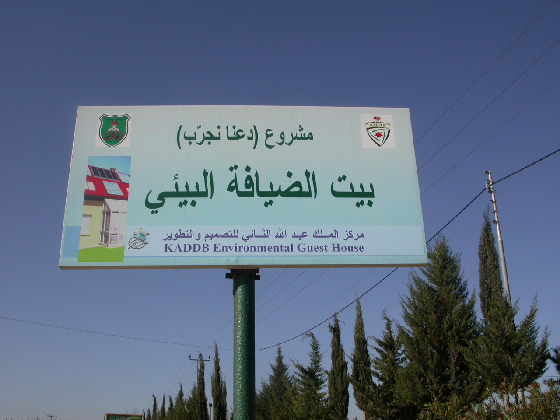
Though not everyone in Jordan has an eco-conscience, such as the local thieves who are scheming ways to divert water, the country’s conferences and other initiatives suggest that the environmental movement is finally gaining ground. And the Jordanian Society for Renewable Energy (JRES) is doing their part to ensure that everyday people have access to the necessary tools to make natural living a part of their daily dialogue.
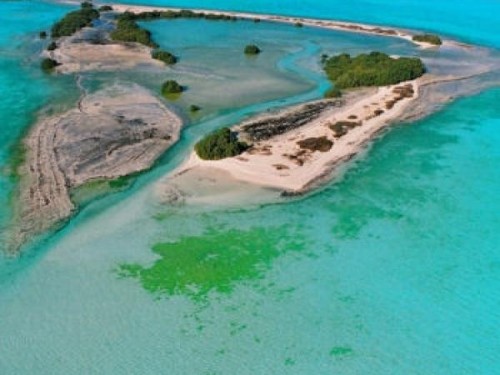
A death trap for corals: Is Abu Dhabi’s Bu Tinah island atoll next in line for dumping?
We have heard this issue before: corals are being killed from human caused environmental damage. We’ve heard this in a lot of places, especially in the areas like the Persian Gulf; where large scale construction projects in Dubai, Abu Dhabi, and Bahrain are causing serious damage to the Gulf’s very fragile ecological infrastructure. After finding many examples of this problem, especially in regards to Dubai’s mega artificial island project, The World, the nearby United Arab Emirates state of Bahrain is now facing a serious problem to its coral formations due to the dumping of construction waste into the sea. These incidents, reported in the Gulf Daily News, include everything from truck tires, to concrete cinder blocks and other building materials, as well as old fishing nets, are found lying in the Gulf seabed.
The debris is becoming a “death trap” for various forms of marine life that become trapped in it and die. Corals, which depend on a very fragile natural ecosystem, are changing color from their normal blue and orange to shades of grey and are dying; according to Bahrain-based environmentalist Dutchman, Ben van Hoogen:
“This is damage you can’t ever express in amounts of money. It’s robbing the resources of fishermen, the environment, tourism; and this pollution will backfire on the water we take from the sea.”
van Hoogan, who also works for an environmental NGO, the Seal Rehabilitation and Rescue Center in Holland, is now organizing a project to remove parts of this debris by monthly “clean up dives” to try to save what is left of the corals not already damaged beyond repair.
“The coastguard doesn’t have time to do this work, as they need to concentrate on catching and arresting vessels that are doing the actual dumping,” he added.
van Hoogen says that before all the current commercialism, Bahrain was an island inhabited by fishermen; many of whom lost their livelihood when the recent construction boom began to destroy the marine environment upon which the fishermen depended upon to make a living. He continued by saying that “you can kill a coral reef in a month, but it takes hundreds of years for it to grow back.”
If ever.
The problem of the destruction of Persian Gulf marine life is not going to be solved as long as construction companies continue to dump their wastes into the waters around Bahrain and other Gulf locations. “Many marine species depend on (coral) reefs for their existence. When the reefs go, so does the marine life,” van Hoogan added.
A visit to Israel’s Goats with the Wind organic farm is delicious and not at all baa-d for the environment.
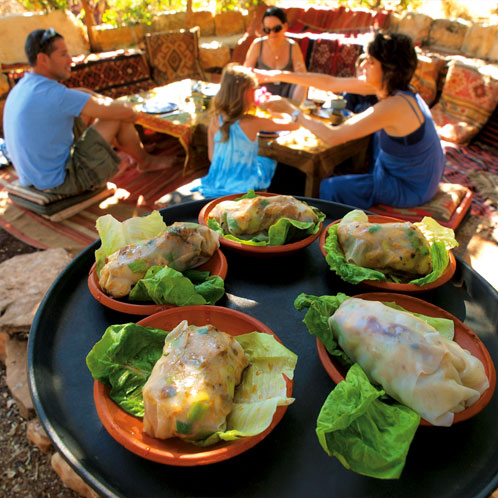
With the summer months upon us, some of you may be looking for an alternative activity to beach volleyball, matkot and tanning in the sun. For those of you living in or visiting Israel this summer (or any other season), here’s a delicious and eco-friendly option: volunteering or dining at Goats with the Wind, an organic goat cheese and wine-producing farm in the Galilee region.
Operated by Amnon and Dalia, a couple who has been running the farm for several years, Goats with the Wind welcomes families, couples, children, and single volunteers. (The cheeses are welcoming as well – check out their “Isabella” half hard organic goat cheese above.)
As Amnon and Dalia so eloquently describe their farm:
“Somewhere in the Galilee,
Among the hills of Har Hashabi,
Is a place of harmony,
And cheese making goats roaming free.”
In addition to being delicious, nutritious, and friendly to its goats, the farm is operated with solar power.
Goats with the Wind cheese
The farm boasts the diversity of its previous volunteers, which has included monks, poets, Olympic poets and ping pong champions. But Amnon and Dalia will welcome all volunteers (provided approximately one week’s notice) who will perform tasks such as cleaning, gardening, feeding the animals, milking the goats, decorating, or constructing walls.
In their own words, “volunteers don’t need any particular skills except to be willing to work hard.”
In exchange, volunteers receive simple accommodations and meals with Amnon and Dalia.
(And considering the fact that Dalia operates the restaurant at the farm, this could be quite a delicious deal.)
Not interested in volunteering but still want to see the farm? The aforementioned restaurant, located under the branches of carob trees, is a good way to experience the products of the farm. The restaurant offers standard, organic, and meat menus and is reasonably priced.
Clean rivers in Israel, youth environmental projects, Israel’s upcoming greenhouse gas registry and more headlines related to Israeli cleantech and the environment. Image by Or Hiltch.
During the week of June 8, 2010, Israel’s Ministry of Tourism announced that it will be investing $30 million into making Israel a top cycling destination for tourists. Würth Solar entered the Israeli market and high school students focused on the environment in an engineering contest. For these stories and more, see this week’s headlines below.
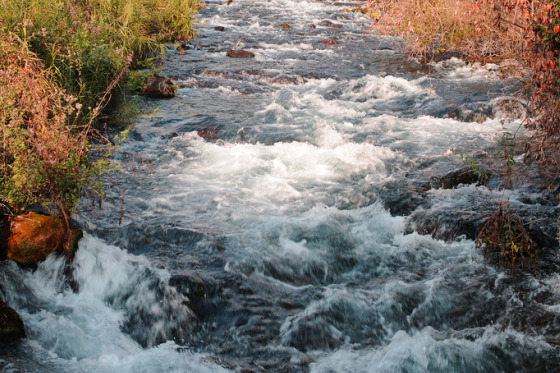
Thieves divert public water in Jordan for greenhouses and swimming pools.
With the Middle East facing a severe water shortage, government efforts to desalinate sea water, regulate usage and prevent waste are being undermined by a growing problem: theft. Thieves have gotten creative about diverting water from public pipes for private or business purposes, bypassing the water authority’s meters and ending up with free, unrestricted amounts of high-quality water.
Afghanistan’s desolate Ghazni Province may hold the world’s largest deposits of lithium.(Image: Tyler Hicks/The New York Times)
Just days after the Afghan War became the longest war in US history – 104 months, surpassing the 103-month American engagement in Vietnam – the New York Times, quoting top US government officials, reported the discovery of near $1 trillion in untapped mineral deposits in Afghanistan.
In addition to huge finds of iron, copper, cobalt and gold, Afghanistan could potentially rival Bolivia as the world’s largest source of lithium, a key material for green technologies, including batteries for electric vehicles. In fact, the NYT cites an internal Pentagon memo stating that Afghanistan could become the “Saudi Arabia of lithium.”
The report quotes US officials who claim that these mineral deposits have the potential to “fundamentally alter the Afghan economy and perhaps the Afghan war itself ,” but also notes that “the Obama administration is hungry for some positive news to come out of Afghanistan.”
Air conditioning powered by the sun, which bypasses the electricity grid? Perfect for the Middle East.
It’s perfectly logical: When the thermostat rises on scorching hot days, the air conditioners kick in, causing a massive electricity surge that strains the grid. Summer blackouts and brownouts are already occurring in the US and in the Middle East. If mismanaged, they may cripple cities and damage local economies.
In April 2006, for instance, parts of Texas experienced rolling blackouts lasting as long as five hours that were caused by air conditioner use. Blackouts from air con use in California were first experienced in early 2000 and continue to be a major priority on the California utility companies’ list of problems. Blackouts happen regularly in Israel in the summer; Lebanon suffers blackouts daily, and they loom in Kuwait as summer sets in.

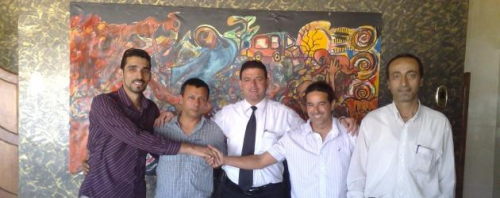
 Representatives of Israeli and Palestinian partner companies pose after reaching agreement on joint venture for wind power. (Courtesy photo)
 Can Mr. Potatohead outrun the Energizer Bunny? Researchers in Israel and California develop a potato battery, 50 times cheaper than the Energizer equivalent.
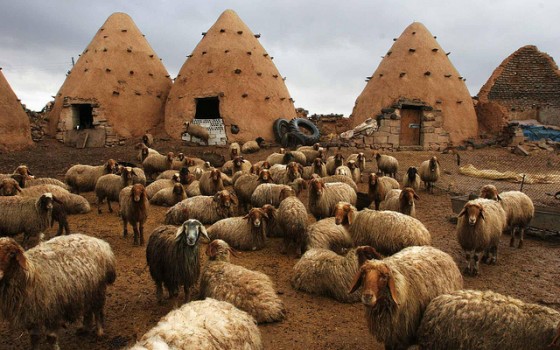

 The Mecca of green? “Green” activism has defined Jewish and Christian culture for decades already. Now, Muslim leaders in Saudi Arabia keen to “green” the annual Hajj pilgrimage.
 It’s Slow Food defined, but worth it. Miriam winds down the sourdough series with a plan.

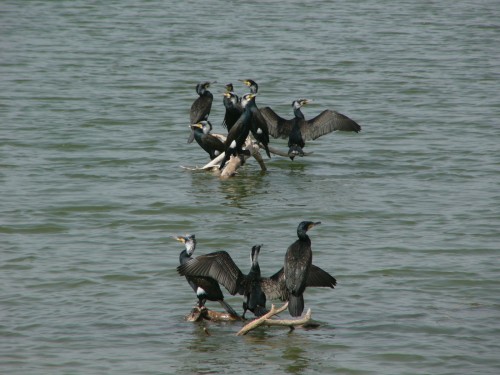
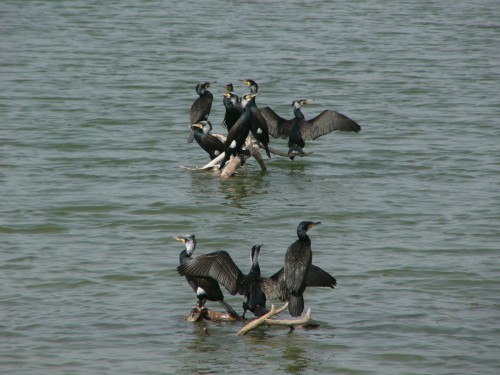 Considered the most polluted river in Israel, the Kishon River struggles with water quality. But now, cormorants on the river can eat the fish they catch.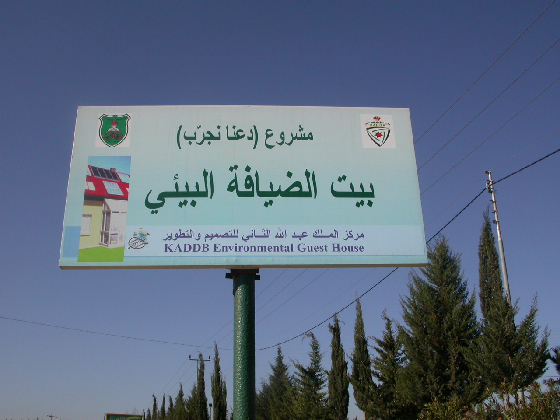
 A death trap for corals: Is Abu Dhabi’s Bu Tinah island atoll next in line for dumping?
 A visit to Israel’s Goats with the Wind organic farm is delicious and not at all baa-d for the environment.


 Thieves divert public water in Jordan for greenhouses and swimming pools.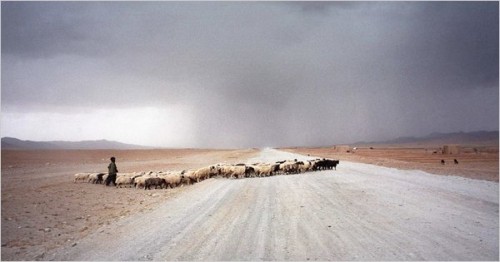
 Afghanistan’s desolate Ghazni Province may hold the world’s largest deposits of lithium. (Image: Tyler Hicks/The New York Times)
 Air conditioning powered by the sun, which bypasses the electricity grid? Perfect for the Middle East.