
 Pet owners in the Middle East pay lots for imported pet food. Miriam offers recipes for Fido’s food with locally sourced ingredients to keep him healthy, save money, and reduce carbon emissions.
A dog somewhere on the street howled pitifully, all day and all night. Neighbors told us that her owner had gone abroad, leaving money and the house keys with a student who was supposed to feed and walk her. Who didn’t. We tracked down the negligent student and brought the poor animal home till her owner returned. Then we cooked for her. Cook for a dog? Whaddaya, crazy?
Well, no. We need to consider sustainability and health in our pet foods just as much as in our own foods. Home-made dog food is far healthier than the commercial stuff. It costs very little and is easy to make. And it makes ecological sense to rely on fresh, local ingredients rather than on packaged pet food imported from countries thousands of miles away. In some countries, like in Germany, natural pet food sales are growing faster than human ones.


 New studies looking at evolution sees nothing extra-ordinary about island communities.
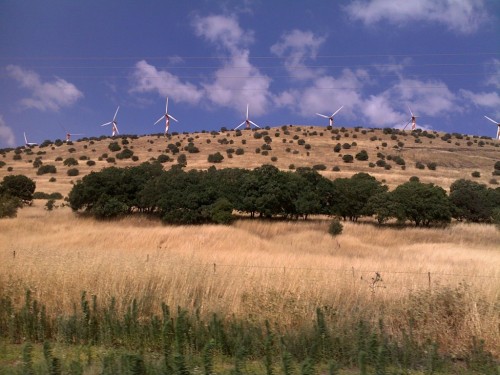 Wind farms, like this one in the Israeli-occupied Golan Heights, may soon be common in Syria.
 Wait, what? Whales in the desert? Fossils of earliest suborder of now extinct whale sheds new light on evolution.
  Lebanon is eager to replant their cedars – a national symbol. But a sustainable, community-wide vision is in need.
 “Borders, Territory and Conflict in a Globalizing World” was the theme at a conference held in Israel. Experts deliberated on ethnicity, power relations and technology. Dr. Gotlieb emphasizes that such issues must be linked to the environment.
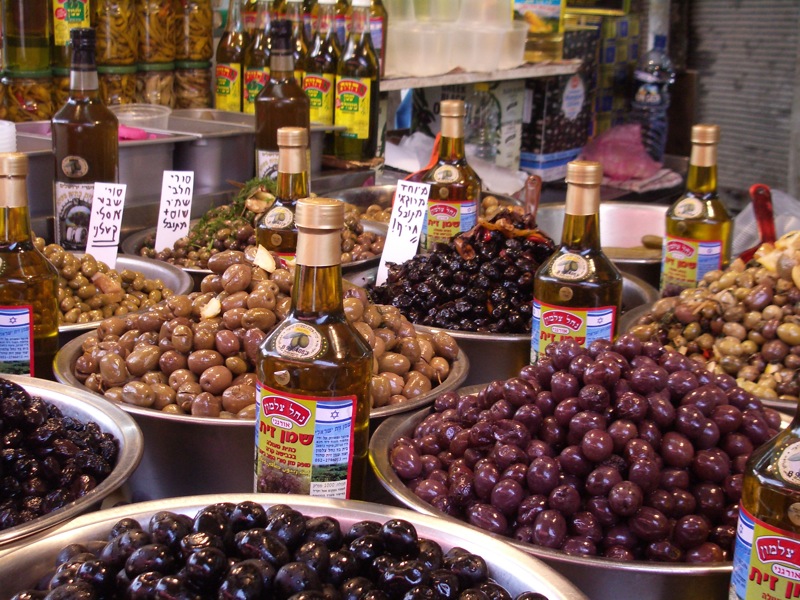 Tel Aviv Carmel Market. Above image via
 When you’re stuck in the middle of a crowded, noisy city like Cairo,

 They’re already going eco: Hanging the clothes to dry, naturally, in Hebron. Image via