People in the Middle East have understood that privacy and protection from the intense heat outside go hand in hand. The mashrabiya is an ancient Arab invention to passively cool buildings and keep strangers from looking in. But not all of us can invest in architecture additions. Or frosted glass. And when there is a heat way or instant privacy needed, no need to go far. You can use a Scandinavian trick that puts a few coats of yoghurt on your windows to create a fritted or frosted glass appearance.
Make shift curtains, use yoghurt to frost glass.Above and below images via Scandimama
The yoghurt is easy to apply with a small roller brush, it doesn’t smell, it doesn’t attract insects, it doesn’t degrade and it can be washed off simply with a cloth and water once the heatwave (or your privacy issues) are over. It’s a also a cheap and easy solution if you are renting or are allergic to dust from heat blocking curtains.
Buy sugar free Greek yoghurt – the higher the fat content the better. Oak yoghurt works. If you use a lower fat content, the effect will be more opaque.
Map out section of window that you want to frost. You can take out straight lines, heart shapes, or buy stickers or stencils to map out your design.
Above and lower image of taping off windows for yoghurt frost via Reddit
Roll on 2 or 3 coats of yoghurt on the inside of your window. (You can also use the exterior side if you live in an area that doesn’t get extensive rain.) It is possible to dab on the yoghurt with a sponge.
When dry and you have achieved your desired effect, pull away your tape and stencils and voila!
When dry you can scratch out designs as well using a hard piece of plastic like an old credit card.
If you want a more permanent solution, you can use acrylic paint to “frost” the glass but this is harder to remove. The previous owners of the house I bought self-frosted the bathroom windows in my bathroom this way and it is impossible to remove the bad paint job, Go for the yoghurt.
A new study has found that vultures, much like humans, experience changes in movement habits and social relationships as they age. Young vultures frequently move between roosting sites and hang out a lot with their friends. During adolescence, they spend about half their nights at a permanent site at home and the other half at other sites.
In old age, however, vultures scale back on socializing, preferring to “stay home.”
The study followed 142 Eurasian Griffon Vultures (Gyps fulvus) and is among the first to shed light on the behavioral changes in aging animals in the wild.
The researchers utilized a database accumulated over 15 years from GPS devices attached to 142 vultures that tracked them for periods of up to 12 years. The vulture, a social bird, sleeps in roosts on cliffs. By cross-referencing the vultures’ ages with the GPS data on their roosting sites, the researchers discovered that as the vultures aged, they increasingly preferred to stay at the same roosting site.
A vulture in captivity learns to join the flock
The study was led by Marta Acácio at Tel Aviv University and Prof. Noa Pinter-Wollman of the University of California, Los Angeles (UCLA). The findings were published in the prestigious journal PNAS.
“Vultures are a locally endangered species in Israel, with only about 200 individual vultures remaining. They are closely monitored to determine the best possible conservation methods. We thought about what else could be gleaned from the extensive database we have accumulated over the years and agreed it would be interesting to explore how vultures age,” says Spiegel.
“Tracking the same individuals in the wild over many years is often very challenging, but the transmitters we use to monitor the population provided us with a rare opportunity to observe the aging process in vultures specifically and in animals generally.
It turns out that aging vultures behave a bit like humans and are more inclined to stay at home. When they are young, vultures like to explore new sites and frequently move between places; the likelihood that a young vulture will sleep at the same site two nights in a row is low.
When they reach adolescence at the age of five, this behavior stabilizes, and as adults they spend 50 percent of their nights at the same site and the other 50 percent at other sites. When they are old, from the age of 10 onwards, they no longer have the energy to be “out and about,” and return consistently to the same site.
According to Spiegel, these fascinating findings on the aging of birds also have very practical implications for conservation efforts. “This new study can help us better protect vultures’ roosting sites in the wild. Additionally, we have now seen that older vultures have fewer social connections, which can help us to prevent poisoning. The transmitters are connected to a system that sends an alert to the Israel Nature and Parks Authority, and to us by phone, if the vulture is not moving or has landed in a dangerous place, indicating that it may have been poisoned. Unfortunately, this happens frequently.
The danger arises when a vulture descends on a poisoned goat carcass, not knowing that a farmer has poisoned the carcass in order to kill stray dogs. Being social birds, vultures do not come down alone, leading to the risk of dozens of vultures dying at once. Understanding how wide the poisoned vulture’s social circle is will significantly help in mitigating the damage.”
It is important to note that vultures play an important ecological role in the disposing of carcasses. Studies have shown that the extinction of vultures ultimately leads to the loss of human lives, due to the rise of diseases such as rabies. In India, for example, a recently published study revealed that the extinction of vultures due to poisoning resulted in the deaths of half a million people over the course of five years.
Healthy lunches made for Mediterranean kids. Spinach pie. Mango. Mozarella salad, and avocado salad spread for a pita.
Pack your kid’s lunchbox with wholesome foods to help her gain health, not weight.
Across the Western world, parents and schools have woken up to the crucial link between the foods a child eats during school hours and his/her health. To control obesity, children are being encouraged to acquire a taste for real foods and to form healthy eating habits. Hopefully, the days of soda and snack machines in school corridors and cafeteria trays loaded with greasy, starchy messes are on their way out.
In the U.S., efforts such as the Farm to School movement integrate food and nutrition education in the classroom. Through their efforts, more American children eat fresh local foods in school cafeterias, and local farmers benefit too. Turning to Europe, we see that, according to the WorldWatch Institute, “Seventy percent of all school cafeteria food in Rome is now organic, with ingredients coming from 400 Italian organic farms.” France, where at lunch children are routinely served 4-5 courses freshly cooked in the school kitchen, has the lowest rate of childhood obesity in Europe.
And what of those of us who live in the Middle East, where the majority of school children take their lunches to school from home? As a mother living in Israel, I’m sad to report that many kids fill up on soy-based or meat-glued chicken “shnitzels” nuked in the microwave a few minutes before running off to school. (See our post on the perils of soy and meat glue here.) The horrible white bread sandwich with a layer of cocoa-flavored margarine known as “chocolate spread” is still the favorite 10:00 am snack.
The solution? Dedicate time to preparing real food for your precious children
It means deciding what “quality time” really means to you. Is an hour spent in front of the TV emptying your mind as valuable as an hour cooking ? If you encourage your child or teenager to help out, you might find you’re having fun together. And your child will like being the one to determine what his lunch foods will be. Even cooking alone, the manual labor (and good smells coming from the pot) soothe and relax.
A wide-mouthed thermos is helpful for keeping home-cooked food and soups warm.
Helpful equipment:
A standard thermos for hot cocoa or soup.
A food thermos to contain hot foods like stews or drier hot foods like rice and beans, or majadra.
2 frozen packs to keep sliced fresh fruit or vegetables, or salads, fresh. Frozen packs also keep sandwiches with fish or chicken cool.
3 light but sturdy containers with tight lids. They should be microwaveable.
TV-dinner style boxes with separated areas inside for different foods.
Nice but not essential:
A small insulated carrying bag.
An insulated bottle container with a shoulder strap, for home-made iced tea or other cold drink.
Just having those thermoses and packs gives you lunch ideas.
The plan
During the school year, I sit down with my teenage daughter once a month or so and we draw up the food plan in two columns. Column A: something satisfying but portable for breakfast, since that’s food she might snatch up as she’s flying out the door to make her bus. The snack foods for the 10:00 o’clock break are interchangeable with the foods in Column A. Lunch foods go to Column B.
I undertake to cook and pack the the food either the night before or in the mornng. She has to put up with my choices, since she dictated the list.
Rather than suggest menus item by item, here are lists of kinds of foods that you can turn out in your kitchen with just a little effort.
Column A: Breakfast and Mid-Morning Snack
Muffins and quick breads of all kinds. As long as they’re whole-wheat and have chunks of fresh fruit or grated vegetables (zucchini, carrots). For a savory muffin, try cheese, with or without oven-dried tomatoes.
Low-sugar cookies or cupcakes. Add dates or other dried fruit. This allows you to reduce the sugar in the recipe.
A variety of favorite whole-grain breads, sliced or ready to fill as sandwiches (like a half-pita or tortilla).
Breakfast sandwich fillings: whatever he/she likes to put on bread in the morning.
A slice of leftover pizza (we’re talking about a teenager here). With slices of whatever raw vegetable is in favor at the time.
Sliced fresh fruit. Sliced is key here. A child might ignore an entire apple or bell pepper, but one sliced, arranged, and kept cool in a box always gets eaten up.
Dried fruit and nuts. Mix a few varieties or pack them individually.
Dairy. Natural yogurt with a dollop of maple syrup or your jam, or chopped nuts and raisins. Natural cheese slices wrapped around cucumber sticks.
Let’s not forget healthy drinks. One glass of natural juice . Cold herbal tea, sweetened or not, as you will. How about plain cool water?
Column B: Lunch
Protein foods give energy; starchy foods put kids to sleep.Pack a minimal amount of carb-heavy foods – enough to satisfy but not act as a soporific.
Eggs, hard-boiled and kept cool in a bag with a frozen pack. Or an omelet. Omelets are handy protein vehicles for chopped vegetables, or to use as wraps. Or chopped up and added to pasta salads or brown rice.
Dairy: a container of low-fat cottage cheese (add a spoon). Put some olives or pickles on the side or in a small bag to go with it.
Whole grains, hot in food thermos or cold with dressing, as a salad. Rice and beans, hot. Quinoa tabbuleh, cold. Lentils.
Pasta and other carb-heavy foods: mix with cold or hot vegetables, leftover meat or fish and pack into the appropriate container.
Vegetables. A mixture of raw vegetable sticks for dipping into choumous or to eat as is. Your child will decide which vegetables. A whole baked potato. A whole small baked sweet potato (add his favorite topping in a small separate container). Leftover stir-fry. Vegetable fritters. Mixed salad with 4 colors of vegetables in it.
Soup or stew left over from dinner, re-heated in the morning and stored in a thermos. (In my kosher kitchen there is a dairy thermos and another for chicken soups.)
Leftover meat or poultry, sliced or chopped and packed into a hot/cold container. Again, sliced or pre-chopped is important. Provide a fork, and your kid will eat. Expect him to pick up an entire drumstick and eat it in front of his friends, and he won’t. Meatballs are good.
Tips:
Choose menus for the next week and cook accordingly. At the end of the month, review the lists with your child and let him/her choose to repeat, or omit, or add whatever healthy foods he wants for the next month.
Cook ahead. Freeze individual portions at least twice a week.
When cooking dinner, keep the next day’s lunch in mind. My daughter doesn’t mind repeating last night’s dinner at lunch, but if she did, I would separate a portion to freeze, thawing it out another day.
Every once in a while, dedicate time to making two condiments. Pesto, labneh, jam, chutney, salsa, pickles, salad dressing. Anything your child likes that adds relish to his food. Pesto, by the way, freezes well.
Cook and pack foods your child likes, being mindful of quality ingredients. Is he/she going through a phase of only peanut butter sandwiches? My daughter did, at age 6 – three weeks of only PB sandwiches, with an occasional apple or yogurt to make me happy. I made sure the bread was whole wheat and the PB natural and sugar free. She grew out of it.
Still looking for specific recipes? Try some of these on Green Prophet:
A solar PV plant in California. More remote farms are using solar to support agriculture.
The growing demand for sustainable living and farming is no hidden secret in today’s eco-sensitive world. The climate is changing rapidly for the worse.
So is the way we do farming. The food quality around the world is decreasing without limit because of the chemicals and pesticides we use for faster harvesting and production.
That is when and why leading PV systems providers like Soltec are changing the entire ecological and agricultural system of how we utilize renewable sources like sunlight.
With the integration of photovoltaic systems, we can drastically change how we farm and organically harvest the produce. The yield will be much better and healthier for consumers.
Let’s learn about these systems below in detail. The knowledge will help you improve the quality of the produce on any farmland.
Intersection of Agriculture and Solar Power in 2024
Farming processes from irrigation, harvesting, and nurturing plants need sunlight as a constant renewable energy source.
Traditionally, farmers started to use pesticides and other chemically harmful alternatives for better output on the farmland they irrigate. But that has costed us – and the planet – an arm and leg.
Now is the time to know more about the importance of the sun in agriculture. It is the cleanest form of energy, one that is renewable and easily available to us for growing the best of the best produce.
Hence, with a cost-effective solar tracking system, an average farmer can store, process, and utilize solar energy without heavy investments.
What do we mean by Photovoltaic Systems (PV)?
Integrated PV systems fit into the existing electricity systems for tracking, trapping, and helping the farmers utilize solar energy which must be readily available at any time.
The traditional energy storage systems were not usually present on the land. That is not the case with modern PV systems. Farmers can install these adjacent to the farmland and use these solar trackers to trap and track solar energy around the clock.
Components of a vast and usable PV system might include inverters, solar panels, and other items to store, track, and convert solar energy into electricity in seconds.
Types of PV Systems to Know
For better knowledge, let’s not learn about the different types of PV systems you can find on the farmlands.
1. Ground-mounted:
These traditional PV systems were mounted on the ground but not where the crops were grown. These were on the unused lands close to the farms where crops were grown for a significant flow of electricity.
2. Floating Photovoltaic systems:
Find these mounted onto irrigation systems or reservoirs to avoid water evaporation or algae growth.
3. Agrovoltaics:
These are the modernized PV systems that farmers can mount onto the farmlands or directly/indirectly above the crops for a certain amount of sunlight on a set clock. These PV systems improve land efficiency and protect crops from extremely cloudy or dusty conditions, providing them with energy whenever necessary for optimal growth.
Role of PV Systems in Improving Agricultural Efficiency
1. Efficient use of land:
Farmers have now recognized the need to use their lands better and more efficiently. They no longer worry about not receiving the right amount of energy, water, or electricity because of these solar panels and tracking systems.
With the land transforming into a multipurpose field, farmers can utilize it in many ways, lowering the per-yield cost.
2. Reduction in using water during irrigation:
The shade cover provided by floating PV systems, agrovoltaics, or dual-row single-axis systems helps reduce the chances of water evaporation. The influential microclimate created by these panels helps yield more output in terms of the higher produce per acre of farmland.
Floating solar panels near farmland in Turkey
3. Independence from the non-renewable energy sources:
Farmers no longer have to grow extensively, dependent on non-renewable sources for irrigation and harvesting their produce.
Now, their agricultural activities are more oriented towards renewable energies, like solar panels and trackers. These improve their way of farming and let the crops be better for healthier consumption.
4. Help farmers save funds for bigger investments:
The solar trackers and panels are not that costly for farmers in the long run. They can consider these PV systems as a one-time investment.
With the help of these integrated PV systems, they don’t have to go on investing money in non-renewable sources of generating electricity, which already harms the environment more.
Instead, they can save these funds and invest in greener projects or crops. This improves their overall efficiency in producing organic raw materials so that allied and dependent industries can grow greener as well.
5. Generate electricity and solar energy on demand:
Integrated PV systems provide access to large units of electricity at any time. Farmers get the superpower to generate solar energy like the sun pouring the light over the crops even on a cloud or rain day.
This removes the chances of crops going to waste because of unsettling weather. It is highly important to consistently grow farm produce and help the energy market scale with healthier produce.
Frmers have one-click access to produce electricity with these panels. So they can harvest more challenging crops or produce without caring much about the current weather.
The Future of PV Systems in Agriculture
The demand for sustainable and organic farming is only to shoot up in the next decade. This will help the owners and manufacturers of integrated PV systems like Soltec to develop more innovative solutions in the times ahead.
Government policies and bank lending incentives are becoming more supportive of such innovations in the future as the profit margins increase for an average farmer.
Ready to Invest in integrated PV Systems for Better Output from Organic Farming?
We hope you understand the concept of integrated PV systems to improve the overall efficiency of the farmland above. If you think you’re ready to go green and sustainable, this could be your way on the bandwagon.
Invest in PV systems today if you want to have anytime access to untapped solar energy and electricity – a possible way forward for sustainable and organic farming with increased profits.
Increasingly, business owners are concerned about environmental sustainability, and for a variety of reasons, including long-term profitability, compliance, and customer satisfaction. If you have a fleet of vehicles to manage, you’ll know how important it is to control fuel economy and environmental sustainability more broadly.
So what are the best strategies to do it?
Keys to Fleet Vehicle Sustainability
These are some of the best strategies for improving vehicle sustainability within your fleet:
Set specific goals. Your vehicle sustainability strategy isn’t going to make much of an impact unless you have specific goals to aim for. Additionally, these goals will serve as benchmarks for you to gauge your progress. Many businesses attempt to reduce their carbon emissions by a specific amount, or eliminate certain forms of waste, for example. The exact goals you choose don’t particularly matter; what’s important is that you have a specific vision for how you want your environmental sustainability plans to develop.
Make some preliminary reports.Reporting is vital for understanding your goal progress as well. Using appropriate software, this becomes much easier. Figure out which objective sustainability metrics you can reliably track and put them together in a report that you can create on a monthly, or perhaps annual basis. This is going to serve as the foundation for the future of your environmental sustainability strategy.
Audit your current environmental impact. Every business needs to start somewhere, so audit your current environmental impact. How much fuel are you using? How much carbon are you emitting? How much waste are you producing? Once you have your existing metrics, you’ll be in a position to know just how much of an impact your improvements are making.
Invest in efficient vehicles. Some vehicles arenaturally more efficient than others. Small vehicles use less fuel than big vehicles, and electric and hybrid vehicles use even less fossil fuel. Additionally, some vehicles are designed with efficiency in mind, allowing them to use fuel more efficiently and produce fewer emissions. Whenever you need to purchase new vehicles, consider more efficient vehicles to add to your fleet. The only caveat here is that you shouldn’t go out of your way to replace existing vehicles with new ones, as this produces additional waste in most cases.
Maintain and repair when possible. In line with this, maintain and repair your vehicles rather than replacing them, whenever possible. Producing a new vehicle demands significant energy and resource expenditure, so it’s typically the more sustainable choice to repair what you already have, rather than getting something totally new.
Retread, repair, and recycle. Try to keep and make use of materials, rather than throwing them away. For example, you can retread old tires, rather than purchasing brand new ones. You can recycle certain materials, rather than purely disposing of them. Incorporate these measures into your processes so you can reduce waste and improve efficiency.
Optimize routes. Use software or careful planning to optimize your routes. In nearly all transportation situations, there are multiple available routes, but only one “most efficient” route in terms of fuel efficiency. Not only will this reduce emissions, but it should also save you money on fuel.
Hire and train optimal drivers. Hire and train the best drivers you can. Optimal drivers focus on fuel efficient routes and drive their vehicles with care to avoid unnecessary resource expenditure. They also pay attention to potential issues, so they can be handled proactively.
Consider carbon offsets.Carbon offsets are certificates associated with practices designed to reduce the amount of carbon dioxide in the atmosphere. They can be useful in mitigating some of the effects of your operation.
Consider additional efforts. Depending on your goals, you may want to go even further, participating in environmentally responsible habits or donating or volunteering to environmental causes. While this will only indirectly be associated with your fleet, it could look great for your business.
Reaping the Benefits
There are many benefits of pursuing more sustainable fleet vehicle management.
Cost savings. Many environmentally sustainable practices have the incidental benefit of helping you save money. For example, route optimization reduces the amount of fuel your vehicles need.
Regulatory compliance. Following environmental sustainability best practices means ensuring regulatory compliance in many cases, limiting your potential liability.
Future proofing. Adopting environmentally friendly practices now is a way of future proofing your organization, as environmental restrictions and regulations are likely to become even stricter in the future.
Brand reputation. Today’s consumers demand ethical environmental practices, so your sustainability efforts can greatly improve your brand reputation.
Sustainability isn’t a strict requirement for effective fleet vehicle management, at least not yet. But businesses that dedicate themselves to improving sustainability in this area are much more likely to increase their profitability with time.
Just as the weather heats up in the Mediterranean a nasty surprise makes it uncomfortable to surf and swim. After Egypt created the man-made Suez Canal to link the Red Sea to the Mediterranean Sea a nightmare of invasive animal, plant and bacterial species have overtook the Mediterranean Sea.
They compete with fish and habitat, causing harm to natural ecosystems. It’s been over 150 years since the canal was created and there is little evidence that Egypt has done anything to protect habitats on either side of the canal. Toxic jellyfish and invasive lionfish are two of the more well known invaders. Most worrisome has been the arrival of the Lagocephalus Sceleratus, an extremely poisonous bony fish commonly known as the silver-cheeked toadfish.
Desalination plants could create a salinity barrier that would slow the invaders from traveling back and forth but meanwhile research continues on the expansion and behavior of the newcomers.
The phenomenon of migrating from the Red to Med Sea is called the Lessepsian migration (or the Erythrean invasion). It is more rare for the migration to happen in the opposite direction.
One jellyfish, the invasive Rhopilema nomadica, is a nomad jellyfish indigenous to tropical warm waters of the Indian and Pacific Oceans. Since the 70’s it has been also found in Mediterranean Sea, where it entered via the Suez Canal. It is now the the commonest jellyfish in the southeastern Mediterranean, and they actually direct themselves and “swim” to the west while swimming, according to researchers who studied them.
“Until now, it was assumed that jellyfish aggregations swim in a random manner, so that their direction is dictated solely by water currents…We discovered that along the coast of Israel, jellyfish swim toward the west, i.e., against the direction of the waves,” said Dr. Yoav Lehahn of the Department of Marine Geosciences at the University of Haifa, the editor of the study.
Jellyfish belong to the phylum Cnidaria and have existed for around 500 million years without any morphological changes. Researchers’ knowledge about jellyfish is still very limited in many respects. One of the biggest unknowns about jellyfish aggregations is the nature of their movement and migration patterns.
The lack of understanding of this aspect impairs the ability to prepare for the arrival of jellyfish at various facilities, such as power stations and desalination plants. “If the jellyfish were passive – in other words, if they were not able to move independently and simply drifted along in sea currents, we could predict the arrival of aggregations. We cannot do so, and this suggests that jellyfish have swimming capabilities that we do not yet understand,” the researchers explained.
The data collection stage in the study was complex: a light airplane flew along the coastline from Ashkelon in the south to Nahariya in the north, mapping the distribution of aggregations and identifying the largest ones. Next, the researchers monitored and photographed the direction of progress of the aggregations using drones operated from a nearby research boat.
The researchers examined the direction in which the aggregations swam relative to the sea currents and waves and found they swim collectively at a speed of around 10cm a second, moving to the west in a counter-wave direction. By so doing, they distance themselves from the coast and increase their chances of survival. The researchers added that the swimming patterns may vary between different jellyfish species and different maritime environments:
“When the strong tidal currents are dominant, it is possible that the jellyfish would swim against the current rather than against the waves, in order to reduce the risk of being swept onto the beach. In other cases, jellyfish may prefer to stay close to the coast, in inlets or estuaries. Swimming toward the open sea may not always be the first choice – the underlying objective is to reach a place where they have the best chances of survival.”
After storms, for example, large numbers of jellyfish are swept onto the beach, because they were unable to overcome the undertow created by the waves, the researchers note. The study advances our understanding of their movements, and in the future may allow us to predict when accumulations will arrive on coasts and when they will depart.
During the 2022 to 2023 fiscal year, the Suez Canal revenues hit a record-breaking $9.4 billion. Canal revenues are a key source of foreign currency for Egypt alongside tourism. Egypt should be earmarking a significant amount of these profits to helping protect the ecosystems that have been devastated. Why is no one holding Egypt accountable?
The Walmart Foundation has provided the Wildlife Conservation Society (WCS) a four-year grant that will significantly boost its work in Indonesia. The grant will support a landscape initiative in southern Aceh Province: a key region for forests and biodiversity and for smallholder farming communities.
Aceh is home to the highly biodiverse Leuser Ecosystem, frequently referred to as the “Last Place on Earth.” It is indeed the last place on Earth where orangutans, tigers, elephants, and rhinoceros are found to coexist.
The grant will enable WCS to support the Government of Indonesia in protecting and restoring this valuable forest and peatland landscape and improving the livelihoods of rural communities living at the forest edge.
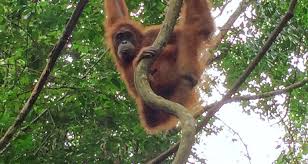
Home to the Sumatran Orang-utan, the Aceh forest is considered the last place on earth.
Aceh Province has 3.5 million hectares of forest, which play a key role for biodiversity and in mitigating climate change but are threatened by the expansion of agricultural and industrial activities. Meanwhile, communities bordering important forest areas often experience poverty and have limited options for sustainable livelihoods.
These challenges play out in southern Aceh where the province’s last remaining intact peatland ecosystem—Rawa Singkil Wildlife Reserve—meets Gunung Leuser National Park, which makes up part of Southeast Asia’s largest intact rainforest. This area is also the only place where Sumatran elephant, orangutan, tiger, and rhino co-exist in the wild.
“Specifically, the grant will enable WCS to strengthen support for the government and a multi-stakeholder collaboration to translate national and provincial plans and conservation targets to the local level, supporting livelihoods and ecosystem integrity at scale,” said Joe Walston, Executive Vice President for WCS Global. “We are grateful for the Walmart Foundation’s commitment to help advance an inclusive multi-stakeholder platform for the landscape, ensuring the most vulnerable are part of developing sound management plans for the region.”
Field-based ‘SMART’ patrols and conservation area management plans will enhance the protection of key areas, including the Rawa Singkil Wildlife Reserve and other management units that serve as crucial habitat and wildlife corridors for endangered species.
Capacity building with 500 smallholder oil palm farmers will improve on-farm productivity and, along with broader community engagement and support for Forest Farmer Groups, will help to foster improved and more sustainable livelihoods, and reduce encroachment pressures facing the forest.
Said Julie Gehrki, VP and Chief Operating Officer, Walmart Foundation: “The rainforests and peatland ecosystems of southern Aceh are critically important for wildlife, people, and palm oil production. These are critical contributors to our global ecosystem and supply chain and we look forward to seeing how this work helps advance a more sustainable and inclusive landscape approach in the region.
“We’ve made a commitment to help protect, restore, or more sustainable manage at least 50 million acres of land by 2030—and the conservation efforts catalyzed by this work can act as an important contributor.”
An insect species that evolved 130 million years ago is the inspiration for a new research study to improve navigation systems in drones, robots, and orbiting satellites. The dung beetle is the first known species to use the Milky Way at night to navigate, focusing on the constellation of stars as a reference point to roll balls of dung in a straight line away from their competitors.
Swedish researchers made this discovery in 2013 and a decade later, Australian engineers are modelling the same technique used by the dung beetle to develop an AI sensor that can accurately measure the orientation of the Milky Way in low light. This advance could be used to create better navigational technology for drones.
University of South Australia remote sensing engineer Professor Javaan Chahl and his team of PhD students have used computer vision to demonstrate that the large stripe of light that forms the Milky Way is not affected by motion blur, unlike individual stars.
“Nocturnal dung beetles move their head and body extensively when rolling balls of manure across a field, needing a fixed orientation point in the night sky to help them steer in a straight line,” Prof Chahl says. “Their tiny compound eyes make it difficult to distinguish individual stars, particularly while in motion, whereas the Milky Way is highly visible.”
In a series of experiments using a camera mounted to the roof of a vehicle, the UniSA researchers captured images of the Milky Way while the vehicle was both stationery and moving. Using information from those images they have developed a computer vision system that reliably measures the orientation of the Milky Way, which is the first step towards building a navigation system.
Their findings have been published in the journal Biomimetics.
Lead author UniSA PhD candidate Yiting Tao says the orientation sensor could be a backup method to stabilise satellites and help drones and robots to navigate in low light, even when there is a lot of blur caused by movement and vibration: “For the next step I want to put the algorithm on a drone and allow it to control the aircraft in flight during the night,” Tao says.
The sun helps many insects to navigate during the day, including wasps, dragonflies, honeybees, and desert ants. At night, the moon also provides a reference point for nocturnal insects, but it is not always visible, hence why dung beetles and some moths use the Milky Way for orientation.
Prof Chahl says insect vision has long inspired engineers where navigation systems are concerned.
“Insects have been solving navigational problems for millions of years, including those that even the most advanced machines struggle with. And they’ve done it in a tiny little package. Their brains consist of tens of thousands of neurons compared to billions of neurons in humans, yet they still manage to find solutions from the natural world.”
An innovative development by researchers allows for the conversion of the wet raw waste that we throw in the trash into liquid and solid biofuels, without the need to dry the waste. The researchers assess that at the national level, fuels produced from organic waste can, among other things, can create a significant amount of fuel for consumers.
The study was done in the small country of Israel but serves as a pilot for American states and regions in Europe and Canada that would like to challenge reusing bio-organic waste – some already collected and separated at the household level like in York Region, Ontario.
Israel’s waste problem, like most countries in the world, is escalating. In 2019, the country generated approximately 5.8 million tons of municipal waste, averaging about 1.76 kg of waste per person per day — about 30 percent more than the European average.
This figure increases every year by about 2.6 percent. Currently, about 80 percent of household waste in Israel ends up in landfills. Organic waste presents a significant challenge, harming the environment through greenhouse gas emissions, leachate formation, and the pollution of air, water, and soil, often accompanied by unpleasant odors.
“Organic waste emits methane, which is a greenhouse gas, and also contaminates groundwater,” explains Prof. Alexander Golberg, a study leader at Tel Aviv University. “The treatment of waste is a critical issue. Landfill sites in Israel are reaching capacity, and despite the desire to reduce landfill to a minimum, we are forced to open new sites, because there is no other solution. The major advantage of our proposal is that we will reduce the need for so many landfill sites. Municipalities invest considerable funds on waste transportation and treatment, and this solution has the potential to significantly cut those expenses.”
In order to assess the potential of municipal waste in Israel, the researchers analyzed the results of a groundbreaking 2018 survey conducted by E. Elimelech et al. from the University of Haifa. The survey examined the composition of the garbage produced by 190 households in the city of Haifa over the course of a week. The findings revealed that measurable organic waste constitutes about 36.4 percent of food waste and about 16.4 percent of total household waste. The category of measured organic waste was further analyzed, showing that it comprised 67 percent fruits and vegetables, 14 percent breads, pastas and cereals, 8 percent eggs and dairy products, 5 percent by-products such as peels and skins, 3 percent meat, fish and poultry, 2 percent sweets and cookies, and 1percent soft drinks. In general this organic waste contains around 80% water.
“The results of this survey formed the basis for the waste model in our study,” says Prof. Golberg. “We built a continuous reactor — which will eventually be adaptable for solar energy usage — to heat the waste to 280 degrees Celsius, and we were able to significantly reduce the amount of water and oxygen in the biofuel. We found cost-effective catalysts that make it possible to control the ratio between the liquid and solid fuel products.
“Solid fuel can be used as biochar, effectively sequestering carbon dioxide for extended periods. The biochar can be burned in power plants like regular coal, and liquid biofuels, after upgrading, can power planes, trucks, and ships.”
Using the representative model of the measured organic waste, the TAU researchers successfully produced liquid biofuel with a yield of up to 29.3 percent by weight and solid fuel with a yield of up to 40.7 percent based on dry raw material. This process is versatile and suitable for treating any wet organic waste or residue, for example, organic waste from food factories, institutional kitchens, and hospitals.
The researchers conclude: “The production of biofuels from organic waste components can significantly reduce the volume of municipal waste sent to landfills, thereby decreasing environmental pollution of soil, water, and air. Moreover, reducing landfilling will lower greenhouse gas emissions and decrease reliance on oil and coal. Converting waste into energy also offers a local solution for Israel’s energy independence and security.”
This is a map of love in your brain. Love for children activates the brain the deepest ways. Then romantic love.
All we need now is an Elon Musk Neurolink to stimulate the desired center and we can be forever in love with our partners: a new study has mapped out various love centers in the brain, leading to new ways we can stimulate love on a path to being more productive and satisfied beings.
We all have used the word ‘love’ in a bewildering range of contexts — from sexual adoration to parental love or the love of nature.
New imaging of the brain may shed light on why we use the same word for such a diverse collection of human experiences, called love:
You see your newborn child for the first time. The baby is soft, healthy and hearty — your life’s greatest wonder. You feel love for the little one.
Love for your child is the deepest
The above statement was one of many simple scenarios presented to fifty-five parents, self-described as being in a loving relationship. Researchers from Aalto University in Finland applied functional magnetic resonance imaging (fMRI) to measure brain activity while subjects mulled brief stories related to six different types of love.
Love for children is the deepest
“We now provide a more comprehensive picture of the brain activity associated with different types of love than previous research,” says Pärttyli Rinne, the researcher who coordinated the study: “The activation pattern of love is generated in social situations in the basal ganglia, the midline of the forehead, the precuneus and the temporoparietal junction at the sides of the back of the head.”
Love for one’s children generated the most intense brain activity, closely followed by romantic love. “In parental love, there was activation deep in the brain’s reward system in the striatum area while imagining love, and this was not seen for any other kind of love,” says Rinne.
Love for romantic partners, friends, strangers, pets and nature were also part of the study, which was published this week in the Cerebral Cortex journal, Oxford University Press.
According to the research, brain activity is influenced not only by the closeness of the object of love, but also by whether it is a human being, another species or nature.
Unsurprisingly, compassionate love for strangers was less rewarding and caused less brain activation than love in close relationships. Meanwhile, love of nature activated the reward system and visual areas of the brain, but not the social brain areas.
Pet-owners identifiable by brain activity
The biggest surprise for the researchers was that the brain areas associated with love between people ended up being very similar, with differences lying primarily in the intensity of activation. All types of interpersonal love activated areas of the brain associated with social cognition, in contrast to love for pets or nature — with one exception.
CBD is often turned into an oil but it can be delivered in beverages and edibles for pain relief, romance
Subjects’ brain responses to a statement like the following, on average, revealed whether or not they shared their life with a furry friend:
‘You are home lolling on the couch and your pet cat pads over to you. The cat curls up next to you and purrs sleepily. You love your pet.’
“When looking at love for pets and the brain activity associated with it, brain areas associated with sociality statistically reveal whether or not the person is a pet owner. When it comes to the pet owners, these areas are more activated than with non-pet owners,” says Rinne.
Not only can understanding the neural mechanisms of love help guide philosophical discussions about the nature of love, consciousness, and human connection, but also, the researchers hope that their work will enhance mental health interventions in conditions like attachment disorders, depression or relationship issues.
Isgandar Shiralizada’s passion for all things related to bees and honey began as a child at his family home in Bilasuvar, a town in the southern region of Azerbaijan. His mother made a delicious variety of honey-based desserts, especially the popular, local sweet pakhlava, with its honey-soaked layers. These delectables sparked Isgandar’s curiosity about the creatures that produced the honey.
“Every spoonful of honey was a mystery to me, making me wonder about the bees and their world,” he recalls.
Isgandar fondly remembers when every winter, his mother would buy three kilograms of honey from a neighbor, and he would tell her, “One day, I will keep bees, and we will have our own honey.”
This childhood dream set the foundation for his future in the honey sector.
Starting in his early twenties, Isgandar and his mother invested in their first bee colony. This modest start gradually expanded, with both his beehives and skills growing year by year.
He received mentoring by Hikmat Aliyev, a renowned beekeeper in this area of Azerbaijan, who taught him the art and the hidden secrets of beekeeping. He also attended several training courses in the country and abroad. In Türkiye, Isgandar joined local beekeepers for sessions on market access and the formation of cooperatives, and there he also gained practical experience in innovative beekeeping techniques.
Isgandar’s career truly flourished after he joined a course offered by the UN’s FAO, funded by the Government of Azerbaijan. This initiative, part of the “Increasing Youth Employment in Agriculture” project, equips young men and women in rural areas with the skills necessary for careers in agriculture, focusing on agribusiness and entrepreneurship development.
In a country where over a quarter of the population is aged between 14 and 29, youth employment presents a major challenge in rural areas. Agriculture is a vital sector for Azerbaijan, employing 36.3 percent of the workforce and providing significant household income in rural areas.
One of the major reasons for youth unemployment in rural areas is limited education or professional skills, coupled with restricted access to entrepreneurship opportunities and services.
“Enhancing employment for rural youth and women through training and agricultural support is vital in Azerbaijan, helping to combat intergenerational poverty and promoting social and gender inclusion,” said Nasar Hayat, an FAO Representative in Azerbaijan.
For Isgandar, FAO’s support was a catalyst that transformed him from a local beekeeper into an innovator in the field.
He devised the “Smart Bee Houses” that he presented at TechnoFest, a prestigious technology festival held in Türkiye. These bee houses are innovative devices that are designed to combat bee diseases and optimize honey production. Through sensors placed inside the bee house, beekeepers can monitor for varroa mites, humidity and hive weight through an application that alerts them of issues without the need for physical intervention, setting a new standard in beekeeping practices.
The FAO project also equipped Isgandar with essential agricultural tools to enhance his business, including a water tank and pump to ensure a steady water supply for his bee gardens. This setup contributed to the health of his gardens, significantly improving both the quality and quantity of his honey production.
With the increased earnings, Isgandar expanded his number of beehives to 60.
“Before the project, I could only produce up to one ton of honey each year, but now, my production has doubled to two tons annually,” Isgandar proudly shared.
With the backing from FAO, he has not only become economically independent, but in turn, FAO found in Isgandar the perfect ambassador to engage youth and share his passion for beekeeping with the next generations.
With a wealth of international experience, Isgandar wished to teach others what he learned.
“I want to become a mentor; I can’t keep this all to myself,” he exclaims.
He found an opportunity to share his knowledge through a beekeeping training programme at the Bilasuvar Vocational Lyceum.
Isgandar currently gives a course for aspiring young beekeepers, where he imparts everything from the essentials of beekeeping to the use of innovative technologies to combat bee diseases.
“The excitement of young people about beekeeping makes me really happy, and I see it as my job to help them love and appreciate this work,” Isgandar says.
“Every day I’m equipping students with vital skills, preparing them to be the next generation of beekeepers who can contribute to enhancing the agricultural sector in Azerbaijan,” shares Isgandar, who sees vast potential in his country and is committed to ensuring that young people see it too.
After teaching, he spends time at his farm checking on his bees or assisting other beekeepers in the area with their hives.
Isgandar sees his own children’s enthusiasm for apiculture as evidence of its appeal as a career for youth.
“My daughter Asmanur and my son Ismail love bees and bee products. They get excited every time I put on my protective suit,” he says. Though at age two and three, they are too young to join him now, their interest is undeniable. “They always ask when they can come with me to the apiary. Especially my daughter, she’s really eager to start.”
Isgandar believes introducing young people to beekeeping not only connects them with nature but also opens the door to sustainable and profitable career opportunities.
For ambitious young individuals, like Isgandar’s children and students, the beekeeping sector offers a viable and rewarding career in a field ripe for innovation and growth.
During growth sunflowers “dance” so as not to block the sun from each other. A recent study sheds light on a scientific puzzle that has occupied researchers since Darwin
Sunflowers shift around rapidly in a form of dance that has perplexed scientists since the times of Darwin. A new study discovers that plants that grow in dense environments, where each plant casts a shadow on its neighbor, find a collective solution with the help of random movements that help them find optimal growth directions. In this way, the study sheds light on a scientific puzzle that has occupied researchers since Darwin, namely the functional role of these inherent movements called “circumnutations”.
The research was conducted under the leadership of Prof. Yasmine Meroz from Tel Aviv University, in collaboration with Prof. Orit Peleg from the University of Colorado Boulder in the USA.
“Previous studies have shown that if sunflowers are densely planted in a field where they shade each other they grow in a zigzag pattern – one forward and one back – so as not to be in each other’s shadow,” says Prof. Meroz.
“This way they grow side by side to maximize illumination from the sun, and therefore photosynthesis, on a collective level. In fact, plants know how to distinguish between the shadow of a building and the green shadow of a leaf. If they sense the shadow of a building – they usually don’t change their growth direction, because they “know” that will have no effect. But if they sense the shadow of a plant, they will grow in a direction away from the shadow.”
The research was published in the prestigious journal Physical Review X.
In the current study the researchers examined the question of how sunflowers “know” to grow in an optimal way to maximize capture of sunlight for the collective, and analyzed the growth dynamics of the sunflowers in the laboratory, where they exhibit a zig-zag pattern.
Meroz and her team grew sunflowers in a high density environment and photographed them during growth, taking pictures every few minutes. The photographs were then combined to create a time-lapse movie. By following the movement of each individual sunflower, the researchers observed that the flowers were “dancing” a lot.
According to the researchers (from Israel and the US), Darwin was the first to recognize that all plants grow while exhibiting a kind of cyclical movement (“circumnutation”) – both stems and roots show this behavior. But until today, – except for a few cases such as climbing plants, which grow in huge circular movements to look for something to grab onto – it was not clear whether it was an artifact or a critical feature of growth.
Why would a plant invest energy to grow in random directions?
Prof. Meroz: “Sunflowers ‘dance’ to find the best angle so each flower would not block the sunlight of their neighbor. We quantified this movement statistically and showed through computer simulations that these random movements are used collectively to minimize the amount of shadow.
“It was also very surprising to find that the distribution of the sunflower’s “steps” was very wide, ranging over three orders of magnitude, from close to zero displacement to a movement of two centimeters every few minutes in one direction or another,” she explains.
The sunflower plant takes advantage of the fact that it can use both small and slow steps as well as large and fast ones to find the optimum arrangement for the collective. That is, if the range of steps was smaller or larger the arrangement would result in more mutual shading and less photosynthesis.
This is somewhat like a crowded dance party, says Meroz, where individuals dance around to get more space: if they move too much they will interfere with the other dancers, but if they move too little the crowding problem will not be solved, as it will be very crowded in one corner of the square and empty on the other side. Sunflowers show a similar communication dynamic – a combination of response to the shade of neighboring plants, along with random movements regardless of external stimuli.
Manufacturers are always in the market for new solutions that are environmentally conscious and have minimal impact on the environment. Ideally, these materials should also be potent and effective solutions to many problems. Dead Sea magnesium chloride has already been proving its worth and increasing its impact many times over. There are numerous different ways that companies are using Dead Sea magnesium chloride. This presents a unique opportunity for manufacturers looking to make a splash in their industry and move towards a better ecological footprint.
What is Dead Sea Magnesium Chloride?
Dead Sea magnesium chloride is a compound that stands out in the pack due to how soluble it is as well as its absorption rate, plus it is easy to get. This makes it something that a bucketload of industries are going after from natural cosmetic companies to agriculture! As the name hints, it comes from the Dead Sea, which is extremely salty, thus making it a pretty bountiful resource for the brine that ends up becoming magnesium chloride.
Changing the Industry for the Better
Dead Sea magnesium chloride gives manufacturers the great ability to go green and swap out some of their less-than-friendly methods for this salty but green one instead. Here are some industries that can definitely benefit from going for Dead Sea Magnesium Chloride.
Agriculture: Including dead sea magnesium chloride in fertilizers improves soil health, enriches crop-zapping plants with additional nutrients, and promotes eco-friendly farming. Plants that are given a boost of the mineral are better equipped to ward off pesky pests and diseases, which means less synthetic pesticides from the big bad chemical companies.
Cosmetics: The beauty industry is no stranger to the oh-so magical powers of Dead Sea magnesium chloride. Across the world, formulators are tuning in to this miracle ingredient to create calm, cool, and collected skin care solutions. Ditching synthetic add-ins in favor of natural alternatives is great for your customer’s skin and your brand reputation.
Water Treatment: Dead Sea magnesium chloride, as part of a water treatment process, can be a healthy alternative to cruel chemical treatments. This can help neutralize and or ‘soften’ hard water without endangering any humans! Making the planet happy AND salty!
De-Icing Agent: Want a de-icer sans those pesky chemicals that might affect your pets or you? Then go for Dead Sea magnesium chloride!
Bath Products: Hailing back to its health and wellness roots, magnesium chloride is a wonder ingredient that makes bath salts and other spa treatments that much more fab. The ingredient helps your muscles to relax and soak away the stress of life––a sure sign of a scienced-up holistic hero.
Sourcing Dead Sea Magnesium Chloride from ICL Industrial Products
If you want to get your hands on Dead Sea Magnesium chloride, then ICL Industrial Products is the place you want to go! ICL’s advanced extraction technique allows them to take already stellar magnesium chloride (as extracted from the Dead Sea) and turn a great ingredient into an even better one. Also, this is the sort of company that puts people and the planet first.
Dead Sea Magnesium For The Future
All in all, Dead Sea magnesium chloride is a smart, new ingredient to consider for long-term sustainability. From elevating your product line to lowering your overall impact, Dead Sea magnesium chloride can help you grow consumer trust by aligning yourself with a growing community of industry leaders who are turning intentions into action. Use Dead Sea magnesium chloride and experience the positive spillover effect!
The latest pardon by King Mohammed VI would encourage farmers “to engage in the legal process of cannabis cultivation to improve their revenue and living conditions,” Mohammed El Guerrouj, the head of Moroccan cannabis regulator ANRAC, told Reuters.
Morocco’s first legal cannabis harvest weighed 294 metric tons back in 2023, according to officials.
This year it is expected to be higher as the number of farming permits increases officials allow farmers to cultivate a local strain called Beldia.
About a million people live in northern Morocco where cannabis is now the main economic activity. People have been growing and smoking it for generations, along with tobacco in long-stemmed pipes.
Legalization was meant to stop trafficking and improve the farmers’ income. It has awarded 54 export permits last year. Here is a great research article on the history and challenges of cannabis and medical marijuana in Morocco from 2017.
CBD is a natural medicine that can have a profound affect on mediating pain and anxiety. It is now being tested to help kids with autism, in Israel
SciSparc (NASDAQ:SPRC), a clinical-stage pharmaceutical company that uses cannabis for various treatment modalities, has started a clinical trial for cannabis-based drug SCI-210 aimed at treating symptoms of autism spectrum disorder (ASD) or autism spectrum disorder in children. The trial, which is currently underway at Soroka Medical Center in Israel, has enrolled and dosed the first five patients.
The study is a double-blind, randomized, and placebo-controlled trial that will include 60 subjects between the ages of 5 and 18 over a period of 20 weeks. The aim is to evaluate the efficacy of SCI-210, a combination of cannabidiol (CBD) and CannAmide, against standard CBD monotherapy in managing ASD symptoms.
CBD does not contain the psychotropic elements found in the cannabis plant.
The trial’s design was developed in consultation with the National Autism Research Center, Israel’s leading autism research institution.
SciSparc’s CEO, Oz Adler, expressed satisfaction with the enrollment pace and anticipates that the trial will contribute new scientific data to aid those affected by ASD. ASD is a neurological and developmental disorder that influences social interaction and communication skills, with symptoms and severity varying widely across the spectrum.
The company’s strategic plan is to first commercialize SCI-210 in the Israeli market, followed by other countries, subject to regulatory approvals.
SciSparc specializes in cannabinoid-based pharmaceuticals and has other drug development programs targeting conditions such as Tourette Syndrome, Alzheimer’s disease, pain, and status epilepticus.
The company is publicly traded in the US on the NASDAQ.