Home Blog Page 625

Ana Seco Teaches Her Grandmother’s Eco-Fashion Techniques Throughout The World

8

ana-seco-cairo
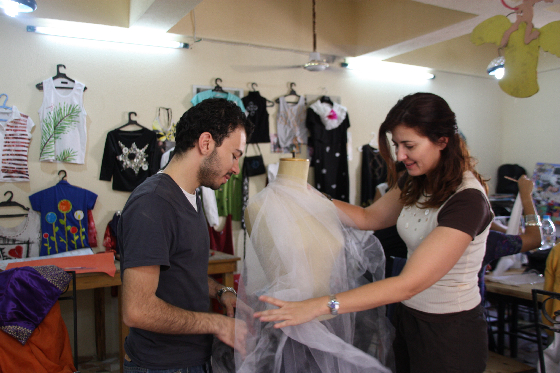
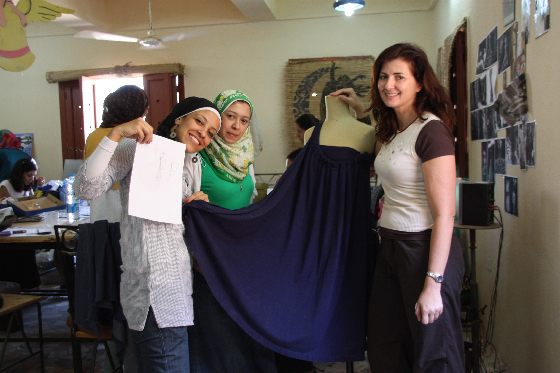
At a workshop in Cairo, Spanish fashion artist Ana Seco teaches students how to incorporate “garbage” into their designs. Reluctant at first, they soon eclipsed their teacher by introducing materials she had never even thought of.

Ana Seco’s resume reaches far and wide. Her Bachelor of Fine Arts is buttressed with numerous diplomas and courses related to art and fashion. Originally from Spain, she lived and worked in New York for five years and now spreads her knowledge as far afield as Viet Nam, Turkey, Ethiopia, and Egypt.

She issued the very first fashion diplomas to Ethiopian designers and recently finished a workshop in Cairo, where she introduced eco-fashion methods and materials (“garbage”) to a surprised group of now-converted Egyptian designers. In this interview, she describes why she travels so much, as well as challenges and successes she has confronted throughout.

Ana, you are originally from Spain.  How did you become interested in the Middle East?

“I started traveling after graduating from university, and I think that since then, the longest period I have been steady in a place is eight years which seemed to me really long. The reason for my traveling now, is actually my husband; I started travelling with him four years ago, and his work has taken us to places such as Vietnam, Turkey and Cairo.”

You have a background in graphic design as well as fashion; how and why did you make the switch?

“Actually my education is in fine arts, on the specialty of painting, and I have never switched since I have been developing the two careers in parallel. You know, in the 18th century, fashion and art were both considered as art, and as artists and designer, both fields complement each other, in my case perfectly.

Inspiration and imagination can be used in so many ways and artists can pour them in so many fields. The only thing that must be really worked at, and that I think is a quality that many artists don’t have, and that I learned during my years in New York, is organization, and reliability. Without those two, it is quite difficult to succeed I think in any field.  ”

You studied at the Fashion Institute of Technology in New York. Is that where you became interested in eco-fashion, or is this something you’ve always been interested in?

“When I studied in NY, the eco awareness did not exist yet.

But since my beginnings in fashion, before moving  to NY, back in 1990 I was already creating some sort of eco-fashion. You know, I lived for many years with my grandmother, and she has been through two world wars and the Spanish civil war. She was a real master on saving and reusing things.

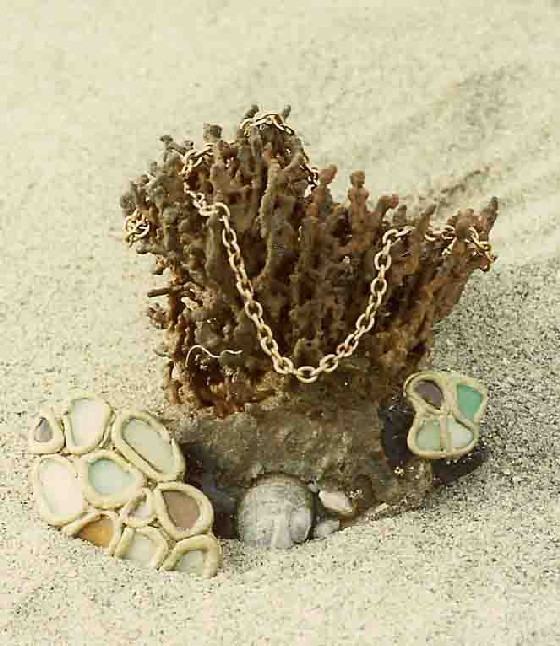
I think I got it from her, because my first accessories collection was done with pieces of glass found on the beach. In those days I had just finished at the university and did not have much money to buy materials. So there you go, my beginnings.”
You recently led a workshop at the Darb 1718 art gallery in Cairo. How did that opportunity arise and did you experience any unique challenges?

“The opportunity came through Mayada Said, one of Darb’s project managers and the Spanish Embassy in Cairo.

Together with Mayada we created a project and presented it to the Embassy where Ana Alonso, who is responsible for Spanish culture, was enthusiastic and fully supportive.

The biggest challenges came afterwards during the workshop itself, and putting together the big fashion show that took place at the gardens of Darb 1718 – mainly because of the lack of experience of the people involved.”

Where do you usually source your materials? Do you involve your students in that process?

“Well, the materials that we use are in everybody’s homes: empty plastic bottles of all kinds, cords, cables, food cans, plastic bags, metal findings. Everything can be used. There are really so many materials to use, that sometimes you have to limit yourself not to “mess” it up too much.

The students at the beginning were a bit reluctant, but towards the end, they understood the real meaning of what we were doing and brought  many materials that I have not even thought of.”

And what kind of response do you get from your students and participants when you first suggest that you’ll be decorating shirts or making  jewelry with, say, plastic?

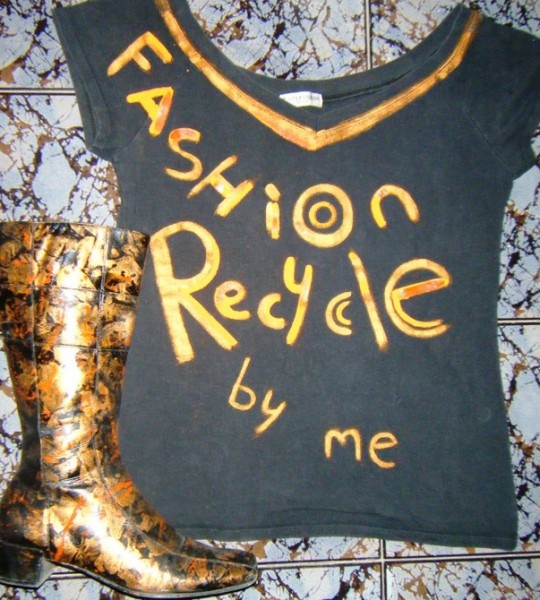
“As I told you, they were  bit shocked, since they thought we were just going to recycle garments, meaning renewing old clothing, which we also did, but through applying manipulations and other materials such as plastic, paper, metals, cables and so on.

For a couple of weeks they were somehow resisting, but I always brought  them some examples of garments created on this way, and so many of them really jumped into it and spent lots of time researching and working at home with this concept.

Today, I am proud to say that they have created a fashion recycled line of accessories and clothing which will be on the market after Ramadan that is called “Jorda chick.” I think they will write it in Arabic  and I am not even sure of the spelling in English.But they are working hard on the pieces and I wish them the best of luck. Even from here I am trying to coach them since it will be really great if they succeed.”

I understand that you are beginning a new project in Turkey. Can you tell us about that?

“I am afraid I cannot tell you anything right now, since for my husband’s work I am not sure how long will I be staying here at the moment. Things will clear out after September and then I can start …

But I can tell you to be on the lookout for a new fashion show in Cairo: it’s the outcome of a workshop imparted at Townhouse gallery and the students are preparing their collections right now. It is not recycled fashion, although I can’t help pushing them in this direction, if only a bit.”
Ana-Seco-Cairo2

Since you began working disadvantaged communities and spreading your eco-fashion goodness, have you noticed any changes or trends?

“Well, its hard to see a movement in society just yet, but I can tell you that many of the people attending the fashion show have grown a much bigger awareness of what can be done with “garbage;” many of the reporters who interviewed me were really impressed with the outcome and the designs.

And one of my students was just selected as a finalist out of 200 applicants for a Spanish fashion competition, with a collection done with recycled materials. She will be granted the money to create her collection, and she will travel to Spain for the final fashion show and award ceremony. I guess at least for this it was worth all the effort.”
ana seco recycled shirt boots

Finally, can you describe your goals and vision for Green Prophet readers?

“My main goal when creating and directing this project was really to awaken the Egyptian society to the concept of recycling and environment.

As I travel through the world, I go around getting involved on several different projects related to art and fashion. Environment and recycling are always a priority in my life, not only my work, and so I try to include this on my teachings and projects.

My idea is that if I can change the attitude of just a handful of people, I am already successful.”

::Ana Seco

More Eco-Fashion Stories:
“Thirsty for Change” Fashion Show Raises Awareness About Israeli Water Conservation
Zolaykha Sherzad Resurrects Traditional Afghan Crafts Via Modern Fashion Design
Yael Uriely Shows Us That Good Things Come in Upcycled Shapes, Colors and Sizes
Masdar City: Small Hiccups, Or Total System Failure?

17
masdar-city-abengoa-solar
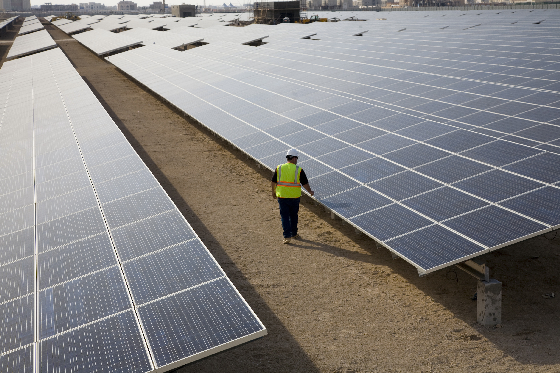
Masdar City solar panels

Masdar City has experienced knee-buckling setbacks, but we haven’t heard the last of them just yet

Masdar City is hanging on tenterhooks. After questioning the dicey science of carbon credits for big energy companies, we then published assurances by Masdar’s CEO Sultan Al-Jaber that although the project will be delayed because of certain hiccups – not least of which being that no one in the post-industrial world has aspired to a city free of carbon, or cars – it will still proceed. Yet critics like Brett Prior say the Masdar ship is sinking fast.

Shining Promises

Prior dealt a scathing blow to the company’s rhetoric in a recent post for greentechmedia.com. The svelte five act unfolding begins with a little background about Masdar’s much-touted ambitions:

They aimed for a $22 billion dollar, 6 square-km walled city for 45,000 residents and 1,500 businesses to be built by 2016. That city would be run completely on renewable energy sources, generating zero carbon emissions and zero waste. Additionally, 80% of the city’s water would have been recylced.

They boasted a top-notch research facility, the Masdar Institute of Science & Technology (MIST), that would be assisted by Massachusetts’s internationally-acclaimed MIT. Even construction would have been powered by a 40-60MW solar plant and PV panels manufactured on-site.

Uncontrollable dust

But then in Prior’s second act, he describes what become “cracks in the armor.”

In this phase of development, whirling dust storms in August 2009, with “suspended dust in the air between 1,500 to 2,000 parts per million,” decreased solar productivity by 40%. The panels were washed – at great expense – and productivity restored.

Khaled Awad, the director of Masdar City, claimed that “Dust storms have the same impact on a PV panel’s performance as cloud cover. In Abu Dhabi, we have a number of dust storms during the year, but compared with the level of cloud cover that European countries such as Germany receive, the performance in Abu Dhabi is far superior. In fact, on average, a solar module installed in Abu Dhabi will generate twice as much as [one installed in] a cloudy region in Europe.”

Key personnel resign

By the third act, the armor is not cracked, it is shattered.

The deadline is pushed back to 2020 and electricity, it turns out, will have to be imported. The electric transport pods that were supposed to replace cars are only going to be used in certain parts of the city, and Masdar PV fired both their CEO and COO. Then, to top off the floundering debacle, the head of MIST, Tariq Ali, resigned after only 1 year.

Prior considers Sultan al-Jaber’s recent press – in which he is adamant that these are not insurmountable setbacks – as desperate efforts to hold on, to instruct the band to keep playing while the ship sinks.

Given that John Perkins, the provost of the Masdar Institute, also resigned, and that the company that would have provided silicon equipment, Sun Fab, folded its operations, it seems that Prior may be right.

Solar gives hope?

On the other hand, his fourth and fifth acts offer a glimmer of hope.

Abengoa Solar – one of the most established solar power producers in the world – is going to build a $600 million Concentrated Solar Plant, which they plan to expand from an initial generating capacity of 100MW to 2000MW. And funding the $22 billion zero carbon city should be a breeze for Abu Dhabi’s sovereign wealth fund that amounts to a cool $650 billion.

Libya developed a $20 billion man-made river, so there’s no telling what Masdar might still pull off backed as it is by Abengoa and silly money. Though they may not deliver their original, dazzling ambitions, the ship is still afloat. Let’s hope it docks in more sustainable harbors.

Haitians Test the Pee-Poo Bag: A Sanitary Solution for Crises in Middle East?

2

peepoo bag how to photoWhen sanitation pipes break, or they don’t exist at all, the Pee-Poo solution could alleviate risks from faecal pollution in the Middle East.

“Flying toilets” are common in slums worldwide: Residents unable to reach a latrine due to crowding, distance or insecurity, defecate in a plastic bag and then sling it over the rooftops. But in Haiti, aid teams are testing a specially treated bag designed to turn human faeces into compost within weeks. This solution could work in Gaza, and other Middle East regions where sanitation is poor, and infrastructure limited. Covered extensively on Green Prophet, this is the first time the new Pee-Poo bags are being tested in a post-disaster humanitarian response, according to Andy Bastable, public health engineering coordinator with Oxfam, which is evaluating the product at settlements of displaced people in the Delmas area of the capital, Port-au-Prince.

UAE VIPs Attend Lecture on Environmental Sustainability at Yale University

0

etsy daniel yale lectureProfessor Daniel Esty lectured United Arab Emirates officials (and others) about environmental sustainability at Yale University last week.

Members attending Professor Daniel Esty’s lecture: “Green to Gold: Environmental Sustainability in a Changing World” at Yale University last week included a who’s who of United Arab Emirates officials.  The event was attended by H.H. General Sheikh Mohammed bin Zayed Al Nahyan (Crown Prince of Abu Dhabi and Deputy Supreme Commander of the UAE Armed Forces), Sheikh Nahyan Bin Mubarak Al-Nahyan (Minister of Higher Education & Scientific Research), Sheikh Sultan Bin Tahnoun Al-Nahyan (Chairman of Abu Dhabi Tourism Authority (ADTA)), senior officials, dignitaries and ambassadors from the United Arab Emirates.

In the Face of “Nile-lessness” Egyptians Protest Water Shortages

18

Hotter summers, intense irrigation and threats of losing their Nile, Egyptians are under quota for water compared to other Arab nations. They take to the streets.
Looking at Google Earth (above) truly shows how Egypt is a fertile crescent of the region. But in the face of losing water from the Nile, tens of thousands of people in Egypt – Africa’s second most populous country – have taken to the streets in recent months to protest against water shortages. This goes some way to explaining the government’s reluctance to relinquish its current share of River Nile water.

On 26 July, 600 people from the southern governorate of Minya staged a sit-down protest outside the Irrigation Ministry in Cairo to protest about the lack of water for their land. While there have been water shortage protests in previous years, the size and frequency of protests in 2010 has been unprecedented, local observers say. “Water scarcity will be even worse in the future,” Riad Aldamk, head of a water studies project at Cairo College of Engineering, told IRIN, the United Nation’s environment news source.

A Flash Flood DIY Survival Guide for the Middle East

2

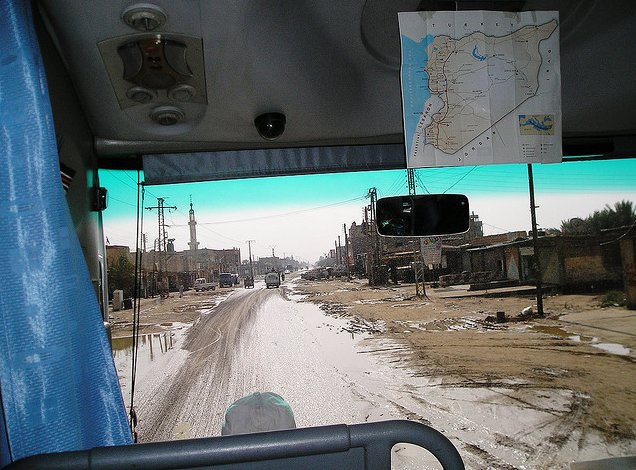
floods mud syriaNatural disasters are expected to rise in the coming years in the Middle East. The UN supplies a quick DIY list of tips to keeping developing communities risk-free from floods.

While it’s not exactly flash flood season in the Middle East, now is the time to prepare: Floods have got bigger, droughts in countries like Syria more intense and threats posed by waterborne diseases a bit too much to handle for poor countries trying to use their limited resources to adapt to a moodier climate. “Money isn’t everything,” Alastair Morrison, of the Stockholm International Water Institute (SIWI), wrote in the latest edition of the think-tank’s quarterly journal. “Many of the most effective water-related adaptation measures are free,” she says. Here is a list, based on some of Morrison’s suggestions and community-based adaptation measures on preventing flood damage.

And the best news, most of the tips can be implemented for free. This is a handy resource for development aids and agencies in poorer Middle Eastern regions.

Spain to Provide $10 million for Solar Power Hospitals in Lebanon

9

solar bandaid band aid lebanon spainA solar band-aid: Spain and the UN looks to create solar power heating, mainly water, for hospitals in Lebanon.

Thanks to a contribution from Spain, Lebanon’s first solar power heating project for hospitals have been made possible, the Lebanese newspaper The Daily Star is reporting. The project is part of the Lebanese government’s plan called Country Energy Efficiency and Renewable Energy Demonstration Project for the Recovery of Lebanon (CEDRO); it aims to reform the country’s energy sector by promoting the use of renewable energy in public institutions. CEDRO is managed by the Lebanese government together with the United Nations Development Program.

Protect The Middle East’s Natural Wonders – Vote Today!

21

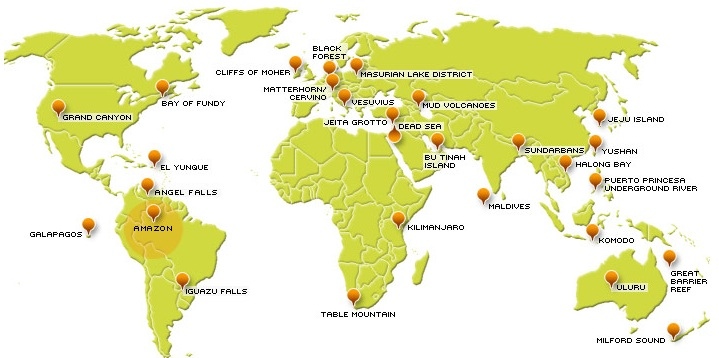
7 natural wonders vote middle eastThe Dead Sea in Israel, PA, and Jordan; the Jeita Cave Grotto in Lebanon, and the Bu Tinah Island Archepelago in Abu Dhabi – are vying for the 7 Natural Wonders list of 28 from around the world. Cast your votes today.

It seems like this contest has been going on for years already, but okay, we’ll go with it: Although the Pyramids of Giza, the Lighthouse of Alexandria, and the Hanging Gardens of Babylon are relegated to the wonders of the Ancient World, the Middle East may still be able lay claim to at least one of the 7 Wonders of the Modern World. The 28 world locations that now reached the finals in this competition on the New 7 Wonders website, include three Middle East natural wonders. If you care about the Middle East, we implore you to vote!

Israel’s First Tidal Power Plant Completed In Jaffa

12

sde s.d.e. energy jaffaIt’s where the ancient biblical story Jonah and the Whale took place. Now SDE Energy builds tidal energy plant in Jaffa, which should expand to 50 MW.

The ancient port city of Jaffa, today a part of Tel Aviv, has added one more attraction to its historical harbor as a new sea wave power plant is completed.

The Israeli tidal wave energy firm S.D.E. have completed the construction of its first large scale sea wave power plant capable of producing 60 KWh.

Towers of Silence in Iran is the ultimate green burial

vultures pick on bones at the Tower of Silence in Iran

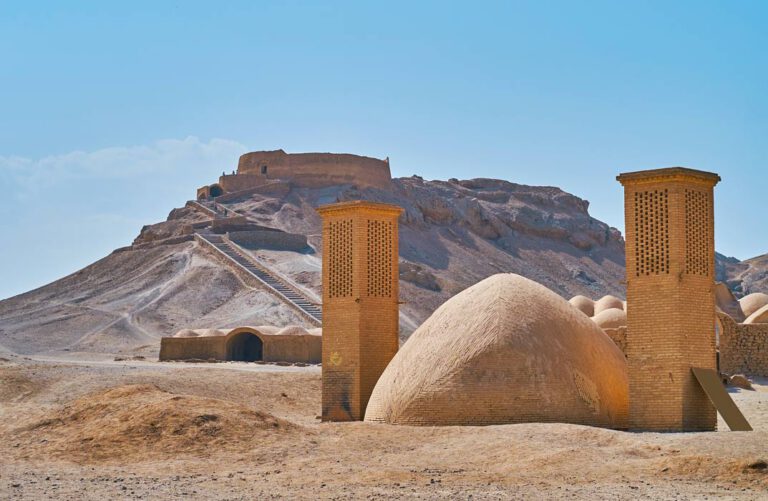
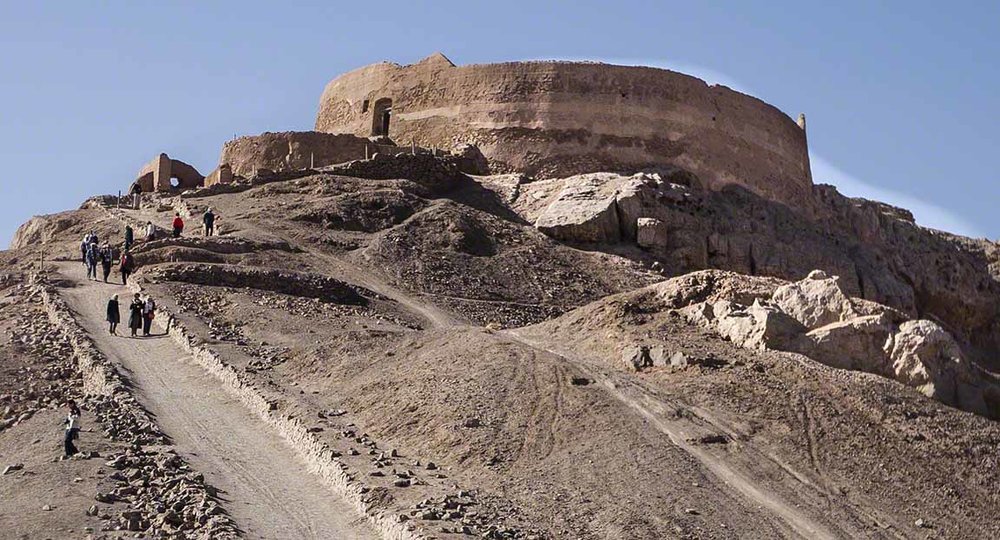
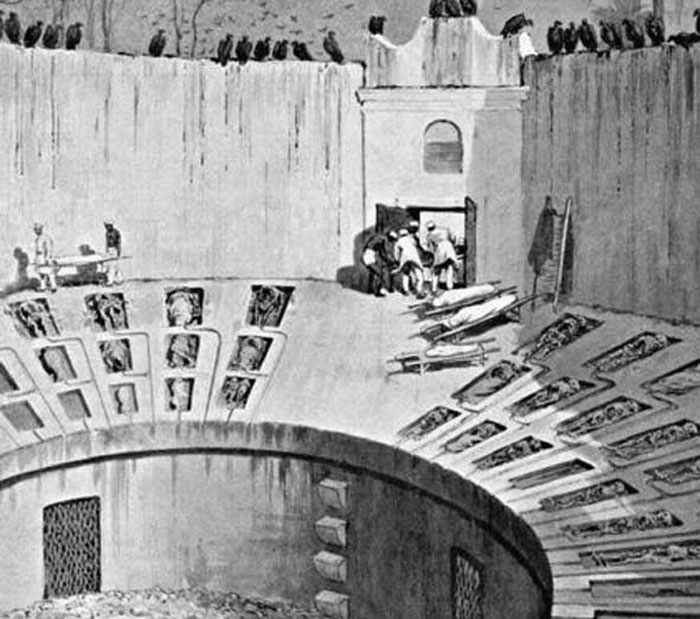
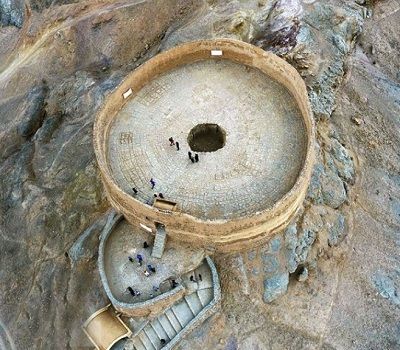
The Tower of Silence, a “green” and ancient burial site in the West of Yazd, Iran. This ancient sky burial site of the Zoroastrians is where corpses were placed atop a tower to be consumed by vultures, last done in the 70s. A culture similar to Tibetan Buddhism.

Until 40 years ago, corpses could still be found on top of the Towers of Silence in Yazd, Iran, slowly disintegrating or being picked apart by desert vultures. The west – eager to learn about green burial and holiday traditions – doesn’t need to invent the wheel. Head over to Iran and see the religious ceremonies and traditions in the Zoroastrian religion and culture that are linked to nature –– like the well-known and popular Zoroastrian spring festival Nowruz.

towers of silence, Iran, vultures pick on the dead
Putrefaction plateaus in Iran, where the dead are sent for purification

Iranians and have always respected these old traditions. Other ceremonies like Mehregan festival are drawing the attention of Iranians more during the recent years. However, there are points in the old religious culture ancient Persia, which today many Iranians even not too knowledgeable about. One of these traditions is the Zoroastrianism funeral ceremony. And we love it because it’s green.

The religion that Zarathustra introduced does not recommend burying the corpse of the dead. Instead the corpse is washed and put in a special tower to be exposed to the sun and birds of prey. Zoroastrianism believes that the unclean corpse pollutes the soil, so the whole ceremony is done up high, so that the dead corpse is decomposed and is sent back to the nature.

The Zoroastrian Funeral is linked to Nature

tower of silence, burial chambers iran

The Zoroastrian funeral is based on the belief that the dead corpse is unclean and preservation of the environment. So the dead are not buried. First they are washed with special ceremony and then the corpse is set on a high construction or tower called Dakhmeh in Persian. In some sites this Dakhmeh translates to the “Tower of Silence”.

After being cleaned, the corpse is set in front of the sun and the birds eventually come in.

towers of silence, Iran

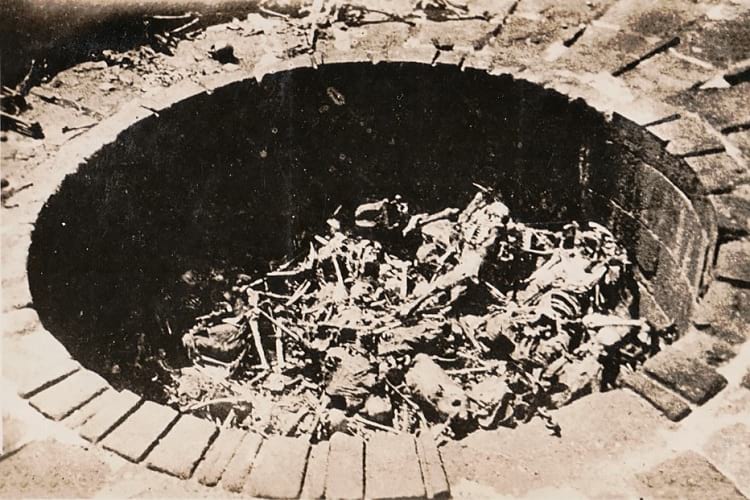
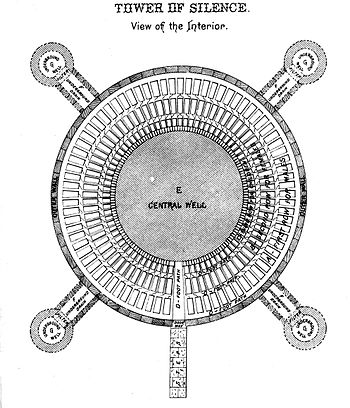
The towers of silence are round, stone constructions with a flat top. The bones of the dead were put in a well-like depth in center of the tower, which was called a stoudan. Men, women, and children were put in separately in different places of the stoudan.

tower of silence, Iran
Bones after the vultures and crows have picked them

One of the most famous towers is the one near Yazd in center of Iran, which has an approximate height of 200 meters. The construction has a diameter of more than 50 meters.

The traditional way of Zoroastrian funeral was almost forgotten in the twentieth century and burying the corpse was used instead. The Zoroastrians buried the dead in Tehran starting about 1930, in Kerman in 1940 and in Yazd (famous for their amazing wind catcher invention) in 1960.

tower of silence, interior

The Parsi community of India has an importance share of preserving the religious traditions. There are towers of silence in India too. In some parts, the traditional religious funeral is still practiced.

The Philosophy of the Zoroastrian Burial Rite

There are two main points in the funeral philosophy. The first is that nature should not be polluted and the corpse is a pollutant of the nature, which we’ve talked about already. There are four elements in Zoroastrianism, which are air, water, soil, and fire. These elements are to be respected and man should try to preserve them. That is why the Towers of Silence were built up high.

The place where the dead body is washed, placed on the tower and its remains are kept on a higher level on the ground to be away from the soil. A special example of such places is the Tomb of Cyrus the Great in Pasargad near Shiraz, which is some steps higher than the ground.

The second aspect of this philosophy is that human is composed of body and spirit. The body of human beings is to be respected, but it’s mortal. After death it goes back to the four main elements of the world. But the spirit joins god and reaches ever lasting peace.

Towers of silence, Iran

Of course in the modern world, it is our option to choose both our life “styles” and death “styles”. The main criteria against which the styles are guarded are dignity and happiness. Ancient cultures and religions do it with regards to nature. Other green burial traditions in tune with nature is seen in other environmental religions like Indian religions. (both links go to PDF).

Are the Towers of Silence still used?

No, they are no longer used for burial—Zoroastrians have adopted alternative “clean death” methods, such as burying bodies in cement-lined coffins to prevent contamination of the earth. Though Yazd’s Towers of Silence are now relics, Zoroastrians elsewhere maintain the same dakhma tradition.

Zoroastrians are the oldest remaining religious community in Iran. Prior to the Muslim conquest of Iran, Zoroastrianism was the primary religion of Sassanid Iran.

According to the country’s official census, there were 25,271 Zoroastrians in the country as of 2011, but some unofficial accounts suggest higher figures. Zoroastrians, are persecuted in Iran, and a history of forced conversions to Islam over the centuries have prevented them from practicing their religion freely.

It was particularly tough for Zoroastrians during the the 1979 Islamic Revolution and remaining numbers of them were reduced even more.  Just after the revolution, during Bazargan’s premiership, Muslim revolutionaries “walked into the main Zoroastrian fire temple in Tehran and removed the portrait of the Prophet Zoroaster and replaced it with one of [Ayatollah] Khomeini“.

More readings on green religion:
Prince Charles on Islam and the Environment
Saudis Listen to Call for Green Hajj
Eco-Activist Yeshiva Offers Summer Session That Brings Torah Down to Earth

Lycored’s Tomato-Based Ingestible Sunscreen

0

cherry tomato
Summer is in full force and so is our desire to head to cool down by the lake, pool or sea. We’ve heard about the dangers of chemicals in sunscreens, and for many reasons want to avoid them or limit their use. We know sunscreens can cause causing bleaching in corals — another reason to limit their use. They can also transexualize fish. Yuck.

An Israeli company called Lycored that focuses on plant extracts has found an alternate solutions for protecting you from the sun’s harmful rays. Using the help of Mother Nature they’ve developed an extract from the tomato that can protect the skin against harmful UV radiation. The cosmeceutical company Lyc-O-Mato doesn’t turn your skin red, but can prevent you from turning into a tomato.

Available in Europe through Inneov, a joint venture of L’Oreal and Nestle, and by the French company Oenobiol, it is expected to be available in the US shortly, said the company. They also develop a natural red food coloring additive.

Freeing your radicals

The tomato extract oleoresin works magic on the skin to defeat free radicals. Belonging to the carotenoid family, it is extracted from LycoRed’s specially bred tomatoes. Scientific studies have found this extract can “shield” the skin from sunburn and the free radicals that lead to premature aging.

There is a growing amount of scientific evidence that points to the power of antioxidants found in tomatoes. In addition to sun protection, tomatoes may improve the immune system in general, and work to protect us from degenerative diseases such as cancer.

[youtube]http://www.youtube.com/watch?v=WwPLE7L5Klg&feature=player_embedded[/youtube]

The carotenoid that LycoRed has extracted is made up of several elements: lycopene, phytoene, phytofluene and tocopherols (vitamin E). These natural phytochemicals from the tomato work in harmony to protect the skin from damaging UV radiation, says Zohar Nir, LycoRed’s VP of Scientific Affairs and VP of new product development.

While Lyc-O-Mato is not intended to be a sunscreen replacement, it can be a part of a person’s daily regimen to help maintain their skin beauty and elasticity, he says.

Read deeper on sunscreen tips and research:

Make Your Own Organic Sunscreen
3 Good and 3 Bad Sunscreen Tips for Summer
Aloe Vera Recipes
Watermelon’s Lycopenes Protect You Naturally from the Sun

The search for new products had started a few years earlier, when Lycored’s mother company Makhteshim-Agan was looking to diversify its portfolio of products. After a long screening process, they focused on the red color found in tomatoes, to be used as both a wide spectrum antioxidant and also as a natural food coloring product.

Beauty and cosmetics companies now use the LycoRed preparation in a capsule, but it could also come as a fortified food supplement or in a beverage. It doesn’t only protect your skin from free radicals on the skin, but from within as well. In Israel, LycoRed’s special fortification as a nutritional supplement, already appears in dairy products.

BP To Drill Even Deeper Off Libya's Coast

0

rising-temperatures-globe With BP’s leaky well in the Gulf of Mexico barely capped and Tony Hayward ousted, Libya will allow BP to commence drilling deep off the coast of the Mediterranean Sea [image via arenamontanus]

While the BP oil spill off the Gulf of Mexico drew worldwide consternation, inspiring an ardent campaign to quit our dependence on oil, the Mediterranean Sea’s Deepwater Horizon goes largely unnoticed.

Though no singular spill so spectacular has occurred, the Financial Times reports that the hundreds of annual spills in the Mediterranean add up to the equivalent. Even so, beyond the reach of potent environmental watchdogs and beyond the scrutiny of the American press, Libya is ready to harbor BP’s dangerous deepwater drills in the Mediterranean.

Safety and Health Exhibition 2010 Kish Island, Iran

0

International-HSE-ExpoOrganizers of the Health, Safety and Environment Expo in October invite businesses, individuals, and organizations from all over the Middle East to participate in Iran.
Clean tech and green conferences aren’t just taking place in the US and Europe. From 12-15 October 2010, the First International Health, Safety and Environment (HSE) Exhibition 2010 will be held in Kish Island in the Persian Gulf. The Expo will focus on topics such as safety, rescue, firefighting, crisis management, and environmental issues in all disciplines, particularly oil and gas industries.

The expo invites all professional individuals and companies and also academic researchers from Iran and other countries of the region to join the event. The emphasis of the event will be on the health and safety problems of the Middle East and the Persian Gulf region but it is expected that some European companies will also join.

Israel’s Water Industry at Crossroads As Its Head Focuses on Private Venture

0

Whitewater Group Company, CheckLightThe upcoming months are going to be critical for the success of Israel’s water industry, including Ori Yogev’s Whitewater Group.

Globes is reporting that Ori Yogev has resigned from his position as chairman of the National Economics Council to focus on his water venture, Whitewater Group. Yogev had taken on the advisory role on a voluntary, temporary basis as a favor to PM Benjamin Netanyahu.

According to Yogev,”Israel has become a leading player in the global water industry, and I consider it a great privilege to promote this industry. Whitewater Group is making progress and growing as planned.”

In recent months Yogev has spoken about the continued promise of Israel’s water technology industry, which can be an international leader, and the the growth of the industry in Israel, which is expected to reach $2.5 billion by 2011.

Omar Yousef’s Crowded Architecture

0

omar-yousef-architectPalestinian Architect Omar Yousef draws attention to the occupation’s “forced ecology” at the Ecoweek conference in Israel [image taken by Tomer Appelbaum]

Designed to teach young architects the most progressive building practices available, beyond borders or cultural differences, the Ecoweek conference taking place in Israel draws inevitable attention to disparities.

Green Prophet’s interest in natural building practices such as Hassan Fathy’s Nubian-esque structures stems from our intellectual interest in and understanding of ecology. Yousef, on the other hand, explains how in Palestinian territories, natural building occurs out of necessity.