Home Blog Page 613

5 Tips to Save You Time and Energy in the Kitchen

0

people-smiling-in-the-kitchen
Do you smile when you walk into your kitchen or does it make you frown? Maybe it is time to change your kitchen into a room you like.

Summertime can be stressful with vacation from school, children around, not to mention the incredible heat we have been having here in the Middle East. When it comes to meal times, often we find ourselves lacking the time and energy to create a full, healthy meal. Still, the benefits of home-cooking means you know exactly what you are eating, so you can control the amount of salt or sugar in your food. There are a few time saving tricks that can help you out on those chaotic days.

Make authentic Egyptian molokhia, soup of the enlightened

3

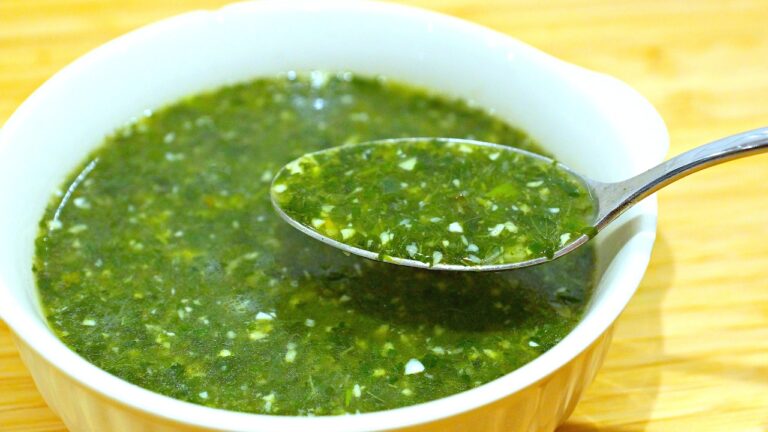
jute leaves soup

This popular Egyptian soup made with minced Jute leaves is nutritious and delicious over rice and chicken (or tofu!)

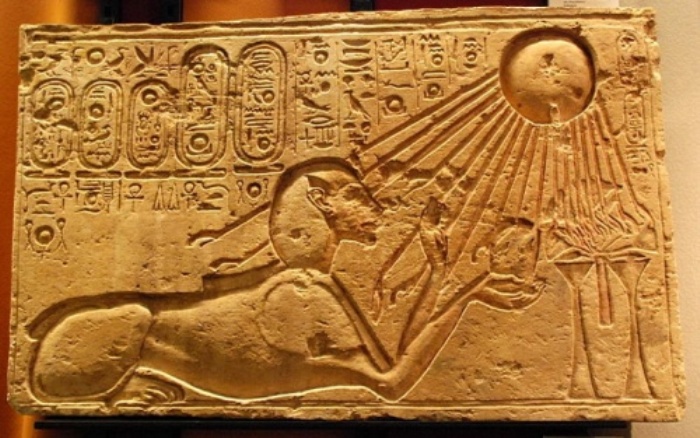
Whatever faith and holiday you celebrate, there is no better way to enjoy them all than be eating some classic Egyptian food delicacies, some of which have been popular since the time of the Pharaohs.

egyptian solar energy for residential consumers

One of the most popular is a vegetable and meat soup known as molokhia or mulukhiyah; a dish so popular that many Egyptians consider it to be one of their country’s national dishes. Another name for the leaves is jute. You can grow them indoors in a hydroponic garden year round, or sew some seeds in your garden in spring.

Mulukhiyah is made from the leaves of a leafy plant that bears the same name and is usually found only in parts of the Middle East. Not available in most supermarkets or even in many open air markets, molucheya leaves have to be sought after, and then prepared while the leaves are still fresh.

One of the best recipes I know comes from my own mother-in-law, who is originally from Alexandria and spent many years living in Cairo. The preparation of molucheya soup is a cherished family tradition that is lovingly passed down from mother to daughter.

To prepare mulukhiyah soup:

1.   Grind about 1/2 kg of molokhia leaves in either a food processor or hand grinder until the leaves almost resemble a green paste.

2.   Fry 4 or 5 large garlic “teeth” in olive oil, and add about a tablespoon of  chopped coriander, known to locals as “cusbara”.

3.  Have either a meat or chicken stock ready to use to mix the molucheya paste and other ingredients in.

4.  Add veggie, beef or chicken soup stock with the other ingredients and add pieces of either boiled meat or chicken (or tofu!), and cook all the ingredients together in a pot on a low fire for 10 to 15 minutes. You can add other spices like black pepper, cumin, and salt to taste.

Mulukhiyah soup is best served hot with a lot of rice added. It takes a bit getting used to, but once you do, it’s easy to understand why this ancient dish was once a favorite of the Pharaohs.

Mulukhiyahmolokhiamulukhiyyamalukhiyahnalita, or Jew’s mallow (Arabic: ملوخية‎) is the leaves of jute and related Corchorusspecies used as a vegetable in Middle Eastern, East African, North African, and South Asian cuisine.

BONUS desert!


More Middle Eastern food ideas:

Za’tar Pesto Recipe  from Israel’s Premiere Slow Food Chef

Silky White Malabi, Middle Eastern Milk Pudding

Taking on the Middle East: Baba Ganoush Classic Eggplant Recipe


A Black Smog-Craft Chokes Cairo’s Skies

0

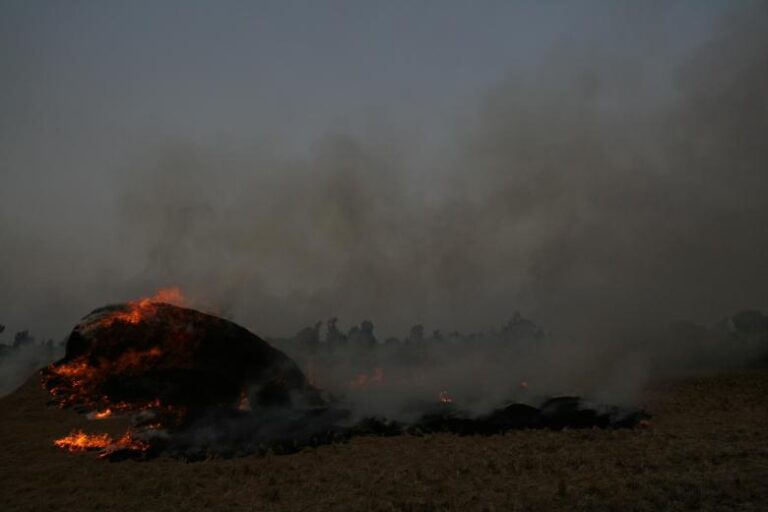
burning-rice-wasteTrapped air and burning rice waste turns Cairo’s already sullied skies black during “Black Cloud Season”

Not long ago I took a trip to the Mediterranean Sea and was appalled that from Cairo’s city center, in the Nile river, to well beyond the pyramids of Giza lie mounting heaps of trash: litter on the side of the streets, abandoned vehicles, industrial discards, and a general disrepair characterizes this once great city.

But I was even more disturbed, returning in the evening, to discover a suffocating smog hovering over Egypt’s outlying villages. My hosts explained that although technically illegal, this smog is caused by burning rice straw, and warned that this was just the beginning. Hoda Baraka, whose photography we recently featured, confirms that Cairo’s annual Black Cloud season has returned.

Australian Eucalyptus Trees Keep Israel’s Honey Buzzing Year-Round

2

israel-bee-keeperWith nectar now readily available year-round, Israeli bees are increasing their honey production.

Israel may be a desert, going six months of the year without rain, but local bee populations are thriving and honey production rising thanks to a new flowering tree brought over from Australia.

It’s not a good time for honeybee populations worldwide. All over the globe bee numbers are dwindling, as hives are hit by Colony Collapse Disorder – an ailment which an Israeli company, Beeologics, claims to have now developed a vaccination for. Last winter alone, more than 36 percent of the US bee colonies collapsed, affecting honey production, and the one-third of all food production that requires pollination – from fruits and nuts to the dairy and beef cows that feed on alfalfa.

The Gaza Islamic University Environmental Engineering Blog

0

green-prophet-middle-east-blog-reviewA weekly Green Prophet series that looks at the Arabic “green” blogosphere and online communities

After looking at The Forum of the Ornithological Society of Kuwait, the Saudi Green Blog, The Oman Eco Group Blogs, the UAE Environment & Life Blog, and the Yemenite Blog for Sciences and the Environment, we are now continuing our journey through the Middle East. Today we are arriving at the Gaza Environmental Engineering Blog.

According to the blog’s summary (no longer online, 2021), it deals with environmental engineering as well as scientific news. Its aim is to “supply all the pioneers in the fields of environmental engineering and sciences in beneficial and satisfactory information concerning the fields of environmental sciences and culture.” All this is done with an environmental encyclopedia. Active since December 2009, it is written in Arabic and administered by the students of the Department of Environmental Engineering within the Islamic University of Gaza.

General Articles on Environmental Engineering and Sciences

This blog includes many general articles on environmental engineering and sciences such as: an article on Environmental Engineering, important environmental links, international environmental dates, climate change, reports on environmental chemistry, environmental pollution, and more.

Environmental Issues in the Gaza Strip

This blog includes also many articles concerning environmental issues in the Gaza Strip. One of these articles is titled “Corrupted Fetus in Gaza because of the Israeli Nuclear Waste”.

According to the authors, a Palestinian institute for human rights said in December 2009 that the birth rate of corrupted fetus in the eastern areas of the Gaza Strip increased as a result of the radiation emanating from the Israeli nuclear plants and its waste, which is buried throughout the Israeli border with the Gaza Strip.

The Palestinian Institute said that only 48% of the toxic waste from the Israeli plants is buried in the formal waste burial places, while the burial place of 52% of the toxic waste is unknown. It is suspected that it was buried in the Gaza Strip and the West Bank.

Another article titled “Al-Mizan Center Publishes A Report concerning Environmental Pollution and the Issue of Medical Drainage in Khan Yunes” gives information about another environmental issue which is prevalent in the Gaza Strip.

On December 15, 2009, the Mizan Center for Human Rights issued a report on environmental pollution and the issue of medical drainage in Khan Yunes.  According to this report, Khan Yunes is suffering from the issue of medical drainage, also because of the negligence of Israel, which needs to establish a mechanism to drain the waste water.

Some of the recommendations mentioned are to allocate emergency funding to complete the mechanism to drain medical waste water in the city; to allocate money out of the general budget to develop the sources of water in the Gaza Strip; to prepare the rain water drainage network, and to work on benefiting from the rain water. At the end of the report, the Mizan Center stressed that Israel is to blame for the creation of the issues of the medical waste drainage as well as the pollution of ground water in the Gaza Strip and especially in Khan Yunes.

It also demanded that the international community push Israel to lift the siege from the Gaza Strip in order to allow needed materials to complete a medical waste water drainage system.

According to an article dealing with medical waste purification stations in the Gaza Strip, there are three such stations. Beit Lahiya station in the north was established in 1976 and serves about 190,000 people; the Gaza waste water station, which was also established in 1976 and serves all the population of the city of Gaza. And there is a station for the treatment of waste water in Rafah.

Moreover, an article titled “Wadi Gaza… and the Going On Blow on Human and Environmental Rights” tells the sad story of Wadi Gaza, which according to the writer of the article, instead of being a natural reserve has become a polluted river. Wadi Gaza begins near Hebron and spills into the Mediterranean Sea in the Gaza Strip. Its length is about 160 kilometers.

Wadi Gaza within the Gaza Strip is full of animal corpses, debris, solid waste, and waste water. This results in the pollution of the ground water within the Gaza Strip. The writer of the article blames Israel for all of this damage. This is because Israel built a few dams and water reservoirs in the streams of Wadi Gaza, which caused the Wadi water to stop taking its natural course and to flow less in Wadi Gaza. According to this article, Israel has been preventing water from flowing to the Gaza Strip for a long time by way of Wadi Gaza in order to build dams on the border between Israel and the Gaza Strip. Thus, in case of floods or heavy rain, the agricultural lands on both sides of the Gaza Wadi are flooded.

Sum On the Gaza Environmental Blog

The Gaza Islamic University Environmental Engineering Blog is a very unique environmental blog, since it brings to the fore the concept of the environment as seen by a militant radical Islamic group, in this case Hamas. This blog provides valuable information concerning the environmental concept of the Islamic University in Gaza, ruled by Hamas.

While giving valuable information concerning some of the environmental issues and challenges faced by the Hamas government in the Gaza Strip, the blog writers claim that the State of Israel is the source and to blame for all all these problems.

This blog is a window through which one can see how radical groups, in this case Hamas, take advantage of the environment in order to attack their enemies, in this case Israel, and blame them for all their problems, including environmental ones.

More On Environment in Gaza
Hamas Thwarts A Greener Gaza
Electric Cars in Gaza: Necessity is the Mother of Invention!
Solar Cooking Ovens: Another Eco-Solution from the Gaza Strip

We removed links to this blog in 2021 as it was no longer online

The Romans Would Be Proud of Jordanian-Greek Wind Farm Outside Jerash

0

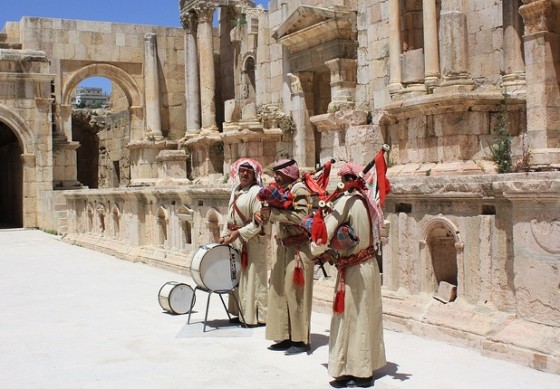
jerash jordan bagpipersA new wind farm is planned nearby the Jordanian city of Jerash. Located 48 kilometers north of Amman, the site is considered one of the largest and most well-preserved sites of Roman architecture outside Italy.


Yet another Middle Eastern country is looking to wind power for a quick solution to an ever-increasing population. This time it’s Jordan, which unlike its Gulf neighbors hasn’t been blessed with vast reserves of oil and gas, that hopes to harvest the winds sweeping the desert kingdom. The Jordanian daily Jordan Times is reporting that the Jordanian Ministry of Energy and Minerals are conducting negotiations with the Greek firm Terna Energy SA over the country’s first wind power plant.

Rehabilitate and Detox Your Lifestyle in Time for the New Year

0

Detoxing your lifestyle of non-green habits doesn’t have to be as dramatic as drug rehab. It can be simple and is a great way to start the new year.

Rosh Hashana, or the Jewish New Year, is only a few days away and as a time of reflection many of us may be thinking of ways that we want to change our lifestyles for the coming year.  If the words “detox” or “rehab” call to mind dramatic associations rehab clinics from the movies, you’re going too far.  Invent your own mellow and green version of rehab – one that leads you to a gentler, kinder way of treating yourself, your resources, and the environment.

“Titanic” Ship Leads Mediterranean Sea Floor Research Mission From Israel

0

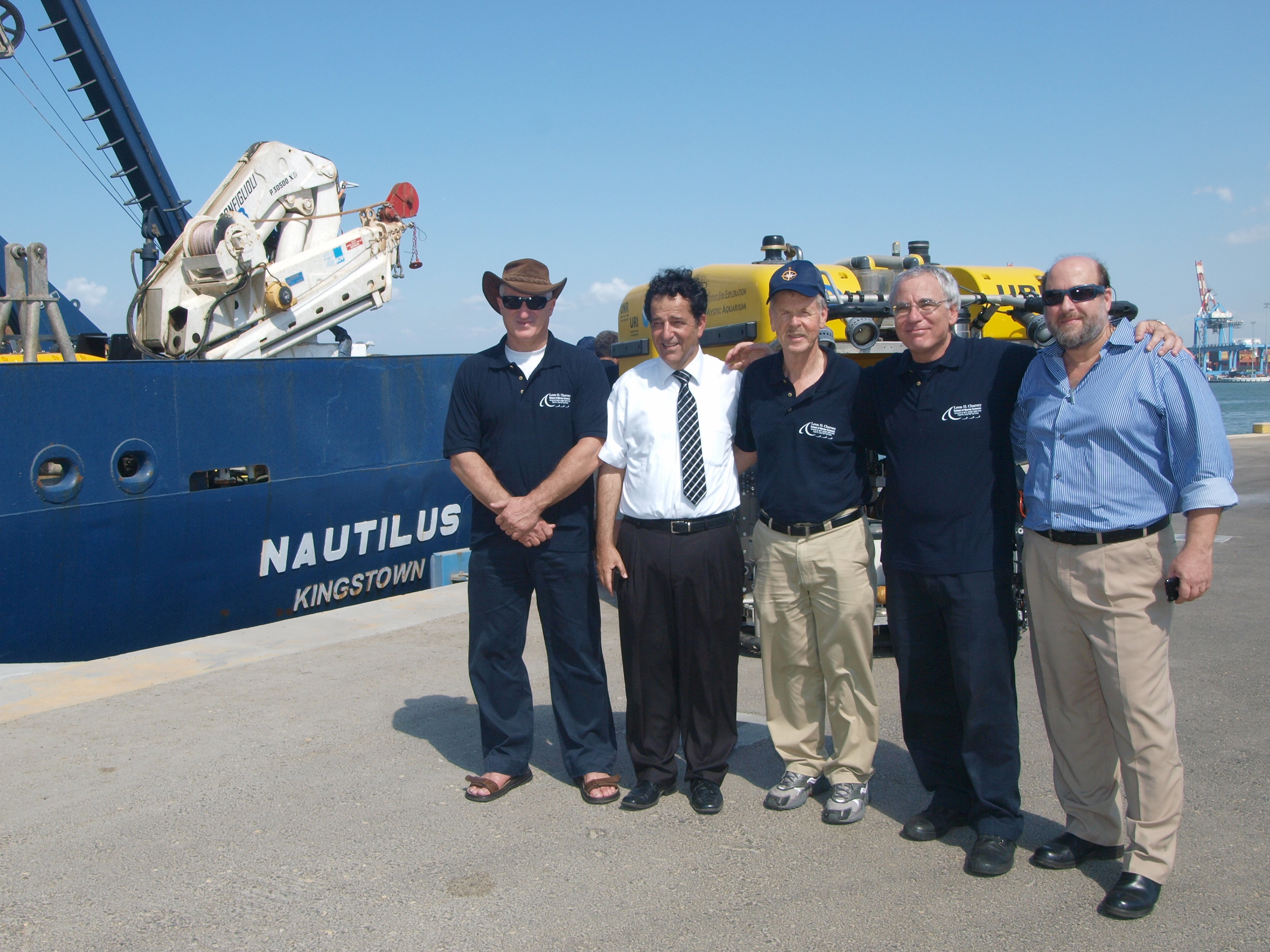
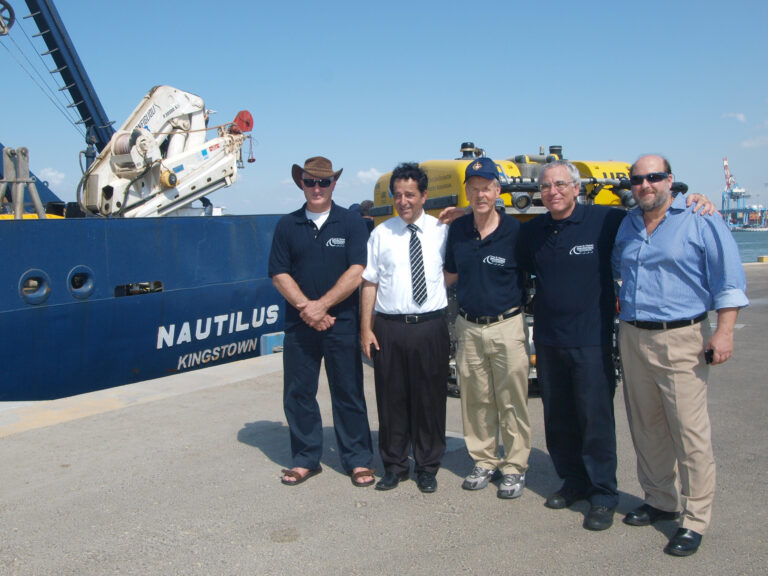
nautilus-haifa-portScientific heavyweights to scour the Mediterranean Sea Floor in a first of its kind research mission

We worry about the possibility of a giant trash heap floating in the Mediterranean, and about the effect that this and Israel’s new gas fields will have on marine life. We are also concerned that various oil exploration projects could culminate in accidental leaks that would have deleterious effects on the sea’s well-being. But we are mostly uncertain about what prowls on the sea floor. Our knowledge of this relatively unexplored region could deepen, though, since the premiere scientist Zvi Ben-Avraham, who is also the Israeli President’s scientific adviser, will lead a two week research mission aboard the Nautilus.

5 Green Dating Ideas for the Middle Eastern Romantic

1

green-dating-ideasImpress your date and reduce your negative impact on the environment with a green-ified date.

Dating can be rough. Firstly, it can be hard to find that special someone (which is facilitated, in our modern times, by some form of online dating site or one of those popular US dating sites), and secondly, it can be difficult to come up with a date that is fun for you, your date, AND the environment. The classic “dinner-and-a-movie” date often involves a great deal of wastefulness since most restaurants are major resource and food wasters. But it doesn’t have to be. If you want to flex your creative side and show off some environmental muscle, try going on a green date.

Jordan Combines Conservation and Tourism To Combat Environmental Woes

0

azraq-wetland-egret
In a historic measure that demonstrates Jordan’s new environmental commitment, the Royal Society for the Protection of Nature has agreed to establish nine more protected areas

With the help of certain enlightened individuals, such as the activists who pranced through Amman wearing lettuce to encourage vegetarianism, and Friends of the Earth Middle East (FoEME), who have been working hard to save the Jordan river, Jordan is beginning to realize that the environment is crucial to the country’s overall survival. As a result, officials are combining conservation with tourism in order to entice visitors to explore the country’s natural beauty in addition to its history. Gemma Bowes from the Guardian takes us on a comprehensive tour through Jordan’s national parks and protected areas, making suggestions for a few  good, eco-friendly places to stay along the way.

Car Talk With the “Driving Dutchman” Highlights Many Green Auto Issues

0

driving-dutchman-car-talk
Testing Better Place Taxi in Tokyo. Will Taxi drivers go for only 130 km per charge?

Jerusalem’s Rusty Mike Radio station is relatively new to the Middle East, but it is already popular with thousands of listeners in worldwide, especially with the station’s Wednesday night Car Talk  talk show that is devoted exclusively to cars and issues related to driving. Moderated by Joop Soesan, formerly from Holland, and who also goes by the name of “the driving Dutchman,”  the one hour program often covers subjects like electric cars, hybrid cars, and the technology behind both.

I attended last Wednesday’s Car Talk program as Soesan’s guest, representing Green Prophet. Subjects covered during the hour long program included issues surrounding various car engine technologies, including biomass fuels and natural gas. Much of our conversation about electric cars centered around those being developed by Better Place Company headed by Mr. Shai Agassi. I described my experience in visiting the Better Place Electric Car Education and Test Drive Center near Tel Aviv .

Polluters Face New OECD Rules

1

factory-pollutionIsrael’s entry into the OECD will mean more stringent pollution standards for industries, but it comes with a cost – especially for smaller businesses

Frequently people argue that it’s pointless to curb one’s personal habits when the big industries are most at fault for driving up greenhouse gas emissions. What difference does it make if one family recycles their cans, for example, or their meat consumption, when the agricultural, energy, manufacturing, and transportation industries pollute at rates that are exponentially higher? In Israel, that argument will be increasingly difficult to maintain, as the cabinet recently ratified the country’s membership in the Organization for Economic Cooperation and Development (OECD).

The standard

OECD’s aim is to impose legal industry standards for developed economies. Of the 220 such standards, 70 apply to the environment.

The ratification should lead to better disclosure of each plant’s pollution output and a permitting system to control and prevent pollution; tracking the presence of dangerous chemicals will also be a priority.

However, implementing these new, rigorous pollution standards will require an adjustment period that will be easier for large companies to incorporate than it will for small to medium sized companies.

A little help from the government

For this reason, the Israel Manufacturer’s Association is asking the government for NIS 200 million to ease the smaller organizations’ transition, though according to Haaretz writer Ora Coren, the treasury has received no such request.

However, the Environmental Protection Ministry’s Director General Yossi Inbar told Haaretz that it is prepared to spend billions of shekels to improve industry environmental standards.

“It hasn’t come voluntarily, but rather because they have no choice,” he told Haaretz.

Slow to implement

Amit Bracha, the Director of the Israel Union for Environmental Defense, claims that implementation of the OECD rules, which is expected to last until 2017, could occur more quickly, and that despite their claims otherwise, even large companies have not fully grasped environmental concerns.

Israel Chemicals, which has received criticism for its role in compromising the ecological health of the Dead Sea, has since become the poster child for environmental awareness among industries, according to Coren.

Judging footprints

The company’s executive Vice President Asher Grinbaum claims to understand the interconnectedness of environmental and economic health, and acknowledges that in the same way that consumers judge their food by its calorie and fat content, so too will they judge industry’s carbon footprint.

The OECD rules will ensure that polluters absorb the costs of pollution, so that consumers will be encouraged to purchase products that are cheaper and cleaner. Also, companies that have poor environmental standards will no longer receive incentives or subsidies.

“The OECD led the Environmental Protection Ministry to discontinue its policy of letting factories receive separate permits for air and ground pollution and to develop an integrated pollution registry. New air pollution legislation will come into effect in Israel next year as a result,” writes Coren.

While a certain step in the right direction, the hard days of implementation still lie ahead.

:: image via Taras Kalapun and story via Haaretz

More Green News From Israel:
Will Israel’s Undersea Gas Pipeline Idea Increase the Mediterranean’s Already Polluted State?
One State. One Environment
Intel Israel Is LEED’s Golden Child

Nursing in the Middle East

0

nursing Muslim motherA How to avoid common pitfalls that undermine breastfeeding in the Islamic world.

Dr. Modia Batterjee, the author of A Fading Art: Understanding Breastfeeding in the Middle East, is an International Board Certified Lactation Consultant with a private clinic, and has a masters degree in public health.

As such, she is able to understand both the day-to-day issues facing young mothers as well as the larger, global forces that influence infant feeding patterns. These feeding patterns play a role in the high infant mortality rate in the Muslim world, about 60% in the first year of life. This post continues Part I of this review of A Fading Art: Understanding Breastfeeding in the Middle East.

Why Muslims fail at breastfeeding 

There are many cultural practices and beliefs that prevent both exclusive and long-term breastfeeding of babies in Saudi Arabia and the rest of the Arab world.

  1. Separation after birth. Babies should be placed on the mother’s stomach immediately after birth, and kept with the mother throughout the hospital stay. Even in the case of a cesarean section the mother can breastfeed immediately after the surgery, as long as she is alert and has help. Early feedings are important to establish the milk supply and for baby to get colostrum, the early milk that coats the stomach and prevents harmful bacteria from entering the baby’s system.
  2. Teas and formula. In Saudi Arabia, babies are often served tea or formula to soothe tummy aches or help baby sleep. But these interfere with the mother’s milk supply, which works according to supply and demand. If the breast is not emptied frequently enough, they gradually produce less milk.
  3. Nipple confusion. Some babies  start to prefer the bottle after having been fed a supplement. It’s not always the nipple itself that is the issue. Sometimes it’s the mother’s low supply, or the baby’s inability to breastfeed well that leads a baby to prefer the bottle. Fixing these problems usually reverses the preference.
  4. Questions about milk supply. This is a major concern among Saudi women. According to Batterjee the important signs are satiety after each feed, the number of urine-filled diapers, and the color of the stools. She emphasizes night-feeding as an important factor in maintaining supply. Her recommendation to nurse on only one side may not work well for all mothers especially in the early weeks when the supply is being established. Current recommendations are to let baby finish the first side at each feeding, then offer the second.
  5. Correct latch-on. Babies need to suckle in a way that allows the nipple to reach back against the baby’s soft palate to avoid pain and transfer a good supply of milk.
  6. Birth. Pain medications during labor cross the placenta and affect both the baby and the mother in the early stages of breastfeeding.
  7. Ramadan and prolonged fasting for a month can quicken the end of nursing

Breastfeeding and Fasting During Ramadan

Dr. Batterjee advises Moslem women to eat and drink well in between fast days during the holy month of Ramadan. She also writes:

As soon as she begins to feel the exhausting pressures of breastfeeding and fasting, such as feeling ill, feeling dizzy, or passing dark yellow urine indicating dehydration, it is okay for her to break her fast and give her kafarah (compensation) for that day.

Muslim women who are pregnant or breastfeeding might be exempt from fasting if they feel that the fasting would negatively affect their health or their baby’s health.

A mother might be expected to make up for the missed fasting at a later time or pay some compensation for not fasting. Consulting a scholar or a book of fiqh is recommended to determine the appropriate guidelines.

Breastfeeding and the planet

Dr. Batterjee doesn’t forget ecology, “the least familiar benefit of breastfeeding.” In Pakistan, the number of feeding bottles sold annually, if placed end to end, would reach Mt. Everest. One liter of water a day is needed to mix the formula, and another two to wash the bottles. This doesn’t take into account water used to raise cows and manufacture formula.

A Fading Art: Breatfeeding in the Middle East by Modia Batterjee is an unusual and fascinating first-hand account of family life, public health, and breastfeeding in the Islamic world.

More on breastfeeding:

World Breastfeeding Week Focuses on Baby-Friendly Policies
Breastfeed Your Baby in a Hijab: Public Breastfeeding in the Middle East
Ten Tips for Breastfeeding Your Baby in Public in the Middle East

4 Reasons To Eat Pomegranate During the Jewish New Year

0

pomegranate-heart
You have to love the health benefits of this amazing fruit.

With Jewish New Year (Rosh Hashana) around the corner, certain traditional foods are expected to appear at the table. There are many different recipes, but there are several which are universal, including honey cake (try out this amazing recipe) and certain fruits. One of these fruits, originating in the Middle East, is the pomegranate.

I have eaten pomegranate around New Year since childhood. It is only recently, however, that I realised that apart from being a traditional fruit, it is also extremely beneficial to your health. Here is a fruit which you should make part of your diet more than just once a year.

Will Israel’s Undersea Gas Pipeline Idea Increase the Mediterranean’s Already Polluted State?

4

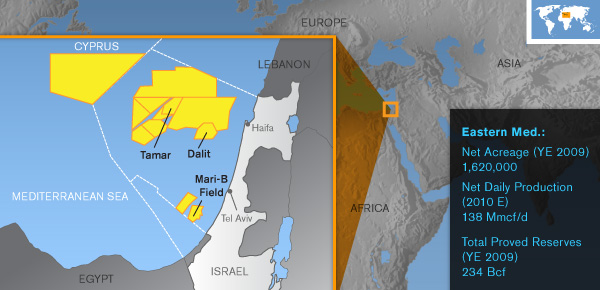
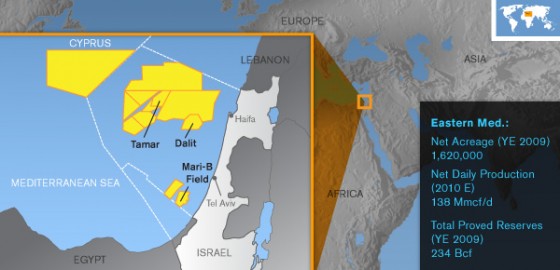
israel-gas-fieldNatural gas fields off Israel’s coast. A submerged gas pipeline to Greece will be even more ecologically problematic.

Israel is considering a plan to build an underwater natural gas pipeline to Europe as a way to transport gas being drilled from offshore wells in the eastern Mediterranean. The plan, as reported August 30 in Globes, involves a pipeline that will run from the Tamar and Dalit gas fields, located off Israel’s northern coastline, and along the seabed to Greece where it will then be transported overland to various EU countries. The undersea gas fields are currently being developed by a drilling consortium involving the American Nobel Energy Inc., based in Houston Texas, and the Israeli Delek Group Ltd., controlled by business tycoon Yitzhak Tshuva.