Home Blog Page 585

Thinking About Giving The Gift Of Jeans? Please Think Again

7

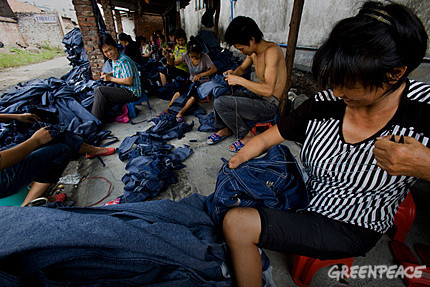
chinese-workers-jeansThe “jean capital of the worldexacts a dark environmental and public health price – too steep for wholesome gift-giving.

When the last Hanukkah candle is extinguished, we will shift our attention to Christmas. Since the wise men laid down their wares at baby Jesus’ feet in Bethlehem, Christians (and atheists and agnostics and many in between) have demonstrated their love and consideration for friends and family through gifts. Theoretically.

In reality, this tradition has evolved into a cacophony of  registers blowing smoke from burning cash. So people in the green world have been calling for more meaningful giving: fair trade items, homemade art, or experiences versus things because only a gift that has been created with a wholesome spirit, from the cradle to the grave, can be truly loving. Which is why we think blue jeans may just be the most unloving gift of all.

Bromine in the Dead Sea Makes Mercury Above it More Lethal

2

Researchers thought it only happened at the poles; new research between Israel and the US shows that bromine above the sea can make mercury way more toxic in fish.

A joint US/Israel study funded by the National Science Foundation has found that the Dead Sea has measurable effects on the chemistry of the air above it, in a paper just published at Nature: Geoscience.

The research, led by scientist Daniel Obrist and colleagues at Nevada’s Desert Research Institute with a group of Israeli researchers at Hebrew University, found that mercury was concentrated into the most toxic form in the air above the Dead Sea.

The atmosphere over the Dead Sea, researchers found, is laden with oxidized mercury, a much more toxic form of Mercury than the elemental form. The finding was surprising, as such high levels of oxidized mercury have only been found at the polar regions.

Reclaimed Saudi Wetland Garners Prestigious Aga Khan Award

2

wadi-hanifa-saudiAga Khan awards the Wadi Hanifa reclamation project in Riyadh, Saudi Arabia with top honors.

Typically the Aga Khan Award for Architecture is reserved for just that – socially transformative buildings constructed in areas that have a strong Muslim presence. But this year, Aga Khan also recognized Saudi’s Wadi Hanifa Watershed project for its contribution to society.

And it really is a watershed moment for the country whose water resources are deeply limited. Wetlands throughout the Middle East have suffered from poor management, leading to negative consequences for both the environment and public health. But Saudi Arabia’s sparkling initiative demonstrates that recreation and ecology can flow in harmony.

$500 Billion Global Fossil Fuel Subsidies Main Barrier To Renewable Energy

0

mr-amin-kenya-irenaMr. Amin claims that government subsidies given to the fossil fuel industry impedes serious growth of the renewable sector.

On Sunday, Israel made a public NIS2.2 billion (US$0.6 billion) commitment to reduce greenhouse gas emissions. That announcement came just days after Rupert Murdoch and Lord Jacob Rothschild bought shares in Genie Oil & Gas Inc., whose subsidiary Israel Energy Initiatives (IEI) was granted license by the Ministry of Infrastructure to proceed with oil shale exploration.

The pair proclaimed that extracting not only Israel’s shale oil, but that of America’s Green River Formation – the world’s largest reserve – would put international energy on a new stage. A western stage, complete with powerful spotlights. This insane chicken dance – two steps forward and a mile back – underscores the challenges facing the renewable energy industry, a challenge that the Interim Director of the International Renewable Energy Agency (Irena) understands all too well.

Climate Change and Hanukah – A Connection?

hanukah menorah
The 8-day Jewish holiday of Hanukah starts tonight. Is there a connect with climate change?

This week marks the Jewish holiday of Hanukah – celebrated by widely in Israel by Jewish people. And the local Israeli Arabs enjoy it too, feasting on the jelly doughnuts that go along with the 8-day holiday.

“What does Hanukah have to do with global warming?”

Hanukah sends an environmental message: how could a one-day supply of oil last eight days and nights?

“It represents an early example of energy conservation with relevance to our current environmental challenges,” wrote Adam Stern from the Coalition on the Environment and Jewish Life (COEJL). In the past he’s recommended that people switch over to CFLs this holiday season.

For some yummy recipes to go along with the miracle of Hanukkah, how about latke recipes of Rachel Barenblat, the wife of a World Changing writer. Rachel’s Asian latkes with soy dipping sauce sound tempting and definitely modern, we would probably choose a hot and crispy jelly doughnut (sufganiyot) over a latke any day. That’s if you’re a calorie counter.

image-baked-dougnuts

Or try baked sufganiyot for a healthier change.

Browsing through our archives, GreenProphet has not forsaken its Jewish readers. For a good green start this Hanukkah try:

1. Eco-Rabbi – Take the Hannukah Eco-Challenge
2. Read about the importance of spreading the Hannukah message.
3. A Jewish Heart for Africa Shines During Hannukah

Obama Tried to Get Saudis on Board at Copenhagen, Wikileaks Reveals

1

ClimateWire has revealed that leading up to the UN meeting at Copenhagen last December, the Obama administration leaned hard on the Saudis to get them to agree to the Copenhagen Accord.

According to Wikileaks of private communications within the state department, the administration went right to the source of opposition to climate negotiations. The Saudis.

The memos show that Saudi Arabia was privately pushed hard by the US to accept the Copenhagen Accord, and that climate change was a front burner issue for the Obama administration.

“Saudi officials are very concerned that a climate change treaty would significantly reduce their income just as they face significant costs to diversify their economy,” the US ambassador James Smith wrote, briefing Secretary of State Hillary Clinton. However, he alluded to a possible negotiating tactic in the memo.

Start Looking For Eco-Gifts On Dubai’s Goumbook

0

dubai-goumbook-foundersThese are the savvy ladies behind Dubai-based Goumbook, an online directory of all-things eco.

This morning I was doing my usual rounds on the internet, read a few inspirational poems, caught up on the day’s big news: wikileaks, Cancun, and Goumbook – apparently the first online directory of all things eco in the Middle East. I almost choked on my coffee.

Green Prophet has been the go-to source of “green” information throughout the Middle East for several years, while Goumbook only showed up towards the end of 2009. But that’s ok. We forgive them this small transgression because they do have an awesome directory of green businesses, events, and other useful eco-tips. Step on in to learn more about the ladies from Dubai who make it happen.

Israeli Electric Cars on the Fast Track – Says Company’s Power Supplier

2

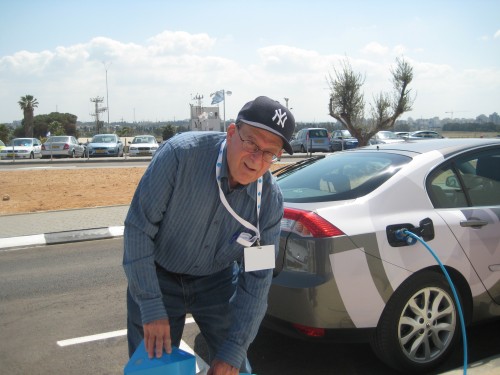
israel electric carsThis guy (Maurice) will have to wait till 2012 to have an electric car

Contrary to reservations being made about the Better Place electric car company being a monopoly in Israel’s upcoming electric car market, it now appears that the head of one of the country’s largest holding companies, the Israel Corporation, is very positive concerning the future of electric cars in Israel and other countries. Favorable remarks in regards to electric cars were made recently by Israel Corps.’ CEO, Nir Gilad, in an interview with Globes Financial News.

Gilad told Globes that he expects these cars to be “commercially on the roads” by the year 2012. He notes that the company largely responsible for this occurring, Better Place LLC, is on the “fast track” in setting up the infrastructure needed for running these cars on Israel’s motorways.

Mysterious Female Whale Sharks Elude Marine Biologists

0

whale-sharkSomething as big as a whale shark should be easy to track, but Dubai-based marine biologists learn they are actually quite elusive.

It’s so tempting to attribute anthropogenic qualities to fauna. Take the whale shark Rhincodon typus, sometimes referred to as gentle giants, the largest fish to plow through tropical seas with its wide mouth open. The heaviest on record weighed in at 36 tonnes – as much as a ring of six Barnum and Bailey circus elephants. And yet they are among the least known creatures.

They’re nomadic, but no one knows their favorite haunts, they’re huge, but a sighting can be as furtive as a wanton look, and the ladies are especially sneaky. To learn more about these extraordinary seafaring creatures, Sharkwatch Arabia plans to tag 25 whale sharks over the next five years, starting with two tags donated by Emirati organizations.

Spacefaring Civilization Finds Evidence of Great Lake in Paleolithic Egypt

0

New images taken from the space shuttle, using radar, are revealing that 100,000 years ago, Egypt had a lake broader than the gigantic Lake Erie, one of the Great Lakes in the US.

New evidence of a once wetter Middle East comes from high above the earth, where we are able to peer back through the centuries with the aid of technology that we have gradually developed over centuries of civilization, in the space shuttle.

When the giant body of water first appeared, a few hundred miles West of the Nile in what is now Egypt’s Tushka region, about 250,000 years ago, Paleolithic hunters and gatherers would have fished here. The lake appears to have grown and shrunk and finally disappeared about 80,000 years ago, say the scientists.

Ohalo College of Katzrin Opens Department of Sustainable Development and Renewable Energy

0

"galilee israel eco education"Ohalo College of Katzrin brings sustainable development studies into the ivory tower.

The world of academia and environmental activism do not always go hand in hand, and academics are notorious for their detachment from the real world.  But some universities and colleges are an exception to this generalization.  In fact, Tel Aviv University held a conference intended to bring together academic researchers and environmental policy makers just last month.  And green MBA degrees are popping up all over the place, instructing business students on how to integrate sustainable objectives in the business world.

The Ohalo College of Katzrin in Israel is rising to our global environmental challenge as well, by opening an entire department devoted to sustainable development and renewable energy.

Interview With American Oil Shale Expert Jeremy Boak

1

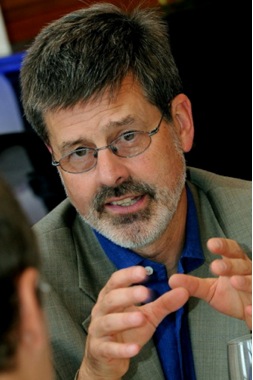
oil-shale-jeremy-boakThe Director of the Center for Oil Shale Technology and Research (COSTAR) talks to Green Prophet about the benefits and detriments of oil shale exploration.

When we first submitted our open letter to David de Rothschild, in which we asked him to intervene in an oil-shale development project in the Elah Valley now backed by Lord Jacob Rothschild and Rupert Murdoch, Jeremy Boak wrote in to question the science of our oil shale assertions. David responded, pledging to look into the matter.

In the meantime, we have asked Jeremy, the director of the Center for Oil Shale Technology and Research (COSTAR) funded by ExxonMobil, Shell, and Total, to discuss the technology that Israel Energy Initiatives (IEI) would use to extract energy from oil shale, as well as to shed light on the different regulatory environments facing developers in the United States and Israel. Here are his answers:

Hannukah Sufganyot (Jelly Donuts) Recipe

4

image-jelly-donuts-sufganyotIt’s almost Hannukah, and Hanukkah means sufganyot. Delicious jelly doughnuts dripping with jam, a once-a-year indulgence.

Sufganyot weigh in at about 300 calories per wicked, tempting little piece, but who says you have to eat more than one?

Consider taking our Hannukah eco-challenge, then fry some sufganyot for the kids. They have enough energy to burn them off. And they’ll love making them together with you.

Hannukah Sufganyot Recipe

Note 1: The dough needs to be made the night before and allowed to rise in the fridge.

Ingredients:

2 packages dry yeast, or 1 fresh cube

4 tablespoons granulated sugar

3/4 cup warm milk or water

2 -1/2 cups flour

1 teaspoon cinnamon or 1/2 teaspoon ground nutmeg, if liked

1/8 teaspoon salt

2 egg yolks, beaten

1-1/2 tablespoon softened butter or margerine

Oil for frying

1 cup powdered sugar

1/2 cup bright red jam, dulce de leche, or chocolate spread (See Green Prophet’s recipe for strawberry jam here.)

Dissolve the yeast and granulated sugar in the milk.

Place the flour in a large bowl and push most of it to the sides. Add the yeast mixture, yolks, salt, and cinnamon; mix well.

Work the softened butter or margarine into the dough, kneading for a few minutes till the dough is elastic. Cover the dough and put it away to rise overnight in the fridge.

Next day:

Flour your working surface. Roll dough out to 1/8 of an inch. Using a glass about 2 inches wide, cut out dough rounds. Cover and allow to rise 15 minutes.

Form the rounds into balls. Heat oil to 375 F – 190 C and drop a test donut into it. Turn it over when brown. Cut it open to test doneness on the inside – give the oil a few more minutes to finish heating up if the donut is still a bit raw inside.

Fry a few at a time – don’t crowd the pan. Remove the donuts with a slotted spoon to drain on crumpled newspaper.

Make a slit in the top of each and fill with 1/2 teaspoon of jam or other filling. Roll each sufganyah in powdered sugar.

Eat hot!

Note 2: These are best eaten fresh. If it seems you have excess dough, or wish to make some ahead of time, you can replace it in the fridge and just take off the amount you want for a fresh batch.

More on green Jewish Holidays:

Photo of Sufganyot by Miriam Kresh

Three Employees Killed In Haifa Oil Refinery Gas Leak

0

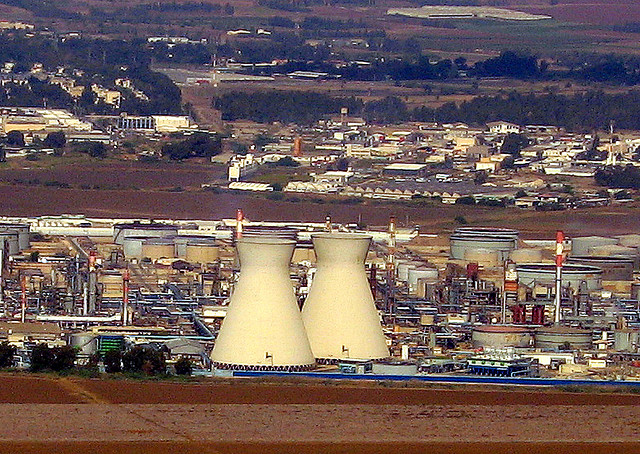
haifa-oil-refineriesThree Oil Refineries Ltd. employees killed as a result of “negligence?”

An explosion at Israel’s largest oil refinery resulted in a gas leak that killed three people last week. Located in the bay area of Haifa, Oil Refineries Ltd. (ORL) has an annual capacity of 9.8million tons of crude oil and a daily maximum capacity of 196,000 barrels. Though its facilities are considered to be “state-of-the-art” last week Tuesday something went terribly wrong, resulting in the death of three people under thirty-five including two cousins. An environment ministry official told Haaretz that he has no doubt that the accident was caused by negligence.

Superfoods, are they real or just a marketing ploy?

4

image-broccoliMaca, goji berries… what gives? Miriam shows how to buy local superfoods without the cost and fancy wasteful packaging.

Colorful, flavorful, wonderful, natural products  crammed with every natural antioxidant, mineral, micro-nutrient, essential fatty acid and protein you can think of. And I can get them for you, too – wholesale.

What? These aren’t superfoods? You’re looking for  capsules or powders in bottles bearing attractive “green” logos. But all you see on the table are humble… vegetables. Um, we’ve had a misunderstanding, it seems.

True, these are slow foods (read about a slow food chef here) – not the instant commercial products known as “superfoods.” What’s that again? If it’s going to be fresh produce, at least I could have shown you some maca root, some goji berries? (See the market where I’m buying fresh produce these days.)

Valuable as maca and goji really are, they’re not native to the Middle East region.

Maca, for example, comes from the Peruvian highlands, where searing summers alternates with below-freezing winter temperatures, and high winds buffet the landscape. I don’t think it would grow here in the Middle East.

Goji berries, now, they might take. Of course, we’d have to wait three years before our plants bear fruit, but never mind – the leaves are edible. We can eat those in the meantime.

On the other hand, why wait? Fresh fruit and vegetables, both cultivated and wild, are powerful nutritional sources. Much quicker and cheaper than imported wonder-foods, or extracts of them, and much easier to get.

As nutrients and medicines, extracts fall behind whole foods because when they’re made, only the properties manufacturers consider important are retained in the product. Unknown components are discarded. To get all the goodness out of a food, it has to be consumed as a whole, organic piece, with all its mysterious unknowns interacting with each other and with our bodies.

Next time you’re in the health food store, ignore exotic foods flown in from 5,000 miles away. Leave the blue-green algae, the spirulina, the whey powder where they are. Shop from the shelves where whole grains and organic fresh produce sit.

  • Eat broccoli, sweet potatoes, mangoes, beans, humus, labneh,  humanely-reared poultry.
  • Douse your superfoods with golden  liquid superfood – olive oil.
  • Spice your whole-grain pizza with za’atar from your windowsill garden.

You’ll fizz and crackle with energy.

And you’ll feel good about having no packaging to recycle, because these foods don’t need packaging, or even much advertising. Humanity has survived and evolved on these same humble ingredients since pre-history, with never a need to flog their images in glossy magazines or on billboards. Doesn’t a cauliflower look ridiculous dressed up with a fancy name and crammed into fancy packaging? The marketing ploy backfires; it makes the familiar green-and-white vegetable that we can pick up and heft in our hand look much more attractive.

Still want to plant goji, astragalus, burdock? Go ahead, and I wish you success. I’m in favor of growing as much of our own foods as we humanly can – even just a handful of parsley in a window box. After all, much of our fresh produce was only recently introduced to local farmers. But choose wisely. Not every new plant takes to a new climate. Believe me, if I could get dandelions to grow in hot, humid central Israel where I live, I’d plant all my window boxes with them. I’ve tried – it hasn’t worked.

Go wild

Don’t neglect wild superfoods either. Nettles, chickweed, purslane, mallows, and many other super edible “weeds” grow abundantly every springtime. There’s nothing wrong with drying some for later, either. (Just pick ethically and leave enough for new growth next season.)

Next time you’re out shopping with antioxidants in mind, cast an eye over the fruit and vegetables. Choose the most deeply-colored ones and when you get home, eat them.

Now that’s superfood.

image-hamster-broccoli

More on sustainable, slow foods on Green Prophet: