Somehow vegetables with short seasons excite the imagination and appetite more sharply than produce that’s available all year around. Good Middle Eastern cooks have many recipes for delicate fava beans, and this turmeric-fragrant soup is one.
Somehow vegetables with short seasons excite the imagination and appetite more sharply than produce that’s available all year around. Good Middle Eastern cooks have many recipes for delicate fava beans, and this turmeric-fragrant soup is one.
Somehow vegetables with short seasons excite the imagination and appetite more sharply than produce that’s available all year around. Good Middle Eastern cooks have many recipes for delicate fava beans, and this turmeric-fragrant soup is one.
Somehow vegetables with short seasons excite the imagination and appetite more sharply than produce that’s available all year around. Good Middle Eastern cooks have many recipes for delicate fava beans, and this turmeric-fragrant soup is one.
Somehow vegetables with short seasons excite the imagination and appetite more sharply than produce that’s available all year around. Good Middle Eastern cooks have many recipes for delicate fava beans, and this turmeric-fragrant soup is one.
Somehow vegetables with short seasons excite the imagination and appetite more sharply than produce that’s available all year around. Good Middle Eastern cooks have many recipes for delicate fava beans, and this turmeric-fragrant soup is one.
Somehow vegetables with short seasons excite the imagination and appetite more sharply than produce that’s available all year around. Good Middle Eastern cooks have many recipes for delicate fava beans, and this turmeric-fragrant soup is one.
Somehow vegetables with short seasons excite the imagination and appetite more sharply than produce that’s available all year around. Good Middle Eastern cooks have many recipes for delicate fava beans, and this turmeric-fragrant soup is one.
The plan involves the establishment of a $100 million agro-industrial park in Jericho that will be powered by solar energy. The park, which will be used to produce products for export, will enable the Palestinians to export their products via Jordan, thus circumventing Israeli checkpoints which now are a hindrance to the free movement of goods in and out of Palestine.
Egyptians joined the 350 campaign to create art and demand bold climate action
In the Egyptian desert landscape of Wadi Natrun, 200 students and activists worked in the blistering heat to send a message to world leaders heading to Cancan for the latest climate conference. Placing large black strips on the ground and using florescent jackets, the image of a scarab holding a sun with ‘350’ inside slowly emerged and could even be seen from space. The enormous scarab was a call for leaders to agree to a fair and effective climate deal and also symbolized the potential of solar power as a renewable resource to power Egypt’s future.
The Cairo event was designed and organised by the local artist Sarah Rifaat and was one of 12 events around the world by the 350 campaign. Rifaat told the BBC that it was “important that Egypt joined this global call” to tackle climate change.
Another mosque has taken up the battle against climate change and gone Eco- this time in Turkey
When a nuclear plant was proposed for the Turkish village of Buyukeceli, the residents decided to demonstrate their resistance not through protest and petitions but by highlighting the viability of renewable energy. Using the support of Greenpeace, they decided to show the power of solar energy and installed photovoltaic panels on the local mosque.
Whilst this may sound like a new and novel concept, back in July Green Prophet revealed plans for Europe’s first completely eco-friendly Mosque in the English city of Cambridge.
Arwa speaks to green deen Ibrahim Abdul-Matin about his latest book ‘Green Deen’ and why he believes that Muslims need be compelled spiritually to make dramatic changes in their lives for the sake of the planet
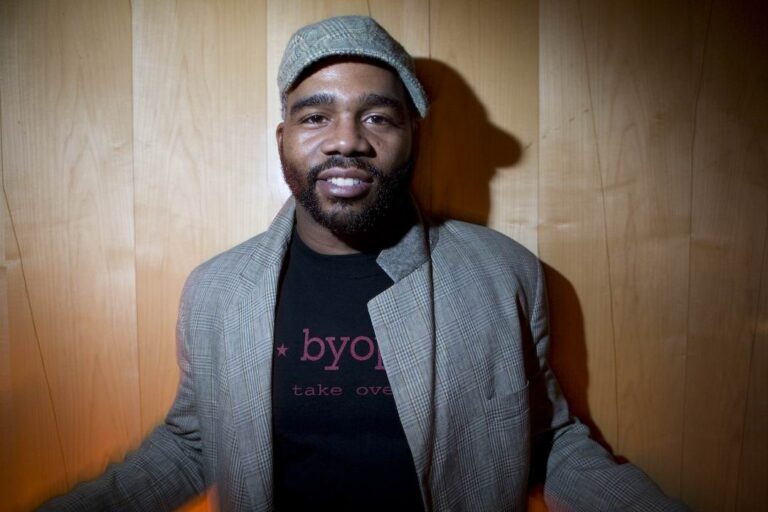
Ibrahim Abdul-Matin is a man of many talents. As well as working as a regular sports commentator and youth organiser, he is a policy adviser for NYC Mayor Bloomberg’s office of sustainability and author of ‘Green Deen: What Islam Teaches About Protecting the Planet‘. He has been making waves on the US green scene for a decade now and his latest book, which connects his Muslim faith with his love of nature hopes to spark greater environmental awareness amongst the Muslim community. I caught up with him to speak about the influence of his father on his green ethic, what the life of an Eco-Muslim would look like, ideas for a green hajj and why Muslims need to become ambassadors for clean water.
GP: Tell us a bit about yourself. When and where were you born and how did you become more aware of environmental issues?
Ibrahim: I was born in the middle of a blizzard in Manhattan, New York on January, 1977. My mother and father were recent converts to mainstream Islam and lived in Queens. We eventually moved to Brooklyn and I remember thinking the entire world was a sea of concrete buildings. My father took my brother and I when we were little kids to hike on Bear Mountain – which is just an hour north of NYC- that day, we saw the beauty of nature, and my love of the environment has only grown ever since.
What inspired you to write the book and what has the process of putting together all that knowledge been like?
In 2008, I went to a conference called “The Dream Reborn,” in Memphis, Tennessee. This conference was a gathering of environmental justice activists. It was a beautiful group of very dedicated and inspiring people. But I was curious – what was the ordinary resident of Memphis thinking? So I ventured into the downtown area away from the conference, and met an old woman at a diner. I asked her, “what do you think of climate change?” She said, “I think it’s something democrats want me to be afraid of. Just like republicans want me to be afraid of terrorists.”
In that moment I knew that unless environmentalists found a deeper, divine, more spiritual reason for folks to become involved in the movement – they would simply see it as propaganda. Since I’m Muslim, I decided to look to my own Deen of Islam to learn more about its connection to the planet – and then tell Muslims all about it!
What response have you had about your book from the Muslim and wider community? Overall, very positive. I think people are intrigued about mixing the two issues – Islam and the environment. And a quick glance at the book’s introduction shows people that these two issues are in fact, very connected. I’ve heard a lot from young people who felt innately connected to the environment and knew deep down inside that Islam was a Green Deen. These young folks were very happy to see their thoughts in writing.
The negative stuff has been from the typical Islam/Muslim hater who thinks “the Earth is a Mosque” is Muslims’ attempt to turn the whole world into a mosque. It’s a ridiculous notion and frankly, it’s ignorant. Islam has beautiful teachings about harnessing the power of the sun, about treating animals well, about eating food with care, and about not wasting in general. That’s what “The Earth is a mosque,” means. It means to treat the whole world as sacred.
What core teachings does Islam offer us in terms of better caring for the environment?
First I need to give a serious shout out to my dear brother Faraz Khan in New Jersey. Faraz is a true scholar and far more capable of writing a book than I am. Faraz has been studying what Islamic scholars say about the environment for some time. It’s his work that leads to the 6 principles [Tawhid (oneness), Ayats (signs of God, Khalifah (being a steward of the Earth), Amana (our sacred trust with God), Adl (justice) and Mizan (maintaining the natural world’s delicate balance)] of a Green Deen in Islam that I cite in the book.
Why do you believe that Muslims have an important role to play in combating climate change?
Because it’s our God given duty. Allah has entrusted human beings with the planet and all that’s in it. Creation is not ours – it’s Allah’s and He has made us responsible, as the best of Creation, to take care of it. Allah has generously given us these things and that we cannot forget to be grateful. We also must serve with justice and not destroy, pillage, or hurt any of the things He has provided.
What one person or group or way of thought has inspired your Green Deen?
Definitely my father. He grew up on a farm in southern Virginia and has deep connections to the land. He’s spent the last 15 years in upstate New York and frequently takes trips into the woods, the mountains, to simply exist among Allah’s creations and praise Him. My father prays outside a lot – he says that it’s good to be reminded of what we’re a part of and who to be thankful to.
Ibrahim Abdul Matin
What do you think is holding back Muslims from doing more for the planet (particularly in the Muslim world)? And what can be done to tackle these constraints? I think it’s the same reason as the old woman in Memphis. Muslims need to feel compelled spiritually to make dramatic changes in their lives. They need to feel like Allah has commanded them to do something – that’s what “Green Deen” is about. I argue that Allah has told us that protecting the planet is a major priority in our practice of Islam.
If you could get Muslims to do one thing for the environment, what would it be?
Become advocates for worldwide clean water. Muslims need to pay attention to and get involved in issues that don’t just affect them – but affect everyone. We are stewards of the Earth. Not just stewards of Muslims. Water is every creature’s most basic need for survival. Our Prophet (peace be upon him) taught us to not waste water while making wudu, even if we live next to a flowing river. Our Holy City of Mecca exists because of the Well of Zamzam.
Nearly one billion people on Earth do not have access to clean water! Every 20 seconds a child dies from a water-related disease. Bottled water companies are on a mission to privatize water – tragedy if this happens!- and even more people would be left without drinking water if a cost becomes attached to it. From now on, whenever someone asks you, a Muslim, why you follow Islam or asks you about terrorism, start talking about water. Join clean water campaigns. Pressure the UN, the WHO, and other international organizations to make this a REAL priority.
Do you think it is fair to say that all the major faiths are just discovering the green roots in their religions and the need to take environmental action?
I wouldn’t say they are “just” discovering this – I think Christians, Jews, Muslims, Buddhists, Hindus, everyone has known for quite some time that humans have a responsibility to take care of the Earth. It’s just that now, today, the crisis is becoming more and more apparent. People world wide are “Going Green” so faith communities are feeling the pressure – rightly so – to get involved.
There are certain environmental activists who argue that the practice of Hajj (air travel) and the Muslim world’s dependence on oil is incompatible with green principles. Would you agree?
I think the environmental challenges created by Hajj are the same as most big cities face every day. The carbon emissions from the traffic is huge. The waste left behind from food packaging is huge. But guess what – there’s hope. The Saudi government is building a train that will transport passengers during hajj rituals. They are also considering a ban on plastic water bottles. Every person that goes to Hajj gets a Qur’an when leaving, how about everyone gets a reusable water bottle when arriving? I think that would be amazing.
What would the daily life of a green Muslim be like? How would they live, socialize, travel, etc?
It would be 50% looking back and 50% looking forward. What I mean is that our Prophet (peace be upon him) and his sahaba (companions of the Prophet) led a very Green existence. They knew how to live off the land, they ate little meat which they sacrificed themselves and never depended on a factory farming system. They lived minimally, not defining themselves based on their material possessions, but rather on their closeness to Allah.
By looking forward I mean by becoming involved in environmental innovation. Finding the new, clean energy technology that will be usable by the entire world. Choosing to use “Energy from Heaven” such as wind over “Energy from Hell” such as oil and coal. This would mean demanding that our elected officials begin focusing on harnessing the power of the sun and the wind and not allowing coal mining companies to ruin entire communities and eco-systems just to get the coal that powers our homes.
And pray. Green Muslims need to pray. Our five times a day are in synch with the rhythm of the Earth. The more we pray, the more in tune we are with the planet.
Update 2023: Green Prophet is sorry to hear about the untimely passing of Ibrahim Abdul-Matin whose death was announced in June, 2023 at age 46.
Jewelry maker John Hardy’s wife dragged him to a movie he didn’t want to see: An Inconvenient Truth, the film documenting Al Gore’s campaign against global warming. “It ruined my life,” says Hardy.
“I have four kids. Even if part of what Mr. Gore says is true, they’re not going to have the life that I had.” (See Green Prophet on Al Gore’s campaign here.) ” I decided at that time that I would spend the rest of my life doing what I could do improve their possibilities.”
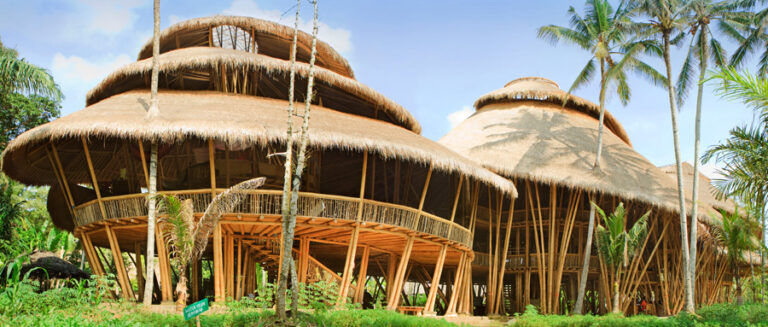
Hardy and his wife, Cynthia are North American ex-pats who met, married, and raised their family on Bali. When they retired, they decided to give back to the community. They built an eco-school where children from kindergarten age through high school learn how to live in sustainability with the environment and each other. (We reported on a Middle-Eastern eco-school here).
Rupert Murdoch announced that Israel’s oil shale could potentially shift the international oil dynamic. A 2005 USGS survey presents a less optimistic view.
With the recent announcement that Rupert Murdoch and Lord Jacob Rothschild have bought shares in Genie Oil & Gas Inc., which owns 89% of the company, Israel Energy Initiatives (IEI), granted license to conduct an oil share exploration project in Israel’s Elah Valley, we started thinking: if the big players want a slice, it must be some kind of delicious oil shale pie.
Not so much, according to a 2005 United States Geological Survey. There’s a lot of it. But it is not all easily accessible and the quality is inconsistent, sometimes mediocre. Jordan’s reserves, on the other side of the Dead Sea, are much better.
David fights Goliath again in Israel’s Elah Valley: Union for Environmental Defense takes on Genie Oil & Gas Inc., now backed by some of the world’s most powerful banking, media, and oil barons intent on destructive oil shale exploration.
In 2008, Israel’s Ministry of Infrastructure granted Israel Energy Initiatives (IEI) the right to produce gas and liquid fuel from oil shale in the Elah Valley, where David fought Goliath, without requiring an environmental impact assessment or master plan. (Al Gore calls oil shale “utter insanity”). On 15 August, 2010, the Union for Environmental Defense challenged the legality of those rights, and requested a revocation of IEI’s mining license from the Israeli High Court. A court date is still pending.
The Ministry of Environment pledged it would insist the company produce an environmental impact study prior to proceeding with their pilot project. But last week Globes announced that Lord Jacob Rothschild (2nd cousin to eco-ambassador David de Rothschild) and Rupert Murdoch purchased shares worth $11 million in Genie Oil and Gas Inc., the company that owns 89% of IEI, adding formidable power to the program.
The media mogul told Globes “If Genie’s effort to develop shale oil is successful, as I believe it will be, then the news we’ll report in the coming decades will reflect a more prosperous, more democratic, and more secure world.” No mention has been made of the pending court case.
As a quick follow-up to the new oil shale pilot about to be conducted in Israel, here is a video of Al Gore saying how oil shale exploration is “insanity.” From the 2008 video, speaking about oil shale in America, Gore says: “It would vastly multiply the amount of CO2 from every gallon of gasoline. This is utter insanity and demonstrates that the wealth and power and influence of the entranced carbon lobby to twist policy and put out illusory impressions about this is overwhelming free debate.”
The Japanese International Cooperation Agency is finalizing “a corridor for peace and prosperity”so the PA can bypass exports via Jordan. Solar power is in the plan.
Japan is funding the creation of a $100 million 111.5 hectare agricultural-cum-industrial park near the ancient Palestinian city of Jericho. About $5 million of this amount is to go towards a solar power array to provide power for the park. This week, JICA announced that the first section of the park will be complete in 2012.
Already on her way to international acclaim, Israeli designer Anna Braverman talks to Tafline about the designboom competition, the philosophy of design, and life as a student in Japan.
The winner of the Tokyo Designers Week in Japan and designboom endangered species competition, Anna was chosen out of 2,078 participants from 86 different countries. The competition called for entries that would draw attention to the plight of endangered species in a fresh and inspiring way. In a way that would catalyze positive action.
Called “Living Tracks”, Anna’s entry depicts the footprint of various species of plant and animal and human gradually diminishing to one shoe print – driving home how homo sapiens have effected such widespread destruction of biodiversity. It’s just one of several powerful pieces that Anna has under her sleeve. Here she shares a few more, along with a glimpse into her brilliant design mind.
Not all environmental organizations and projects have tunnel vision – some focus on social responsibility as well.
It’s unfortunate that environmental and social responsibility don’t automatically go hand in hand. What green changes would be possible without effecting society? And since when does anything involving society or people not effect the environment? But most organizations and initiatives take a narrower look at things and avoid the environmental-and-social-responsibility-bigger-picture combo. Which is why it’s so great when you finally do hear of an organization, person, or initiative that casts a wider net.
A few projects encompassing both environmental and social responsibility have popped up in the Middle East over recent years, in all kinds of fields including (among others) food, clothing, and the arts.
David de Rothschild responds to our open letter urging him to influence his family member to stop oil-shale exploration in Israel’s Elah Valley.
He was named “Emerging Explorer” by the National Geographic Society, “Young Global Leader” by the World Economic Forum, and “Climate Hero” by the United Nations Environment Programme. The founder of Adventure Ecology, David de Rothschild is particularly well known as the young Rothschild who eschewed banking and eventually became head of the Plastiki team, which built and sails a catamaran made of plastic bottles.
After learning that his second cousin Lord Jacob Rothschild and media mogul Rupert Murdoch acquired 11 percent in equal shares of Genie Energy Corporation unit Genie Oil and Gas Inc., which intends to start an environmentally destructive oil-shale exploration program in Israel’s Elah Valley, we published an open letter to David urging him to contact Lord Jacob to discourage such exploration. Not only did he hear our plea, but he has pledged his support.
Solar power is looking cheaper than the traditional fossil energy that is now used in Enhanced Oil Recovery.
By the end of next month, California-based Glasspoint expects to have finalized a sale in the Gulf of the use of solar CSP to make steam for injecting into oil fields, to help in extracting oil, using a process called EOR (Enhanced Oil Recovery).
Currently, natural gas, a much needed fossil fuel, is burned to make steam for this use.
A Saudi food activist and former vegan questions whether veganism is for your health, and for the planet.
Vegans reading this post might want to think twice about forgoing a slice of turkey this Thanksgiving. Saudi Arabia-based blogger, Tasha of Voracious Eats, runs a well-known vegan cooking site featuring no animal products. This week she made a monumental announcement: Veganism has caused a severe decline in her health, and she has begun eating meat again. And she is back to excellent health.
Of course, the process was not nearly so simple as that. In her post she describes how the vitamin supplements she was taking weren’t being absorbed by her body, leading to fatigue, depression, pain, indigestion, weight loss, and memory loss.
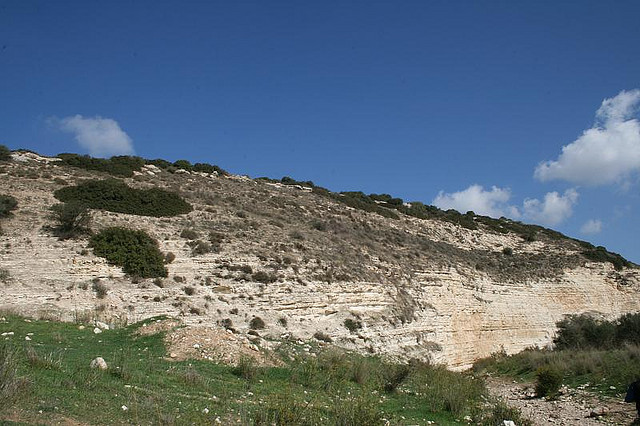
A ten year dream to dig in the Dead Sea for a history of this portion of the earth’s crust has finally become a reality for eager scientists. It’s a study expected to give unprecedented information about climate change.
It is easy to criticize science for failing to predict the exact temperature to which the earth is expected to rise, or what year it will melt under the weight of our carbon blitz. Climate-change “deniers” then use this lack of precision to throw up their arms, buy hummers, and exploit every last drop of oil left on the planet – at whatever cost. But scientists are up for the challenge.
To find the necessary data to plug into prediction models, a US-manned drilling rig travels around the world churning up samples of the earth’s crust. These are are then used to map out the natural history in each area. That rig, after ten years of urging, has finally landed eight kilometers from Ein Gedi, in the middle of the Dead Sea, where for the next forty days and nights researchers will work around the clock using it to drill for sediment samples that will reveal 500,000 years of natural, and even human history.

 Solar panel arrays, like these in Abu Dhabi, will soon power Jericho’s new agra-industrial park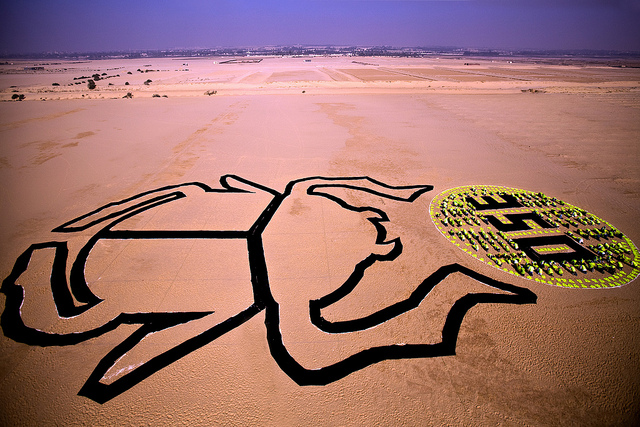











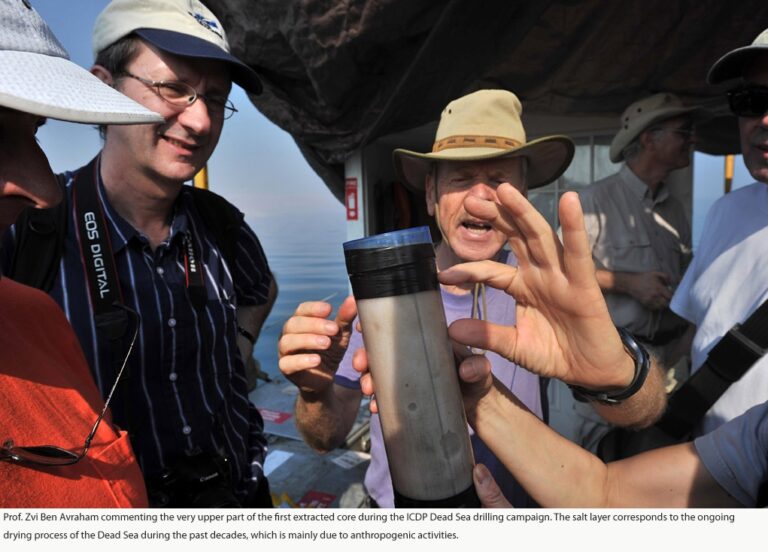
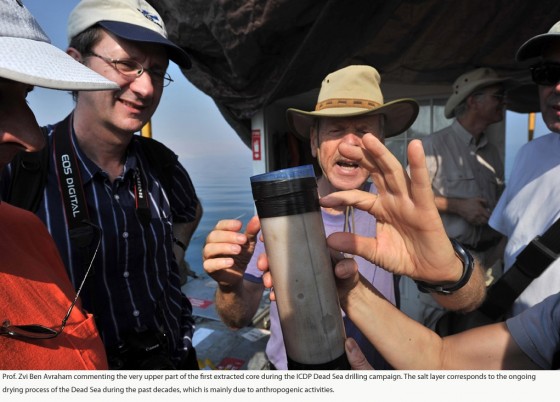 A ten year dream to dig in the Dead Sea for a history of this portion of the earth’s crust has finally become a reality for eager scientists. It’s a study expected to give unprecedented information about climate change.