For those unaware, SpaceX has already shifted focus to building a self-growing city on the Moon, as we can potentially achieve that in less than 10 years, whereas Mars would take 20+ years.
For those unaware, SpaceX has already shifted focus to building a self-growing city on the Moon, as we can potentially achieve that in less than 10 years, whereas Mars would take 20+ years.
For those unaware, SpaceX has already shifted focus to building a self-growing city on the Moon, as we can potentially achieve that in less than 10 years, whereas Mars would take 20+ years.
For those unaware, SpaceX has already shifted focus to building a self-growing city on the Moon, as we can potentially achieve that in less than 10 years, whereas Mars would take 20+ years.
For those unaware, SpaceX has already shifted focus to building a self-growing city on the Moon, as we can potentially achieve that in less than 10 years, whereas Mars would take 20+ years.
For those unaware, SpaceX has already shifted focus to building a self-growing city on the Moon, as we can potentially achieve that in less than 10 years, whereas Mars would take 20+ years.
For those unaware, SpaceX has already shifted focus to building a self-growing city on the Moon, as we can potentially achieve that in less than 10 years, whereas Mars would take 20+ years.
For those unaware, SpaceX has already shifted focus to building a self-growing city on the Moon, as we can potentially achieve that in less than 10 years, whereas Mars would take 20+ years.
The 8-day Jewish holiday of Hanukah starts tonight. Is there a connect with climate change?
This week marks the Jewish holiday of Hanukah – celebrated by widely in Israel by Jewish people. And the local Israeli Arabs enjoy it too, feasting on the jelly doughnuts that go along with the 8-day holiday.
“What does Hanukah have to do with global warming?”
Hanukah sends an environmental message: how could a one-day supply of oil last eight days and nights?
“It represents an early example of energy conservation with relevance to our current environmental challenges,” wrote Adam Stern from the Coalition on the Environment and Jewish Life (COEJL). In the past he’s recommended that people switch over to CFLs this holiday season.
For some yummy recipes to go along with the miracle of Hanukkah, how about latke recipes of Rachel Barenblat, the wife of a World Changing writer. Rachel’s Asian latkes with soy dipping sauce sound tempting and definitely modern, we would probably choose a hot and crispy jelly doughnut (sufganiyot) over a latke any day. That’s if you’re a calorie counter.
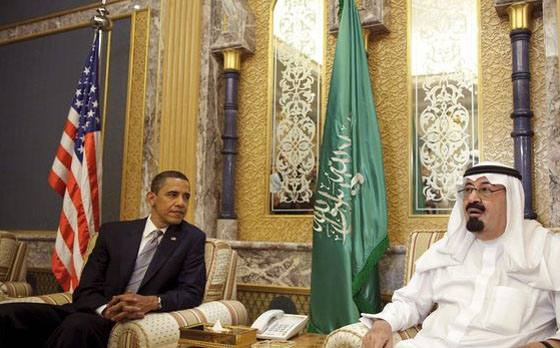
ClimateWire has revealed that leading up to the UN meeting at Copenhagen last December, the Obama administration leaned hard on the Saudis to get them to agree to the Copenhagen Accord.
The memos show that Saudi Arabia was privately pushed hard by the US to accept the Copenhagen Accord, and that climate change was a front burner issue for the Obama administration.
“Saudi officials are very concerned that a climate change treaty would significantly reduce their income just as they face significant costs to diversify their economy,” the US ambassador James Smith wrote, briefing Secretary of State Hillary Clinton. However, he alluded to a possible negotiating tactic in the memo.
These are the savvy ladies behind Dubai-based Goumbook, an online directory of all-things eco.
This morning I was doing my usual rounds on the internet, read a few inspirational poems, caught up on the day’s big news: wikileaks, Cancun, and Goumbook – apparently the first online directory of all things eco in the Middle East. I almost choked on my coffee.
Green Prophet has been the go-to source of “green” information throughout the Middle East for several years, while Goumbook only showed up towards the end of 2009. But that’s ok. We forgive them this small transgression because they do have an awesome directory of green businesses, events, and other useful eco-tips. Step on in to learn more about the ladies from Dubai who make it happen.
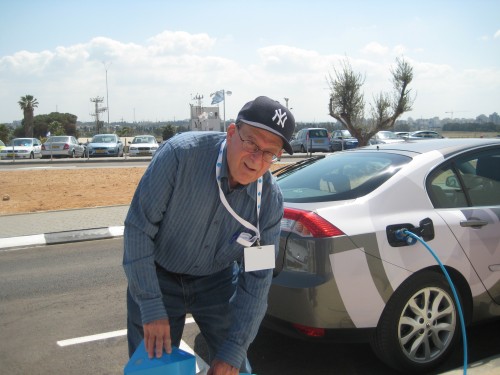
This guy (Maurice) will have to wait till 2012 to have an electric car
Contrary to reservations being made about the Better Place electric car company being a monopoly in Israel’s upcoming electric car market, it now appears that the head of one of the country’s largest holding companies, the Israel Corporation, is very positive concerning the future of electric cars in Israel and other countries. Favorable remarks in regards to electric cars were made recently by Israel Corps.’ CEO, Nir Gilad, in an interview with Globes Financial News.
Gilad told Globes that he expects these cars to be “commercially on the roads” by the year 2012. He notes that the company largely responsible for this occurring, Better Place LLC, is on the “fast track” in setting up the infrastructure needed for running these cars on Israel’s motorways.
Something as big as a whale shark should be easy to track, but Dubai-based marine biologists learn they are actually quite elusive.
It’s so tempting to attribute anthropogenic qualities to fauna. Take the whale shark Rhincodon typus, sometimes referred to as gentle giants, the largest fish to plow through tropical seas with its wide mouth open. The heaviest on record weighed in at 36 tonnes – as much as a ring of six Barnum and Bailey circus elephants. And yet they are among the least known creatures.
They’re nomadic, but no one knows their favorite haunts, they’re huge, but a sighting can be as furtive as a wanton look, and the ladies are especially sneaky. To learn more about these extraordinary seafaring creatures, Sharkwatch Arabia plans to tag 25 whale sharks over the next five years, starting with two tags donated by Emirati organizations.
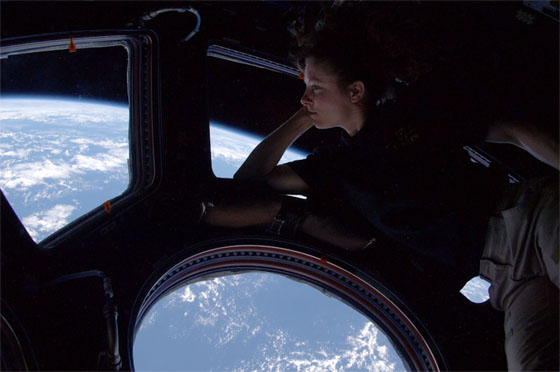
New images taken from the space shuttle, using radar, are revealing that 100,000 years ago, Egypt had a lake broader than the gigantic Lake Erie, one of the Great Lakes in the US.
New evidence of a once wetter Middle East comes from high above the earth, where we are able to peer back through the centuries with the aid of technology that we have gradually developed over centuries of civilization, in the space shuttle.
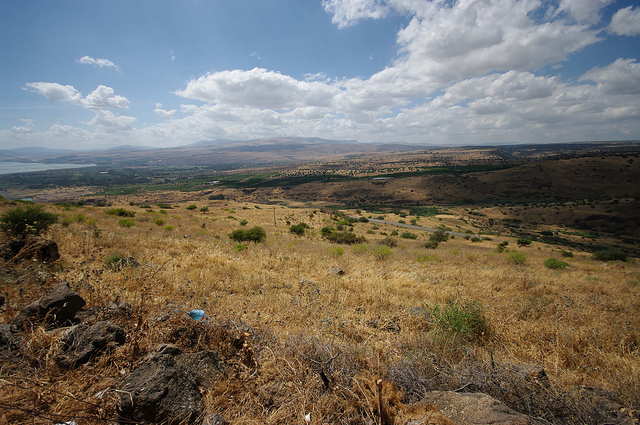
When the giant body of water first appeared, a few hundred miles West of the Nile in what is now Egypt’s Tushka region, about 250,000 years ago, Paleolithic hunters and gatherers would have fished here. The lake appears to have grown and shrunk and finally disappeared about 80,000 years ago, say the scientists.
Ohalo College of Katzrin brings sustainable development studies into the ivory tower.
The world of academia and environmental activism do not always go hand in hand, and academics are notorious for their detachment from the real world. But some universities and colleges are an exception to this generalization. In fact, Tel Aviv University held a conference intended to bring together academic researchers and environmental policy makers just last month. And green MBA degrees are popping up all over the place, instructing business students on how to integrate sustainable objectives in the business world.
The Ohalo College of Katzrin in Israel is rising to our global environmental challenge as well, by opening an entire department devoted to sustainable development and renewable energy.
The Director of the Center for Oil Shale Technology and Research (COSTAR) talks to Green Prophet about the benefits and detriments of oil shale exploration.
When we first submitted our open letter to David de Rothschild, in which we asked him to intervene in an oil-shale development project in the Elah Valley now backed by Lord Jacob Rothschild and Rupert Murdoch, Jeremy Boak wrote in to question the science of our oil shale assertions. David responded, pledging to look into the matter.
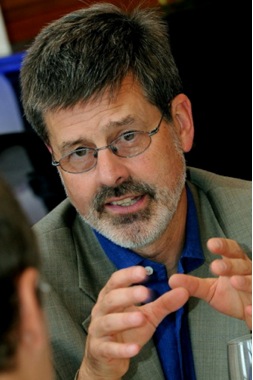
In the meantime, we have asked Jeremy, the director of the Center for Oil Shale Technology and Research (COSTAR) funded by ExxonMobil, Shell, and Total, to discuss the technology that Israel Energy Initiatives (IEI) would use to extract energy from oil shale, as well as to shed light on the different regulatory environments facing developers in the United States and Israel. Here are his answers:
Dissolve the yeast and granulated sugar in the milk.
Place the flour in a large bowl and push most of it to the sides. Add the yeast mixture, yolks, salt, and cinnamon; mix well.
Work the softened butter or margarine into the dough, kneading for a few minutes till the dough is elastic. Cover the dough and put it away to rise overnight in the fridge.
Next day:
Flour your working surface. Roll dough out to 1/8 of an inch. Using a glass about 2 inches wide, cut out dough rounds. Cover and allow to rise 15 minutes.
Form the rounds into balls. Heat oil to 375 F – 190 C and drop a test donut into it. Turn it over when brown. Cut it open to test doneness on the inside – give the oil a few more minutes to finish heating up if the donut is still a bit raw inside.
Fry a few at a time – don’t crowd the pan. Remove the donuts with a slotted spoon to drain on crumpled newspaper.
Make a slit in the top of each and fill with 1/2 teaspoon of jam or other filling. Roll each sufganyah in powdered sugar.
Eat hot!
Note 2: These are best eaten fresh. If it seems you have excess dough, or wish to make some ahead of time, you can replace it in the fridge and just take off the amount you want for a fresh batch.
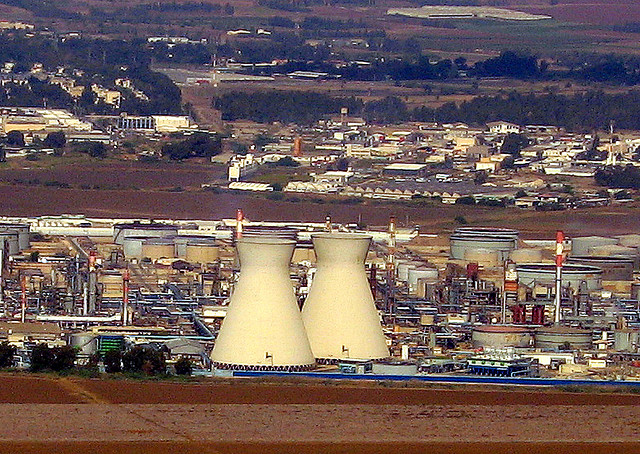
Three Oil Refineries Ltd. employees killed as a result of “negligence?”
An explosion at Israel’s largest oil refinery resulted in a gas leak that killed three people last week. Located in the bay area of Haifa, Oil Refineries Ltd. (ORL) has an annual capacity of 9.8million tons of crude oil and a daily maximum capacity of 196,000 barrels. Though its facilities are considered to be “state-of-the-art” last week Tuesday something went terribly wrong, resulting in the death of three people under thirty-five including two cousins. An environment ministry official told Haaretz that he has no doubt that the accident was caused by negligence.
Maca, goji berries… what gives? Miriam shows how to buy local superfoods without the cost and fancy wasteful packaging.
Colorful, flavorful, wonderful, natural products crammed with every natural antioxidant, mineral, micro-nutrient, essential fatty acid and protein you can think of. And I can get them for you, too – wholesale.
What? These aren’t superfoods? You’re looking for capsules or powders in bottles bearing attractive “green” logos. But all you see on the table are humble… vegetables. Um, we’ve had a misunderstanding, it seems.
Valuable as maca and goji really are, they’re not native to the Middle East region.
Maca, for example, comes from the Peruvian highlands, where searing summers alternates with below-freezing winter temperatures, and high winds buffet the landscape. I don’t think it would grow here in the Middle East.
Goji berries, now, they might take. Of course, we’d have to wait three years before our plants bear fruit, but never mind – the leaves are edible. We can eat those in the meantime.
On the other hand, why wait? Fresh fruit and vegetables, both cultivated and wild, are powerful nutritional sources. Much quicker and cheaper than imported wonder-foods, or extracts of them, and much easier to get.
As nutrients and medicines, extracts fall behind whole foods because when they’re made, only the properties manufacturers consider important are retained in the product. Unknown components are discarded. To get all the goodness out of a food, it has to be consumed as a whole, organic piece, with all its mysterious unknowns interacting with each other and with our bodies.
Next time you’re in the health food store, ignore exotic foods flown in from 5,000 miles away. Leave the blue-green algae, the spirulina, the whey powder where they are. Shop from the shelves where whole grains and organic fresh produce sit.
Douse your superfoods with golden liquid superfood – olive oil.
Spice your whole-grain pizza with za’atar from your windowsill garden.
You’ll fizz and crackle with energy.
And you’ll feel good about having no packaging to recycle, because these foods don’t need packaging, or even much advertising. Humanity has survived and evolved on these same humble ingredients since pre-history, with never a need to flog their images in glossy magazines or on billboards. Doesn’t a cauliflower look ridiculous dressed up with a fancy name and crammed into fancy packaging? The marketing ploy backfires; it makes the familiar green-and-white vegetable that we can pick up and heft in our hand look much more attractive.
Still want to plant goji, astragalus, burdock? Go ahead, and I wish you success. I’m in favor of growing as much of our own foods as we humanly can – even just a handful of parsley in a window box. After all, much of our fresh produce was only recently introduced to local farmers. But choose wisely. Not every new plant takes to a new climate. Believe me, if I could get dandelions to grow in hot, humid central Israel where I live, I’d plant all my window boxes with them. I’ve tried – it hasn’t worked.
Go wild
Don’t neglect wild superfoods either. Nettles, chickweed, purslane, mallows, and many other super edible “weeds” grow abundantly every springtime. There’s nothing wrong with drying some for later, either. (Just pick ethically and leave enough for new growth next season.)
Next time you’re out shopping with antioxidants in mind, cast an eye over the fruit and vegetables. Choose the most deeply-colored ones and when you get home, eat them.
The plan involves the establishment of a $100 million agro-industrial park in Jericho that will be powered by solar energy. The park, which will be used to produce products for export, will enable the Palestinians to export their products via Jordan, thus circumventing Israeli checkpoints which now are a hindrance to the free movement of goods in and out of Palestine.
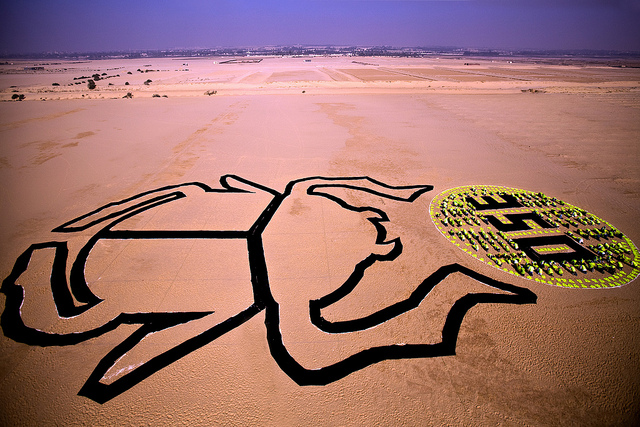
Egyptians joined the 350 campaign to create art and demand bold climate action
In the Egyptian desert landscape of Wadi Natrun, 200 students and activists worked in the blistering heat to send a message to world leaders heading to Cancan for the latest climate conference. Placing large black strips on the ground and using florescent jackets, the image of a scarab holding a sun with ‘350’ inside slowly emerged and could even be seen from space. The enormous scarab was a call for leaders to agree to a fair and effective climate deal and also symbolized the potential of solar power as a renewable resource to power Egypt’s future.
The Cairo event was designed and organised by the local artist Sarah Rifaat and was one of 12 events around the world by the 350 campaign. Rifaat told the BBC that it was “important that Egypt joined this global call” to tackle climate change.
Another mosque has taken up the battle against climate change and gone Eco- this time in Turkey
When a nuclear plant was proposed for the Turkish village of Buyukeceli, the residents decided to demonstrate their resistance not through protest and petitions but by highlighting the viability of renewable energy. Using the support of Greenpeace, they decided to show the power of solar energy and installed photovoltaic panels on the local mosque.
Whilst this may sound like a new and novel concept, back in July Green Prophet revealed plans for Europe’s first completely eco-friendly Mosque in the English city of Cambridge.
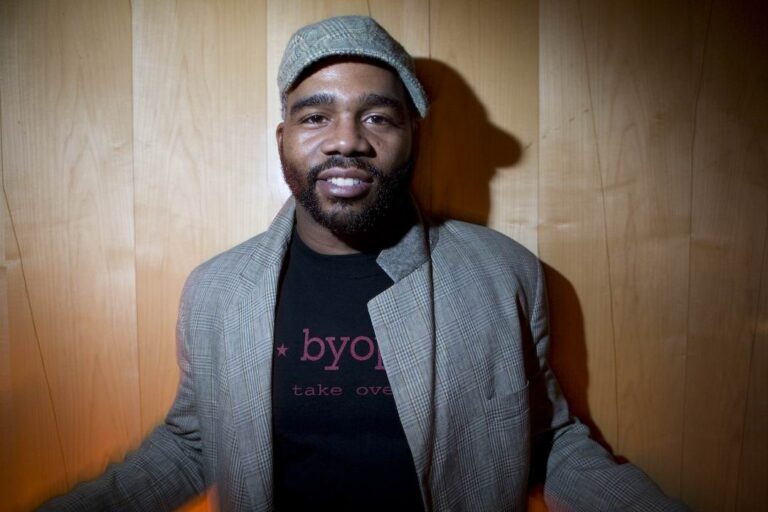
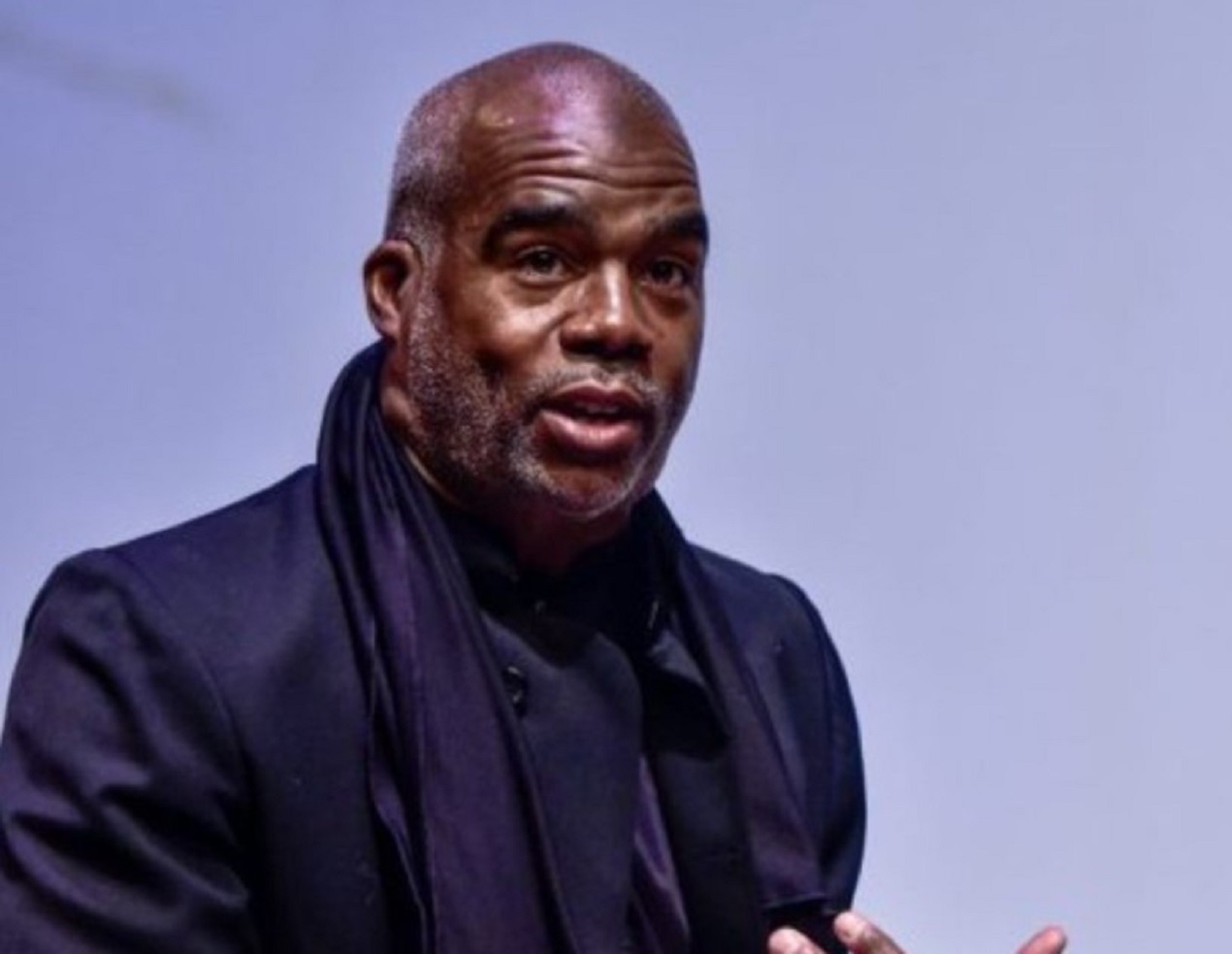
Arwa speaks to green deen Ibrahim Abdul-Matin about his latest book ‘Green Deen’ and why he believes that Muslims need be compelled spiritually to make dramatic changes in their lives for the sake of the planet
Ibrahim Abdul-Matin is a man of many talents. As well as working as a regular sports commentator and youth organiser, he is a policy adviser for NYC Mayor Bloomberg’s office of sustainability and author of ‘Green Deen: What Islam Teaches About Protecting the Planet‘. He has been making waves on the US green scene for a decade now and his latest book, which connects his Muslim faith with his love of nature hopes to spark greater environmental awareness amongst the Muslim community. I caught up with him to speak about the influence of his father on his green ethic, what the life of an Eco-Muslim would look like, ideas for a green hajj and why Muslims need to become ambassadors for clean water.
GP: Tell us a bit about yourself. When and where were you born and how did you become more aware of environmental issues?
Ibrahim: I was born in the middle of a blizzard in Manhattan, New York on January, 1977. My mother and father were recent converts to mainstream Islam and lived in Queens. We eventually moved to Brooklyn and I remember thinking the entire world was a sea of concrete buildings. My father took my brother and I when we were little kids to hike on Bear Mountain – which is just an hour north of NYC- that day, we saw the beauty of nature, and my love of the environment has only grown ever since.
What inspired you to write the book and what has the process of putting together all that knowledge been like?
In 2008, I went to a conference called “The Dream Reborn,” in Memphis, Tennessee. This conference was a gathering of environmental justice activists. It was a beautiful group of very dedicated and inspiring people. But I was curious – what was the ordinary resident of Memphis thinking? So I ventured into the downtown area away from the conference, and met an old woman at a diner. I asked her, “what do you think of climate change?” She said, “I think it’s something democrats want me to be afraid of. Just like republicans want me to be afraid of terrorists.”
In that moment I knew that unless environmentalists found a deeper, divine, more spiritual reason for folks to become involved in the movement – they would simply see it as propaganda. Since I’m Muslim, I decided to look to my own Deen of Islam to learn more about its connection to the planet – and then tell Muslims all about it!
What response have you had about your book from the Muslim and wider community? Overall, very positive. I think people are intrigued about mixing the two issues – Islam and the environment. And a quick glance at the book’s introduction shows people that these two issues are in fact, very connected. I’ve heard a lot from young people who felt innately connected to the environment and knew deep down inside that Islam was a Green Deen. These young folks were very happy to see their thoughts in writing.
The negative stuff has been from the typical Islam/Muslim hater who thinks “the Earth is a Mosque” is Muslims’ attempt to turn the whole world into a mosque. It’s a ridiculous notion and frankly, it’s ignorant. Islam has beautiful teachings about harnessing the power of the sun, about treating animals well, about eating food with care, and about not wasting in general. That’s what “The Earth is a mosque,” means. It means to treat the whole world as sacred.
What core teachings does Islam offer us in terms of better caring for the environment?
First I need to give a serious shout out to my dear brother Faraz Khan in New Jersey. Faraz is a true scholar and far more capable of writing a book than I am. Faraz has been studying what Islamic scholars say about the environment for some time. It’s his work that leads to the 6 principles [Tawhid (oneness), Ayats (signs of God, Khalifah (being a steward of the Earth), Amana (our sacred trust with God), Adl (justice) and Mizan (maintaining the natural world’s delicate balance)] of a Green Deen in Islam that I cite in the book.
Why do you believe that Muslims have an important role to play in combating climate change?
Because it’s our God given duty. Allah has entrusted human beings with the planet and all that’s in it. Creation is not ours – it’s Allah’s and He has made us responsible, as the best of Creation, to take care of it. Allah has generously given us these things and that we cannot forget to be grateful. We also must serve with justice and not destroy, pillage, or hurt any of the things He has provided.
What one person or group or way of thought has inspired your Green Deen?
Definitely my father. He grew up on a farm in southern Virginia and has deep connections to the land. He’s spent the last 15 years in upstate New York and frequently takes trips into the woods, the mountains, to simply exist among Allah’s creations and praise Him. My father prays outside a lot – he says that it’s good to be reminded of what we’re a part of and who to be thankful to.
Ibrahim Abdul Matin
What do you think is holding back Muslims from doing more for the planet (particularly in the Muslim world)? And what can be done to tackle these constraints? I think it’s the same reason as the old woman in Memphis. Muslims need to feel compelled spiritually to make dramatic changes in their lives. They need to feel like Allah has commanded them to do something – that’s what “Green Deen” is about. I argue that Allah has told us that protecting the planet is a major priority in our practice of Islam.
If you could get Muslims to do one thing for the environment, what would it be?
Become advocates for worldwide clean water. Muslims need to pay attention to and get involved in issues that don’t just affect them – but affect everyone. We are stewards of the Earth. Not just stewards of Muslims. Water is every creature’s most basic need for survival. Our Prophet (peace be upon him) taught us to not waste water while making wudu, even if we live next to a flowing river. Our Holy City of Mecca exists because of the Well of Zamzam.
Nearly one billion people on Earth do not have access to clean water! Every 20 seconds a child dies from a water-related disease. Bottled water companies are on a mission to privatize water – tragedy if this happens!- and even more people would be left without drinking water if a cost becomes attached to it. From now on, whenever someone asks you, a Muslim, why you follow Islam or asks you about terrorism, start talking about water. Join clean water campaigns. Pressure the UN, the WHO, and other international organizations to make this a REAL priority.
Do you think it is fair to say that all the major faiths are just discovering the green roots in their religions and the need to take environmental action?
I wouldn’t say they are “just” discovering this – I think Christians, Jews, Muslims, Buddhists, Hindus, everyone has known for quite some time that humans have a responsibility to take care of the Earth. It’s just that now, today, the crisis is becoming more and more apparent. People world wide are “Going Green” so faith communities are feeling the pressure – rightly so – to get involved.
There are certain environmental activists who argue that the practice of Hajj (air travel) and the Muslim world’s dependence on oil is incompatible with green principles. Would you agree?
I think the environmental challenges created by Hajj are the same as most big cities face every day. The carbon emissions from the traffic is huge. The waste left behind from food packaging is huge. But guess what – there’s hope. The Saudi government is building a train that will transport passengers during hajj rituals. They are also considering a ban on plastic water bottles. Every person that goes to Hajj gets a Qur’an when leaving, how about everyone gets a reusable water bottle when arriving? I think that would be amazing.
What would the daily life of a green Muslim be like? How would they live, socialize, travel, etc?
It would be 50% looking back and 50% looking forward. What I mean is that our Prophet (peace be upon him) and his sahaba (companions of the Prophet) led a very Green existence. They knew how to live off the land, they ate little meat which they sacrificed themselves and never depended on a factory farming system. They lived minimally, not defining themselves based on their material possessions, but rather on their closeness to Allah.
By looking forward I mean by becoming involved in environmental innovation. Finding the new, clean energy technology that will be usable by the entire world. Choosing to use “Energy from Heaven” such as wind over “Energy from Hell” such as oil and coal. This would mean demanding that our elected officials begin focusing on harnessing the power of the sun and the wind and not allowing coal mining companies to ruin entire communities and eco-systems just to get the coal that powers our homes.
And pray. Green Muslims need to pray. Our five times a day are in synch with the rhythm of the Earth. The more we pray, the more in tune we are with the planet.
Update 2023: Green Prophet is sorry to hear about the untimely passing of Ibrahim Abdul-Matin whose death was announced in June, 2023 at age 46.











 Maca, goji berries… what gives? Miriam shows how to buy local superfoods without the cost and fancy wasteful packaging.