Home Blog Page 555

Why Masdar’s Personal Rapid Transport Would Have Been Great

Masdar PRT Cancelled

When the PRT plan at Masdar was scrapped, what exactly did we lose?

The folks at Singularity Hub offer an interesting analysis of Masdar’s PRT failure. Why is it, David Hill wonders out loud, that we have made massive advancements in telecommunications but precious few in transportation

Masdar gave us the perfect opportunity to take the next giant leap but we slipped and fell, our Fifth Element fantasies dashed in the process. Alas, the tiny self-navigating pods were simply too expensive. Or at least, the infrastructure necessary to lift them off the ground would have broken an already strained budget. What exactly have we lost?

Why Starving Bald Eagles Are Dropping From the Sky

1

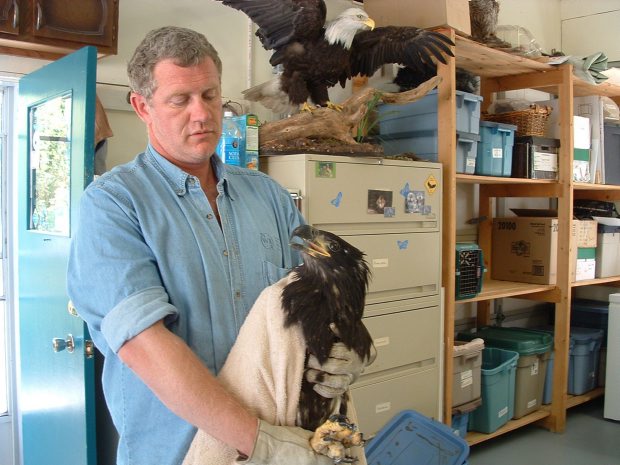
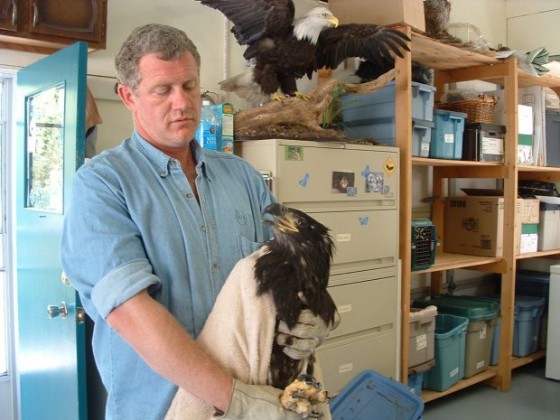
This female Bald Eagle may be saved – but what about others?

Bald Eagles, longtime American symbols of strength and independence, are now fighting for their very survival in Canada due to their main food source, chum salmon, being scarce due to pollution and over fishing. Chum salmon are salmon which after fighting the river currents to return to the streams when where they were born, are now left to die after spawning. The eagles, which feed on these dead or dying fish that are rich in nutrients, have become some weak and emaciated from lack of food they some of them have literally fallen from the sky. Some of the birds, due to not being able to find food in the natural habitats, have had no alternative other than foraging for food in municipal  dumps and landfills, often resulting in being poisoned by chemicals thrown into the dumps or by poisons used to kill rats and other vermin.

Going Green In Your Home

0

floating home feng shui
Potted plants, green cleaning products and ventilation are part of your “green” indoors.

In the last thirty years, there has been a lot discussion about our environment and pollution. However, most of this pollution has been referring to what goes on outdoors. Only recently, the international scientific community has become concerned about the contamination of air in closed in environments, that is- indoor air pollution. An average person spends 90 percent of their time in a closed environment. Considering that winter is here and we are going to be spending more time indoors, ensuring that our indoor air is clean is of utmost importance.
There are three basic strategies to improve indoor air quality.

How Food Insecurity Fuels Anger in the Middle East

0

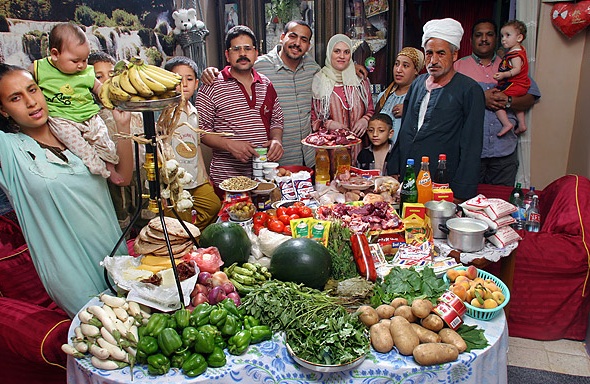
food egypt cairoThe Ahmad Family in Egypt shows us what they eat.

As popular uprisings continue to spread in Middle East, rising food costs for stable crops like rice and wheat cannot be ignored as underlying factors in the political unrest. In a region where Islam and anti-Westernism are usually blamed for driving populist politics, the impact of the global food crisis, combined with rising unemployment, may have surfaced unexpectedly in these countries, but not without warning.

Israel Utility Envisions Territory Near Gaza Covered In Solar Fields

1

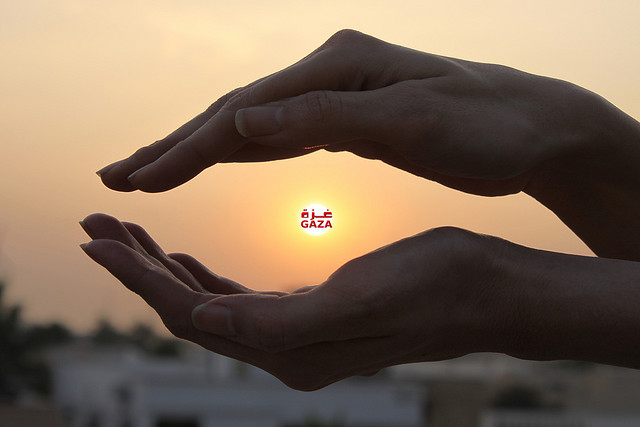
gaza strip solar

Israel has already issued 25 conditional licenses to companies building solar energy installations near the Gaza strip.

Israel’s National Public Utility Authority (PUA) has received numerous requests to build solar facilities along the edge of the Gaza strip, according to Xinhua News Agency. Two out of the eleven companies would provide 180MW of electricity generated by solar-thermal technology, while the remaining nine will generated an additional 500MW with photovoltaics.

The PUA has already issued conditional licenses for 25 medium-sized plants that will account for almost 50% of the region’s electricity output. “We expected to see the entire south of the country covered in solar fields,” PUA licensing chief Moshe Sheetrit told the paper.

:: istockanalyst

More on solar energy and Gaza:
Hamas Thwarts A Greener Gaza
Solar Cooking Ovens – An Eco-Solution From The Gaza Strip
Electric Cars In Gaza – Necessity Is The Mother Of Invention
image via BilalMiRza

Could Saudi Arabia Become the Saudi Arabia of Solar?

3

saudi arabia solarMiddle East to Become a $90 Billion a Year Solar Exporter?

A report from international energy consultants AT Kearney, quoted in the The Saudi, said that the oil-rich Middle East has the potential to become a solar “boom center” within ten years, creating 100,000 jobs and able to export $90 billion a year from solar projects. The World Bank appears to think so too. Last year it announced plans to invest $5.5 billion in the region to develop solar projects in the region. And there are signs that the wealthiest nation in the Middle East, Saudi Arabia is waking up to this potential for a peak-free energy source.

Last year, the Saudi electricity regulator, ECRA’s Abdullah Al-Shehri said he hopes to get 10% of the kingdom’s electricity from solar by 2020. Demand in the Kingdom is rising at an unsustainable 8% a year – so he better move fast. Part of the damand crunch comes from Saudi use of oil to desalinate water. Last year, as peaks loomed, mention was made of using solar for desalination instead.

Its first solar PV installation went online last year. An unprecedented 18-strong delegation from Saudi Arabia now plan to attend this years MENASOL 2011 in Cairo, revolution or not.

Last week, a $1 billion solar joint venture was announced between South Korea and Saudi Arabia, that would bring the first ever solar factory to Saudi Arabia, that would make polysilicon, the essential ingredient of traditional solar cells.

The Korean engineering company KCC Corp. and the Saudi Mutajadedah Energy Co (MEC) will work jointly on the $380 million engineering, procuring and construction contract to build the $1 billion factory, with assistance from Hyundai Engineering Co, forming a Saudi-based joint venture company, Polysilicon Technology Company.

Initial estimates are that their jointly owned factory will be producing 3,350 tonnes of solar grade polysilicon when it opens in 2014. By 2017, it will be able to produce 12,000 tonnes every year of the material that can turn long hours of desert sunlight into electricity.

The partnership will probably work out well. Saudi Arabia successfully partnered with Western nations, creating gigantic partnership corporations like Saudi Aramco, to extract its vast riches of oil wealth that we now know are finite. Now, perhaps sensibly, it is turning to an Eastern nation that is among world solar leaders, to develop a new energy source that won’t ever run out.


More on solar and oil in Saudi Arabia:

Saudi Arabia’s First Solar Installation Goes Online
Saudi Arabia to Replace Oil With Sunpower for Desalination Plants
It Must be Peak Oil Driving Saudis to Solar

Sexual abuse against women cyclists in Cairo, Egypt

1

harassmap cairoDo women in Cairo have bigger carbon footprints because they are afraid to ride their bikes?

Transportation is a large contributor to air-pollution. Today, the whole world is shifting towards more sustainable means of transportation. While in most countries men and women are equally active in such a movement, in more traditional societies, women are denied the right to a safe street where they can walk or use their bicycles instead of driving cars, and thus have a larger carbon footprint. Egypt is one of those countries and I am one of the women.

In the early days of the cycling movement in Cairo, a friend and me, both working in the filed of sustainable development, got all analytical about it and decided to explore the reasons that got people cycling and the reasons that discouraged them from cycling.

From our surveys we found that, in part, some women could not use bicycle in their daily commutes due to widespread harassment on Cairo streets.

Most found themselves confined to the weekly Friday rides when streets were emptier, resorting cycling merely as an urban sport. Even on Fridays they could not ride alone, and had to tag along with a group of friends, preferably male.

To the surprise of many, on Fridays 60 percent of the cyclists are girls from all walks of life, adorning sportswear, urban wear, veils, helmets and t-shirts saying diverse messages. Also, a few brave women have ventured on weekdays on their own to cycle to their workplace in spite of harassment.

While regular street harassment is offensive and psychologically disturbing, harassing cyclists could kill. The cyclists could lose balance if frightened or grabbed, and sometimes causing this unbalance is even the harasser’s intention. Many members of the cycling clubs have experienced harassment and some have refrained from using their bicycles the following week.

Reclaiming women’s right to safe streets

To provide its women members with a safer riding experience, the Cairo Cycler’s Club (CCC) has partnered with two anti-harassment initiatives. The first, Harassmap has put in place a system for reporting incidences of sexual harassment via SMS messaging. By mapping these reports online, the initiative will act as an advocacy, prevention, and response tool, highlighting the severity and pervasiveness of the problem.

[youtube]http://www.youtube.com/watch?v=zTUGSorTZGc[/youtube]

The second, 678, the movie (screener in Arabic above), is a docudrama shedding light on the issue of sexual harassment and its root causes. CCC is planning an awareness raising event with Harassmap & 678 in the near future, to advocate for safe streets.

We hope that this partnership will be fruitful.

Read more on greening Cairo:
Keep It Clean Cairo
Tap Into Solar Energy at MENASOL
Get A Ride With Egypt Car Poolers

Inji El Abd is the co-founder of the Green Arm (a platform and incubator for environmental initiatives in Egypt) and the Cycling for Change movement (whose mission is to make Cairo a bicycle friendly city).


Israeli Study: Smog Bad For Wall Street

0

wall street tradersTwo Israeli researchers have discovered a link between air pollution and stock returns.

Days with poor air quality may be hurting more than merely your asthmatic nieces and your uncles and aunts with emphysema and your descendants. Now its even hurting your Wall Street stock traders, by affecting their ability to deal with risks.

Nat Geo Goes On Tour, Through The UAE

0

national geographic arabic

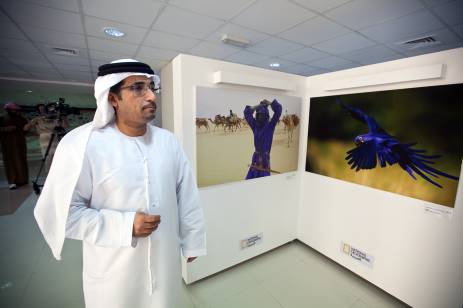
National Geographic “isn’t just about animals”: that’s the message the Editor-in-Chief of the Arabic version intends to convey.

National Geographic Magazine is one of the most exciting magazines on the planet. With 50 million monthly readers, its commitment to conservation, culture, and science is virtually unparalleled.

To date, the National Geographic Society has awarded 9,000 research grants that enable scientists to continue uncovering our planet’s sacred wonders. And then the magazine paints those in living color.

Translated into 31 different languages, National Geographic has extraordinary potential to inspire even more people on the planet, if only it can overcome its image as an “animal magazine.” That is what the Editor-in-Chief of the UAE-based Al Arabiya Magazine aims to achieve on his tour of the UAE.

In order to generate more interest not just in the magazine, but in its multi-faceted content, Mohamed al Hammadi will visit a series of universities throughout the United Arab Emirates. Better awareness could lead to paying better attention to what ails us environmentally, culturally, and socially.

Speaking to The National, he likens our relationship to the planet’s health to our personal relationship with our own health:

“Just like we feel pain and take care of ourselves and go to the hospital when we get sick, we should feel pain when we see the world gets sick,” he said.

To show his support, the Minister of Higher Education and Scientific Research – Sheikh Nahyan bin Mubarak – joined al Hammadi at his first stop: the Higher Colleges of Technology (HCT) in Khalifa City.

Al Arabiya was first published last October, and sales have since increased, according to Hammadi. Currently the content is translated from English, but next year, Emiratis will be able to enjoy locally-produced stories. The magazine’s 6th issue is currently available.

Published by the Abu Dhabi Media Company, the magazine suprised certain university students.

“People think it is a geography magazine, all about nature, environment and animals, but that is not true. It is also about different cultures, tribes and new discoveries in health and science.

One student claims that many of her peers do not read enough, and that they might benefit from reading magazines like Al Arabiya nearly as frequently as they read celebrity magazines. (We couldn’t agree more!) Al Hammadi acknowledged his concern that lack of interest in reading would impact badly on sales, but also expresses confidence that eventually people will be drawn in by the content.

He adds that if the UAE tour is successful, he may travel elsewhere in the Arab world to drum up even further support.

More on travel and nature in the Middle East:

Abu Dhabi Media Company To Create Environmental Films

Dubai Expat On Cloud Lucky Wins Nat Geo Photo Competition

There’s More To Lebanese Tourism Than Bars And Beaches

Turmeric’s Old Remedy Gives New Hope for Cancer Patients

0

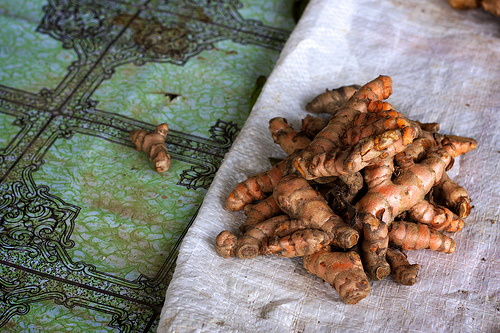
image-turmeric-root
Turmeric isn’t only a spice: it may be an effective boost for anti-cancer drugs.

Bright yellow turmeric root, a well-loved spice in the Middle East and Asia, has been used for centuries in folk medicine to relieve inflammation. Medicinal spices have been reviewed on Green Prophet here. To relieve internal inflammation in the digestive tract, Ayurvedic medicine from India advises grating the fresh root into clarified butter or organic milk, sweetening it with a little unprocessed honey, and drinking it daily. See our post about farming goats for organic milk.

Recently this Oriental wisdom was validated in Western medicine by Tel Aviv University researchers. Studies conducted by Dr. Lev-Ari, Prof. Nadir Arber, and Prof. Dov Lichtenberg at the university’s School of Public Health, show that curcumin, the active principle in turmeric, inhibits the COX-2 enzyme. This enzyme is believed to cause inflammation. Curcumin also neutralizes oxygen free radical cells, believed to scavenge healthy cells, causing cancer.

Azouri Brothers & Shai Agassi Together Make Tel Aviv A Better Place

0

azouri-brothers-eco-towerThe Azouri brothers and architect Keren Yedvub leave no stone unturned. Their 20-storey “eco-tower” overturns the old n’ ugly world order with a building that is bold, beautiful, and deeply sustainable.

The Azouri Brothers’ eco-tower is growing greener and greener by the day.

 Already featuring a whole host of attributes that make their 20 storey office building as livable and sustainable as technology and funding will allow, Alon & Ronen Azouri have joined forces with Better Place CEO Shai Agassi to take sustainability to the next level.

Those employees who drive zero emission vehicles will not only be rewarded with prime parking spots, but they will also receive 50% off their monthly parking fee.

While this may not pay off financially except in the very long term, the program does associate carbon-emitting vehicles with a sort of social stigma. The stima: pollution is bad.

Israeli Reuse Conference Claims that Big Opportunities Come in Reused Packages

0

"reuse design window seat junktion"Reuse conference brings designers and entrepreneurs together, showing that reusing is eco-friendly, fun, and profitable too.

"reuse conference israel"The concept of reuse is not new to Israel.  Over the past few years it has seen “Reuse” exhibitions in Tel Aviv and Jerusalem, as well as the emergence of several upcycling, sustainable designers who have brought fun and eco-friendly products to the market (check out the old window shutter turned seat by Tel Aviv’s Junktion Studio above).  But the idea of reuse as a business opportunity?  That’s something new.

The first national Reuse Conference taking place in Pardes Hana-Carcur today is trying to prove that reuse is not only creative and good for the environment, but a good business opportunity as well.  In their own words: “big opportunities come in reused packages”.

If Bill McKibben’s A Communist, Call Me Alexandra Kollontai

1

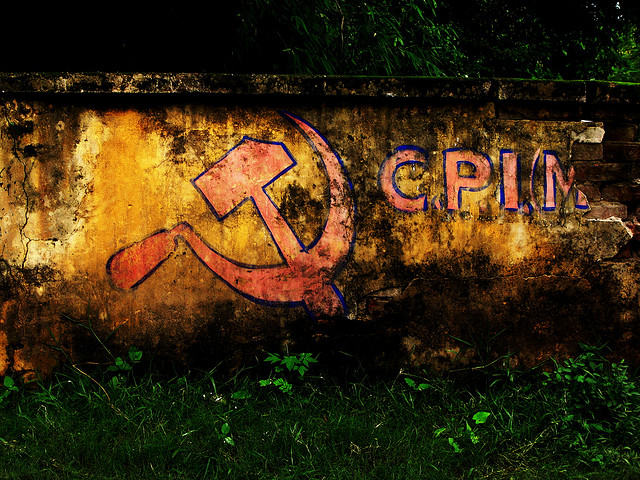
hammer and sickleIncreasingly shameful to members of America’s conservative wing, Glenn Beck evokes Code Red by dismissing 350.org as “Communistic.” Sadly, he’s no match for our witty friend Bill McKibben.

Who the hey is Alexandra Kollontai, you ask? Why, she is the author of  The Autobiography of a Sexually Emancipated Communist Woman. Of the year 1917, a time when Bolsheviks were amassing their discontent, she wrote: “One of the most burning questions of the day was the high cost of living and the growing scarcity of vital necessities. Thus the women of the poverty-stricken strata had an indescribably hard time of it.”

Sound familiar? It should: food prices are rising and water’s running out in places (Yemen is considering moving its capital since Sana’a is almost bone dry). And worldwide men and women are putting down their, ahem, collective foot. So it’s familiar, but it’s not 1917. Instead, we are fully ensconced in a decidedly warmer 2011, surrounded by people who dangerously refuse the facts, people like the incendiary Glenn Beck.

RECIPE: Potato Salad with Fresh Fava Beans

0

image-potato-salad-fava

Fresh, green fava beans appear in the Middle East for just a few weeks. Eat them as they are or accent another vegetable with them.

Those fat, ungainly-looking pods conceal a fleeting vegetable delicacy: fresh fava beans. Maybe it’s a good thing that the season for them is so short – it makes the work of peeling the beans worthwhile. Green favas are available frozen and peeled too, but nothing compares to the taste of fresh, locally grown ones, as all lovers of slow food know. See Karin’s philosophical approach to slow food here.

Slow-roasted tomatoes are delicious with fava beans -see our recipe for slow-roasted tomatoes. Once freed from their pods, put the beans into boiling, lightly salted water and cook them for 10-20 minutes at a simmer, until they’re as tender as you like them. The cooking adventure starts there.

A Profile of Iraq’s Environmental Woes

6

What do you know about Iraq’s environmental issues? Well, if you’re anything like me surprisingly little considering its pivotal place in the Middle East

I think this post was born at the moment I realised I knew so little about Iraq and it environmental concerns. I get to write a lot on all sorts of countries through my work at Green Prophet – Yemen, Morocco, Turkey, Lebanon, Dubai- but Iraq remains conspicuously absent from my portfolio of work. At Green Prophet, there have been only 11 articles written directly on Iraq’s environment since 2008 which is a shockingly small number considering we have thousands of articles posted.

In a bid to enlighten myself and others alike, I’ve put together a short profile on Iraq and its environmental issues. Let’s hope it’s the first of many more (positive hopefully) articles on the country.