Home Blog Page 534

Rural, Poor Women and Children in Middle East Lagging Behind in Access to Basic Healthcare

middle east women
UNICEF in this news piece has announced that although a number of countries in the Middle East and North Africa (MENA) region have made considerable progress towards improving the health of mothers and children, disparities within these countries persist, making this progress inequitable.

“The health and well-being of mothers and children is often determined not by what country they live in, but by their income and where they live within a country,” said Shahida Azfar, UNICEF Regional Director for the Middle East and North Africa at the launch of a study on inequities in maternal and child health in the region. “If these countries are to meet the Millennium Development Goals by 2015, they need to ensure that access to health is equal to all.”

The study looks at access to maternal and child health among two groups – the poorest and richest 20 per cent of the population, and urban and rural dwellers – in 10 countries and territories: Algeria, Djibouti, Iraq, Egypt, Jordan, the occupied Palestinian territory, Sudan, Syria, Tunisia and Yemen.

Data for five indicators were analyzed: under-five mortality, measles vaccination among one-year olds, the proportion of births attended by a skilled health professional, antenatal care coverage, and contraceptive use.

The Little Black Dress Is Not For Dubai

dubai, britney spears, burqasApart from the frigid air-conditioned buildings, there is another reason to ditch the little black dress when in Dubai.

No one loves the ugly American who criticizes smaller French portions, the evangelist who pushes their unchecked religious euphoria down everyone’s throat, or the girls who walk around half naked in Dubai. Although there exists enormous tolerance for western mores, and foreigners are not asked to observe the more conservative Islamic dress code, a little respect goes a long way.

Tourists Not Terrorists: The Middle East Can Capitalize on World Eco-Travel Trends

20

trees middle east

The three winners from the Middle East/MENA region are Tunisia, Bahrain and Qatar in new survey on tourism trends.

The recently released 2011 Travel and Tourism Competitiveness”report by the World Economic Forum, in co-operation with Booz & Company, reveals some interesting dynamics in the global tourism industry, including a shift to the East, with Central and Eastern Europe (CEE) and Asia rising in rank, while sustainability continues to establish itself as a  key tourism trend. Political reality may be overshadowing any wide discourse on tourism in the Middle East. But the potential role of this industry is more relevant than ever for a region struggling with issues of heritage, identity, and community development. Here’s a brief overview of the report:

A Guide To Green Blogging For Muslims

4

Want to attract Muslim readers and help them switch to a green way of life? Well, here’s how.

A couple more weeks of blogging will make it a full year since I joined the Green Prophet team writing on Eco-Islam. I’ve enjoyed every moment of it and learnt a lot about writing green blogs for Muslims, which is why I have put together a short guide to green blogging for Muslims!

Answering questions such as why the Muslim audience is important and how to keep the diverse Muslim readership happy, this guide is a little ‘how-to’ for the aspiring writer in you. Also, keep an eye out for part two of this guide which includes tips on how to avoid offending your readers, preaching at them and how to fun while you are at it.

Innovative Israeli Burials Save Land Resources

image-multilevel-tomb A multi-level tomb in Tiberias, Israel, shows how one space may house the remains of several family members.

In Judaism, respectful care of human remains entails burial of the whole body – discussed in our previous post. Islam’s funeral requirements are almost identical. (See Zaufishan’s post on Moslem conventional and sea burial.) Use of land resources for cemeteries is indeed diminishing everywhere, and in Israel, a tiny country that could comfortably fit into the dimensions of New Jersey, the problem is becoming acute. Maurice discussed the advantages of burial at sea, but we agree it’s unlikely to become fashionable in Israel. And without efficient burial methods, cemeteries will soon crowd living people out, especially in big cities like Tel Aviv.

Commenter Esther Hecht pointed us in the direction of innovative Israeli solutions in the quest for sustainable burials.  The concept is called dense burials, and is the project of architects Uri Ponger and Tuvia Sagiv.

How Moms Risk Their Daughters’ Health: The Inheritance of Tanning Hazards

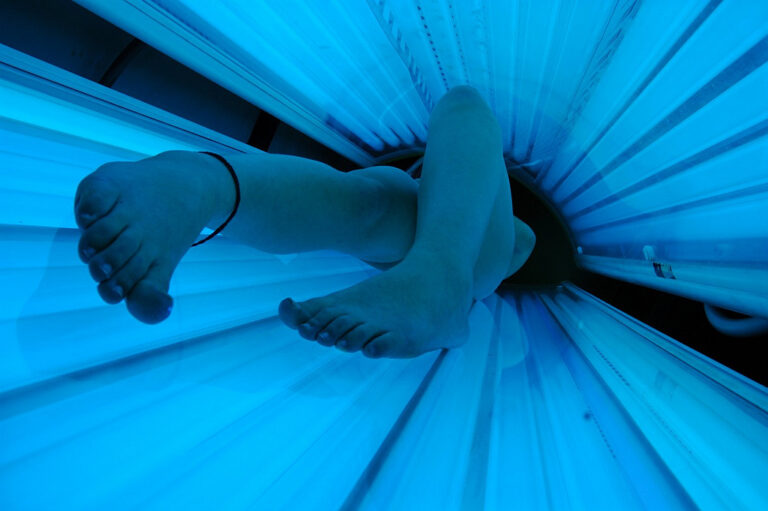
tanning beds photo legs
Tanning beds are NOT the way to get your Vitamin D fix.

Last year, the Israeli Ministry of Health issued a statement that tanning beds are as hazardous to your health as sunbathing. “In light of the accumulating knowledge on the rise of skin cancer – including malignant melanoma – the ministry is warning the public about the use of tanning beds, which are just as dangerous as exposure to sunlight.” For those in high-risk groups for skin cancer – people with fair skin, moles or a family history, for example – they strongly urged consumers to avoid using tanning beds, and recommended legislation banning the use of tanning beds by people under 18.

Mind-Blowing Effects of Coffee and Sex

coffee sex don't mixThat cappucino may not put a smile on your face if you are at risk for a stroke.

A new study from The Netherlands suggests that having sex and drinking coffee can temporarily raise your risks of strokes or brain aneurysms. Several triggers were identified in the study published by the American Heart Association including coffee consumption, vigorous exercise, nose blowing, sexual intercourse, straining to defecate and cola consumption.  Being startled or suddenly angry was also implicated in increasing the risk of rupturing a weakened vessel in the brain.

Qatar Accused Of Bribing Their Way To Solar-Powered 2022 World Cup

qatar, world cup 2022, spy characters, bribery

Life wouldn’t be interesting without a few spy characters. Sunday Times reporters go undercover to root out Fifa corruption.

This is not the first time that two African Fifa committee members have sold their votes. Sunday Times undercover reporters learned from Ismail Bhamjee, a former Fifa executive committee member, that Cameroon and the Ivory Coast accepted bribes from Morocco when that country was bidding against South Africa for the 2010 World Cup. Given the numerous obstacles that could prevent a successful 2022 World Cup in Qatar, its considerable heat chief among them, it might not come as a surprise that the country is accused of offering up to $1.2 million in exchange for votes that might have secured its controversial win.

Liat Yaniv’s Colorful Newspaper World and Upcycled Paper Dolls

0

"recycled israel paper doll"Yaniv’s surprisingly colorful dolls are made solely from scraps of newspaper (and no paint!).

Israeli artist Liat Yaniv‘s creativity – like that of many before here – was fueled by a shortage of materials and resources.  When she was an art student in Denmark she had limited funds, and so she began to find ways to use the ubiquitous and free materials around her – such as the daily newspaper.  She did not use the newspaper to create papier mache, though, which is what many end up doing with newspaper.  She used the colored sections of the newspaper to make idiosyncratic eco-friendly dolls with surprising amounts of character and presence.

Hassan Fathy Fan Has High Eco-Hopes For Cairo

2

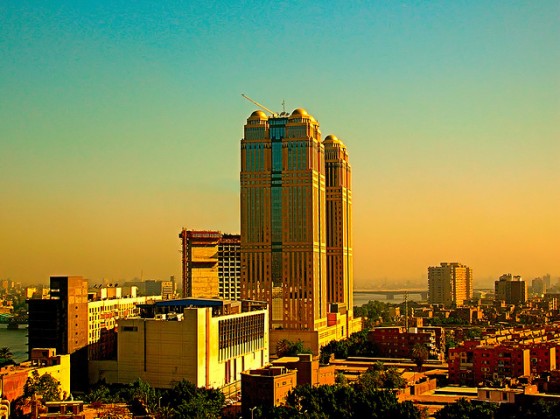
cairo, sustainable architecture, urban development Despite its numerous environmental challenges, Egypt can go green, according to Dominique Gauzin-Müller.

It’s hard not to compare Dubai and Cairo – two cities that occupy many of our worried green thoughts. Although different on so many levels, one thing stands out: despite being relatively young and stroppy, Dubai is definitely the cleaner city. Sure, there is litter along the beaches and in other more isolated areas, but when compared to Egypt, the Emirate comes out squeaky clean. Even so, French Architect Dominique Gauzin-Müller told Almasry Alyoum that she can envision a sustainable urban future for Egypt, particularly if the country embraces wisdom advocated by their very own father of sustainable architecture – Hassan Fathy.

Palestinian Coal Kilns Blow Dust on Israeli Meat Eaters

meat israel charcoal BBQ
We pay for barbecued meat with our health

Every year the air pollution rises steeply during Israel’s Independence Day, where even people with vegetarian (or vegaware) leanings have a sudden urge to fry ground beef “kebabs” on the mini BBQ grill sold at minimarkets and basically tossed out after use. But the effects of man’s ancient meat roasting urge are badly felt in the north of Israel where coal ash dust, from charcoal kilns, produced by a factory in the West Bank’s Wadi Ara, is blowing onto Israeli villages: “This pollution is ruining our lives and hurting my son’s health,” said Udi Razamovitz of Kibbutz Metzer to Haaretz: “I’m considering leaving the kibbutz altogether.”

Reporter’s Notebook: Tasteless Dried Shark Fin For Sale

9

whale shark, dead sharks, sharks in truck, dubai, shark fins for soupTafline in Dubai shark market: “Sharks piled up in the back of a truck along with a spade and rebar.”

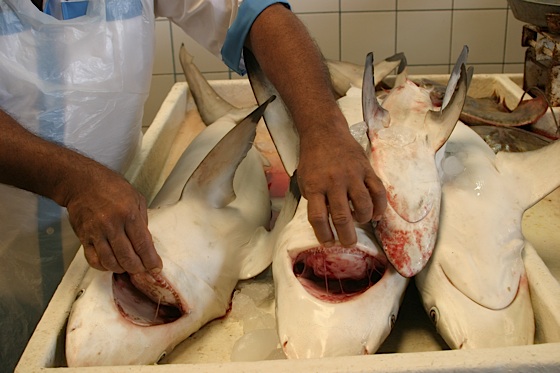
The locals are proud to pose with their dead sharks, rays, and barracudas. Many of them will even open the shark’s mouth for dramatic effect. “Picture, picture,” they said repeatedly as Jacques Van Wyk, a South African paramedic who works for a Dubai-based hotel group, led me through a pungent fish souq in Dubai in search of finned sharks. Along with a rusty spade and rebar, we found a few sharks carelessly strewn in the back of a transport truck.
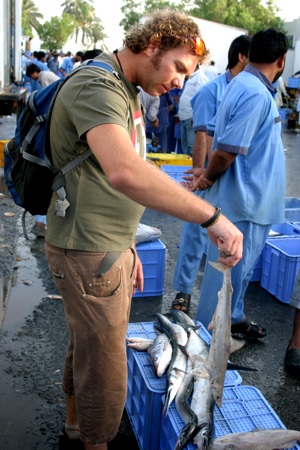
jacques van wyk, baby shark for saleOne of them may be a juvenile whale shark – the gentle giants of the sea. But (I was privately relieved) we did not witness any finning today. That doesn’t mean it has stopped. Just a few days ago, Jacques witnessed 400 kilograms of fins being driven away.

Known at work as the “treehugger,” Jacques (left) first became aware of shark finning when a friend of his took him to a market four and a half years ago. They found a truck full of sharks, which they then followed back to the market where they were being sold. He has been coming to the markets regularly ever since.

If this sounds like a clandestine endeavor, that would be misleading. The salespeople fin sharks with as much indifference as nearby merchants sell their vegetables. They line the sharks up on a short wall at the far end of the market, slice off their fins, and pile them in a truck.

According to Van Wyk, most of the fish here come from Oman. “With so much phytoplankton, those waters are literally teeming with marine life.” But it is not legal to fin in Oman so they are brought to Dubai where they are processed and then shipped off.”
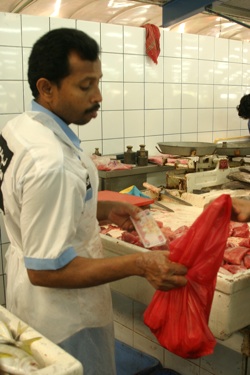
shark meat for sale shark fins for soupA curious fresh seafood salesman who spoke excellent English, Vijay confirmed that the cheaper fish comes from Oman, but the more expensive fish are caught on lines outside of Dubai.

He also explained that dried shark fins are too dry to eat, that they are only used for their taste.

Shark meat costs as little as $3 for two pounds, while a baby shark fetches approximately $40.

“Shark fin soup is on the menu of many high-profile functions,” Jacques said, “until that ends, the fishermen will continue to fish them.”

That hasn’t stopped Jacques from dreaming about how to make a difference.

In addition to potentially teaming up with Ernst Van Der Poll at Tawasul to screen the film Shark Water at the Jumeirah Beach Dive Center, he is working on plans to help his employer incorporate more environmental programs into their Corporate Social Responsibility portfolio.

dried shark, shark fin soup

Also, he and his girlfriend have plans to walk from Abu Dhabi to South Africa in the next couple of years in order to generate overall environmental awareness.
shark for sale shark fins for soup

Having grown up in the bush in South Africa, Jacques is passionate about nature. “Sometimes I get down in the dumps,” he told me after we finally left the market to get fresh air and process what we had seen.

“But it’s good, because that is what gives me the motivation to go on.”

More on shark finning in the UAE:
Working with Fishermen to Tackle Shark Finning
Despite Ban, UAE Is A Market Hub for Shark Finning
UAE Divers Organization: Stop Buying Shark Fins and Shark Fin Soup

Are Sea Burials Greener Than Land?

burial at sea weights bin laden islamA body is prepared for a “full sea burial”. Note iron weights alongside the remains.

Following the killing of Al Qaeda leader Usama bin Ladin and his burial at sea, Green Prophet’s Zaufishan asks Can Muslims Be Buried At Sea? The question I am asking is whether the bin Laden’s burial at sea was as “green” compared to other forms of burial on land, including burial rites for Jews and Muslims. Burying at sea was once an unavoidable circumstance of long sea voyages on sailing vessels – where passengers and ship crew succumbed to disease or other circumstances, and there was simply no other option.

Can Muslims Be Buried At Sea?

Muslim burial mound?

Muslim burial rights are eco-friendly

It was historic when the world’s most wanted man, Osama bin Laden, was laid to rest somewhere in the Arabian Sea, which some are calling the ultimate green burial. US officials told news agencies the sea burial followed Islamic customs.

What are Islamic customs for death? Bin Laden’s body was ritually washed, shrouded in a plain white sheet and placed in a weighted bag. Arabic prayers were said over the body, which was then tilted off a flat board from the deck of the USS aircraft carrier Carl Vinson and allowed to slide off into the sea.

While there is no strict time frame for Muslim burials, senior US officials focused on disposing the body within 24 hours, out of respect for the Muslim community, and the decomposing process. This 24-hour rule was not applied for Uday and Qusay Hussein – sons of Iraqi leader Saddam – when in 2003 U.S forces preserved their bodies for 11 days through embalmment.

Since the death Muslim scholars have issued statements for and against sea burials and the ethics behind the mystery of a watery grave.

Egyptian lawyer Montasser el-Zayat said Bin Laden’s sea burial was designed to prevent his grave from becoming a shrine or “a symbol”.

In Islamic tradition, sea burials can be allowed but only in extraordinary cases where the death occurs aboard a ship that is a “long distance from land”. Shiite cleric Ibrahim al-Jabari spoke out that if the death occurs on land, the person “should be buried in the ground… Otherwise this would only be inviting fish to a banquet.”

How Muslims Bury The Deceased

On land
Like Jewish burials, the Muslim funeral rites are simple and to the point. Out of respect for the dead cremations are not allowed. In Judaism cremations are not allowed because they believe in reincarnation. Muslims believe the lifeless body still ‘feels’ and will be brought back to life whole. In Islamic teaching the earth and sea are clean burial sites that do not prerequisite elaborate markings or coffins.

  • Close family members close the eyes of the deceased and carry out a ritual ablution called ‘ghusl’ – purifying the body three times with water and perfume.
  • The body is wrapped completely with clean sheets, preferably white, known as a ‘kaffan’, similar to coffin.
  • Those present make a du`a – an Islamic prayer – and perform ‘salat-ul janazah’, a unique prayer in Arabic for the departed soul.
  • The wrapped body is then lowered on its right side into a grave, usually without a box coffin and facing the direction of Mecca. The dug earth covers the grave and a small stone is placed at the head to mark the grave. Earth to earth, dust to dust.

In the sea –
The difference between an earth and sea burial is only in the final resting place. The shrouded body should be lowered into the water in a vessel of clay or with a weight tied to its feet.

If a person dies on a ship and there is no risk of decay, the body is retained on board to be buried in the ground after reaching land. Otherwise, after the Muslim rites are performed, the body is lowered into the sea as far as possible to avoid being disturbed by the sea predators.

Green to the end – the environmental impact of burials

  • Water pollution is one of the most commonly cited problems of large cemeteries. As remains are converted to minerals the drainage shifts although drinking sources are not affected negatively.
  • Any infective viruses in the deceased can be isolated by surrounding plants. Placing plants with intricate root systems around burial sites is a productive and beautiful way to pull viruses from the soil and counter soil and water contamination, which restricts the movement of microorganisms through the soil.
  • If you considered a cremation remember that is uses substantial amounts of energy and fuel, as well as expelling carbon monoxide into the atmosphere – a potent greenhouse gas.
  • Sea burials degrade at a slower rate due to the oxygen levels and cooler temperatures.
  • With the help of natural microbial processes and corrosion, even an eco-coffin made from recycled material will eventually break down into its basic natural elements.

Osama bin Laden’s sea burial is technically eco-friendly but the decision behind it was more politically driven. Akbar Ahmed, the chairman of the Islamic studies department at American University, told The New York Times that sea burial prevented Bin Laden’s resting place from becoming a powerful shrine.

“If they allowed Osama bin Laden to be buried in Pakistan, his followers would… plant flowers, and women will say the shrine has healing powers, especially among the uneducated. His myth would continue to grow.”

For Muslims, both land and sea burials are means of connecting with nature: a returning to the original source of organic matter. Although sea burials have minimal environmental impact, every burial method has some contribution to the Earth’s equilibrium.

More on greening the afterlife:
Saudi Arabia Has the Highest Road Accident Death Toll in the World
Eco Funeral? Jewish Burials Are Green
“If I Die” Lets Facebook Prepare A Video Clip Launched At Death
Horses: The Silent Victims of Egypt’s Revolution
Why 27 People A Day Die From Air Pollution in Tehran
The Oldest Iranian Is Dying

120 Dubai buildings do the Internet of Things to save energy

0

energy efficiency, cloud computing, dubai, pacific controls

In order to reduce their energy consumption, hundreds of buildings are being connected to Pacific Control Cloud Systems’ M2M technology.

Over one hundred buildings in Dubai are latching onto Pacific Control Systems’ machine-to-machine energy efficiency technology every day. In order to combat the outside temperatures, most businesses, restaurants, and universities crank their A/C units so high it’s like sitting in a giant refrigerator.

Despite the theory that energy subsidies in the region will keep widespread adoption of energy-saving methods at a minimum, PCS is radically changing how energy is consumed in the Emirate with its M2M cloud computing services. PCS is able to save energy by monitoring machine to machine applications that adjust the temperature to energy efficient levels.

To date, more than 60,000 buildings have already connected to M2M services. Dilip Rahulan, Chairman and CEO of Pacific Controls, told Telecom Engine that the company has benefitted from the residual of Dubai’s building boom.

Rahulan explains that M2M technology uses virtual robots called Gbots that manage energy efficiency and other data systems remotely.

“Gbots are the new paradigm for the virtualization of managed services. The intelligent, self-autonomous, self-learning software agents will be deployed across networks for diverse automated services,” he said.

M2M smart grid technology offers energy savings of up to 30%, which is used to offset initial installation costs. The company offers its services to every single building, who Rahulan says would be foolish not to adopt them (who doesn’t like saving money?) As suspected, businesses are lapping up M2M en masse. As an added benefit, Dubai’s carbon footprint could slowly abate.

PCS recently announced that it will build the Middle East’s largest data center in order to accommodate this rapid connectivity. 60,000 square feet of computing space that will cost $85 million, and 24 command centers are slated to be finished by the end of the third quarter in 2013.

With buildings sapping up more than 40 percent of the Emirate’s energy, this could be a huge boon to conservation efforts. But some experts caution that controls need to be put in place at the early stages in order to avoid an Orwellian scenario.

More on Dubai’s Building Projects and Energy Conservation in the Middle East:
Saudi Arabia’ Green Construction Potential: Insurance For A New Reality
An Ant in Dubai
Dubai Utility Doubles Business Electricity Rates in Three Years