Home Blog Page 531

Herbed Baked Eggs on Toast Recipe

0

image-baked-eggs

In early summer, mornings are still cool and soft sunlight comes streaming into my room. I wake up feeling energized and optimistic, and ready to start the day really well.  If I feel like spoiling my family or just treating myself to an excellent breakfast, I fetch a pre-cooked mushroom sauce from the fridge – see what we say about pre-cooked foods –  and get these eggs going in the oven. By the time I’ve had a cuppa (and here’s our recipe for authentic Turkish coffee), checked my email, and made toast, they’re ready.

image-baked-eggs

image-baked-eggs-ramekin

Herbed Baked Eggs

(Individual serving – multiply as needed )

Equipment:

1 ramekin or custard cup per serving
A deep, ovenproof pan or casserole into which the ramekins will fit
Baking parchment cut into circles to cover the ramekins

Ingredients:

1 or 2 large eggs
1 tablespoon chopped fresh herbs: parsley, basil, cilantro or finely-chopped celery and shallots, alone or in combination
1 tablespoon chopped chives, scallions or shallots
Butter for greasing the ramekins
Salt
Pepper
Paprika
1 slice of whole-wheat bread, the corners snipped off to make a round, and toasted

METHOD
Preheat oven to 350° F (175° C).

Grease each ramekin thoroughly with butter or margarine.
Combine one tablespoon green herbs with one of chives, scallions, or shallots. Place chopped herbs in the bottom of each ramekin and gently drop 1 or 2 eggs over herbs. Don’t worry if eggs break.
Season with salt, pepper, and paprika.
Place one ramekin per portion in baking pan. Pour water into pan to come up to within ¼ inch of the ramekins’ rims. Cover each ramekin with a parchment paper circle or a loose piece of tin foil.
Bake for ½ hour or until eggs are firm. Remove ramekins from water and allow to cool for a few minutes. Use a butter knife to gently loosen the baked eggs. Turn them out onto hot rounds of toast. Cover with mushroom sauce (or any other sauce you like).

If no sauce is handy, butter the toast and serve the eggs as they are –  or with a little sour cream.

Serve with fresh vegetables or fruit.

Mushroom Sauce (Make the night before for convenience.)

Approximately 2 cups sauce or enough for 6 servings

Ingredients:

1 cup chopped fresh mushrooms
¼ cup finely chopped onion or shallots
1 tablespoon butter
1 tablespoon flour
1 cup hot milk
½ teaspoon dried thyme or 1 sprig fresh thyme
Salt and pepper to taste

METHOD

Sauté mushrooms and onions in butter for 5 minutes. Sprinkle the flour in and stir, coating the vegetables. Add salt and pepper, tasting to adjust.

Slowly pour the hot milk in, stirring often. Add thyme. Simmer for 5 minutes, allowing the sauce to thicken. Taste for seasoning. You may thicken the sauce by cooking it longer if wished. Serve, or store in the refrigerator for up to 3 days.

Was breakfast ready too soon? Surprisingly, these eggs can be held for half an hour in their ramekins and reheated in a warm oven for 10 minutes. Just watch out for over-cooking and drying out.

More easy and delicious recipes from Green Prophet’s kitchen:

Pure Rootz Puts the Preppy in Organic Clothing

1

pure rootz organicThe Pure Rootz fashion label brings organic cotton to the Lacoste customer.

Whereas organic food has been a relatively easy sell to high-end customers, organic clothing has been a little tougher to get going.  Organic goat cheese or cherry tomato confit sound delicious to just about anybody, but organic clothing might call to mind tie-dyed hemp drawstring pants or loose beige tank tops.  It doesn’t have to be so.  An increasing number of young designers see the environmental and personal comfort value of using organic cotton, and so lots of trendy clothes are starting to be made with sustainable fibers.  Organic clothing lines are popping up everywhere, including large superstores such as H&M, bringing the trend to the mainstream.

One fashion area that organic clothing is beginning to approach is the high-end market, and Dutch company Pure Rootz is doing its part: one organic polo shirt at a time.

Eco Sins Of The Cheshire Blogger

7

eco sins, cheshire blogger, tafline laylin, cairo, toxic chemicalsPoisoning hair to look “pretty.”

Every four, five years, I get this crazy urge to do what some women find perfectly normal: put nasty stuff in my hair that will supposedly make me look “prettier.” Without fail, I regret it. Here’s how it went down: I was feeling a little bleh and out of it and foolishly thought that a “new do” might perk me up a bit.

So, without giving it the proper amount of thought and ignoring my inner red flags, I marched down to the local hairdresser in Maadi, a fairly well-off Cairene neighborhood. There I asked Hassan to please put  a few highlights in my hair, and to give me a swift trim. “Just a little bit,” I emphasized. Sensing my trepidation, he said, “you’re going to love it.”

Interview With Environmental Filmmaker Zeina Aboul Hosn

0

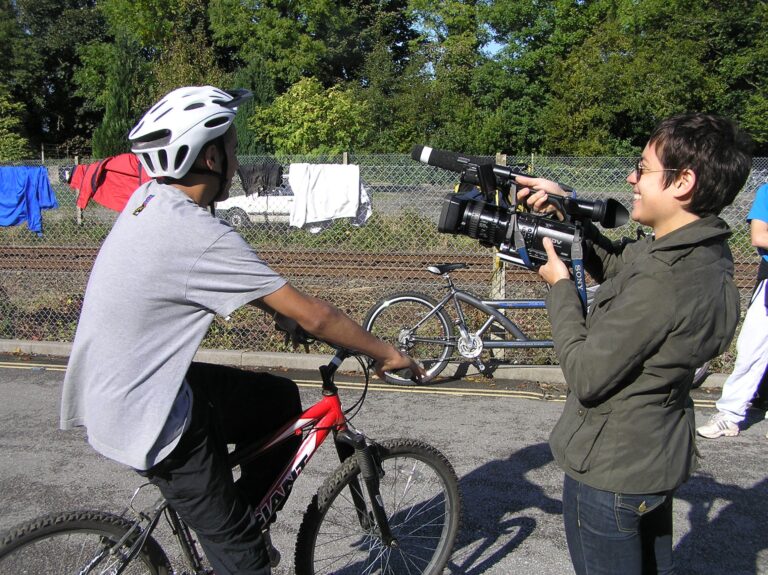
We speak to the Zeina Aboul Hosn, an environmental filmmaker based in the Middle East about sharks, working on the Age of Stupid and the challenges she faces in her work

Shortlisted for the Amnesty International 2008 Media Award for journalists covering human rights, Zeina Aboul Hosn is clearly passionate about the world around her and conveying important messages through her films. As well as working on the widely influential Age of Stupid film, she has participated in an expedition to study sharks in the Gulf which was filmed by Al Jazeera and has also worked in TV across the Middle East. I caught up with her between some turtle conservation work in Dubai and a trip to Beirut, where she was born, to talk about her path into film-making.

Time Running Out for Saving Dead Sea Hotels

1

dead sea hotelsArtist Sigalit Landau swims naked amongst watermelons in Dead Sea to dramatize its plight.

The Dead Sea is situated at the lowest point on earth and has been the subject a number of projects aimed at reversing the salt lake’s declining water levels. These projects include the controversial Red – Dead Sea Conduit Project, which is being fought against by environmentalists. Another idea, and one that makes much betters sense from an ecological viewpoint, is the one involving the restoration of at least a part of the natural flow of the Lower Jordan River, which has been reduced to not more than a trickle.

But the lack of sufficient water in the entire Dead Sea has now taken a back seat to an even more pressing problem: the one of rising waters in the southern portion of the lake, near many of the hotels and health spas in the Ein Bokek area which are in danger of sinking.

Recycling Tires Can Rid Egypt Of Fumes, Mosquitoes And Rats

1

burning tires, pollution, cairo, recycling, trashA new initiative could put an end to this in Cairo!

Nine million used rubber tires are dumped in Cairo every year, according to the Community Times. Egypt’s capital is in many ways defined by its pollution. Not only are the skies smoggy (well ahead of black cloud season), but waste is a veritable plague. Even the wealthier neighborhoods such as Maadi can’t escape the food scraps, disposable containers, and plastic strewn absolutely everywhere. But nothing here stinks more than the country’s ubiquitous used rubber tires. 

Tel-O-Fun (Finally) Brings Bike Sharing to Tel Aviv

tel aviv bike sharing tel-o-funThanks to Tel-O-Fun, now Tel Aviv urbanites with the tiniest of apartments can bike around without the storage hassle.

Despite widespread announcements that it would open its city-wide bike sharing service in April, Tel Aviv’s Tel-O-Fun finally got kick started in May (but, to its credit, in a bigger way than originally intended).  150 stations and 1500 bikes were made available for shared use by the public earlier this month in an effort to encourage the already growing trend of cycling in Tel Aviv.  (Biking has become such a popular mode of transportation that some cafes offer free bike rentals alongside delicious coffee.)

The service brings an almost kibbutz-like attitude to pedaling – users pick up bikes when they want them and where they want them, and drop them off as soon as they’re done with the idea being that the bikes should be readily available for anyone and everyone.

Feeding Abu Dhabi With Water From Air

2

humidity, abu dhabi, hydroponic farm, desertThe Abu Dhabi Farmers Services Center is promoting technology that can potentially set Abu Dhabi farmers free from water constraints.

Abu Dhabi farmers may be able to grow food with water pulled out of dense air. With just four days back up supply of water, and desalination projects usurping considerable energy, Abu Dhabi is facing down a variety of long-term challenges. Among them, how to sustain agriculture in the desert without using a ton of energy and water? The answer lies in exactly two things that make this Gulf nation virtually uninhabitable in the summer: persistently high humidity levels and relentless sunshine.

Eco-Muslim, Professor Ali’s Islamic Eco-Rap

eco muslim islam rap professor ali

A humanities instructor by day and social activist by night, Californian based hip-hop artist ‘Professor A.L.I.’ is behind a cool new era of enviro-activism. We’re talking Islamic Eco-Rap. In this exclusive Green Prophet interview, Zaufishan asks eco-Muslim A.L.I. why his environmental message should be on our iTunes playlist.

Green Prophet: Firstly, who is behind ‘Professor A.L.I?’

Professor A.L.I.: I’m a hip-hop poet, artist and activist based out of the Bay Area in California. I identify myself as a human being. I try to define myself through my actions, clarify myself through my intentions, and strive to be a Muslim.

Outside of rap music, I am both a writer and an educator. I am working on several writing projects with the poetry compilation entitled ’72 Martyr Series’ coming out the soonest. I also teach courses in African-American Literature and poetry at U.C. Berkeley as well as in the Humanities department at a prestigious college preparatory school in the Bay Area.

Green Prophet: When did you start the “Eco-Rap” concept?

Professor A.L.I.: I’ve been rapping since high school, but over time what I rapped about and communicated through hip-hop changed. It was fueled by my observations and life lessons. Hip-hop to me is a method of communication to a specific audience, one that is capable of understanding coded language and acting upon a message.

“The overwhelming message in my short life has been that this planet is dying and we are the murderers. Once the lesson was imparted, that this pristine planet is now polluted, the natural has become artificial and that life itself has become unbearable… I made this my predominant message. I called it “the real green movement” but a radio show host at KPFA called it ‘Eco-Rap’ on the air, ‘Islamic Eco-Rap’ at that, and it stuck.”

I didn’t set out to promote a specific theme, I was just trying to tell a story to inspire my fellow Muslims to save our planet – not just from Global Warming or pollution but all forms of epidemics and oppression.

Green Prophet: We love creative environmentalists and Green Prophet fans would be very interested in the background to your eco-messages. So, what exactly do you rap about?

Professor A.L.I.: Hip-hop is an intelligent movement in which rap plays a role of delivering… [a] message. The message here is that the ‘Mother’ Earth is in fact dying; slowly murdered by the children she once suckled. Eco-Rap is bringing awareness to this global issue. And Islamic Eco-Rap is putting it in the Muslim context of the ultimate goal in life: to please Allah Almighty (God).

I believe that we will be judged by God for our contribution to the destruction of this planet. I also believe that the foretold revolutions by prophets in the past will come to pass as ecological disasters that we are creating and have created. I hope that using the art of hip-hop and rap music to deliver a message will be heard by the only group that has the energy, incentive and hope to change things: the youth.

Green Prophet: That is a fantastic aim and we hope the youth will be part of the movement. What drives you to spread this ecological message to others?

Professor A.L.I.: My mother died from Lymphoma in 2007. Her last words to me still echo in my mind ‘Grab the Mic’. She wanted me to continue with hip-hop and rap which I had almost given up on at that point. In her life she was an accomplished musician, singer and vocalist. She encouraged me to use my voice. After she passed I embarked on using my voice to tell a story.

I firmly believe that my mother, who died young, died because of what we as human beings have done to the environment. Cancer is a by-product, and my mother a casualty of human neglect. I do this to honor her and to help inspire people to make the world a better place for my daughter to grow up in.

Green Prophet: Have you collaborated with any other singers or activists?

The ‘Carbon Cycle Diaries’ LP was a project that was constructed just to tell that story. There was something in it that resonated with established artists in the music industry and so I was first joined by the iconic figures: E-40, then Killah Priest, Raekwon, Canibus, Brand Nubian and Hussein Fatal of the Outlawz. Many other artists also collaborated with me in this solo debut, helping to bring this [eco] message to the people.

Green Prophet: Rap artists are generally associated with the mainstream music industry – songs are about living the fast life, cars, women, women in cars. How and why are you different with your eco principles?

I wouldn’t say that I am a mainstream artist. I do collaborate with mainstream artists as I mentioned earlier but I think what I am doing is what true hip-hop artists have always done which is communicate to the masses about real issues. I think where I differ is that I keep both a human focus, but an overall global feel. The earth is at the heart of the question; it is after-all why I call my solo debut the ‘Carbon Cycle Diaries’.

Green Prophet: Muslims are increasingly raising awareness about food waste and pollution. What are your biggest concerns as an eco-Muslim and which areas of the world do you feel are most affected by similar issues?

Professor A.L.I.: Let me tackle part two first. I have travelled all over the world extensively and spend a great length of time in the Middle East and Asia. I would say that nations developing now and trying the bridge the gap between themselves and ‘The West’ are the areas of the world I am most concerned with. The reason is that these nations are using the same methods used by the U.S. and Europe which we are now paying for as ecological disasters and as Global Warming. They are using these methods because in many instances they are cheap and quick; often times the climate issues are exacerbated by geography and pre-existing weather patterns as well.

One of the most polluted places I have been in recently is Tehran and it goes beyond the fossil fuels burned for millions of unregulated vehicles. Tehran and much of Iran is on a plateau, pollution just sits there and is visible as you fly in and out of the city as a thick brown layer.

As an Eco-Muslim my biggest concern is that my fellow Muslims lose sight of the fact that the earth is a trust, and destroy it in hopes of being more like other nations. I fear we will lose ourselves in the process.

Green Prophet: Now that you mention the Middle Eastern regions affected by human neglect, more of its otherwise traditionally Muslim countries are welcoming rap artists and their entourages. Where have you performed and what has the reaction been from different communities?

Professor A.L.I.: I have performed in Canada and the United States and I hope to perform in Turkey, Arab Nations, and Iran now that ‘Carbon Cycle Diaries’ is out. I get a mixed reaction. Many Muslims are under the false assumption that only traditional language [spoken] music is permissible or that Western influenced music or instrumentation is problematic. At the end of the day I find the greatest support amongst those who listen to the message conveyed which is one which resonates within Muslim culture.

Green Prophet: With that in mind, what advice would you give to aspiring Muslim eco-rap artists and other environmentally aware Muslims (who cannot sing!)?

Professor A.L.I.: I have young Muslims connecting with me now who aspire to be rap artists. My question is always ‘Why?’ Most recently I had someone tell me that they wanted to rap so they can be like Jay-Z. In other instances I have people only paying attention to my music because of the big names attached to my project. At the end of the day I’ll tell all of them the same thing, don’t embrace rap and hip-hop because you want to be rich. Get involved if you have a message and a passion to effectuate change. Be creative yet stay true to your voice and experiences. At the end of the day if you want to copy someone copy the Prophet Muhammad in Islam.

To my environmentally conscious Muslims, I say we need to educate the communities at large of how ‘Haraam’ (unlawful) our wasteful lifestyle is.

“I have never been to an Islamic center that regularly recycles and composts; I have been to many that use Styrofoam and waste copious amounts of power, food and water. These may seem like little things but they contribute greatly to the worldwide epidemic. Each one, teach one and let’s keep the movement growing!

Green Prophet: Amen to that! So, lastly, what contribution do you hope to make towards Muslim environmentalists?”

Professor A.L.I.: The Arts need to play a significant role from music to painting, to plays and animation. My greatest hope is to network with so-called ‘green sheikhs’ and eco-Muslimas like Kristiane Backer, to help bring light to environment issues in our own communities. We need to stop thinking in terms of being Carbon Neutral and start thinking in terms of being Carbon regenerative.

We need to be the stewards of this ‘Real Green Movement’ and help create a global awareness starting in the Middle East. Music and hip-hop can be powerful tools in energizing our future leaders into becoming environmental stewards themselves.

Green Prophet: Thank you kindly A.L.I. for sharing your environmental words of wisdom and we hope that everyone reading is inspired and takes a leaf out of your unique activism.

:: www.professorali.com

More eco-Muslims:
This Is What A Muslim Vegetarian Looks Like
“Green Deen” Ibrahim Abdul-Matin Connects Environmentalism With Islam
From Rockstars to Recycling: Kristiane Backer – An Eco-Muslimah
How Does the World’s 1.5 Billion Muslims Relate to Climate Change?
The Green Sheikh Knows How To Treat A Lady
30 Mosques in 30 States: USA’s Organic Muslims


Mashrabiya: 12th Century Light & Cooling For Lebanon’s USJ Campus

1

USJ campus, Lebanon, 109 Architects, mashrabiya, passive coolingContemporary architects in the Middle East revert to ancient techniques to cool and light new buildings.

The earliest known Mashrabiya dates to 12th century Baghdad, Iraq. A special architectural feature that provides passive cooling both in and outside of the building, it was particularly popular in Iraq during the 1920s and 1930s. Unfortunately, the Al Rasheed street Mashrabiyas influenced by the Art Deco and Art Nouveau movements during that time have since been destroyed. But Beirut-based 109 Architects has revived this ancient design technique with their own unique twist.

World’s Largest Canvas Turned Into 5,000 Reusable Bags

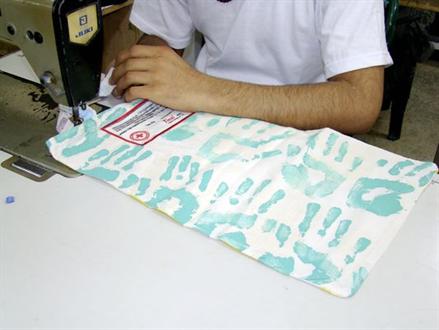
eco-bags, world's largest canvas, hand to hand, lebanonEnvironmental and human rights go hand in hand in Lebanon.

Winning recognition from the Guinness Book of Records last October for the world’s largest hand painted cloth, 12,000 Lebanese joined hands for environmental and social peace. Spearheaded by Lebanon’s Red Cross and Timol Paints, 7,000 volunteers and 5,000 concerned citizens pledged to observe tolerance and basic human rights before they were permitted to add their hand print to a 4,355 square meter canvas laid out in Beirut’s Camille Chamoun Stadium.

Turkish Officials File Complaint Against Scientist Over Health Report

7

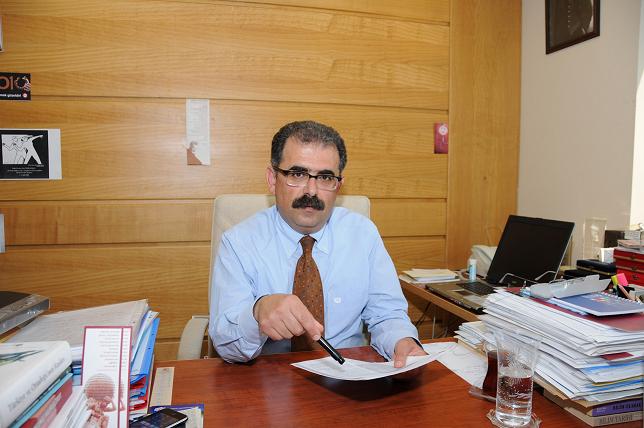
Professor Onur HamzaoğluThe head of a Turkish university’s public health department was accused of “threatening to incite fear and panic” after he published a study showing high amounts of heavy metals in the local population.

After he found high levels of mercury and arsenic in mother’s milk and babies’ excrement from Dilovası, an industrial town in the northwestern Turkish province of Kocaeli, Professor Onur Hamzaoğlu published his preliminary findings in early January. At the end of last week, the town and regional mayors filed complaints against Hamzaoğlu with his university’s rector’s office, accusing him of willfully scaring the town’s residents with misinformation.

Hamzaoğlu, of Kocaeli University, could face two to four years in prison if the district court agrees with his accusers.

Oil Will Be A Past Relic When Today’s Babies Hit Fifty

3

peak oil, hsbc, green, oil barrelsWe have 50 years to get unhooked. Is it too late?

A senior economist at HSBC claimed in a recent report that the world’s oil resources are only expected to last five more decades, according to the New York Times. An earlier report from Wikileaks that Saudi Arabia’s peak oil is expected to happen much sooner than thought and desperate measures by mega oil companies corroborate this notion. In the meantime, we can expect a series of “persistent and painful” price hikes in the coming decades.

Fundamentals of Eco-Sexuality: Is Conscious Love the Way Towards Global Peace?

grass naked woman
Why sexecology, eco-sexuality and sustainable sex offer real hope for a greener, safer future.

The emerging field of eco-sexuality takes cues from many viewpoints and philosophies. There are the practical aspects, like using eco-friendly lubrication, or eating the right sort of foods (we recommend the Mediterranean diet), and considering whether to have children, and how tree-humpers can best manage reproductive health.

Equally important to the fundamentals of eco-sexuality is the idea of consciousness; that every choice we make has an impact on ourselves and the planet. In order for humanity to birth itself to the next level of awareness, we must visualize a future that is compatible with the values of love and peace, sexual healing and freedom, and global planetary stewardship. Have you consciously considered becoming an eco-sexual yet?

Holland’s Proposed Ban on Ritual Slaughter Affects Jews and Moslems

imag3-cows cow slaughter

Holland, where religious tolerance has been known since the 16th century, proposes a step backwards to the Dark Ages.

Although here on Green Prophet we advocate adding more vegetables to your diet, we acknowledge the human appetite for meat. In Holland, about 45.000 Jewish and  945.000 Moslem citizens eat only meat slaughtered according to religious law. The problem is, ritual slaughter is about to become illegal in in Holland.

The issue: stunning the animals unconscious before slaughter, a practice prohibited by Jewish law. Islamic law forbids stunning except for certain electric methods. See Tafline’s previous post explaining the European Union slaughter labeling law.

The extreme right, openly anti-Moslem Party for Freedom leads the movement, which it took from an animal rights group called The Party for Animals. It now carries the anti-ritual slaughter banner as its own. If  Dutch Parliament passes the law, Moslems and Jews stand to be deprived of of religious rights.