It's sea turtles which may in the end save islands in the Seychelles. They may also better help us understand climate change. Like rings on a tree, scientists have found a way to read sea turtle shells and how they are impacted by climate change tells a story.
For centuries, the Sámi shaman drum was one of the most powerful sacred objects in northern Europe, and one of the most feared by church and state. If ISIS looks bad to us today for its religious fundamentalism, Christians were just as fervent.
In a real emergency, romance takes a back seat to physics, panic, and how fast 150 people can squeeze through a narrow tube. The Federal Aviation Administration says every aircraft must be evacuated within 90 seconds. That’s the gold standard. But new research suggests that in the real world, especially as we age, that number might be more aspirational than achievable.
Research from the Wildlife Conservation Society (WCS) and the University of Queensland, published in Ocean & Coastal Management, found that nearly three out of four marine protected areas (MPAs) worldwide are exposed to sewage pollution.
It's sea turtles which may in the end save islands in the Seychelles. They may also better help us understand climate change. Like rings on a tree, scientists have found a way to read sea turtle shells and how they are impacted by climate change tells a story.
For centuries, the Sámi shaman drum was one of the most powerful sacred objects in northern Europe, and one of the most feared by church and state. If ISIS looks bad to us today for its religious fundamentalism, Christians were just as fervent.
In a real emergency, romance takes a back seat to physics, panic, and how fast 150 people can squeeze through a narrow tube. The Federal Aviation Administration says every aircraft must be evacuated within 90 seconds. That’s the gold standard. But new research suggests that in the real world, especially as we age, that number might be more aspirational than achievable.
Research from the Wildlife Conservation Society (WCS) and the University of Queensland, published in Ocean & Coastal Management, found that nearly three out of four marine protected areas (MPAs) worldwide are exposed to sewage pollution.
It's sea turtles which may in the end save islands in the Seychelles. They may also better help us understand climate change. Like rings on a tree, scientists have found a way to read sea turtle shells and how they are impacted by climate change tells a story.
For centuries, the Sámi shaman drum was one of the most powerful sacred objects in northern Europe, and one of the most feared by church and state. If ISIS looks bad to us today for its religious fundamentalism, Christians were just as fervent.
In a real emergency, romance takes a back seat to physics, panic, and how fast 150 people can squeeze through a narrow tube. The Federal Aviation Administration says every aircraft must be evacuated within 90 seconds. That’s the gold standard. But new research suggests that in the real world, especially as we age, that number might be more aspirational than achievable.
Research from the Wildlife Conservation Society (WCS) and the University of Queensland, published in Ocean & Coastal Management, found that nearly three out of four marine protected areas (MPAs) worldwide are exposed to sewage pollution.
It's sea turtles which may in the end save islands in the Seychelles. They may also better help us understand climate change. Like rings on a tree, scientists have found a way to read sea turtle shells and how they are impacted by climate change tells a story.
For centuries, the Sámi shaman drum was one of the most powerful sacred objects in northern Europe, and one of the most feared by church and state. If ISIS looks bad to us today for its religious fundamentalism, Christians were just as fervent.
In a real emergency, romance takes a back seat to physics, panic, and how fast 150 people can squeeze through a narrow tube. The Federal Aviation Administration says every aircraft must be evacuated within 90 seconds. That’s the gold standard. But new research suggests that in the real world, especially as we age, that number might be more aspirational than achievable.
Research from the Wildlife Conservation Society (WCS) and the University of Queensland, published in Ocean & Coastal Management, found that nearly three out of four marine protected areas (MPAs) worldwide are exposed to sewage pollution.
It's sea turtles which may in the end save islands in the Seychelles. They may also better help us understand climate change. Like rings on a tree, scientists have found a way to read sea turtle shells and how they are impacted by climate change tells a story.
For centuries, the Sámi shaman drum was one of the most powerful sacred objects in northern Europe, and one of the most feared by church and state. If ISIS looks bad to us today for its religious fundamentalism, Christians were just as fervent.
In a real emergency, romance takes a back seat to physics, panic, and how fast 150 people can squeeze through a narrow tube. The Federal Aviation Administration says every aircraft must be evacuated within 90 seconds. That’s the gold standard. But new research suggests that in the real world, especially as we age, that number might be more aspirational than achievable.
Research from the Wildlife Conservation Society (WCS) and the University of Queensland, published in Ocean & Coastal Management, found that nearly three out of four marine protected areas (MPAs) worldwide are exposed to sewage pollution.
It's sea turtles which may in the end save islands in the Seychelles. They may also better help us understand climate change. Like rings on a tree, scientists have found a way to read sea turtle shells and how they are impacted by climate change tells a story.
For centuries, the Sámi shaman drum was one of the most powerful sacred objects in northern Europe, and one of the most feared by church and state. If ISIS looks bad to us today for its religious fundamentalism, Christians were just as fervent.
In a real emergency, romance takes a back seat to physics, panic, and how fast 150 people can squeeze through a narrow tube. The Federal Aviation Administration says every aircraft must be evacuated within 90 seconds. That’s the gold standard. But new research suggests that in the real world, especially as we age, that number might be more aspirational than achievable.
Research from the Wildlife Conservation Society (WCS) and the University of Queensland, published in Ocean & Coastal Management, found that nearly three out of four marine protected areas (MPAs) worldwide are exposed to sewage pollution.
It's sea turtles which may in the end save islands in the Seychelles. They may also better help us understand climate change. Like rings on a tree, scientists have found a way to read sea turtle shells and how they are impacted by climate change tells a story.
For centuries, the Sámi shaman drum was one of the most powerful sacred objects in northern Europe, and one of the most feared by church and state. If ISIS looks bad to us today for its religious fundamentalism, Christians were just as fervent.
In a real emergency, romance takes a back seat to physics, panic, and how fast 150 people can squeeze through a narrow tube. The Federal Aviation Administration says every aircraft must be evacuated within 90 seconds. That’s the gold standard. But new research suggests that in the real world, especially as we age, that number might be more aspirational than achievable.
Research from the Wildlife Conservation Society (WCS) and the University of Queensland, published in Ocean & Coastal Management, found that nearly three out of four marine protected areas (MPAs) worldwide are exposed to sewage pollution.
It's sea turtles which may in the end save islands in the Seychelles. They may also better help us understand climate change. Like rings on a tree, scientists have found a way to read sea turtle shells and how they are impacted by climate change tells a story.
For centuries, the Sámi shaman drum was one of the most powerful sacred objects in northern Europe, and one of the most feared by church and state. If ISIS looks bad to us today for its religious fundamentalism, Christians were just as fervent.
In a real emergency, romance takes a back seat to physics, panic, and how fast 150 people can squeeze through a narrow tube. The Federal Aviation Administration says every aircraft must be evacuated within 90 seconds. That’s the gold standard. But new research suggests that in the real world, especially as we age, that number might be more aspirational than achievable.
Research from the Wildlife Conservation Society (WCS) and the University of Queensland, published in Ocean & Coastal Management, found that nearly three out of four marine protected areas (MPAs) worldwide are exposed to sewage pollution.
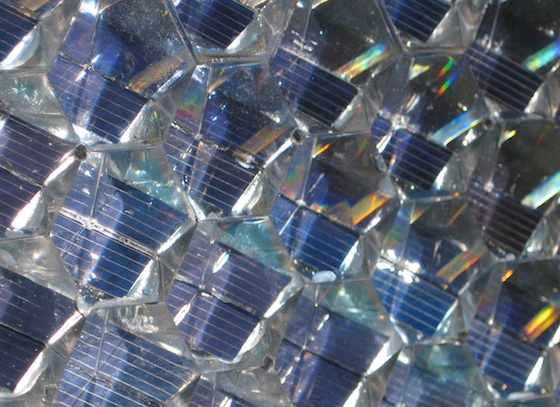
Despite problems confronted on its own soil, Japan proceeds with its commitment to fund a photovoltaic project in Egypt.
Japan’s International Cooperation Agency (JICA) announced that it will proceed with plans to support a solar energy generating station south of Alexandria. Egypt applied to the aid agency for assistance with the “Project for the Introduction of Clean Energy by Solar Electricity Generation System” long before the Fukushima accident usurped all of Japan’s attention and capital. The plan, approved by JICA in February 2010, includes a 420 kilowatt photovoltaic power plant that is expected to produce 641,000 kw by 2012.
Hanging from the ceiling like an ivy plant, Omer Deutsch’s “Secondary Growth” computer design softens the harsh, plastic, traditional work cubicle.
If you’re reading this right now, chances are you are a person who spends at least an hour or two a day on a computer (if not more). This has become commonplace practice for people, and it is not unusual for people to eat in front of their computers, watch TV on their computers, and generally spend a lot of time hanging out with these electronic boxes. The problem with this is manifold, but here are two computer issues that Israeli industrial designer Omer Deutsch was able to tackle with his “Secondary Growth” design: the need for a more aesthetic, organic design for computers and the need to provide a reason for people to occasionally look up from their computers.
Despite a potentially thriving renewable sector, Israel’s government selects a relatively modest and unenforced goal
The Israeli cabinet has just approved the 10% renewable energy target by 2020 initially proposed by Finance Minister Roni Bar-On three years ago. This is lower than some had expected. In May, Israel’s Director of Industry had touted a higher level: 20% by 2020. The lower 10% target would be reached in two stages. The cabinet set an interim target of 1,550 MW of renewables to be met by 2014, by setting quotas “allowing for” their development.
In a moment of unabashed self-aggrandizement, Sheikh Hamad bin Hamdan Al Nahyan from Abu Dhabi commissioned beach graffiti visible from space.
We have nothing against Sheikhs per se. A member of Ajman’s royal family, HRH Sheikh Abdul Aziz Bin Al Nuami, also known as the Green Sheikh (who knows how to treat a lady), has an incredibly modest lifestyle and travels the world educating people about the benefits of environmental stewardship.
He invites people into his home, teaches them about the high-minded side of Islam, and also pens a monthly column for Green Prophet. And undoubtedly there are several Sheikhs who are similarly grounded in the realities of our world. But another Sheikh from the United Arab Emirates, HRH Sheikh Hamad bin Hamdan al Nahyan from Abu Dhabi, is making a name for himself in other, less flattering ways with beach graffiti visible from space.
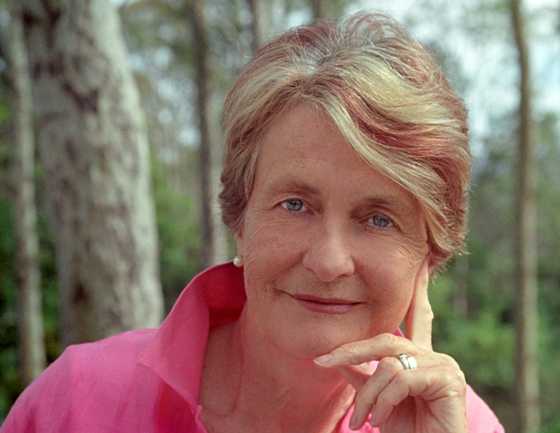
Dr. Helen Caldicott has campaigned against nuclear energy for decades. Today she talked to Green Prophet about how no nuclear event is merely local.
We had a skype conversation with Dr. Helen Caldicott today, during which she stated in no uncertain terms that there is only one side to the nuclear question. Dr. Caldicott is a long time anti-nuclear activist, physician, and speaker whose name is trailed by an exhaustive list of impressive accolades. For roughly four decades, she has been tirelessly speaking out against the absolute nightmare that that is nuclear anything, and recently claimed that the Fukushima nuclear disaster is worse than Chernobyl.
Why would we want to talk about Fukushima when we are in the Middle East, far from Japan? Because nuclear disasters in our interconnected world are never merely local affairs. Following Chernobyl, Turkish tea and food, along with produce from other parts of Europe, were contaminated after the stratosphere winds carried radiation from the Ukraine to other parts of the northern hemisphere. We wanted to get a clear sense of what kind of fallout, if any, we can expect from Fukushima.
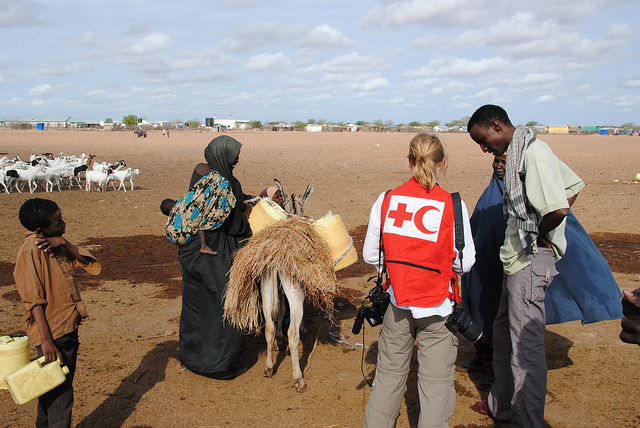
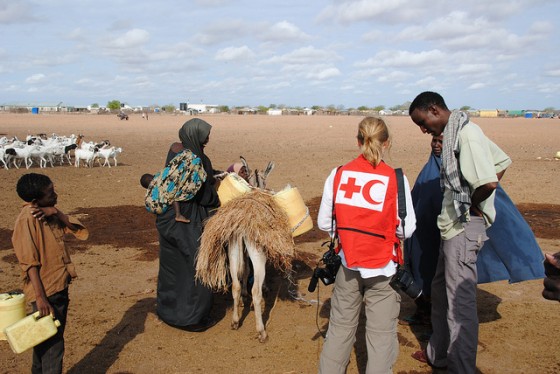
Aid workers are battling to reach certain drought-affected people in the Horn of Africa, where tens of thousands of people have died.
Tens of thousands of people, many of them children, have already died in Somalia – the seat of what is being called the Horn of Africa famine. While many news outlets focus on Rupert Murdoch, for whom oil shale in Israel is likely a dwindling concern by now, we really ought to have our eyes on Djibouti, Eritrea, Ethiopia, Kenya, Somalia, Sudan and South Sudan, where global warming, climate change, higher carbon concentrations, whatever you want to call one of the most serious challenges humanity has ever faced, is presently, right now, starving millions of people to death. And we should be looking because we in the Middle East could be next.
Millions of people around the world will fast during Ramadan, and thousands will hide in the bathroom to sneak food.
I tread lightly. I am not a Muslim. I’m not religious at all, though enforced bible education is firmly rooted in my neurological framework. So, it is with grave respect that I tackle the question of fasting. Last year during Ramadan, I spent a week with an Egyptian family in Maadi, a relatively wealthy neighborhood just outside of Cairo.The Aref family were lovely, and I will cherish their kindness and generosity for a long time.
But it was perplexing for me to see my friends abstain all day from food or drink, often in extreme heat amidst power shortages, and then gorge themselves at night. And what are the consequences for people who in consideration of their health decide to relieve their thirst or hunger, particularly in harsh weather? A high school student recently penned an eye-opening op-ed in the Morocco Times addressing just this problem.
Suntech, the world’s leading solar panel maker, with 1,800MW of annual production last year in China, is now looking to Israel for its next launch of solar panels. With a panel made specifically to meet Israeli requirements, the top Chinese panel maker is making its debut in the tiny, parched, sunny nation with a new generation of high-efficiency solar modules, the Suntech 300W Vd series, with 72-cell modules of 6-inch black square cells per panel.
The series is designed to be tough, water conserving and lightweight enough for typical Israeli rooftops.
Ecco Ukka’s funky fabric jewelry pieces are green, fashion forward, and comfy all at the same time.
It’s not easy to make it cool to be green. Eco conscious designers – who believe that you can have sleek Prada-esque taste and environmental values at the same time – often have a hard time shedding the crunchy granola label. Occasionally a handful of eco designers make it to the high ranks of haute couture (as is the case with Lebanese designer Ziad Ghanem), and we hope that they keep bringing high eco fashion to the world. Liat Kadosh’s line of upcycled fabric jewelry – Ecco Ukka – is one more green design line that should make it there as well.
The verdant valleys in the Toubkal National Park stand in stark contrast to the dry, red mountain sides.
After my last visit to Toubkal National Park in Morocco’s high Atlas Mountains, where I ungracefully scrambled to the summit of its namesake in order to prove to myself and the world that I am cool enough to climb to the highest point in North Africa, I couldn’t walk properly for days after.
Over the weekend, I went back via the Ourika Valley. But this time, while there were moments of challenging hiking, my focus was on understanding the Berber people who live in small iron-red homes tucked into the side of steep slopes. With my talented mountain guide leading the way, I trekked across a handful of loose scree peaks and verdant valleys, occassionally stopping to drink mint tea with the locals, and admire their terraced agriculture plots. Naturally, what seems “so sustainable” has a more complicated background.
A municipal council in Denmark has rejected Better Place’s blue and gray electric vehicle chargers!
If powered renewably, Better Place electric vehicles can significantly reduce greenhouse gas emissions (unless you listen to Dan Rabinowitz). This potential transition to cleaner vehicles notwithstanding, one Danish municipal council has vetoed Better Place chargers because of their color. Frederiksberg Council claims that the chargers which accompany any new Better Place electric vehicle are not suitable for street installation because they are blue and gray, and not green.
Human genetic material and human gelatin – coming to your marshmallows and Jello soon?
Reading the ingredients list in any processed food is always thought-provoking. If you really want to know what those mysterious combinations of letters and numbers mean, you have to become adept at Internet research. So I suppose it could be argued that artificial colors and flavorings, the various forms of sugars, like that derived from GM beets, addictive chemicals, and strange substances like meat glue are actually good for us.
I mean, it’s intellectually stimulating – tracking down their origins and possible side effects. Like a puzzle or a good detective story, right?
Not.
Now how about human genes in your drug capsules, dessert, or cosmetics?
The latest stomach-turning development in the science of food processing is gelatin derived from human genetic material. According to the American Chemical Society, scientists at the University of Chemical Technology in Beijing, China, are working on culturing human collagen genes to yeast. In this highly synthesized process, the human-DNA-laden yeast does what yeast does so well, reproducing itself many times over and making massive amounts of gelatin. Human-derived gelatin.
The advantage in this gelatin over the conventional animal-based kind, is being able to get around allergic responses and risk of infectious diseases carried by animals, claim the Chinese scientists. Is it vegan?
Having spoken to a biochemist of my acquaintance who prefers to remain anonymous, it becomes clear that the gross-out factor is the major deterrent in our minds. There’s no question of cannibalism. It’s not necessary to boil down human bones or skin.
An inner-cheek swab would provide enough DNA to start the synthesis. According to my source, the manufacturing process is already well-known and widely used. And the original human material is so remote from the finished product that ethical concerns are irrelevant.
Well, it depends on what you consider ethical. To observant Jews and Muslim, not to mention vegetarians or vegans, this kind of food is abhorrent. In addition, humans are full of infectious diseases, just like animals, so the “cleaner than animal-based” argument seems specious.
Since this human-derived gelatin falls under the safe food category, it might not even be required to appear on labels. One more reason to avoid processed foods. As if we needed another reason.
Yet the scientist I spoke to brought up another issue: this kind of gelatin is essentially another genetically modified food. It’s not yet known how our bodies ultimately react to synthetic foods. We were born with enzymes that help us metabolize animal and vegetable foods, but handling synthetic foods wasn’t built into our body’s blueprint. They are viewed as irritants by our natural systems and treated as such.
Now, what’s an allergy? Reaction to an irritant, isn’t it? And with current theories about the origins of many cancers coming from constant cellular irritation, you really do have to pause for thought. Before you treat your child to GMO food, swallow a capsule, or apply makeup, that is.
More on creepy synthetic foods to avoid on Green Prophet:
Turkey imports more than three-quarters of its primary energy supply, primarily from Russia and Iran. The country’s energy ministry says it wants to become less dependent on foreign sources — but how sensible are its methods?
As Turkey faces a 10 percent growth rate in energy demand and unrest in the Middle East pushes oil and gas prices up, Turkey’s government has unveiled a new strategic plan to wean itself from foreign energy sources. Over the next four years, Energy Minister Taner Yıldız said last week, efforts to locate domestic oil and gas sources will “intensify”, and his ministry will continue trying to invest in nuclear power plants in Turkey.
This plan ignores the fact that Turkey’s richest energy resources lie above its soil, in the sun and wind. Turkey’s domestic energy policy does need a major overhaul — but the energy ministry seems to be heading in the wrong direction.

 Despite problems confronted on its own soil, Japan proceeds with its commitment to fund a photovoltaic project in Egypt.


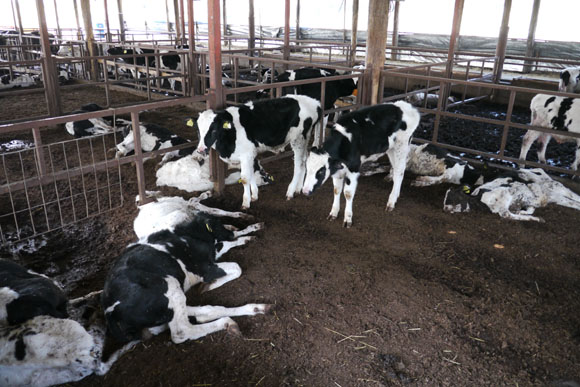
 “Fukushima cows” starving to death – but some got shipped to the meat markets.