

Israel’s BrightSource Energy is among the large-scale solar developers happy with the Australian government’s new carbon “tax” that was just carefully shepherded through parliament by Prime Minister Julia Gillard despite the sort of astroturfing hysteria normally perpetrated only in American media.
BrightSource Glad to See Carbon “Tax” Down Under
Do Fluorescent Chicks and Bunnies in Qatar Alienate Kids From Nature?
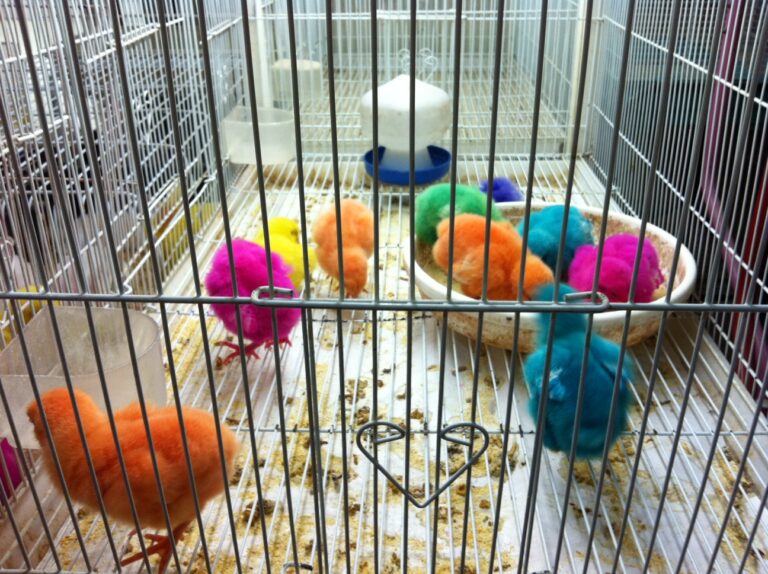
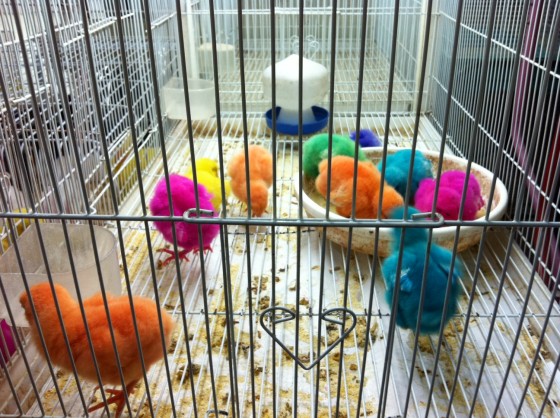 Science journalist Mike Shanahan took these pictures of dyed chicks while attending a conference in Qatar. He questions how antics like this impact children’s understanding of nature.
Sometimes we come across a story and think “this can only happen in the Middle East.” Renowned science journalist Mike Shanahan, who previously inspired us to consider the antidote to bigger, better, and more, ran across these brightly dyed chicks and bunnies in Doha, Qatar, where he attended the World Conference of Science Journalists, and asked a young journalism student how she felt about the animals being subjected to such kaleidoscopic antics.
Although she sited religious regions for believing that people in Qatar generally consider animals to be superior to humans, that has not been Green Prophet’s experience of how animals are treated in Egypt, the United Arab Emirates, or Morocco, for example, where illegal wildlife trafficking is common. Nonetheless, Mike raised another important question: how does this kind of treatment (it’s only cruel if the animals are licking at the dye, and only then if it’s toxic) affect children’s attitude towards animals?
Reuven Fields Brings Israeli Scrapiness to his Scrap Metal Sculptures
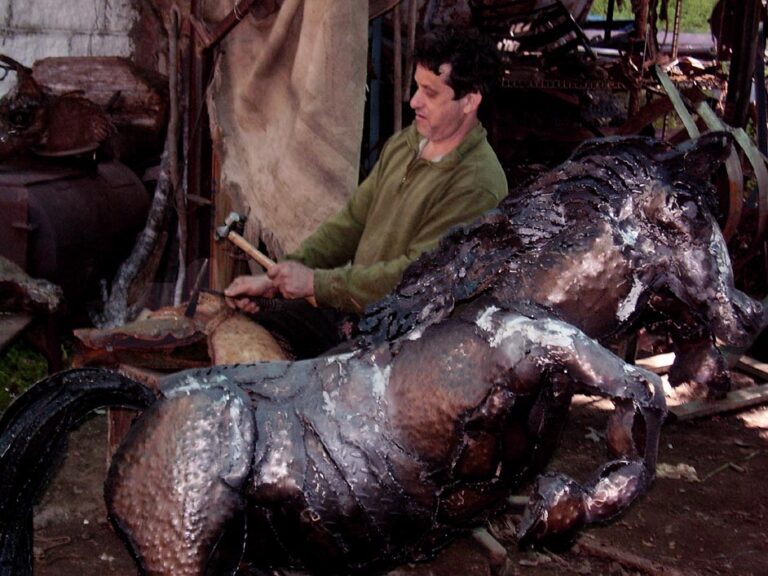
 From small-scale butterflies to large horses, Reuven Fields’ scrap metal sculptures breathe life into discarded pieces.
It takes a lot of energy to mine metals from the earth, and significantly less energy to recycle metals into something new. But if you can upcycle used metal scraps into something else (such as an upcycled aluminum can chair) without it undergoing a significant process? That’s ideal. And industrious. The concept has not evaded Reuven Fields, an Israeli artist currently living and working in North Carolina in the United States whose front lawn and studio are filled with sculptures fashioned out of scrap metal.
Black Sea Female Artists’ Association Brings Organic Paint To The Masses
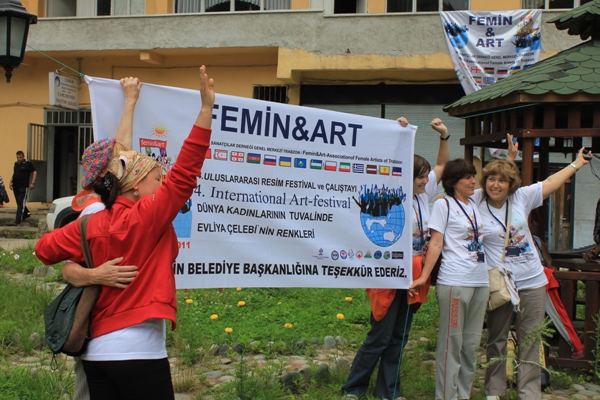
 The FEMİN-ART Women Artists Association from Trabzon, Turkey, one of the regions worst affected by the Chernobyl meltdown, has been awarded funding to produce root-based paints and distribute them for free.
Chemical-based paints have long been known to cause adverse health effects, from reduced sperm counts in men to raising the risk of miscarriage or birth defects for the children of pregnant women.
The link between organic living and better human health is obvious to residents of Trabzon, along the Black Sea coast of Turkey, an area seriously blighted by the Chernobyl nuclear meltdown of 1986. Now, with funding from the Turkey-European Union Civil Society Dialogue, a female artists’ association from the city of Trabzon will strive to replace standard chemical paints with ones from healthier, organic sources.
Make Ayran, a refreshing Turkish yogurt drink

Need a refreshing, sugar-free drink? Look no further than the container of natural yogurt in your fridge.
Known as aryan in Turkey and drunk plain, the cooling, soothing yogurt-based drink is popular all over the Middle East. Syrians and Lebanese call it laban ayran. In Iraq and Jordan it’s called shenina.
Traditional Middle Eastern recipes transform yogurt into labneh, a creamy, semi-solid cheese as well (and here’s our labneh recipe). In its turn, labneh is combined with vegetables like our eggplant with tahini and labneh dish. But the start is always yogurt.
Rather than fill up on drinks sweetened with sugar or aspartame, go for something cool and salty. The salt is part of what makes aryan so refreshing. As we endure the summer heat, we need to replace some of the minerals lost through perspiration, and aryan is a pleasant way to do it.
Aryan, Turkish Yogurt Drink Recipe
1/3 glass yogurt (natural)
1/3 glass water
1/3 teaspoon of salt
1/3 glass of crushed ice
1. Combine all the above except the ice and beat well.
2. Put the ice into a tall glass and pour the blended yogurt in.
That’s it. Try using soda water for a change, or add a little crushed mint to the glass. Then you’ll have doogh, the Iranian version of aryan.
Enjoy!
More lip-smacking Middle-Eastern recipes on Green Prophet:
Art Exhibition To Showcase Arabia’s Wild Side
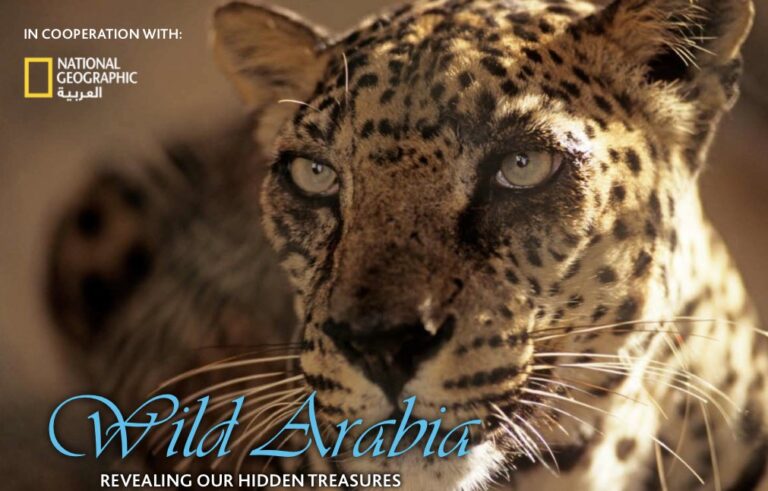
 Gulf conservation groups have teamed up with National Geographic Al Arabiya to showcase 100 stunning images of Arabian species
The Gulf countries of the Middle East may be more famous for their outlandish construction projects, endless deserts and malls than their biodiversity but one art exhibition is hoping to change all that. A large coalition of conservation groups have teamed up with National Geographic Al Arabiya to launch a massive outdoor art exhibition to tackle people’s perceptions and showcase a wide variety of species from the Arabian peninsular.
Rabbit-Killing Pesticide Kills Dubai Man Instead

These innocuous-looking pellets release deadly fumes that killed a young IT professional in Dubai last week.
This is the second pesticide-related tragedy we are covering this week. A few days ago, no fewer than 15 top racing camels in Qatar died after their breeder administered a toxic chemical to their skin, which the owner blames on the poor quality of the product he received. Potentially more serious, though we value all living creatures, several people throughout the United Arab Emirates have died this year as a result of the wrongful application of a pesticide that is typically used to kill moles, rabbits, and rats. The most recent man, Raghavendra Shivaji, died last week Friday after inhaling toxic gases from a neighboring apartment.
Siemens Asks Middle Eastern Students to Think About How to Build Sustainable Cities in the Desert

 The question has been asked – how would you build a sustainable city in the desert?
Siemens, the German energy corporation, has been active in the Middle East over the past couple of years since it bought a couple of solar companies in Israel. Now it is playing a role again as it has just launched a regional Siemens Student Award open to bachelor and master students across the Middle East, asking participants to answer one central question: how to build sustainable cities in the desert. If past behavior is any indicator then solar energy is part of Siemens’ sustainable plan for the region, but it appears that they want to know what the locals think.
Greenpeace Lebanon’s “Generation C”: Young, Connected, and Making a Difference
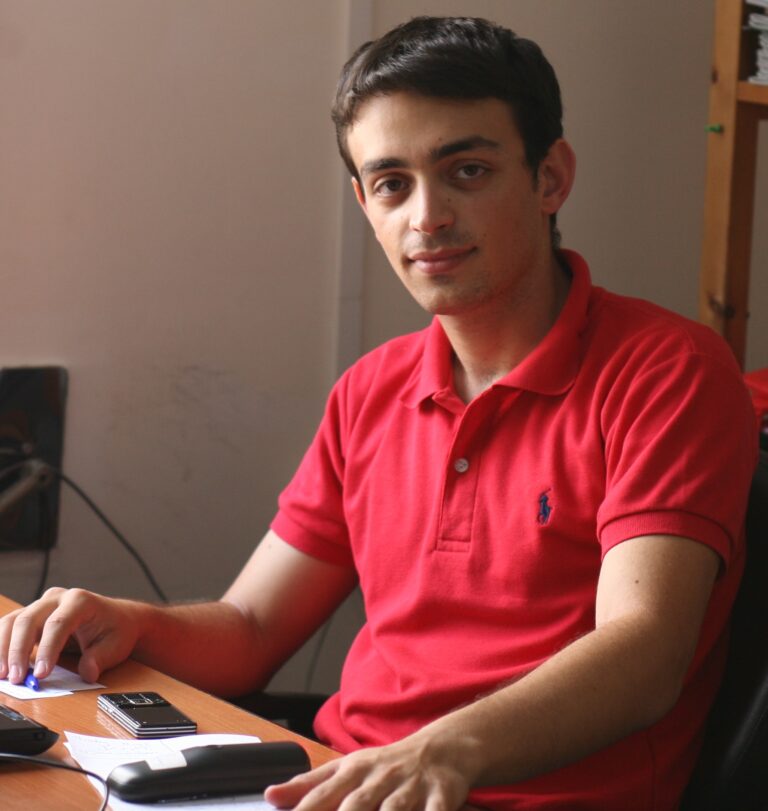

From a small office on Bliss Street in Beirut, overlooking the Mediterranean sea, a small team of young Lebanese activists are busy trying to expose environmental injustices, change attitudes, recruit volunteers, lobby and fundraise, in a country where every day politics often comes in the way of any environmental reform.
Fresh out of college, Campaigner Rayan Makarem has his tasks set: complete the programs launched by the founders of Greenpeace Lebanon while coordinating with the global and regional offices to initiate new Pan Arab campaigns from the only official Greenpeace office in the Arab world.
Bats Get Wired With GPS
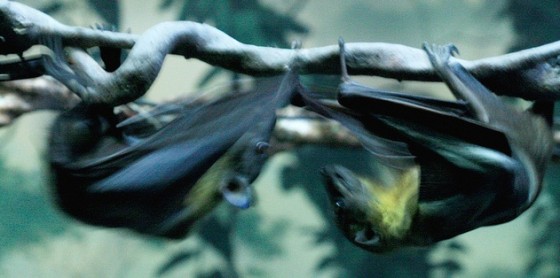 Blind as a bat? New research from Israel shows how Egyptian fruit bats navigate in wide areas with internal compass.
If you ever watch nature shows, it might strike you as funny that the ones who apparently love the animals most are causing the most suffering. At least that’s how it appears on camera. Sharks get chunks of skin cut from them for testing, and they are wired with bulky devices that slow down movement and no doubt cause the other sharks to laugh at them, or at least alienate the tagged animal from the non-tagged. I too was involved in animal tracking research once. We trapped small mammals, cut their toes to tag them and then followed them in a rude and rough manner.
Now, a new kind of small GPS advice, fitted to small fruit bats can help researchers track and trace bats in a less invasive way. Researchers in Israel have studied bats in army bunkers. Now researchers wanted to study how bats navigate in large areas, and how they return to individual trees each and every night. Knowing more about their behavior and habitat can help scientists preserve animals and nature. Strengthening bat populations can also cut down on insect pests, since some bats feast on bugs.
Jordan Pushes On With Its Nuclear Plans
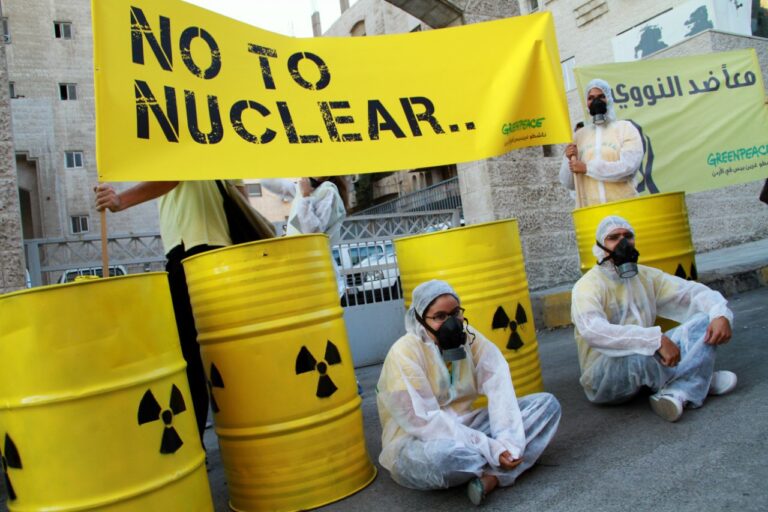
 Jordan is now months away from announcing the company they have selected to construct the country’s first nuclear reactor
Despite growing protests against the country’s nuclear plans from residents and environmentalists, the Jordanian government is pressing on with its nuclear programme. According to the local press, the government is expected to announce the name of the winning bid in November as the Jordan Atomic Energy Commission is currently assessing offers from three shortlisted companies. Here at Green Prophet, we have covered the mounting protests from the start and explored their concerns over safety and feasibility as well as the government’s justification of the nuclear reactor.
Could Morocco be First to Get 42% Solar?

It might seem counter-intuitive, but an undeveloped North African nation could be the first in the world to get 42% of its electricity from solar power. It has set its policy to achieve that end. And, startlingly, undeveloped nations actually do now lead the world in the addition of new renewable energy. France has just stepped forward to help. (Paris Gives Morocco’s Solar Plan a Frank Chance)
The extraordinary Moroccan Solar Plan unveiled last November is aimed at achieving a hugely ambitious 42% renewable energy target by 2020, higher than California’s 33% and second only to Portugal’s 45%. Unlike them, it is putting all of its renewable energy eggs in one basket. Solar. All kinds of solar. Fourteen percent is to carved out for just concentrated solar power, CSP. So why Morocco?
Israel’s Advantix to Wring out the Soggy Air of the USA

In our warming world, ever more moisture is being held by ever warmer air. This means more places now suffer from humid heat more of the time. Humid heat is a problem that regular air conditioning technologies have failed to successfully address.
An ingenious solution from Israel’s Advantix, inspired by its native Dead Sea, could bring relief with a different approach.
Invitation for a Permaculture Tour in Israel
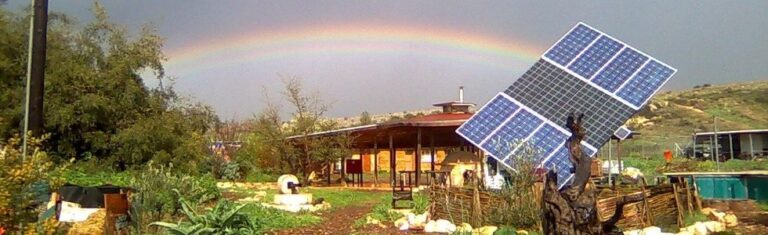
 See how permaculture is spreading across Israel during an international tour at the end of September.
Permaculture, or the sustainable use of land and agriculture, has thankfully been spreading across the Middle East in recent years. Permaculture farms have sprouted seeds in Palestine, grassroots permaculture initiatives have popped up in urban settings such as Jerusalem, and permaculture courses are taught in the area as well. Apparently, permaculture is gaining force, and people are taking notice. In order to make it easier for both the Israeli and the international community to know what’s going on permaculture-wise in Israel, an International Permaculture Tour has been organized between September 26-October 2, 2011.
Burning Egypt’s Agricultural Waste

It’s black cloud season. Again. But there’s no reason to pull out the party favors just yet.
It’s the anniversary of the Black Cloud in Egypt, but nobody’s celebrating. This is the time of year that farmers typically burn off their agricultural waste because they don’t know what else to do with it. When set to flames, this waste produces unimaginable plumes of thick black smoke that billows into the atmosphere, creating respiratory hazards that put much industrial pollution to shame. But the government has been notoriously slow to address this problem, which Abu Bakr al-Shahawy, Head of the Environment Ministry’s Central Department, claims is becoming increasingly serious.
The problem is most pronounced in the Central and Eastern Delta Governorates of Egypt, where farmers burn off their hay and straw en masse – a combined 30 million tons every year. The smog dubbed by locals as “the black cloud” gets caught up in wind currents and hovers over Cairo around August every year.
Al-Shahawy lays blame at the Agricultural Ministry’s door, and told Almasry Alyoum that this department should be responsible for helping farmers dispose of their agricultural waste in a more appropriate manner than has a less disastrous environmental impact. Some farmers such as Ibrahim al-Sayyed from Daqahlia are well aware of the dangers of burning their waste and are urging the government to provide safer alternatives.
Adel Zayed, who is the Governor of Qalyubiya, affirms that agricultural waste is a burdensome dilemma and that he is looking to the private sector for help. This won’t be the first time that the private sector has bailed out the environment. In one of the country’s biggest success stories, Veolia moved into Alexandria and stepped up the city’s once unmanageable solid waste system.
Meanwhile, environmental activist Hisham Sherif told Almasry Alyoum that the waste should be turned into fertilizers, and that following his urging, they are looking into doing so. In the meantime, break out the gas masks ladies and gents.
More on Egypt’s black cloud and pollution:
A Black Smog-Craft Chokes Cairo’s Skies
While You Eat Rice and Breath Clear, It’s Black Cloud Season Again
Blackouts and Black Clouds: What’s Wrong with Egypt’s Environmental Policies?