It's sea turtles which may in the end save islands in the Seychelles. They may also better help us understand climate change. Like rings on a tree, scientists have found a way to read sea turtle shells and how they are impacted by climate change tells a story.
For centuries, the Sámi shaman drum was one of the most powerful sacred objects in northern Europe, and one of the most feared by church and state. If ISIS looks bad to us today for its religious fundamentalism, Christians were just as fervent.
In a real emergency, romance takes a back seat to physics, panic, and how fast 150 people can squeeze through a narrow tube. The Federal Aviation Administration says every aircraft must be evacuated within 90 seconds. That’s the gold standard. But new research suggests that in the real world, especially as we age, that number might be more aspirational than achievable.
Research from the Wildlife Conservation Society (WCS) and the University of Queensland, published in Ocean & Coastal Management, found that nearly three out of four marine protected areas (MPAs) worldwide are exposed to sewage pollution.
At a time when climate anxiety can feel abstract and overwhelming, and being Jewish something people may need to hide in big cities, Adamah Los Angeles is trying something different: turning Jewish values into local climate action with dirt-under-the-fingernails practicality.
It's sea turtles which may in the end save islands in the Seychelles. They may also better help us understand climate change. Like rings on a tree, scientists have found a way to read sea turtle shells and how they are impacted by climate change tells a story.
For centuries, the Sámi shaman drum was one of the most powerful sacred objects in northern Europe, and one of the most feared by church and state. If ISIS looks bad to us today for its religious fundamentalism, Christians were just as fervent.
In a real emergency, romance takes a back seat to physics, panic, and how fast 150 people can squeeze through a narrow tube. The Federal Aviation Administration says every aircraft must be evacuated within 90 seconds. That’s the gold standard. But new research suggests that in the real world, especially as we age, that number might be more aspirational than achievable.
Research from the Wildlife Conservation Society (WCS) and the University of Queensland, published in Ocean & Coastal Management, found that nearly three out of four marine protected areas (MPAs) worldwide are exposed to sewage pollution.
At a time when climate anxiety can feel abstract and overwhelming, and being Jewish something people may need to hide in big cities, Adamah Los Angeles is trying something different: turning Jewish values into local climate action with dirt-under-the-fingernails practicality.
It's sea turtles which may in the end save islands in the Seychelles. They may also better help us understand climate change. Like rings on a tree, scientists have found a way to read sea turtle shells and how they are impacted by climate change tells a story.
For centuries, the Sámi shaman drum was one of the most powerful sacred objects in northern Europe, and one of the most feared by church and state. If ISIS looks bad to us today for its religious fundamentalism, Christians were just as fervent.
In a real emergency, romance takes a back seat to physics, panic, and how fast 150 people can squeeze through a narrow tube. The Federal Aviation Administration says every aircraft must be evacuated within 90 seconds. That’s the gold standard. But new research suggests that in the real world, especially as we age, that number might be more aspirational than achievable.
Research from the Wildlife Conservation Society (WCS) and the University of Queensland, published in Ocean & Coastal Management, found that nearly three out of four marine protected areas (MPAs) worldwide are exposed to sewage pollution.
At a time when climate anxiety can feel abstract and overwhelming, and being Jewish something people may need to hide in big cities, Adamah Los Angeles is trying something different: turning Jewish values into local climate action with dirt-under-the-fingernails practicality.
It's sea turtles which may in the end save islands in the Seychelles. They may also better help us understand climate change. Like rings on a tree, scientists have found a way to read sea turtle shells and how they are impacted by climate change tells a story.
For centuries, the Sámi shaman drum was one of the most powerful sacred objects in northern Europe, and one of the most feared by church and state. If ISIS looks bad to us today for its religious fundamentalism, Christians were just as fervent.
In a real emergency, romance takes a back seat to physics, panic, and how fast 150 people can squeeze through a narrow tube. The Federal Aviation Administration says every aircraft must be evacuated within 90 seconds. That’s the gold standard. But new research suggests that in the real world, especially as we age, that number might be more aspirational than achievable.
Research from the Wildlife Conservation Society (WCS) and the University of Queensland, published in Ocean & Coastal Management, found that nearly three out of four marine protected areas (MPAs) worldwide are exposed to sewage pollution.
At a time when climate anxiety can feel abstract and overwhelming, and being Jewish something people may need to hide in big cities, Adamah Los Angeles is trying something different: turning Jewish values into local climate action with dirt-under-the-fingernails practicality.
It's sea turtles which may in the end save islands in the Seychelles. They may also better help us understand climate change. Like rings on a tree, scientists have found a way to read sea turtle shells and how they are impacted by climate change tells a story.
For centuries, the Sámi shaman drum was one of the most powerful sacred objects in northern Europe, and one of the most feared by church and state. If ISIS looks bad to us today for its religious fundamentalism, Christians were just as fervent.
In a real emergency, romance takes a back seat to physics, panic, and how fast 150 people can squeeze through a narrow tube. The Federal Aviation Administration says every aircraft must be evacuated within 90 seconds. That’s the gold standard. But new research suggests that in the real world, especially as we age, that number might be more aspirational than achievable.
Research from the Wildlife Conservation Society (WCS) and the University of Queensland, published in Ocean & Coastal Management, found that nearly three out of four marine protected areas (MPAs) worldwide are exposed to sewage pollution.
At a time when climate anxiety can feel abstract and overwhelming, and being Jewish something people may need to hide in big cities, Adamah Los Angeles is trying something different: turning Jewish values into local climate action with dirt-under-the-fingernails practicality.
It's sea turtles which may in the end save islands in the Seychelles. They may also better help us understand climate change. Like rings on a tree, scientists have found a way to read sea turtle shells and how they are impacted by climate change tells a story.
For centuries, the Sámi shaman drum was one of the most powerful sacred objects in northern Europe, and one of the most feared by church and state. If ISIS looks bad to us today for its religious fundamentalism, Christians were just as fervent.
In a real emergency, romance takes a back seat to physics, panic, and how fast 150 people can squeeze through a narrow tube. The Federal Aviation Administration says every aircraft must be evacuated within 90 seconds. That’s the gold standard. But new research suggests that in the real world, especially as we age, that number might be more aspirational than achievable.
Research from the Wildlife Conservation Society (WCS) and the University of Queensland, published in Ocean & Coastal Management, found that nearly three out of four marine protected areas (MPAs) worldwide are exposed to sewage pollution.
At a time when climate anxiety can feel abstract and overwhelming, and being Jewish something people may need to hide in big cities, Adamah Los Angeles is trying something different: turning Jewish values into local climate action with dirt-under-the-fingernails practicality.
It's sea turtles which may in the end save islands in the Seychelles. They may also better help us understand climate change. Like rings on a tree, scientists have found a way to read sea turtle shells and how they are impacted by climate change tells a story.
For centuries, the Sámi shaman drum was one of the most powerful sacred objects in northern Europe, and one of the most feared by church and state. If ISIS looks bad to us today for its religious fundamentalism, Christians were just as fervent.
In a real emergency, romance takes a back seat to physics, panic, and how fast 150 people can squeeze through a narrow tube. The Federal Aviation Administration says every aircraft must be evacuated within 90 seconds. That’s the gold standard. But new research suggests that in the real world, especially as we age, that number might be more aspirational than achievable.
Research from the Wildlife Conservation Society (WCS) and the University of Queensland, published in Ocean & Coastal Management, found that nearly three out of four marine protected areas (MPAs) worldwide are exposed to sewage pollution.
At a time when climate anxiety can feel abstract and overwhelming, and being Jewish something people may need to hide in big cities, Adamah Los Angeles is trying something different: turning Jewish values into local climate action with dirt-under-the-fingernails practicality.
It's sea turtles which may in the end save islands in the Seychelles. They may also better help us understand climate change. Like rings on a tree, scientists have found a way to read sea turtle shells and how they are impacted by climate change tells a story.
For centuries, the Sámi shaman drum was one of the most powerful sacred objects in northern Europe, and one of the most feared by church and state. If ISIS looks bad to us today for its religious fundamentalism, Christians were just as fervent.
In a real emergency, romance takes a back seat to physics, panic, and how fast 150 people can squeeze through a narrow tube. The Federal Aviation Administration says every aircraft must be evacuated within 90 seconds. That’s the gold standard. But new research suggests that in the real world, especially as we age, that number might be more aspirational than achievable.
Research from the Wildlife Conservation Society (WCS) and the University of Queensland, published in Ocean & Coastal Management, found that nearly three out of four marine protected areas (MPAs) worldwide are exposed to sewage pollution.
At a time when climate anxiety can feel abstract and overwhelming, and being Jewish something people may need to hide in big cities, Adamah Los Angeles is trying something different: turning Jewish values into local climate action with dirt-under-the-fingernails practicality.
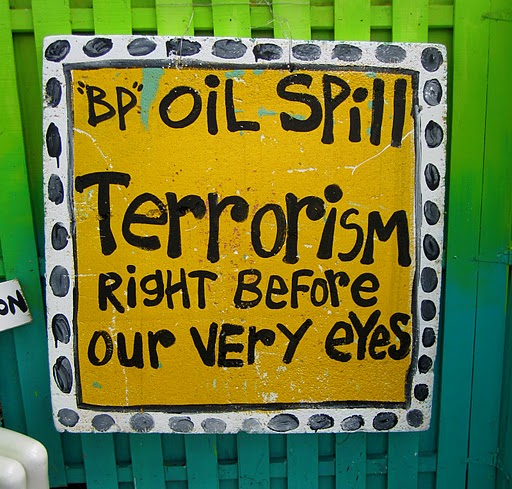
Lobbying group EthicalOil.org is challenging Saudi Oil on the basis of women’s rights.
A Canadian lobbying group is claiming that Canada’s oil is somehow more “ethical” than Saudi Arabian oil because the Saudis don’t just destroy the climate we evolved to live in but also abuse women’s rights. Now, I am as feminist as they come, but the civil rights of women living now in Saudi Arabia are insignificant, ethically, compared with destroying the climate our civilization depended on.
Bush era US climate science policy seems to have moved north to Canada, argues Susan.
A student researcher at the University of Toronto has exposed a draconian shut-down of climate science in Canada. This is a first for Canada – an advanced democracy, but a democracy that has the resource-curse of vast oil sands potential. James Birch does research in a thirty person lab focused on climate change research and adaptations headed by Dr. Brad Bass, the co-recipient of the IPCC Nobel Prize for climate science.
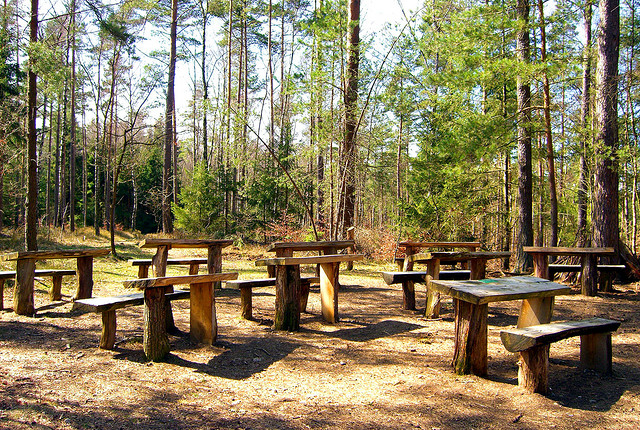
How should teachers incorporate environmental ethics and lessons on sustainability into their classrooms? That’s the focus of a four-year educational ecoliteracy project — Turkey’s first — which has just begun.
A training program for Turkish teachers kicked off this week in an unusual classroom: an arboretum in the northwestern province of Yalova. Beneath Yalova’s graceful willows, 75 teachers will spend the next week studying environmental issues from soil erosion to ethical forestry. They will be Turkey’s first certified “ecoliteracy instructors”, authorized by the Ministry of Education to share principles of sustainability with their schools.
It is expected to fall today: a dead six-ton satellite will hit earth today, NASA predicts. Where it will fall is anyone’s guess. Iran, Israel, India, Illinois?
Space junk is becoming a serious environmental concern, especially when it starts falling back to planet earth. NASA has issued an advisory that an old satellite, the Upper Atmosphere Research Satellite, 20 years old, will be the biggest piece of NASA space junk to fall from the sky in 32 years. Green Prophet readers everywhere: put on your helmets, even if NASA believes it will fall into water. We are not taking any chances.
According to NASA, the space junk is likely to miss North America entirely (lucky them), and when it hits our earth’s atmosphere some 1,200 pounds or 544 kilograms are expected to break into 26 pieces, with the biggest chunk weighing 300 pounds. NASA insists the space junk, is not a risk for humans. Well, there is only a one in 3,200 chance a person will get hit, says NASA.
“The Mega Leisure Destination on the Red Sea” has sprung an oily leak so serious that the Egyptian authorities have declared a state of emergency, according to Almasry Alyoum. General Petroleum Corporation reported that one of their wells is leaking in three Gamsha spots north of Hurghada – a spot that is popular among tourists and the scene a very serious oil spill covered up by authorities last year.
Called a development comprised of “environmentally conscious design” by property developers eager to turn the area’s 39 kilometers of shoreline into the next Dubai, Gamsha is just one among numerous developments along the Red Sea that compromise its long term health. We recently reported that temperatures in the Red Sea (in concert with rising air temperatures) are escalating faster than the global average. This latest oil spill won’t make it hotter, but it’s bound to kill off coral a lot sooner. Authorities are still working on the spill, among numerous other emergencies.
Instead of standard apples and honey, put some creative green thought into your Rosh Hashanah gifts this year.
The Jewish New Year, or Rosh Hashanah 2011 is quickly approaching next week on September 28, and for many Jewish people this is a time of gift-giving in the new Jewish calendar year 5772. Gift giving is hard enough – it is difficult to find that perfect gift to show someone that you love them and understand their tastes. But it can be even more difficult when you’re faced with the task of giving a gift or gift box to someone who is eco-conscious (and who, therefore, may be against commercial gifts that use up various resources).
So here’s a helpful gift guide for some different types of greenies: the Compulsive DIY-er (or DIY Appreciator), the Foodie, the Interior Design Junkie, and the Eco Fashionista. Read on!!!
Could reckless driving in Lebanon come to an end with the new Cheyef 7alak crowd sourcing campaign?
There’s something uncanny about seeing yourself on video: somehow your manifested self looks and sounds nothing like the inner self. Your voice doesn’t sound like your own, your nose looks bigger than you think, and you see all kinds of physical gestures you never knew you made. Cringe.
At least, that was my experience. Our editor in chief basically agreed that I look like a complete dork in this You Tube clip compiled for a Mashallah news conference earlier this year, though at least I got geeked out for a good cause. But how does it feel when a stranger takes a photo or video clip of you acting like a complete jerk on the road? Embarrassed? Violated? Enough to change your behavior?
After fighting over the Nile for the last several months, Egypt and Ethiopia have kissed and made up.
After a decades-long monopoly over the Nile river, Egypt became defensive when Ethiopia stood up to reclaim its rightful share of water. In addition to making public a plan to build what is now known as the Grand Renaissance Dam in March this year, Ethiopia corralled several other Nile Basin countries in order to re-draft legislation that previously gave Egypt almost exclusive rights to the river that serves 160 million people. The trouble is, 83 million Egyptians depend on the Nile for nearly all of their water, which is why, after a lot of posturing on both sides, Egypt has finally made friends with Prime Minister Meles Zenawi.
Water conservation policies are being promoted in the naturally water poor nation of United Arab Emirates
Considering that the United Arab Emirates is located in harsh and arid desert, the fact that the average resident uses around 364 liters of water a day – way above the global average of 200 litres- is surprising. Natural groundwater is supplemented with desalinated water and treated water to boost supplies and provide a steady supply of clean water to residents (well, most of the time). However, a recent report which found that water demand is likely to double by 2030 in the UAE has got government authorities worried and they are now promoting the benefits of water conservation.
New Life at the Dead Sea: How do they survive and what is their energy source is the next big question.
All the attention from the naked Israelis at the Spencer Tunick photo shoot at the Dead Sea has brought good vibes to the dying salt lake: Israeli and German scientists say they have found new things for us to think about: deep replenishing springs and new life below fissures in the floor. Ben Gurion University researchers discovered deep springs on the floor of the Dead Sea, which provide fresh water to the rapidly dwindling lake. In parallel, German researchers has found new forms of life growing around the fissures in the sea floor. Click below to see the gallery.
“The chapter (of building nuclear plants) is closed for us. We will no longer be involved in managing the building or financing of nuclear plants.”
Loscher went on to say that shifting the attention of Siemens towards renewable energy is “the project of the century”. This marks an abrupt shift for a company that only two years ago announced it was partnering with a Russian company to construct as many as 400 new nuclear power plants by the year 2030.
Siemen’s decision to leave the nuclear energy business goes along with German Chancellor Angela Merkel’s announcement that all of Germany’s remaining 17 nuclear power plants will be shut down by the year 2020. (They were shut down by 2023).
Afterwards, Siemens bought a 40% state in another Israeli solar energy company, Arava Power. Arava Power has signed deals with 15 Negev and Arava desert region communities to provide them with electricity from solar energy. They have an installation of about 5 MW already installed at Kibbutz Ketura.
Siemens still has some on-going nuclear energy plant projects to complete, but no new projects will be undertaken. It will continue to offer steam turbines, generators, control systems and the various other components for use in thermal power plants, including nuclear ones. Geo-thermal power plants such as those in Iceland will be one of Siemen’s new priorities.
The Middle-Eastern pantry staple can be made at home easily.
Pomegranates come into season now, just as summer fades and before the Jewish New Year, Rosh Hashanah. Fresh pomegranate seeds are one of the traditional Rosh HaShanah simanim (symbolic foods) on the holiday table. Downtown juice stands everywhere in the Middle East offer glasses of sweet and sour, dark-red pomegranate juice. And to get pomegranate molasses for drizzling over our eggplant with tahini/labneh sauce or adding to our classic muhamarra recipe, you usually have to trek out to a store and buy it.
Now you can make this versatile Middle-Eastern flavoring at home, with 5 minutes’ active preparation and about an hour of letting it simmer down on the stove while you’re doing other things. There’s no comparison between the fresh flavor of your own pomegranate molasses and that of the commercial stuff, especially if your juice comes from local and organic fruit. And you can adjust the sweetness/tartness to your taste by adding or reducing the sugar and lemon juice. With all of three ingredients to work with, your own pomegranate molasses can only go right.
Homemade Pomegranate Molasses Recipe
Ingredients:
4 cups pure 100% pomegranate juice (bottled or fresh)
2/3 cup sugar
1/3 cup freshly squeezed lemon juice
Pour pomegranate juice, sugar, and lemon juice into a small saucepan.
Heat up over medium until the sauce begins to simmer lightly. Stir to dissolve sugar. Allow the liquid to simmer very lightly for 60-80 minutes, stirring every 10 minutes, till the liquid reduces by 75% to about 1 cup of molasses.
The liquid is ready when it has a light syrupy consistency and coats the back of a spoon. Don’t let it thicken too much, or it will harden when it cools.
Remove from heat. The syrup will continue to thicken as it cools. If you’re unsure about the consistency, measure the reduce liquid– it should be between 1 and 1 1/4 cups of syrup. If it’s a lot more liquid than that, continue reducing.
After the syrup cools completely, store it in an airtight jar or container in the refrigerator for up to 4 weeks.
Amnesty International is calling for an investigation into a report that a female activist was tortured in custody following protests over Lake Orumieh’s destruction in Iran
Amnesty International has received information that she was beaten by plain clothes officers so severely that she temporarily lost hearing in her left ear and was unable to move one of her arms. She was then interrogated at length at a detention centre and then forced to sign a document she was unable to read as her glasses had been confiscated.
Ms. Farid (pictured below) is one of several hundred environmental protestors believed to have been arrested since late August 2011 when the campaign to end the destruction of Lake Orumieh intensified. Protests were triggered by the rejection of an emergency bill put to the Iranian parliament on August 17 to raise the water level of Lake Orumieh by diverting water into it from the Aras River.
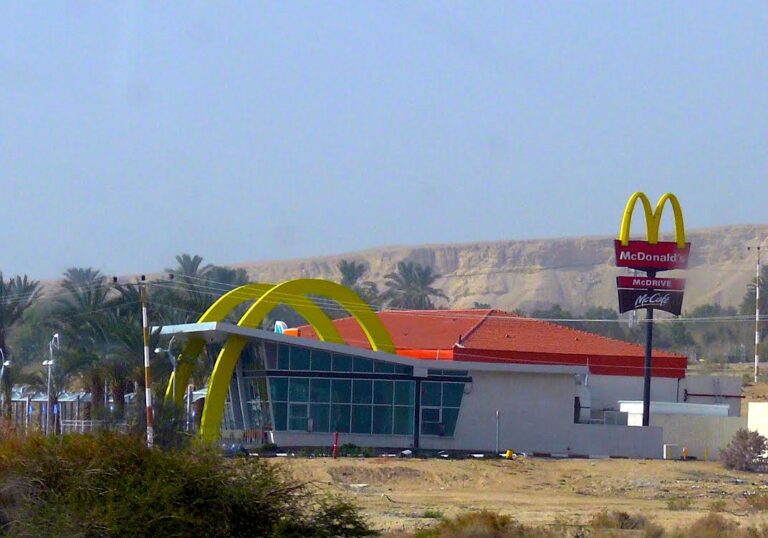
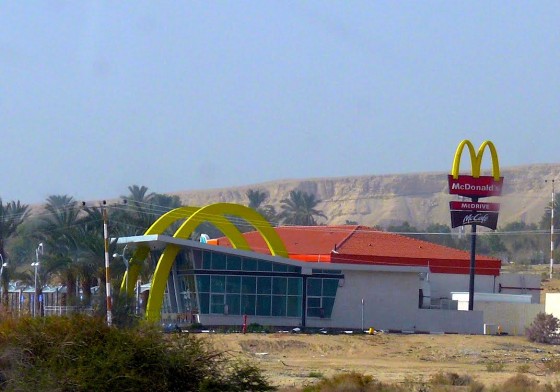
Zionists believe that the McDonalds at Masada, a sacred Jewish site, cuts to the heart of their strongest ideals.
It takes serious exercise to burn off a 480 calorie Big Mac, which is perhaps why Omri Padan – the steward of all 130 branches of McDonalds in Israel – decided to put the latest at the foot of Masada. Situated along the Dead Sea, where 1,000 Israelis got naked over the weekend, these well-preserved Roman ruins are reached by the “snake path” – a long and steep footpath that winds around a series of switchbacks before reaching the summit. It’s a challenging walk that will slash at least part of that burger, but Zionists who consider this site sacred are not amused.
Masada is one of the most important sites in Jewish history. After the Roman Empire destroyed their temple in Jerusalem circa AD70, a sect of Jews called the Sicarii Zealots fled to Masada, where for three years they managed to hold on to their identity.
When the Roman 10th Legion eventually caught up to the rebels and prepared to lay siege, the zealots committed mass suicide. They were determined not to be enslaved by imperialist forces. For Jews in both Israel and the diaspora, this story is a reminder to hold on to their values in the face of all adversity, and at all costs.
So when the McDonalds franchise – one of the most prominent symbols of modern imperialism – opened a branch in the visitor center of their sacred place, they began to mount a near-silent campaign against it.
According to Indy News Israel, Benny Katz of the Semitic Action movement correlates the initial “explosion” of foreign chains in Israel, along with American TV and products, with unchecked westernization.
Katz told Indy News (now :
…But the fact that they’re now opening up at Masada, one of the most sacred sites of Jewish heroism and a national symbol of resistance to foreign imperialism, shows that the forces of global capitalism are taking the fight to the heart of the Zionist narrative.
Katz is behind a campaign to bring down McDonalds in Masada, but to date it has been largely ineffective. Although Indy News reports that a facebook boycott page has been gaining momentum, it only has 111 supporters. Seems like they will have to gather much more steam than that to shut down the branch, which has already opened.
In the meantime, anyone who eats McDonalds before heading up to the ruins should forego the cable cars and take full advantage of the site’s built-in exercise program. It could be a “rule.”
SEKEM, an Egyptian organic farming community has been chosen as one of 16 ‘Sustainability Champions’ in the developing world which are tackling environmental and social problems
A recent report by the World Economic Forum has identified 16 successful companies from as far afield as Costa Rica and China which have shown great environmental awareness and tackled social problems. These ‘New Sustainability Champions’ include just one company from the Middle East and North Africa region- SEKEM.
Established by Dr. Ibrahim Abouleish in 1977, SEKEM is a truly unique enterprise which integrates social, economic and environmental development in an organic farming community just outside, Cairo. Today the company is run by Dr. Abouleish’s son Helmy and what started as a 70-hectre organic farm is now a several thousand hectres farming community which champions sustainable agriculture.
After years of working to improve the soil quality of reclaimed land from the desert on the southeastern edge of the Nile Delta, SEKEM harvested their first crop of organic fruits, vegetables and spices in 1983. They now produce organic fruit, vegetables, cotton, cereals, herbs and herbal medicines which are all grown without pesticides or fertilizers.
The main advantages of organic agriculture in these reclaimed desert lands is that it helps to improve the soil, it optimises water use and also supports more workers than conventional farming. SEKEM, which means ‘vitality from the sun’ in Egyptian hieroglyphics, currently employs around 2,000 people.
SEKEM farms use organic waste fertilizers which are able to hold more water than chemically fertilized land- something which is ideal for the water scarce country. Working with Egypt’s Ministry of Agriculture, SEKEM also demonstrated the possibility of successfully growing organic cotton by using biological pheromones to control cotton insects. By 2000, the use of pesticides on Egyptian cotton fields had fallen by over 90% and 80% of Egyptian cotton is now grown without synthetic insecticides.
Indeed, Helmy Abouleish has said that a 100% conversion of global agricultural land into organic agriculture would transform the agricultural sector from a significant contributor to climate change into a net carbon sink.
As well as various subsidiaries involved in the agricultural field, such as Conytex which produces children’s garments from organic cotton, one of SEKEM’s initiatives is the Egyptian Society for Cultural Development. Founded in 1984, the society has helped build a kindergarten, the SEKEM primary and secondary school with 300 pupils, a vocational training centre, an institute for Adult Education, an education programme for disabled children as well as a SEKEM medical centre which treats 30,000 people a year.
Workers all enjoy great working conditions, a fair wage and run remarkably well-managed farms and beautiful buildings surrounded with the fragrances of chamomile and mint. In 2003, the eco-friendly business won the prestigious Right Livelihood Award – known as the ‘Alternative Nobel Prize’ – which honours those working on the most urgent challenges facing the world.

 Lobbying group EthicalOil.org is challenging Saudi Oil on the basis of women’s rights.





 Could reckless driving in Lebanon come to an end with the new Cheyef 7alak crowd sourcing campaign?

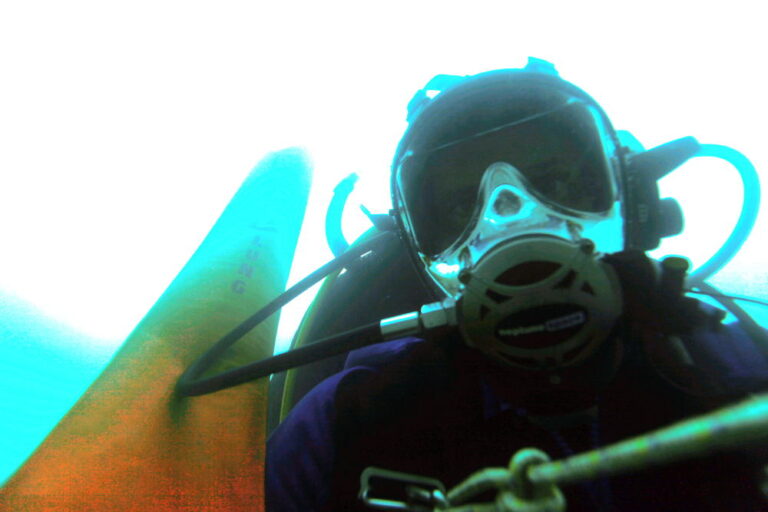
 New Life at the Dead Sea: How do they survive and what is their energy source is the next big question.
 Siemens CEO Peter Loscher on nuclear energy: “This chapter is closed for us”

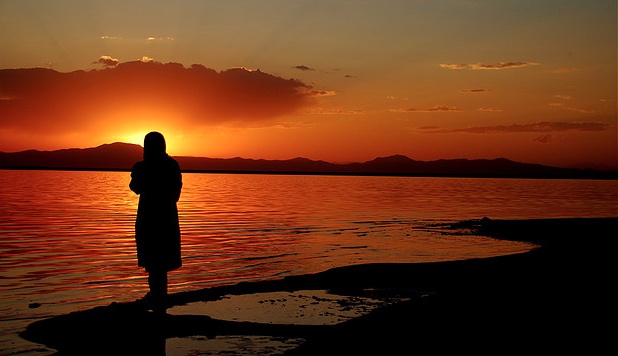
 Amnesty International is calling for an investigation into a report that a female activist was tortured in custody following protests over Lake Orumieh’s destruction in Iran