Microplastics are showing up everywhere—from dollar store toys and synthetic clothing to bottled water, toothbrushes and even human sperm. A new Ocean Conservancy survey finds that nearly 9 in 10 Americans are concerned about the health impacts of microplastics, while support is growing for tougher regulations. As scientists uncover plastic particles in the heart, placenta and reproductive organs, the question is no longer whether microplastics are affecting our lives, but how much damage they are already doing.
Karl Studer occupies an unusual position in American business. As President of Quanta Services, he oversees electrical infrastructure operations across the United States, Canada, and Australia, managing thousands of employees and multibillion-dollar projects.
A fresh oil spill in the Tigris River, filmed by an Iraqi university student, has reignited concern over Iraq's polluted waterways. From ancient Mesopotamia to modern Basra, the country's dependence on oil has come at a steep environmental and human cost, with activists warning that unchecked contamination is putting ecosystems and public health at risk.
Hair restoration technology continues to evolve, but the surgeon behind the procedure remains the most important factor. Doctor-led hair transplants emphasize careful diagnosis, conservative donor management, natural hairline design, and long-term planning rather than simply maximizing graft counts. By treating donor hair as a limited resource and tailoring each procedure to the patient's future hair loss, experienced surgeons can reduce the need for corrective surgery while delivering more natural, sustainable results.
Can data centers really be built in space? Pasadena-based Sophia Space is partnering with Apex to test the idea by launching modular AI computing systems into low Earth orbit in 2027. Using radiation-hardened compute TILEs cooled by passive radiative systems and mounted on scalable satellite buses, the companies aim to prove that edge computing can operate reliably in space. While challenges remain, the project represents an important step toward distributed orbital computing networks that could support everything from climate monitoring and pollution tracking to autonomous spacecraft navigation in an increasingly crowded orbital environment.
Microplastics are showing up everywhere—from dollar store toys and synthetic clothing to bottled water, toothbrushes and even human sperm. A new Ocean Conservancy survey finds that nearly 9 in 10 Americans are concerned about the health impacts of microplastics, while support is growing for tougher regulations. As scientists uncover plastic particles in the heart, placenta and reproductive organs, the question is no longer whether microplastics are affecting our lives, but how much damage they are already doing.
Karl Studer occupies an unusual position in American business. As President of Quanta Services, he oversees electrical infrastructure operations across the United States, Canada, and Australia, managing thousands of employees and multibillion-dollar projects.
A fresh oil spill in the Tigris River, filmed by an Iraqi university student, has reignited concern over Iraq's polluted waterways. From ancient Mesopotamia to modern Basra, the country's dependence on oil has come at a steep environmental and human cost, with activists warning that unchecked contamination is putting ecosystems and public health at risk.
Hair restoration technology continues to evolve, but the surgeon behind the procedure remains the most important factor. Doctor-led hair transplants emphasize careful diagnosis, conservative donor management, natural hairline design, and long-term planning rather than simply maximizing graft counts. By treating donor hair as a limited resource and tailoring each procedure to the patient's future hair loss, experienced surgeons can reduce the need for corrective surgery while delivering more natural, sustainable results.
Can data centers really be built in space? Pasadena-based Sophia Space is partnering with Apex to test the idea by launching modular AI computing systems into low Earth orbit in 2027. Using radiation-hardened compute TILEs cooled by passive radiative systems and mounted on scalable satellite buses, the companies aim to prove that edge computing can operate reliably in space. While challenges remain, the project represents an important step toward distributed orbital computing networks that could support everything from climate monitoring and pollution tracking to autonomous spacecraft navigation in an increasingly crowded orbital environment.
Microplastics are showing up everywhere—from dollar store toys and synthetic clothing to bottled water, toothbrushes and even human sperm. A new Ocean Conservancy survey finds that nearly 9 in 10 Americans are concerned about the health impacts of microplastics, while support is growing for tougher regulations. As scientists uncover plastic particles in the heart, placenta and reproductive organs, the question is no longer whether microplastics are affecting our lives, but how much damage they are already doing.
Karl Studer occupies an unusual position in American business. As President of Quanta Services, he oversees electrical infrastructure operations across the United States, Canada, and Australia, managing thousands of employees and multibillion-dollar projects.
A fresh oil spill in the Tigris River, filmed by an Iraqi university student, has reignited concern over Iraq's polluted waterways. From ancient Mesopotamia to modern Basra, the country's dependence on oil has come at a steep environmental and human cost, with activists warning that unchecked contamination is putting ecosystems and public health at risk.
Hair restoration technology continues to evolve, but the surgeon behind the procedure remains the most important factor. Doctor-led hair transplants emphasize careful diagnosis, conservative donor management, natural hairline design, and long-term planning rather than simply maximizing graft counts. By treating donor hair as a limited resource and tailoring each procedure to the patient's future hair loss, experienced surgeons can reduce the need for corrective surgery while delivering more natural, sustainable results.
Can data centers really be built in space? Pasadena-based Sophia Space is partnering with Apex to test the idea by launching modular AI computing systems into low Earth orbit in 2027. Using radiation-hardened compute TILEs cooled by passive radiative systems and mounted on scalable satellite buses, the companies aim to prove that edge computing can operate reliably in space. While challenges remain, the project represents an important step toward distributed orbital computing networks that could support everything from climate monitoring and pollution tracking to autonomous spacecraft navigation in an increasingly crowded orbital environment.
Microplastics are showing up everywhere—from dollar store toys and synthetic clothing to bottled water, toothbrushes and even human sperm. A new Ocean Conservancy survey finds that nearly 9 in 10 Americans are concerned about the health impacts of microplastics, while support is growing for tougher regulations. As scientists uncover plastic particles in the heart, placenta and reproductive organs, the question is no longer whether microplastics are affecting our lives, but how much damage they are already doing.
Karl Studer occupies an unusual position in American business. As President of Quanta Services, he oversees electrical infrastructure operations across the United States, Canada, and Australia, managing thousands of employees and multibillion-dollar projects.
A fresh oil spill in the Tigris River, filmed by an Iraqi university student, has reignited concern over Iraq's polluted waterways. From ancient Mesopotamia to modern Basra, the country's dependence on oil has come at a steep environmental and human cost, with activists warning that unchecked contamination is putting ecosystems and public health at risk.
Hair restoration technology continues to evolve, but the surgeon behind the procedure remains the most important factor. Doctor-led hair transplants emphasize careful diagnosis, conservative donor management, natural hairline design, and long-term planning rather than simply maximizing graft counts. By treating donor hair as a limited resource and tailoring each procedure to the patient's future hair loss, experienced surgeons can reduce the need for corrective surgery while delivering more natural, sustainable results.
Can data centers really be built in space? Pasadena-based Sophia Space is partnering with Apex to test the idea by launching modular AI computing systems into low Earth orbit in 2027. Using radiation-hardened compute TILEs cooled by passive radiative systems and mounted on scalable satellite buses, the companies aim to prove that edge computing can operate reliably in space. While challenges remain, the project represents an important step toward distributed orbital computing networks that could support everything from climate monitoring and pollution tracking to autonomous spacecraft navigation in an increasingly crowded orbital environment.
Microplastics are showing up everywhere—from dollar store toys and synthetic clothing to bottled water, toothbrushes and even human sperm. A new Ocean Conservancy survey finds that nearly 9 in 10 Americans are concerned about the health impacts of microplastics, while support is growing for tougher regulations. As scientists uncover plastic particles in the heart, placenta and reproductive organs, the question is no longer whether microplastics are affecting our lives, but how much damage they are already doing.
Karl Studer occupies an unusual position in American business. As President of Quanta Services, he oversees electrical infrastructure operations across the United States, Canada, and Australia, managing thousands of employees and multibillion-dollar projects.
A fresh oil spill in the Tigris River, filmed by an Iraqi university student, has reignited concern over Iraq's polluted waterways. From ancient Mesopotamia to modern Basra, the country's dependence on oil has come at a steep environmental and human cost, with activists warning that unchecked contamination is putting ecosystems and public health at risk.
Hair restoration technology continues to evolve, but the surgeon behind the procedure remains the most important factor. Doctor-led hair transplants emphasize careful diagnosis, conservative donor management, natural hairline design, and long-term planning rather than simply maximizing graft counts. By treating donor hair as a limited resource and tailoring each procedure to the patient's future hair loss, experienced surgeons can reduce the need for corrective surgery while delivering more natural, sustainable results.
Can data centers really be built in space? Pasadena-based Sophia Space is partnering with Apex to test the idea by launching modular AI computing systems into low Earth orbit in 2027. Using radiation-hardened compute TILEs cooled by passive radiative systems and mounted on scalable satellite buses, the companies aim to prove that edge computing can operate reliably in space. While challenges remain, the project represents an important step toward distributed orbital computing networks that could support everything from climate monitoring and pollution tracking to autonomous spacecraft navigation in an increasingly crowded orbital environment.
Microplastics are showing up everywhere—from dollar store toys and synthetic clothing to bottled water, toothbrushes and even human sperm. A new Ocean Conservancy survey finds that nearly 9 in 10 Americans are concerned about the health impacts of microplastics, while support is growing for tougher regulations. As scientists uncover plastic particles in the heart, placenta and reproductive organs, the question is no longer whether microplastics are affecting our lives, but how much damage they are already doing.
Karl Studer occupies an unusual position in American business. As President of Quanta Services, he oversees electrical infrastructure operations across the United States, Canada, and Australia, managing thousands of employees and multibillion-dollar projects.
A fresh oil spill in the Tigris River, filmed by an Iraqi university student, has reignited concern over Iraq's polluted waterways. From ancient Mesopotamia to modern Basra, the country's dependence on oil has come at a steep environmental and human cost, with activists warning that unchecked contamination is putting ecosystems and public health at risk.
Hair restoration technology continues to evolve, but the surgeon behind the procedure remains the most important factor. Doctor-led hair transplants emphasize careful diagnosis, conservative donor management, natural hairline design, and long-term planning rather than simply maximizing graft counts. By treating donor hair as a limited resource and tailoring each procedure to the patient's future hair loss, experienced surgeons can reduce the need for corrective surgery while delivering more natural, sustainable results.
Can data centers really be built in space? Pasadena-based Sophia Space is partnering with Apex to test the idea by launching modular AI computing systems into low Earth orbit in 2027. Using radiation-hardened compute TILEs cooled by passive radiative systems and mounted on scalable satellite buses, the companies aim to prove that edge computing can operate reliably in space. While challenges remain, the project represents an important step toward distributed orbital computing networks that could support everything from climate monitoring and pollution tracking to autonomous spacecraft navigation in an increasingly crowded orbital environment.
Microplastics are showing up everywhere—from dollar store toys and synthetic clothing to bottled water, toothbrushes and even human sperm. A new Ocean Conservancy survey finds that nearly 9 in 10 Americans are concerned about the health impacts of microplastics, while support is growing for tougher regulations. As scientists uncover plastic particles in the heart, placenta and reproductive organs, the question is no longer whether microplastics are affecting our lives, but how much damage they are already doing.
Karl Studer occupies an unusual position in American business. As President of Quanta Services, he oversees electrical infrastructure operations across the United States, Canada, and Australia, managing thousands of employees and multibillion-dollar projects.
A fresh oil spill in the Tigris River, filmed by an Iraqi university student, has reignited concern over Iraq's polluted waterways. From ancient Mesopotamia to modern Basra, the country's dependence on oil has come at a steep environmental and human cost, with activists warning that unchecked contamination is putting ecosystems and public health at risk.
Hair restoration technology continues to evolve, but the surgeon behind the procedure remains the most important factor. Doctor-led hair transplants emphasize careful diagnosis, conservative donor management, natural hairline design, and long-term planning rather than simply maximizing graft counts. By treating donor hair as a limited resource and tailoring each procedure to the patient's future hair loss, experienced surgeons can reduce the need for corrective surgery while delivering more natural, sustainable results.
Can data centers really be built in space? Pasadena-based Sophia Space is partnering with Apex to test the idea by launching modular AI computing systems into low Earth orbit in 2027. Using radiation-hardened compute TILEs cooled by passive radiative systems and mounted on scalable satellite buses, the companies aim to prove that edge computing can operate reliably in space. While challenges remain, the project represents an important step toward distributed orbital computing networks that could support everything from climate monitoring and pollution tracking to autonomous spacecraft navigation in an increasingly crowded orbital environment.
Microplastics are showing up everywhere—from dollar store toys and synthetic clothing to bottled water, toothbrushes and even human sperm. A new Ocean Conservancy survey finds that nearly 9 in 10 Americans are concerned about the health impacts of microplastics, while support is growing for tougher regulations. As scientists uncover plastic particles in the heart, placenta and reproductive organs, the question is no longer whether microplastics are affecting our lives, but how much damage they are already doing.
Karl Studer occupies an unusual position in American business. As President of Quanta Services, he oversees electrical infrastructure operations across the United States, Canada, and Australia, managing thousands of employees and multibillion-dollar projects.
A fresh oil spill in the Tigris River, filmed by an Iraqi university student, has reignited concern over Iraq's polluted waterways. From ancient Mesopotamia to modern Basra, the country's dependence on oil has come at a steep environmental and human cost, with activists warning that unchecked contamination is putting ecosystems and public health at risk.
Hair restoration technology continues to evolve, but the surgeon behind the procedure remains the most important factor. Doctor-led hair transplants emphasize careful diagnosis, conservative donor management, natural hairline design, and long-term planning rather than simply maximizing graft counts. By treating donor hair as a limited resource and tailoring each procedure to the patient's future hair loss, experienced surgeons can reduce the need for corrective surgery while delivering more natural, sustainable results.
Can data centers really be built in space? Pasadena-based Sophia Space is partnering with Apex to test the idea by launching modular AI computing systems into low Earth orbit in 2027. Using radiation-hardened compute TILEs cooled by passive radiative systems and mounted on scalable satellite buses, the companies aim to prove that edge computing can operate reliably in space. While challenges remain, the project represents an important step toward distributed orbital computing networks that could support everything from climate monitoring and pollution tracking to autonomous spacecraft navigation in an increasingly crowded orbital environment.
Renewable Energy professionals from Europe and Egypt (and Green Prophet!) took a field trip to Egypt’s first solar-thermal plant 90km south of Cairo!
Brimming with the kind of energy that infuses a school field trip, roughly 80 professionals from the renewable energy industry packed into two large buses outside the Semiramis International Hotel in Cairo last Friday. This was the 3rd and final day of the Desertec conference that addressed many of the concerns related to funding, legislating, and monitoring the push to harness North Africa’s endless renewable energy sources (experts say solar is the future) and eventually ship part of that energy to Europe. The buses were headed for Kuraymat, Egypt’s very first solar-thermal plant located 90km south of Cairo, and Green Prophet was on the scene. Step in for exclusive photographs of this 150 MW Integrated Solar Combined Cycle (ISCC) power plant, which has been feeding energy into the grid since July, 2011.
What is a friendlier urban environment – dense constructed areas dotted with large, open public areas, or a slightly less dense urban environment infused with nature?
Israeli urban planners and environmentalists are currently disagreeing on the best way for a city to be green, after an annual convention of the Israeli Association of Landscape Architects.
Get your weekly dose of green news snippets from the region
It’s been another great week of green news coming from the Middle East. We hope you managed to catch our interview with Green Hajj expert Dr Husna Ahmed, our coverage of the quake-proof straw houses as well as Tafline’s time at the Desertec conference in Cairo. And we have more bite-size news to keep you busy this quiet Sunday too. Read on for green courses on climate change, mega-rail projects and record high fines for an oil spill in Israeli waters.
Educating people about sustainability in the Middle East – while having fun.
The eco-curious public thronged Masdar’s open organic market and street fair last week. As at last April’s first event, people experienced renewable energy in the flesh, riding in neat little driverless pod cars that shuttled between the parking lot and the fair grounds. Once at the market, organic shwarma and snacks tempted appetites. Displays of colorful produce and shelves of organic cosmetics appealed to the health and beauty-conscious.
The Little Fair Trade Shop opened again, selling beautiful craft items made from recycled materials. Kids were treated to “Mad Scientist” and recycling workshops, magic shows and more. Education in sustainability lightly disguised as fun.
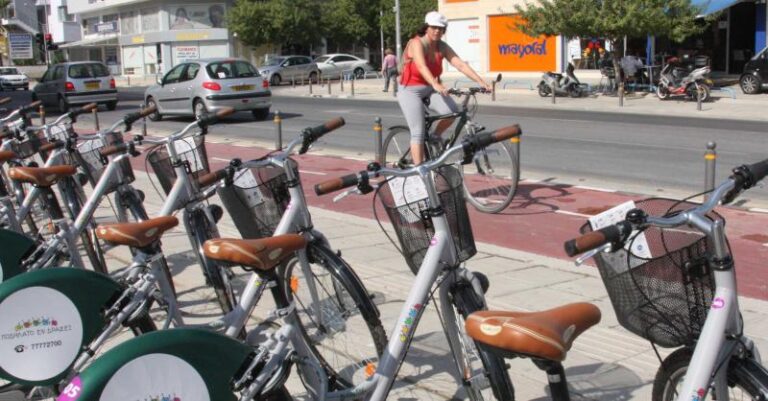
Environment Commissioner Charalambos Theopepmtou is skeptical of the system’s truly positive environmental impact, though, saying that “the purpose [of the system] was to connect the universities and encourage leisurely cycling, not cycling on an everyday basis.”
Zaufishan gives 7 tips on making the Muslim Eid festival more sustainable.
I’m overjoyed and giddy like a child on Christmas eve. As a Muslim, my year is punctuated with two religious festivals, or Eids. Eid-ul-Fitr ended the 30-day fasting in Ramadan two months ago, and Eid-ul-Adha which marks the end of the Hajj pilgrimage in Makkah with a sacrifice.
By choosing more quake-proof, sustainable, and cost-effective materials, developers could avoid future scenes like this one in Van, Turkey.
In the aftermath of a devastating earthquake that rocked its southeast region in October and rendered 14,000 buildings uninhabitable, Turkey is about to embark on its biggest ever urban renewal and construction campaign. Prime Minister Recep Tayyip Erdoğan has promised that the new buildings and property, which will require an estimated $255 billion in investment, will be “safe and sustainable” — unlike their predecessors.
If Erdoğan’s serious about those goals, we have one piece of advice for him: straw bale construction.
The Alliance of Religions and Conservation has launched a special water conservation guide aimed at Muslim women and families
Every year at Hajj, Muslims commemorate the struggle of Hajjar; an Egyptian hand-maid and second wife of the Prophet Ibrahim [pbuh] who was stranded in the desert without water for her child. The hajj pilgrims walk, as she did, between two mountains in the Saudi Arabian wilderness known as Safa and Marwa to remember her search for water. To mark the significance of this event, the Alliance of Religions and Conservation has launched a special water conservation guide which focuses on the story of Hajjar, to accompany its Green Guide to Hajj.
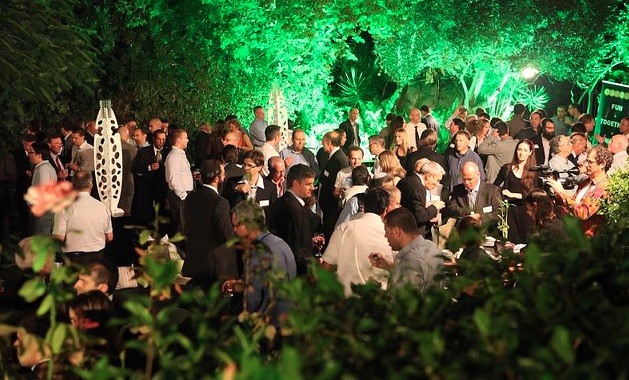
Hobnobbing: Green Prophet attends a new UK-Israeli tech hub hosted at the house of UK Ambassador Matthew Gould. With the UK’s help, Israel can accelerate more clean tech innovation.
The UK is making a bid to leverage investment in Israeli tech start-ups. Ambassador Matthew Gould has launched a Tech Hub in Tel Aviv. This endeavor will foster the growth of Israeli companies in their nascence and connect them to markets in London.
Israel has made a name for itself in recent years for its innovation in emerging fields such as biotech, telecommunications and cleantech. In the book “Start-up Nation,” Dan Senor and Saul Singer discuss how “Israel has beaten the odds to become a major player in the global business world, especially in the technology sector.” They explain that the country has achieved this “economic miracle” notwithstanding its decades-long regional conflict and lack of natural resources. And entrepreneurs there are just getting started.
Sheikh Ali Gomaa is the Grand Mufti of Egypt issuing environmental fatwas.
Sheikh Ali Gomaa is the Grand Mufti of Egypt since September 2003 and one of the highest ranking and respected religious authorities throughout the Sunni world. He holds the second highest religious position in Egypt, after that of Sheikh al-Azhar. As the Grand Mufti, he oversees the premier institution throughout the Muslim world for religious legal direction, Dar al-Iftaa. It turns out his educational approach is also very “green”.
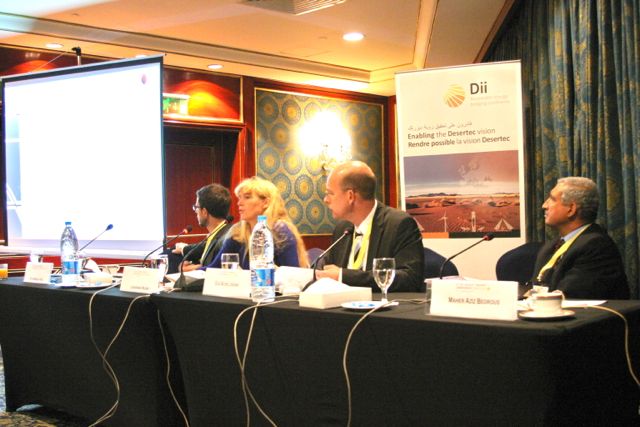
Looking deeper into the pitfalls and promise of Desertec at Dii conference in Cairo. Green Prophet’s Tafline is there and reports from the field.
Instead of scrambling to find funds and legislative support for the Desertec initiative, a handful of people gathered at the Dii conference in Cairo to explore the project’s overall environmental sustainability. The ambitious plan to develop solar and wind energy in North Africa’s deserts could replace harmful fossil fuel alternatives, but researchers are quick to dismiss the notion that renewable energy projects are completely innocent.
Dr. Anthony Patt from the International Institute for Applied Systems Analysis pointed out that scaled up Concentrated Solar Power (CSP) plants that utilize wet-cooling technology could use up to 20 percent of North Africa’s already dwindling water supply. And “that is simply not possible,” he said.
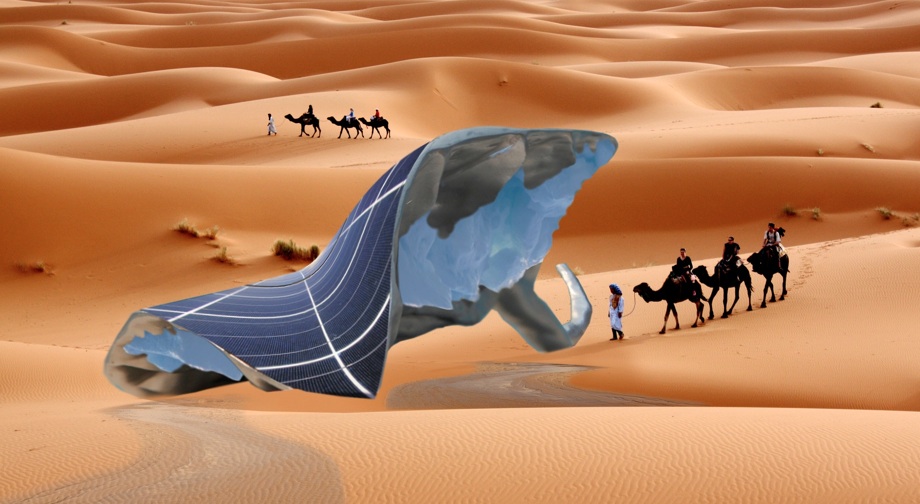
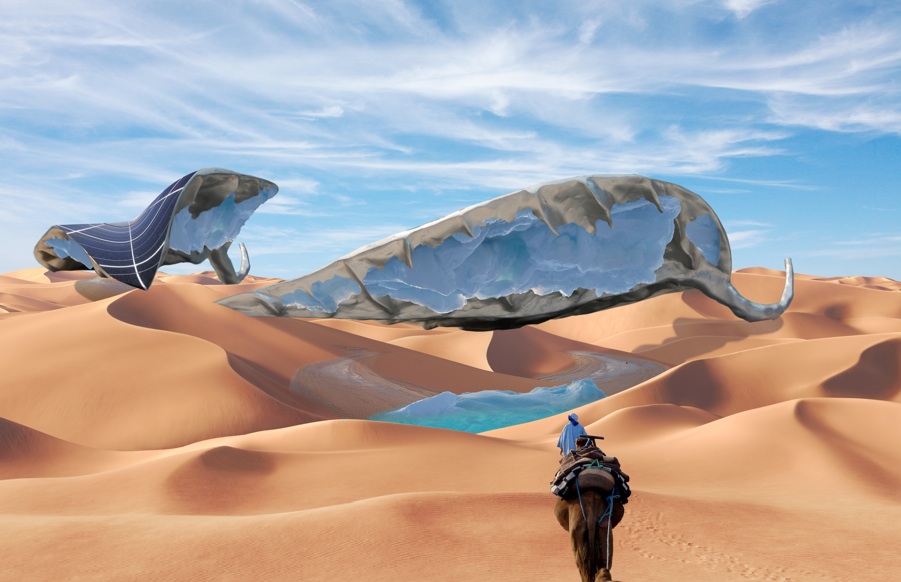
This incredible solar-powered artificial leaf that creates ice and water in Egypt’s Sahara desert is well on its way to becoming a reality!
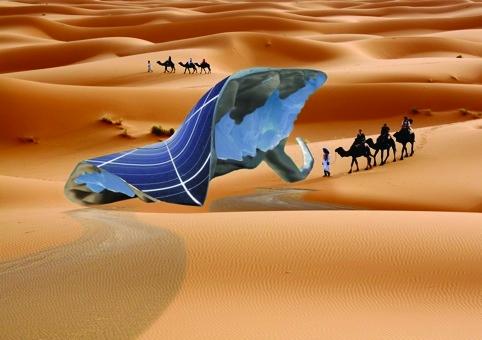
We have learned time and again what a mistake it is to see the desert as a giant wasteland, a fact that artist Ap Verheggen intends to drive home with the incredible SunGlacier project. Based in the Netherlands, Verheggen is developing a giant sun-powered artificial leaf that uses condensation to create ice out of humidity in the Saharan desert.
This may sound like fantasy, but a pilot project that tests the theory behind the SunGlacier proposal is well underway. Instead of a 200m2 elm-leaf shaped structure with an PV cell coated underbelly, which powers cooling condensers that in turn convert humidity from the desert air into ice, engineers have simulated the desert environment inside of a shipping container. And they’ve already made a 10cm slab of ice!
Believe the impossible
The Engineer reports that Ap Verheggen wants to inspire people to “believe the impossible” where climate change and appropriate action are concerned. As bold and counterintuitive as it is, albeit firmly ensconced in science, the SunGlacier leaf project is certain to do just that.
Extracting water from humid air is yesterday’s news in the Middle East. The Gulf countries in particular have very little freshwater so they have had to develop clever solutions for obtaining water wherever they can, including from the air, which is absolutely saturated with humidity.
Too dry? Nope.
But since the Sahara desert is significantly less humid than the Gulf countries, it seems like a poor candidate for this kind of technology. Not so, according to Verheggen, who told the paper that the humidity in Egypt’s portion of the Sahara desert is equivalent to that of the Netherlands and that it is sufficient to generate ice and water.
The engineers have heated the shipping container to 30 degrees Celsius and installed a humidifier that creates moisture. A fan, which simulates the fierce desert winds, is pointed at the ice. As the ice grows from the condensation, water collects at the base – an encouraging sign for water scarce countries in the Middle East.
For once, hotter is definitely better!
According to the Engineer, hotter conditions are favorable to the experiment, since theoretically, more heat means more condensation, which means more ice and water.
The group has not yet achieved the kinds of efficiencies they hope for, but the project is still in its infancy and so far their progress is quite remarkable. Combined with Markus Kayser’s Solar Sinter that produces 3D objects from the sun, it is becoming increasingly possible to envision whole new communities thriving in the desert lands once again.
Axes of power are changing in the Middle East and Israel and Cyprus as an alliance could shift energy focus away from some OPEC oil countries.
The decision for Cyprus to explore its undersea natural gas wells has Turkish government officials crying foul. Turkey occupies the northern half of Cyprus and the southern half is eager to develop its economy and ties with Israel. How this plays out in a quest for power over these cleaner fuel sources is yet to be seen. In the following article I interview a Cypriot businessman, and an Israeli consulate staff positioned in Cyprus to see how these two countries are refueling old ties.
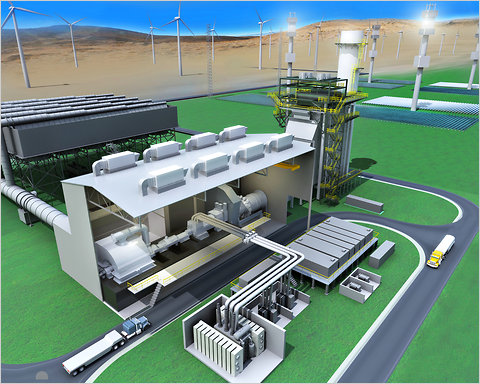
Traditional power plant operators have been loathe to adopt renewables for infrastructure investment. But a new Israeli hybrid invention could make solar a realistic step forward.
While solar energy is the environmentally-friendly alternative of choice for power plants, it’s an expensive option because of the equipment and technology needed to harvest the sun’s rays. Now a Tel Aviv University researcher says that “going hybrid” is a quicker and cheaper route to cleaner electrical power. Prof. Avi Kribus has developed a technology that combines the conventional fuel used in today’s power plants with the lower pressures and temperatures of steam produced by solar power. His new “hybrid” power plant is a potentially cost-effective and realistic way to integrate solar technology into existing power plants.
Gulf States have been drilling oil for decades now. Can we really get them to co-operate at the upcoming climate summit in Durban and re-think oil?
Climate negotiations to get world leaders to agree to a fair and binding agreement that will keep climate change in check have been ticking away in the background for a while now. Around six months ago, climate negotiations continued in Bonn and sadly, the Middle East wasn’t exactly making a positive contribution. Saudi Arabia was criticized for its attempts to delay progress and Kuwait, Oman and Qatar were awarded the ‘Fossil of the Day’ title for holding up the talks. So will this year be any different?

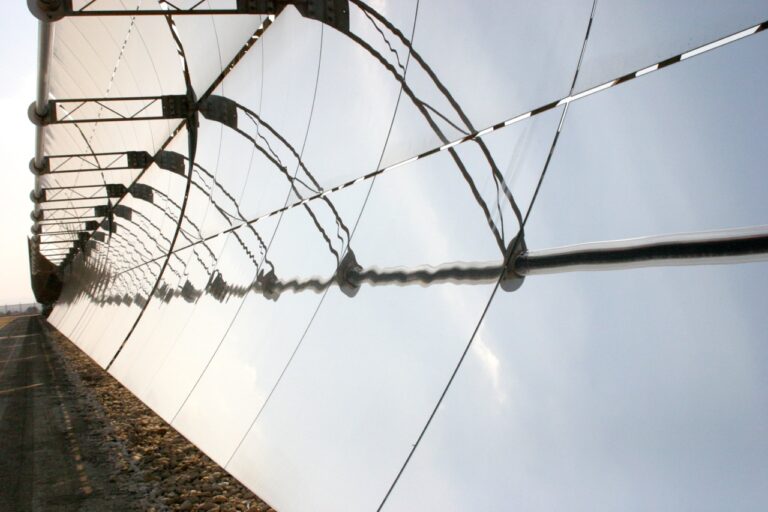
 Renewable Energy professionals from Europe and Egypt (and Green Prophet!) took a field trip to Egypt’s first solar-thermal plant 90km south of Cairo!





 By choosing more quake-proof, sustainable, and cost-effective materials, developers could avoid future scenes like this one in Van, Turkey.