Somehow vegetables with short seasons excite the imagination and appetite more sharply than produce that’s available all year around. Good Middle Eastern cooks have many recipes for delicate fava beans, and this turmeric-fragrant soup is one.
Somehow vegetables with short seasons excite the imagination and appetite more sharply than produce that’s available all year around. Good Middle Eastern cooks have many recipes for delicate fava beans, and this turmeric-fragrant soup is one.
Somehow vegetables with short seasons excite the imagination and appetite more sharply than produce that’s available all year around. Good Middle Eastern cooks have many recipes for delicate fava beans, and this turmeric-fragrant soup is one.
Somehow vegetables with short seasons excite the imagination and appetite more sharply than produce that’s available all year around. Good Middle Eastern cooks have many recipes for delicate fava beans, and this turmeric-fragrant soup is one.
Somehow vegetables with short seasons excite the imagination and appetite more sharply than produce that’s available all year around. Good Middle Eastern cooks have many recipes for delicate fava beans, and this turmeric-fragrant soup is one.
Somehow vegetables with short seasons excite the imagination and appetite more sharply than produce that’s available all year around. Good Middle Eastern cooks have many recipes for delicate fava beans, and this turmeric-fragrant soup is one.
Somehow vegetables with short seasons excite the imagination and appetite more sharply than produce that’s available all year around. Good Middle Eastern cooks have many recipes for delicate fava beans, and this turmeric-fragrant soup is one.
Somehow vegetables with short seasons excite the imagination and appetite more sharply than produce that’s available all year around. Good Middle Eastern cooks have many recipes for delicate fava beans, and this turmeric-fragrant soup is one.
We already know what plastic bottle trees look like, how will 10 newspaper trees look?
For Christmas last year, Israeli artist Hadas Itzcovitch gifted her city of Haifa a tree made from 5480 upcycled plastic bottles (pictured above). Constructed immediately after the disastrous Carmel region fires broke out and destroyed so many trees, Itzcovitch’s tree was a symbol of the community’s hope for a greener future. In a few weeks she will be building another set of 10 green cypress trees, this time as a celebration of the Baha’i gardens in Haifa and of the city’s interfaith residents.
Miriam suggests dishes to suit meals before and after the Big Fast of Yom Kippur.
This coming Friday night a Jewish Shabbat and Yom Kippur holiday occur together. While I look forward to a day of prayer and meditation, a day offline and a day of cleaner air, I confess I don’t relish the thought of the 25-hour fast. So what are the smartest things I can do to make it go easier? And which foods go down best when the fast is over?
Certain dishes are considered working-man’s lunches in the Middle East. They’re foods you find in small shuk restaurants or roadside eateries. Eggy shakshoukah (recipe here), mulukhiyah soup (recipe here), the classic lentil/rice combination, majadra.
The favored meat in the Middle East is lamb and it’s most often prepared in some variation of meatballs, like the popular kibbeh. Now try these savory meatballs in a rich tomato sauce enriched with vegetables and spices. Just delicious.
Kafta, Syrian Meatballs in Rich Tomato Sauce
4 servings
Ingredients for Sauce
1 tablespoon olive oil
1 medium onion, chopped
4 large garlic cloves, finely chopped
1 tablespoon flour
1 carrot, peeled and diced
250 grams – 1/2 lb. tomatoes, peeled, seeded, and chopped
2 tablespoons tomato paste
1/2- 1 teaspoon cayenne flakes or 1/2 dried red chili
1 quart water
1 teaspoon salt
1/8 teaspoon freshly ground white pepper
Ingredients for Kafta:
500 grams – 1 lb. ground lamb
1 tablespoon all-purpose flour
1 egg yolk
1/2 teaspoon salt
1/2 teaspoon ground cinnamon
1/4 teaspoon freshly ground white pepper
1/8 teaspoon ground nutmeg
1/8 teaspoon freshly ground allspice berries
1/4 cup parsley, chopped fine
The Sauce:
Sauté the onion in the olive oil until softened and golden, about 4 minutes. Add the garlic. Reduce the heat to low, and cook 1 minute, stirring constantly. Add carrot, flour, tomato, tomato paste, chile, and water. Stir well. Raise heat and bring to a boil. Lower heat to a simmer and season with salt and pepper. Cover and simmer 30 minutes. Remove from heat and pass through a sieve or puree in blender. Put the sauce in a large skillet that can hold all the meatballs.
Preheat the broiler.
The Meatballs:
Knead together the ground lamb, flour, egg yolk, salt, cinnamon, white pepper, nutmeg, allspice and parsley. Form meatballs the size of large eggs. Arrange them on a broiling tray and broil until golden brown, about 8 minutes. Transfer to the sauce in the skillet and bring to a boil. Reduce the heat to medium-low, cover, and simmer until bubbling furiously, 10 minutes. Uncover and cook for another 10 minutes.
Serve with rice, couscous, or bulgur.
Enjoy!
Green Prophet’s Middle-Eastern relishes to serve alongside the kafta:
Steven Jobs and iPhone: a genius and an environmentalist.
Steven Paul Jobs finally met up against a challenge at age 56 that he simply could not overcome – pancreatic cancer. Now that he is being consigned to the annuls of history, and we at Green Prophet are writers of clean technology and environmental issues, it’s a good time to pause and think about what this one individual has done to further both of these subjects, clean technology and making the world’s environment better.
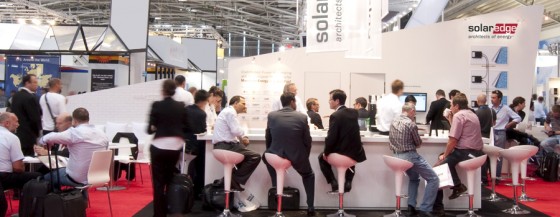
Israel’s SolarEdge is making solar energy most cost-effective
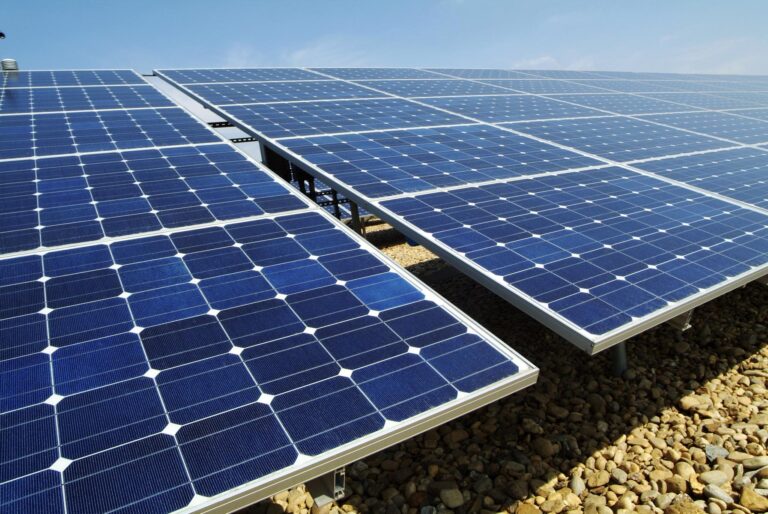
SolarEdge Technologies Inc, whose patented Solar Power Harvesting and Optimization System is beginning to receive good reviews, will be exhibiting their products at the upcoming Solar Power International Trade Show in Dallas Texas.The Israel based solar energy company, with offices in the USA, Europe and Japan will have a booth at what is billed as North America’s largest, most comprehensive solar power trade show and conference that will run from October 17 -20 in the giant Dallas Convention Center.
The world’s most innovative rebel was the son of a Syrian man who gave him up for adoption. But neither this, nor cancer, nor a series of public failures ever deterred his strength of vision. This is our tribute to Steve Jobs.
“No one wants to die,” Steve Jobs said in a speech to Stanford’s 2005 graduating class, “and yet it is the destination that we all share.” At 56, after struggling with pancreatic cancer for several years, Apple’s co-founder and lead visionary finally reached his destination. And though he once said that he didn’t care about being the richest person in the cemetery, he will be, not only because he is one of the world’s wealthiest people, but because his commitment to personal excellence has completely changed how millions of people from all walks of life interact with their personal computers, their telephones, and one another.
Steve Jobs did not revolutionize the animation and computing industry by feeling sorry for himself when he found out about his illness. When Apple, Inc. – the company that he co-founded after dropping out of college – fired him at 30, he did not give up and slink into oblivion. He kept going and founded NeXT. Nor did he dwell on the idea that his biological parents Abdulfattah Jandali – a Syrian man – and Joanne Simpson gave him up for adoption. Instead, the man behind the Macbook, iPod, iPhone, iPad, and Pixar – the animation studio that delighted squealing children everywhere with Toy Story – persevered through his daily challenges with a determination and discipline that sometimes made him fearsome, but always with a focus on making the world a better place.
Steve Jobs broke the rules and shattered stoic conventions, and he did it all with heart. We at Green Prophet are very sad to lose such an inspirational figure, and promise to honor his legacy by striving to heal the planet’s health with the same courage, dignity, and clarity of purpose that this well-loved husband, father, and mentor displayed every single day. “I want to put a ding in the universe,” Steve once said. I think we can all agree that he has definitely done just that.
“If God allows, we will hold our baby in our arms”. 21-year-old Derya Sert (right) and her doctor Omer Ozkan pose for a photograph before her medical operation
Derya Sert is the 21 year old who had the world’s first successful womb transplant at a Turkish hospital. On August 9th, 2011, doctors at Akdeniz University Hospital in Turkey’s southern province of Antalya, successfully transplanted a uterus to Derya Sert without any major complications. This is a new precedence in the medical developments of women’s health in the Middle East region.
Now Masdar builds solar with a 75% capacity factor, almost as much as nuclear
Masdar, the holistic and progressive renewable energy company from the UAE’s capital Abu Dhabi, and SENER, a leading engineering and construction firm in Spain have formed a joint venture, Torresol Energy, that just inaugurated their Gemasolar Concentrated Solar Power (CSP) project; the first commercial plant in the world to use molten salt thermal storage in a central tower configuration using a heliostat, which will give it a capacity factor of 75%, which is almost on a par with nuclear plants.
Gemasolar is the first of three projects that the newly formed partnership has financed at $1.4 billion US. Raising this amount for first of its kind technology at commercial scale shows what Masdar and SENER are jointly capable of as leaders in strong, credible solar technology.
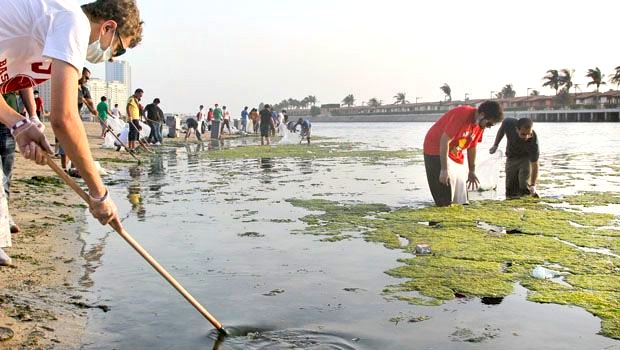
Almost a thousand student scouts took to the hot Red Sea shores in an environmental clean up that made their National Day something to be proud of. The scouts are carrying a keep-clean message across the nation, aiming to educate peers and adults alike about the importance of keeping the country an exemplar of green activism.
The battle for the Samar sand dunes may be lost to concrete trucks and bulldozers. An evironmental attorney Joshua Basofin makes a case to save the sand.
After a protracted battle over the Samar sand dunes, in the Arava Valley in Israel, the bulldozers may be revving their engines. Last year the Israel Lands Administration issued a tender for a mining operation there. The development company securing that contract plans to make concrete from the sand. Environmentalists cried foul shortly after the deal, citing the dunes’ unique features, rare wildlife and recreation opportunities. In January, an impassioned campaign to protect the dunes peaked when the Supreme Court green lighted the project.
With its superfine sands and almost surreal stillness, it is easy to see how locals fell in love with the Samar dunes, located in the Arava Valley just north of Eilat.
The site is home to many “endemic” species – plants and animals that are found only on the dunes like the leggy spiders. University of Haifa professor Uri Shanas discovered a new species of spider there less than two years ago. Measuring 14 centimeters, it is the largest arachnid of its kind known to dwell in the Middle East.
The spider saves the day?
Its discovery exemplifies the mantra of Israeli ecologists – we don’t know everything living in our backyard. The Samar dunes have become a haven not just for wildlife, but also nature enthusiasts. With their wide open spaces and ample opportunity for wildlife viewing, the dunes are quite popular.
Unfortunately, the same qualities that attract wildlife and visitors have piqued the interest of developers – superfine sands that make for high quality concrete.
Environmentalists began a protest campaign in earnest upon learning of the mining plan. It quickly picked up steam, garnering the support of environmental groups Megama Yeruka, Adam Teva v’Din and local NGO Sababa. A study looked at potential alternatives to the project.
It concluded that using sand from quarries in Dimona or mine waste from Timna Park would result in only modest price increases (about $8 USD per ton). But the developers, having received the blessing of the courts, aren’t biting.
The case itself was decided on a technicality – environmentalists filed too late. As a result, the court could not consider the government’s alleged failure to complete a comprehensive environmental impact statement.
Lost in the rancor between environmentalists and developers is a rational conversation about land use planning in the Arava region. Certainly the dunes are worth protecting.
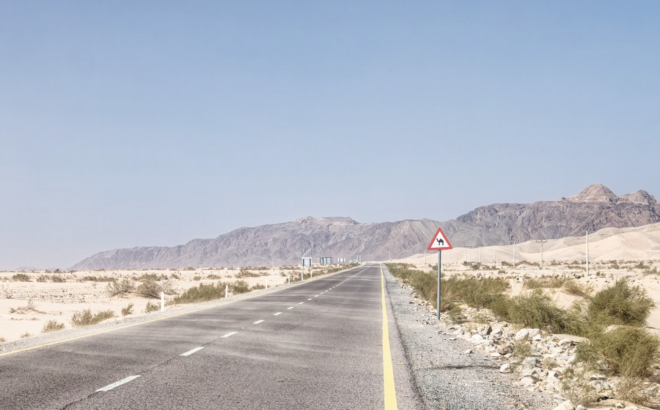
Arava Desert, Jordan. Watch out for camels sign on the road.
When the 1994 armistice lines were drawn between Israel and Jordan, most of the dunes ended up in the latter’s territory. The new political border made these features rare in Israel.
The remaining dunes were developed or mined – except Samar. The dilemma over its future is a prime example of Israel’s obligation to steward rare and dwindling natural areas.
Development versus conservation
Beyond that simple concept, however, and perhaps more importantly, Israel must appreciate the “ecosystem services” provided by places like the Samar dunes. The value of wildlife, tourism, shade, and minerals, for example, can be measured. And it can be measured in dollars.
Undoubtedly, however, Israel’s bulging center will need the relief of additional housing. The vast expanse of southern desert is a natural choice. In addition to the Samar mining, a proposed hotel within the boundaries of the beloved Timna Park has locals bristling but others citing economic development in the area.
Geologists regard Timna Park as one of the Middle East’s top attractions for sheer geological interest, and its gorgeous multicolored sand, combined with its towering sandstone pillars are a sight sure to amaze even the most jaded of tourists.
Add to that the prospect of utility-scale solar fields and suddenly the Arava Valley seems quite small indeed. It appears a traffic jam is forming. The rush to build hotels, mines, and solar fields militates for a clear and concise land use plan. Interested parties should develop the plan, fully considering the inherent value and ecosystem services of the area.
The Jewish theologian Abraham Joshua Heschel said “there are three ways in which we may relate ourselves to the world – we may exploit it, we may enjoy it, we may accept it in awe.”
How will we relate ourselves to the Arava Valley? In truth, we must invoke all three perspectives to balance the competing interests of conservation and development. They are not mutually exclusive, but they do require careful thought. The rise and fall of civilizations throughout history has taught us that stewardship is necessary for human survival. Many people have called Israel “the promised land.”
But there is a deeper covenant here, formed before our time and etched in sand. Perhaps we can only know that promise when we walk below the steep, orange cliffs of the Arava Valley. But we must keep it all the same.
Joshua is an environmental attorney and writer living in Tel Aviv. He has worked for several conservation groups in his native United States, including The Nature Conservancy and Defenders of Wildlife. Joshua specializes in laws and policies aimed at protecting natural areas. He has a particular interest in freshwater and marine habitats.
Growing up in the suburbs of Middle America, Joshua learned to escape into nature and leave the strip malls and parking lots behind. He has hiked and explored around the world, from South America to Australia to Thailand. Joshua is fascinated by the often polarizing worlds of tradition and modernity. He thrives on studying the intersection of environmental conservation, religion, and human culture. And he may have found his greatest challenge yet in Israel.
Saudi Arabia to diversify to solar energy on the exotic Farasan Island.
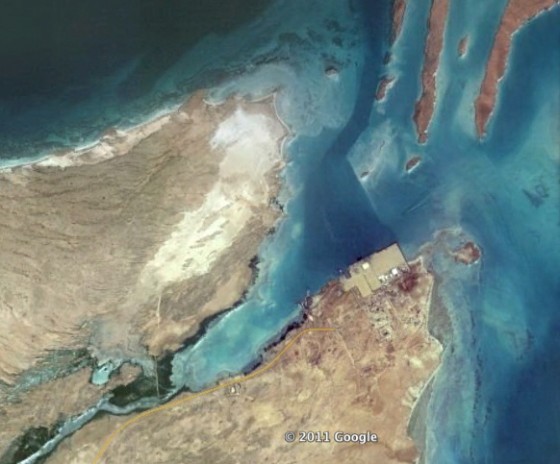
We hope that OPEC oil countries will continue putting the west to shame: A few days ago on October 1, Saudi Arabia inaugurated its first solar power plant as the country continues to diversify its energy sources. The 500-kilowatt plant, located on the beautiful Farasan Island will save the equivalent of transferring 28,000 barrels of diesel fuel to the island annually reports the Saudi Embassy in the United States. Farasan Island is the biggest of the Farasan Islands and the new plant will save the government from shipping diesel fuel to the island.
When an oil-rich Sheikdom crowns an official building with grid-connected solar panels, it’s time for the U.S. to wake up!
After Obama’s failure to return Jimmy Carter’s solar panels to the White House roof, the court of HH Mohammed bin Zayed bin Sultan Al Nahyan – the ruler of one of the world’s most oil-rich nations – was recently crowned with an array of active photovoltaic panels. Technically, the U.S. was ahead of the game. In 1979, after the Arab oil embargo, Jimmy Carter added solar panels to the White House roof and developed an impressive renewable energy research program in order to secure the country’s energy future.
By 1986, however, Ronald Reagan undid Carter’s vision by removing the panels and slashing funding to the Department of Energy’s R&D program. Instead of supporting green alternatives, the former president put America’s full weight behind fossil fuels.
In order to redeem Reagan’s faux pas, environmental activists led by Bill McKibben (who was since arrested for his green activism) returned the original panels to the White House in September last year. But Obama – despite his campaign promises to advance environmental initiatives – turned down the opportunity to put them back up on the roof. And now oil-rich Abu Dhabi has surpassed the United States’ symbolic support for renewable energy programs with the court’s new grid-connected solar panels – a slap in the face for the “world’s most powerful country.”
A cement plant in Morocco will switch on sunshine from Switzerland this year.
The world’s fifth largest cement producer, with an annual production capacity of approximately 75 million tons of cement, Italcementi Group is pioneering a concentrated solar power (CSP) plant at the site of one of its cement plants – in Ait Baha, Morocco. CSP for industrial use is becoming more common in the MENA region as the oil age draws to a close. The Saudis are pioneering CSP in oil fields to extract oil, for example.
The Airlight Energy solar project in Morocco will cost €2.7 million, but bring greater efficiency than other CSP. Using a novel, modular Fresnel collector system, the Swiss company’s ‘Flaming Air’ air-based fresnel receivers can generate temperatures of above 650 degrees celcius, using low-pressure receiver technology.
For both the interim Mediterranean Solar Plan and Desertec, the creation of renewable policy and renewable job skills development in both the potential energy-supplying countries and the potential energy-receiving countries is necessary.
The Mediterranean Solar Plan represents an interim step towards Desertec. It aims to create 20 gigawatts’ worth of new renewable energy sources in MENA nations by 2020 – the equivalent of around 15 to 20 coal-fired power plants – whereas Desertec has set itself the much larger – but more long-term – goal of supplying 15 per cent of Europe’s electricity by 2050 from solar and wind power plants in the MENA region.
Desertec is based on the research of Dr Gerhard Knies, the German physicist and founder of the Trans-Mediterranean Renewable Energy Cooperation (TREC), who famously found that “The world’s deserts collect more energy from the sun in six hours than mankind consumes in an entire year.”
For an example of the bilateral policy needed, Germany is considering modifying its Renewable Energy Sources Act to include a specific set-aside feed-in tariff just for “desert electricity”.
Whilst Christians make up a tiny minority of the Middle East’s population, their faith does have a lot to say on climate change
From Jews celebrating Sukkot in green style, Muslims promoting a green hajj and Baha’is working to promote sustainability, the Middle East is something of a green faith haven. However, the role that the Christian community plays in promoting environmentalism both in the West and the Middle East tends to get overlooked. In this post, I explore various Christian values such as ‘love thy neighbour’ and caring for the poor which are encouraging church-goers worldwide to tackle the global issue of climate change.
Sharing Equally and Living In Dignity
Around a month ago, Christian leaders alongside Rabbis and Imams met in Jerusalem to talk about the role that faith can play in resolving the ecological crisis. At the event, Bishop Shomali of the Latin Patriarchate of Jerusalem said, “We are accountable for how we use this Earth. The earth is like our home, and those who live in the same home should know how to live together…The main religions should study ecological issues together because we have a common destiny. ”
Indeed, it is widely held in Christianity that the earth and its resources are for people to share equally and all humans have the right to live in dignity. In the past, poverty has been seen as the major barrier to realising this equality but now a consensus is slowly emerging that climate change – and the unfair impact it will have the world’s poor – is another dimensions which needs to be addressed.
Ending Poverty and Love Thy Neighbour
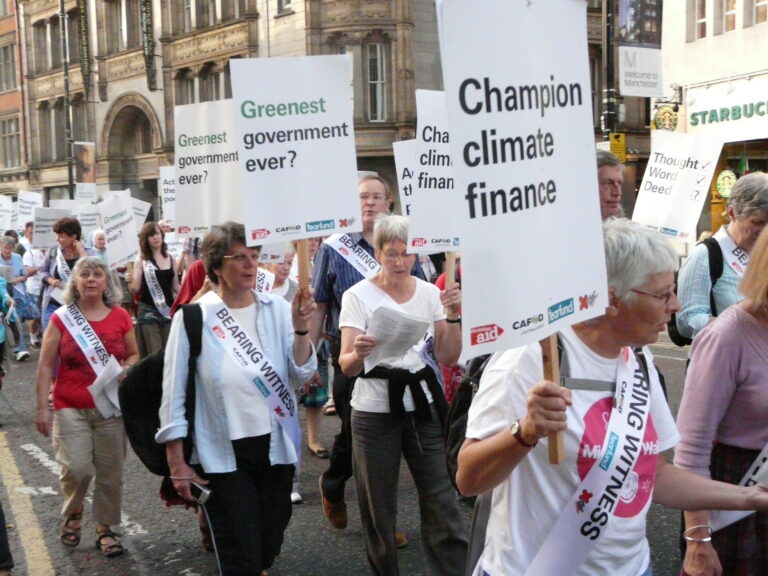
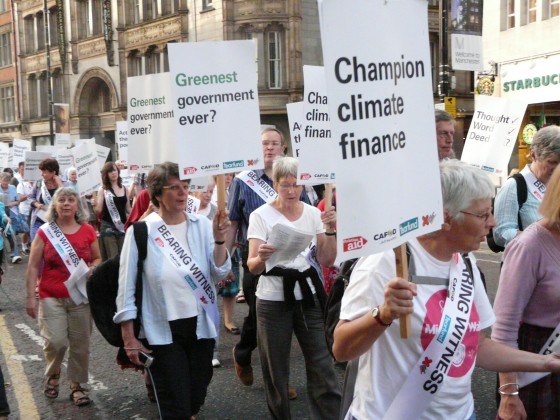
Over the weekend, I joined a protest of over 1,000 Christians in the UK who called on the government to do more to protect the poorest from the impacts of a warming planet. Many of the people I spoke to told me that a sense of justice and the need to protect the poorest from droughts and floods had brought them to the rally. At the heart of their motivation to take action was the ‘love thy neighbour’ principle which meant that they couldn’t stand by whilst the planet becomes more inhabitable and more people are pushed into poverty.
In fact, some environmental leaders such as Bill McKibben (who is a Christian) have already called on environmental and faith organisations to get together to halt runaway global warming. Speaking at a faith and sustainability lecture in Cambridge, he also explained that the West had so far failed in its duty to ‘love thy neighbour’. Even when you take into account the aid that the West has given to the developing world, McKibben insisted that it still didn’t make up for the greenhouse gases that they had also sent which would have profound impacts on the planet and their ability to live their lives.
With this in mind, it’s high time that people of all faiths got together, acknowledged the injustice of changing climate and worked together to halt it.

 We already know what plastic bottle trees look like, how will 10 newspaper trees look?
 Miriam suggests dishes to suit meals before and after the Big Fast of Yom Kippur.



 Israel’s SolarEdge is making solar energy most cost-effective
 The world’s most innovative rebel was the son of a Syrian man who gave him up for adoption. But neither this, nor cancer, nor a series of public failures ever deterred his strength of vision. This is our tribute to Steve Jobs.

 Volunteers have attempted to keep Jeddah’s corniche litter-free for years
 The battle for the Samar sand dunes may be lost to concrete trucks and bulldozers. An evironmental attorney Joshua Basofin makes a case to save the sand.