Home Blog Page 490

Micro-Financed Straw Houses For Pakistan Are Quake-Proof

1

pakistan environmental energy efficient house Twice as energy efficient as a conventional house, straw bale makes for environmentally friendly earthquake-proof homes

After the 2005 Kashmir earthquake, Pakistan Straw Bale and Appropriate Building (PAKSBAB) was set up to protect people’s homes against extreme weather conditions. More recently with the catastrophic earthquake in Turkey, I am reminded of the value of homes and family.

PAKSBAB invests in creative micro-financing, giving the local community innovative design solutions to semi-independently construct energy efficient houses. A training period enables families directly affected by the earthquake to build their own houses using refined natural materials, and locals are recruited to participate in developing the community.

Since 2006, PAKSBAB has trained fifty people and constructed twenty-six straw bale buildings in Pakistan’s Khyber Pakhtunkha province. Construction expertise is passed forward as disadvantaged Pakistani families are educated in the necessary steps to build their own straw bale homes. The Community Development Program (CDP) in 2007 did just that, providing all the necessary materials, training and financing to the poorest socio-economic group in the region.

World Population Hits 7 Billion Today

0

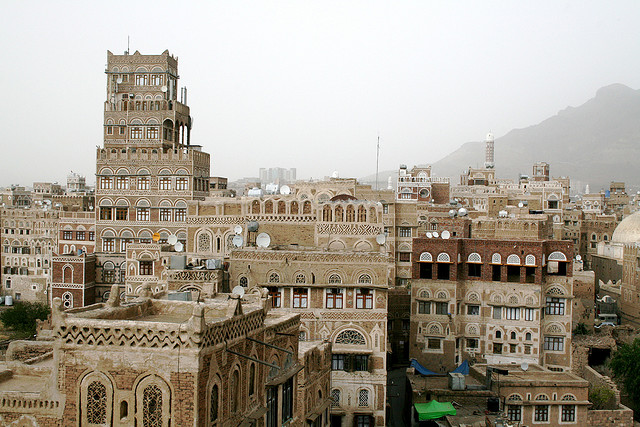
yemen-sanaa-world-population-seven-billionThe world population hits seven billion and the Middle East is playing its role with one of the fastest growing cities on earth

According to UN estimates the world population will reach seven billion today. It’s a pretty big feat considering that we hit six billion a little over a decade ago and the world population at the birth of Christ was just two hundred million. To mark this milestone, Foreign Policy have put together a list of the seven fastest growing cities in the world and it turns out that the capital city of Yemen, Sana’a, is one of them.

EneR Morocco is Window to Maghreb’s Shiny Energy Potential

ener morocco casablancaThe free EneR event is a networking and investment platform for those interested in Morocco’s renewable energy markets happening later this month in Casablanca.

Morocco is wild, yet for the average business or tourist traveler tame and safe. You can walk out of your riad in Marakesh and get lost in another time. Meander around the market in Fez and feel forever connected to Arabian Nights, or wind around the modern city of Casablanca for good food and pleasant chats with locals. You won’t find Clarke Gable in Morocco, but business investors interested in new financing opportunities might be advised to head to the EneR event in Casablanca later this month, November 22 to 26.

White Roofs Don’t Slow Global Warming

9

white roof walmart global warming

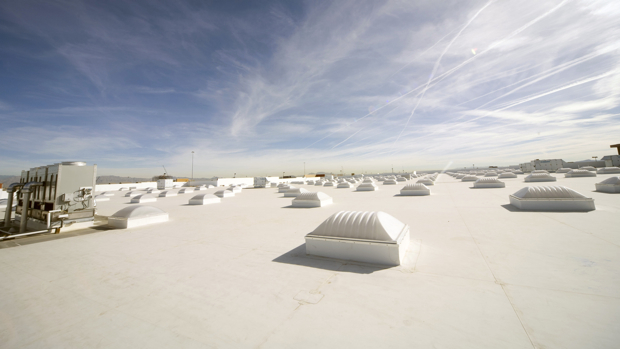
Leave the white paint in the bucket. It won’t help climate change. Add solar panels instead to “green” your home.

Stop the contractors! If you were thinking about painting the roof of your house white this winter, before winter rains start, leave the paint in the bucket: Environmentalists were advocating white, just like they offer a quick fix to climate change by getting you to change to CFL lightbulbs.

But according to a new study by Mark Jacobson from Stanford, the white roof doesn’t act like an anti-warming device, keeping your house cooler in the summer. White paint, it turns out, is a big fat waste of money.

Writing in the journal Climate, Jacobson and his research student John Ten Hoeve did report that white surfaces cooled houses, but the white roof effect also reduced cloudiness, thereby allowing more of the sun’s rays to reach the ground.

“There does not seem to be a benefit from investing in white roofs,” says Jacobson. “The most important thing is to reduce emissions of the pollutants that contribute to global warming.”

Solar panels, the team reports, are better than white paint: “The better thing to do is to put a solar panel on the roof because that not only cools the house by absorbing the sunlight to make electricity. It also offsets fossil fuel generation at power plants.”

They are dead set against any other form of quick fix or geo-engineering schemes to “fix” climate change: “With all geo-engineering approaches, you are not solving the problem but masking it. There are all kinds of consequences people are not aware of, and it doesn’t solve the problem. You are still going to have all these greenhouse gases going into the air.”

The effect of heat islands whereby buildings cover natural vegetation needs to be studied more.

Photovoltaic panels helpful

How you can upgrade your house while leaving the white paint in the bucket? One way to reduce emissions while simultaneously reducing summer air conditioning demand is to install photovoltaic panels on roofs.

Such panels not only generate electricity, reducing emissions of fossil fuels from electricity-producing power plants, but they also reduce sunlight absorbed by buildings because they convert sunlight to electricity. Because photovoltaic panels do not reflect the sunlight back to the air, unlike white roofs, reflected light is not available to be absorbed again by pollutants in the air, creating heat.

“Cooling your house with white roofs at the expense of warming the planet is not a very desirable trade-off,” Jacobson said. “A warmer planet will melt the sea ice and glaciers faster, triggering feedbacks that will lead to even greater overall warming. There are more effective methods of reducing global warming.”

::Fast Company

Salt Cedars are Carbon Sinks in the Desert

0

tamarix salt cedar israelConsidered a pest in California, a tamarix salt cedar tree found in the Arava Desert could sequester greenhouse gases on barren, desert land.

Fears of global warming and its impact on our environment have left scientists scrambling to decrease levels of atmospheric carbon we humans produce. But Tel Aviv University researchers are doing their part to reduce humanity’s carbon footprint by successfully growing forests in the most unlikely place — deep in Israel’s Arava Desert.

Water Hackathon in Cairo and Tel Aviv

cairo water hackathon

As the dust of revolution settles in Egypt, the country is beginning to face some of its other challenges. Chief among these is a scarcity of water. In fact, by 2017, demand is projected to outpace the country’s supply.

At the American University in Cairo (AUC) last week, dozens of water and technology experts convened to discuss and create solutions for Egypt’s water crisis. The Water Hackathon was organized by both the AUC Desert Development Center and the World Bank as a competition between 13 teams with prizes awarded to the best ICT solutions.

Could Israel Join With its Arab Neighbors in Medgrid?

0

Medgrid Israel Arab grid

Could sharing a transmision grid for renewable energy bring Arabs and Jews together?

Invited to speak by the Israeli branch of CIGRE in Israel, Jean Kowal, executive vice president of Medgrid suggested that the road to Middle East peace could be a shared and interconnected electrical grid that facilitates the addition of more green energy. The Israel-hosted CIGRE conference covered different techniques of transmitting power within, and among, the countries of the Mediterranean basin.

Timo Handmade Finds Modern Uses for Vintage Fabrics

1

"handmade fabric toy"Made mostly from used and vintage scraps of fabric, Timo Handmade’s new creations have a warm, old-world feel.

Fabric scraps can be used for lots of things, and we’ve seen designers refashion them in all kinds of ways – like use them to make repurposed fabric shoes, purses made from upholstery fabric samples, and even fabric scrap necklaces.  Israeli designer Timor Cohen, the brain and creator behind Timo Handmade, is no exception, and uses her collection of fabric scraps and knick knacks to create one-of-a-kind dolls, fabric books, blankets and handbags and rid the planet of a little more waste.  In using upcycled and repurposed materials that would have otherwise ended up in a landfill, TIMO’s creations eliminate waste and reduce the need for new materials to be created.

Find Green Prophet at the 2nd Annual DII Conference in Cairo

Dii, Kuryamat, Cairo, Egypt, Desert, renewable energy, DesertecGreen Prophet is crossing the desert in a bus to attend one of the most important renewable energy conferences on earth.

Green Prophet is heading across the desert to attend the second annual Dii Conference being held at the swanky Semiramis InterContinental Hotel in Cairo. Part of a concerted push to develop wind and solar energy in Africa and the Middle East, the Desertec conference being held on the 2nd and 3rd of November is one of the most important gatherings of its kind. This is an opportunity for business and government leaders from MENA and Europe to discuss the various opportunities and challenges associated with growing and exporting the desert’s numerous renewable energy resources.

The conference will be hosted by Egypt’s Prime Minister Dr. Essam Sharaf, who says that the Egyptian government “shall spare no effort to turn this international event into a real success.” Topics to be discussed include regulatory challenges associated with developing renewables (specifically Concentrated Solar Power, Photovoltaics, and Wind Power), success factors, challenges of long distance transmission, and renewables market integration. We will also attend a tour of the Kuraymat hybrid gas and solar energy plant on Friday November 4th, so come on by and introduce yourself!

More on Desertec:

Arab Spring May Boost Chance for Desertec Solar Power

Looks Like Desertec and Morocco’s Government May Join Hands

Next for MENA Nations: Desertec University

Mountains of Toxic E-Waste in Pakistan Are a Goldmine

Pakistan, E-waste, soil contamination, water contamination, pollutionThousands of tons of electronic waste are dumped in Pakistan each year, creating a hazard, and a mountain of opportunities for recyclers.

Nobody knows for sure how much electronic waste is dumped in Pakistan, but it’s easily in the thousands of tons every year. Some of it is generated internally but most is imported from developed countries. It’s not legal under the Basel Convention – to which Pakistan is a party – to import E-waste  into the country, and legislation calls for proper handling of what does exist to minimize lead, cadmium, beryllium, and brominated flame retardant contamination, but these laws are not well enforced.

In just two years, between 2005 and 2007, cell phone ownership in Pakistan increased from 1.277 million people to 100 million. In time these phones will be added to Karachi landfills, where they will leach harmful toxins into the soil that will eventually make their way into the Arabian Gulf. The country’s Environmental Ministry acknowledges the country’s Waste Electrical & Electronic Equipment (WEEE) challenges and presented potential solutions at a conference in Japan this past July. It turns out, these toxic heaps represent a potential goldmine for investors and industrious business people.

Sheep’s tail fat alya is the ancient Middle-Eastern shmaltz

0

sheep tail herd iran

A Middle Eastern flavor that refuses to go out of style – sheep’s tail fat.

Some vegetable species thrive in harsh, arid conditions and still produce oil, like argan trees. And some animal species survive the desert by storing fat around their bodies, like camels. And like Awassi sheep, bred to store fat in their tails. A mature ram’s tail can carry up to 12 kg. (25 lbs) of prized fat, softer and more delicately-flavored than fat stored in the body’s interior.

Cooking with alya, the rendered fat, has been around for a very long time. The oldest existing Arabic cookbooks (both called Kitab al-Tabikh and written between the 10th and 13th centuries) instruct the cook to “melt tail fat.” A 6th-century mosaic from the Beit Alpha synagogue, Israel, depicts shepherds and a fat-tailed sheep.

Nowadays vegetable oils are preferred in daily Middle-Eastern cooking, yet when folks crave that old-time flavor, it’s still fat rendered from sheep’s tails. In rural areas, people simply heat chunks of it to melt down in the skillet or pot, as done with chicken shmaltz or bacon. Townsfolk can find white disks of prepared rendered sheep’s fat in the freezers of their supermarkets. In Israel, it’s even kosher.

Some skewer and grill whole chunks of the fat, declaring that the delicious flavor is worth any health risk. I have eaten potatoes flavored with lamb fat in a high-end Jerusalem ethnic restaurant. A stack of shwarma meat is often topped with a slab of fat to drip down as the meat rotates and cooks; shish kebabs may alternate chunks of lamb cubes and fat with onions and other vegetables.

image-shish-kebabFestive Asian/Russian rice dishes like the Bucharian osh polo and Uzbeki plov pilaf start by frying meat in lamb fat. In rural Lebanon, lamb meat is traditionally preserved in the fat, confit-style, and called qawarma.

According to traditional Arabic medicine, drinking warm, liquid alya will cure sciatic pain if taken three days in a row.

Feel like trying it out?* If you’re not in the Middle East, maybe a Turkish or Lebanese butcher near you will spare you some lamb’s fat. Melt a couple of 1-inch cubes down slowly to use as the fat in a rice dish, fishing out the cracklings to salt and eat quietly as the cook’s treat. Or chop up any quantity of raw fat, , cover it with cold water, and put on a medium heat. When the water has evaporated and the meat adhering to the fat starts to pop and crackle, allow the liquid fat to cool down to warm. Strain it into a jar. Let it cool, and store in the fridge for up to 6 months.

image-fat-tailed-sheep

What can you do with the fat? Same as you would with lard, shmaltz, or drippings from a roast. Fry eggs in it, spread a little on bread if you dare, cook some into almost any vegetable or meat dish. Substitute it for the olive oil in our maklubah recipe. I’ve heard that a discreet quantity of rendered sheep’s tail fat is the secret of really spectacular baklawa – but if that’s so, the bakers aren’t giving the recipe away.

More Middle Eastern lamb recipes from Green Prophet:

Photo of Assawi sheep by Fardeen Omidwar via Sheep 101

Photo of lamb shish kebabs by Mamonello via Flickr.

Sunday’s Middle East Green News Snippets

1

green-middle-east-newsCatch up on the green stories from Middle East you may have missed this week

It’s certainly been a busy week of green news and our team of Green Prophet reporters have been working hard to get the latest to you. From Lebanon’s embrace of the car to the continuing water problems for Egypt’s Nile, we have been bringing you the best. We also launched our Green Prophet Eco Hero of 2011 campaign (don’t forget to nominate someone!) and highlighted an important new initiative working to green religious pilgrimages.

However, there are some smaller stories which we just didn’t get time to cover. That’s not to say they’re just as important- in fact, if you think more in-depth coverage of these stories would be useful just let us know.

Cypriot Law Threatens to Discourage Cycling

2

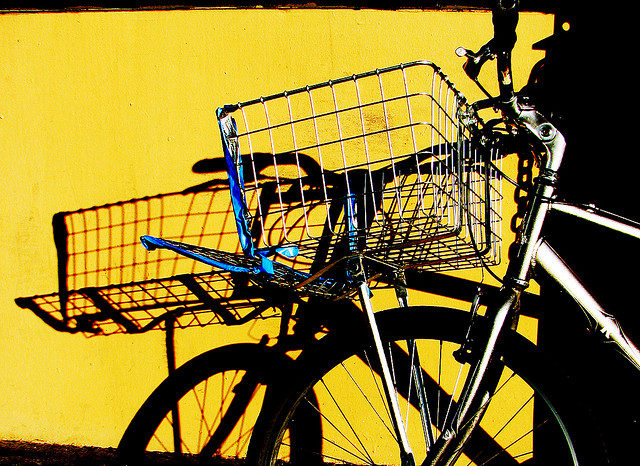
"urban cycling cyprus"A new law in the works in Cyprus may deter cycling (and therefore promote more carbon-emitting forms of transportation).

We’ve heard some pretty crazy stories coming out of Cyprus lately (such as some Cypriots’ appetite for pickled migrating songbirds), but this may be just as shocking: a new Cypriot law proposal wishes to fine and imprison cyclists for riding on pavements, among other things.  The problem with this law?  Cypriot cyclists currently have no allocated bike lanes and it is dangerous for them to use the roads, so the sidewalks are their only real urban cycling option.  Take this away, and you may as well be taking cycling in Cyprus away altogether.

Environment Commisioner Charalambos Theopepmtou agrees that the proposal is a problem, saying that “such a ban should be enforced only when the necessary infrastructure is put in place or else it will keep cyclists away.”

Cyprus Researcher: Protect Sea from Natural Gas Drills

0

Drilling for undersea gas in Cyprus’s Exclusive Economic Zone may have serious impacts on marine life.

Like 0ther-energy poor countries in the eastern Mediterranean basin, including Israel and Lebanon, who are now in a  serious dispute over energy reserves located there, the Republic of Cyprus has shown interested in exploiting the undersea natural gas fields that lay near its shores. Last July,  the Republic of Cyprus’s Commerce Minister Antonis Paschalides expressed his concern involving his country’s exploration for natural gas in what is known as the Exclusive Economic Zone (EEZ) south-east of Cyprus, otherwise known as Block 12. In an interview in the Cyprus Mail, Paschalides expressed concerns that drilling for natural gas could result in severe environmental damage.

Katerva Picks 8 Global Projects to Save Planet Earth

1

katerva
Katerva picks the top of the top social entrepreneur and NGO projects for 2011. The grand prize winner will be courted by top business and marketing advisers to help its impact reach the stratosphere.

In an ambitious effort to screen the best of the best sustainability projects that can radically change our world, quickly, our friends at Katerva have announced its competing finalists, a list of 8. “We are pleased to confirm the Katerva Award Category Winners have been identified following rigorous review by our expert panelists,” announces the organization set up to radically change the deteriorating course of planet earth: ” These winners were chosen from a field of very strong candidates after undergoing a year-long nomination and review process involving roughly 500 experts, researchers, business and thought leaders across 50 countries.

A number of the 8 have been featured on Green Prophet as vehicles for change in the Middle East. Who are Katerva’s Top 8? Read on.