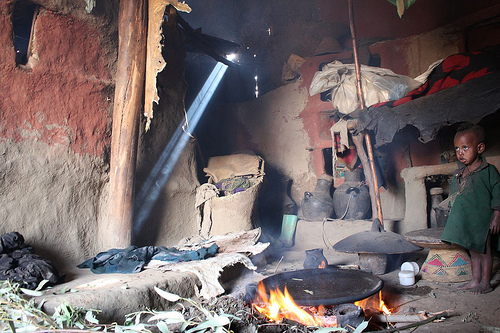
 Nearly 3 billion people lack safe and efficient cooking gear. It’s time to make the problem in the kitchen sexier.
Half the world’s households prepare their meals over open fires or with jerry-rigged cookers fueled by scrap wood, coal, combustible waste and dung. Fatal burns are common and foraged fuel dangerously degrades indoor air quality. The World Health Organization reports that toxic smoke from inefficient stoves is the fifth biggest health risk in the developing world, killing 2 million people annually. This shocking statistic puts unsafe cooking nose to nose with HIV/AIDS on the global killing field, with women and children most vulnerable. Who knew?
For decades, aid advocates insisted that more efficient stoves using cleaner fuels could eradicate the problem in underdeveloped communities where electricity was unreliable and fuel supplies scarce. Now safe-stove news is popping up relative to refugee camps and “Occupy Wall Street” outposts. In the ‘90s, American inventor Peter Scott helped design low-cost portable “rocket stoves” which run on electric, gas or solar power and include powerful filters to limit harmful smoke. The New Yorker christened Scott the movement’s Thomas Edison, adding, “The average cooking fire produces as much carbon dioxide as a car, and a great deal more soot. Cleaning up these emissions may be the fastest, cheapest way to cool the planet.” But why isn’t this idea selling?

 Villagers gather around a kiosk in Afto, Ethiopia to charge their cell phones using solar power and to fill up their jerry cans with UV clean water