Home Blog Page 452

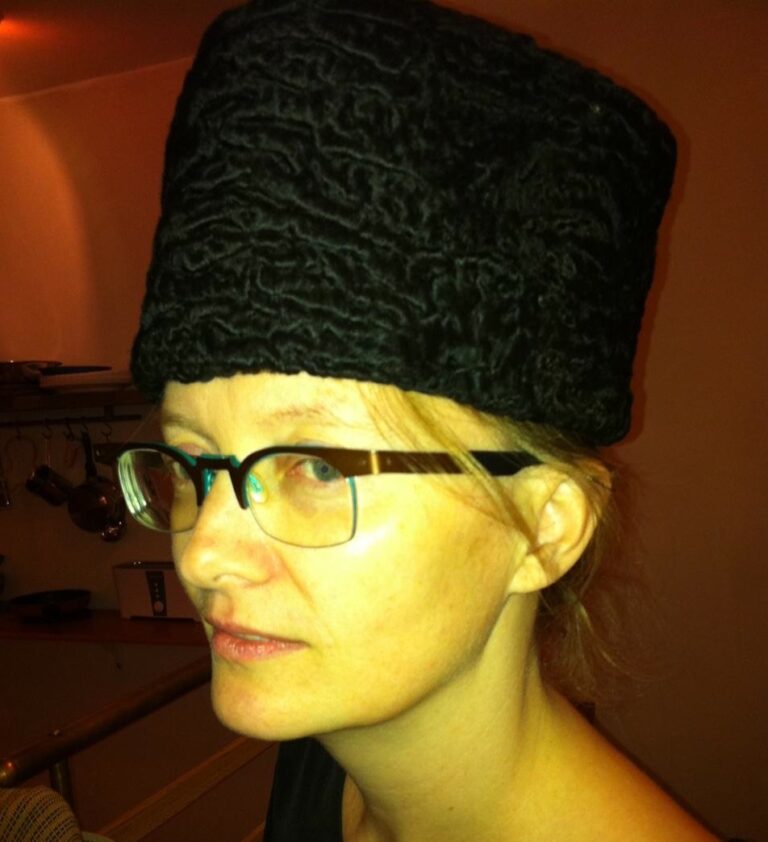
Caught Wearing An Aborted Lamb Fetus Karacul Hat!

35

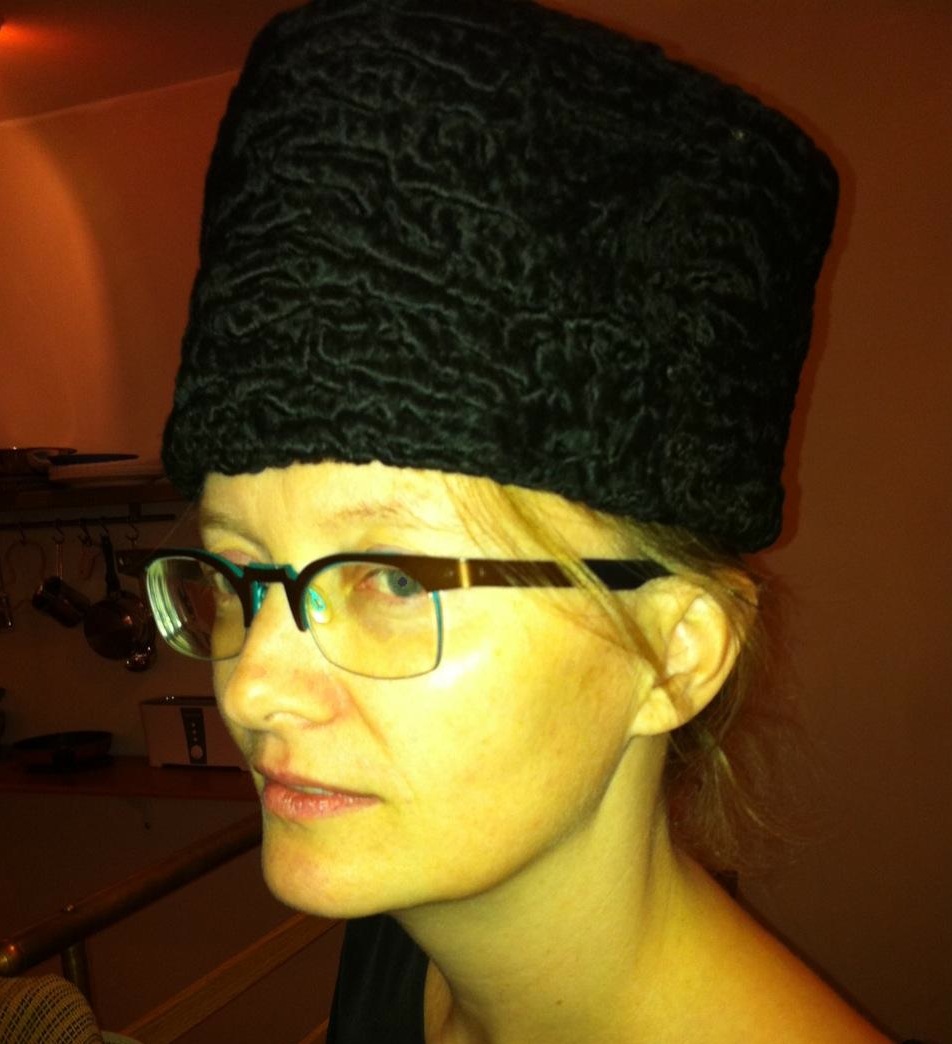
karacul hat lamb fetusGreen Prophet’s founder (that’s me) caught on camera wearing a controversial karacul hat.

My husband’s people come from the Silk Road region of Tajikistan, where the elders pride themselves on wearing grey or black karacul hats. Football shaped, with soft fur, they give a man a look of distinction. On a recent outing to a flea market my husband stopped by a Bukharian clothes shop, where the owner had just brought back a pile of supplies form Tashkent. Upon finding a hat that reminded him of his grandfather, my husband immediately shelled out the $50 for the hat, and came home excited to show me. I put it on and he said I looked like a supermodel. Admittedly, I kind of felt like one, and started wondering where I could wear this hat. Until I read how it was made.

Gaza Seawater Desalination Plant Backed By Europe

0

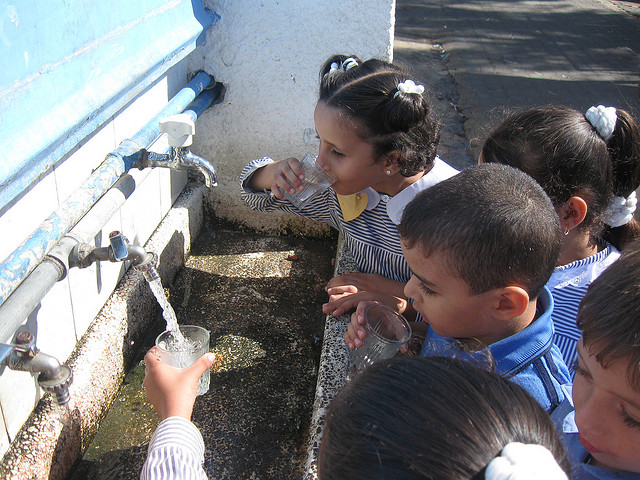
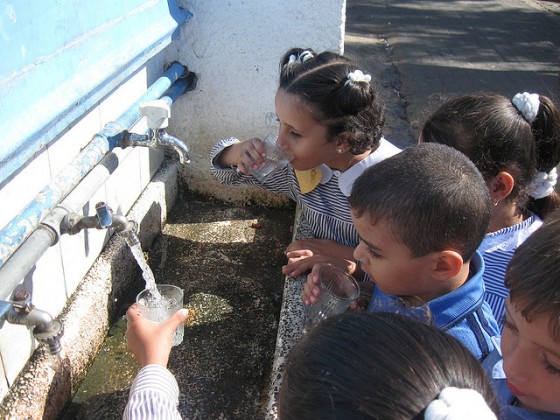
gaza-desalination-europe-water-securityFunding and technical support has been offered by Europe to help build a desalination plant in Gaza – but is desalination a wise choice?

In the Gaza Strip it is estimated that just 5% of the available water is suitable for consumption. As such any efforts to help improve water security are not only welcome but necessary. France recently announced that they would be contributing €10 million towards the construction of a desalination plant in Gaza. The European Investment Bank is also offering its technical expertise as well funding and operational management. But can the energy-poor and economically-challenged Gaza Strip really operate a water technology normally associated with rich Gulf nations?

Greener TV With Comcast Cable?

vintage TVs and bike, Israel
Want to support a cable company that cares about the planet?

True, a lot of environmentalists promote reading over television. A nice intimate dinner and good chats with friends over a night at the movies. And of course we know it’s the better way to let our kids play outside before we let them switch on the computer games and consoles.

But we can’t be superheros all the time. Sometimes we need that downtime, some time to be couch potatoes in front of the television. Kids too.

If you live in the United States you’ll find the best cable deals, with dozens of channels, or more, that will interest you –– even if you consider yourself a serious environmentalist.

Building one of the most environmentally-savvy green buildings in the United States, Comcast – the largest cable, phone and Internet provider in the United States, is setting the pace on how overlooked services like media, communications and entertainment can be greened.

It is setting an agenda for global companies to follow.

Whether you are into animal, nature or ecological shows at all, there are plenty of environment-related shows served by Comcast from PBS, Discovery, Nat Geo, Nat Geographic Wild, and channels like Animal Planet.

Animal Planet is one of our favorite shows as it captivates audiences with adventures from the wild kingdom, all the way to adventure with domestic animals like Kitty in the backyard. Meow.

Discovery is the best way to take a comfy seat into exploring your world; with programming that includes series on undisturbed habitats, to man’s place in the city and environment, to pure environmental programming. (Take note that Discovery bought the blog TreeHugger a few years ago, adding to its commitment to serve the environmental ethos.)

And National Geographic? No home is complete without access to this world-changing programming, showing the culture of people and our fascination with our natural and built environment from the arctic, to the tropics to the heartlands of Africa.


Jerusalem Mayor to Join “Bike to Work Day” Next Week

"jerusalem bicycle festival"Jerusalem’s light rail may have been up and running for months already, but some residents believe that cycling is still the best way to get around.

In the fall of 2011, Jerusalem finally got its much anticipated light rail (after years of construction).  The light rail was intended to offer a comfortable and eco-friendly means of transportation to Jerusalem’s residents, but some of them – especially those who ride bikes – think cycling is better (and protest the fact that bikes are banned aboard the light rail).  In order to remind Jerusalem that cycling is still a great way to get around, Cycle Jerusalem has organized a Bike to Work Day to take place next week.

Dubai Might Buy Solar off Roofs

2

dubai-might-buy-solar-roofs

Dubai’s electric utilities are considering buying back power generated from solar panels on the roofs of houses and office buildings.

Last year, the city carried out its first ever study to see how much solar power is being produced outside the grid and it found that local businesses and other private owners were producing around 5 MW of electricity for their own use.

If that much is being done with no incentives, they thought, how much power could citizens deploy if there were an incentive?

(Or – could all this onsite solar generation be due to Dubai’s own Net Zero Building Codes it passed a few years ago? To incentivize architects to add solar!)

Related: Green Gas Station Meets Stringent New Dubai Building Code)

Food Security Overwhelming More Than 1 Million Syrians

syria food plate shared
The United Nations Food and Agriculture Organization (FAO) issued a special alert on the food security situation in Syria this past week, voicing serious concern over the state of food security, especially for vulnerable groups, because of continued civil unrest since March 2011. According to the Syrian Central Bureau of Statistics, inflation increased between June and December 2011 by about 15 percent, mainly driven by sharp increases in food prices and fuel shortages that are impacting on transportation costs.

The United Nations World Food Programme estimated in 2010 that about 1.4 million food insecure were living in areas which have now become conflict hotspots such as Homs, Hama, rural Damascus, Daraa and Idleb and the concern is that they now have become even more vulnerable.

Jerusalem’s Western Wall for the Birds

western wall jerusalem swifts
Swifts return to nest at Judaism most sacred site

When the swifts came back to Jerusalem’s Western Wall last week there was rejoicing as bird watchers and the religious welcomed them home to Judaism’s most sacred site. The common swift, which spends is entire life flying or sitting its nest, returns from wintering in South Africa to nest between the cracks in the ancient wall. For over 2,000 years, the crevices between the wall’s massive limestone blocks have served as the perfect nesting location for the swift (Apus apus).

America can’t green Jordan’s future

0

green money plant watering can
America joins Jordan in a celebration of green, but we are not sold on the deal. 

The USA and Jordan recently entered into environmental partnership, cosigning a plan to promote four distinct Jordanian initiatives: ecosystem conservation; increased education; improved private sector performance; and stronger environmental law.

This agreement wrapped up a one-day forum on Environmental Technical Cooperation involving experts from each country’s environmental agencies and commits both nations to increased cooperation in efforts to preserve Jordan’s natural environment.

This new work program aims to incite sustainable development and green job creation in the Kingdom, stating that, “…cooperation tangibly demonstrates that economic growth and environmental protection are mutually supportive.”

The US Embassy in Amman’s website states that the program “was established in 2000…in association with the U.S.-Jordan Free Trade Agreement…as a means to enhance Jordan’s economic development and the quality of the trade relationship between the two countries.”
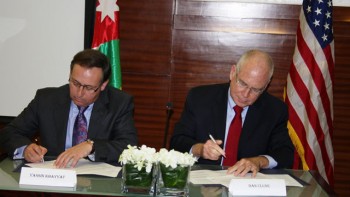
Minister of Environment Yaseen Khayyat and U.S. Principle Deputy Assistant Secretary of State Danial Clune signed an agreement on a new work program that lays out a road map for environmental cooperation between the United States and Jordan into 2013.

Since signing the US Free Trade Agreement in 2001, Jordan hit green targets ranging from establishing a Ministry of Environment to banning use of leaded fuels. They were the first Middle Eastern nation to join the Global Methane Initiative (GMI), a public-private initiative to develop methane recovery projects. Good press in all that.

But after a decade, do these accomplishments really warrant bragging rights? Where are the benchmarks to track specific progress against original goals?  And what were those original environmental goals?

Emphasizing free trade, job creation and economic growth.

Jobs are good. I’m happy to have one.  My job has an enviro edge to it, but it’ not an environmental job.  There’s a similar distinction to be made between this compact’s twin goals. Is it an environmental initiative, or an economic one with a green angle?  Sure, there are instances where both masters can be served, but which here holds sway?

Leaded fuels have been banned for decades in most industrialized countries because of pollution concerns, but also because of disastrous effects on vehicles’ catalytic converters (enviro-benefit motivated by commercial need).   Establishing a ministry and joining green programs like GMI are positive steps but, lacking key performance indicators, it’s difficult to gauge impact (enviro-ambition with ill-defined output).

Shouldn’t liaison between top-tier environmental agencies drive larger green feats?

USAID does important work in Jordan bringing clean water to remote villages, installing water saving systems, and teaching conservation.  The Royal Society for the Conservation of Nature (RSCN) works to conserve Jordan’s biodiversity, linking conservation with socioeconomic development, and engaging public action for protecting the natural environment.

RSCN is also home to Wild Jordan, a popular outpost in old Amman that hosts ecotours (the real deal, hikes and bikes and camping in tents without minibars) and educational programs that benefit both tour-takers and local communities. These are just two examples of green partnerships between the nations with bona fide environmental achievement.

So what’s this new compact bring to the table?

Years ago, I worked in the USA in an environmental role. I could see the EPA’s political teeth were already loosening.  With diminishing powers back home, what can they effect across the globe?

The US Department of the Interior has a lengthy record of questionable environmental positions, supporting development of federal lands for commercial use, and inadequately preserving endangered species.

In September 2008, The New York Times reported, “A culture of ethical failure pervades the agency.  The reports portray a dysfunctional organization that has been riddled with conflicts of interest, unprofessional behavior and a free-for-all atmosphere.”

That same year, the Department of the Interior was sued by the Center for Biological Diversity for introducing “regulations…that would eviscerate our nation’s most successful wildlife law by exempting thousands of federal activities, including those that generate greenhouse gases, from review under the Endangered Species Act.”

Not exactly the A-team for catapulting Jordan’s environmental protection ambition into reality.

A Joint Communiqué issued at the end of the USA-Jordan forum stated, “We are happy to report that we are making significant progress toward achieving the goal we identified almost 12 years ago in our Joint Statement to ‘advance environmental protection in Jordan.'”

Twelve years to ban leaded fuel and set up a new ministry.

What will they accomplish in the next twelve months?

Signatory image via the US Embassy

Barefoot College Solar Project in Jordan Needs You!

1

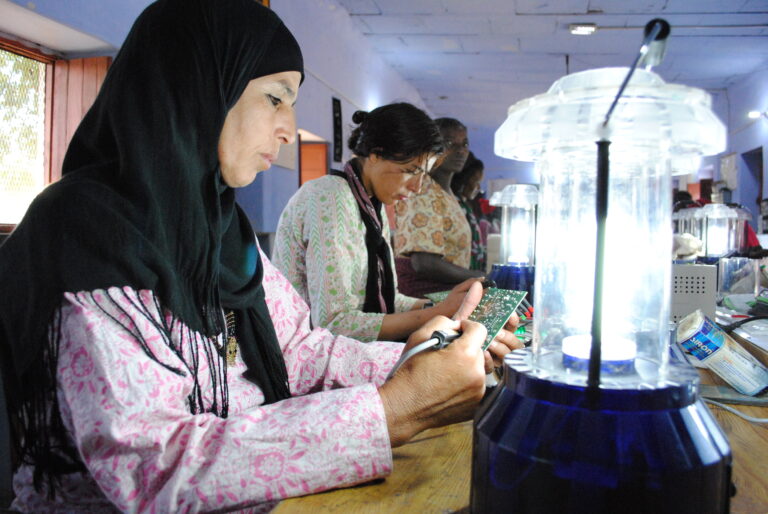
barefoot-college-jordan-solar-bedouinOne year after they were trained as solar engineers, two illiterate women from Jordan are still waiting for funding to connect their villages to solar power

“I have no doubt that we are going to achieve a lot. I’m hoping that my life and that of my village will change forever.” Those were the words of Raf’ia Abdul Hamid exactly one year ago. At the time Rafi’a, a mother of four, was finishing off a year-long course at the Barefoot College in India to qualify as a solar engineer. She was preparing to return to Jordan and was clearly excited about the prospect of bringing clean energy to her village.

Although she had come from a underprivileged background and was illiterate, could not afford services like research paper writing services she learnt how to setup and repair solar panels and was eager to apply her skills.

But one year on and little progress has been made.

Raouf Dabbas, Senior Advisor at the Ministry of Environment in Jordan informed me that the solar project was still awaiting donor assistance. “We’ve tried UNDP/GEF where the local representative informed us that there were no funds available at the time. The Ministry of Planning in Jordan responsible for supporting small socio-economic projects also turned us down,” he said

“Our hopes now are focused on the Jordan Environment Protection Fund who have been presented with the 3 year technical capacity building proposal for the Rural Solar Electrification project. The Jordan Society for Sustainable Development NGO is following up the proposal closely with the Fund at this time. There is a 50-50 chance they will be successful.”

Dabbas was also eager to add that the Barefoot College in India, which trains illiterate women from all around world, has also offered some assistance to the ex-students. As well as searching for funding sources, they have provided the village with a limited amount of panels. These were successfully assembled by the women and there are now solar systems in three homes in the village.

“The Bedouin women have demonstrated that they possess the knowledge and experience to put the systems together,” remarked Dabbas. All they need now is the financial and administrative support to assembly solar panels on a large scale and also to train a new generation of female solar engineers.

I’ll keep readers updated on the Jordan Environment Protection Fund’s final decision.

The Barefoot college launched the solar power course for women in 2005 and already more than 150 grandmothers from 28 countries have been trained. Over 10,000 homes in 100 villages have been solar electrified which has saved 1.5 million litres of kerosene from polluting the atmosphere.

For more on Jordan see:

Barefoot College Bedouin Women Bring Solar Power To Jordan

Jordan’s Public Transport Plans Blocked By ‘Politics’

Jordanians Hold Vigil For Fukushima

A Clarion Call for Sahel Drought Victims

0

drought, water shortages, food shortages, Sahel, Oxfam, Baaba Maal,World-renowned Sengalese musician Baaba Maal visits drought victims in Mauritania.

Regardless of criticism or the fact that its narrator was arrested for disorderly conduct in San Diego, the Kony 2012 campaign video that recently “went viral” on social media networks has demonstrated that the masses can be called to action when invisible people from the planet’s underbelly are in need.

Unfortunately, no video exists to convey the desperation of people living in the drought-stricken Sahel region south of the Sahara desert, but Oxfam International warns that 12 million people are facing a severe food crisis due to failed crops, erratic rains, and other factors.

Catch up With Green Prophet in Tunisia

1

http://www.greenprophet.com/author/tafline-laylin/Green Prophet will be scouting out stories in Tunisia so give us a shout if you want your project featured on our site.

Heads up to our green-minded readers in Tunisia: Green Prophet is coming into town and we want to meet you! We’re heading to Tunis on Tuesday and will be on the look out for organic or local restaurants, awesome green building projects, eco-art, and other sustainable initiatives. Are you the owner of an eco-lodge that needs a review or a chef who needs a guinea pig?

If so, give us a shout, and we’ll come and check you out. In the meantime, take a quick look at The Bedouins – a wonderful group of creative young people who are transforming Tunisia one tagged wall at a time, and this awesome eco-lodge that we reviewed in the days before Jasmine. And finally, here are 5 stories that point to a freer, greener Tunisia. We can’t wait to be there in person!

Have a fabulous weekend, and we hope to see you next week!

Image credit: Tunis Medina, Shutterstock.

Holy Land Leaders: Muslims, Jews, Christians Link to Save the Planet

hamsa with wings
Ahead of Rio +20 join the interfaith climate and energy conference in Jerusalem next week.

Can mobilizing the world’s faithful save the planet where activists without faith have failed? Muslim, Jewish and Christian leaders will be speaking out on climate change next week, while conveying their shared visions on renewable energy at the Interfaith Climate and Energy Conference. It will be held in Jerusalem on Monday, March 19th and you the public are invited to attend.

What the Kony 2012 Video Can Teach Saudi Arabia’s Greens

0

saudi arabia recycling sign
Let’s admit it: the Kony Video is big. With more views in a week than any other TV show and YouTube video showing a number usually reserved for the latest antics of the Kardashian Clan, the video has quickly and effectively managed to communicate its message. The controversies surrounding the cause as pointed out by some people have not done much damage to the viral status of the video. Looking at the video and following the ensuing responses, both good and bad, I believe that Saudi Arabia‘s movement for environmental conservation and green living can take some rather valuable lessons from the epic success of the Kony Video.

What Iran Could Learn from Abu Dhabi’s First Nuclear Plant

0

aladdin's lamp nuclear iran, abu dhabi
Iran’s Bushehr nuclear plant has been under suspicion for decades, rightly or wrongly.

So as not to arouse alarm, the United Arab Emirates’ civil nuclear plan has been taking the opposite approach of complete transparency. The UAE has forgone any plans to enrich or reprocess uranium itself, so as to allay any cause for suspicion or concerns about nuclear proliferation. Abu Dhabi engaged an independent regulator, and an international advisory board that includes Hans Blix – famous for the globally backed hunt for Iraq’s nukes.

And Abu Dhabi’s first ever nuclear power plant was just permitted this month.

Curvy Desert Home Designed by Iranian Students Mimics the Snail

Iran biomimicry design-architecture

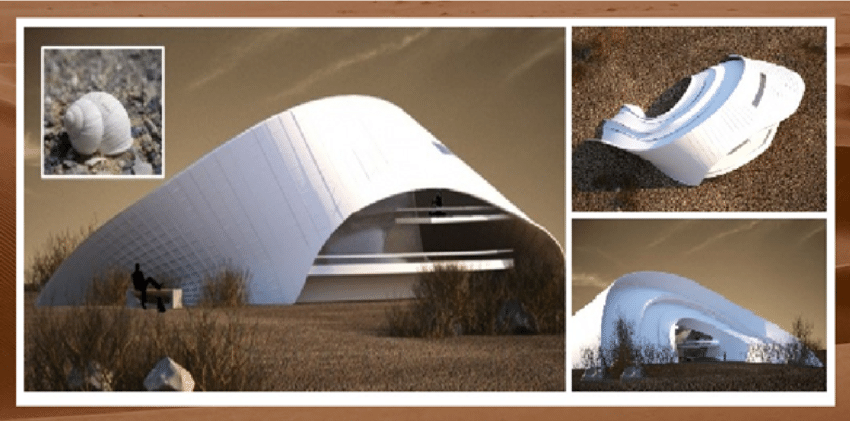
A team of Iranian students won a prestigious design competition with this cool desert dwelling!

If you think this curvy desert dwelling looks a bit like a snail, then you definitely aren’t going crazy! Tasked by the Biomimicry Institute’s Student Design Challenge with finding solutions to every day challenges by looking to nature, Elnaz Amiri, Hesam Andalib, Roza Atarod, and M-amin Mohamad from the Art University of Isfahan in Iran decided to design a house that is self-cooling – just like a snail. Step into our lair for more details about this very – ahem – cool home.

Staying Cool

Hesam Andalib told Fastco. Design that the snail has remarkable qualities that has allowed it to stay both cool and moist in even the harshest temperatures. He and the rest of the design team found its form, the material of its shell, and its coping strategies to be qualities worth emulating in architecture.

To mimic the curvature of the snail’s shell, the students created crescent shaped panels that overlap one another. These prevent excess sunlight from penetrating the interior and its off-white color is thought to reflect sunlight.

Like the snail, which retreats far into the depths of its shell when the sun blazes, residents of this desert dwelling (if it is built) can escape the heat by tunneling further into the building’s recess. The further the reach, the cooler the interior – like a cave.

In case this sounds too good to be true, the students tested their ideas using Ecotect Building Analysis. Unsurprisingly, they found that the design works and the home would be perfectly comfortable without air conditioning in even the most formidable heat.

And we would be remiss if we didn’t mention how exciting it is for Iranian designers to win such a respected prize when the rest of the world is waiting with bated breath for the country to self-destruct.


biomimicry design Iran

Biomimicry in the Middle East

Biomimicry is slowly gaining momentum in the Middle East. Two Egyptian women have designed eco-tours that encourage students to look to the camel and scorpions and other desert animals for solutions to modern issues.

And last year we interviewed one of the foremost leaders in the biomimicry field, Melissa Sterry, who shared a few mind-blowing concepts that could easily be adapted in the Middle East.

But biomimicry’s most compelling advantage might be that in order to achieve the kind of pre-industrial efficiency and sustainability demonstrated by our ancestors, it might not be necessary for all of us to live in cob buildings and eat roots. We can move into the next era by combining nature’s prowess with our own technological might. Within reason.

More awesome desert dwellings:
First Earth: Uncompromising Ecological Architecture
The Mashrabiya House Beats the Heat With Traditional Arabic Technique
Hassan Fathy is the Father of Sustainable Architecture