Home Blog Page 447

Thimar Farm in Palestinian Territory Grows Food and Dignity

0

agriculture, Middle East, Palestinian Territory, food, health, An expanding farm in the Palestinian Territory provides jobs to more than 100 locals.

More than 600,000 Palestinians living in the West Bank are without jobs. That’s just over 16% of the population, and in the Gaza Strip the situation is worse with fully 40% of the population unemployed. In the past we’ve explored the value of green jobs, but frequently projects in the Palestinian territories only benefit a handful of people. Not so with THIMAR (Nature’s Produce for Agricultural Investment and Marketing.) Established in 2008 by the Nussiebeh family, the farm has grown more quickly than anyone could have imagined, not only fueling the local economy, but also restoring dignity to 140 workers and their families.

What Recycled Paper Products from Poo Looks Like

applied clean tech recycled toilet paper Poo paper produced by Applied Clean Tech.  

Tafline likes toilet talk, products and innovation that comes from human waste. See her round up on 5 innovations that turn the toilet into power. Following this article she picked up on the great new story of Applied Clean Tech, an Israeli company that is developing recycled paper from used toilet paper and other solid waste from the toilet. Sounds gross at first thought – imaging having your tofu burger wrapped in paper that previously came from someone’s toilet? But with sanitary issues aside, the idea is brilliant. It’s upcycling in the best way. 

Green Designers’ Cloudy Thinking

3

the cloud korea MVRVD

Rotterdam-based architects MVRDV were smacked with a powerful backlash after unveiling their design for The Cloud, a pair of posh residential skyscrapers located in Seoul, Korea. Hovering about 300 meters above the streetscape, the towers are linked at the 27th floor by a ten-story-high girdle of cubist forms, intended to represent a pixelated “cloud“. The building is sited at the entrance of a new business district, the Yongsan Dreamhub, designed by wunderkind Daniel Libeskind.

The concept’s not awful and something tower builders in the Middle East can learn from: raise up private green spaces typically placed at ground level to the sky. Create more surface for greenery, increase interior daylighting, and use street level set-backs for an open-to-public park. Occupants will hop express elevators that shoot them into this lofty “bridge” connecting both towers. The 14,000 m2 volume will house a sky lounge, restaurants, a conference center, and health club. Vegetated roofs, open decks and swimming pools will sit atop the stacked cubes, centrally located to all residents, offering astounding (and vertigo-inducing) city views.

FRX Polymers Raises $26.7 Million in Multinational Funding for Green Plastic

4

green plastic red jellybearAbu Dhabi and Israeli investors among new financiers of dioxin-free flame retardant plastic.

FRX Polymers manufactures and markets a range of environmental friendly and inherently flame retardant plastics. The company recently raised $26.6 million in series B venture capital financing from a diverse group of investors including Masdar Capital of Abu Dhabi, Israel Cleantech Ventures (ICV), Capricorn venture capital, SAM private equity and BASF Venture Capital of Europe.  This funding will allow FRX polymer to complete its first full scale production facility in Antwerp, Belgium.

Tour Nazareth in the Arms of An Angel

1

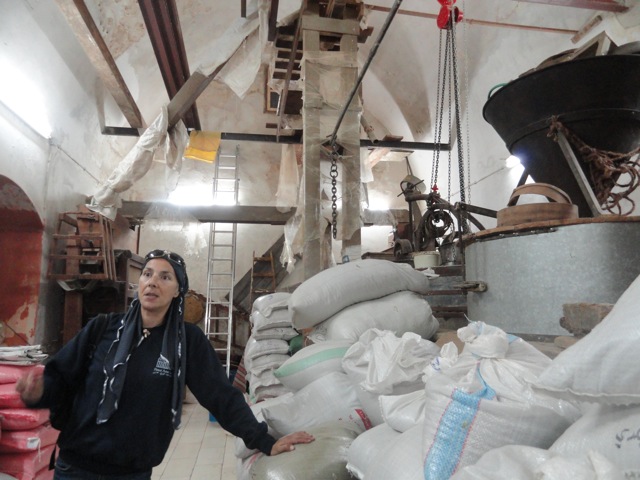
fauzi araz inn free tour nazarethGo on a mind-shifting free tour of Nazareth with Linda (above) when you stay at the budget hotel the Fauzi Azar Inn.

Nazareth, a Galilean City between the Mediterranean Sea and the Sea of Galilee is an important one for all major monotheistic religions. Most notably it has become a must-see pilgramage site for Catholics looking to see the Basilica of the Annunciation, and Mary’s Well. The city is believed to be the hometown of young Jesus. And it is there where faithful believed he attended synagogue and gave sermons. In a bold attempt to keep the busload of tourists in Nazareth for more than an hour or two in the crumbling city, the delightful Fauzi Azar Inn, in the Old City of Nazareth, has designed a must-see Old City Tour. The best part is that it’s free, the better part is that you’ll see nothing like it if you ventured around the Old City on your own, or even on an expensive historical and religious tour.

Touring Nazareth is a great way to learn how to support the local economy and learn more about the traditional ways of life in Nazareth, as they were then, and as they are today.

SpiderNet’s Artificial Spider Web Protects Crops from Tiny Pests

spidernet, spider web on flowersWhat would Charlotte the spider think of this man-made SpiderNet?

An Israeli made artificial spider web made to protect crops from insect pests will be one of the showcased products at Israel’s Agritech 2012 exhibit. Made from a special weave of micro-fibers, this new netting called SpiderNet is woven to catch insects in the field, much in the same way that real spiders entrap their prey. Developed by the company Meteor Nets, the SpiderNet is designed to create a blanket of protection around crops. It allows air to flow through freely, but the micro-fibres ensnare even the tiniest crop pests like whiteflies or thrips. These pests can be devastating to crops.

Astronauts to Watch Earth Hour From Above

5

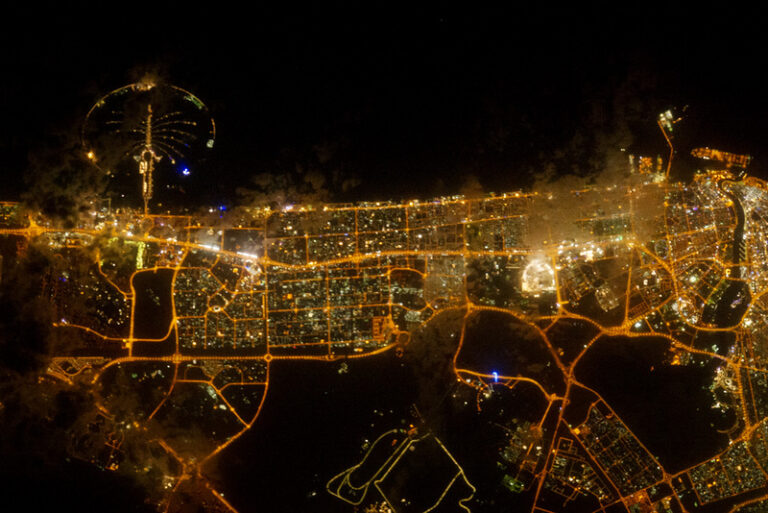
international space station light pollution Dubai

International Space Station view of Dubai Light Pollution on February 22, 2012. Can we change the world by switching off for an hour?

People from all over the world are encouraged to turn off their lights for Earth Hour, which takes place on Saturday March, 31 2012 at 8:30 pm local time (check the Earth Hour website for details of your home country). The first Earth Hour was organized in Sydney, Australia in 2007 by the World Wildlife Fund (WWF). By 2011, millions of people across 137 countries participated in this reminder of our ability to change the world for the better.

Egypt’s Foot-and-Mouth Disease Outbreak has Already Killed 10,000 Animals

3

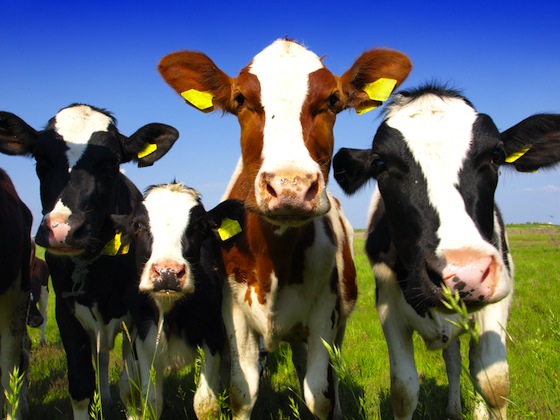
livestock, Egypt, foot-and-mouth disease, outbreak, food, health, FAO, UNThousands of animals have died and more are infected with a deadly strain of foot-and-mouth disease that has plowed through Egypt.

Despite government assurances that they were in control of Egypt’s foot-and-mouth disease (FMD), an outbreak has swept through the country, killing more than 10,000 animals to date. The UN Food and Agriculture Association (FAO) warns that 6.3 million buffalo and cattle and 7.5 million sheep and goats are at risk of contamination, and the General Authority for Veterinary Services claims that more than 60,000 animals have already contracted a new strain of the virus (SAT2) against which local livestock have no immunity.

Another Day in Tunisia: Chasing Balls Through Trash (PHOTOS)

1

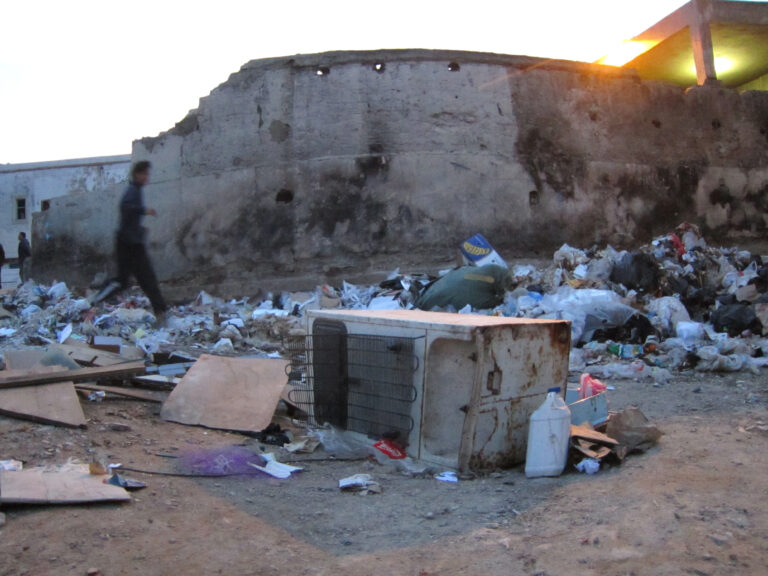
pollution, waste management, Tunis, medina, tourism, travel, health, recycling, waste, hazardous materialsA boy chases a ball into one of Tunisia’s 400 unofficial dumps.

After the hustle and bustle of Tunisia’s capital medina dies down, the kids come out to play – in the trash! A large open area just a few blocks from the main tourist attraction, a space between two buildings has been converted into an unofficial dump full of disused toilets, chemicals, and all manner of organic and recyclable waste.

Compared to Egypt, Tunisia has a 5 star waste management system but lags when compared to European cities. In 2009, 10 landfills serviced 10 million people. But now, with help from World Bank funds, nine new landfills are being created throughout the country and a 5th cell will be added to one in Tunis. Check out our photos of just one of 400 uncontrolled dumps in the country.

Looking for Sustainable Alternatives for Endangered Word

7

sustainable wordSorry folks, but nothing on this earth is sustainable, even words. Brian argues the dire need for new words to replace ‘sustainable’ in our eco-English vocabulary. 

Peak oil came and went in 2008.  Everyone knows this– with the possible exception of some US presidential candidates and one wildcat oil prospector in Cairo, Illinois.  Most Green Prophet readers are also aware that the Nubian ibex, Persian fallow deer, Arabian gazelle, Egyptian tortoise and hundreds of other animal species may become extinct within our lifetimes.

When Persian Sufi poets and the Jewish King Solomon told us that, This too shall pass, they were speaking of everything.  Solomon elaborated, that to everything there is a season and a time for every purpose under heaven.  In other words, nothing on this earth is… sustainable.  There, I’ve said it.  This is the first time I’ve used the “s” word on Green Prophet.  Yes, I know that I should conserve this overworked word but please let me explain its history and why I believe it is endangered. 

Sea of Galilee RisesTwo Meters, But Still Runs Short of Water

0

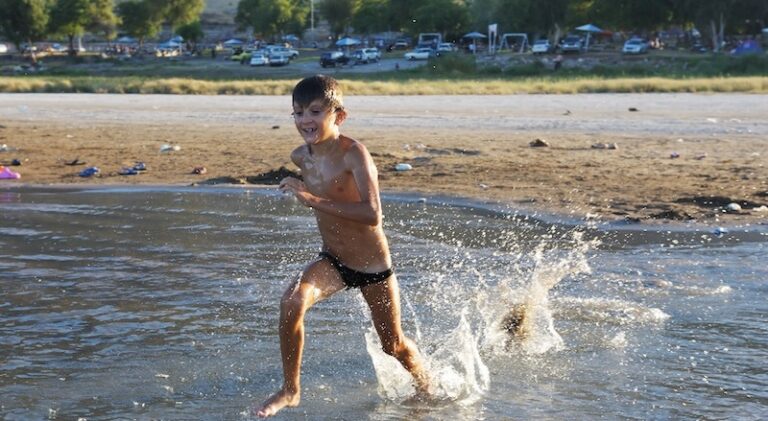
kinneret, sea of galilee, boy in water Despite recent and heavy rains in Israel, the Sea of Galilee is still three meters lower than it should be

Unusually heavy rains have helped restore water levels in Israel’s main water source, the Sea of Galilee or Lake Kinneret; a body of water that has been known since ancient times and until recently was also the primary water source for the Lower Jordan River. Due to increasingly dry conditions, Israel has had to depend more on desalination plants, such as ones in Ashkelon, Palmachim and Hadera, to supply the country’s population with needed fresh water. An abundance of winter rainfall has replenished the Sea of Galilee, but it’s not enough. 

How NASA Sees the Changing Middle East Landscape

1

[youtube http://www.youtube.com/watch?v=7q4YTpa3Bwg]
Who would have known 50 years ago that Angel Falls can be experienced like this?

Flying in a motorized paraglider over one of the most diverse continents in the world I find it absolutely awe inspiringly mind blowingly beautiful that nowadays we have the technology to provides us with new perspectives on this spherical rock called earth, أرض. This new perspective is not only important for scientific purposes, for instance to track changes of the Mesopotamian Marshes or Urbanization in Dubai or to track human rights abuses in Syria. But also simply to shows us the stunning beauty of our temporary dwelling.

We can now seize the moment and forever record what is left of this earth, places that will undoubtedly no longer exist in years to come. For example, George Steinmetz has been photographing remote landscapes for the past decade by flying ultralight air crafts. He has managed to capture some unique aerial pictures, without being noticed or heard.

An Israel Alone, Dependant On Natural Gas

1

Shaul Zemach (left) shakes hands with Zvi Rome of Petco (right) at the Asia House in Tel Aviv this Tuesday morningShaul Zemach (left) shakes hands with Zvi Rome of Petco (right) at the Asia House in Tel Aviv this Tuesday morning

With Israeli electricity prices set to rise nearly 9%, government officials are trying to plan for the long-term, at least until the next energy crisis.

At a breakfast event this Tuesday in Tel Aviv sponsored by Washington-based international energy consulting company Petco, the Director General of Israel’s Ministry of Energy and Water Resources Shaul Zemach spoke about the challenges facing Israel as it struggles to keep up with rising electricity and gas demand.

Israel’s Public Utility Authority – Electricity is raising electricity prices because a shortage of natural gas supply and a projected increase in electricity demand this summer will literally max out the country’s grid. Unfortunately for Israelis, this is not the first time that demand will outpace supply for the tiny Middle Eastern country that, according to Zemach, cannot rely on its neighbors for back-up power.

“We cannot rely on natural gas that is imported from a foreign country,” Zemach told the fifty or so gathered energy industry professionals in Hebrew. “This was something we knew before the problems with Egypt. Even then, the situation was not stable, but at the time we did not put enough emphasis on diversifying the country’s energy portfolio.”

Although Israel has recently discovered several significant offshore natural gas wells in the Mediterranean Sea, only the Leviathan well—with over 400 BCM (billion cubic meters) of natural gas—has been tapped and connected with a pipeline to generators. But with over 40% of Israel’s electricity produced with natural gas, Leviathan is quickly emptying just as supply from post-revolution Egypt is dwindling.

Zemach said the government knew there would be a gap in supply as Leviathan drained and the newly discovered 200 BCM Tamar well was tapped, but the government mistakenly assumed that Egyptian natural gas would fill the gap.

“Everyone thought we could buy time,” said Zemach. So when the government realized that would not be happening, it scurried to begin development of the Tamar well, but a gap in supply this summer is still inevitable.

And because the Israeli grid is so dependant on natural gas, Zemach said it will be nearly impossible for the country to transition to alternative energy sources anytime in the near future.

“We are in a natural gas crisis, so we have to develop [the wells we have] as quickly as possible,” said Zemach. But like everything in Israel, obtaining the necessary permits has been challenging for natural gas developers that have to jump through the hoops of government bureaucracy and local residents that are fighting the construction of pipelines near their homes.

“Israel has become a crowded countries in terms of infrastruct ure, said Zemach. But he said the government has to do a better job of prioritizing national interests over the protests of local communities.

In 2010, Israel also faced an energy crisis and at the time the government approved construction of four emergency power plants. Currently 34% of Israel’s power is generated from coal. But only three of the plants were built which is why the PUA is still struggling to keep ahead of supply two years later. Zemach said that included in the demand numbers is a relatively generous cushion of excess energy that Israel feels is necessary because it cannot rely on a neighboring country for backup power.

While many small isolated countries have chosen to invest in renewables rather than import natural gas, Zemach said the lack of energy partnerships with neighboring countries makes the Israeli PUA uncomfortable relying on renewable energy for any significant amount of power.

And the lack of abundant water resources makes hydropower, which in many small countries a significant part of a renewable energy portfolio, an impossibility in Israel.

By 2020, the country has set a goal of 10% renewable power, but it is an initial goal that is being used only as a preliminary test, Zemach said in response to a question from GreenProphet. There is currently no plan for further expansion after the 2020 target is met. For that target, the PUA will develop wind (30% of total renewables) and biomass (21% of total renewables) but will focus heavily on solar. And for a country with nearly constant sunshine, that technology may prove most effective.

What’s in season in March?

0

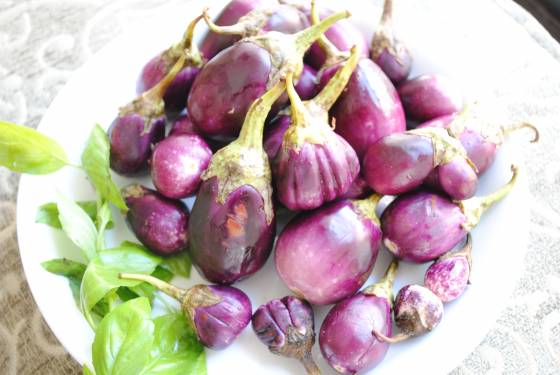
image-baby-eggplantsEver wonder what to do with eggplants? Read on for some Middle Eastern eggplant ideas.

At the start of the month, markets didn’t have much new. Everything in February’s post still appliedNewcomers like strawberries were still expensive and not sweet yet. Now, seasonal produce is on the upward swing towards summer’s abundance and those piles of strawberries fill the air with their fragrance as you move from vendor to vendor in the shuk. Strawberry prices will continue to fall slightly as spring progresses, but if you want to put jam up now, you won’t regret it.

More fruit in season: Avocados must be the best bargain in fruit right now. Black, wrinkly Hass avocados are sold dead ripe and ready for eating right now.  Try our natural moisturizing blend with some of these ripe avocados. The larger smooth green varieties are mostly sold hard for ripening at home.

Melons have begun. The smaller varieties are sweet already, but I advise waiting for hotter weather to buy watermelons. Oranges and clementines are still around, but fading out of the picture. Lemons are still abundant and good. Bananas are attractive, with prices slightly lower than at the beginning of the month.

Apples and pears are mostly imported and although attractive, not especially sweet. International shipping and perhaps refrigeration seem to draw the sweetness and flavor out of fruit. However, loquats are out in quantity, and they are a purely local fruit.

Other springtime arrivals are passion fruit, and kiwi fruit, both highly priced. Passion fruit vines grow easily in our climate, with fruit dropping off garden fences onto sidewalks, but kiwi is produced by farmers in the colder hilly regions. Quinces are available and look beautiful, but are most expensive.  Papaya fruit has now arrived, although scanty and expensive. Yellow guavas, with their unforgettable heady odor, are another springtime newcomer.

Lebanese Quince Jam, A Sweet Winter Recipe

Vegetables: Timeless cooking principle: cook seasonal produce together. Right now eggplants, peppers and tomatoes are fat and glossy, so cooks here naturally grill, then blend them together with garlic and olive oil. It’s a delicious spread with the slightly charred flavor that says Middle East. Or try grilling chunks of vegetables, our way.

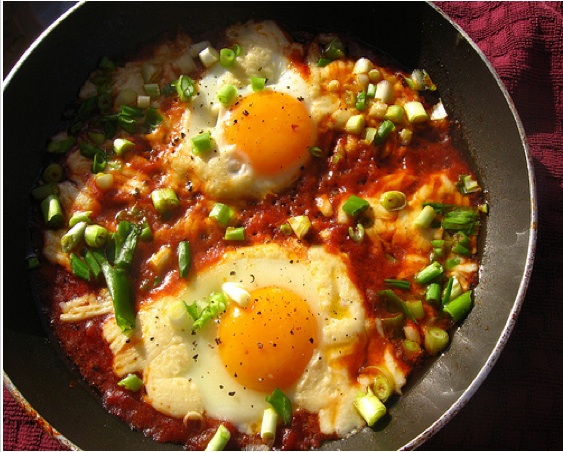
Shakshoukah, eggs poached in a tomato sauce with bell peppers, is another brilliant way to combine seasonal vegetables.
shakshouka eggs stew

Those prime ingredients for Middle-Eastern chopped salad, cucumbers and tomatoes, are excellent now and prices are coming down as summer approaches.

Bell peppers in all their colors are fat and prime for stuffing, grilling and pickling. Red bell peppers are slightly more expensive than their yellow, orange, and green cousins. Beware peppers imported from Turkey though. Buy organic if you can. Peppers are worth buying for salad or muhamarra spread now, but wait for full summer to buy quantities for pickling.

Eggplants again: both long, slender and full-bodied varieties, are worth buying now. Once the hot weather starts eggplants are the first to spoil and buckle in the heat, so buy now and enjoy.
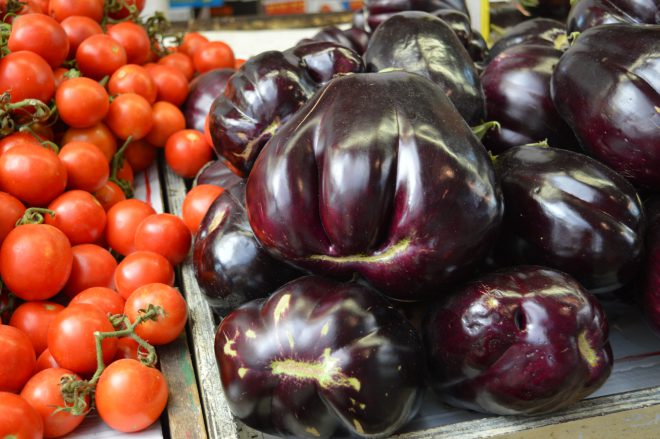
image-eggplants-israel

Squash varieties like pumpkins and zucchini are handsome and excellent for light springtime soups.

Green string beans and yellow wax beans are more in evidence although their prices are still on the high side. Artichokes are full and heavy; this is prime season for them.

Red, white, and baby potatoes of both colors are excellent, as always in spring. Onions are improving – you can ignore the sprouty ones that vendors are still trying to get rid of for the fresh new crops.

Short-season vegetables. Peas are in the markets now, as are green fava beans. Cardoons are in the markets. The cardoon, Cynara cardunculus, also called the artichoke thistle, is a thistle in the sunflower family. It is a naturally occurring species that also has many cultivated forms, including the globe artichoke.

Fresh green garlic is here and if you like it, now’s the time to buy for drying or preserving. Two ways to preserve fresh garlic are peeling and freezing it, or burying the cloves or entire cleaned bulbs in olive oil and herbs and baking till soft. This confit of garlic also freezes well. And eggplants yet again: baby eggplants for pickling are available in some markets. Buy now if you like them.

Some cold-weather vegetables are still firm and worth buying: cabbages, kohlrabi, beets, turnips, carrots, celeriac, parsley root.

Leafy vegetables like lettuces, Swiss chard and celery are very good. Broccoli has been looking rather old, but cauliflowers are going strong, fat, and white.

Herbs are so exuberantly beautiful and plentiful that they deserve space all to themselves. Mint,  thyme, rosemary, parsley, dill, watercress, aragula,  rocket, bitter wormwood for a sprig in tea, coriander leaf, fresh  fenugreek leaves, which are favored by the Indian community, a garlicky Persian leaf called” richu,” basil, scallions,  leeks, fresh ginger and “shav,” or sour grass for soup. A variety of savory that tastes like za’atar is being sold now.

Forager’s notes: Mulberry trees have put out leaves, good for stuffing or drying and crumbling later for tea. Shepherd’s purse is flowering and getting leggy, but the heart-shaped seed pods make a peppery accent in salads. Wild marigolds and chamomile flowers are very abundant wherever they’re allowed to grow.

Nettles, chickweed and mallows are no longer worth picking. Plantain leaf is especially abundant now because of the recent heavy rains. Fumaria and cleavers are still good. Mandrakes may be seen in cold regions, but beware – the intriguing purple fruit is toxic.

We promised you eggplant ideas, and here they are:

Baba Ganoush

Eggplant with Tahin/Labneh Sauce

Creamy Eggplant Soup

World’s Longest Solar-Powered Flight Will Land in Morocco!

Solar Impulse, solar-powered flight, Morocco, Switzerland, world's longest solar-powered flight
The Solar Impulse flies from Switzerland into the Moroccan sun.

Just 107 years after the Wright Brothers became famous for successfully flying the world’s first airplane, Swiss pilots Bertrand Piccard and André Borschberg made history in July, 2010 by piloting the longest solar-powered flight at 26 hours, 10 minutes, and 19 seconds. Now they have announced plans to break their own record in May or June by flying their Solar Impulse plane from Switzerland to Morocco in preparation of their round-the-world trip scheduled for next year.