Nothing like fresh, green produce for natural vitamins and minerals
Thanks to Green Prophet contributors who give us recipes on local vegetables like peppers, as well as flavor enhancers like garlic (locally grown and not imported from China of course), readers of our website have benefited from advice on how to boost one’s immune system, as well as adding a natural boost to low sexual libidos.
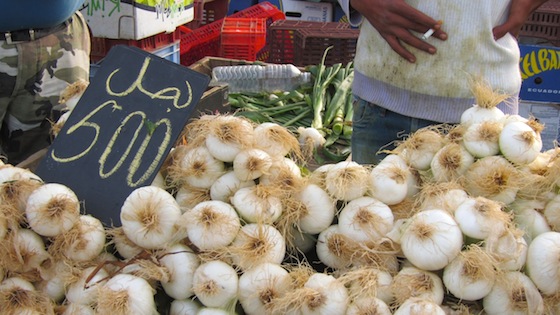 Home grown garlic is as near as your local shuk
Natural food users are aware of a number of herbs and vegetables to give a natural boost to human immune systems that are often weakened by taking too many antibiotics. Here are just some of them, with explanations on how these natural vegetables and herbs benefit our bodies and help increase our natural immunity to disease:
1. Astralagus – an herb long used in traditional Chinese medicine that aids in digestion and acts as a stimulant to the immune system as well as being a diuretic.
The herb is used in people with poor appetite, diarrhea or loose stool, blood in the stool and uterine bleeding. It also contains polysacchrides, saponins and flavonoids. Chinese medicine practitioners also use the plant to treat symptoms of HIV/AIDS; especially fatigue, weight loss, night sweats and insomnia.
If you have an auto-immune disease, are a child, are nursing, pregnant or are a transplant recipient, it is advised not to take Astralagus known in Chinese as HUang Qi, Radix Astragali, or 黄芪.
Astragalus propinquus is a flowering plant in the family Fabaceae and is one of the 50 fundamental herbs used in traditional Chinese medicine.
2. Red Bell Peppers: These sweet tasting vegetables come in different colors, ranging from light green to red. They contain a carotenoid called lycopene that protects our bodies against various cancers.
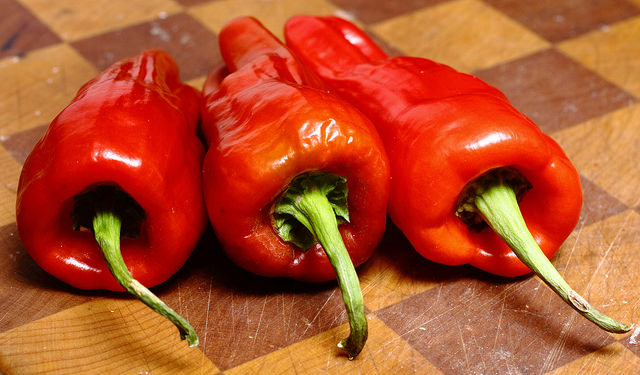
Bell peppers contain a number of vitamins, including vitamins A, C, B (1,3,5, and 6) as well as vitamins E and K . They also contain good quantities of other carotenoid antioxidants, including alpha and beta carotene. Buy organic ones because the non-organic can be high in pesticides.
Try this recipe if you are stuck at home, muhamarra:
Muhamarra: the addictive red pepper and walnut spread from Syria
3. Cat’s Claw: A woody plant with hook like thorns found in South American rainforests that has long been used by natives there to treat health problems including arthritis, stomach ulcers, inflammation, dysentery, and fevers.
It also contains antioxidants and oxindole alkaloids enhancing the immune system’s capacity to engulf and destroy pathogens.
4. Echinacea: A member of the daisy family, echinacea is a popular herb that has been identified to boost immunity and ward off infections. It has also been found to prevent and treat upper respiratory tract infections as well as the common cold.

5. Ganoderma– This hard, bitter mushroom is also known as reishi. Ganoderma is used to promote health and longevity in traditional Chinese medicine.
Proponents claim that ganoderma can relieve fatigue, keep cholesterol in check, curb high blood pressure, tame inflammation, build stamina, and support the immune system.
6. Garlic – This spice has had a long history of medicinal value. In a recent study conducted by Dr. Ellen Tattelman, an assistant professor at the Albert Einstein College of Medicine of Yeshiva University, New York, it was found that garlic has cardiovascular, anti-microbial and antineoplastic properties.
Garlic is used almost daily as a spice in Mediterranean and Middle Eastern cuisine.
7. Ginger – This herb has been shown to reduce inflammation, cardiovascular conditions, blood clots and cholesterol. It is often used in Chinese medicine and is commonly used to treat various types of stomach problems, including motion sickness, morning sickness, colic, upset stomach, gas, diarrhea, nausea caused by cancer treatment, nausea and vomiting after surgery, as well as loss of appetite.
8. Ginseng – Another common herb in Chinese medicine. The most commonly studied variety is Panax ginseng and is used for improving thinking, concentration, memory and work efficiency, physical stamina, and athletic endurance.
It is also used in treating chronic fatigue syndrome (CFS), for boosting the immune system, and for fighting particular infections in a lung disease called cystic fibrosis. Its main active component, ginsenosides, has been proven to have anti-inflammatory and anti-cancer properties.
9. Gingko Biloba– Ginkgo has been used in traditional medicine to treat blood disorders and enhance memory. Scientific studies throughout the years have found evidence that supports these claims.
Gingko has also been found top help treat dementia (including Alzheimer’s disease) and poor circulation in the legs. It also may be good for improving memory in older adults. Laboratory studies have shown that ginkgo improves blood circulation by dilating blood vessels and reducing the stickiness of blood platelets. Gingko trees are very long living; often living up to 1,000 years.
10. Turmeric– This spice contains curcumin, which has notable antioxidant properties. It also has antibacterial, anti-inflammatory and stomach soothing benefits.
It reduces inflammation by stimulating the adrenal glands to increase the hormone that lessens inflammation. Recent studies indicate that this very old remedy may also be beneficial in treating cancer by neutralizing oxygen free radical cells.
The good news about these beneficial vegetables and herbs is that they are available either naturally in our region or in whole food and health products stores and holistic medicine pharmacies. Using these products is an excellent way to commemorate Earth Day. And sadly, to help keep your immune system strong to beat viruses, some which may be deadly, like corona virus or COVID-19.
More on beneficial herbs and veggies for health and well being:

 Framing climate-influenced migration as a threat is dangerous and counterproductive is author Gregory White









 An archaic Saudia Arabian practice of trapping parrot fish in the Red Sea has to stop.



 The last international climate change negotiation