Home Blog Page 443

Northern Israel Monitors Sewage Trucks By GPS

1

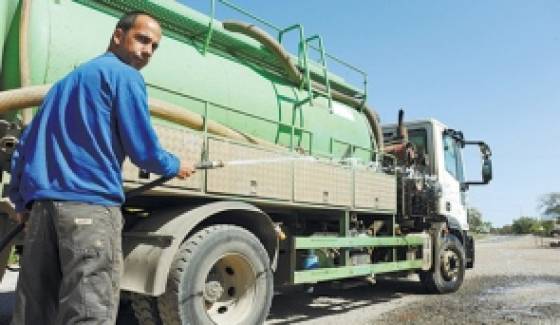
image-golan-sewage-truckIs Big Brother watching your sewage?

Israeli polluters can no longer dump raw sewage, lest they get caught. Drivers often dump collected waste into open areas to save on fuel and avoid paying authorized landfills. One incident occurred in 2009 in which drivers dumped the contents of 50 trucks worth of sewage food waste near the Sea of Galilee, polluting the area’s groundwater. But will the government  put GPS trackers on all the country’s sewage trucks to monitor their whereabouts?

Can Shared Water Be The Key To Peace?

1

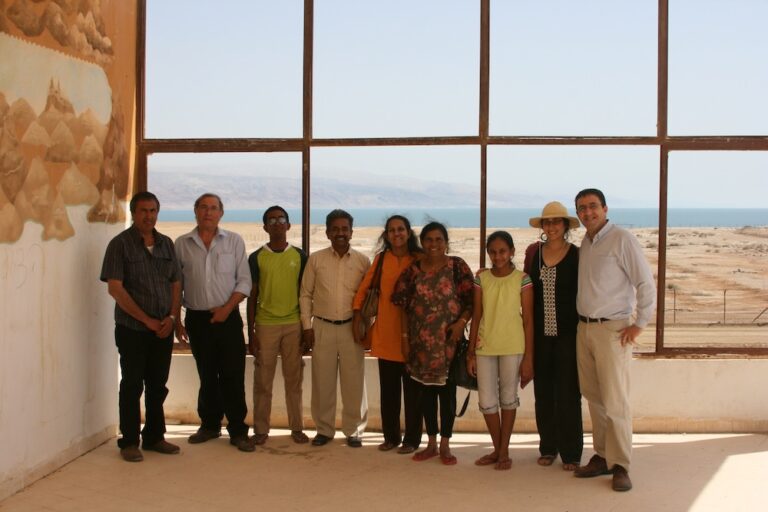
friends of earth middle east waterGreen Prophet goes on another water trip with Friends of the Earth and guests from Sri Lanka.

“Even sewage has a national flag,” said Gidon Bromberg, co-director and co-founder of Eco-Peace/Friends of the Earth Middle East (FoEME). Israel Director of the organization for 18 years, Bromberg says he’s seen how natural resources, like water, and even human waste, have become political tools in the Middle East regional conflict. A sewage treatment plant that was built for West Jerusalem, for example, does not treat the sewage from East Jerusalem. His goal: to use these very environmental tools to instead find common goals and connection and to build peace.

Israel’s Beach Season Opens With Litterbugs

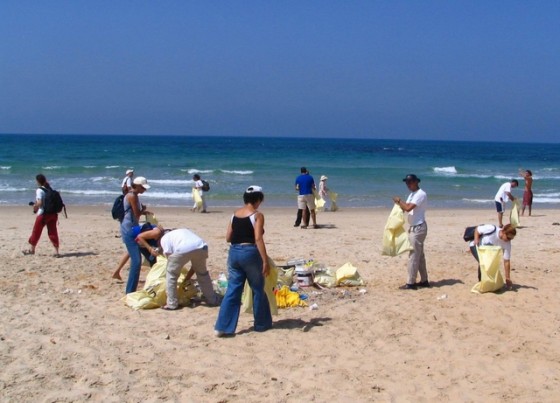
litter Israel beachDespite periodic volunteer clean up efforts, much of Israel’s beach front suffers from public littering

Lawyer Amit Bracha, director of Israel’s Union for Environmental Defense,  was a recent guest on Israel’s Channel 10 morning TV show, speaking on the official opening of beach season for 2012. Bracha told the program moderators that despite greater efforts being made to clean up the beachfronts many beaches are still very dirty, with the main responsibility for this situation falling on  the Israeli public.  This statement by Bracha come despite continuing efforts to clean up the country’s beaches with various clean-up projects that been ongoing since at least the summer of 2008.

Arab School Scoops a Coveted Israeli Green Globe Award

0

green globes, agriculture, education, urban, solar, environmental education

2012 Marks the ninth year that green globes have been awarded to Israel’s most sustainable movers and shakers, and a small Arab school northeast of Tel Aviv is among this year’s nine recipients. Located in Kafr Qasim, the Alzahraa school has not only established an ecological garden and solar station in their own school, but the headmaster Safwat Tahah told Jerusalem Post that they are particularly proud of engaging with the surrounding community to raise the specter of environmental issues.

The lions at the Gaza Zoo

2

zoo, Gaza, taxidermy, politics, nature, wildlife, animal conservation, animal rightsA lion even more sickly than this one was stuffed and put on display in a Gaza zoo.

Animals are among the first victims of political crisis, and nowhere is this more evident than in Gaza. The Times of Israel journalists recently toured the Gaza Strip’s unofficial Khan Younis Zoo and found mangled animals stuffed and displayed in makeshift cages littered with trash.

The owner Mohammed Awaida opened the zoo shortly before Israel’s three-week offensive against Hamas militants in December, 2008. During that time, he was unable to get to the animals, many of whom succumbed to starvation and neglect. Instead of disposing of their bodies, the self-trained taxidermist went online to learn how to stuff them using formaldehyde and sawdust.

Mangled dead animals

On display are a skeletal lion with a mangy coat, a monkey missing limbs, and a porcupine with a hole in its head. And the 65 live animals, according to Dalia Nammari and Daniella Cheslow, aren’t in much better shape. Since there are no animal activists in the forsaken Gaza Strip nor an official body overseeing zoo facilities, anything goes.

Since Israel has blocked all but one entrance into Gaza to deter Hamas militants, the animals are smuggled to Gaza from Egypt through underground tunnels that have come under fire after three Palestinian men drowned in a wastewater flood. But they are not properly cared for.

Dismal state of animal affairs

Awaida receives veterinary advice by telephone from Egypt, which also has a dubious and long record of inflicting abuse and neglect on its wild animals.

“We have humble capabilities, but the ministry encourages zoos,”Hassan Azzam, director of the veterinary services department in Gaza’s ministry of agriculture, told the journalists, who emphasize that despite being a rather grim experience, the Gaza Strip’s 1.7 million residents have few other entertainment options.

A 14 year old boy visiting Khan Younis said he had never seen stuffed animals before and told reporters he was going to put a photo on his wall of him standing next to the bedraggled lion.

More on Zoos and Wild Animals in the Middle East:
Gaza Zoo Paints Donkeys to Look Like Zebras
Corruption is Alive and Well at Egyptian Zoo
Egyptian Man Plans to Fight African Lion for Tourism

Solar-Rich Saudis Running after Nukes

0

desert-planet-saudi-nuclear

It has no uranium, but lots of solar – yet Saudi Arabia plans to double down on nuclear capacity.

As we covered previously, working with China, Saudi Arabia will spend more than $100 billion to build 16 nuclear energy plants within the next few years, as part of ramping up its electric capacity. But the proposed solar budget might shock you.

The rapidly growing nation expects its installed electric capacity to about double by 2030 to 110 GW.  Official sources from Saudi Arabia say that they plan to get 20% of their electricity from nuclear, which will remain at a fifth of their electricity, even while domestic demand is growing at an estimated 8% over the next ten years.

That’s fine. They have the dough.

But what will it invest in solar power? After all, the Saudis could be exporting solar for the next twenty centuries.

“We have allocated $3 billion to produce solar energy panels in Jubail and Yanbu,”Commerce and Industry Minister Abdullah Zainal Alireza told a Saudi U.S. business forum where investment opportunities totaling $385 billion in the Kingdom were outlined.

Uzbek babies don’t use diapers

6

diapers, energy, water, environment, Uzbekistan, babies, cradle, Beshik

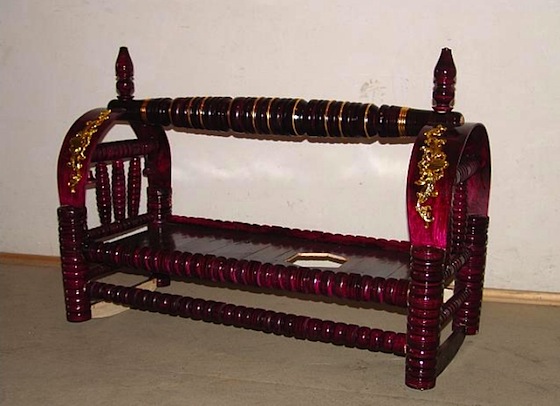
Non-biodegradable diapers are not only an environmental nightmare, but they often cause terrible rashes and cost a fair sum too. Cloth diapers are one viable alternative, but washing them is time consuming, requires energy and water expenditure, and frankly doesn’t look like an awful lot of fun. So how about mitigating all of these problems by building a Beshik cradle from Uzbekistan? Hit the jump to learn more about baby’s first bed pan.

After sleeping with their mothers for six weeks, Uzbeki babies are treated to their first major celebration — the Beshik Toyi. This involves a gathering with family members who show up with armfuls of food and other essentials, and baby’s new cradle.

The elder women leave the younger generation to create a festive environment while they bed baby down in this unusual contraption using blankets and straps. The cradle is decorated with all sorts of colorful tassels and trinkets, and they come in varying degrees of opulence.

diapers, energy, water, environment, Uzbekistan, babies, cradle, Beshik

There’s a hole at the base of the Beshik, which appears to be an exit point for baby’s number two, while a bucket at the end of the cradle catches urine transported via a short pole that looks like a very thin and hollow eggplant.

Since boys and girls have different apparatus, it stands to reason that different mechanisms are used to capture their waste.

Having met a handful of talented Uzbeki musicians, I can attest that they seem perfectly normal and not at all traumatized by starting out life strapped to a cradle.

That being said, we are uncertain how long they stay in their Beshik or how they stay clean and dry when running free.

Still, we are big fans of indigenous solutions to daily needs and this is no exception.


More on Diapers and Babies:
Are Cloth Diapers Green Even in Water-Scarce Middle East?
Going Halfway on Kushies Washable Diapers
All About Cloth Diapers

Egypt Slashes Longstanding Gas Deal With Israel

35

oil, natural gas, Egypt, Sinai, energy crisis, IsraelEgyptian Natural Gas Holding Company announced on Sunday that they have cancelled their agreement to sell natural gas to Israel following at least one dozen attacks on the pipeline linking the two countries. Israeli Finance Minister Yuval Steinitz said the move was of “great concern,” but Egypt insists that the decision was motivated purely by commercial reasons, not political.

Israel has received 40% of its natural gas supply from Egypt as part of a 1979 peace accord between the two countries that has been hugely unpopular among Egyptian citizens, who believe that Mubarak sold the gas too cheaply. Meanwhile, Egypt, population 81 million, has been suffering from crippling energy shortages over the last few months.

Interview: SolarReserve For the MENA Region?

0

SolarReserve tower
This week I spoke to Kevin Smith, the CEO of SolarReserve, the U.S. company constructing the largest 24 hour solar project worldwide in Nevada, who told me that they are beginning to be active in the Middle East North Africa region as well.

“We do have projects in development,” he said, “in Morocco, and Algeria and Saudi Arabia, Oman, which we’re looking at. There’s real opportunity there. So we’re looking at projects in those markets there, not as part of the Desertec program, but part of the buildup of the potential of solar in the Middle East and North Africa region.”

Earth Day Exclusive: Interview with Julie McIntyre, author of new Ecosex Book

Julie McIntyre, author of new Ecosex BookA growing but still small cadre of environmentalists are taking on the final frontier: nature and intimacy.


Julie McIntyre, an ‘Earth ceremonialist’ and director for the Center for Earth Relations is an ecological visionary. Trained in plant medicine, Ayurveda, Reiki, medical herbalism, wilderness survival and holistic health, she’s the lastest to write a book about human relationships and the environmental movement: Sex and the Intelligence of the Heart: Nature, Intimacy and Sexual Energy (Destiny Books, 2012).

In this exclusive Earth Day interview, Julie shares her vision for falling in love with the planet, explains why she thinks the environmental movement has shied away from Ecosex, and how the Ecosex movement can mentor in greater environmental awareness in the Middle East.

Native Deen: Muslim Hip Hop Group Releases Epic Earth Day Video

1

music video, environment, earth day, Native Deen, art, culture, lifestyle

The hugely popular DC-based Muslim hip hop group Native Deen have over 110,000 Facebook followers alone. And one of them, Aisha Ali, says she can’t go to sleep without listening to their songs. So when they release a new music video for a song called “Our Earth,” the diaspora is bound to listen.

Taken from the album “The Remedy,” this gentle environmental tribute diverges widely from many hip hop songs by referencing the importance of recycling and making smarter consumer choices. “What have we done to our earth,” the band asks in the song’s chorus, “When will we open our eyes and change the way we live our lives?”

A Guide to the Islamic Gardens of Andalucia (PHOTOS)

0

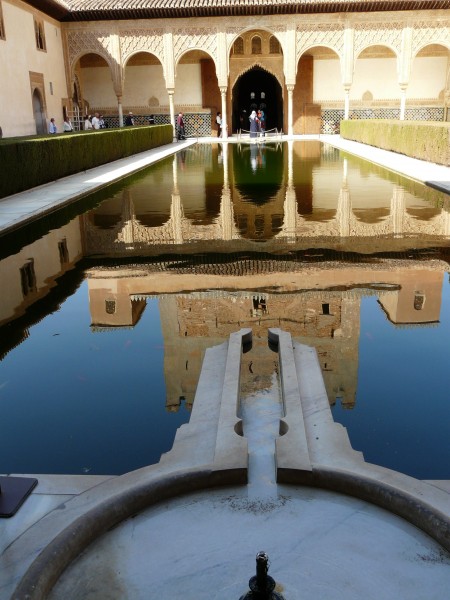
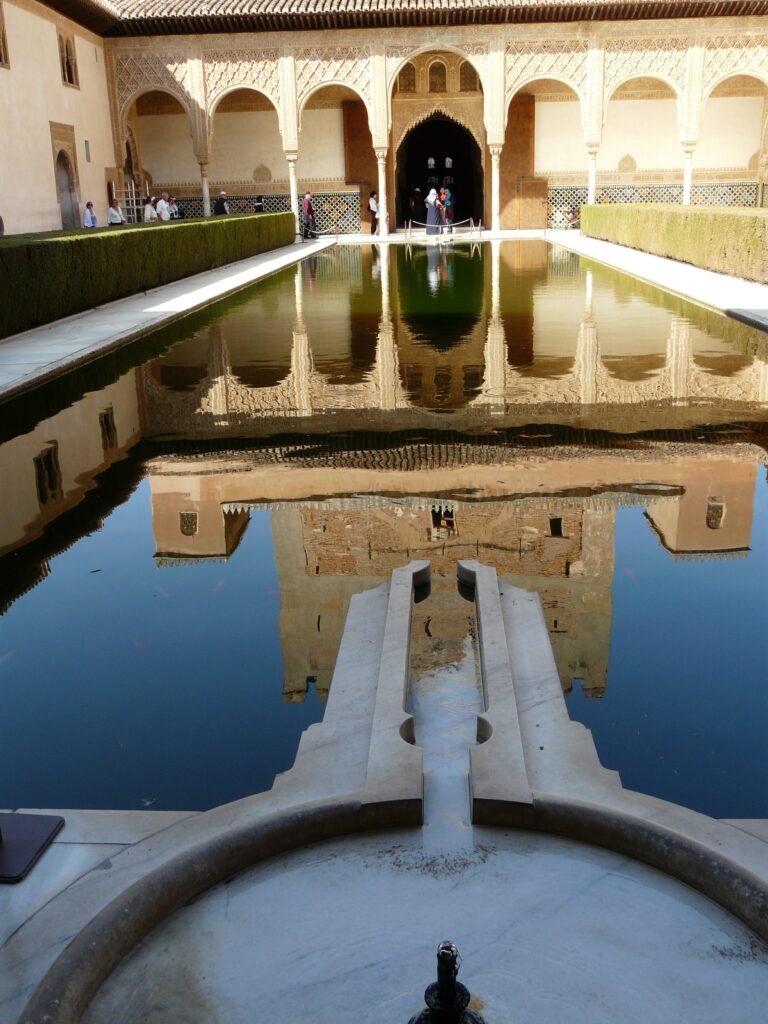
garden-andalucia-islam-greenFollowing a trip to the stunning gardens of Andalucia, Arwa delves in the world of Islamic gardens
About two weeks ago, I was lucky enough to take a tour around the south of Spain and see the spectacular gardens of Granada, Seville, Malaga and Cordoba. I was completely spellbound.

Built during the Islamic-era, these gardens beautifully combine water features, secluded walkways, geometry and stunning mosaic work. They are little oases of calm situated right in the heart of the city. Walking through the weaving pathways, all your worries just fade away and you’re transported to a world of tranquillity.

Indeed, in Islam paradise is often portrayed as a garden with running water, shade from the sun, sweet scents and exuberant foliage. These gardens also remind you of the calming and rejuvenating power of nature – something we could all do with a little bit more of in our hectic lives.

Recycling for Earth Day

1

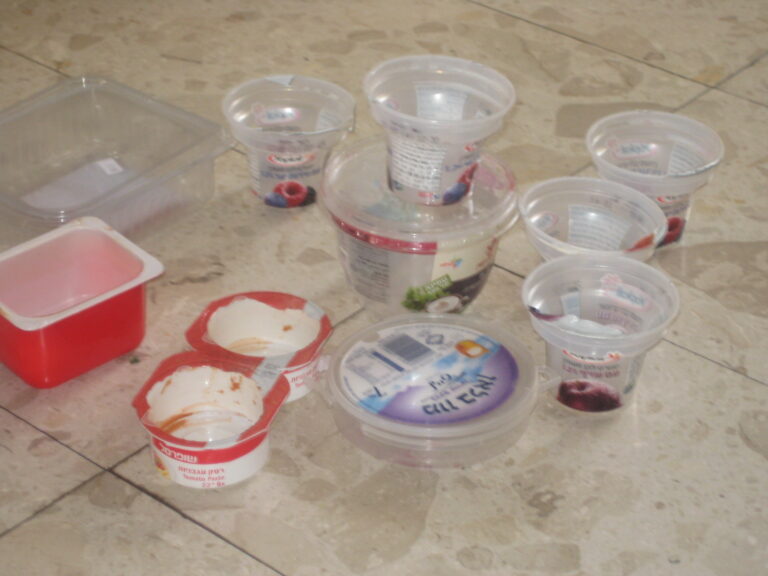
plastic containers Israel HebrewJust a few plastic containers that can be reused or recycled
Another Earth Day is upon us, and for those of us living the Middle East the very origins of this ecological event have much to do a lot with fossil fuel based energy so prevalent in this region. Aside from the frequently discussed issues surrounding the affects of oil and other fossil fuels on the world’ environment, much has been written and talked about the effects of plastic products on the world’s seas and oceans like “islands” of floating plastic material.

Freewheeling With Wild Jordan

2

Guests descend like locusts since I moved to Jordan. This time we decided to try something new.

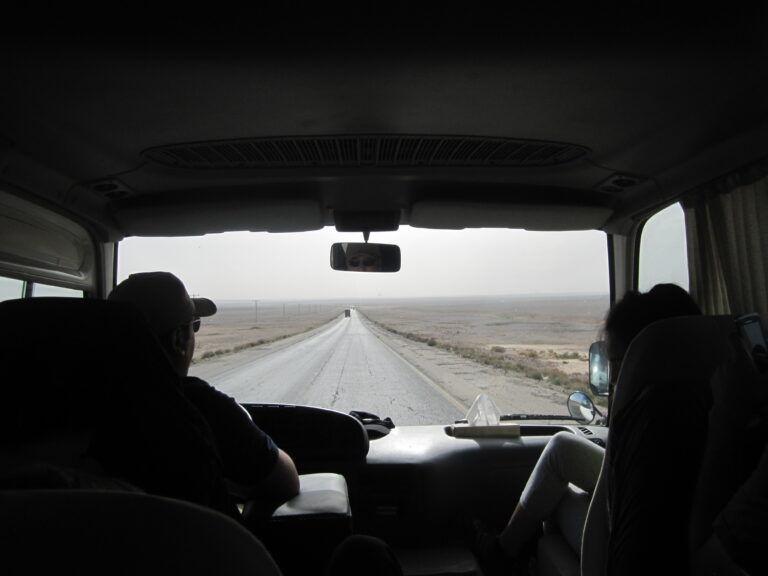
Mass transit is not an option outside Amman city limits.  Navigating a rental car through craggy mountains and city roads would test Evel Knievel. My visitors speak no Arabic, further limiting free travel. And most are past their hitchhiking and hostel “sell-by” date. So we devise a speed-date for traveling friends, with us at the wheel, through the Dead Sea, Wadi Rum, and Petra: a Jordanian trifecta.  We know the hotel deals, the routes with the vistas, and cool places to grab a coffee or a local meal.  Satisfaction delivered every time.  Too many times.

Easter break loomed and Hotel Balbo was empty; what to do that’s new? I itch for something different. Wild Jordan tops the list of travel alternatives.  We head over to see what appeals.

Seeing Green Mirages, a Film Review

green mirageSustainable development in Demmer, Tunisia could be lost forever shows this new documentary film.

You cannot be against development, progress, innovation and even education. We count on these things to solve our biggest problems, whether it’s the ecological crisis, malnourishment or peak oil. If you don’t believe in them, you’re a defeatist. But do they earn the blind faith we have in them? The documentary film Green Mirages, directed by Egyptian Nadia Kamal and Tunisian Habib Ayeb, about the Tunisian village of Demmer, suggests we shouldn’t, and points out some important questions to ask.