Home Blog Page 432

Green Lag B’Omer by Taking Control of Your Bonfire Safely

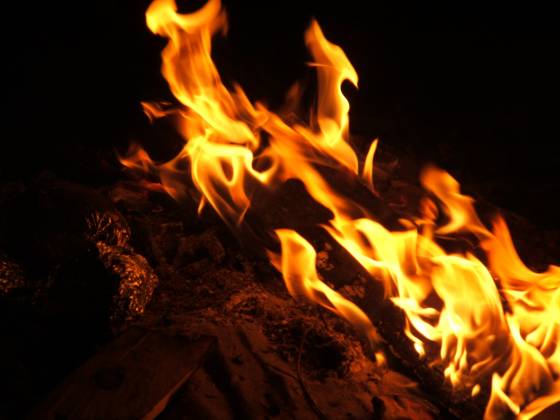
image-bonfire-lag-b'omerTraditional Lag B’Omer bonfires pose an environmental and safety hazard. Here’s how to enjoy the holiday and still stay green.

Few can resist the lure of a crackling bonfire in the dark. Children certainly can’t. Tonight, Wednesday the 9th of May, fires will go up in empty lots, parks, and beaches all over Israel. On Mt. Meron, hundreds of families have already gathered near the tomb of Rabbi Shimon Bar Yochai, camping in nearby fields and forests and building high stacks of old furniture, wooden boards, and whatever else will burn.

Up to 400,000 people are expected to visit the site over today and tomorrow. It’s Lag B’Omer (see this post with an explanation of this Jewish holiday).

It’s a holiday enjoyed by religious and secular Jews. Families look forward to exhilarated dancing around the flames, sing-alongs that last all night, and potatoes roasted in the embers. Yet because of carelessness around the fire, children are at risk. Hospitals around the country treat hundreds of children’s burns, splinters, injuries from exploding nails, and even scorpion and snake bites, every year.

Air pollution goes sky-high on Lag B’Omer, too, as housewives hastily pulling laundry off lines can tell you. The smoke and wisps of burned stuff blowing throughout neighborhoods make everyone close windows and turn the air conditioning on. Apart from the dramatic increase of particles in the air, celebrants outdoors may inhale toxic fumes from burning plastic and other materials in old furniture set aflame. In a report to the Jerusalem Post, the Israel Nature and Parks Authority raised another worry: beach fires may endanger sea turtles that lay their eggs on beaches at this time.

This amazing hammerhead shark will be finned

2

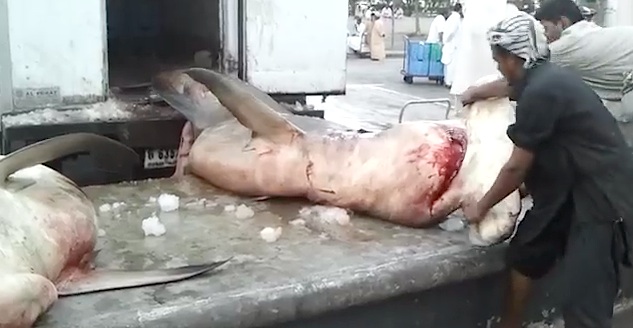
A disturbing video of an enormous Great hammerhead shark (Sphyma mokarran) being hauled out of a truck in a Dubai fish market reveals once again the failure of authorities to monitor shark fishing in the United Arab Emirates. We had used an image of it here, but it was so violent and ugly Google banned the page! So we removed it for the tamer pic you see above.

In the UAE, it is officially illegal to kill sharks with the sole purpose of harvesting their fins, but Dubai has a record of supplying shark fins to Hong Kong, where they are highly coveted as the main ingredient in shark fin soup. They are never captured for their meat, which the International Union of Conservation (IUCN) claims is considered unpalatable. Hit the jump to see the video.

[youtube]http://www.youtube.com/watch?v=LermuNgmwpQ[/youtube]

Reproductive prime

This video was uploaded onto the Shark Year website by Alexmoz76, who we were unable to reach for comment.

But Jonathan Ali, Managing Director of Wild Animal Productions and a renowned shark activist based in the UAE, posted the video on his Facebook page with strong exclamations of disapproval.

“Another massive great Hammerhead in Dubai fish market brought in from Oman!” he wrote. “They can barely get it out of the truck!! This is a magnificent specimen and reproductively in its prime! What a sad waste!”

Great hammerhead sharks are particularly vulnerable since they only reach sexual maturity when they are five years old, according to a 2011 story published in The National. And then they only reproduce once every two years.

Last year we posted a ghastly image of a female hammerhead that was killed along with a belly full of pups, a devastating loss to the species that prompted a massive outcry.

Shoddy enforcement

Shark conservation in the UAE is hampered in great measure because of gaps in crucial data, which Rima Jabado from Lebanon – a doctoral student at UAE University – is striving daily to fill. In an interview with Arwa, Rima describes the challenges associated with shark conservation and overfishing.

She explains that shark finning is a major threat to this apex species, but it is not the only one. Habitat degradation and by-catch in places where the hammerhead is not specifically targeted are other key factors contributing to diminishing populations.

Although Article 5 of the UAE’s Ministry of Environment and Water’s Decree No. 216 makes it clear that “capture of sharks for fins is prohibited,” the law in Dubai is poorly enforced. Notice that the men handling the enormous shark were completely unphased by the cameraman, which probably means that they have little fear of retribution.

Great hammerheads are listed as globally endangered on the IUCN red list but as long as their fins remain so profitable, it will be very difficult to slow their journey towards extinction.

More on Shark Fishing and Finning in the UAE:
Dubai Marine Life at Risk After Devastating Shark Catch
25 Shark Species in the Persian Gulf Need Urgent Protection
Shark Fin Soup Can Give You Brain Damage

Autism and your home

2

autism red head girl
Autism is one of those worries that some parents have to deal with at some point in the early years of a child’s life. The rise in diagnosed cases of over the past few years has been alarming. The search for answers as to what could be the possible cause or trigger has been going on for years, with many controversies including the most notoriously common: vaccinations and environmental exposures.

Although the vaccine link has been constantly debunked, doctors and parents haven’t gotten any closer to finding the right answers for what could be impacting the brain development of children.

While the doctors all agree that there is a genetic susceptibility to the condition, Brita Belli in her new book claims that it could be the pairing of environmental exposures with genetic susceptibilities that may be the culprit. We talked to Belli about her book and the findings.

Here’s how Belli’s story starts:

“I had written a feature story on the topic for E-The Environmental Magazine  and discovered in the course of writing that piece that there was a lot of research beginning to connect exposure to certain heavy metals, chemicals, pollutants and drugs during pregnancy to increased likelihood for autism,” she tells Green Prophet.

“The focus of autism research had largely been looking at genetics until recent years, with a few notable exceptions. In the mid-nineties it was discovered that some women who took thalidomide, used during the ‘60s to treat morning sickness, had children with autism as a result of that exposure. Other drugs were similarly tied to autism, including valproic acid and misoprostol. Those were the first clues, but it has taken years of autism rates continuing to climb (1 in 88 children in the U.S. now has autism according to the latest numbers) for research to really look seriously at how other chemicals to which we are all exposed may be acting together with genetic predisposition to drive up autism rates.”

How does your book answer some of the myths parents have about Autism and does it explain the reality, that is to say, is your work also about raising awareness?

One of the most important myths countered in the book is the idea that rising autism numbers are somehow just the result of over-zealous diagnosing on the part of doctors and specialists. There is a lot of argument that autism rates are related to expanded definition and increased diagnosis, but as I write in the book, if this were the case there would be many more adults with autism stepping forward who had been misdiagnosed in the past. As one psychiatrist—Dr. Suruchi Chandra—who treats children with autism, is quoted in the book as saying “We’re seeing an increase in the rates of ASDs [autism spectrum disorders] in children. Really only children.” What’s more, I raise issues about under-diagnosis and misdiagnosis in poor and minority communities, where there is less access to autism services and less parental knowledge. The book is absolutely about raising awareness—in particular that this rise is real, it is widespread, and likely greater than the current numbers suggest. What’s more, it is increasingly clear that the rise in autism is directly tied to common exposures in concert with genetic susceptibility.

What research or evidence if any, are your findings based on?

The book is full of research tracing connections between exposures during pregnancy and autism. Some of these reports are fairly shocking. For example, a 2004 study in Texas found that for every 1,000 pounds of environmentally released mercury, there was a 43% increase in the rate of special education services and a 61% increase in the rate of autism. Another study in San Francisco, found that where exposure to air pollutants was highest, the risk factor for autism increased by 5o%.  Studies using baby hair  and baby teeth have found that children with autism have difficulty getting rid of toxic metals like mercury (which, like lead, is known to cause neurological damage), and that increased antibiotics given to these children further inhibits this process.

And there is a growing body of research connecting autism to the many widespread hormone-altering chemicals such as flame retardants, pesticides and chemicals found in plastics like phthalates and bisphenol A. Pitocin, a drug administered during labor and delivery, is also suspect for its hormone-mimicking properties. Specifically, pitocin acts as synthetic oxytocin in the body. Oxytocin is the social hormone needed for bonding and trusting—and autistic children have difficulty producing and/or processing oxytocin, contributing to their social difficulties. None of these exposures alone are thought to be the sole cause of increased autism rates—rather it is the combination of these exposures acting together with genetics that is the biggest concern.

4. Since your book sidesteps the heated mercury-in-vaccines debate and its link with Autism, does that mean there is no correlation between the vaccines and Autism threat?

I address this topic in the introduction. Andrew Wakefield, whose research made the vaccine-autism connection, was discredited. No other research has found any connection between vaccines and autism and still, as a precaution, mercury-containing thimerosal was removed or reduced in all vaccinations for children (except for the flu vaccine) in 2001. Mercury is a major concern in relation to autism rates, but not from vaccines. The largest source of mercury today is from our seafood, thanks to emissions from coal burning power plants that settle across the nation’s waters and accumulate in fish—particularly big fish like tuna.

Dental fillings are the next largest source of exposure. Other places where mercury exposure can happen, as mentioned in the book, include schools and day care centers built on former factory sites and gym floors which have been found, in some cases, to include a mercury-containing top coat that can off-gas, providing a particularly worrisome path of exposure.

You mention that Autism triggers include flame retardants, pesticides, some pregnancy medications, and plastic (including food containers and shrink-wrap). What is a parent to do? Eliminate all of these from their lives? 

Parents can and should take reasonable steps to limit their chemical exposures, particularly during pregnancy, and I provide some steps they can take, from minimizing plastics used for storing and especially heating food, to choosing organic fresh fruits and vegetables where possible, to checking cosmetic and baby care ingredients by using the Environmental Working Group’s Skin Deep Cosmetics Database.

But the problem of chemical exposure is not one parents can solve. It requires comprehensive reform of our chemical policies as has been introduced multiple times in the Safe Chemicals Act. The current legislation—the Toxic Substances Control Act—was passed in 1976 and grandfathered in some 61,000 chemicals. Since then, our understanding of what impacts these chemicals can have even in minute amounts during vulnerable windows of development, and the dangers they pose when acting together, give us ample reason to overhaul this outdated legislation and require that all chemicals be safety tested before being approved—including for their impacts on pregnant women and children.

I hope readers will take this as a call to action and support the efforts of organizations such as Healthy Child Healthy World, Environmental Working Group, Safer Chemicals Healthy Families and others at the forefront of reforming the nation’s chemical laws.

What advice do you have for parents who have an autistic child?

I learned so much from the parents I interviewed for this book—all of them are tireless advocates for their children and have devoted their lives to improving their children’s potential. It is difficult work raising children with autism and it easy to become overwhelmed. I would encourage all parents with autistic children to find support groups, both in their community and online, where they can turn to others who understand them, who will not judge them and who can share strategies for helping their children succeed.

The Autism Puzzle: Connecting the Dots between Environmental Toxins and Rising Autism Rates (Seven Stories Press) is available on Amazon.

Image of autistic girl from Shutterstock

Jet Engine Sponge Makes Airports Less Sensual

jet engine ring sponge
A new adaptor ring cuts noise pollution at airports.

Airports are like Desperate Housewives. Unpopular neighbors, but crazy sensual. You can see them, feel them, smell them, and you absolutely hear them. Ask anyone living or working near an airport and they’ll tell tales of noise pollution so extreme it wakes babies, rattles windows, and sets off car security alarms (of course, if a plane’s overhead, you won’t hear a word).

Beyond being an public audio menace, there’s a technical downside.  The powerful sound waves generated by jet engine combustion can violently shake engine components, accelerating mechanical failure. Researchers at the University of Alabama quiet combustion at its source. 

The Red Sea is Filled With Tiny Treasures – Saudi Researchers Intent on Discovery

Dr. Feras Lafi, a scientist in the KAUST Red Sea Laboratory of Integrative Systems Biology, has been investigating the unusual microbial communities in Red Sea spongesThe King Abdullah University of Science and Technology (KAUST), Saudi Arabia, has featured several times in Green Prophet for developing cleaner chemical derivatives, research on rising red sea surface water temperatures and  predicting flash floods , and for its Eco friendly architecture .

But KAUSTs scientific research potentials are also partially leveraged due to its unique location. On the coast and half way between the two extremes of the Red Sea, KAUST has access to a significant wealth of undiscovered treasures floating- no, better – marinating right in front of them. The microorganisms of the Red Sea.

Dr. Feras Lafi, a scientist in the KAUST Red Sea Laboratory of Integrative Systems Biology (left), is among those investigating the unusual microbial communities in Red Sea sponges. Here are two examples of how these little animals can become pivotal for the advancement of marine science.

Think Green in Arabic, English, Hebrew and Russian

2

think green israel gamAvailable in English, Hebrew, Arabic and Russian, the Israeli government launches a new go green game to learn about saving the earth.

Israel’s Environmental Protection Agency recently launched a free online game and iphone application called Thinking Green, aimed at promoting eco-conscious consumerism. It is part of the Ministry’s Think Green campaign. The application (although it’s not really clear where to find it) offers tips on green behavior and a test to help users see if they were able to maximize their savings through such practices.

As of 2009 studies showed that the average Israeli emitted 9.19 tonnes (one tonne equals 1000 kilograms) of carbon dioxide a year from fuel consumption alone. That still puts Israel’s consumption drastically lower than other western nations.

Israel Triumphs Over Invasive Acacia Species

0

acacia israel blue leaf wattleFour years ago Israel Nature and Parks Authority (INPA) schemed a plan to eradicate the blue-leafed wattle (acacia saligna), an invasive species native to Australia that threatened to overrun the native plant species in Nahal Sorek National Park.

Just a few years ago the blue-leafed wattle spread beyond the park’s boundaries to eight spots along the main route to Sorek. Each spot consisted of hundreds of trees.

Jordan Finally Phases out Ozone-depleting Chemicals

0

ozone jordan Middle East earth globe bubble

The Hashemite Kingdom of Jordan has wrapped up a national phase-out of all central cooling systems using chlorofluorocarbons (CFC), reports the Jordan Times: “Jordan’s program for phasing out the use of CFCs, aimed at disposing 1500 tons of the harmful substance, was achieved one year ahead of schedule”, said Ghazi Odat, Director of the Ministry of Environment’s ozone project. Odat said replacing these systems in 165 facilities also reduced energy consumption. The program was funded by a $2.16 million grant from the Multilateral Fund for the Implementation of the Montreal Protocol, granted to the Kingdom in May 2010. Jordan is a signatory to the Montreal Protocol.

Locatat: Building With Materials Sourced Within a 100 Mile Radius

2

locatat, local materials, architecture, design, sustainable, green building, eco buildingCertain buzzwords are developed to help us grasp a concept. To environmentalists, sustainability refers to eating, building and living in a way that will sustain more than one greedy generation. Vegewarian is another for those who aren’t quite ready to commit to full-fledged vegetarianism or veganism.

Sometimes these terms are overused, as Brian pointed out with his interesting post on the “S” word, and sometimes they don’t paint a complete picture. Now there’s a new word floating around – locatat – that refers to building a habitat using materials sourced within a 100 mile radius. It’s like locavore but for builders and it has critics.

Going Green at the Beach? Use Natural Sunblocks

1

sun bathing sinaiSun bathing in Sinai is like asking for trouble if not adequately screened from the sun’s UV rays.



Beach season is now beginning in Middle East countries sharing beach fronts on the Mediterranean and the Red Sea. Along with problems like beach littering;  and increasing and even record high summer temperatures in the Middle East due to global warming (?), those who love to sun bathe have to protect themselves adequately from the sun’s dangerous ultraviolet rays.

Various commercial sunscreen preparations, while claiming to provide good protection against the sun’s harmful rays, also contain ingredients which may be harmful in themselves to the skin as well as other parts of the body. These ingredients include Octinoxate  which can cause acne, skin rash, inflammation of hair follicles and skin irritation; as well as allergies and dry skin.

Supermoon photos from around the world

0

nature, astronomy, supermoon, full moon, photographyThe full “supermoon” peers out from behind the US Capitol building in Washington DC; taken by @quinalty.

People around the world flocked to catch a glimpse of the spectacular “supermoon” that lit up the night sky on Saturday. At roughly 11.34 pm EDT on 5 May, 2012 the moon passed its perigree – the closest point to earth – making it appear 14% larger and 30% brighter than normal.

At its peak, the moon was approximately 221,802 miles from the earth, which was 248 miles further away than the last supermoon event that took place on 19 March, 2011, according to Discovery. On average, the moon orbits 230,000 miles from earth. Here are seven indelible images of the 2012 supermoon taken from international vantage points by Shutterstock contributors.

nature, astronomy, supermoon, full moon, photographyThe full moon hovers above the Canadian Parliament building on the southern banks of the Ottawa River in downtown Ottawa, Ontario. This striking image was taken by Shutterstock contributor Michel Loiselle.

nature, astronomy, supermoon, full moon, photographyAlthough there are no landmarks to put it into perspective, this supermoon image taken in the Philippines by @aotinio is still positively enigmatic. We love the orange hue.

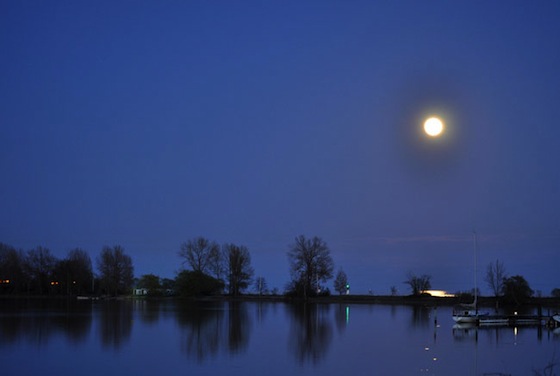
nature, astronomy, supermoon, full moon, photographyAlso taken in Canada, the super bright full moon rises over Lake Ontario. This image was captured by @MAGpi60 from Frenchman’s Bay in Pickering, Ontario.

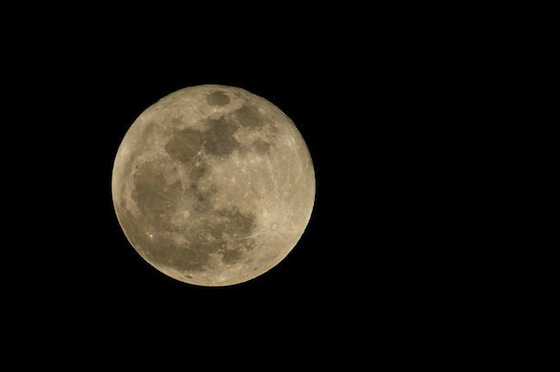
nature, astronomy, supermoon, full moon, photographyAnother lonely moon photograph, this time snapped up by @hzhwang in Taiwan. What kind of telephoto lens was this lucky photographer using?

nature, astronomy, supermoon, full moon, photographyThis is a classic full moon image with wispy clouds passing in front. Many skygazers complained that cloud cover on Cinco de Mayo busted their supermoon viewing experience, but @lafsatfriday got lucky in Spokane, Washington.

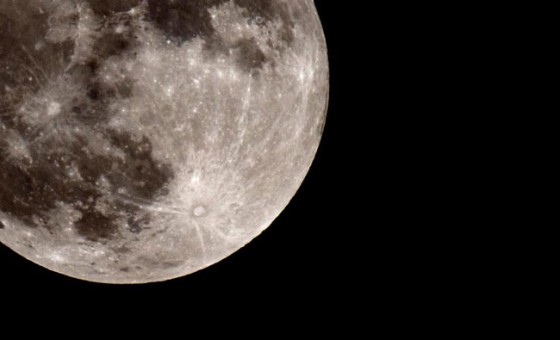
nature, astronomy, supermoon, full moon, photographyGoing out with a closeup bang, Jer Buck from Vancouver, B.C took this image, which was submitted to Shutterstock by @saramushanksy. For more lunar gazing, look out for the lunar eclipse on 20 May, 2012. It will be less dramatic to readers living in the Middle East but there’s a chance you’ll at least be able to see the bring ring around the sun known as an annulus.

And for more really amazing images that capture the 2012 supermoon’s glory, check out this fantastic slideshow on Space.com.

Iraqi Mud Architect Wins Prestigious Sustainability Award

2

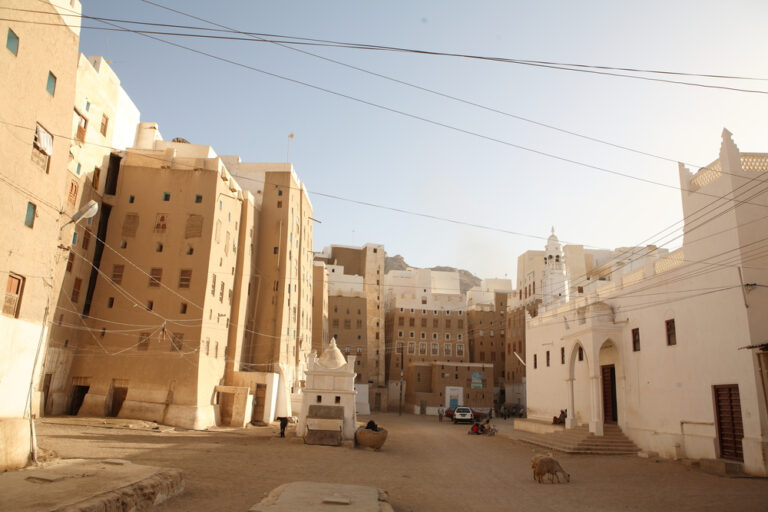
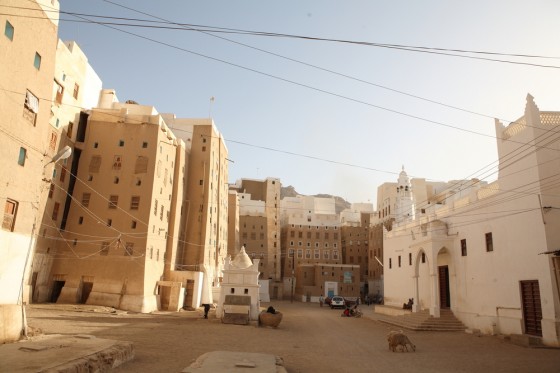
salma-samar-damluji-yemen-sustainability-architectureIraqi architect Salma Samar Damluji has won the ‘Global Award for Sustainable Architecture’ for her mud-brick renovation work in Yemen

Mud. Muck. Dirt. Clay. Earth. Call it what you like – it’s the stuff of life and also of sustainable architecture. From the stunning mud mosque of Djenne in Mali to the clay tower homes of Yemen, earth architecture has been used to create some stunning and sustainable buildings. Indeed, Iraqi architect Salma Samar Damluji has just been awarded the Global Award for Sustainable Architecture for helping to renovate the mud built towns of Hadramut in Yemen.

4.1 Million Acres Of Land Previously Classified As Forest Goes On Sale In Turkey Today

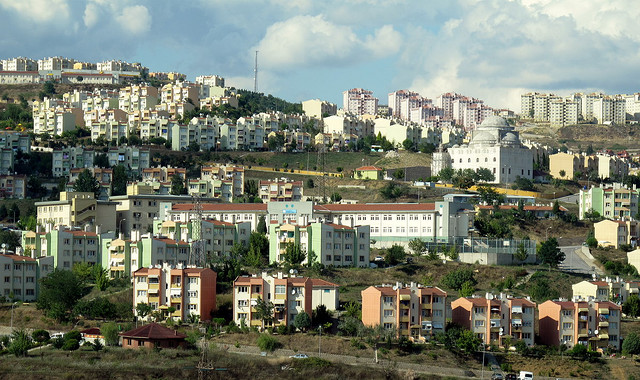
Turkey’s government argues that much of the land has already been illegally developed and sold, especially in the outskirts of major cities like Istanbul (pictured above).

Two weeks ago, Turkish President Abdullah Gül approved a law that opened a parcel of land in Turkey formerly classified as forests — known as “2B” land — to construction. Today, according to Dünya newspaper, a six-month period of bidding opened for the land, which is estimated to be worth approximately $15 billion in sum.

GreenWorldOne Is A Social Network with Soul

shoe soles legs

My children, living a world apart in Hoboken and Amman, find the same goofy YouTube clips, only to learn their cousins in California and England already hit those same sites. Today’s instant communication is marvelous to someone who remembers rotary phones and punched card programming.

I discovered Facebook page GreenWorldOne (GWO) on a single day when my daughter, in Jordan, hit me with links to cuddly endangered animals; a friend, in Spain, popped me a project to help Syrian refugees; and an old boss, in the USA, shared a clip on making fabric shoes for impoverished African kids. Three links to this unassuming little site all in one day. I peeked to see what was behind it and found GreenWorldOne. Read my interview with one of the team below.

DIY Tel Aviv Guide – Every City Needs One

9

DIY, travel, eco-tourism, Israel, Tel Aviv, green issues

When Shimrit Elisar travels to other cities, she wonders where to find pizza after hours, where all the “cool kids” hang out, and how to score a reasonably-priced yoga class. In other words, she wants an insider’s look, which is why she was inspired  to create DIY Tel Aviv.

This alternative city guide is packed with information about everything from how to handle Israeli security and find certain products on Shabat to finally answering the question: will I get blown up? Fun and quirky, this awesome guide leaves the pricier Lonely Planet choking in its self-published dust, though it definitely speaks to the younger crowd.