“In the midst of uncertain time, renewable energy remains consistent and steadfast in its expansion,” said Francesco La Camera, IRENA’s Director-General. “A more decentralised energy system, with a growing share of renewables and more market players, is structurally more resilient.”
Health insurance is a regulated financial product. Insurers operate under binding contracts, overseen by state insurance commissioners, that legally obligate them to pay claims meeting policy terms. Policyholders who believe a covered claim was wrongfully denied have legal recourse through state regulatory channels.
The New Zealand Merino Company, now rebranded as Zentera, has quietly removed the phrase “world’s leading ethical wool brand” from its website, a notable change that comes after a disturbing investigation by PETA Asia-Pacific into the company’s ZQ-certified wool supply chain, PETA reports to Green Prophet.
Somehow vegetables with short seasons excite the imagination and appetite more sharply than produce that’s available all year around. Good Middle Eastern cooks have many recipes for delicate fava beans, and this turmeric-fragrant soup is one.
“In the midst of uncertain time, renewable energy remains consistent and steadfast in its expansion,” said Francesco La Camera, IRENA’s Director-General. “A more decentralised energy system, with a growing share of renewables and more market players, is structurally more resilient.”
Health insurance is a regulated financial product. Insurers operate under binding contracts, overseen by state insurance commissioners, that legally obligate them to pay claims meeting policy terms. Policyholders who believe a covered claim was wrongfully denied have legal recourse through state regulatory channels.
The New Zealand Merino Company, now rebranded as Zentera, has quietly removed the phrase “world’s leading ethical wool brand” from its website, a notable change that comes after a disturbing investigation by PETA Asia-Pacific into the company’s ZQ-certified wool supply chain, PETA reports to Green Prophet.
Somehow vegetables with short seasons excite the imagination and appetite more sharply than produce that’s available all year around. Good Middle Eastern cooks have many recipes for delicate fava beans, and this turmeric-fragrant soup is one.
“In the midst of uncertain time, renewable energy remains consistent and steadfast in its expansion,” said Francesco La Camera, IRENA’s Director-General. “A more decentralised energy system, with a growing share of renewables and more market players, is structurally more resilient.”
Health insurance is a regulated financial product. Insurers operate under binding contracts, overseen by state insurance commissioners, that legally obligate them to pay claims meeting policy terms. Policyholders who believe a covered claim was wrongfully denied have legal recourse through state regulatory channels.
The New Zealand Merino Company, now rebranded as Zentera, has quietly removed the phrase “world’s leading ethical wool brand” from its website, a notable change that comes after a disturbing investigation by PETA Asia-Pacific into the company’s ZQ-certified wool supply chain, PETA reports to Green Prophet.
Somehow vegetables with short seasons excite the imagination and appetite more sharply than produce that’s available all year around. Good Middle Eastern cooks have many recipes for delicate fava beans, and this turmeric-fragrant soup is one.
“In the midst of uncertain time, renewable energy remains consistent and steadfast in its expansion,” said Francesco La Camera, IRENA’s Director-General. “A more decentralised energy system, with a growing share of renewables and more market players, is structurally more resilient.”
Health insurance is a regulated financial product. Insurers operate under binding contracts, overseen by state insurance commissioners, that legally obligate them to pay claims meeting policy terms. Policyholders who believe a covered claim was wrongfully denied have legal recourse through state regulatory channels.
The New Zealand Merino Company, now rebranded as Zentera, has quietly removed the phrase “world’s leading ethical wool brand” from its website, a notable change that comes after a disturbing investigation by PETA Asia-Pacific into the company’s ZQ-certified wool supply chain, PETA reports to Green Prophet.
Somehow vegetables with short seasons excite the imagination and appetite more sharply than produce that’s available all year around. Good Middle Eastern cooks have many recipes for delicate fava beans, and this turmeric-fragrant soup is one.
“In the midst of uncertain time, renewable energy remains consistent and steadfast in its expansion,” said Francesco La Camera, IRENA’s Director-General. “A more decentralised energy system, with a growing share of renewables and more market players, is structurally more resilient.”
Health insurance is a regulated financial product. Insurers operate under binding contracts, overseen by state insurance commissioners, that legally obligate them to pay claims meeting policy terms. Policyholders who believe a covered claim was wrongfully denied have legal recourse through state regulatory channels.
The New Zealand Merino Company, now rebranded as Zentera, has quietly removed the phrase “world’s leading ethical wool brand” from its website, a notable change that comes after a disturbing investigation by PETA Asia-Pacific into the company’s ZQ-certified wool supply chain, PETA reports to Green Prophet.
Somehow vegetables with short seasons excite the imagination and appetite more sharply than produce that’s available all year around. Good Middle Eastern cooks have many recipes for delicate fava beans, and this turmeric-fragrant soup is one.
“In the midst of uncertain time, renewable energy remains consistent and steadfast in its expansion,” said Francesco La Camera, IRENA’s Director-General. “A more decentralised energy system, with a growing share of renewables and more market players, is structurally more resilient.”
Health insurance is a regulated financial product. Insurers operate under binding contracts, overseen by state insurance commissioners, that legally obligate them to pay claims meeting policy terms. Policyholders who believe a covered claim was wrongfully denied have legal recourse through state regulatory channels.
The New Zealand Merino Company, now rebranded as Zentera, has quietly removed the phrase “world’s leading ethical wool brand” from its website, a notable change that comes after a disturbing investigation by PETA Asia-Pacific into the company’s ZQ-certified wool supply chain, PETA reports to Green Prophet.
Somehow vegetables with short seasons excite the imagination and appetite more sharply than produce that’s available all year around. Good Middle Eastern cooks have many recipes for delicate fava beans, and this turmeric-fragrant soup is one.
“In the midst of uncertain time, renewable energy remains consistent and steadfast in its expansion,” said Francesco La Camera, IRENA’s Director-General. “A more decentralised energy system, with a growing share of renewables and more market players, is structurally more resilient.”
Health insurance is a regulated financial product. Insurers operate under binding contracts, overseen by state insurance commissioners, that legally obligate them to pay claims meeting policy terms. Policyholders who believe a covered claim was wrongfully denied have legal recourse through state regulatory channels.
The New Zealand Merino Company, now rebranded as Zentera, has quietly removed the phrase “world’s leading ethical wool brand” from its website, a notable change that comes after a disturbing investigation by PETA Asia-Pacific into the company’s ZQ-certified wool supply chain, PETA reports to Green Prophet.
Somehow vegetables with short seasons excite the imagination and appetite more sharply than produce that’s available all year around. Good Middle Eastern cooks have many recipes for delicate fava beans, and this turmeric-fragrant soup is one.
“In the midst of uncertain time, renewable energy remains consistent and steadfast in its expansion,” said Francesco La Camera, IRENA’s Director-General. “A more decentralised energy system, with a growing share of renewables and more market players, is structurally more resilient.”
Health insurance is a regulated financial product. Insurers operate under binding contracts, overseen by state insurance commissioners, that legally obligate them to pay claims meeting policy terms. Policyholders who believe a covered claim was wrongfully denied have legal recourse through state regulatory channels.
The New Zealand Merino Company, now rebranded as Zentera, has quietly removed the phrase “world’s leading ethical wool brand” from its website, a notable change that comes after a disturbing investigation by PETA Asia-Pacific into the company’s ZQ-certified wool supply chain, PETA reports to Green Prophet.
Somehow vegetables with short seasons excite the imagination and appetite more sharply than produce that’s available all year around. Good Middle Eastern cooks have many recipes for delicate fava beans, and this turmeric-fragrant soup is one.
Middle Eastern olive oil producers are baring the brunt of falling oil prices
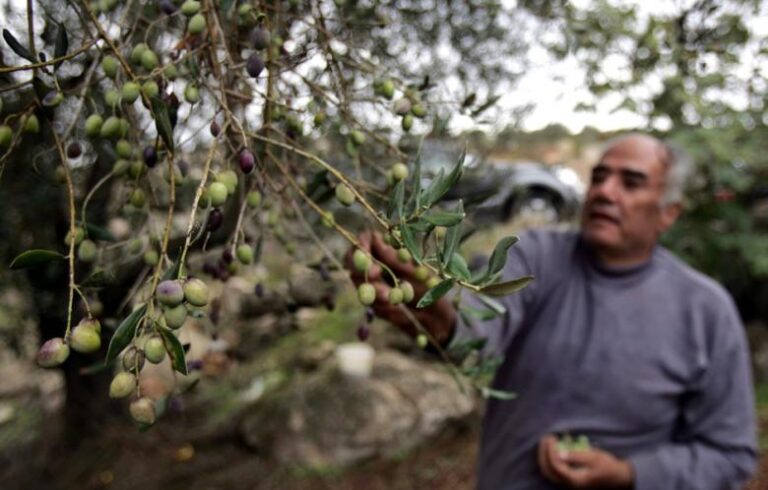
Olive oil prices have hit a 10 year low, severely impacting producers in Spain, Italy , Greece and Protugal- which produce more than 60 percent of the world’s olive oil. However, Middle Eastern Farmers in Tunisia, Morocco, Syria, Libya, Israel and Palestine will also be severely affected. Part of the recent olive oil price crises is as a result of surplus production due to heavy olive oil subsidizing in the EU and the subsequent unsuccessful attempt by the EU commission to maintain prices relatively high and stable by paying farmers to stockpile olives.
Monitoring stations all over the arctic are reading greenhouse gas concentrations of 400 parts per million – a grim new milestone that dims hope of reversing runaway climate change. Millions of pounds of methane lay dormant in arctic ice, threatening to accelerate climate change when it melts, violent weather, drought, flooding and other disasters are on the rise, and yet the fossil fuel industry continues to function virtually unabated.
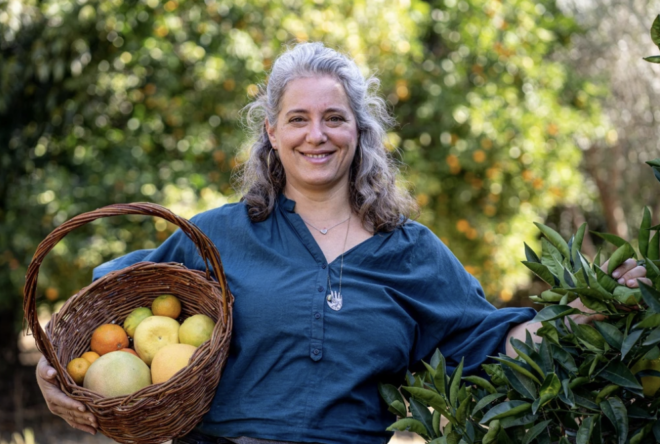
Ayala Moriel has captured and bottled natural Middle East smells and made them into natural perfumes.
With captivating names, perfumer Ayala Mor from Canada has distilled the best scents of the Middle East and has turned them into bottles of perfume. From Israel, her scents are reminiscent of her roots: the Old City in Jerusalem, Israel in spring, Arab coffee in winter, and a walk through the Yemen Spice Market in the Carmel Market anytime.
I’ve bought samples of her perfumes and they transport me to the Middle East and my favorite places every time I wear them.
Having travelled throughout the Middle East her scents do capture the time and place, as one smells their way through markets.
For a moment Moriel has bottled those old world smells travellers and spice route traders probably met along the way. Find the smells of etrog, finjan-brewed coffee, cardamon. Wearing these smells keeps you travelling even when far from the East.
Here is a citron or etrog from the Hebrew holiday of Succoth
I wish I could add a scratch and sniff window to this blog to share with you the eight tester bottles that Moriel sent in the mail. Normally I am not a perfume wearer, and dislike the smells of people who wear commercial scents. But these are different.
Natural in their origin and true to their name, Moriel’s scents are gentle, leaving just a trace an hour after application.
While some people might want their perfume to last a day, I like the idea of leaving the house with a scent, having it drift away with me as I go on with my day. You can carry a little bottle in your bag for a top off later. This could be handy for people who do not wear deodorant and who find themselves in sticky situations.
Perfumer, Time Traveller, Olfactory Story-Teller, Anthophile, Incensor, Teaist, Alchemist. Lead by the nose since 2001. That is how she describes herself.
High performance and gold plated to boot: a Porsche 997 GT2 on sale in Dubai. Photo: GT Spirit.com
We’ve written lots about super luxury cars in the Gulf region on Green Prophet. While one of them, a white gold Mercedes sports coup was touted to be able to run on bio-fuel; others like a gold trimmed armored plated Rolls Royce is strictly designed to enable its owner to ride in protected style. For those who are bored with such cars and wish for super luxury versions of high performance sports cars will now be happy to hear that also in that part of the Middle East is none other than a gold version of a gold Porsche 997 GT2 twin turbo that was advertised for sale in the glitzy city of Dubai.
Israeli Opera Festival 2012 will feature five performances of the classic opera, Carmen, June 7 to 11 at Masada. According to the Israeli Opera’s Artistic Director, Michael Ajzenstadt, 50,000 people from across Israel and all over the world are coming to experience opera at the lowest point on earth, beneath the mountain of Masada and across from the Dead Sea.
Choosing the location for this momentous performance was a delicate balance between aesthetic appeal and the imperative to not effect the historic site in any way. “We wanted to perform opera in the desert, not just to have an opera performance at a desert location,” said Ajzenstadt. “There is no stage. There is sand and rock beneath the mountain. The set is an extension of the surrounding habitat. In three weeks we will deconstruct the set and leave no trace.”
Can there be ways to protect olive oil prices and the sustainable ways of olive farming in the Middle East?
The price for olive oil has dropped to its lowest level in a decade and farmers in the Middle East are bearing the brunt as Spain and Italy dump their government-subsidized stocks at below cost. “The international market prices are going below sustainable levels,” Nasser Abu Farha, the director of Canaan Fair Trade that works with some 1,500 Palestinian farmers, told The Media Line.
Jordan’s hosting of forced migrants is overburdening already stressed water resources.
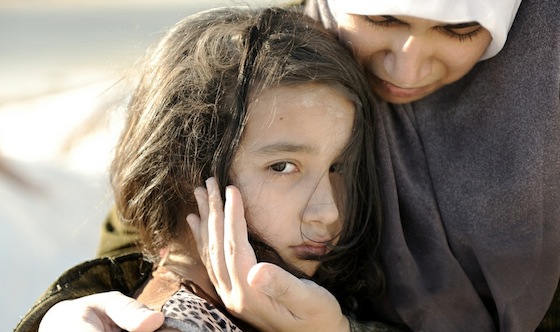
Humanitarianism has an unanticipated knock-on to fresh water supplies, as Jordan is starting to realize. Syrian refugees harbored in kingdom are draining the desert nation’s scarce water resources, reports Lebanon’s Daily Star. This presents a new setback for Jordan, one of the world’s most water-poor countries, where regional water shortfalls have been making alarming headlines.
Jordan’s average water consumption approximates 900 million cubic meters annually, with more than half consumed by agriculture. Annual per capita share is expected to fall to less than 500 cubic meters within three years: less than a tenth of the average world citizen’s share. Annual per capita share below 500 m3 threatens human life.
This tiny kingdom has historically provided safe haven to refugees from neighboring Arab conflicts. Palestinians and Iraqis have emigrated for decades; more recently, Egyptians and Libyans sought entry. It’s estimated that Syrian violence has resulted in over 120,000 new refugees, and inflow is steady.
Not to be outdone by Masdar City in Abu Dhabi, Dubai will soon begin construction on its own ‘sustainable city,’ where green transportation options include horses. Lest it seem that the new 743,000m2 development project entails a remarkable step backward, solar-powered vehicles are also planned, which is every bit as ambitious (and unlikely) as Masdar’s long-since-abandoned zero carbon, zero waste pipe-dream.
Asbestos, linked directly to mesothelioma, a rare form of lung cancer, is still present in many products used daily in Lebanon. But there’s no protection for workers or the population at large.
In 1998, Lebanon submitted to popular pressure and banned asbestos imports. In 2000, Eternit, the country’s major importer of asbestos closed down. But almost no action has been taken to prevent usage of remaining asbestos products or to find substitutes for them.
Jordan’s nuclear industry is wildly volatile, especially when you consider it doesn’t actually exist.
Arwa reported on last week’s parliamentary vote to shelve Jordan’s first nuclear reactor. Exploratory mining for uranium was also stopped. The program will surely resurrect once new feasibility analyses are complete, but against a backdrop of a pressurized economy, scarce water sources and corruption investigations, success is anyone’s guess. The time is now for Jordan’s renewable proponents to demonstrate the viability of alternative energy. Take a page from regional legend David and Goliath, and slay the nuclear beast.
Last April, Jordan’s Parliament adopted the Renewable Energy and Energy Efficiency Law (REEL). REEL is aimed at inciting private-sector investment in Jordan’s nonexistent commercial renewable energy sector, but the law targets homeowners and small businesses too:
Environmental law has proven to be quite dynamic in the Middle East. Some countries have made great strides toward protecting resources and preventing pollution. Others have done little to tackle environmental problems head on due to competing interests or public funding shortfalls. Although the majority of countries in the Middle East are Arab and Muslim, each has a different approach to its regulatory system. Vermont Law School, recognizing the complex issues surrounding environmental law in the region, recently launched the Middle East Environmental Law Project (MEEL). We caught up with John Echeverria, Director of Vermont Law School’s Environmental Law Center. He explains why environmental law is important in the region, and what MEEL is doing to advance it.
However, every now and then something happens which makes me doubt my faith in humanity and it’s ability to do ‘the right thing’. The recent report presented to Israel’s environment minister suggesting that they build a border fencing – including a marine border in the Mediterranean and Red Seas – to keep climate refugees out is one such example.
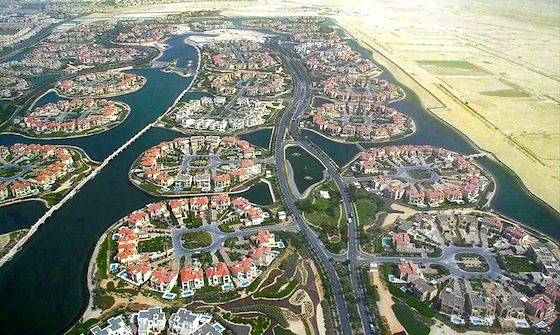
Residents of the artificial Jumeirah Island villas in Dubai face cooling bills of up to $1,600 a month – almost double last year’s price, according to The National. So British national and long-time Dubai resident Tony Caden decided to install an array of 38 solar panels and a giant 20 tonne chiller. Now completely independent of Nakheel’s district cooling service, the head of an oil and gas industry service company says that he is ecstatic to have re-gained control over the quality of his own life.
I speak to Qatar-based environmental researcher Mari Luomi about the balancing act Qatar has to perform at the upcoming climate summit
You could say that Mari Luomi’s environmental education began at a very early stage. Wandering through the forests and lakes of Finland when young, she explains that she learnt very quickly that human societies formed a part of the Earth’s ecosystems- and not vice versa. This love and interest in nature later developed into a fully-fledged career and she is now a Post-Doctoral Fellow looking at the environmental issues facing Gulf nations at the Center for International and Regional Studies of Georgetown University in Qatar. In the run of the climate summit in Qatar later this year, I caught up with her to talk politics, the challenge of behaviour change and what an OPEC nation with the world’s largest per capita carbon footprint has to offer the international community in terms of dealing with climate change.




 Ayala Moriel has captured and bottled natural Middle East smells and made them into natural perfumes.






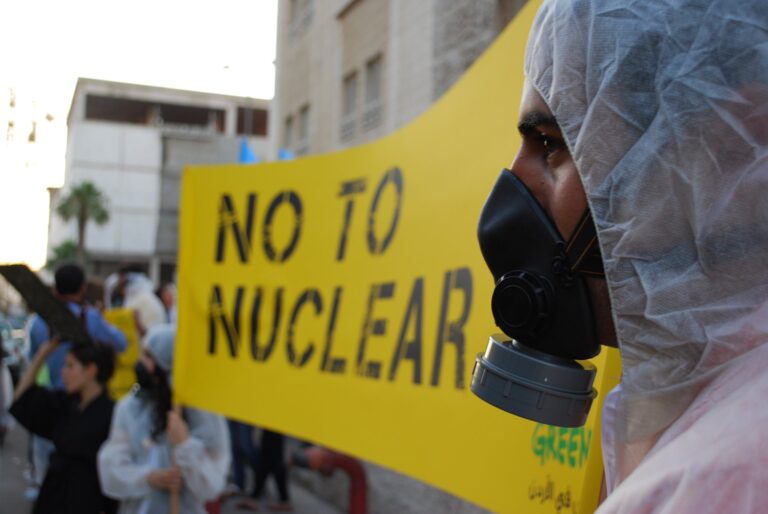
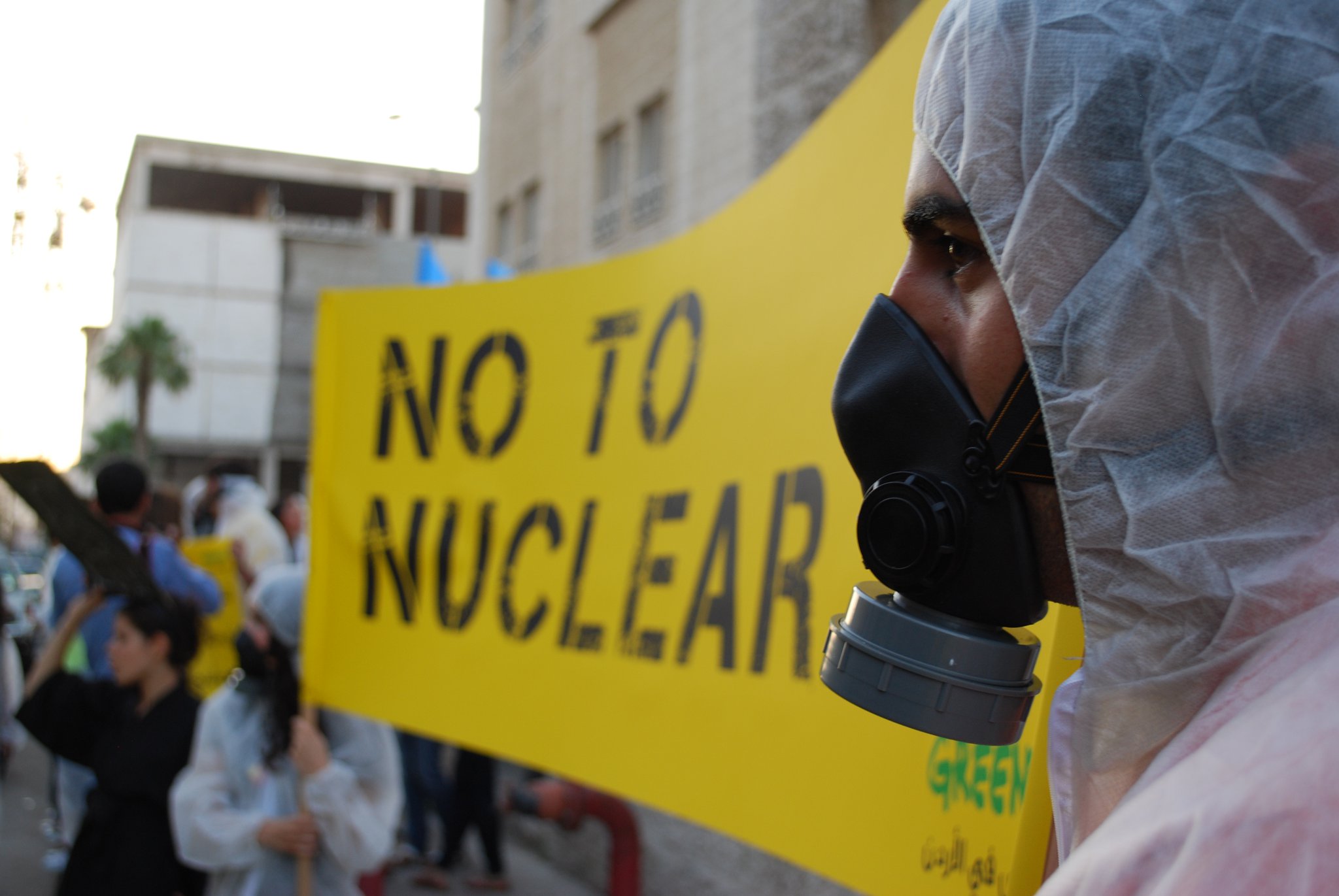 Jordan’s nuclear industry is wildly volatile, especially when you consider it doesn’t actually exist.