“In the midst of uncertain time, renewable energy remains consistent and steadfast in its expansion,” said Francesco La Camera, IRENA’s Director-General. “A more decentralised energy system, with a growing share of renewables and more market players, is structurally more resilient.”
Health insurance is a regulated financial product. Insurers operate under binding contracts, overseen by state insurance commissioners, that legally obligate them to pay claims meeting policy terms. Policyholders who believe a covered claim was wrongfully denied have legal recourse through state regulatory channels.
The New Zealand Merino Company, now rebranded as Zentera, has quietly removed the phrase “world’s leading ethical wool brand” from its website, a notable change that comes after a disturbing investigation by PETA Asia-Pacific into the company’s ZQ-certified wool supply chain, PETA reports to Green Prophet.
Somehow vegetables with short seasons excite the imagination and appetite more sharply than produce that’s available all year around. Good Middle Eastern cooks have many recipes for delicate fava beans, and this turmeric-fragrant soup is one.
“In the midst of uncertain time, renewable energy remains consistent and steadfast in its expansion,” said Francesco La Camera, IRENA’s Director-General. “A more decentralised energy system, with a growing share of renewables and more market players, is structurally more resilient.”
Health insurance is a regulated financial product. Insurers operate under binding contracts, overseen by state insurance commissioners, that legally obligate them to pay claims meeting policy terms. Policyholders who believe a covered claim was wrongfully denied have legal recourse through state regulatory channels.
The New Zealand Merino Company, now rebranded as Zentera, has quietly removed the phrase “world’s leading ethical wool brand” from its website, a notable change that comes after a disturbing investigation by PETA Asia-Pacific into the company’s ZQ-certified wool supply chain, PETA reports to Green Prophet.
Somehow vegetables with short seasons excite the imagination and appetite more sharply than produce that’s available all year around. Good Middle Eastern cooks have many recipes for delicate fava beans, and this turmeric-fragrant soup is one.
“In the midst of uncertain time, renewable energy remains consistent and steadfast in its expansion,” said Francesco La Camera, IRENA’s Director-General. “A more decentralised energy system, with a growing share of renewables and more market players, is structurally more resilient.”
Health insurance is a regulated financial product. Insurers operate under binding contracts, overseen by state insurance commissioners, that legally obligate them to pay claims meeting policy terms. Policyholders who believe a covered claim was wrongfully denied have legal recourse through state regulatory channels.
The New Zealand Merino Company, now rebranded as Zentera, has quietly removed the phrase “world’s leading ethical wool brand” from its website, a notable change that comes after a disturbing investigation by PETA Asia-Pacific into the company’s ZQ-certified wool supply chain, PETA reports to Green Prophet.
Somehow vegetables with short seasons excite the imagination and appetite more sharply than produce that’s available all year around. Good Middle Eastern cooks have many recipes for delicate fava beans, and this turmeric-fragrant soup is one.
“In the midst of uncertain time, renewable energy remains consistent and steadfast in its expansion,” said Francesco La Camera, IRENA’s Director-General. “A more decentralised energy system, with a growing share of renewables and more market players, is structurally more resilient.”
Health insurance is a regulated financial product. Insurers operate under binding contracts, overseen by state insurance commissioners, that legally obligate them to pay claims meeting policy terms. Policyholders who believe a covered claim was wrongfully denied have legal recourse through state regulatory channels.
The New Zealand Merino Company, now rebranded as Zentera, has quietly removed the phrase “world’s leading ethical wool brand” from its website, a notable change that comes after a disturbing investigation by PETA Asia-Pacific into the company’s ZQ-certified wool supply chain, PETA reports to Green Prophet.
Somehow vegetables with short seasons excite the imagination and appetite more sharply than produce that’s available all year around. Good Middle Eastern cooks have many recipes for delicate fava beans, and this turmeric-fragrant soup is one.
“In the midst of uncertain time, renewable energy remains consistent and steadfast in its expansion,” said Francesco La Camera, IRENA’s Director-General. “A more decentralised energy system, with a growing share of renewables and more market players, is structurally more resilient.”
Health insurance is a regulated financial product. Insurers operate under binding contracts, overseen by state insurance commissioners, that legally obligate them to pay claims meeting policy terms. Policyholders who believe a covered claim was wrongfully denied have legal recourse through state regulatory channels.
The New Zealand Merino Company, now rebranded as Zentera, has quietly removed the phrase “world’s leading ethical wool brand” from its website, a notable change that comes after a disturbing investigation by PETA Asia-Pacific into the company’s ZQ-certified wool supply chain, PETA reports to Green Prophet.
Somehow vegetables with short seasons excite the imagination and appetite more sharply than produce that’s available all year around. Good Middle Eastern cooks have many recipes for delicate fava beans, and this turmeric-fragrant soup is one.
“In the midst of uncertain time, renewable energy remains consistent and steadfast in its expansion,” said Francesco La Camera, IRENA’s Director-General. “A more decentralised energy system, with a growing share of renewables and more market players, is structurally more resilient.”
Health insurance is a regulated financial product. Insurers operate under binding contracts, overseen by state insurance commissioners, that legally obligate them to pay claims meeting policy terms. Policyholders who believe a covered claim was wrongfully denied have legal recourse through state regulatory channels.
The New Zealand Merino Company, now rebranded as Zentera, has quietly removed the phrase “world’s leading ethical wool brand” from its website, a notable change that comes after a disturbing investigation by PETA Asia-Pacific into the company’s ZQ-certified wool supply chain, PETA reports to Green Prophet.
Somehow vegetables with short seasons excite the imagination and appetite more sharply than produce that’s available all year around. Good Middle Eastern cooks have many recipes for delicate fava beans, and this turmeric-fragrant soup is one.
“In the midst of uncertain time, renewable energy remains consistent and steadfast in its expansion,” said Francesco La Camera, IRENA’s Director-General. “A more decentralised energy system, with a growing share of renewables and more market players, is structurally more resilient.”
Health insurance is a regulated financial product. Insurers operate under binding contracts, overseen by state insurance commissioners, that legally obligate them to pay claims meeting policy terms. Policyholders who believe a covered claim was wrongfully denied have legal recourse through state regulatory channels.
The New Zealand Merino Company, now rebranded as Zentera, has quietly removed the phrase “world’s leading ethical wool brand” from its website, a notable change that comes after a disturbing investigation by PETA Asia-Pacific into the company’s ZQ-certified wool supply chain, PETA reports to Green Prophet.
Somehow vegetables with short seasons excite the imagination and appetite more sharply than produce that’s available all year around. Good Middle Eastern cooks have many recipes for delicate fava beans, and this turmeric-fragrant soup is one.
“In the midst of uncertain time, renewable energy remains consistent and steadfast in its expansion,” said Francesco La Camera, IRENA’s Director-General. “A more decentralised energy system, with a growing share of renewables and more market players, is structurally more resilient.”
Health insurance is a regulated financial product. Insurers operate under binding contracts, overseen by state insurance commissioners, that legally obligate them to pay claims meeting policy terms. Policyholders who believe a covered claim was wrongfully denied have legal recourse through state regulatory channels.
The New Zealand Merino Company, now rebranded as Zentera, has quietly removed the phrase “world’s leading ethical wool brand” from its website, a notable change that comes after a disturbing investigation by PETA Asia-Pacific into the company’s ZQ-certified wool supply chain, PETA reports to Green Prophet.
Somehow vegetables with short seasons excite the imagination and appetite more sharply than produce that’s available all year around. Good Middle Eastern cooks have many recipes for delicate fava beans, and this turmeric-fragrant soup is one.
Gulf states urge citizens not to visit Lebanon, cancelations abound
Despite appeals from Lebanese leaders, Gulf states are advising their citizens not to travel to Lebanon and those already there to leave, thus boding ill for this summer’s tourism industry. Beirut, once known as the Riviera of the Levant, has thrived through turmoil as a place where visitors from the oil-rich states like to spend their summers and a few billion dollars on everything from renting luxurious apartments on the waterfront, to fancy cars, restaurants, clubs and hotels.
But current political turmoil and security developments in Lebanon have forced many Gulf Arabs to cancel their summer bookings or put them off until the situation in the country stabilizes.
Green Prophet runs into an interesting event in Pisa, Italy.
When tourists visit Pisa, Italy they discover not only that the tower really does lean but also that there is a considerable number of immigrants and refugees speaking perfect Italian waiting for them. The Arab spring has created a considerable influx of refugees seeking stability in Italy, but it is hard to understand how these people can easily integrate. One way is for refugees and immigrants to directly engage with the Italian public on issues relating to their own country.
For three days in Pisa, local arab-italian NGOs , arab students and workers, in collaboration with the municipality of Pisa have decided to dedicate a space to represent and deliberate on the arab spring and immigration in Italy.
Here Green Prophet shares a selection of the posters used during the “Jasmine Revolution” in Tunisia, that were exposed in Pisa.
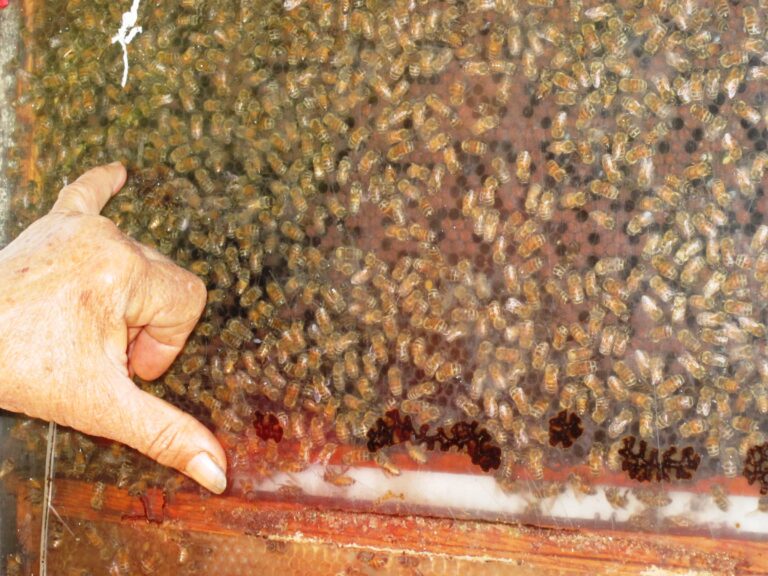
Besides CCD, many other factors have also been said to contribute to bee colony demise, including climate change that destroys the pollen or food the bees feed on, overuse of pesticides and herbicides, and even microwave transmissions from cell phone towers that many say “confuse” bees and make them lose their homing ability to return to their hives.
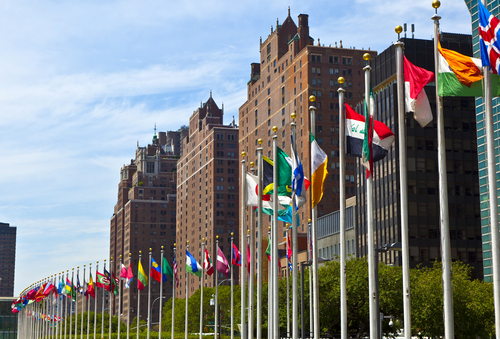
The Dan Region Wastewater Treatment Plant, known in Israel as Shafdan, is among the thirty projects from around the world chosen by the UN as global role models for how local authorities can deal with environmental problems.
Shafdan utilizes the surrounding environment, the nearby sands of Rishon Letzion and Yavne, as natural filters for part of the water purification process. There are still kinks in the system that need to be worked out. Insufficiently purified water can damage adjacent soil before it even reaches the sands. The plant, in combination with Israel’s national water company Mekorot, is working to improve its methods. Mekorot routinely pumps 130 million cubic meters of purified sewage water into the sands. The resulting water is pure enough to be used for irrigation in Israel’s southern desert region, the Negev.
Shafdan is just one of many Israeli innovations that explores how to harvest natural resources for wastewater treatment. Just a few months ago young, Israeli students designed a solar-powered water treatment system that can be used at home.
Israel hopes to use this bounty of innovation and creativity to change its public image. It recently launched an advertising campaign on CNN International to coincide with the Rio+20 United Nations Conference, seeking to brand Israel as a “green county.” The tiny nation of Israel is indeed one of the world’s biggest producers of clean technology. But calling it a green country is problematic.
Israeli settlements in the West Bank have starkly different environmental practices than communities within the green line. In May, Dr. Yousef Abu Safief, Chairman of the Environment Quality Authority of Palestine, wrote an article in Aljazeera denouncing Israeli settlers for wasting water and illegally discharging wastewater, causing massive pollution.
He cited a study by the Applied Research Institute in Jerusalem (ARIJ) that reported: “around 80 per cent of the solid waste generated by the [Israeli] colonists is dumped…within the West Bank.”
In preparing for the Rio+20 United Nations Conference, Israeli Environmental Protection Minister, Gilad Erdan, expressed concern that Palestinian and Iranian leaders would draw the focus away from Israel’s innovation and concentrate exclusively on the ongoing occupation, referred to in Israel as “the situation.”
In general, Israelis feel that the UN is biased against them, even deliberately demonizing them in front of the world. Since its creation, the UN Human Rights Council has devoted 41.12 percent of its country-specific resolutions to condemning Israel. To put that in perspective, 4.67 percent of such resolutions condemned human rights abuses in the Democratic Republic of the Congo and 5.61 percent addressed human rights abuses in Syria.
Despite the vast amount of innovation emerging from Israel, over the past few years only a handful of Israelis have managed to pass the tests for the UN’s Young Professionals Program. Out of the UN’s 70,000 employees, only between 60-80 are Israelis.
The UN’s recognition of Israeli successes, like Shafdan, is therefore significant both for its environmental know-how and its political potential. The human rights abuses of the occupation and Israel’s environmental problem solving are not mutually exclusive conversations. But so far Israel has responded to international pressure with self-imposed isolation.
Acknowledging, rewarding, and cooperating with Israel’s successes are crucial to the UN’s legitimacy and ability to influence policy in the region. Israel needs to feel humanized by the UN, acknowledged just like any other nation for both its fiascos and its accomplishments. Maybe then it would dare reconsider its public relations priorities and focus that national creativity on resolving the situation.
Environmental reports like the one published by the UN, which appreciated Shafdan, maintain a global perspective because the planet is interconnected. Environmental damage in a neighboring nation will cross borders; it cannot be kept at bay with checkpoints or walls. Therefore policies that stop at the borders are a hindrance to real, sustainable solutions.
We can only hope that Israel will recognize inconsistent policies as insufficient, and see all the work it has poured into preserving natural resources as yet another reason for finding local solutions to its regional conflicts.
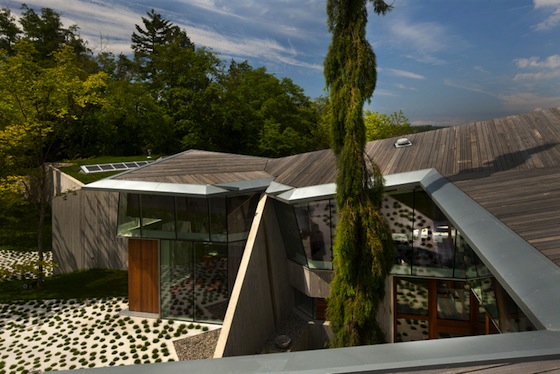
23.2 is only the second house that Jerusalem-born Omer Arbel has parented since opening his own practice in 2005, but the Vancouver-based architect demonstrates a natural flair for projects of this scale. Keen to soften the edges between industrial design and architecture and gifted with a large stock of reclaimed Douglas Fir beams of varying length and thickness, Arbel took interesting new liberties with this building’s unique geometry.
Turmeric originates from Asia and is common to Indian cuisine. It is also a popular ingredient for middle eastern recipes.
Worried about the side effects of breast cancer recovery drugs, a 44 year old survivor named Vicky Sewart refused to follow medical orders and instead radically altered her diet. One of her secrets? A common spice found in souks across the Middle East – turmeric. Can this ancient savory spice really benefit breast health?
Bulldozers in Beirut tore down remains of a 2,500 year old Phoenician port on Tuesday with blessings from the Culture Minister. Eventually, three new skyscrapers will be built in its place, further blighting a once-beautiful city. The former Culture Minister Salim Wardy thwarted efforts by Venus Construction to proceed with the demolition in Mina al-Hosn and activists have engaged a year-long battle against the firm, but Gaby Layyoun ordered the port’s destruction, denying claims of its historical importance. Activists told The Daily Star that they will not rest until both Layyoun and Venus Construction stand trial for destroying the city’s cultural heritage.
From edible gardens to green bank accounts, I look at the top 7 things every eco-mosque should have
As the days creep into weeks and months, it seems that an entire year has passed and Ramadan has come knocking on our doors again. I say it every year, but every year I literally can’t believe its Ramadan again. Where does the time go? Anyway, in an effort to help fellow Muslims build some green momentum leading up to the holy month of fasting, I am going to look at the top seven things every green mosque should have. Whether it’s an edible garden, a green bank account or a water policy, I have come up with a list of things your local mosque could be doing to reduce its carbon footprint and tread more softly on this old planet of ours.
I also want to point out that building green mosques is only part of the solution. As the common wisdom now goes, a green building turns brown very quickly if the people using the building don’t change their behaviours. So, here are 7 things mosques can do without having to re-build and redesign their place of worship!
We are suckers for a good love story, especially when it has an eco-twist. Chafiq Ennaoui and Aimee Bianca met at the Djemaa el Fna square in Marrakech, where Aimee gushed over the unique quality of artisanal Moroccan crafts. The pair soon fell in love and eventually moved to New York, where Chafiq gained a new appreciation for the designs of his youth.
But with plastic junk from China and elsewhere quickly replacing slow handcrafted pieces, the couple became concerned about the future of these special products and the people who so lovingly craft them. This is how BELDI, which refers to all things folk and country about real Morocco, was born. An online store and a preservation project, BELDI sells a wide range of striking pieces that are almost all made with recycled or renewable materials.
Libya is one of the countries with which Turkey signed a rapid oil supply deal after the United States threatened to sanction countries that purchased oil from Iran.
In March, U.S. President Barack Obama approved sanctions on buyers of Iranian crude oil, effective starting in July. The announcement threw many of Iran’s international customers into a panic as they requested exemptions and began seeking new sources for the precious fuel.
Thanks to its exceptionally high energy demand and reliance on Iranian imports, Turkey is one of the countries whose energy strategy will most drastically change as a result.
Qatar is targeting 76 Acres of LEED Certified Buildings
When complete, the Msheireb regeneration project in the heart of Doha’s historical district will feature the world’s largest collection of LEED-certified buildings. Projected to cost $5.5 billion, the city’s new heart will eventually comprise 100 new buildings, all of which will target either Gold or Platinum LEED certification. (It is unclear whether this project will weigh in on the new GSAS green building rating system?)
Construction of the first development phase is already underway. The Diwan Amiri Quarter located in the Mohamed Bin Jassm District adjacent to Amiri Diwan and Souq Waqif will feature three major government buildings, including the national archive, heritage sites, a museum and an Eid prayer ground.
According to the Worldwatch Institute’s latest report on land grab, the oil-rich Gulf nations are big buyers of foreign land
Since 2000, an estimated 70.2 million hectares of agricultural land worldwide has been sold or leased by private or public investors. Most of that land grab took place between 2008 and 2010 and most of the land bought was in Africa, Asia and Latin America. The buyers, however, were a little more dispersed with Brazil, India, China, East Asian nations, the US and the UK topping the list.
The oil-rich Gulf nations of the Middle East, however, were close behind making up one of the major groups of buyers. Indeed Saudi Arabia, the UAE and Qatar alone bought up 4.6 million hectares of land over the decade. And other nations such as Egypt and Jordan have also been buying up fertile land abroad.
Everyone who constructed pavilions for the recently-completed Rio +20 conference in Brazil was required to source their materials locally and to employ members of the Rio de Janiero community to build each structure. But the New York-based industrial design firm Grimshaw Architects distinguished Qatar’s pavilion from the crowd by modeling its shape after the wingspan of a soaring falcon. Referencing Qatar’s longstanding devotion to falconry, the pavilion was comprised of a steel frame and a light transparent roof and showcased the emirate’s various sustainability initiatives.
Brochures for the Giza Pyramids usually depict Egypt’s historic relics amid a poignant desert background or a deep, radiant sunset. Camels and their Bedouin owners lurk in the background, poised to take visitors on the adventure of a lifetime. But these images spread only half the truth.
Although numbers have dropped precipitously since the revolution, in 2010 tourism accounted for approximately 11% of the country’s GDP. So it stands to reason that the authorities take excellent care of their national treasures, right? Unfortunately not.
During Mubarak’s 30 years as President, Egypt fell into a terrible decline, mummifying basic goods and services. And the masses have grown to accept life in the shadows of a once-great nation. This video depicts what the road to Giza really looks like and underscores the enormous challenges President Morsi has to face.