Home Blog Page 422

Khat Juice is Pumping Up Israeli Hipsters at a Price

4

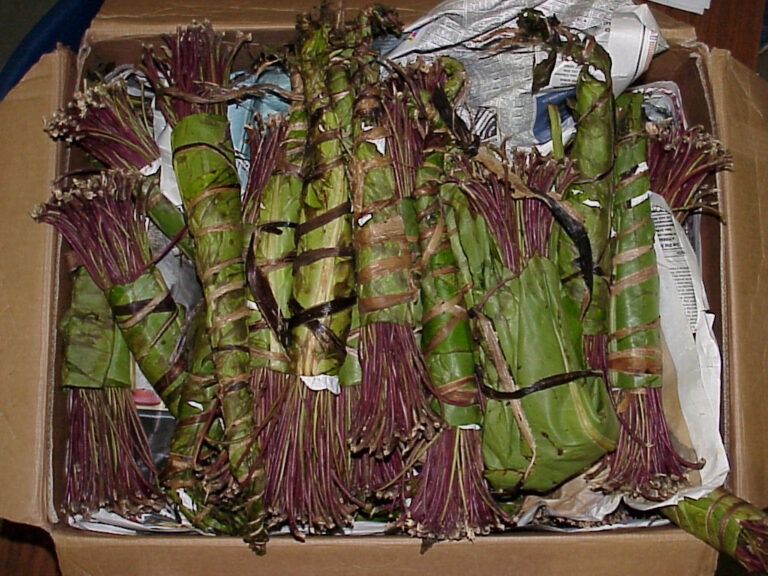
narcotics, drugs, khat, Yemen, Israel, food, healthAn illuminating article in Haaretz describes how certain industrious Israelis realized the marketing potential of khat juice – an exhilarating stimulant made from extracts of Catha edulis and other ingredients – and turned the potent drink into one of the most highly sought after drugs in all of Tel Aviv.

Dafna Arad goes into significant detail about the local social and health impact of this new trend, describing a society so eager to prolong their dancing and productive hours that they are flocking to restaurants to buy it, but does a little less to address the trend’s potential environmental consequence or its greater social impact.

Saudi Arabian Bukhari Rice

3

image-ruz-bukhariRuz Bukhari, a traditional and well-loved Arabic dish.

Pilgrims from Uzbekistan brought Ruz Bukhari with them long ago, as they traveled to Mecca and Medina. We’re sure they traveled by camel caravan, but nowadays pilgrims make their haj in all kinds of ways, even by bike. Along the way, the recipe infiltrated borders, as recipes tend to do, with Pakistan, Afganistan, and Arabic countries, eventually reaching Yemen.

Every country has its own version. Some cook Ruz Bukhari with lots of blended tomatoes.  Some like it with fewer spices but accompany it with a salad made fiery with chillis. I prefer to serve this vegetarian version hot-spicy, with a cooling drink like Turkish Aryan or cold almond milk. Seasonings vary with the characteristic taste of every region. But everyone agrees that the spices make the dish.

Make this with brown rice for more nutrition, or white for more tradition. But the rice must be Basmati quality and no other.

Ruz Bukhari

Serves 6

Ingredients:

2 cups Basmati rise, rinsed and soaked in salt water 1/2 hour, then drained

2 tablespoons olive oil

3 onions, chopped

1/2 cup black raisins

3 teaspoons salt

1 teaspoon ground allspice or baharat spice

1 teaspoon turmeric

1/2 teaspoon pepper

1/4 teaspoon cayenne flakes

1 teaspoon ground cardamom

5 whole cloves

1/2 teaspoon cumin seeds

1 cinnamon stick

1 bay leaf

1 large carrot, diced

500 grams – 1 lb. fresh tomatoes, peeled and chopped

3 cups water, boiling

Equipment:

Medium-sized pot

Clean kitchen towel

Sauté onion in the olive oil till golden.

Keep heat at medium and add all the spices, stirring and cooking for 3 minutes.

Add carrots. Cook 5 minutes.

Add  tomatoes and continue stirring for 10 minutes. Cook until the tomato juices have reduced and are just beginning to dry. You must keep a sharp eye on the pot here.

Add water carefully, avoiding the steam that will spurt up. Stir the bottom of the pot to loosen anything sticking there.

Add rice and  raisins.

Cover with a kitchen towel and then the pot lid. Reduce heat to minimum. Steam for 20-30 minutes.

Allow the rice to sit off the heat 5 minutes before serving.

Then enjoy – it’s awesome.

More deliciously exotic recipes on Green Prophet:


What Connects Palm Tree Plantations and Manta Rays

0

manta ray with fishResearchers discover the negative link between Palm plantations, nesting birds and manta ray populations.

Over meals and sunset chats at a remote research station in Palmyra Atoll in the Pacific, a group of researchers from Stanford University discover one of the longest ecological interactions ever documented. While Douglas McCauley and Paul DeSalles were tracking manta ray movements for a predator-prey interaction study, Hillary Young was studying palm tree proliferation’s effects on bird communities and native habitats. Soon through discussions of their work and observations, the group of scientists began to see a link between manta ray population densities, bird communities and palm plantations.

Ancient Music Therapy Revived in Turkish Hospital

1

image-turkish-music-therapy Doctors at the Memorial Hospital, Istanbul, help patients’ recovery with soulful music.

In the Intensive Care unit, Dr. Erol Can puts a flute to his lips.  He is wearing blue hospital scrubs and his stethoscope still hangs around his neck.  Propped up in bed and connected to an oxygen tank, a patient listens as the anesthetist plays a makam – a piece in a classic Arabic/Turkish musical style.

A monitor displays his galloping pulse and blood pressure slowing down to a healthier pace. Dr. Can plays on, weaving music and science, body and soul together.

It seems a universal truth that a calm environment with music helps relieve stress. Just like Mozart helps preemies to gain weight. Together with cardiac surgeon Dr. Bingur Sönmezs, Dr. Can is reviving a mode of treatment that goes back at least 900 years.

Environmental Health Courses Not In Best Medical Schools: New Study

1

ailing earth stethoscope medical
Air pollution is one of many environmental factors that impact public health. But doctors aren’t learning about this, finds new Israeli study.

According to a new study by Israeli medical students, doctors in the United States, Israel and Europe are receiving inadequate environmental health education. The study, titled “Our Health and Environment,” was sponsored by Haifa-based Public Health Coalition and conducted at the University of Haifa International School.

Out of the 25 universities surveyed – 10 in United States, 10 in Europe and five in Israel, only the clinical medicine program at Bar-Ilan University in Israel required a course related to environmental health. Only four other university programs out of 25 offered such courses at all, and they deemed such courses optional electives.

Some of the world’s top medical programs, including those at Stanford University, Yale University, John Hopkins University, the University of Oxford, and Hebrew University in Jerusalem, all fail to offer their medical students courses that focus on environmental impacts on health and environmental toxicology. 

Israel’s Mekorot Builds Global Connections Through Water

1

Nahalei Menashe water project reservoir in Caesarea, Israel, Hadera "Orot Rabin" power station in the background. Water conservation, Israel, water management, water crisis, water resources, Middle East, desalinization. Image via RickP, Wikimedia Commons

Israel’s national water company, Mekorot (who we’ve interviewed here), is expanding with projects across the globe. It will build and operate two desalination plants in Cyprus to supply almost half of the country’s drinking water. Also on the horizon is a $180 million deal to build a water filtering facility along the La Plata River near Buenos Aires, Argentina. Mekorot Chairman Alex Wiznitzer said he hopes Mekorot’s water projects will be able to create contacts in nearby Arab countries. The United Nation’s has called the Middle East the world’s most water-stressed region. Water security is a vital regional issue.

Wiznitzer told Reuters: “The underdeveloped world doesn’t understand that water is the number one problem in the world. Not oil. Not gas. Not other resources. Water.”

The Gulf Co-op Council is a European Union Arab-style

0

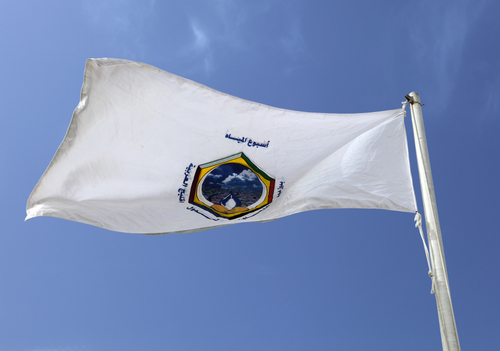
Gulf Cooperation Council flag

Green Prophet’s reports on happenings in the Gulf region have increasingly been using the acronym GCC, which stands for Gulf Cooperation Council.  Perhaps a bit of an explanation is in order. GCC is a political and economic alliance between Bahrain, Kuwait, Oman, United Arab Emirates (UAE), Qatar and Saudi Arabia (KSA). It was formed in 1981 following Iraq’s invasion of Iran and the start of the Persian Gulf War, ostensibly to enhance regional security and bolster trade.

Collectively, these six countries possess nearly half of the world’s oil reserves. Neighboring Yemen has agitated for membership, but its crippled economy and status as a republic are key differentiators that have so far kept them out of the club.   KSA is the most powerful member and the Council is headquartered in Riyadh.

ZERO Awards: Egyptian Designers Have a Week to Strut Their Green Stuff

0

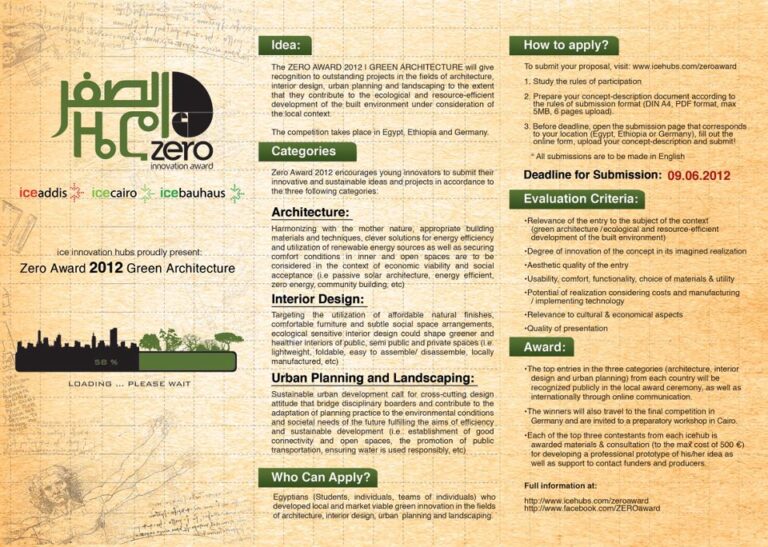
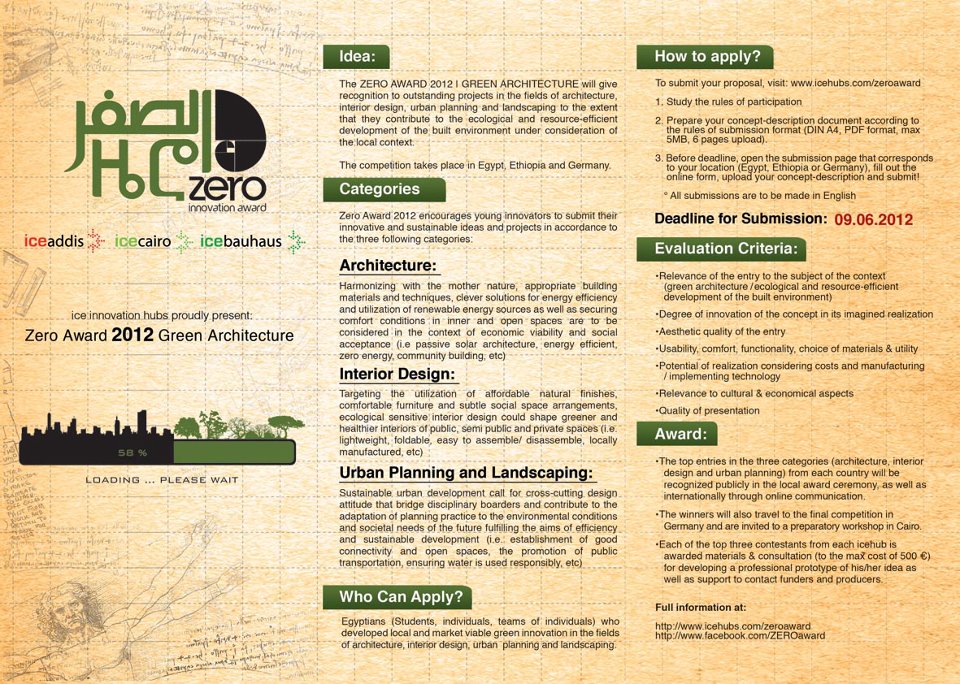
green design, urban planning, Egypt, landscape design, architecture, ZERO Awards 2012, incubatorSupported in part by the Egyptian German Private Sector Development Programme (PSDP), the ZERO award 2012 has extended their deadline for Egyptian designers eager to submit innovative green ideas to the country’s architecture, interior design, and urban planning challenges. The top entries from each category will be recognized publicly and internationally and the winners will also travel to the final competition in Germany.

Previously open to Ethiopian and German participants as well, the deadline for Egyptian architects, landscape and urban designers has been extended by seven days to June 16th, 2012, so there’s still time to submit your proposals. The top three contestants from each country will be awarded materials and consultation valued at up to €500 which should be used towards developing a marketable prototype as well as support sourcing funders and producers.

Called ZERO, this innovation competition for sustainable startups is in its second year. The focus this year is on green architecture and design and contestants are invited to visit www.icehubs.com/zeroaward for detailed instructions on how to prepare proposals and enter the competition. We know that there are many talented Egyptian innovators out there… so get up and go! Go now. Apply. And make your ideas known.

Maldives Floating Greenstar Hotel Sends the Wrong Message About Climate Change

4

rising seas, global warming, climate change, Greenstar Hotel, Waterstudio.NL, floating islands

Waterstudio.NL is world-renowned for its forward-thinking approach to architecture. While so many architects and developers (especially in our region) are still stuck on growing mammoth skyscrapers on land, this Dutch firm has carved a niche in floating architecture in preparation of climate change and rising seas. Their projects are numerous and range from small house boats to whole islands.

But we question whether it is fair to bill one of their recent projects, the Greenstar Hotel underway in the Maldives, as a beacon of light, the shining star of sustainable development? More vulnerable to rising seas than virtually any other nation, the Maldivian government has signed an agreement with Dutch Docklands to develop 80 square million feet of floating buildings, golf courses, hotels, and other floating buildings. But is this the right approach?

Remembering Hassan Fathy – Egypt’s Green Architect Of the People

1

hassan-fathy-gourna
Who was Hassan Fathy, the earth based architect who inspired the Middle East?

Exactly forty years ago, Hassan Fathy published his groundbreaking book on community-inspired mud architecture in Egypt. To mark his book’s 40th anniversary and commemorate his green legacy, we spoke to Salma Samar Damluji who worked with Fathy in Cairo in 1975 and now helps preserve mud architecture in Yemen.

Hassan Fathy was an Egyptian architect who wanted to build a different world using the cheapest material the earth provides – mud. When in 1946 he was commissioned to build a new village in Luxor, he did something which many architects at the time wouldn’t even contemplate. He asked the community what they wanted and integrated the best of their traditional earthen construction techniques with his architectural expertise. What emerged was ‘New Gourna’, a stunning earthen village with natural ventilation, large bright rooms, beautiful domes – and all at low cost too.

In 1972 he published ‘To Build With The People’, a book on this experience as well as his commitment to work with the poorest people in Egypt to secure their right to decent housing. A year later his book was republished by the University of Chicago Press under the new title ‘Architecture For The Poor’ where it triggered a wider international interest in his work and ideas. Hassan Fathy died in his home in Cairo on November 30th 1989. To mark his book’s 40th anniversary, I spoke to award-winning Iraqi architect Salma Samar Damluji who worked with Hassan Fathy in 1975-6 & 1984-5 and now helps preserve mud and stone architecture in Yemen.

I understand that you were ready to end your architecture studies until you came across Hassan Fathy’s work. Is that true?

Well, yes there was a brief stint when I was home [Beirut] from my studies over the summer when I wanted to quit. And I was thinking how am I going to tell my parents, after all the money that they spent sending me to the UK to study at the most expensive school of architecture? I was wanting to break this news to them when I bumped into Hassan Fathy and that changed everything.

hassan hasan fathyWhat was it about Hassan Fathy and his architecture that fascinated you and drew back into architecture?

I think he was the first person that made me understand that Islamic architecture and vernacular architecture isn’t history. That it can be part of the present and that vernacular architecture can be developed and is an important resource particularly to people who are deprived. It created a more dignified and luxurious space for them to live than concrete matchboxes (as they call them in Cairo) that were the alternative.

Fathy’s premise was that the peasants – the falaheen – who were the rural people could teach us a lot about living well. They used to live in four/five rooms with a patio and a kitchen and a bathroom, a backroom and a shed for the livestock. But soon as the government and the bureaucracy took over housing them, they were transferred into one/two rooms in horrid multi-store buildings. So this is what he was fighting and he learnt a lot from the rural housing of Nubia and upper egypt, and from the master builders and stonemasons who worked with him.

Why do you think Hassan Fathy had such a big influence in the field of architecture in the Middle East and in vernacular (earth) architecture worldwide?

Hasan Fathy has not had a big influence on the architecture in the middle east. In fact the middle east with its bureaucracy (and contractors) has been busy constructing for profit, without any proper design, planning or thinking, and (apart from a few numbered private clients) there was no real interest in Hasan Fathy’s ideas in the region. I am not sure much has changed there since.

He was the first Arab architect (there was another French architect and a British architect who worked with vernacular architecture in Algiers and in upper Egypt) to bring to the forefront and to the contemporary if you like the importance of earth architecture. He recognised its importance across history from the pre-Islamic era to the present day. He was that astute that he could recognise the fact that in the past, people used to know how to build much better than the kind of destructive construction that has taken over now.

He was also one of the first fighters against the recolonisation of architecture which you see today. He wanted to preserve Egypt’s architectural heritage and save it from concrete. He fought relentlessly and so did we alongside him to stop the expansion of imported ideas, imported architecture and the thinking that came with it.
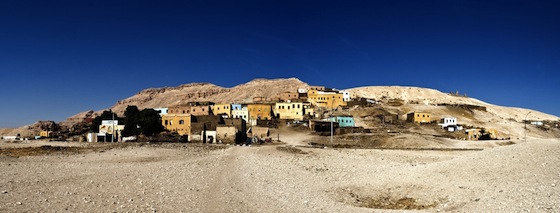
qurna hassan fathy

What was it like to work with Fathy and what was he like as a person?

I first went to work with Fathy in 1974-1975, on my year out at the AA (School of Architecture) in London. It was one of the beautiful periods of my life, and I still look back at it with great fondness. I still miss him to this day. He was a delightful person to be and work with, erudite, gentle and terribly entertaining. He was completely pre-occupied with the projects he was working on, and the cause, the importance of Islamic and vernacular architecture and culture, and housing the poor.

I was completely engaged in taking up my role as assistant, student and companion. He was a wonderful tutor and mentor. I don’t recall a dull or boring moment. We always had so much to do. Designing, drawing (drafting), writing, putting together documents, helping him prepare his slides at the very last minute before he left on a trip abroad…And there was the essential listening to Brahms when there were no guests, or after they had all gone or when he was feeling lonely and dejected he brought his violin out.

As close as his heart was to rural and urban Egypt, his concerns where equally universal, and regional. Fathy redefined spaces, features, pavements and walls in a refreshing architectural language, while being outspoken and critical of the bureaucracy, corruption and condition (squalor, neglect and dilapidation) of the run down urban environment of old Cairo’s buildings, (this was prior to the later conservation projects of the Aga Khan Historic Cities programme). He lifted Islamic architecture out of the orientalist, museum and archaeological status it had acquired (after the Ottoman neo-classicist and colonial architecture era, 19th C. onwards), to a living architecture and town planning to be taken up in Architecture departments, and Arab universities. He was a revolutionary and that explains why working with him was so important and compelling for me at the time. However, his battles are now our battles.


For more on Hassan Fathy and green architecture see:
Hassan Fathy is The Middle East’s Father of Sustainable Architecture
Mud Structures of the Muslim World: Spectacular and Sustainable
13 Principles of Sustainable Architecture

Israel’s Shumis Pizza Joint Features Row Upon Row of Recycled Tomato Cans

2

recycled materials, Israel, Studio OPA, green design, sustainable design, eco-design, Shumis Pizzeria

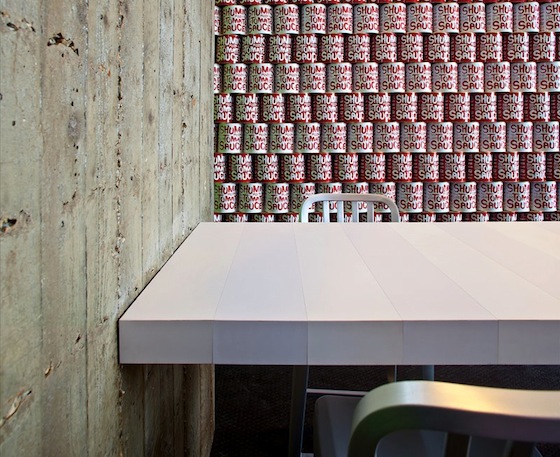
As urban trash threatens to bury city dwellers in environmental and financial ruin, recycling materials is becoming not only a progressive design technique but also a necessary one. That doesn’t mean that an economy of materials has to be boring, mind you. Often, quite the contrary is true. By using either recycled or inexpensive materials, Studio OPA has created a bold, dramatic design that makes the occasional pizza binge at a small, funky cafe in Israel’s industrial Rishon-Lezion both an exciting gastronomical and visual treat.

Israel’s Spencer Tunick Bill Attempts to Outlaw Public Nudity

10

Spencer Tunick, Dead Sea, eco-art, photography, nudity, Israel, politicsAn Israeli Minister has submitted a bill for approval that would outlaw public nudity anywhere in the country except at established nude beaches. An outspoken opponent of Spencer Tunick’s September, 2011 nude photo shoot at a secret location along the Dead Sea, which attracted 1,000 Israelis keen to draw attention to the dire ecological state of the world’s deepest hypersaline lake, MK Nissim Zeev was unable to prevent its eventual occurrence.

Although certain of Tunick’s images snapped that day are worth $2,000 and the event was hailed as a powerful event that demonstrates Israel’s commitment to democracy, Zeev has not let go of his failure to protect religious interests in the country and now proposes a mandatory sentence of one year in prison for anyone who strips naked for either artistic or commercial purposes in public spaces.

Dubai to Abu Dhabi Electric Superbus Now Road Legal

dubai super busWith 23 seats and 16 doors, the all electric Superbus is no ordinary car

It’s 15 meters long, super luxurious and totally electric powered. It’s called the Superbus, and it was originally proposed as a super fast and luxurious commuter vehicle between the UEA Emirate states of Abu Dhabi and Dubai.  This totally electric and futuristic looking vehicle, was originally designed in the Netherlands, and put through its paces in road tests in Abu Dhabi’s Masdar City, has now been certified as “road Legal” by transportation authorities in the Netherlands, according to The National.

A Dustier Planet, Your Dustier Lungs

2

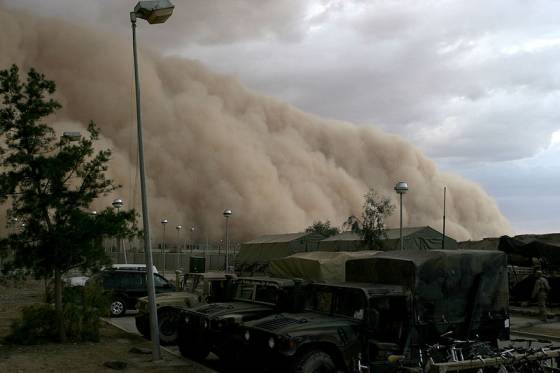
dust storm in Iraq sand

Earth’s dust storms and sand storms are becoming more frequent. How does that affect your health?

Here in the Middle East, powerful hot winds sometimes drop fine yellowish sand  down from the sky, coating the skin and lips irritatingly and making it hard to see across the street. It’s the lashing tail of giant storms in the Sahara.

Invading sand has already caused airport shutdowns in Israel. Radio announcements warn pregnant women, the elderly and people with heart disease or respiratory conditions to stay inside. Babies and young children must remain indoors too. It’s difficult enough to contend with air pollution, but sand storms aggravate everyone.

Even in ordinary weather, plain household dust settles in a visible layer on anything lying around, within a day. Studies conclude that there really is more dust in the atmosphere. But any careful housewife can tell you that.

Breast Milk Worth More Than Oil

breasts worth more than oil bok reviewOne of the surprising facts in Florence William’s new book: breast milk is more expensive than oil.

Jet fuel in breast milk? Breasts getting bigger than generations ago? These are just two discoveries that investigative journalist, Florence William’s, shares in her latest book about the environmental impact on breasts.

Breasts: A Natural and Unnatural History (2012) is more than an ode to those beguiling curves; it is part of the growing body of research and awareness about eco-conscious intimacy, a movement some are calling ‘ecosexuality.’ A term originally coined by Greenpeace about 10 years ago, among other things ecosexuality invites us to examine the impact of toxins on our reproductive selves.

“For such an enormously popular feature of the human race — even today, when they are frequently bikinied, bared, flaunted, measured, inflated, sexted, YouTubed, suckled, pierced, tattooed, tassled and in every way fetishized — it’s remarkable how little we know about their basic biology,” Williams says.

Being made primarily of fat and glandular tissue, “breasts, it turns out, are a particularly fine mirror of our industrial lives,” Williams explains. “In the course of a lifetime, [they] meet many friends and foes: lovers, babies, ill-fitting undergarments, persistent pollutants, maybe a nipple ring, a baggie of silicone or a dose of therapeutic radiation. It’s a lot to ask of breasts.”

Measurable consequences include bigger breasts developed earlier with toxins finding hiding places in unsuspecting bosoms. Toxins come from industrial sources including air pollution. William’s had her breast milk tested and found that it was laced with miniscule amounts of jet fuel. However, consumers are also inadvertently exposed to daily household use items.

Many of those are in our beauty, cleaning and pleasure aid products. For example, lead in lipsticks reduces fertility in men and women. Toluene in nail polish and hair dye stops menstruation and decreases sperm count. Phthalates are reproductive toxins found in fragrances, cosmetics, and personal care products (even many vibrators and dildos). Bisphenol-A in plastics has been shown to cause spontaneous abortions and alter a man’s sperm.

Breast cancer rates vary around the globe, with women in Israel having rates similar to the west. It kills fewer women than heart disease, but because its scars reach deeper than our skin, it’s the rallying call that resonates with women’s private erotic selves. This touches on another aspect of the ecosex movement; our attitudes towards pleasure, our bodies and what is considered ‘natural.’ For better or for worse, Williams message about breast health underscores the complicated relationship society often has with the female body.

From the author’s website:

“Feted and fetishized, the breast is an evolutionary masterpiece. But in the modern world, the breast is changing… and attracting newfangled chemicals. Increasingly, the odds are stacked against us in the struggle with breast cancer – even among men. What makes breasts so mercurial – and so vulnerable?”

Her investigation follows the life cycle of the breast from puberty to pregnancy to menopause, bringing her from a plastic surgeon’s office where she learns about the importance of cup size in Texas to a lab where she discovers the presence of environmental toxins in her own breast milk.

Endowed with a witty and inquisitive voice, Williams explores where breasts came from, where they have ended up, and what we can do to save them.

Florence Williams work often focuses on the environment, health and science. She is a contributing editor at Outside Magazine and a freelance writer for New York TimesNew York Times Magazine and numerous other publications.

Read more breast health news:
Ecosex and Why Environmentalists Are Avoiding the e-Spot
Are Hormones in the Environment Making Women’s Breasts Bigger?
Natural Breast Enhancement