Neom, a bombastic collection of futuristic cities and resorts, has flopped as Saudi oil prices roll back reality. The Saudi plan of hosting the 2029 Asian games to be held at Trojena, a ski report in the desert, has been cancelled.
A large sperm whale has washed ashore on Zikim Beach in southern Israel, marking only the eighth documented case of its kind along the country’s Mediterranean coast since monitoring began.
For millennia, the Middle East's water crisis seemed an immutable fact of geography — a region defined as much by what it lacked as by what lay beneath its sands. Today, a convergence of plummeting solar costs, advancing membrane technology, and hard-won engineering expertise is rewriting that story.
Neom, a bombastic collection of futuristic cities and resorts, has flopped as Saudi oil prices roll back reality. The Saudi plan of hosting the 2029 Asian games to be held at Trojena, a ski report in the desert, has been cancelled.
A large sperm whale has washed ashore on Zikim Beach in southern Israel, marking only the eighth documented case of its kind along the country’s Mediterranean coast since monitoring began.
For millennia, the Middle East's water crisis seemed an immutable fact of geography — a region defined as much by what it lacked as by what lay beneath its sands. Today, a convergence of plummeting solar costs, advancing membrane technology, and hard-won engineering expertise is rewriting that story.
Neom, a bombastic collection of futuristic cities and resorts, has flopped as Saudi oil prices roll back reality. The Saudi plan of hosting the 2029 Asian games to be held at Trojena, a ski report in the desert, has been cancelled.
A large sperm whale has washed ashore on Zikim Beach in southern Israel, marking only the eighth documented case of its kind along the country’s Mediterranean coast since monitoring began.
For millennia, the Middle East's water crisis seemed an immutable fact of geography — a region defined as much by what it lacked as by what lay beneath its sands. Today, a convergence of plummeting solar costs, advancing membrane technology, and hard-won engineering expertise is rewriting that story.
Neom, a bombastic collection of futuristic cities and resorts, has flopped as Saudi oil prices roll back reality. The Saudi plan of hosting the 2029 Asian games to be held at Trojena, a ski report in the desert, has been cancelled.
A large sperm whale has washed ashore on Zikim Beach in southern Israel, marking only the eighth documented case of its kind along the country’s Mediterranean coast since monitoring began.
For millennia, the Middle East's water crisis seemed an immutable fact of geography — a region defined as much by what it lacked as by what lay beneath its sands. Today, a convergence of plummeting solar costs, advancing membrane technology, and hard-won engineering expertise is rewriting that story.
Neom, a bombastic collection of futuristic cities and resorts, has flopped as Saudi oil prices roll back reality. The Saudi plan of hosting the 2029 Asian games to be held at Trojena, a ski report in the desert, has been cancelled.
A large sperm whale has washed ashore on Zikim Beach in southern Israel, marking only the eighth documented case of its kind along the country’s Mediterranean coast since monitoring began.
For millennia, the Middle East's water crisis seemed an immutable fact of geography — a region defined as much by what it lacked as by what lay beneath its sands. Today, a convergence of plummeting solar costs, advancing membrane technology, and hard-won engineering expertise is rewriting that story.
Neom, a bombastic collection of futuristic cities and resorts, has flopped as Saudi oil prices roll back reality. The Saudi plan of hosting the 2029 Asian games to be held at Trojena, a ski report in the desert, has been cancelled.
A large sperm whale has washed ashore on Zikim Beach in southern Israel, marking only the eighth documented case of its kind along the country’s Mediterranean coast since monitoring began.
For millennia, the Middle East's water crisis seemed an immutable fact of geography — a region defined as much by what it lacked as by what lay beneath its sands. Today, a convergence of plummeting solar costs, advancing membrane technology, and hard-won engineering expertise is rewriting that story.
Neom, a bombastic collection of futuristic cities and resorts, has flopped as Saudi oil prices roll back reality. The Saudi plan of hosting the 2029 Asian games to be held at Trojena, a ski report in the desert, has been cancelled.
A large sperm whale has washed ashore on Zikim Beach in southern Israel, marking only the eighth documented case of its kind along the country’s Mediterranean coast since monitoring began.
For millennia, the Middle East's water crisis seemed an immutable fact of geography — a region defined as much by what it lacked as by what lay beneath its sands. Today, a convergence of plummeting solar costs, advancing membrane technology, and hard-won engineering expertise is rewriting that story.
Neom, a bombastic collection of futuristic cities and resorts, has flopped as Saudi oil prices roll back reality. The Saudi plan of hosting the 2029 Asian games to be held at Trojena, a ski report in the desert, has been cancelled.
A large sperm whale has washed ashore on Zikim Beach in southern Israel, marking only the eighth documented case of its kind along the country’s Mediterranean coast since monitoring began.
For millennia, the Middle East's water crisis seemed an immutable fact of geography — a region defined as much by what it lacked as by what lay beneath its sands. Today, a convergence of plummeting solar costs, advancing membrane technology, and hard-won engineering expertise is rewriting that story.
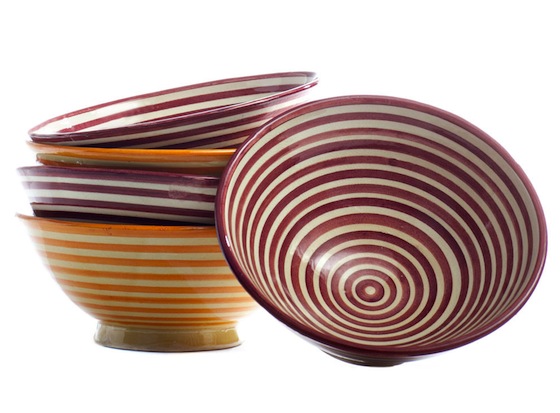
We are suckers for a good love story, especially when it has an eco-twist. Chafiq Ennaoui and Aimee Bianca met at the Djemaa el Fna square in Marrakech, where Aimee gushed over the unique quality of artisanal Moroccan crafts. The pair soon fell in love and eventually moved to New York, where Chafiq gained a new appreciation for the designs of his youth.
But with plastic junk from China and elsewhere quickly replacing slow handcrafted pieces, the couple became concerned about the future of these special products and the people who so lovingly craft them. This is how BELDI, which refers to all things folk and country about real Morocco, was born. An online store and a preservation project, BELDI sells a wide range of striking pieces that are almost all made with recycled or renewable materials.
Libya is one of the countries with which Turkey signed a rapid oil supply deal after the United States threatened to sanction countries that purchased oil from Iran.
In March, U.S. President Barack Obama approved sanctions on buyers of Iranian crude oil, effective starting in July. The announcement threw many of Iran’s international customers into a panic as they requested exemptions and began seeking new sources for the precious fuel.
Thanks to its exceptionally high energy demand and reliance on Iranian imports, Turkey is one of the countries whose energy strategy will most drastically change as a result.
Qatar is targeting 76 Acres of LEED Certified Buildings
When complete, the Msheireb regeneration project in the heart of Doha’s historical district will feature the world’s largest collection of LEED-certified buildings. Projected to cost $5.5 billion, the city’s new heart will eventually comprise 100 new buildings, all of which will target either Gold or Platinum LEED certification. (It is unclear whether this project will weigh in on the new GSAS green building rating system?)
Construction of the first development phase is already underway. The Diwan Amiri Quarter located in the Mohamed Bin Jassm District adjacent to Amiri Diwan and Souq Waqif will feature three major government buildings, including the national archive, heritage sites, a museum and an Eid prayer ground.
According to the Worldwatch Institute’s latest report on land grab, the oil-rich Gulf nations are big buyers of foreign land
Since 2000, an estimated 70.2 million hectares of agricultural land worldwide has been sold or leased by private or public investors. Most of that land grab took place between 2008 and 2010 and most of the land bought was in Africa, Asia and Latin America. The buyers, however, were a little more dispersed with Brazil, India, China, East Asian nations, the US and the UK topping the list.
The oil-rich Gulf nations of the Middle East, however, were close behind making up one of the major groups of buyers. Indeed Saudi Arabia, the UAE and Qatar alone bought up 4.6 million hectares of land over the decade. And other nations such as Egypt and Jordan have also been buying up fertile land abroad.
Everyone who constructed pavilions for the recently-completed Rio +20 conference in Brazil was required to source their materials locally and to employ members of the Rio de Janiero community to build each structure. But the New York-based industrial design firm Grimshaw Architects distinguished Qatar’s pavilion from the crowd by modeling its shape after the wingspan of a soaring falcon. Referencing Qatar’s longstanding devotion to falconry, the pavilion was comprised of a steel frame and a light transparent roof and showcased the emirate’s various sustainability initiatives.
Brochures for the Giza Pyramids usually depict Egypt’s historic relics amid a poignant desert background or a deep, radiant sunset. Camels and their Bedouin owners lurk in the background, poised to take visitors on the adventure of a lifetime. But these images spread only half the truth.
Although numbers have dropped precipitously since the revolution, in 2010 tourism accounted for approximately 11% of the country’s GDP. So it stands to reason that the authorities take excellent care of their national treasures, right? Unfortunately not.
During Mubarak’s 30 years as President, Egypt fell into a terrible decline, mummifying basic goods and services. And the masses have grown to accept life in the shadows of a once-great nation. This video depicts what the road to Giza really looks like and underscores the enormous challenges President Morsi has to face.
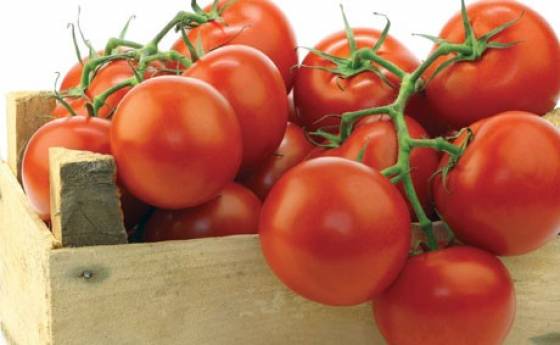
Tomat-O-Red colors foods that appetizing pink color and even offers health benefits. Like eating Shakshouka every day?
Starbucks made waves with their eco-move away from artificial red coloring to a natural, sustainable dye. It was right there on their labels: carmine. Then a tip from an anonymous Starbucks employee to a vegan website alerted the public to the real nature of Strawberry Frappuccinos. Carmine is made from dried, powdered female cochineal beetles. Originating in Latin America, it’s been used to dye fabrics and foods red for centuries.
The coffee-shop chain didn’t count on the public’s reaction. Vegans and vegetarians were understandably upset, and people who don’t care to ingest insects were disgusted. An online petition with over 6,500 signatures asked Starbucks to stop using carmine. The furor is only now petering out, with Starbuck’s announcement that from now on, their products will be colored with vegetarian (and kosher) Tomat-O-Red.
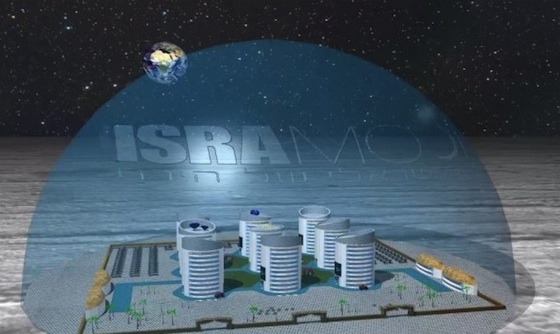
Amid soaring real-estate prices that sent scores of protestors to the streets last year, an Israeli company recently ran a marketing campaign for affordable lunar homes. According to a report published in the Times of Israel, an email circulated among local press promised that intrepid home seekers could purchase “Beautiful apartment towers … built in plastic bubbles” and “apartments for all size families, from three rooms to large penthouses, along with garden apartments.”
“Can I talk to you?” a man named Hashim asked as I stooped to take photographs of government workers cleaning up last night’s party mess. Revelers marching through Tahrir Square, surrounding streets and the 6th of October Bridge cheered and set off giant firecrackers well into the early hours of the morning following the announcement that Mohamed Morsi is Egypt’s first democratically-elected president.
“He said to give him 100 days,” Hashim continued, referring to President Morsi’s promise that he will fix problems such as the poor quality of bread and burgeoning trash in just over three months. But without a constitution and with both budgetary and legislative power in the hands of Egypt’s Supreme Council of Armed Forces (SCAF), it is unclear whether he will have sufficient control of the country’s limited resources to make good on his promises.
Beirut overtakes Abu Dhabi and Dubai, becoming the most expensive city for expatriates in the Middle East region, after Tel Aviv
According to Mercer’s latest Cost of Living survey Tokyo has become the world’s most expensive city for expatriates, pushing Luanda, Angola to second place while Karachi, Pakistan is ranked as the world least expensive city. The survey covers 214 cities across continents in the world and measures the relative costs (using NYC as base) of the 200 most significant expenses for expatriates. Mercer’s cost of living survey “is the world’s most comprehensive and is designed to help multinational companies and governments determine compensation allowances for their expatriate employees.”
Interestingly most Middle Eastern cities have dropped in rankings, according to Nathalie Constantin-Métral, Principal at Mercer this is “mainly because price increases on goods and services have been more moderate here than in our benchmark city, New York. Slight decreases in expatriate accommodation costs were also observed in Abu Dhabi and Dubai.”
Nevertheless, this is not true for Beirut (at spot 67), where living expenses are now the highest after Tel Aviv for the region. Beirut has gone up eight places from last year, and has overtaken Abu Dhabi (76, down nine places from last year) and Dubai (94, falling 13 places). These rising living expenses in Beirut are not hurting expatriates only, but locals too that face costs and prices that are not in line with average wages.
This fall Egypt’s Bibliotheca Alexandria will celebrate the tenth anniversary of its opening. It is one of the region’s grandest and most beautiful libraries. Although it currently holds only one million books there is room for expansion. Bibliotheca Alexandria has shelf space for over eight million books. This library has become a public center of learning and activism. It recently hosted the Natural Sciences Earth and Sun Festival, with public programs about the environment and conversation. The facility’s library for the visually impaired offers monthly computer literacy classes and Braille reading courses.
Bahrain’s health authority has established four directives to regulate the sale and prescription of traditional, alternative medicines. This step was taken in response to concern about the credibility of some businesses. Now the National Health Regulatory Authority (NHRA) will establish guidelines for the sale, use, and advertising of alternative medicines, including services and practices such as ‘cupping,’ known as Hujama.
The NHRA will look to World Health Organization guidelines for guidance to create a list of approved specialties.
The Middle East is home to diverse traditions of alternative medical practices.
Sunni Muslims healing with music
For example the Adyghe people, a predominantly Sunni Muslim minority originally from the Northern Caucasus, has a time-honored tradition of musical treatments for healing.
“Adyghes considered that music could treat not only the body, but also the soul. It has a special influence on a person before the beginning of a battle, invoking bravery. In Abkhaz-Adyghe fairy tales there are scenes that the musician could heal wounds of the warriors through tunes, and then the warriors were ready to fight again. Even in the 20th century, people wishing to praise a good player on the harmonica said that he played so well that paralyzed people rose from their bed and began to dance.”
They believe that music penetrates the body and can thus heal a person from the inside. Folk songs are traditionally prescribed to soothe patients with burns or women experiencing difficult births.
Musical remedies were not a substitute for medical treatment but have generally been used the ease discomfort, much like a modern painkiller.
The Unrepresented Nations and Peoples Organization estimates that over 2 million Adyghes currently live in Turkey and over 150,000 in Jordan, Israel and Syria.
In recent years modern science has discovered the medicinal properties of common spices often used as herbal treatments, including thyme as a topical treatment for acne and cumin as a remedy for a range of ailments.
As in Bahrain, medical professionals in the United Arab Emirates are also perfecting the art of balancing traditional remedies with western medicine. The first western-style hospital in the UAE was a 12-bed facility opened in 1951 with British aid. Today modern hospitals are common place in big cities. But this has not eradicated local traditions. The UAE has recently seen a resurgence of demand for alternative treatments.
“Modern and traditional medicine are complementary to each other,” Dr. Carina Huwari told The National. “Balance them properly and don’t underestimate the body’s natural power to heal. It just needs a little bit of help.”
Image of woman doctor by Michael Jung, via Shutterstock. Image of Circassians in Israel via Andynapso, Wikimedia Commons
Art has a way of jarring our perspective. Here are 6 groundbreaking projects that are changing the way people in the Middle East relate to their environment.
Just today we read about an Egyptian artist who has spread her creative wings since Mubarak’s fall only to have them clipped again by increasing powerful Islamist groups. Despite such obstacles, or perhaps because of them, there are untold numbers of talented people pushing past the ruins of war and oppression in Egypt, Gaza, Iran, and elsewhere in the Middle East and North Africa in order to expose important environmental concerns. We have put together a list of six groundbreaking projects with an eco-concience that are slowly changing how people in our region relate to the natural world.


 We are suckers for a good love story, especially when it has an eco-twist. Chafiq Ennaoui and Aimee Bianca met at the Djemaa el Fna square in Marrakech, where Aimee gushed over the unique quality of artisanal Moroccan crafts. The pair soon fell in love and eventually moved to New York, where Chafiq gained a new appreciation for the designs of his youth.


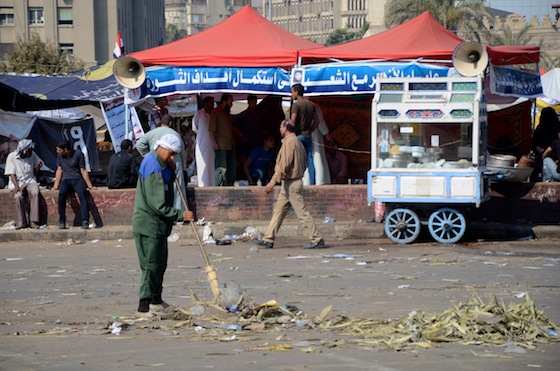
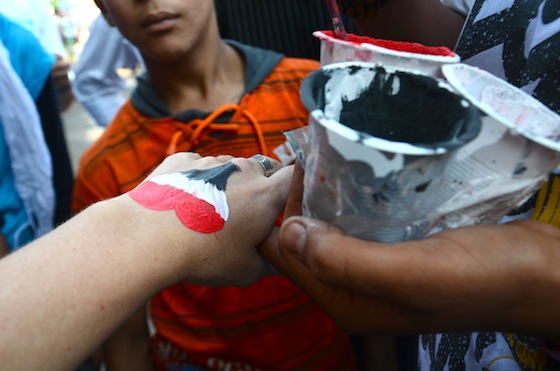 “Can I talk to you?” a man named Hashim asked as I stooped to take photographs of government workers cleaning up last night’s party mess. Revelers marching through Tahrir Square, surrounding streets and the 6th of October Bridge cheered and set off giant firecrackers well into the early hours of the morning following the announcement that Mohamed Morsi is Egypt’s first democratically-elected president.


 The Middle East is home to diverse traditions of alternative medical practices.
