Home Blog Page 405

Islam 101: Eid for Beginners

3

eid, ramadan, islam, muslim, class, questions, studying

Learn the ropes of how to live in a Muslim country. Laurie goes over the 101 of Eid, Ramadan and some Muslim holiday rituals that might baffle the average westerner.

Eid in the summer in the Middle East, when most ex-pats’ minds turn to quick trips-to-get-out-of-this-dry-heat. This year, my second in Jordan, I go native and learn more about the home team’s culture.

We landed in Jordan last July: school was out and I was unemployed. The husband (already here a year) dropped the kid and me at a pool center called The Orthodox Club.  “Orthodox”, to a New Yorker on hiatus from organized religion, conjures up black-suited Jews with impressive hats and beards, a wife in a wig and a herd of tiny kids any Irish Catholic would be proud of. But in Jordan, Orthodox means something different.

I languish in a Woody Allen moment, imagining  a whole club of swimming Hasidim, ‘til I realize that “orthodox” in the Middle East here means Christians, eastern sect Christians, who can eat and drink and co-mingle in cringingly teeny Speedos all through the heat wave of an Ammanian summer (which in 2011, included Ramadan).

So begins my life as a cable TV special: sort of The Sopranos go to Amman.

A year on, I have a job, and co-workers and new friends, who – in fair exchange for imported bags of Reese’s peanut butter cups – have jumped in as my cultural counselors.  Sure, there are Muslims all over Manhattan, and a few count me as their BFF, but religious practice is more muted and diluted amongst that city’s panoply of cultures.  Islamic traditions are not clearly visible to the untrained eye.

Much easier to learn the ropes when living in a Muslim country, one quite tolerant of quizzical foreigners.

Ramadan is a time of prayer, fasting, and charity for a billion plus Muslims.

Islam uses a lunar calendar, with each month starting with the sighting of the new moon: Ramadan is the ninth month of the Islamic year. Elsewhere the solar calendar is used, with months 11 days longer than their lunar cousins. This discrepancy is why the Islamic holy days move forward, occurring later each year.

Muslims believe that the first verses of the Qur’an were revealed to the Prophet Mohammad by Allah through the angel Jibril (Gabriel) beginning 610 AD.  The Qur’an can be considered as a book of guidance, and is composed of ayah, or verses, that form 114 suras, or chapters.

At many mosques during Ramadan, about one thirtieth of the Qur’an is recited each night in prayers known as tarawih.  By the close of the holy month the complete scripture will have been recited. I’m giving the tome a re-read this month too; using an English translation which the young man at the book store assured me,”isn’t nearly the same as the original”.

Muslims fast, a practice called sawm, throughout the month of Ramadan.

Nothing is eaten or drunk (or smoked, praise to Allah on that, I say) between dawn and sunset.  Able-bodied Muslims take part in sawm from about age twelve; illness or pregnancy or travel can exempt the faithful from fasting, although most will undertake the action later that same year.

During the holy month, most Middle Eastern restaurants close during daylight hours. The days begin with suhoor, a meal eaten before the sun rises. After the sunset, a meal known as iftar breaks the fast. Iftar usually begins with dates, simple soups and sweet drinks.

Then the real party starts. I tag daytime inertia not so much on fasting as on late night socializing with loved ones. Can there be a better reason to be shattered the next day?

Fasting is an opportunity to practice self-control. It cleanses both body and mind. It serves as a reminder of the suffering of the poor. As a child in a Catholic home, before Vatican II played with the rules, we did our fair share of fasting before taking Holy Communion.

For me, that was a matter of enduring hours without M&Ms. In summertime Ramadan, it can mean over 12 hours of no food, no drinks, no water.

My new friends tell me that increased solidarity with the wider community during this challenging month is the most gratifying take-away. There is a power to community. I fasted a few days alongside office friends. We eyeballed non-fasters slurping cold water like puppies; the connection I feel with those abstaining is real.

Ramadan ends with the festival of Eid al-Fitr.

Often abbreviated to “Eid”, and literally the “Festival of Breaking the Fast,” Eid al-Fitr is one of the most important Islamic celebrations. The three-day holiday marks the end of Ramadan. Everyone dolls up, homes are dressed with lights and decorations, kids get treats, and visits to friends and family go on steroids.  The holiday is also called “Little Eid”.

Charity and good deeds (always important in Islam) take on special significance at the end of Ramadan, with people sharing their blessings by feeding the poor and making contributions to mosques.

Eid al-Adha marks the end of the Hajj

About a month onwards, Eid al-Adha marks the completion of the hajj (pilgrimage) rites at Mecca, which is observed by Muslims throughout the world to commemorate the faith of Ibrahim (Abraham). The holiday begins the day after pilgrims on Hajj descend from Mount Arafat.

This one’s known as “Big Eid”: a holy day seeped in rich tradition and context, although for foreigners it’s just another good excuse to take a trip.  I’ll be back with a better account of Big Eid once I score some more peanut butter cups.

Isn’t world travel wonderful?

Image of Muslim classroom from Shutterstock
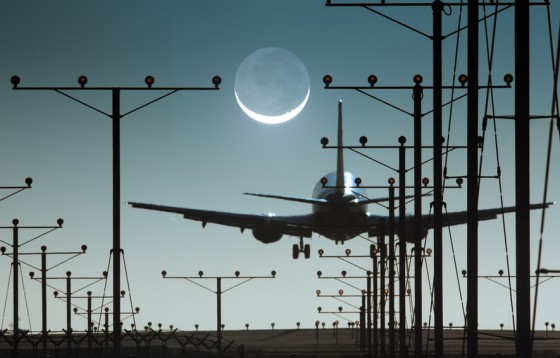
Teaching Old Planes New Energy Efficiency Landing Tricks

planes planding energy efficiency

A simple change in operations gives aviation an environmental win-win-win.

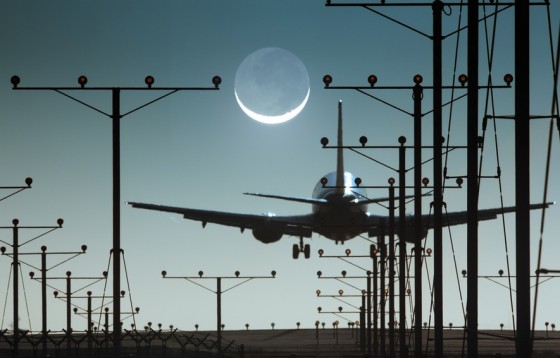
Continuous Descent Arrival (CDA) is an aircraft operating technique in which arriving planes descend in a relatively straight line to the runway. In conventional descent, an aircraft drops in a stair-step manner, requesting control tower permission to descend to each new lower altitude, with portions of level flight in-between altitude changes.

CDA skips the stairs and takes the slide, aiming to avoid level flight to the extent permitted by safe operating procedures.  The aircraft operates with minimal thrust, which significantly reduces power demand.  In Europe, the procedure is called Continuous Descent Operation (CDO) and in the US it’s named Optimized Profile Descent (OPD).

By allowing arriving aircraft to maintain their high cruising altitude for longer periods before starting a continuous descent to the runway, CDAs nearly absolves the three environmental sins of aviation: fuel burn, emissions and noise. Keeping aircraft as high as possible for as long as possible is a very effective method of reducing noise impact on the ground.

Protei Designs Sailing Robots to Clean the Sea

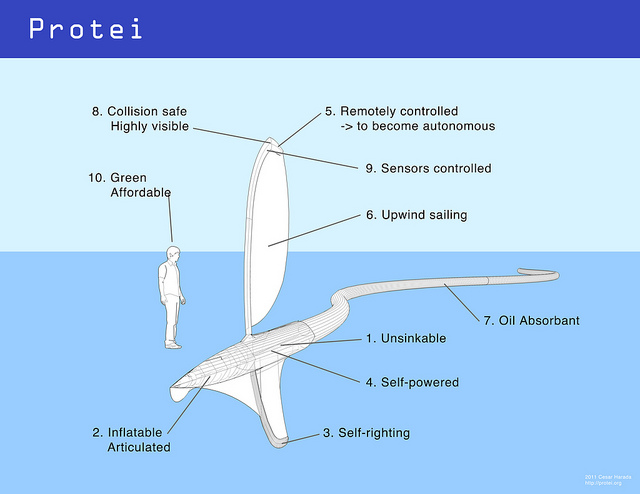
protei sailing robotIt is estimated that BP’s Deepwater Horizon disaster spilled 205 million gallons of oil into the Gulf of Mexico.  Local fishermen and other cleanup workers suffered from the toxic oil and carcinogenic dispersants, but at best only 3% of this oil was ever recovered.  The absorbent booms were never designed for open water.  When Cesar Harada heard about this disaster, he quit his dream job at MIT and moved to New Orleans to find a better way to clean up these spills.  His inspiration combined ancient sailing technology with modern materials and robotics.  He used crowd-funded kickstarter loan to hire some engineers and founded Protei.org.  Harada released the designs under an OpenSource Hardware (OSHW) license so that others can learn, refine and share solutions.

Isrotel Beresheet is a 5 Star Stone-Clad Hotel Overlooking Ramon Crater

0

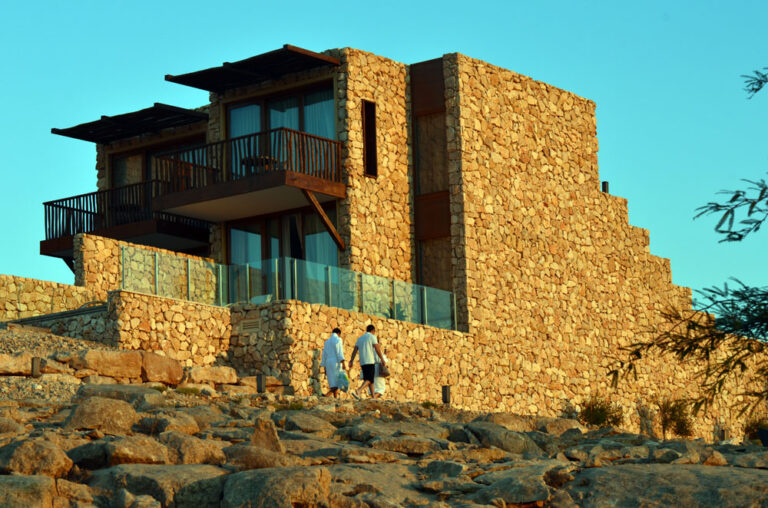
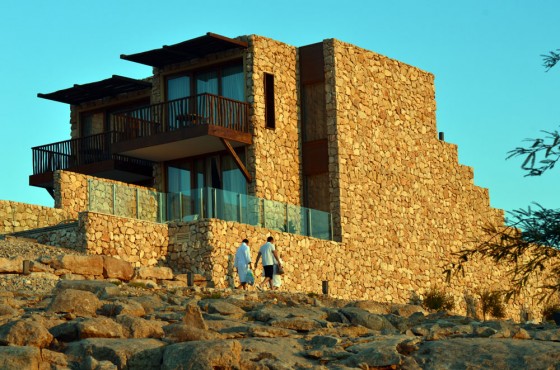
natural materials, 5 star hotel, Ramon crater, Negev desert, Isrotel, natural stoneI’d love to tell you more about the architects responsible for the 5 star Isrotel overlooking Ramon crater, but it’s impossible to get them to return calls and there’s no information online. As for the communications person, either she wasn’t given the skinny on the design or her English is as good as my Hebrew (which is virtually nonexistent.)

Nonetheless, the place is so beautiful that I had to show off my photographs. Located in the Negev desert and a comfortable distance from Israel’s busiest cities, the hotel offers eight different kinds of rooms and a range of beautification options that cost as much as renting a houseboat in Cairo – for a month. 

Solar Powered Desert Oasis Uses Desalination to Fight World Hunger

solar power desalination

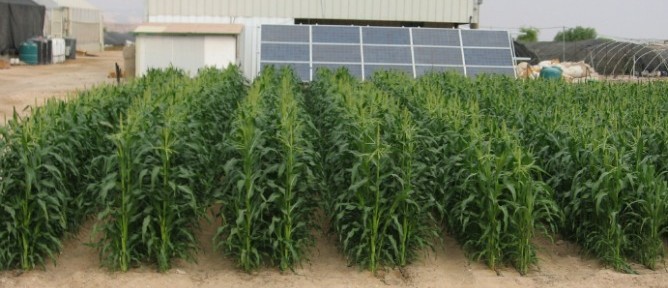
Growing the most crop per drop of water is an Israeli specialty. With little rain and a hot desert sun as unforgiving as the Sahara, Israel’s high-tech researchers and farmers have combined their expertise to grow a cornucopia of salt-tolerant crops in dry desert conditions. People from hungry countries far and wide come to learn from Israel’s expertise.

Now, a new research project by two desert research institutes has strung several Israeli agriculture and clean-tech specialties together to help alleviate world hunger and push back the desert through an artificial desert oasis using low-cost desalination technology that runs on solar power.

Perseid Meteor Shower Attracts Hundreds to Mideast Deserts

0

The show isn’t over yet.

Sky gazers traveled to Mitspeh Ramon, a town on the edge of the Ramon Crater in the Negev desert this weekend. Others followed onthegotours.com to Jordan’s Mt Nebo, Madaba and Wadi Rum. Still others traveled with adventurecompany.co.uk to the Sinai desert in Egypt.  These isolated places all have a resource that Tel Aviv and other great Middle Eastern cities lost long ago.  The skies here are relatively free of clouds and air pollution and they are very dark. Dark enough to see the wispy remnants of a dying comet.  

Fasting Pregnant Women During Ramadan Give Birth to Smaller Babies

2

newborn muslim baby

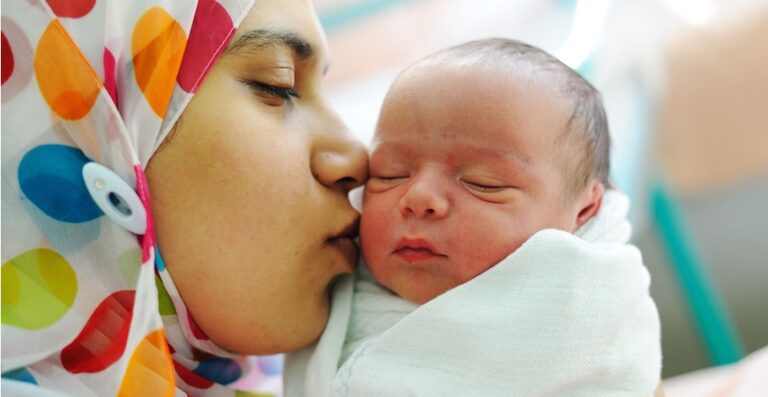
Do pregnant women who are fasting during the Holy Islamic month of Ramadan have a greater chance of experiencing a pre-term birth? A new study by Lebanese researchers rules out the half-day fast as cause for an earlier than expected birth. With Ramadan continuing until Friday, pregnant Muslim everywhere want to know if it’s safe to fast. Of course it’s always wise to consult your doctor and heed their advice, but for those who might be worried about the health effects on pre-term birth should pick up one point worth considering: the researchers ruled out that women who were fasting during their pregnancy have a greater chance of giving birth to smaller babies. And this effect was something they called “alarming.”

Turkish Cabinet Invokes Wartime Law To Seize Property For Hydro Projects

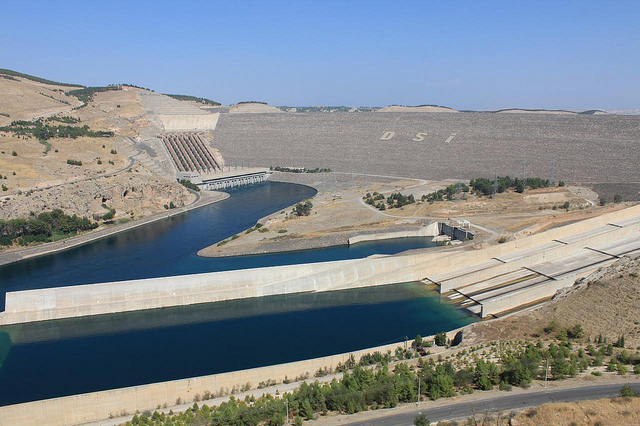
ataturk dam turkey seizes land maritime lawThe more than 20 hydroelectric projects that Turkey has built on the Tigris and Euphrates Rivers have been sharply criticized for displacing populations and harming the local environment.


Now it’s even easier for hydro companies to build destructive dams in Turkey. Real estate for 13 different hydroelectric projects in 12 provinces can now be seized at any time by Turkey’s Energy Market Regulatory Agency (EPDK) and State Waterworks Authority (DSİ), thanks to a recent decision by the prime minister’s cabinet, as reported in Bianet, Turkey’s independent media agency.

541 Jordan Trees Sacrificed for Dubai-esque Development Project

0

Amman, Jordan, Abdali, development, carbon emissions, trees, unsustainableThe privately-owned Abdali development company promises that the new 384,000 sqm commercial center in the heart of Jordan’s capital Amman will offer “lush inviting spaces that beckon and call for your attention.”

“Notice the elements subtly woven into the new downtown’s [sic] environment,” their web marketing person gushed. “Delight in the blossoming urban forest close by, enriching the experience of residents, visitors and all who step into Abdali.”

But the firm fails to mention that the $5 billion project, which also promises to forever transform the Amman skyline and includes 1.7 million sqm of hotel, office, residential, and retail space a la Dubai, will displace 541 trees in the-already brown and sooty concrete jungle.

Israel’s Offshore Natural Gas Good to Burn for 150 Years – If Handled Wisely

6

natural gas, israel, blue, burn, burner, butane, caution, circular, close, cook, cooking, danger, detail, dim, domestic, energy, fire, flame, flammable, fossil, fuel, gas, glow, glowing, hand, heat, hob, hold, hot, kitchen, light, methane, natural, oil, oval, oven, power, propane, ring, stove, tongues, up, warm Drilling for natural gas is one thing, but getting it safely ashore with terror elements in the region is another.

Ever since the news broke a few years back that natural gas exploration companies, headed by entrepreneurs like Yitzhak Tshuva had located large deposits of natural gas in the eastern Mediterranean, the race has been on to finally bring this “less polluting” energy source to the Israel mainland. This continuing effort was spurred even more by the continued sabotage of the natural gas pipeline from Egypt to both Israel and Jordan; upon which both countries, especially Israel, have depended on to supply a portion of vital energy needs.

In addition to all the issues involved in both drilling and extracting natural gas from deposits underneath the Mediterranean sea bed, including environmental reservations by neighboring countries such as Cyprus, bringing the extracted gas to Israel’s mainland includes building a special undersea pipeline to convey the gas to the mainland despite the dangers of both sabotage and terrorism by group like Hezbollah, Hamas and even Al Qaeda.

More recent news regarding these gas issues includes an estimation reported in Bloomberg Businessweek that the amount of natural gas deposits in these submerged gas fields as enough to satisfy Israel’s energy needs for at least 150 years.

Light Graffiti in Wadi Rum for Low Impact Fun

3

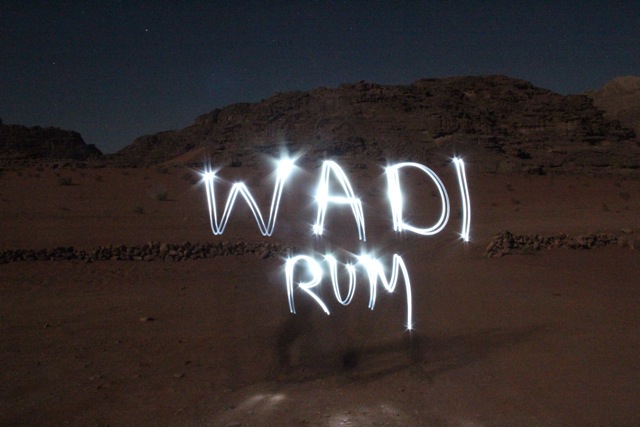
wadi rum light graffiti A quick tutorial on how to make your own low-impact light graffiti, in the desert or anywhere it’s dark.

Although I can appreciate the artistry of good graffiti, I don’t necessarily support it because of graffiti’s potentially harmful effects on Earth’s atmosphere and because of its borderline vandalistic properties (see our post on Sheikh graffiti seen from Space). But light graffiti or light painting, like moss graffiti, dissolves both of those concerns. I recently had some fun creating light graffiti with my friend at Wadi Rum, Jordan. See how we did it.

Pulling Water from the Air

9

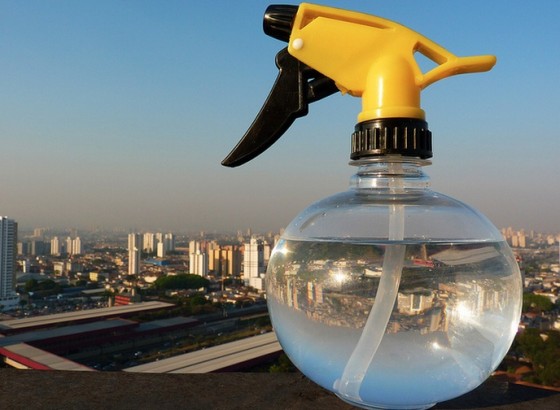
water air city, water tips, spray bottle amman jordanFaced with water shortage in Amman, Laurie digs up some alternative solutions for generating more water.

No water in my house last week in Amman, Jordan and I’m mildly freaked: I’d just taken delivery on some giant bottles for our water cooler, and I was up to speed on laundry. But no water means no cleaning. Not much cooking happening either.  And let’s not talk on the toilet issue.

Residential cut-offs are commonplace in Amman, but for me it’s a first.  I’m unnerved.  Not so much by the apartment’s micro-drought (I’d cope for a few days, no 127 Days crisis looms).  I’m edgy because my First-World-Barbie belief that tells me when I turn a knob, clear water will pour forth –– is seriously flawed.

I’ve never experienced an instance when household water failed to act on my command.  I make it cold or hot,  get it flowing in forceful jets or delicate sprays. Seems I have a bit of a Moses complex when it comes to controlling water, but when it comes to accessing clean stuff when needed, shouldn’t we all?

Set aside that divining rod.  Unlace your rain dance shoes.  Purified drinking water can now be directly produced from the humidity in the atmosphere. 

Yoga in Jordan’s Spectacular Wild Outdoors

3
yoga in jordan, dana nature reserve
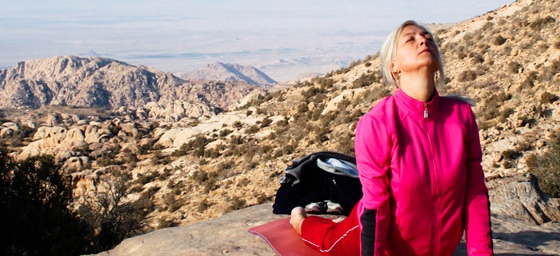
Jordan is an excellent place to start your asanas, maybe on a mountaintop somewhere overlooking the Dead Sea or Wadi Rum.

Jordan’s Royal Society for the Conservation of Nature didn’t name its eco-tourism division Wild Jordan for no reason; there is plenty of adventure to be had in the country’s great outdoors.  But now yoga has merged onto the scene, offering a softer and more meditative alternative to the action-packed fun.

The Yoga in Jordan project was started in 2010 by a Russian exchange student and a Japanese physiotherapist soon after they met one another in Jordan.  The immediate multiculturalism here is a nice reflection of yoga’s applicability to the world at large.

Together deciding to amp up the yoga culture in Jordan, Ivan and Toshi brought in an expert instructor hailing all the way from the source, India, for the group’s first retreat in Wadi Rum in April 2011.  Almost two dozen people were there with their yoga mats on elevated mountain stages, although I bet the deep red sands below could have provided comfort, too.

Jayakumar Swamysree led the group through the project’s curriculum:  Asanas, postures and poses; Pranayama, breathing techniques; Vinyasa, for flow and fitness; and Savasana, relaxation.

If Savasana wasn’t enough to get some of the yogis relaxed, the sweeping desert scenery and stunning silence of Wadi Rum were sure to do the trick.

Yoga in Jordan has since added slacklining – like tightroping except with a looser rope…and minus the circusy atmosphere – as well as hiking, kiting, and even sandsurfing to its programs in order to take full advantage of the giving environment.

The natural locations for the retreats that followed the first one in Wadi Rum were Dana Nature Reserve and the Mujib biosphere.

Yoga in Jordan has since added slacklining – like tight roping except with a looser rope…and minus the circusy atmosphere – as well as hiking, kiting, and even sand surfing to its programs in order to take full advantage of the giving environment.

For the typical yogi, class is held inside.  For the person who joins an excursion with Yoga in Jordan, class is held amidst some of the most magnificent landscapes the Middle East has to offer.  One can do the epic “warrior pose” in the place where Lawrence of Arabic arrived after his capture of Aqaba, or the “cobra pose” with the threat or the thrill, depending, of a snake slithering by.

Saying Namaste to nature opens up a world of benefits; Yoga in Jordan has caught onto that idea.

Update: as of April 13 2020, the website for Yoga in Jordan is not online. Let’s hope everyone is in eternal bliss saying “om” somewhere.

Hashish Field Wars Between Soldiers and Lebanon’s Locals

2

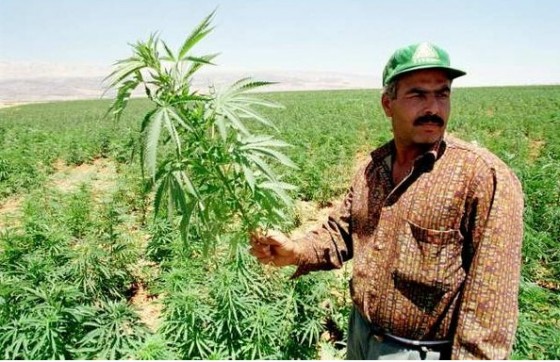
hash wars lebanonWhy grow apples in Lebanon when hashish and cannabis is hundreds of times more lucrative? An overview of Lebanon’s unsustainable drug business in the Bekaa Valley. 

Escalating clashes between armed tribesmen trying to protect their cannabis fields and the Lebanese armed forces are pushing Lebanon to readdress the long-standing issue of cannabis cultivation in the Bekaa valley.

During the lawless years of Lebanon’s 1975 to 1990 Civil War, the fertile plain of the Bekaa Valley was carpeted with fields of green cannabis sativa plants, generating some $500 million USD annually. At its peak in 1988, Lebanon’s narcotic market was making an estimated $1.5 billion.

Back then, government-run eradication programs coupled with international development projects which incentivize farmers to profitably grow legal crops was supposed to bring Lebanon’s cannabis business down. But production continued, with several politicians known to be taking a cut of the profits. Furthermore several international projects failed to deliver plausible income generating alternatives. For example, the US generously donated Holstein cows to farm, however these cost more in upkeep than they provided in income. Unable to make a living, several projects were abandoned and farmers returned to their hash cultivation.

The 2006 war rendered government run eradication programs and as a result cannabis growing has been on the rise again. This year,  however, the government turned its attention again to illegal crop farming and has been destroying  hash fields and burning the plants.

Distance Learning Provides Green Education Opportunities

old school computer keyboard, distance learning, learning key6 ways you can get an environmental education online. Some of them are completely free.

An unsustainable spike is driving up the cost of higher education, particularly the United States where tuition and fees have risen more than 400 percent since the 1970s, far outstripping both inflation and the housing bubble.  This discourages enrollment in the arts, humanities, environmental science and other subjects with lengthy or immeasurable financial payback.

Instead, students are persuaded into pursuing fad degrees and trade-school certifications and whatever else might pay back that enormous student loan in the shortest term.  Some universities are trending towards monoversities and preventing brilliant minds from reaching their full potential.  Others have fully embraced the financial caste system, turning themselves into exclusive four-year country clubs where learning is an afterthought.

The good news is that this education bubble triggered a renaissance in distance learning.  People from the far corners of the world can go to school together without leaving their culture, family and friends behind.

So who wants to study environmentalism with me?  Here are some of the offerings: