“In the midst of uncertain time, renewable energy remains consistent and steadfast in its expansion,” said Francesco La Camera, IRENA’s Director-General. “A more decentralised energy system, with a growing share of renewables and more market players, is structurally more resilient.”
Health insurance is a regulated financial product. Insurers operate under binding contracts, overseen by state insurance commissioners, that legally obligate them to pay claims meeting policy terms. Policyholders who believe a covered claim was wrongfully denied have legal recourse through state regulatory channels.
The New Zealand Merino Company, now rebranded as Zentera, has quietly removed the phrase “world’s leading ethical wool brand” from its website, a notable change that comes after a disturbing investigation by PETA Asia-Pacific into the company’s ZQ-certified wool supply chain, PETA reports to Green Prophet.
Somehow vegetables with short seasons excite the imagination and appetite more sharply than produce that’s available all year around. Good Middle Eastern cooks have many recipes for delicate fava beans, and this turmeric-fragrant soup is one.
“In the midst of uncertain time, renewable energy remains consistent and steadfast in its expansion,” said Francesco La Camera, IRENA’s Director-General. “A more decentralised energy system, with a growing share of renewables and more market players, is structurally more resilient.”
Health insurance is a regulated financial product. Insurers operate under binding contracts, overseen by state insurance commissioners, that legally obligate them to pay claims meeting policy terms. Policyholders who believe a covered claim was wrongfully denied have legal recourse through state regulatory channels.
The New Zealand Merino Company, now rebranded as Zentera, has quietly removed the phrase “world’s leading ethical wool brand” from its website, a notable change that comes after a disturbing investigation by PETA Asia-Pacific into the company’s ZQ-certified wool supply chain, PETA reports to Green Prophet.
Somehow vegetables with short seasons excite the imagination and appetite more sharply than produce that’s available all year around. Good Middle Eastern cooks have many recipes for delicate fava beans, and this turmeric-fragrant soup is one.
“In the midst of uncertain time, renewable energy remains consistent and steadfast in its expansion,” said Francesco La Camera, IRENA’s Director-General. “A more decentralised energy system, with a growing share of renewables and more market players, is structurally more resilient.”
Health insurance is a regulated financial product. Insurers operate under binding contracts, overseen by state insurance commissioners, that legally obligate them to pay claims meeting policy terms. Policyholders who believe a covered claim was wrongfully denied have legal recourse through state regulatory channels.
The New Zealand Merino Company, now rebranded as Zentera, has quietly removed the phrase “world’s leading ethical wool brand” from its website, a notable change that comes after a disturbing investigation by PETA Asia-Pacific into the company’s ZQ-certified wool supply chain, PETA reports to Green Prophet.
Somehow vegetables with short seasons excite the imagination and appetite more sharply than produce that’s available all year around. Good Middle Eastern cooks have many recipes for delicate fava beans, and this turmeric-fragrant soup is one.
“In the midst of uncertain time, renewable energy remains consistent and steadfast in its expansion,” said Francesco La Camera, IRENA’s Director-General. “A more decentralised energy system, with a growing share of renewables and more market players, is structurally more resilient.”
Health insurance is a regulated financial product. Insurers operate under binding contracts, overseen by state insurance commissioners, that legally obligate them to pay claims meeting policy terms. Policyholders who believe a covered claim was wrongfully denied have legal recourse through state regulatory channels.
The New Zealand Merino Company, now rebranded as Zentera, has quietly removed the phrase “world’s leading ethical wool brand” from its website, a notable change that comes after a disturbing investigation by PETA Asia-Pacific into the company’s ZQ-certified wool supply chain, PETA reports to Green Prophet.
Somehow vegetables with short seasons excite the imagination and appetite more sharply than produce that’s available all year around. Good Middle Eastern cooks have many recipes for delicate fava beans, and this turmeric-fragrant soup is one.
“In the midst of uncertain time, renewable energy remains consistent and steadfast in its expansion,” said Francesco La Camera, IRENA’s Director-General. “A more decentralised energy system, with a growing share of renewables and more market players, is structurally more resilient.”
Health insurance is a regulated financial product. Insurers operate under binding contracts, overseen by state insurance commissioners, that legally obligate them to pay claims meeting policy terms. Policyholders who believe a covered claim was wrongfully denied have legal recourse through state regulatory channels.
The New Zealand Merino Company, now rebranded as Zentera, has quietly removed the phrase “world’s leading ethical wool brand” from its website, a notable change that comes after a disturbing investigation by PETA Asia-Pacific into the company’s ZQ-certified wool supply chain, PETA reports to Green Prophet.
Somehow vegetables with short seasons excite the imagination and appetite more sharply than produce that’s available all year around. Good Middle Eastern cooks have many recipes for delicate fava beans, and this turmeric-fragrant soup is one.
“In the midst of uncertain time, renewable energy remains consistent and steadfast in its expansion,” said Francesco La Camera, IRENA’s Director-General. “A more decentralised energy system, with a growing share of renewables and more market players, is structurally more resilient.”
Health insurance is a regulated financial product. Insurers operate under binding contracts, overseen by state insurance commissioners, that legally obligate them to pay claims meeting policy terms. Policyholders who believe a covered claim was wrongfully denied have legal recourse through state regulatory channels.
The New Zealand Merino Company, now rebranded as Zentera, has quietly removed the phrase “world’s leading ethical wool brand” from its website, a notable change that comes after a disturbing investigation by PETA Asia-Pacific into the company’s ZQ-certified wool supply chain, PETA reports to Green Prophet.
Somehow vegetables with short seasons excite the imagination and appetite more sharply than produce that’s available all year around. Good Middle Eastern cooks have many recipes for delicate fava beans, and this turmeric-fragrant soup is one.
“In the midst of uncertain time, renewable energy remains consistent and steadfast in its expansion,” said Francesco La Camera, IRENA’s Director-General. “A more decentralised energy system, with a growing share of renewables and more market players, is structurally more resilient.”
Health insurance is a regulated financial product. Insurers operate under binding contracts, overseen by state insurance commissioners, that legally obligate them to pay claims meeting policy terms. Policyholders who believe a covered claim was wrongfully denied have legal recourse through state regulatory channels.
The New Zealand Merino Company, now rebranded as Zentera, has quietly removed the phrase “world’s leading ethical wool brand” from its website, a notable change that comes after a disturbing investigation by PETA Asia-Pacific into the company’s ZQ-certified wool supply chain, PETA reports to Green Prophet.
Somehow vegetables with short seasons excite the imagination and appetite more sharply than produce that’s available all year around. Good Middle Eastern cooks have many recipes for delicate fava beans, and this turmeric-fragrant soup is one.
“In the midst of uncertain time, renewable energy remains consistent and steadfast in its expansion,” said Francesco La Camera, IRENA’s Director-General. “A more decentralised energy system, with a growing share of renewables and more market players, is structurally more resilient.”
Health insurance is a regulated financial product. Insurers operate under binding contracts, overseen by state insurance commissioners, that legally obligate them to pay claims meeting policy terms. Policyholders who believe a covered claim was wrongfully denied have legal recourse through state regulatory channels.
The New Zealand Merino Company, now rebranded as Zentera, has quietly removed the phrase “world’s leading ethical wool brand” from its website, a notable change that comes after a disturbing investigation by PETA Asia-Pacific into the company’s ZQ-certified wool supply chain, PETA reports to Green Prophet.
Somehow vegetables with short seasons excite the imagination and appetite more sharply than produce that’s available all year around. Good Middle Eastern cooks have many recipes for delicate fava beans, and this turmeric-fragrant soup is one.
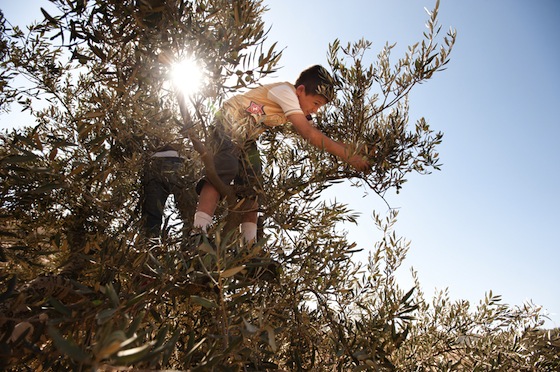
A study mapping the environmental actors in Palestine shows a desperate lack of co-operation between organisations and donors keen to play it safe with ‘practical projects’
The lovely people at Heinrich Böll Stiftung had done something that I have been procrastinating about for almost lifetime (well, not quite a lifetime but a good couple of years at least). They have mapped out the important actors and organisations on the environmental scene in Palestine. Exciting, right!? They have painstakingly gone through all those websites, NGOs and institutes with an environmental focus to bring us a clear image of the state of the environmental movement in Palestine. They found that out of 2,245 NGOs registered in the oPt only 104 were environmentally-focused and of these, just 56 were actually still active. More juicy details after the jump.
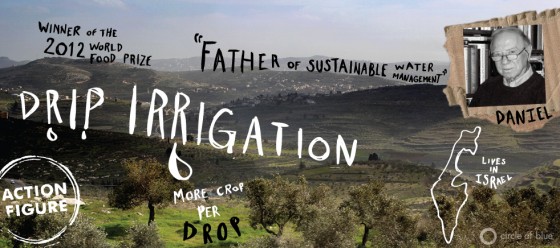
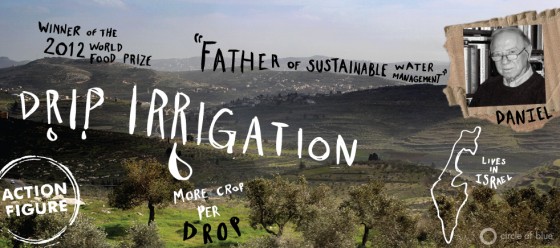
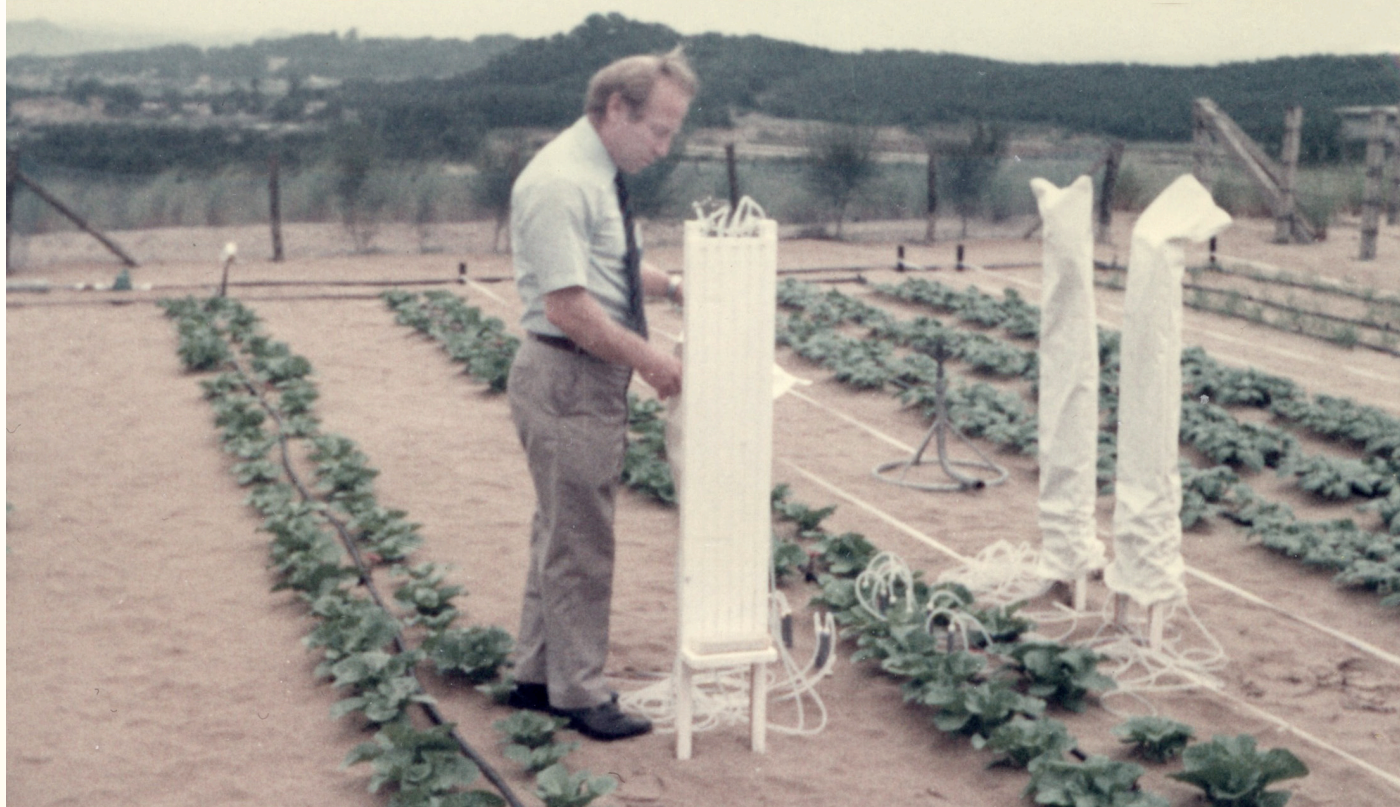
October 16, 2012 is World Food Day as designated by the Food and Agricultural Organization of the United Nations (FAO). This years theme is agricultural cooperatives, and the winner of the World Food Prize for 2012 is Dr. Daniel Hillel of Israel. He was honored for his work in micro-irrigation and innovative irrigation methods for use in arid regions at a ceremony in Washington, D.C. Such work is essential considering our global food production needs and rising food costs.
Dr. Hillel was honored for his work in microirrigation, an innovative irrigation method that applies water in small, continuous amounts directly to plants. Many traditional methods of irrigation, including soaking fields during a region’s wet season and allowing them to dry out during the arid season, are relatively inefficient in both crop productivity and water conservation.
The food prize council also recognized Hillel’s commitment to intercultural understanding and collaboration; he has worked to spread his irrigation technique to farmers in 30 countries, including Turkey, Pakistan, Sudan, and Palestinian communities.
Daniel Hillel in Sde. Boker
Hillel discussed sustainable agricultural practices in a recent lecture in the US. According to the Iowa Daily, Dr. Hillel, an adjunct senior scientist at Columbia University’s Earth Institute is quoted as saying that,“we are not able to expand agriculture much beyond where it is today without encroaching upon natural ecosystems and violating their biodiversity and impoverishing the biosphere. So we have to be very careful and learn how to intensify production and do it sustainably without degrading the resources of the land and water.”
Israel is known for pioneering practices (the drip irrigation system was invented by Israelis) and is often called the Start Up nation for it’s innovations that benefit the global population. That population is growing at a fast rate.
“The world’s population has been projected to stabilize at 9 [billion] to 10 billion by the third decade of this century,” Hillel said. “Consequently, our expansive population has been placing ever greater demands on the world’s limited and vulnerable soil, water and biotic resources.”
“My hope is to encourage them to pursue their interests, and to raise their awareness of the crucial importance of this profession that we share, which is agriculture and environment and land and water and climate,” Hillel said. “You [young people] are the future of the world.”
In the unrelenting Middle East sun, one thing is very clear when you build a new home: it must work with the elements. Standing the test of time are traditional Arabic buildings that kept families and worshippers cool for centuries, long before air conditioning was invented.
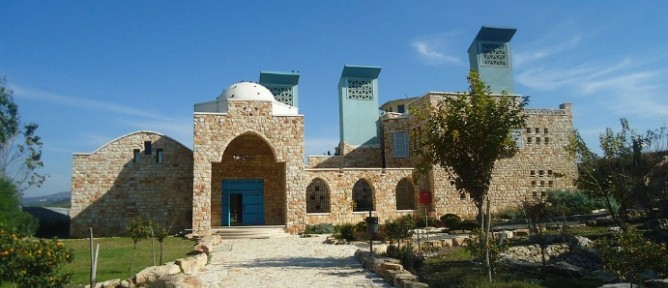
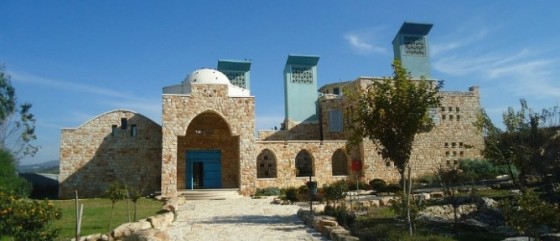
A new “green” teaching and research center in the Israeli-Arab town of Sakhnin showcases some of the best traditional approaches to construction in the hope that it will inspire modern building practices. And on a less concrete level, the building is seen as a “green bridge” between the Arab and Jewish communities. The Union of the Mediterranean recently awarded it first prize in a competition on energy conservation.
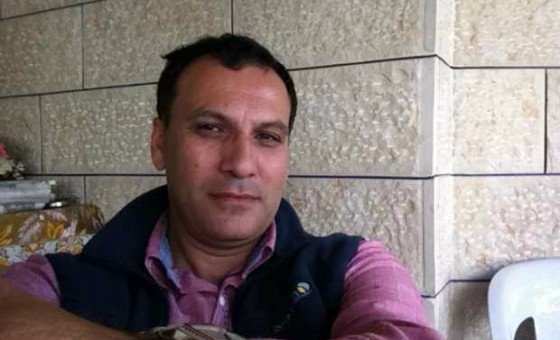
Architects anywhere can pick up on traditional Arab building techniques as a means to improve building efficiency, says Hussein Tarabeih (who we’ve filmed here), director of the Towns Association for Environmental Quality (TAEQ) for the six Arab-Israeli towns in the Beit Natufa Valley in the Lower Galilee. This is the association that commissioned the building.
“We have a lot of energy-saving elements built into the building,” Tarabeih says. “And it was important for us that we use the community. We conducted a survey asking them what they wanted and involved the older people quite a bit. The truth is that much of the knowledge on the traditional elements has been lost so we had to learn from the beginning. But this is one of the purposes for creating this building. We wanted to preserve the old traditional techniques.”
Traditional Arab building secrets
Tarabeih (pictured below) says many of the 20 features incorporated in the building could easily be applied to hot, desert climates anywhere, including California or Arizona, to keep edifices naturally cool in summer and warm in winter.
Constructed from adobe bricks made from mud and straw, the building in Sakhnin was designed by architect Abed Elrahman Yassin, a student of the late Egyptian “architect for the people” Hassan Fathy. Typical of Arabic homes throughout the Middle East, it has a wall and window covering called a mashrabiya. This feature, usually decorated with a geometrical design, serves as a sunshade and privacy screen.
Most traditional Arabic houses have a large patio, either on the exterior of the building or in a central courtyard. When paired with long, high windows and doors, and draft windows in the right orientation, the patios cool the circulating air and offer a pleasant seating area throughout the day. If a water fountain is placed in the center of an enclosed patio, the cooling effects are even greater.
Dome-shaped roofs are a traditional symbol of Arab architecture found in mosques throughout the world. On the practical side, they maintain cool air in the building. At the base of the dome, as in the Sakhnin structure, four small windows remove the hot air while channeling the cool air into the room.
Traditional skylights called tezana are made from glass spheres and tubes that allow natural sunlight to penetrate the rooms without the need of electric power in the daytime. When the glass is colored, the amount of direct sunlight into the rooms can be controlled.
Wind catcher in Iran
Also central to traditional buildings, and seen today widely in countries like Iran, is the cooling wind tower. “Our water circulation tower, called a malkav in Arabic, is 12 meters high, and you can spray water in the top of the tower to cool down the air circulating through the building,” says Tarabeih.
Training, teaching and researching the wind: Al Akhawayn University in Ifrane gets Africa’s first wind-hydrogen system.
Morocco’srenewable energy push received yet another boost last week with the installation of the first-ever wind-hydrogen system in Africa. Activists and industry experts are excited that the government is pushing forward on its continued promises to create clean energy for the North African country which aims to be 42 percent reliant on renewables by 2020. “This is a great initiative and one that we all believe will be a huge success as it can help build on the issues of losing potential energy from renewable sources,” environmental technology consultant Ibrahim bin Abdullah, who has worked with the Moroccan government on wind and solar projects in recent years, told Green Prophet.
Here’s what Lianna got up to on her carbon cutting voyage from London to Israel. You can find out why she wanted to avoid flying in How to get to Israel by boat – Part 1.
Day 1: Departure
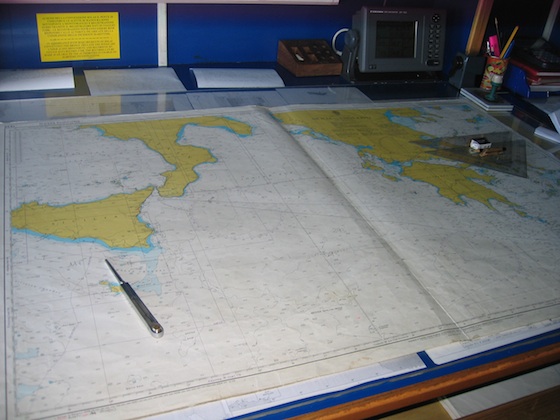
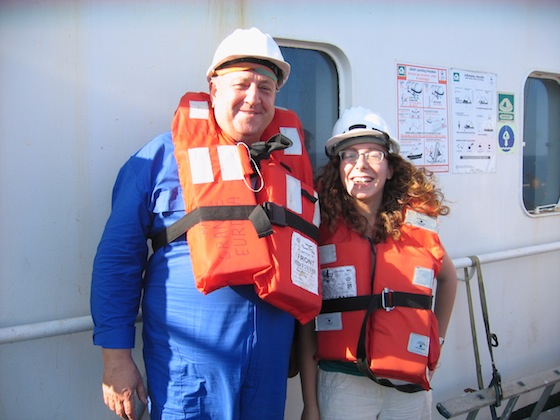
Today, we sail! Confirmation came this morning that the Grande Europe freight ship will arrive at Salerno in Italy. After some final panic-buying of chocolate bars (what if they’ve never heard of vegetarians?!) I shouldered my rucksacks and headed to the docks.
The port borders a pleasure beach, so bizarrely, we wait it out surrounded by beach umbrellas and bronzing Italian families until the unmistakeable yellow and white hulk of our ship moves into view. There’s a nerve-wracking hour whilst the ship turns 180º and heads away from the port. She’s not leaving us behind though, but waiting for a dock to become vacant.
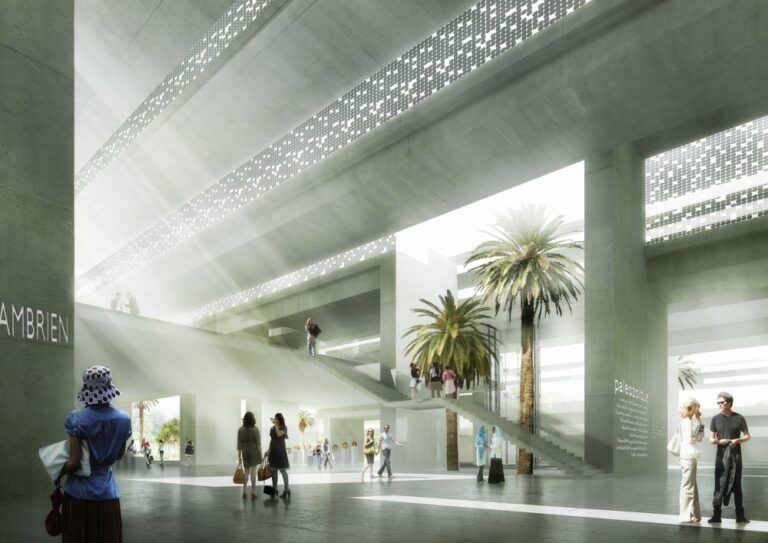
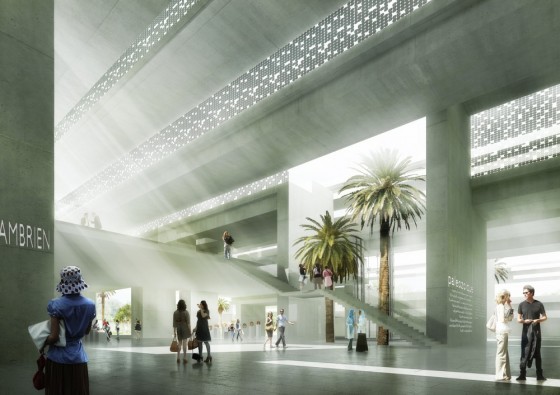
The Archaeological Museum of Rabat was first built in 1932 and is badly in need of a renovation, so Archi5 submitted plans for a new solar-powered facility that would rise in harmony with its surrounding. Comprised of a series of boxy ribbons filled in with glazing, the conceptual museum is a fluid space that provides “visual environmental comfort,” according to the design brief, as well as a protective shell for the museum’s numerous archaeological and earth science treasures.
A deal was brokered over the weekend that will allow a subsidiary of Israel Chemicals to sell water purification tablets that will be used to purify dirty water in Syria. Already a near-dry state, Syria’s drinking water supply has deteriorated sharply since the onset of a bloody war that has displaced and killed thousands of people. Special permission was required to broker the sale since the AquaTabs will be used in an enemy state, although the goods will not be sold directly from Israel to Syria.
Imagine the famous pyramids under water?Alexandria, Egypt holds top risk, followed by Istanbul, Turkey.
Think “Mediterranean” and most Westerners conjure up Monte Carlo or Mykonos, Cannes or Nice, often overlooking the southern coastline cities that lie in Turkey, Cyprus, Syria, Lebanon, Israel, Egypt, Libya, Tunisia, Algeria and Morocco. Fourteen Mediterranean port cities are at risk of extreme and repetitive flooding due to climate change, soils erosion, spikes in population and urban sprawl, according to a Program for the Prevention Preparedness and Response to Natural and Man-Made Disasters (PPRD South) report. According to ANSAmed, PPRD’s top eight cities-at-risk all boast Middle Eastern zip codes: Alexandria holds top risk, followed by Istanbul, Benghazi, Casablanca, Smyrna, Algiers, Rabat, and Beirut.
A man in Israel has been sentenced to spend seven months in prison for possessing a porcupine. Dubbed by locals as a “serial porcupine hunter,” Rami Fahmawhi has a longstanding track record of hunting porcupines, which are listed by the International Union for Conservation of Nature (IUCN) as a protected species of least concern.
The Israel Nature and Parks Authority (INPA) first caught him with two full sacks full of quills and other Indian crested porcupine body parts, including pieces of stomach, in 2009, and he was soon indicted for the crime. But that didn’t stop the serial hunter from pursuing more of his prey.
Case Study: A stable security state or a nation eager for reform? We look at Jordan and the strengths and weaknesses of its civil society
Whilst Jordan may not have seen the flurry of protests that lots of other Arab countries witnessed during the Arab Spring, that doesn’t mean Jordanians are not desperate for reform. In fact, they are and to a certain extent the government has been eager to show they are happy to make changes. In the last two years alone there have been amendments to over 42 articles of the Jordanian Constitution. But, for many, these reforms aren’t having a real impact and there are growing concerns that the authorities are becoming more draconian.
Got strong jaws? Noam Edry’s Seeds of Bliss project promotes international friendship by sunflower seed.
It’s a custom observed by folks everywhere in the Middle East. Neighbors and family get together, sharing a platter of the plump, salty, black seeds and sipping cups of strong coffee. (And if you’re curious to taste the real thing, try our coffee recipe here.)
Maybe taking a leisurely pull at the narghila pipe, although the narghila has been proven stronger than cigarettes. A relaxed meeting between neighbors – or a friendly, apolitical way for Jews and Arabs to meet?Sounds crazy, but it’s working. In artist Noam Edry’s project, Jews and Arabs, Jordanians and Israelis travel to each others’ cities, sit down at cafes, and chew sunflower seeds together. In between chewing and spitting out the seeds, there’s plenty of chat and getting to know each other, at a grassroots level, if you will.
The ostensible goal of the project is to make 10 tons of chewed and discarded hulls, which will then be shipped to London as part of an art exhibit. But the real goal is to open doors of friendship.
British-Israeli artist Noam Edry was inspired by Chinese artist Ai Weiwei ‘s 10 million sunflower-seed replicas on the floor of London’s Tate Museum. Weiwei’s installation represented political and social issues of the Chinese, but Edry brought the idea several steps closer to home. Since Arabs and Jews enjoy chewing the seeds, the leap to inviting Arabs and Jews to sit down together and chew for peace took only a certain out-of-the-box logic.
The “Big Chew” project began in August 2012, when chewers from Kibbutz Ramat Yohanan met with seed-chompers from neighboring Arab/Beduin villages Khawaled, Ibtin, Shfaram and Zarzir.
These events last up to five days, during which everyone in the vicinity is invited to join the core champions. At the end of each meeting, all the hulls are swept up and stored in plastic bags against the day that they’ll reappear as art – and proof that friendship can sprout even in the conflicted soil of the Middle East.
“The goal is to have a meaningful encounter and to develop a real friendship,”says Edry.
In September, a team of eight Jewish and Arab Israeli chewers traveled to Aqaba, spending five days chewing seeds with local folk at a café. Edry overcame bureaucratic objections (and maybe bureaucratic disbelief) to bring 10 Jordanians from Aqaba to Eilat in order to to sit down with sunflower lovers from across the Red Sea. This month’s seed-chewing event took place at Haifa’s Art and Street Culture Festival, where ten residents of Nablus joined Jews in exercising their jaws cracking seeds and chatting. The Governorate of Nablus will sponsor a reciprocal event there.
“At first we were afraid of coming to Haifa and we thought that people would hate us. Instead we were greeted by loving people, who made us feel so welcome and at home,” said one of Nablus participants.
Seed-lovers from Jenin and Afula are scheduled for November’s “Big Chew.”
Edry seems to be one of those people who doesn’t allow anything to get in the way. Facing down incredulity, discouragement, heavy-handed flirtation, the language barrier and the price of the project, she smiles and plows ahead. Each ton of sunflower seeds costs NIS 6000; close to US$1.1572. There are sponsors: Haifa Museum of Art and Artis Contemporary, a nonprofit organization that promotes contemporary Israeli artists. Seeds are donated by the local companies Zarubi Seed, Hazera, Migdan, kibbutzim and private donors. But it seems that Edry’s invincible drive is the project’s most valuable asset.
Who are the chewers? Anyone, of any age, who can chew and spit out the seeds with expert speed. Edry actually brings bags of seeds for “auditions” when recruiting new participants. It’s amazing and encouraging how seriously folks take the whole fantastic project, grasping what the mountain of chewed-up hulls is meant to represent right away.
And what will become of the hulls? They will be piled up into a hill along with any street litter swept up with them, as an art installation. A movie documenting every event and encounter will be projected next to it.
Edry calculates that one person can chew around 200 grams a day.
“Imagine how many are needed for 10 tons – thousands of people,” she says enthusiastically.
More on peace efforts and interfaith projects happening in the Middle East:
My collection of Pyrex baking pans: An explosion waiting to happen?
A hot Pyrex type glass baking dish can literally explode if placed on a cool surface like a sink counter top…In an illuminating article about the dangers of non-stick ceramic cooking ware, we advised readers of the risks involved in cooking with some types of ceramic cooking utensils following an exposure by a local Israeli TV program. The results of this revelation made us think about buying colorful ceramic cookware. And indeed in Israel some of this cooking ware being either taken off the market or sold at low “fire sale” prices by stores to get rid of existing stocks. What many people may not know, however, is a very serious risk involving the use of what is known as glass bake ware, sold for many years in under the brand name of Pyrex.
In a bid to reduce her carbon footprint, Londoner Lianna Etkind chose an unconventional summer holiday this year – a voyage to Israel over land and sea.
“From London to Israel without flying? Is that even possible?” Mostly, telling people about my ambition to travel overland to Israel was met with incredulity. Crossing borders in the Middle East is hardly straightforward, and the ferries that used to go from Greece and Cyprus stopped years ago, another casualty of ‘The Situation’.
But it is possible. The cargo ship company Grimaldi allows paying passengers to piggyback on their regular freight passages to Israel. For me, travelling by cargo ship was a way of minimising the climate change impact of my travel. At around 400 Euros (US$520), it’s more expensive than flying. But passage includes meals and a cabin for the week long sail. I booked trains from London to Paris, then onto Italy, where we would embark.
This is the fourth time that the Biomimicry 3.8 institute is staging their international design competition and this year they are inviting students to submit water management solutions that take inspiration from nature. Biomimicry is not a well known design strategy in the Middle East, though it is possible to learn what camels and scorpions teach us, for example, through special tours offered by Dayma in Egypt.
But the great thing about this competition is that learning is an essential aspect of the entire process. Hit the jump to find out what it takes to win $5,000 while providing meaningful ideas to address the very serious problem of worldwide water shortages.
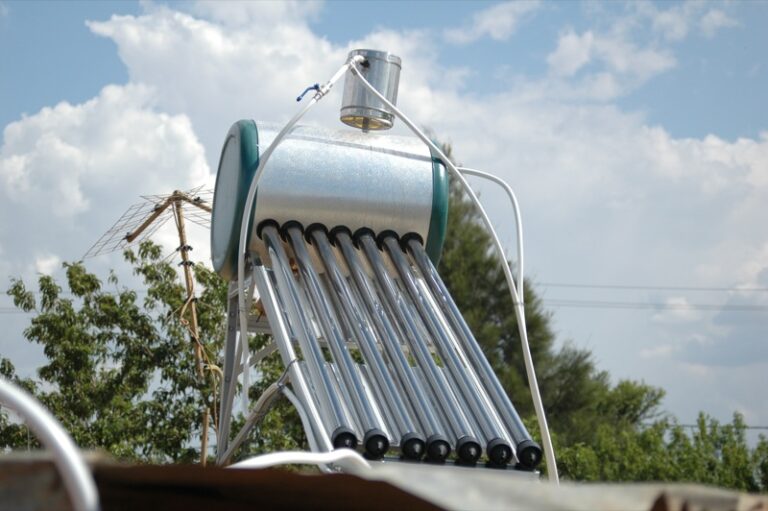
Jordan passes new building codes requiring solar water heaters on all new commercial and residential buildings.
It’s about time: Regulations come into effect in April 2013 and make solar water heaters obligatory for every new residence (including apartments) sized 150 m2 or greater in Jordan where there is ample sun. Private houses sized a minimum of 250 m2 and office spaces sized a minimum 100 m2 must also comply. Finally Jordan’s rooftops and side yards will capitalize on the nearly 330 days of sunshine that they bask in every year, just as we’ve seen in Turkey, Cyprus, Egypt and Israel.

 A study mapping the environmental actors in Palestine shows a desperate lack of co-operation between organisations and donors keen to play it safe with ‘practical projects’