Home Blog Page 370

Toast Chateau Ksara’s Traditional Wine Making in Lebanon

0

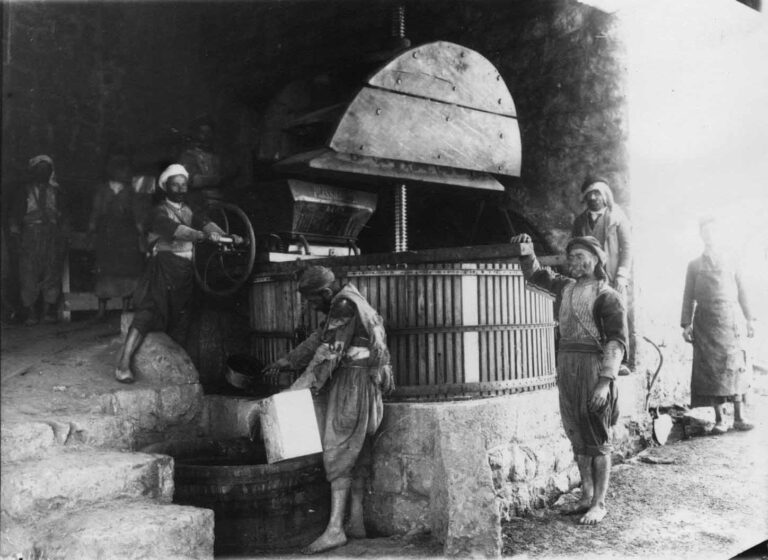
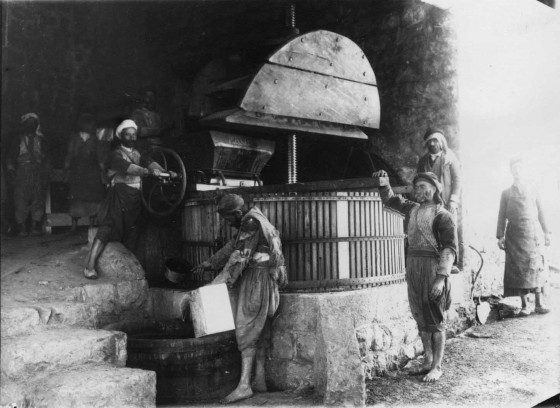
ksara chateau wine lebanonJesuit brothers at the Ksara wine press in 1910: Lebanon’s oldest wine growing domain

Following the footsteps of a wine trading tradition started by Phoenicians, modern Lebanese wine-making re-starts in 1857 when French Jesuit missionaries at Ksara (today the site of Château Ksara) introduced new viticulture and viniculture methods as well as new vines, from French-governed Algeria. Sixty years later the French civil and military administration that governed Lebanon between the wars created unprecedented demand for wine until 1975. This golden age for wine making in Lebanon subsequently declined when the country descended into a 15-year civil war, however it managed to pick up momentum afterwards.
Jacob Karni Is Israel’s Solar Star

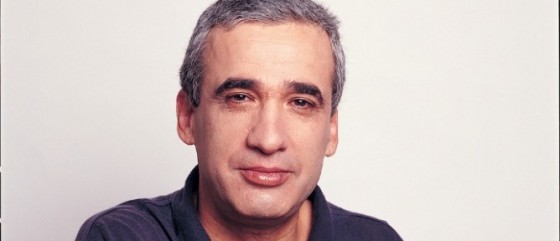
jacob karni israel solar energyI interview one of Israel’s main solar energy entrepreneurs and researchers, Jacob Karni.
Israeli solar energy pioneer Prof. Jacob Karni was born just two years after Israel became a state, in 1950. Already back then, the country’s leaders were tangibly aware that Israel needed to develop its human resources in order to build a country that was severely lacking in energy and water. Unlike some kids who have their goals set early, Karni didn’t know he would be an engineer, let alone work with the sun. He grew up in the Polish Zionist Kibbutz Beit Alpha in northern Israel, where he slept in a children’s house like all kibbutz kids back then, and his mom before him. He went on to become an officer in a tank unit and served in the 1973 Yom Kippur War.

Morflora’s Plant “Vaccine” Boosts Food Production Without Using GMOs

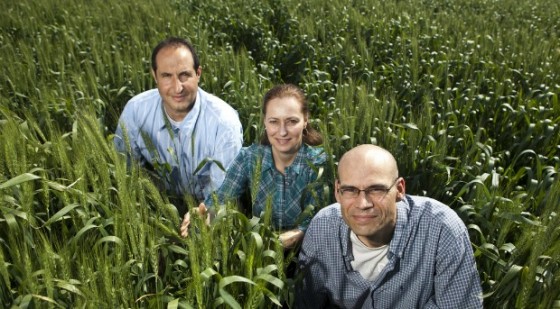
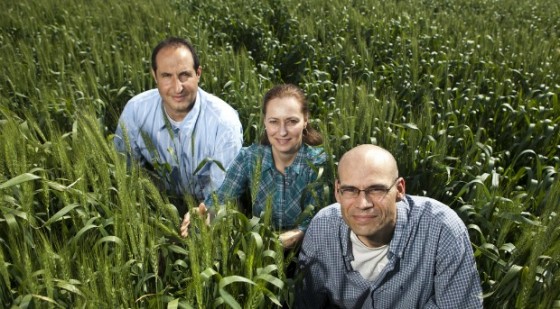
morflora team plant vaccineA new seed treatment could stop the use and need for GMOs.

Even though organic agriculture and sustainable farming practices are on the rise, feeding a hungry world demands that commercial farmers rely on genetically engineered (GMO) seeds to boost production and fend off diseases. But environmentalists fear that GMO crops are a sort of Frankenstein with unknown future consequences.

The Israeli company Morflora now has an alternative seed treatment in the works that is so revolutionary it is short-listed for Best Novel Agricultural Biotechnology in the 2012 international AGROW awards, and recently won a Red Herring business award in the Top 100 Europe category.

Star Wars Fairy Chimneys Threatened By Power Plants and Discos!

1

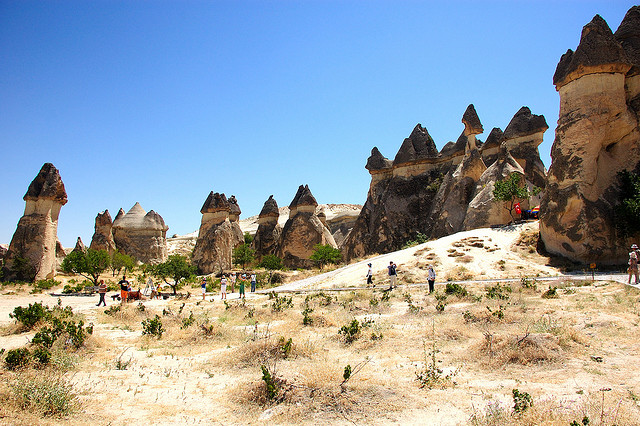
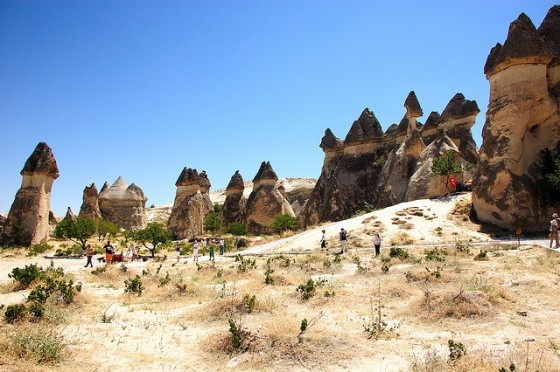
cappadocia fairy chimneys in Turkey star wars under threatRemember them in the movie Star Wars? Historic Turkish Wonder under threat from severe man-caused erosion in the coming years.

A UNESCO World Heritage site, and a favorite backdrop for hot ballooning in Turkey, the iconic “fairy chimney” rock formations of Cappadocia, in central Anatolia, draw more than 1 million tourists to Turkey each year. Only 300 of the formations are officially registered with the Tourism Ministry, according to official statistics, although the 40-square-kilometer site is covered with them. Without any effort made to preserve the delicate structures, warns a Turkish geologist, they’ll begin to erode away rapidly over coming years.

Will Radiation Danger Spoil Israel’s Electrified Train?

israel railways electric trainAnd make it electric? Electrifying Israel’s railway system may cause too much electromagnetic radiation experts warn.

Israel’s local and national rail services have often been featured on Green Prophet ever since Jerusalem’s light rail service was completed in 2010, and another light rail line proposed for the coastal city of Tel Aviv .Its national rail service, which now runs from the northern coastal city of Nahariya to the Negev desert city of Dimona has now been given approval to continue its line further south to link up the commercial hub of Tel Aviv with the country’s southernmost city of Eilat. The new 330 km line, when completed, will “link up with the periphery in a way that has not been done up until now and create a very great interest on the part of Asia’s rising powers, China and India,” says Israel’s Prime Minister Benjamin Netanyahu.

One important issue that is still to be decided on (and an important environmental one at that) is whether to continue to use petroleum based diesel fuel to power the train’s engines, or to convert them to run on electricity as was proposed by the management of Israel Railways and reported in Haaretz and other news media articles. Although using electricity would result in less air and noise pollution, an issue of great concern to the country’s  Ministry of Environmental Protection  is the amount of radiation caused by increased electrical current.  This increase could be much greater that that allowed by the ministry and by the various municipalities along which the rail line now runs, including the two major cities of Haifa and Tel Aviv.

Why Not Use Biofuel for Heating Syrian Refugees? Green Prophet Reports from Jordan Camp

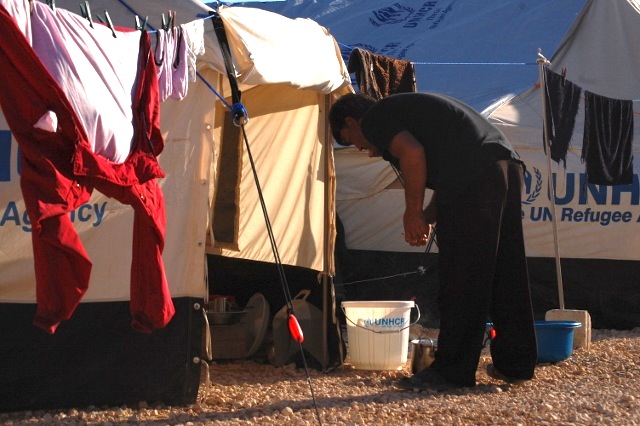
syria refugees at jordan camp for biofuelEgyptian model for the Zabaleen could help heat Syrian refugees. Green Prophet’s Joseph reports from Jordan. 

Zaatari Refugee Camp in Jordan: Walking through the vast expanse of white tents, dirt “roads” and masses of families huddled closely together for warmth, if you ask what they most need, the answer, without pause, is simple: blankets. In late November and early December, I was walking through the Zaatari refugee camp in northern Jordan along the Syrian border, and the Syrian refugees are surprisingly open and frank.

Despite the destruction and death that they witnessed across the border, they remain optimistic about the future. As I was leaving the camp, an idea struck me: why not use biofuel to give power to the tents, at least deliver some form of heat to combat the encroaching winter cold?

Back in Amman, Jordan, I talked to a number of NGOs who listened patiently to this idea. They would nod and smile, say this could be a useful idea, but how could it be implemented, was the question that continued to be broached. They are right. Without adequate funding to supply the tens of thousands of refugees with blankets, biofuel is not high on anyone’s agenda.

Lootah Biofuels to Grow Algae in Dubai to Reduce Oil Spillage

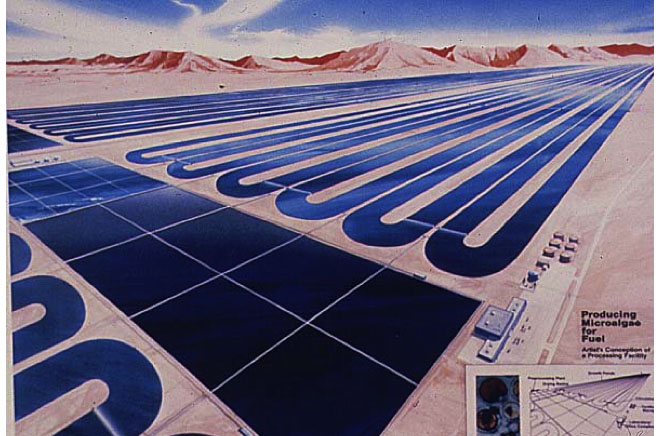
aquatic species program algae biofuelImage of the US-researched Aquatic Species Program from Jimmy Carter era

The Arab gulf region is continuing to boost its international profile in renewable energy, the most recent initiative aims to use algae as biofuel. Lootah Biofuels in Dubai has recently inked a deal with Singapore-based AlgaOil with the ultimate goal of using algae for oil extraction. (Lootah is the company that is helping bio-power buses in Dubai). It won’t be as easy as it might sound, but in an interview with ConstructionWeekOnline, alaLootah’s CEO Yousif Saeed Lootah believes that it could give a boost to reducing greenhouse gas emissions and help ensure that oil spillage is not lost for the oil rich Gulf country.

Will 2013 Herald The Arab Green Spring?

eco arab mother daughter with flowersBanking on Masdar to lead the Arab world in sustainability in 2013?

With over 50 percent of the world’s oil and gas reserves the Middle East is not the likeliest place to be witnessing a green revolution, but with climate change running its course and oil prices rising through the roof, the region, and especially the Gulf countries, believe they can lead the charge to a greener and more sustainable future. Coming off a year that saw numerous gains for the renewable energy sector, including solar, wind and biogas, the region is ready to take on 2013 with a little bit more green in its focus. Masdar in Abu Dhabi is arguably the most prominent figure in this new revolution, which could easily be dubbed the Arab Green Spring.

According to Nawal al-Hosany, the director of sustainability at Masdar, their portfolio is expanding and the region is getting on board the movement away from traditional greenhouse gas emitters to push solar and wind energy to the forefront of development of energy.

Qatar Airways Praised for its Natural Gas/Biofuel Push to the Skies

2

airplane sunset biofuel qatar airwaysCheaper flights for all? If Qatar’s “Pearl project” can develop the natural gas industry for planes, it could translate into reducing overall costs for US carriers.

Qatar Airways ambitious new plan to erect a $19 billion Pearl project that will be the largest gas-to-liquids plant in the world, is receiving massive praise and optimism over its future success. The President of the Council of the International Civil Aviation Organization (ICAO) Roberto Kobeh González said at the recent climate event COP18 in Doha that the project could revolutionize air travel and alternative energy efforts.

“We really welcome this project as an example of the varying biofuel solutions that can be applied in different areas around the globe,” stressed Kobeh in Doha as he detailed the ICAO’s status updates for the aviation industry on energy. Qatar has the largest per capita carbon footprint in the world. 

Qatar’s Sahara Forest Project Grows Its First Cucumbers from Saltwater

sahara desert forest project cucumber

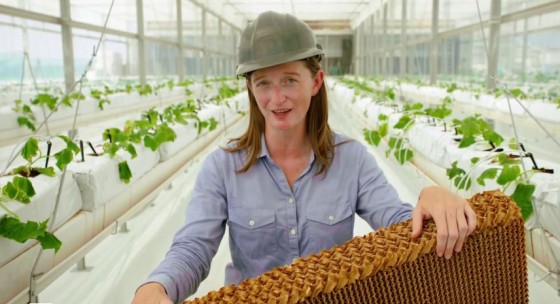
The Gulf region is showing exactly why they are quickly becoming the top destination for renewable and clean technology in the world. A recent pilot project in Qatar aimed at growing cucumbers using seawater and solar power is just one of the more unique endeavors, and hopefully won’t have any Islamic leaders crying foul. According to a recent report published by Renewable Energy Magazine, the Sahara Forest Project, built by a Norwegian firm of the same name, is a facility that will grow the vegetable using the renewable energy has been recently inspected by government officials and has officially launched and should be painting the desert green with the crispy vegetable in no time. Cucumber is a staple in the Middle East diet. 

Egypt and Morocco’s Equator Prize Winners Preserve Environment through Tradition

0

traditional biodiversity preservation, Equator Prize Winners, Medicinal Plants Association St Catherine, Amsing

The Medicinal Plants Association in Egypt helps preserve biodiversity and is one of the 25 winners of the Equator Prize 2012.

Policy making within the realm of “development” is often burdened by an excessively westernized design resulting in unintended consequences on the welfare of local populations. For example, a previous Green Prophet article “Morocco’s Berbers Had Water Management Sorted“, reveals how water management interventions led by the Word Bank replaced traditional water systems and eventually resulted in even poorer social and environmental outcomes.

Fortunately it is becoming increasingly popular for multilateral development initiatives to provide incentives for traditional practices in environmental preservation and economic development rather than replacing, renewing or reforming existing practices which have been built on years of knowledge and perfected after generations of creative design. The Equator Initiative: A partnership for Resilient Communities, is an example of this movement in the “development” world which honors practices that aim to create societies and socio-economic landscapes that are resilient to environmental destruction and cultural erosion.

Through the biannual Equator Prize, the Equator Initiative recognizes 25 outstanding local projectsthat work to advance sustainable development solutions for people, nature and resilient communities. To date 152 community organizations have been awarded the Equator Prize and in June 2012, representatives of winning communities participated in the UN Conference on Sustainable Development (Rio+20), which was held in Brazil. This year the Middle East North Africa region was well represented by two Equator prize winners: the Medicinal Plants Association St. Catherine from Egypt and Amsing Association from Morocco.

Gulf Greywater Recycling Could Cut Water Use by 30%

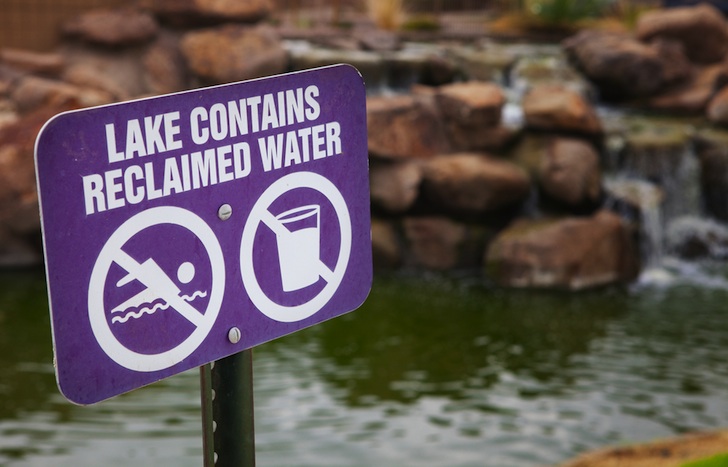
greywater recyling, reclaimed water, United Arab EmiratesThe United Arab Emirates could save approximately 30 per cent of its daily water use if multi-residential buildings implement greywater recycling programs, according to a recent report compiled by researchers from the University of Sharjah. Currently the average Emirati consumes roughly 550 liters of clean water every day, 30% of which is flushed down the toilet. Literally.

If groundwater supplies weren’t running dry and if water didn’t have to be treated in desalination plants, which requires a great deal of energy, this would be less of a travesty. But the Environment Agency Abu Dhabi estimates that the UAE could run out of groundwater within the next five decades if serious measures aren’t put in place to curtail consumption.

Moroccan Solar is Safe Despite Desertec Setbacks

Desertec, Dii, Spain, Morocco, Solar Energy, Ourzazate, Solar Power, Desert, Renewable Energy, Alternative EnergyWhen Spain failed to show up for a recent Desertec meeting that would have signaled government support for the 150 MW concentrated solar plant (CSP) in  Ourzazate, Morocco, energy bloggers rushed to dub the program designed to supply Europe with renewable energy produced in North African countries a failure.

Both Bosch and Siemens pulled out as well, further fanning skepticism. But All Africa reports that despite setbacks, solar energy is safe in Morocco, where the Moroccan Agency for Solar Energy (Masen) has secured $380 million for a 160MW CSP plant planned for the same region set aside for the Ourzazate plant.  

New Environmental Strategy On The Table In Israeli Elections

 policy, Israel, elections, environment, Green Movement, Tzipi Livni, energy, reform

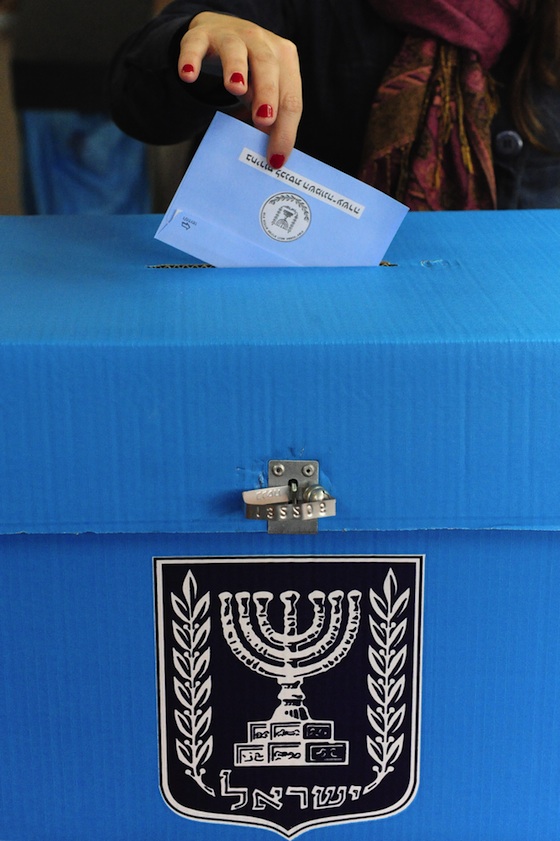
On Thursday, Dec. 20, Tzipi Livni’s new party, The Movement, stated that environmental reforms will be key components of their platform in the January 2013 Israeli elections. They propose passing a Basic Law for environmental protection, and a long-term blueprint for the Israeli energy market.

Livni presented The Movement’s environmental agenda together with Green Movement chairman Alon Tal.

Tal told the Jerusalem Post, “As a professor of environmental policy, I can honestly say this is the most detailed, comprehensive, creative and ambitious environmental platform ever introduced by a major political party in an Israeli election.”

5 Inspiring Green Prophet Stories and People Of 2012

1

senad hadzic walks to meccaFor Green Prophet, I often write about (let’s face it) depressing issues such as climate refugees and environmental conflicts in which everyone pays the price but I do sometimes get to write about some fun stuff too. That’s basically what is going into my top 5 Green Prophet blog stories of the year. These are the odd and uplifting stories of 2012 and the inspiring people behind them. I hope you enjoy them as much as I did and all the best for the new year inshalla!