A comprehensive analysis published by AstroTurf experts on turf field safety identifies several critical factors that separate premium synthetic surfaces from standard installations.
Opioid drugs including oxycodone, heroin and fentanyl have fueled an ever-worsening epidemic in the US. And after giant events in New Orleans they are popping up in the wastewater.
Neom, a bombastic collection of futuristic cities and resorts, has flopped as Saudi oil prices roll back reality. The Saudi plan of hosting the 2029 Asian games to be held at Trojena, a ski report in the desert, has been cancelled.
A comprehensive analysis published by AstroTurf experts on turf field safety identifies several critical factors that separate premium synthetic surfaces from standard installations.
Opioid drugs including oxycodone, heroin and fentanyl have fueled an ever-worsening epidemic in the US. And after giant events in New Orleans they are popping up in the wastewater.
Neom, a bombastic collection of futuristic cities and resorts, has flopped as Saudi oil prices roll back reality. The Saudi plan of hosting the 2029 Asian games to be held at Trojena, a ski report in the desert, has been cancelled.
A comprehensive analysis published by AstroTurf experts on turf field safety identifies several critical factors that separate premium synthetic surfaces from standard installations.
Opioid drugs including oxycodone, heroin and fentanyl have fueled an ever-worsening epidemic in the US. And after giant events in New Orleans they are popping up in the wastewater.
Neom, a bombastic collection of futuristic cities and resorts, has flopped as Saudi oil prices roll back reality. The Saudi plan of hosting the 2029 Asian games to be held at Trojena, a ski report in the desert, has been cancelled.
A comprehensive analysis published by AstroTurf experts on turf field safety identifies several critical factors that separate premium synthetic surfaces from standard installations.
Opioid drugs including oxycodone, heroin and fentanyl have fueled an ever-worsening epidemic in the US. And after giant events in New Orleans they are popping up in the wastewater.
Neom, a bombastic collection of futuristic cities and resorts, has flopped as Saudi oil prices roll back reality. The Saudi plan of hosting the 2029 Asian games to be held at Trojena, a ski report in the desert, has been cancelled.
A comprehensive analysis published by AstroTurf experts on turf field safety identifies several critical factors that separate premium synthetic surfaces from standard installations.
Opioid drugs including oxycodone, heroin and fentanyl have fueled an ever-worsening epidemic in the US. And after giant events in New Orleans they are popping up in the wastewater.
Neom, a bombastic collection of futuristic cities and resorts, has flopped as Saudi oil prices roll back reality. The Saudi plan of hosting the 2029 Asian games to be held at Trojena, a ski report in the desert, has been cancelled.
A comprehensive analysis published by AstroTurf experts on turf field safety identifies several critical factors that separate premium synthetic surfaces from standard installations.
Opioid drugs including oxycodone, heroin and fentanyl have fueled an ever-worsening epidemic in the US. And after giant events in New Orleans they are popping up in the wastewater.
Neom, a bombastic collection of futuristic cities and resorts, has flopped as Saudi oil prices roll back reality. The Saudi plan of hosting the 2029 Asian games to be held at Trojena, a ski report in the desert, has been cancelled.
A comprehensive analysis published by AstroTurf experts on turf field safety identifies several critical factors that separate premium synthetic surfaces from standard installations.
Opioid drugs including oxycodone, heroin and fentanyl have fueled an ever-worsening epidemic in the US. And after giant events in New Orleans they are popping up in the wastewater.
Neom, a bombastic collection of futuristic cities and resorts, has flopped as Saudi oil prices roll back reality. The Saudi plan of hosting the 2029 Asian games to be held at Trojena, a ski report in the desert, has been cancelled.
A comprehensive analysis published by AstroTurf experts on turf field safety identifies several critical factors that separate premium synthetic surfaces from standard installations.
Opioid drugs including oxycodone, heroin and fentanyl have fueled an ever-worsening epidemic in the US. And after giant events in New Orleans they are popping up in the wastewater.
Neom, a bombastic collection of futuristic cities and resorts, has flopped as Saudi oil prices roll back reality. The Saudi plan of hosting the 2029 Asian games to be held at Trojena, a ski report in the desert, has been cancelled.
Saudi Arabia is taking water from the Nile to grass-feed their cows in air conditioning
Land grabs are old news, but National Geographic has taken a closer look at Saudi’s African interests in particular and the resulting story is startling. The world’s favorite nature magazine visited two massive dairy farms, including the world’s largest, that were built in one of the driest and hottest parts of earth – roughly 100 miles southeast of Riyadh. Here, Friesian cows survive amid temperatures of up to 110 degrees fahrenheit.
The cows raised at the Al Safi and Almarai farms live better than some humans in air-conditioned sheds and water misters that keep them cool. But feeding them with grain grown nearby has depleted 4/5th of the Kingdom’s ancient aquifer in the last 30 years. For milk. The farms are facing closure as a result of water shortages, but instead of giving up altogether, the Saudis are buying up land and water elsewhere – including the already vulnerable Nile.
Water is free to farmers in Saudi Arabia so they have no incentives to use less or to conserve at all.
The Nile was apportioned in 1929 by colonial powers, an issue that has created great tension among Nile River Basin countries in the last few years. Egypt relies almost entirely on this river for its population’s survival, but upstream countries feel that they have been shortchanged by that country’s monopoly.
Ethiopia has been particularly vociferous, though the main instigator of a slew of new damns and hydroelectricity projects, former Prime Minister Meles Zenawi, died in August, 2012. But not before allowing Saudi Star, owned by Sheikh Mohammed Ali Al Amoudi, to purchase large tracts of land near the headwaters of the Nile in Gambela.
Member of the local Anuak Tribe talked to National Geographic about the firm’s usurpation of land and water. At the time of writing, the company was digging a canal to drain nearby wetlands and their 24,711 acre relies on a reservoir built in the 1980s by Soviet engineers.
Tribesmen told the magazine that they intended to farm their ancestral land anyway. When they moved in to do so, gunmen shot and killed several Saudi Star workers, unleashing a vicious government crackdown in the nearby villages.
Men were killed, women were raped. Many people fled to neighboring Southern Sudan.
The Saudi government offers shiny incentives for firms to seek out arable land outside of the Kingdom. According to National Geographic, the King Abdullah Initiative for Saudi Agricultural Investment Abroad has catalyzed projects as far afield as Senegal River in West Africa and Indonesian New Guinea.
And the reason? The Saudis are concerned to secure a steady food supply in the decades to come now that their own resources are depleted as a result of chronic mismanagement. Other Gulf countries such as Abu Dhabi are pursuing a similar track.
Meanwhile, several reports show that Gulf Arabs are among the fattest people on earth, which begs the question: will Saudi, Abu Dhabi, Kuwait and Qatar purge other resources the way they destroyed their own in order to satisfy their overgrown waistlines?
In the Middle East, now is the time to buy fresh turmeric root for freezing or planting.
Fancy a turmeric smoothie? That’s how my husband gets his daily dose of the deep-yellow, pungent root. When his doctor took him off anti-inflammation medications, I cast around for a natural way to help him cope with the pain in his hands. He has psoriatic arthritis.
A turmeric smoothie
We’re familiar with spices as medicine. I began reading more. While turmeric’s anti-cancer properties are already well-known, it was news to me that turmeric is also an effective anti-inflammatory with a long history of relieving arthritis pain.
The Middle East’s hot climate doesn’t exempt people from psoriatic, rheumatoid, and osteoarthritis. According to the Israeli Rheumatic Diseases Foundation (site in Hebrew), an estimated 17% of the population suffers from arthritis in one form or another, while the Emirates Arthritis Foundation estimates that 20% of the United Arab Emirates do too. These figures are slightly lower than the estimated percentage of American arthritis sufferers – 22% of the population, according to the Centers for Disease Control and Prevention.
Now medical authorities are turning their attention to one of turmeric’s constituents, curcumin, in help in controlling the debilitating disease. A study conducted in Thailand in 2009 concluded that in controlling pain of knee osteoarthritis, curcumine was as effective as ibuprofen. This review of preclinical and clinical trials with curcumin submitted to PubMed.gov is only one of many publications attesting to its anti-inflammatory powers.
So for ordinary people with aching joints, what’s the best way to ingest the yellow stuff?
Fresh Root Smoothie: slice off a little chunk of turmeric root, about the size of the first joint of your forefinger. Blend it with a cup of any good milk, a teaspoon of cinnamon for flavor (and because cinnamon also fights inflammation), a teaspoon or two of local honey, and 1/4 teaspoon of black pepper to get things circulating quickly. Add something for creaminess if you like: a banana or half an avocado. Drink it up quickly. One smoothie a day should do the trick.
Variation with dry, ground turmeric: Use 1 tablespoon of ground turmeric (best is fresh-ground from a spice store, but even freshly-bought supermarket tumeric will do) instead of the fresh root. It’s best to heat the milk first, to help the spices disperse, and to drink it warm.
Ground Turmeric Capsules: Some buy vegetable-based capsules and fill them at home. Three to five 00 -sized capsules are the ordinary dose, although individual needs vary.
Curcumine Supplements: The University of Maryland Medical Center suggests that adults take one to three grams of dried root powder daily; 15 to 30 drops of 1:2 tincture four times per day; or 400 mg to 600 mg of standardized curcumin powder three times a day.
I’m no great fan of standardized extracts, and suggest that if using fresh or ground turmeric is inconvenient, tincture is better.
Who should avoid medicinal doses of turmeric? Curcumin is a blood-thinner and may prevent normal blood clotting.
People on Warfarin or similar medications should therefore not add medicinal doses of turmeric to their regime.
Pregnant women should also restrict turmeric to ordinary culinary quantities – a pinch to color or flavor food is fine.
People anticipating surgery should stop taking turmeric two weeks beforehand.
Do not combine medicinal doses of turmeric with ginger, gingseng or other blood-thinning herbs.
You’ll know you’re taking too much if you experience nausea or stomach upsets (this is true of any other culinary spice too).
How To Keep Turmeric?
Fresh turmeric root lasts up to a year in the freezer. That’s how I store it for blending into smoothies.
If buying dried, ground root, buy small quantities and replenish. Keep your ground turmeric away from the heat of the stove or a sunny window. It will last, kept in a cool, dark place, for six months.
To ensure a constant supply of fresh root, it’s worth growing your own. It takes little space or effort. The Backyard Gardening Blog offers an easy-to-understand guide on growing turmeric. The comments also offer valuable advice.
Since the Israeli winter is mild, with many sunny days, I myself sprouted and planted some turmeric roots recently. I hope to harvest a good amount of fresh roots to freeze, later in the year.
Eating sustainably can make a huge impact on our planet.
We all know that eating sustainably, and eating local is good for the planet and good for the economy. Now that your New Year’s resolutions to eat better have come into effect, check out your local bookseller for seven recycled titles that will help bolster your New Year’s food resolutions. These titles are largely published before 2012 but still relevant. Dig in.
Not a head turner but Mitsubishi’s new “buggy” MIEV all electric car is one of the best EV car deals
The year 2012 has been a mixed year as far as the success of various models of electric cars and hybrid cars go. Regarding the Middle East, where the luxury Fisker Karma electric vehicle hit the Middle East though a dealer in Dubai, Fisker cars in the USA were under consider pressure following news about some Fisker cars catching fire. This allegation, which involved at least 15 Fisker Karmas burning up at a storage lot in New Jersey during the hurricane Sandy mega storm, was later challenged on Green Prophet by a Fisker Karma owner himself who debunked the allegations of the $130,000 cars being fire hazards.
Social media flexes its muscles in a recent grassroots backlash against General Mills, one of the world’s leading food conglomerates whose brand portfolio includes more than 100 leading U.S. brands and product leaders around the world.
Last December, General Mills’ Cheerios brand released a Facebook app asking “fans” to “show what Cheerios mean to them.”
The app allowed users to create their own placards using Cheerios’ trademarked black font on a yellow background, where dots and periods featured little cheerios. One day later, the app was yanked when thousands of angry consumers used the site as a platform to create anti-GMO statements.
Two of the top three ingredients in Cheerios are corn starch and sugar, ingredients commonly subject to genetic engineering. General Mills, which donated over $1 million to a Californian campaign to defeat a genetic engineering labeling law, recently got a taste of the grassroots backlash.
California’s Proposition 37, which would have required GE foods to be labeled as such (and be prevented from being mislabeled as “natural”) was defeated last November in large part due to massive donations from multinational corporations that hide GE ingredients behind “wholesome” advertising. General Mills donated over $1 million to defeat the proposition.
Organic foods are required by U.S. federal law to be produced in ways that promote ecological sustainability, without common toxic and genetically engineered ingredients.
But organic products are increasingly being forced to compete with products that are labeled as “natural.” There are no restrictions on the term “natural”, and it often constitutes nothing more than meaningless marketing hype. Most disturbing of all, many foods labeled as “natural” actually contain genetically engineered ingredients, and breakfast cereals are particularly vulnerable.
Washington state and Vermont are now working to get GE labeling laws passed in 2013. Cheerios diligently deleted posts as quickly as they could, and most have now been removed, along with the app. But screenshots of some of the creations have been preserved on Cheeseslave2 and the Happy Place3 website.
Parents are Waking Up to the Dangers of Genetically Engineered Foods
In a recent press release, Alisa Gravitz, CEO and president of Green America, stated:
“The sheer volume of comments on Cheerios’ Facebook page raising concerns around genetically engineered ingredients is incredibly inspiring. It is also amazing to see the creativity that visitors to Cheerios’ Facebook page use to call out Cheerios on using their customers as a science experiment for GMO consumption. Cheerios is a cereal that is frequently fed to children, and many of the comments are from concerned parents who are worried about the fact that they have been feeding a cereal with genetically engineered ingredients to their children.”
One such parent posted a comment on Cheerios Facebook page saying,
“So sorry that the food my kids loved as toddlers is one I can’t support anymore. I can’t believe that General Mills has the well-being of its customers in mind when it contributes to movement against labeling of GMOs.”
According to the Cheerios website, “Cheerios has been a family favorite for years — with good reason! Its wholesome goodness is perfect for toddlers to adults and everyone in between. Made from whole grain oats, Cheerios has no artificial colors or flavors. Those wholesome little O’s have only one gram of sugar.
“They’re low in fat, have no saturated fat and are naturally cholesterol free. Cheerios are also an excellent source of folic acid and a good source of fiber. Maybe that’s why parents feel so good about serving Cheerios to their families. It’s a healthy way to start the day, a perfect snack, and tastes great in a recipe. You can trust Cheerios for a lifetime of wholesome goodness for your whole family.”
The thing is we can’t know since they don’t have to disclose whether they’re using GE ingredients or not on the label. But the fact that General Mills chose to cough up well over a million dollars to avoid GE labeling definitely leads one to believe that, most likely, these (and/or other ingredients) of Cheerios ARE indeed the genetically modified versions. So much for “trust” for “a lifetime of wholesome goodness.”
The fact that General Mills would rather pay millions to hide that their products contain GE ingredients rather than give you the choice to buy something else, or reformulate their product without GE ingredients (which would be the sensible thing to do if they were really concerned about children’s long-term health and well-being) is quite telling.
Besides the issue of whether the sugar in your favorite processed food is genetically engineered or not, it’s important to remember that sugary breakfast cereals are bad news for your child’s health no matter what.
Many are utterly fooled by advertisements promising “wholesome goodness,” when it’s really very little difference between many popular breakfast cereals and a candy bar.
The following video illustrates this quite effectively. Honey Nut Cheerios contains the equivalent of four added teaspoons of sugar in each bowl compared to the original Cheerios. Few parents would allow their child to heap four teaspoons of sugar onto their cereal. Yet they fail to understand just how much sugar is hidden in the processed foods they serve their kids each day.
The Rudd Center for Food Policy & Obesity is a non-profit research and public policy organization devoted to improving the world’s diet, preventing obesity, and reducing weight stigma. The Center serves as a leading research institution and clearinghouse for resources that add to our understanding of the complex forces affecting how we eat, how we stigmatize overweight and obese people, and how we can change.
My octogenarian mom eats Cheerios for their oat content; she believes it helps keep her cholesterol levels low. My kids adored the tiny rings; they remain high on the toddler snack list since they require no refrigeration or messy clean-up.
Mostly I loved them as potty training tools: I’d toss a few into the toilet and urge my tiny son to “sink them”, a discount version of pricey toilet targets sold in those educational mail order catalogs.
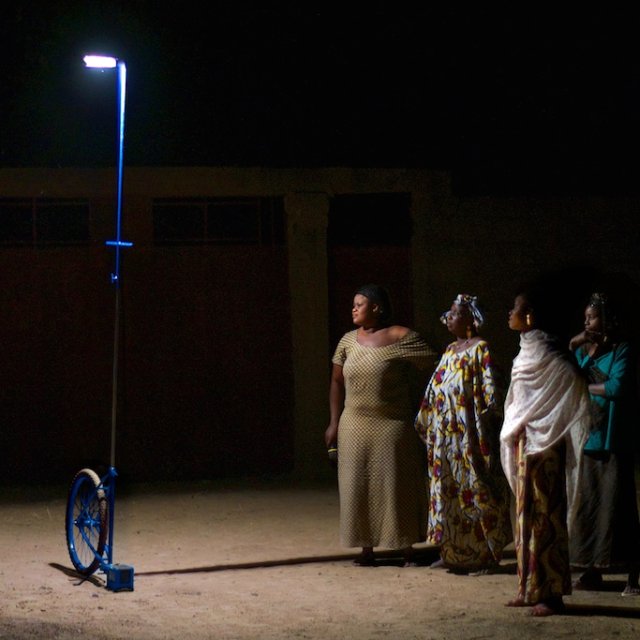
A suite of mobile solar-powered lamps have completely changed the lives of hundreds of villagers in Mali. Approximately 90 per cent of the desert country’s residents lack access to an electrical grid, such that many children are unable to learn after dark and mothers stay up late using the light of paraffin lamps to complete their daily chores. So Italian architect Matteo Ferroni devised a solution that could be easily replicated by locals.
With air pollution 100x worse than NYC the news doesn’t look good for 2013 even though Cairo taxis were offered free natural gas tanks.
Two years ago when the Egyptian government began fully implementing taxis run on natural gas, there was much praise and fanfare. Air pollution was at monumental levels in the Egyptian capital Cairo and something was needed to curtail the growing problem that was leading to health hazards, including a dramatic rise in cases of asthma among young adults. While the country’s burgeoning taxis have largely made the switch to natural gas, congestion and poor maintenance continues to see air pollution one of the biggest problems facing everyday Egyptians.
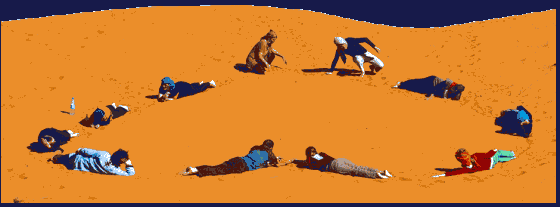
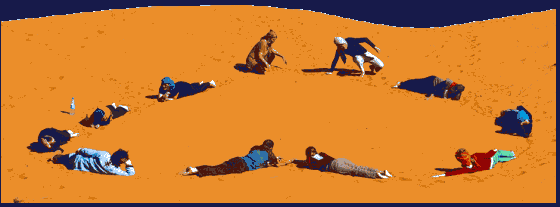
The Sahara. It’s the world’s hottest desert and almost as large as China or the United States, so travelers have good reason to be wary of wandering into it alone. But adventurer Tom Thumb has organized another retreat in 2013 for those who want to experience the Sahara. The Road Junky Sahara Retreat will be held in the Moroccan Sahara from January 27 to February 2, 2013. If it is anything like the past two that have been held, it is a perfect chance for travelers to reflect upon their own lives in the sharp repose of the desert. It is also clear from the testimonials on the Road Junky retreat website that members naturally build a community that yields long-lasting friendships, despite the relative brevity of the trip.
What a great way to start 2013: the Committee of Heads of Environmental Sciences (CHES) and the Institution of Environmental Sciences (IES) accredited Qatar University’s BSc and MSc Environmental Sciences programs. This is not only a first for the Arab world, but it is also the first time these leading institutions have accredited any such program outside of the United Kingdom, Arab Brains reports.
The occasional bicycle rack can be found near pedestrian promenades in Istanbul, such as the one pictured above on the Asian side of the city. But the city’s heavy traffic and reckless drivers discourage many would-be bicycle commuters. Developing a more bike-friendly Istanbul was the goal of BikeLab Istanbul, a workshop held in late December and sponsored by sustainable transport advocate EMBARQ TÜRKİYE, Dutch urban design company YARD 9, and the Dutch consulate in Istanbul.
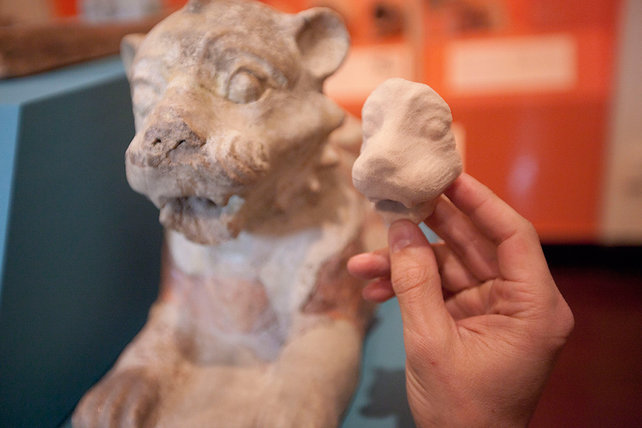
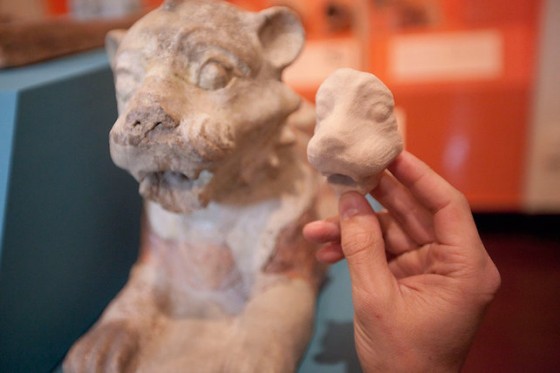
Three thousand years ago four stone lions guarded a temple in Iraq, but their work was short lived. The Assyrians invaded the city Nuzi and annihilated everything in sight, including the lions and other artifacts. One lion that remained almost intact now lives at University of Pennsylvania Museum of Archaeology and Anthropology, while fragments of another, its front paws and rear end, have been languishing in the basement of Harvard University’s Semitic Museum since 1930.
Archaeologists haven’t known what to do with the ruined lion, but new restoration opportunities have emerged alongside the rise of 3D modeling and printing. We’re typically skeptical of 3D printing because it enables the fast production of a lot more unnecessary stuff, but there is something astounding about technology that revives an artifact that was first built three thousand years ago. Read on for the scoop.
Nine people in the West Bank have died from swine flu, the office of Palestinian Authority Prime Minster Salam Fayyad announced on Saturday, and the situation is being monitored carefully.
Now considered a seasonal flu for which vaccinations are administered, H1N1 swept through the globe in 2009, killing up to 18,000 people. On 10 August 2010, the World Health Organization announced the end of the H1N1 pandemic, but at least 225 people have been infected in the most recent outbreak in the Palestinian territories.
King Gyges of Lydia ruled over what is now western Turkey from 716 BC to 678 BC. The legend of his rise to power began when the young shepherd Gyges entered a cave and found a magical ring which gave him the power of invisibility. He used this ring to seduce the queen, murder the king and take his place. In his Republic, Plato used the ring of Gyges to argue that no man is so virtuous that when given the power of invisibility, he would do no evil.
Our technological ring of Gyges
In ancient times our environmental impacts were obvious. Smoke and soot from cooking and lighting fires filled the air and stained the walls of homes. People lived amongst the middens of their own waste. No one could secretly consume more than their share or secretly poison their environment. The invention of agriculture led to cities and trade which increased the distance between populations and their ecological impacts. The invention of plumbing and sanitation removed people from their waste. Electricity allowed people to bring heat and light into their homes while sending our soot and smoke out of sight and out of mind. Like the magical ring of Gyges, technology gave us the power of invisibility. We rely on frail human morality to save our planet. It’s no wonder we’re in trouble.
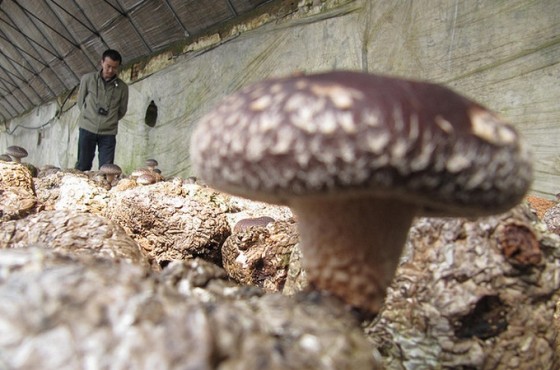
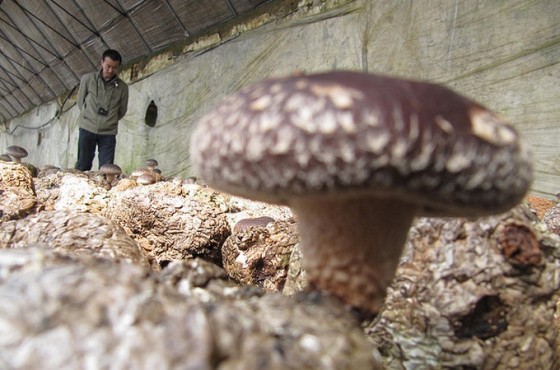
While they might not completely satisfy the Middle East vegetarian, Iraq’s Kurds have found a lucrative new way to cash in on year-round crops, which require no chemicals or pesticides: they have turned to mushroom farming, reports the local paper rudaw.
In the Kurdistan region of Iraq vegetarians could only get natural mushrooms in the spring. Now the locals are excited: Mariwan Ali, who advocates a vegetarian diet, according to the paper, has an easy answer for those who ask him, if we don’t eat meat, what should we eat? “Eat mushrooms,” he says. “Mushrooms compensate for meat.”
What role can traditional knowledge play in climate adaptation in the Arab Region? The Jordanian Royal Society for the Conservation of Nature explores…
From traditional land conservation techniques to water channels reviving arid climates, communities in the Middle East have been creatively tackling environmental problems for centuries now. Whether it was extreme weather events or water scarcity, they have faced climate problems head on and accumulated precious knowledge about how to adapt and survive in the process.
So how do we embrace that traditional knowledge and the advice it has to offer a warming world? Well, we start by acknowledging its usefulness and continued relevance. That’s exactly what the Jordanian Royal Society for the Conservation of Nature did at the recent ‘Hikma Hours’ event.
The event brought cases from Jordan, Oman, Bahrain and Qatar, that showcase community adaptation practices and explored the challenges of integrating traditional knowledge with other modern adaptation tools and approaches. The Hikma Hours event was held during the COP18 negotiations which took place in Doha, Qatar.
Case Study 1: Jordan’s Protected Areas
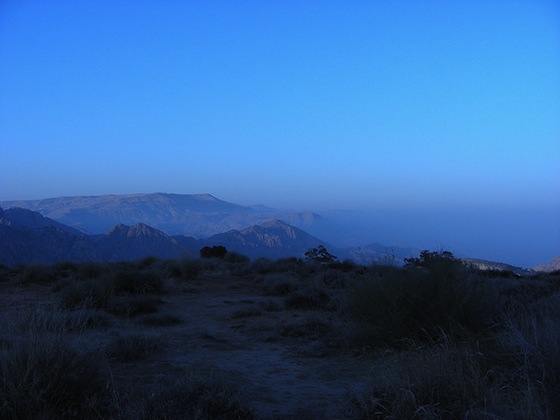
The Royal Society for Conservation of Nature (RSCN) in Jordan is in charge of eight protected areas in the country. Through four pilot sites in the protected areas of Al Yarmouk and Fifa and two in the Biosphere Reserves of Mujib and Dana.
The RSCN is conducting climate change adaptation planning oriented at finding ways and implementing measures based on traditional knowledge, to help reduce the uncertainty that climate change poses to natural ecosystems by rendering them more resilient and resistant.
This case was presented by Mr Hussien M. Kisswani, National Climate Change Officer of the RSCN, Jordan.
Case Study 2: Oman’s Aflaj Water Channels
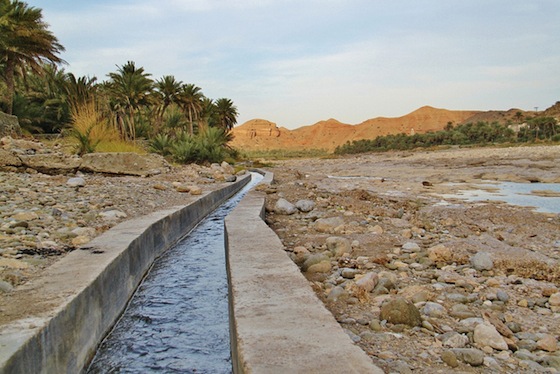
The Aflaj is a water management system created in many parts of the Arab world and is still active in Oman. Today, the Aflaj system not only brings water to distant areas without power requirement and in a sustainable way, but provides for 36% of water used for agriculture in Oman, a country falling below the water poverty line due to naturally occurring, historical water scarcity.
The protection of the Aflaj system and its associated traditional knowledge and institutions is a matter of national relevance in Oman and holds universal value as it has been recognized by the World Heritage Convention. Nevertheless this system and its body of traditional knowledge require further protection and mechanisms to ensure their sustainability.
There are 3,017 remaining active Aflaj in Oman. This body of traditional knowledge can be shared with other communities and countries, even distant ones, to help them adapt to climate change, improve agriculture, etc.
This case was presented by Dr Saif Ali Al-Hajari of Friends of the Environment Centre.
Case Study 3: Traditional Fishing in Qatar
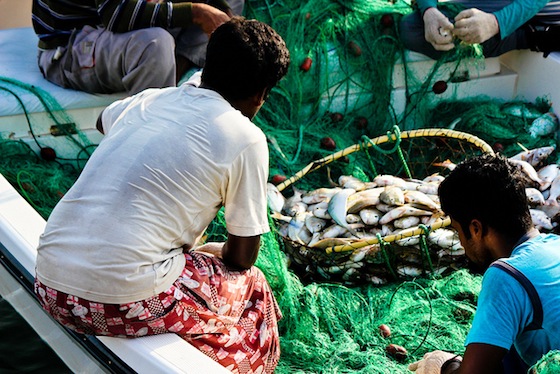
Fishing traditions have been very important in Qatar. Marine ecosystems across the Gulf region are facing high ecological pressures with consequences on the balance of these natural systems. Ms Kaltham Al Ghanem explained how existing environmentally unsustainable behaviours and the negative impacts of economic activities, as well as social and cultural habits, are affecting terrestrial and marine environments in Qatar.
According to Dr Al Ghanem the oil discovery era dissociated people from their natural environment, which contributed to the disappearance of indigenous knowledge. There has been a decline in the use of local natural materials and their associated practices.
Furthermore, changes in fishing techniques have had an adverse effect on the marine environment and its fauna in Qatar. This case was presented by Dr Kaltham Al Ghanem, Professor of Sociology at Qatar University.
Mr Hussien M. Kisswani, the lead organiser of the event, explained that the key message from these case studies was that traditional knowledge and practices in the Arab world represent a valuable asset for adaptation to climate change. “There is a need to better explore how to revitalize traditions, and especially how to maintain and revitalize value and ethical systems that were strongly present in Arab cultures but have deteriorated and are rapidly disappearing due to massive and rapid change occurring in Arab societies,” he says.
Some of the suggestions that the forum came up with include effective law enforcement on matters related to the impact of industrialization on nature, better information sharing and for traditional knowledge to be included in national plans and strategies for mitigation and adaptation to climate change.














 The occasional bicycle rack can be found near pedestrian promenades in Istanbul, such as the one pictured above on the Asian side of the city. But the city’s heavy traffic and reckless drivers discourage many would-be bicycle commuters. Developing a more bike-friendly Istanbul was the goal of