Home Blog Page 366

Going Off The Grid In Egypt with the Solar House

0

slides egypt house solar

What appears to be a first for Egypt (but not the first for us to report) is that a group of university students from the American University in Cairo have finally developed an entire building dubbed “Solar House” after two years of work, and lack of funds, despite not being able to showcase their idea at the Solar Decathalon in Spain recently.  The announcement by the university this month shows that the youth in the country are the driving force for environmental change, even with all their challenges.  And in a country where energy worries – even before the revolution in January 2011 –  are on the rise with a fast-growing population, solar power could be a huge boost for the country.

Dung beetles navigate by the stars

2

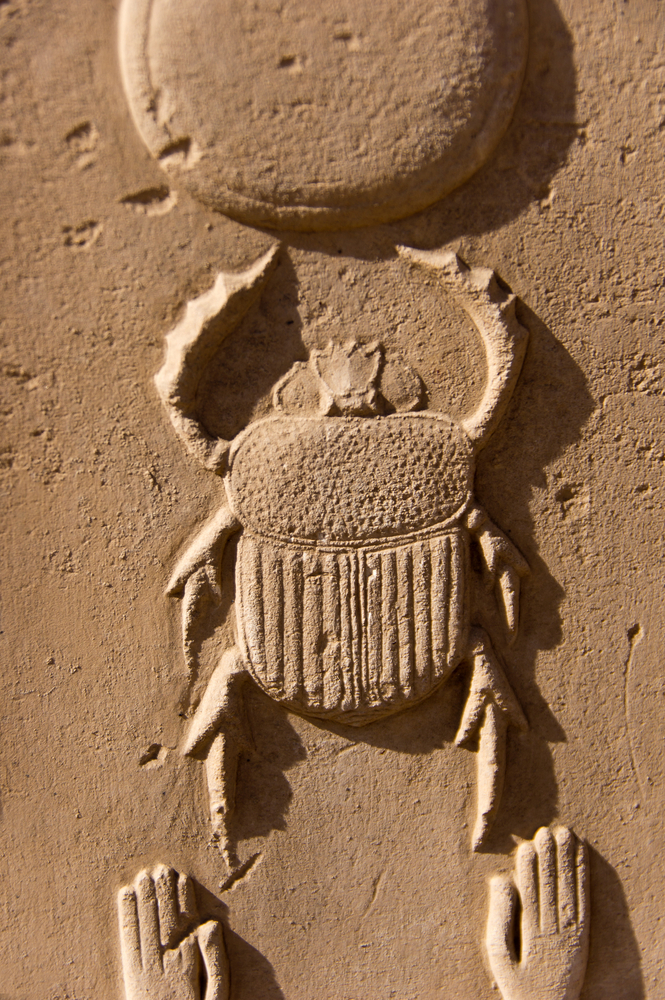
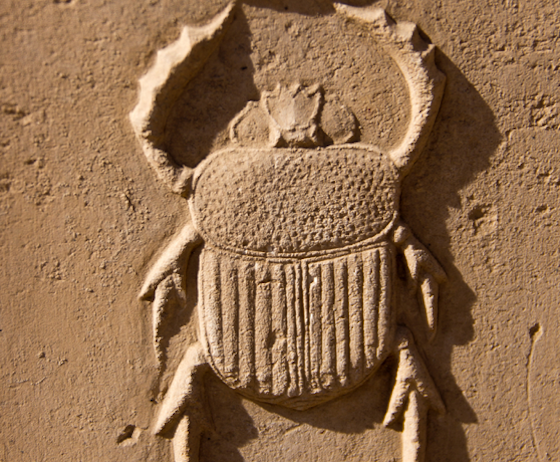
Scarab Beetle, Astronomy, Egyptology, Nature, DesertScarab beetles, or dung beetles, were sacred to the ancient Egyptians. These insects rolled balls of dung across the earth just as the sun god Ra rolled across the sky.

Scarabs were seen as earthly manifestations of heavenly movement. A team of scientists from South Africa and Sweden recently published a study indicating that there was a grain of truth in this belief. They found that these beetles use celestial navigation to roll their balls of dung in a straight path. The beetles orient themselves with star clusters and the wide band of star light we know as the Milky Way.

The Scarab beetle’s Egyptian name Kheper was associated with stability in transformation and was used in the names of pharaohs such as Thutmose III (Mn-Kheper-Re.) These insects and their artistic representations were fashioned into jewelry. Scarabs were also used as seals to protect written documents.

Scarab beetles can walk a straight line

Even on moonless nights some species roll their dung in surprisingly straight lines. They do this order to minimize the energy spent weaving through mobs of other dung-rolling beetles. They’re like shoppers trying to find the shortest path out of a crowded market.

While dung-pushing humans might focus on the task at hand, scarab beetles literally have their eyes on the stars. By using a planetarium to simulate the night sky, these scientists were able to determine that polarized sky light, the position of the sun, bright star clusters as well as the Milky Way were all used as cues to dung beetle navigation.scarab beetle rolling ball of dung

This is the first time celestial navigation has been seen in insects but the scientists believe it is common. This has environmental implications because even moderate light pollution can completely wash out all but the brightest stars – is light pollution the end of Arabian Nights? If you’ve ever seen the Milky Way consider yourself fortunate. Four billion people and untold billions of dung beetles live under too much light pollution to see their own galaxy.

When a 1994 earthquake knocked out power to Los Angeles people who had never seen the Milky Way dialled emergency numbers and worried that the dimly glowing “silver cloud” meant something was terribly wrong with the night sky.

The Milky Way as a path

In many folktales the Milky Way is described as it appears, a glowing pathway across the night sky. But no one really knew where this path was or where it led. Aristotle believed it was composed of starry vapors drifting through the upper atmosphere like graffiti overspray from when stars were painted onto the celestial dome.

But Arabian astronomer Alhazen (965-1037 A.D.) tried to measure the parallax of this ghostly band of starlight known in Arabic as Darb Al-Tabbāna (Haymaker’s way.) Alhazen found no parallax and concluded that it must be very far away.

Medieval Islamic astronomers such as Ibn Qayyim Al-Jawziyya, Abū Rayhān al-Bīrūnī and Ibn Bajjah concluded that the Milky Way was composed of distant stars very close together.

Why is the moon not following me?

When navigating by electric light instead of starlight, insects face the problem of parallax. The moon and stars are very far away so they maintain their angle in the sky as we move under them. But the angle to nearby lights changes based on the observer’s position.

If an insect navigator uses its biological sextant to maintain a constant angle to a relatively nearby electric light, it would find itself spiraling into that light. This is exactly happens to moths, flies and other night-flying insects when they circle electric lights. A light that isn’t infinitely distant must be as strange to them as the feeling that the moon is following us is to humans.

So the next time you find yourself pushing a ball of dung through a crowd on a dark night, keep your gaze on the stars and follow in the footsteps of the scarab beetle.

Dung beetles use the milky way for navigation was published in the journal Current Biology by Marie Dacke, Emily Baird, Marcus Byrne, Clarke H. Scholtz and Eric J. Warrant.

5 reasons to love Trees on Tu B’Shevat

5

hanging out in a tree, woman on branch of large tree

The Jewish version of Arbor Day Tu B’Shevat is more relevant today than ever. Transformed from a general agricultural holiday into a dedicated arboreal conservation initiative in the early 1900’s, this celebration takes place towards the end of January during the Hebrew month of Shevat.

This holiday addresses the travesty that trees previously revered by indigenous people around the globe have become nothing more than commodities in our modern consciousness, something to be grown, skinned, chopped and used in building projects.

But there are so many other reasons to value trees. Not only are they beautiful sentries that transform a flat and dusty landscape, and gracious hosts of important bugs, birds and sometimes mammals too, they also perform a variety of crucial environmental services that most of us don’t see. Followed is a list of five.

1. Trees Absorb Carbon Dioxide

It is relatively well known that trees absorb carbon dioxide. This environmental service also known as a “carbon sink” has become better understood as the discussion about climate change has gained momentum. Trees capture the same CO2 that is spewed from the exhaust of a car and factories and store it in their roots, bark and leaves, diverting harmful emissions from the atmosphere. If it weren’t for trees, life on earth would be significantly hotter, and yet in the last few decades we have managed to decrease forest cover by more the half. Researchers at the World Resources Institute predict that global demand for wood will double by 2050, putting trees (and therefore us) at deadly risk.

2. Trees Help Us Breathe

In addition to sucking up the pollution we unleash, trees produce the oxygen that we need to breathe. According to a website devoted to forestry, one tree produce the same amount of oxygen in one season that ten humans use in an entire year. And why does oxygen matter? Consider this: if we cut off the supply of oxygen to the brain for just a fraction of a second, we start to lose consciousness. In the prolonged absence of oxygen, we will experience respiratory failure and even death.

3. Trees Clean the Soil and Scrub the Air

In addition to absorbing CO2 and using it for food, trees scrub harmful pollutants from both the soil and the air. Remarkably resilient in the face of our pollutant blitz, they absorb pollutants in the soil and either store them or convert them into something useful and treat air pollutants in a similar manner. A world without trees would be hotter and smoggier.

4. Trees Prevent Water Runoff

As climate change escalates, global sea levels are expected to rise as much as 6.5 feet by 2100, according to the National Geographic, though some scientists believe that if the Greenland ice sheet melts, seas could rise 23 feet. If this happens, London and Los Angeles will vanish. In less dramatic circumstances, trees can absorb water runoff and prevent flash floods from destroying crops, homes and soil erosion. One Colorado Blue Spruce can absorb as much as 1,000 gallons of water, according to forestry experts.

5. Trees Block Wind and Noise

Have you ever driven down a busy highway with houses on either side of it and noticed some homeowners have planted either one or two rows of tall trees along the length of their property? Here’s the trifold logic behind such a choice: trees create a natural boundary and provide some privacy, but they also ward off noise pollution and act as a windbreaker. The latter quality can reduce heating bills by up to 30 percent and reduce snow drifts in northern latitudes.

We have barely skimmed the importance of trees in this post and not one of them has anything to do with profit; suffice to say that life without trees is no kind of life at all. So go plant one or two or three this Tu B’Shevat; your very existence is directly tied to theirs.

This Green Prophet Hospitalized from Cairo’s Air Pollution

1

air pollution cairo causes asthmaJoseph’s lungs didn’t like the return to polluted Cairo. It caused a dangerous bout of asthma.

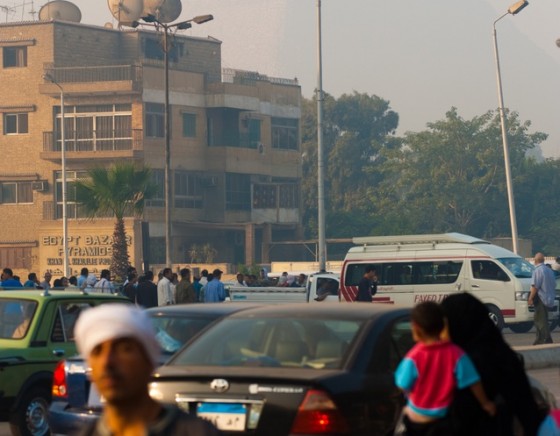
Returning to the city I have lived for more than a decade this January, Cairo, I was definitely not expecting to end up at the doctor’s office with days of near constant asthma problems. After 10 years, one would think we’d be accustomed to the air and its nasty pollutants. But that was not to be. For days after arriving, tops of buildings could not be seen as smog covered Egypt‘s capital city in amounts rare to even this polluted metropolis.

The doctor I went to and nursed me back to good health, was clear about what was causing my near constant asthma attacks: air pollution. Unable to leave my flat during the day, I suffered and waited for my lungs to open and become used to the pollutants in the air. Finally, after nearly a week of treatment, I was in the clear and back able to walk the streets of Cairo. But it left me wondering the affects of pollution and asthma on Egyptians in the city.

What I found was staggering.

Egypt is Close to Bridging the Distance to Saudi

1

land-sea bridge, saudi arabia, egypt, gulf of aqaba, sinai peninsula, tourism, development, business, politics, The Egyptian government announced earlier this week that a plan to bridge the distance between Egypt and Saudi Arabia across the Gulf of Aqaba is going to become reality in the very near future. A longstanding proposal previously rejected by former President Hosni Mubarak, a bridge linking the Sinai Peninsula and Saudi Arabia is expected to cement ties between those two countries while alienating just about everyone else. And don’t even get us started on the environmental damage that will be caused.

Earth Architecture No Longer Fit for a King

0

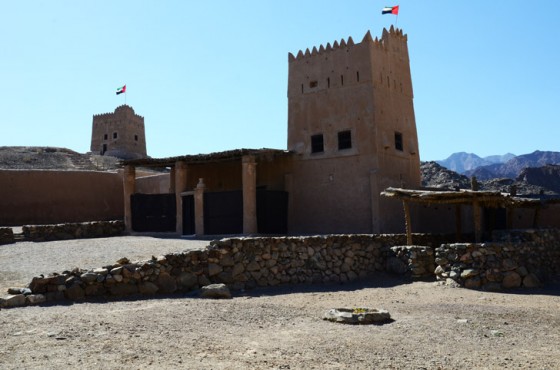
travel, nature, united arab emirates, al hayl fort, fujairah, earth architecture, green design

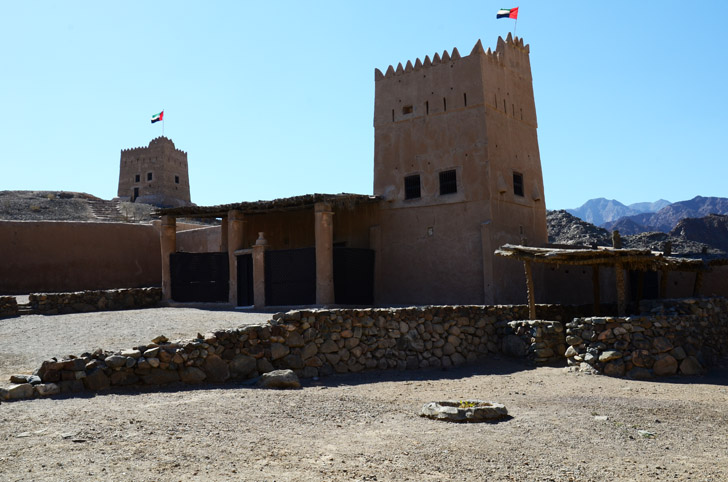
Just two hour’s drive east of Dubai, the Al Hayl Fort or Palace paints a succinct picture of Emirati life before artificial islands and enormous skyscrapers became “normal.” Located in a wadi among the Hajar mountains, the remarkable earthen compound was built in 1932 by then ruler of Fujairah Sheikh Abdullah Bin Hamdan. It’s a slice of history we discovered by accident.

After spending a week in a fancy hotel for Abu Dhabi Sustainability Week, we needed some nature time. So, at the end of the conference last week Friday we set off in a tiny hired car with our tent and sleeping bag packed among suits and fancy shoes. And this is what we found.

10 Weird and Wonderful Uses for Olive Oil

13

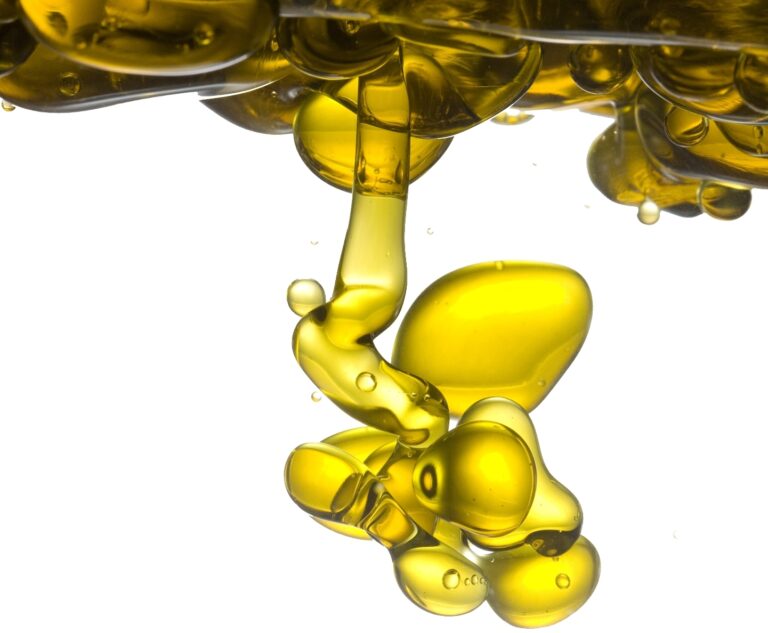
uses for olive oil

Humans have been plucking the fruit off olive trees for over 10,000 years, so it’s no surprise we’ve found creative ways to use olives and their oils.  They’re native to the Mediterranean-basin, and probably first domesticated in Crete, but who first hatched the recipe for extracting olives’ oils remains an mystery.

We know the stuff is tasty, and its nutritional benefits go far beyond  keeping cholesterol levels in check.  But if you’re aiming to simplify your lifestyle, tapping in the versatility of this kitchen staple is a reasonable way to begin. From hand cleaners to skin moisturizers (without parabens, additives or perfumes) to gum remover… check out ten tasks for this Levantine wonder that you won’t see on the Food Network.

  • Hand Cleaner – make a paste of olive oil and sugar (or salt) and scrub your paint-splattered hands (strips almost any sticky goo).  The mess slides right off, and your skin will glow.
  • Hair Conditioner – warm a bit of oil (set it in a cup inside a bowlful of boiled water) and apply a few tablespoons onto dampened hair.  Massage into the ends (avoid scalp), pop on a shower cap and let it sit for 20 minutes. Wash hair as usual, thoroughly removing the residue. You’ll be sleek as a seal.
  • Skin Moisturizer – pour a few drops in the palm of your hand, dip in a few fingers and pat the oil on your skin.  Gently massage in. Used in small amounts, it’s quickly absorbed. Best to scent with a few drops of your favorite essential oil, or risk smelling like a Caesar salad.
  • Leather Conditioner – same technique as above (minus the nice-smelling additives).  Live in arid Jordan for a few years and you learn there’s not much difference between moisturizing your leather and your skin.
  • Stainless Steel Polish – give the item a general wash, then drop a bit of oil onto a soft, clean cloth.  Using a circular motion, buff stainless, copper and brass surfaces to a brilliant shine.
  • Label Remover – saturate the sticker with oil, and let it sit awhile. Using a flat edged knife or spatula, peel the label right off.
  • Chewing Gum Remover – I’ve cleaned gum out of my kids’ hair and our dog’s tail with this technique: soak the affected hair in a generous amount of oil.  Leave it on for as long as the patient’s patience will allow (20 minutes is ideal) , then gently pull hair loose from the sticky wad.
  • Lamp Fuel – replace the noxious stuff in your Tiki lamp with pure olive oil.  We did this in a pinch during a summer barbecue and were stunned to see it really works. Many Jews use olive oil for their weekly candle lighting ceremony.
  • Furniture Polish – mix well 2 ounces of lemon juice with a teaspoon of olive oil for a combo wood cleaner – and – polisher.  Apply the same technique as for shining metals: soft cloth and circular buffing.
  • Shoe Polish – following on the heels of the first nine tips, this one’s sort of intuitive. If olive oil can clean skin, shine appliances, and moisturize skin, of course it can keep your shoes tidy.  (Not recommended for cleaning Uggs.)

Tu B’Shvat is Jewish New Year For The Trees

0

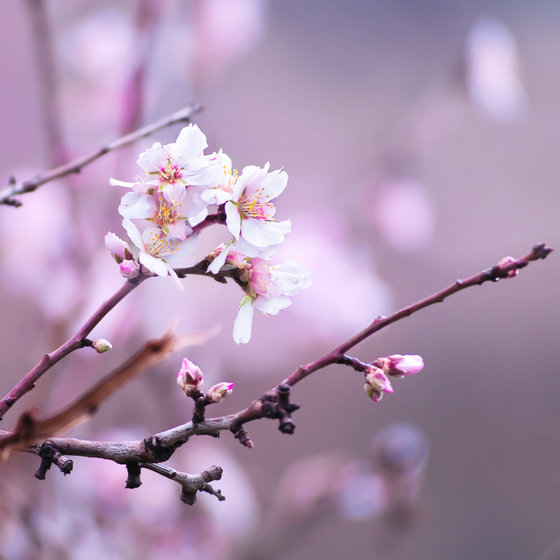
almond blossomThe Jewish holiday of Tu B’Shvat, a day especially loved by children, is a special eco-day in Israel. Celebrate it with a fruity feast.

It’s true, a few days before the Jewish holiday of Tu B’Shvat occurs, the almond trees in Israel begin to shake blossoms out along their branches. Travelers along the Tel-Aviv-Jerusalem highway can spot the occasional cloud of pink or white flowers among the olive groves and green fields along the way. Enjoy the beauty of mid-winter in Israel, because soon enough summer’s hot winds will change the landscape to something much drier and sere.

Suntech Launches New Research Centre In Arava – INTERVIEW

0

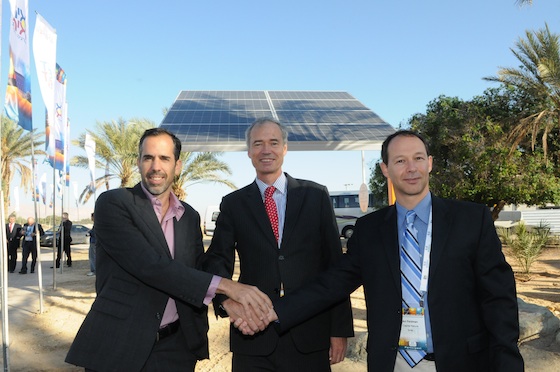
suntech arava solar isrealFollowing the inauguration of Suntech’s new research centre in Arava, we speak to their Chief Technology Officer (pictured centre) about the future of renewables in the Middle East

As one of the largest producers of solar panels, Suntech is undoubtedly a world player. In Israel alone, out of a total of 220 solar megawatts produced, 100 megawatts are harvested by Suntech’s panels. Suntech panels were also used on the Ketura Sun field, the first commercial solar field in Israel. As such, the company’s decision to open a new research centre in the Arava region didn’t come as a huge surprise. Green Prophet caught up with Suntech’s Chief Technology Officer, Dr. Stuart Wenham to talk about their solar plans for the Middle East region.

An Estidama Compliant Eco Dwelling for Next Generation Arabs (PHOTOS)

0

daylighting, estidama, eco home, arab, abu dhabi, world future energy summit, international water summitMost residents of the Middle East, North Africa and the Arabian Gulf believe that in order to live an eco-friendly life, it is necessary to move to some shack out in the desert with no running water or electricity. But what actually passes for a sustainable dwelling in the region has changed in the last few years. And much of that is thanks to a new green rating system called Estidama (read more here) – one that makes sense in the Middle East where LEED standards can’t always work.

For a perfect example, check out our photos of the Estidama-compliant eco-home that was displayed during Abu Dhabi Sustainability Week where Green Prophet was part of the VIP media tour. Roughly equivalent to the government “eco villas” being installed in Al Ain and Al Silaa, this prototype home has all the trappings of a modern Arab home (including a falcon, of course) but consumes 20-30 percent less energy and water.

Twizy Mini Electric Pilot Planned for Israeli Town

twizy renault electric car israel

The Israeli electric car company Better Place is seeing rough times (it just hired its third CEO in as many months after firing two others), but it has reduced its leasing plan to about $400 a month including charge and battery swaps to attract more customers. Thanks to the millions in marketing done by Better Place, the Israeli public is more than ever interested in going electric. With its fair share of oil embargoes from the Middle East, Israelis are too aware of the cost of foreign oil. Locals do want to see greener modes of transport, and ones that use less foreign oil. A second car commuter car, or a first car choice for those living in congested cities may just be the Renault Twizy, at a comfortable price of about Euros 7000 or NIS 50,000 depending on the taxes. Twizy, a mini electric two-seater, will be piloted in the Israeli city Kfar Saba, located about 1/2 an hour north east of Tel Aviv, according to Globes.

Plasan Greens Chevrolet’s 2014 Corvette Body

6

corvette stingray 2014 plasanThe 2014 Chevrolet Corvette 2014will be lighter and stronger, thanks to the Israeli company Plasan

High performance sports cars, including the  gold Mercedes sports coupes burning blends of biofuel are not exactly on most people’s minds as being environmentally friendly. But these are the kind of cars loved by the wealthy and extravagant men of the Middle East who like to show off their assets. Even electric sports cars, such as those made by Tesla Motors  and which have had a slow start in regions like the Middle East still have to rely on fossil fuel fired power stations to supply the electricity needed to recharge their lithium battery packs. A new Israeli-made body composite material will be making hot rods all the more rideable (in the green sense).

Dubai’s Bikram Yoga Turns Up the Heat, One Posture at a Time

0

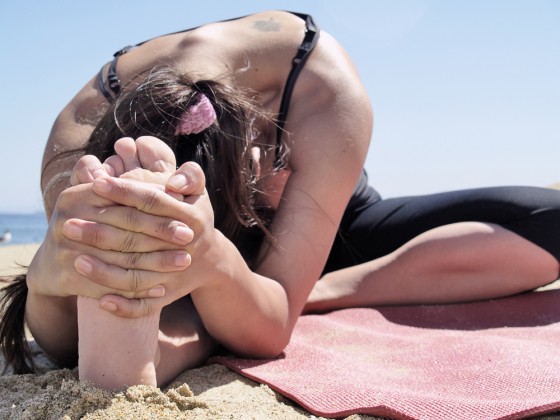
Photo of woman in head-to-knee pose, or janushirasana

A 90-minute yoga class in the great outdoors?  Piece of cake, some yogis will say.  But with Bikram yoga, a form created by Calcutta-born Bikram Choudhury, there’s a catch: class is conducted in a studio that’s heated to 105°F or approximately 40.6°C. When you are doing yoga like this in the Arabian Desert there is no need to heat the room!

Cadillac’s ELR and Eco Luxury Cars Fit for the Middle East

0

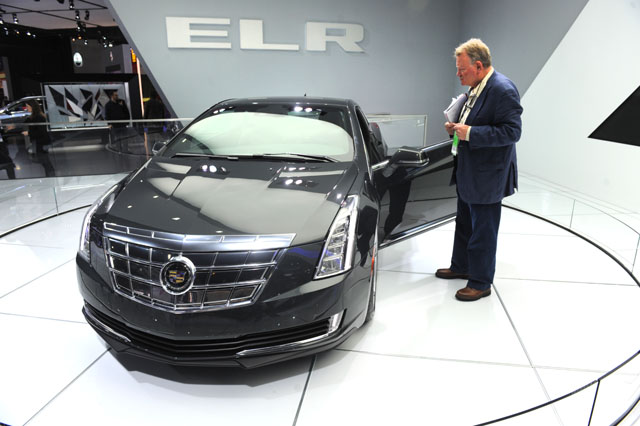
cadillac elr 2014Cadillac’s 2014 ELR; a luxury plug in hybrid for only $55,000

Luxury cars, including biofuel driven gold Mercedes sports coups and sports cars like  gold plated Porsche 997 GT2’s  are often found in the garages of wealthy Middle East residents where price is no limit to luxury. These kinds of buyers who might want to go green will not likely buy into the wimpy Renault Twizy. But don’t despair wealthy sheikhs:  Even green luxury models like the plug-in hybrid Fisker Karma can now be found in the United Arab Emirates.  While some of these car makers claim their rides to be more environmentally friendly, especially the hybrid models, their high prices may make one wonder why so many of these cars are often seen in countries where many inhabitants live on bare subsistence incomes.

Green Prophet Upcycles Jordan’s Politicians Into Hip Handbags

2

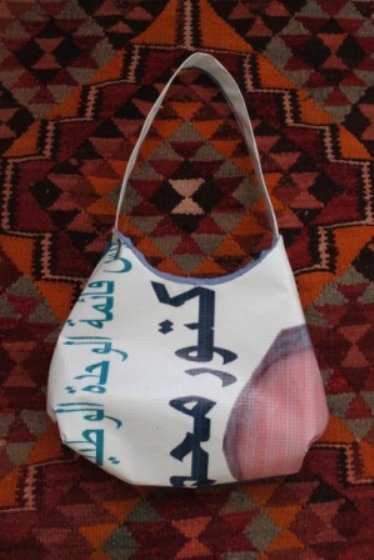
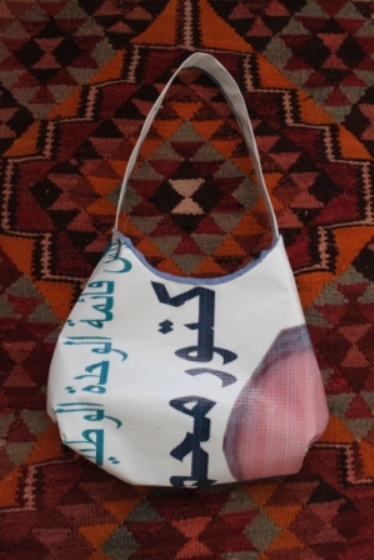
recycled plastic sign handbag jordanLaurie recycles a Jordanian political poster into a handbag. Here’s how she does it.

Voting is underway for Jordan’s Parliament. I’m not running, but I have this one in the bag!

Hundreds of posters are hanging along Amman roadways; a somber assemblage of Middle Eastern manhood, mostly mustachioed. No wonder there’s tension in the lead-up to election: everywhere I look there are faces scowling down.

The signs are made from fiberglass-reinforced plastic stretched across a simple wood frame, the plastic fabric roughly stapled in place.

Amman’s recent spate of hard rain, wind and snow knocked many signs off their telephone pole mounts. Aerodynamic, as if crafted by Pakistani kite-makers, they flew across roads, into cars and front yards. One landed near me.

I took it home (torn fabric, broken frame), salvaged some of the plastic and tossed the wood into the fireplace.

Then I took my politician into the shower.