The CFTC, FINRA, and NASAA have jointly warned retirees about precious metals fraud targeting retirement accounts. This checklist provides a structured framework for evaluating any company before transferring savings — and illustrates what credible providers look like across 7 measurable criteria.
A vast and largely untapped lithium reserve may be hiding beneath one of North America’s oldest landscapes, the Appalachian Mountains, offering a surprising twist in the global race for clean energy materials. According to new findings from the U.S. Geological Survey (USGS), as much as 2.5 million tons of lithium could be buried across the region, stretching from the Carolinas up through New England.
Energy equities are responding unevenly to the evolving landscape. Companies with direct exposure to UAE production growth and infrastructure are benefiting from increased activity expectations, while global oil majors face a more mixed outlook.
All air conditioners release water. That's Physics. Cities like Los Angeles pour billions of water down the drain every year. And while home owners who are savvy to water reuse are finding ways to use AC water in the garden (here are 5 ways to use air con water at home), or in art studios (it's basically free distilled water), cities could save water in meaningful ways by using creative ideas. These are solutions you can send to urban planners and those running smart city accelerator programs. Pick one of them and you might win the grant!
As tensions rise in one of the world’s most critical maritime chokepoints, the ripple effects go far beyond oil—touching food systems, climate pressures, and regional stability
The CFTC, FINRA, and NASAA have jointly warned retirees about precious metals fraud targeting retirement accounts. This checklist provides a structured framework for evaluating any company before transferring savings — and illustrates what credible providers look like across 7 measurable criteria.
A vast and largely untapped lithium reserve may be hiding beneath one of North America’s oldest landscapes, the Appalachian Mountains, offering a surprising twist in the global race for clean energy materials. According to new findings from the U.S. Geological Survey (USGS), as much as 2.5 million tons of lithium could be buried across the region, stretching from the Carolinas up through New England.
Energy equities are responding unevenly to the evolving landscape. Companies with direct exposure to UAE production growth and infrastructure are benefiting from increased activity expectations, while global oil majors face a more mixed outlook.
All air conditioners release water. That's Physics. Cities like Los Angeles pour billions of water down the drain every year. And while home owners who are savvy to water reuse are finding ways to use AC water in the garden (here are 5 ways to use air con water at home), or in art studios (it's basically free distilled water), cities could save water in meaningful ways by using creative ideas. These are solutions you can send to urban planners and those running smart city accelerator programs. Pick one of them and you might win the grant!
As tensions rise in one of the world’s most critical maritime chokepoints, the ripple effects go far beyond oil—touching food systems, climate pressures, and regional stability
The CFTC, FINRA, and NASAA have jointly warned retirees about precious metals fraud targeting retirement accounts. This checklist provides a structured framework for evaluating any company before transferring savings — and illustrates what credible providers look like across 7 measurable criteria.
A vast and largely untapped lithium reserve may be hiding beneath one of North America’s oldest landscapes, the Appalachian Mountains, offering a surprising twist in the global race for clean energy materials. According to new findings from the U.S. Geological Survey (USGS), as much as 2.5 million tons of lithium could be buried across the region, stretching from the Carolinas up through New England.
Energy equities are responding unevenly to the evolving landscape. Companies with direct exposure to UAE production growth and infrastructure are benefiting from increased activity expectations, while global oil majors face a more mixed outlook.
All air conditioners release water. That's Physics. Cities like Los Angeles pour billions of water down the drain every year. And while home owners who are savvy to water reuse are finding ways to use AC water in the garden (here are 5 ways to use air con water at home), or in art studios (it's basically free distilled water), cities could save water in meaningful ways by using creative ideas. These are solutions you can send to urban planners and those running smart city accelerator programs. Pick one of them and you might win the grant!
As tensions rise in one of the world’s most critical maritime chokepoints, the ripple effects go far beyond oil—touching food systems, climate pressures, and regional stability
The CFTC, FINRA, and NASAA have jointly warned retirees about precious metals fraud targeting retirement accounts. This checklist provides a structured framework for evaluating any company before transferring savings — and illustrates what credible providers look like across 7 measurable criteria.
A vast and largely untapped lithium reserve may be hiding beneath one of North America’s oldest landscapes, the Appalachian Mountains, offering a surprising twist in the global race for clean energy materials. According to new findings from the U.S. Geological Survey (USGS), as much as 2.5 million tons of lithium could be buried across the region, stretching from the Carolinas up through New England.
Energy equities are responding unevenly to the evolving landscape. Companies with direct exposure to UAE production growth and infrastructure are benefiting from increased activity expectations, while global oil majors face a more mixed outlook.
All air conditioners release water. That's Physics. Cities like Los Angeles pour billions of water down the drain every year. And while home owners who are savvy to water reuse are finding ways to use AC water in the garden (here are 5 ways to use air con water at home), or in art studios (it's basically free distilled water), cities could save water in meaningful ways by using creative ideas. These are solutions you can send to urban planners and those running smart city accelerator programs. Pick one of them and you might win the grant!
As tensions rise in one of the world’s most critical maritime chokepoints, the ripple effects go far beyond oil—touching food systems, climate pressures, and regional stability
The CFTC, FINRA, and NASAA have jointly warned retirees about precious metals fraud targeting retirement accounts. This checklist provides a structured framework for evaluating any company before transferring savings — and illustrates what credible providers look like across 7 measurable criteria.
A vast and largely untapped lithium reserve may be hiding beneath one of North America’s oldest landscapes, the Appalachian Mountains, offering a surprising twist in the global race for clean energy materials. According to new findings from the U.S. Geological Survey (USGS), as much as 2.5 million tons of lithium could be buried across the region, stretching from the Carolinas up through New England.
Energy equities are responding unevenly to the evolving landscape. Companies with direct exposure to UAE production growth and infrastructure are benefiting from increased activity expectations, while global oil majors face a more mixed outlook.
All air conditioners release water. That's Physics. Cities like Los Angeles pour billions of water down the drain every year. And while home owners who are savvy to water reuse are finding ways to use AC water in the garden (here are 5 ways to use air con water at home), or in art studios (it's basically free distilled water), cities could save water in meaningful ways by using creative ideas. These are solutions you can send to urban planners and those running smart city accelerator programs. Pick one of them and you might win the grant!
As tensions rise in one of the world’s most critical maritime chokepoints, the ripple effects go far beyond oil—touching food systems, climate pressures, and regional stability
The CFTC, FINRA, and NASAA have jointly warned retirees about precious metals fraud targeting retirement accounts. This checklist provides a structured framework for evaluating any company before transferring savings — and illustrates what credible providers look like across 7 measurable criteria.
A vast and largely untapped lithium reserve may be hiding beneath one of North America’s oldest landscapes, the Appalachian Mountains, offering a surprising twist in the global race for clean energy materials. According to new findings from the U.S. Geological Survey (USGS), as much as 2.5 million tons of lithium could be buried across the region, stretching from the Carolinas up through New England.
Energy equities are responding unevenly to the evolving landscape. Companies with direct exposure to UAE production growth and infrastructure are benefiting from increased activity expectations, while global oil majors face a more mixed outlook.
All air conditioners release water. That's Physics. Cities like Los Angeles pour billions of water down the drain every year. And while home owners who are savvy to water reuse are finding ways to use AC water in the garden (here are 5 ways to use air con water at home), or in art studios (it's basically free distilled water), cities could save water in meaningful ways by using creative ideas. These are solutions you can send to urban planners and those running smart city accelerator programs. Pick one of them and you might win the grant!
As tensions rise in one of the world’s most critical maritime chokepoints, the ripple effects go far beyond oil—touching food systems, climate pressures, and regional stability
The CFTC, FINRA, and NASAA have jointly warned retirees about precious metals fraud targeting retirement accounts. This checklist provides a structured framework for evaluating any company before transferring savings — and illustrates what credible providers look like across 7 measurable criteria.
A vast and largely untapped lithium reserve may be hiding beneath one of North America’s oldest landscapes, the Appalachian Mountains, offering a surprising twist in the global race for clean energy materials. According to new findings from the U.S. Geological Survey (USGS), as much as 2.5 million tons of lithium could be buried across the region, stretching from the Carolinas up through New England.
Energy equities are responding unevenly to the evolving landscape. Companies with direct exposure to UAE production growth and infrastructure are benefiting from increased activity expectations, while global oil majors face a more mixed outlook.
All air conditioners release water. That's Physics. Cities like Los Angeles pour billions of water down the drain every year. And while home owners who are savvy to water reuse are finding ways to use AC water in the garden (here are 5 ways to use air con water at home), or in art studios (it's basically free distilled water), cities could save water in meaningful ways by using creative ideas. These are solutions you can send to urban planners and those running smart city accelerator programs. Pick one of them and you might win the grant!
As tensions rise in one of the world’s most critical maritime chokepoints, the ripple effects go far beyond oil—touching food systems, climate pressures, and regional stability
The CFTC, FINRA, and NASAA have jointly warned retirees about precious metals fraud targeting retirement accounts. This checklist provides a structured framework for evaluating any company before transferring savings — and illustrates what credible providers look like across 7 measurable criteria.
A vast and largely untapped lithium reserve may be hiding beneath one of North America’s oldest landscapes, the Appalachian Mountains, offering a surprising twist in the global race for clean energy materials. According to new findings from the U.S. Geological Survey (USGS), as much as 2.5 million tons of lithium could be buried across the region, stretching from the Carolinas up through New England.
Energy equities are responding unevenly to the evolving landscape. Companies with direct exposure to UAE production growth and infrastructure are benefiting from increased activity expectations, while global oil majors face a more mixed outlook.
All air conditioners release water. That's Physics. Cities like Los Angeles pour billions of water down the drain every year. And while home owners who are savvy to water reuse are finding ways to use AC water in the garden (here are 5 ways to use air con water at home), or in art studios (it's basically free distilled water), cities could save water in meaningful ways by using creative ideas. These are solutions you can send to urban planners and those running smart city accelerator programs. Pick one of them and you might win the grant!
As tensions rise in one of the world’s most critical maritime chokepoints, the ripple effects go far beyond oil—touching food systems, climate pressures, and regional stability
The safety of the balloon industry is again questioned in the wake of a hot air balloon crash near Cappadocia, Turkey today that killed two, officials announced. Some 23 other tourists from Brazil, Spain and Argentina have been injured as the hot air balloon hit another’s basket mid-air while drifting over volcanic rock formations.
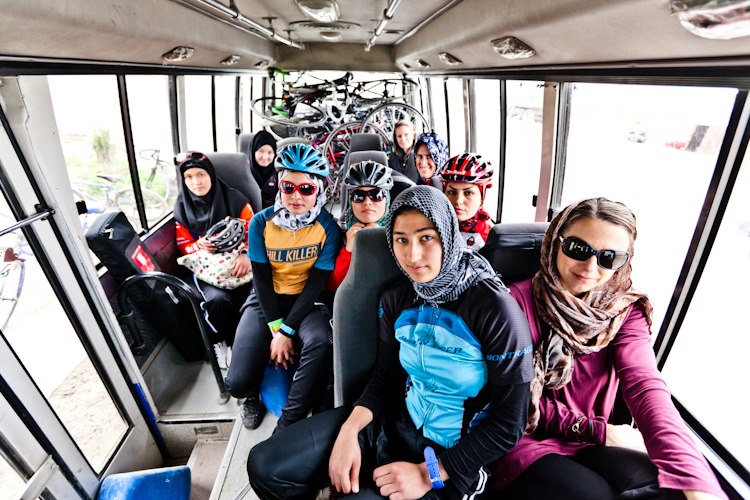
Cartoonist Charles Schulz wrote, “Life is like a ten speed bicycle. Most of us have gears we never use.”
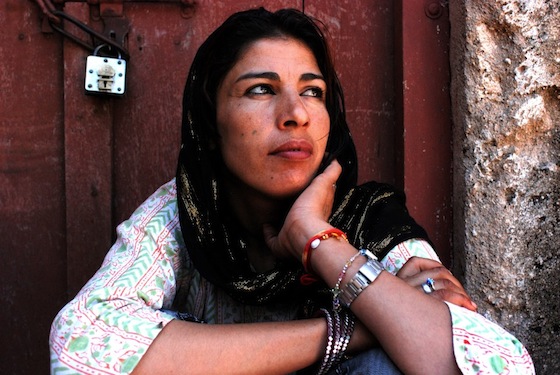
A group of women in the mountains of Afghanistan, who likely never read his strip, don’t agree.
Wearing full body clothing might not be the thing for everyone in the Middle East: but cover up the very young – especially those with light skin. Middle East sun exposure in the young leads to higher rates of skin cancer later in life.
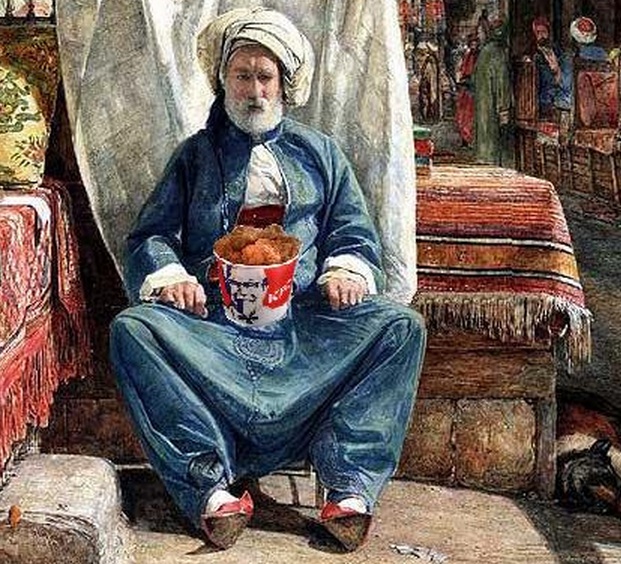
A business man in the Gaza Strip has found a lucrative way of satisfying the urge for KFC by smuggling it through underground tunnels. It may be four hours cold, with a side of soggy chips, but for Gazans it is a taste of freedom.
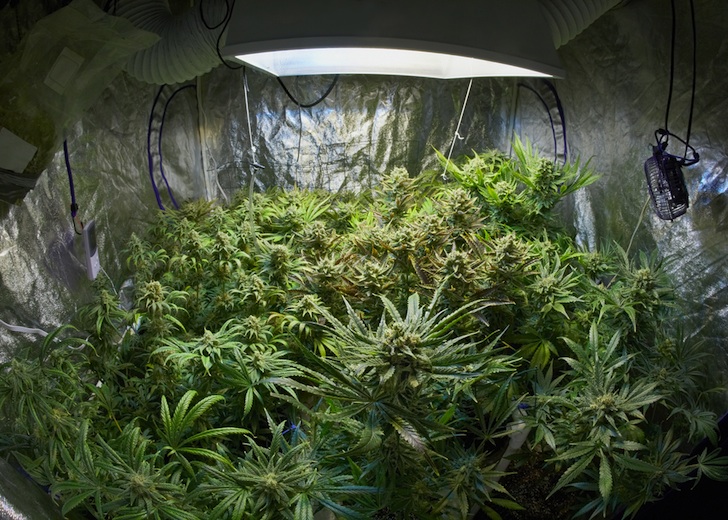
When authorities discovered a lab full of marijuana plants in a bomb shelter beneath an all girls Orthodox Jewish school south of Tel Aviv, they proposed that outsiders must be responsible – because Haredim girls would never smoke pot, right?
The Lower Jordan River, the baptismal river of Jesus, has been dead at its source for some time. For the first time in ages, Israel is releasing native waters via a pump back to the historic waterway.
With Dubai’s government close to finalizing legislation, property owners in the Emirate may soon have the option to feed solar power into the grid so they can make money from feed-in tariffs.
As of recently, there has been much encouragement from industry sources for the use of solar power on rooftops. Mounting photovoltaic panels on rooftops of residential and office buildings or industrial facilities can be beneficial for they can provide electricity and create a surplus that can be fed into the grid.
“In the next 12 months, we will see a constant increase of solar infrastructure. Not only standalone facilities, but to actually power our villas, our parks, our residential communities,” said Ivano Iannelli to The National. He is the chief executive of the government-owned advisory company Dubai Carbon Centre of Excellence.
However, the legislation may reach some hurdles. Other countries that receive solar energy from small-scale sources, suppliers receive a feed-in tariff from the government. This is a tactic that is under consideration in Dubai. Feed-in tariffs are usually above the market rate, making installation for the solar technology profitable.
“Feed-in tariffs are part of the different activities that are being looked upon,” he noted.
Despite the tariffs being under consideration, industry players are still interested in the appeal for Dubai’s move towards solar energy. SolarWorld, one of Germany’s biggest solar panel producers, opened a showroom in Dubai Creek where its product will be sold by local distributor PTL Solar.
Reliant on fossil fuels, solar energy is a possible alternative energy source for Dubai to take advantage of. The Emirate is already seeking to generate five percent of its electricity from the sun by 2030 and last year, the Dubai Supreme Council for Energy announced its plans for the Mohammad bin Rashad Al Maktoum Solar Park; the contract was awarded for the first plans to take place in October.
Solar energy will also divert attention away from Dubai’s power plants’ reliance on natural gases, which are imported.
The expense is especially high during the summer months when air conditioning is frequently used and the emirate must turn to costly liquefied natural gas.
This expense is then passed on to consumers with a fuel surcharge. Fortunately, solar panels are becoming cheaper as the technology advances and fierce competition controls the prices.
Thanks to the emergence of solar energy, Dubai can also reach its goal of reducing the carbon footprint of its power generation – like Abu Dhabi, which launched the Shams1 Concentrated Solar Plant (CSP) in March 2013.
Kuwaiti graphic designer Mohammad Sharaf serves up powerful pictures based on current events, salted with modern Middle Eastern humor and instantly provocative.
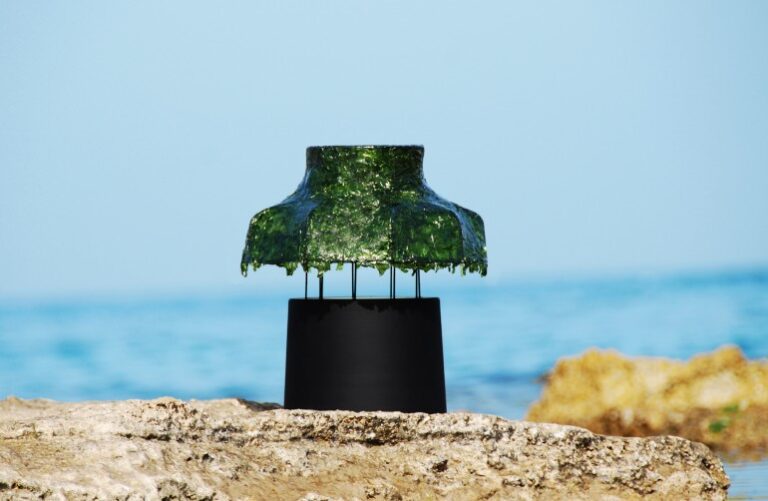
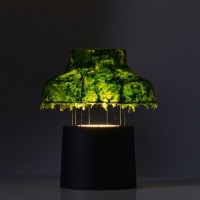
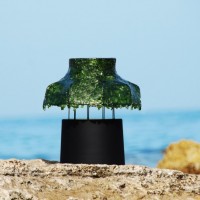
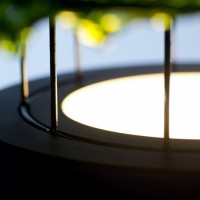
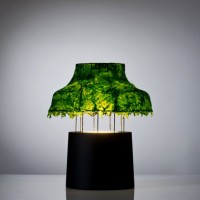
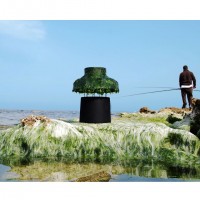
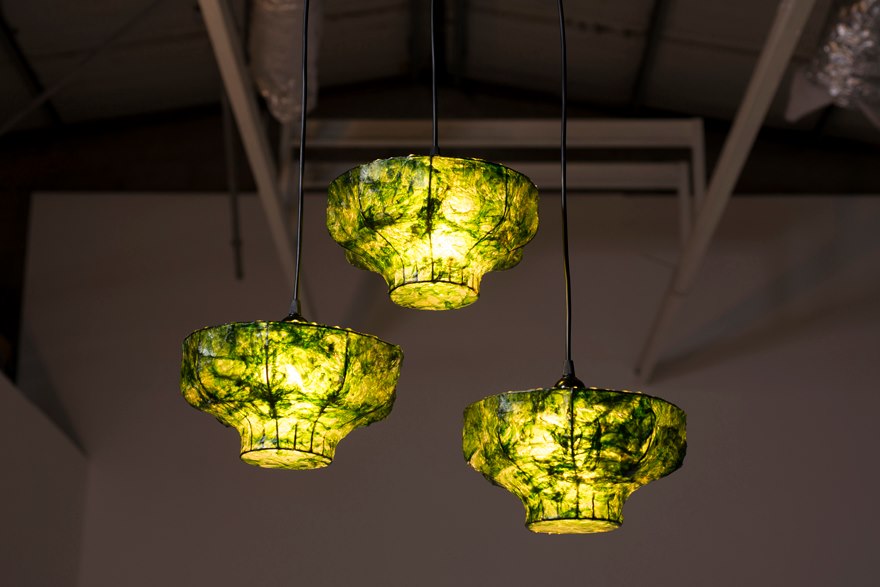
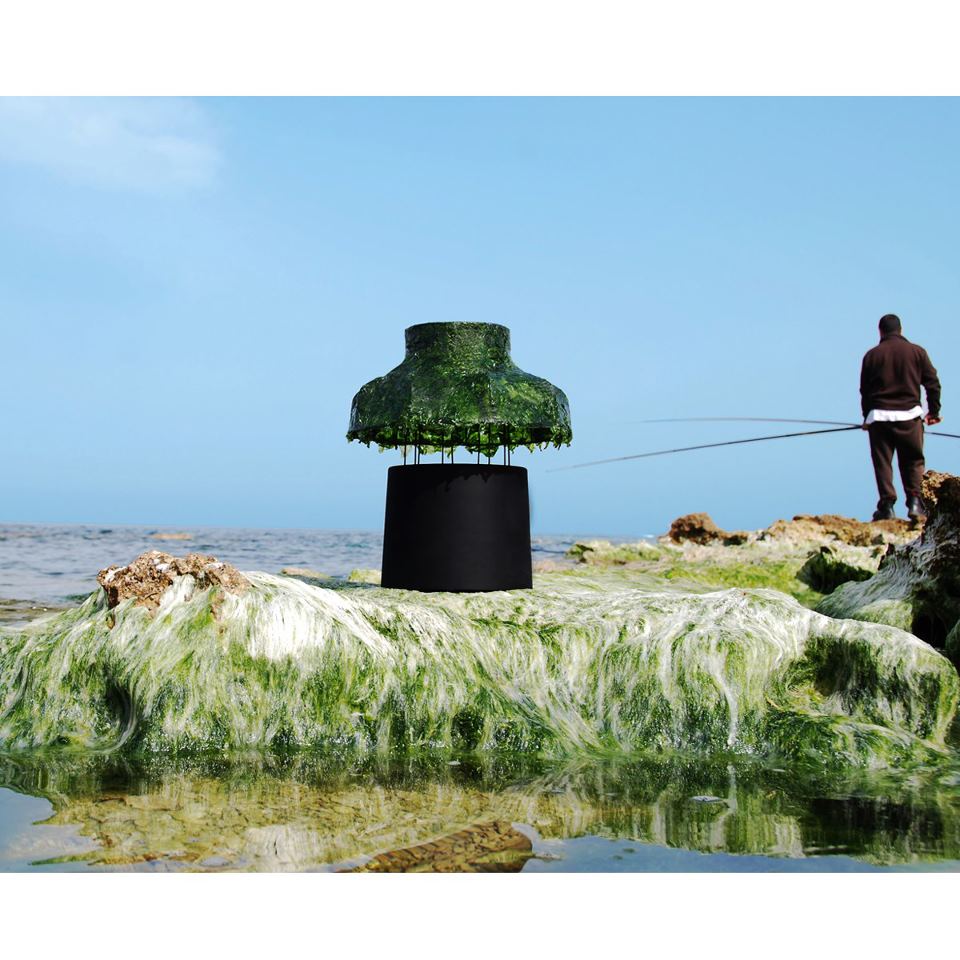
Tel Aviv’s Nir Meiri recently unveiled Marine Light – a curious lamp shade made entirely of seaweed wrapped around a spindly metal frame.
Eaten by coastal people all over the world and prized for its gelatinous and nutritional properties (see bottled algae superfood), and its use is being investigated for seaweed as biofuel, marine algae is harvested for everything from dental moulds and wound dressings to deserts.
But we’ve never seen a seaweed lamp shade before.
“Ancient cultures have appreciated and utilized seaweeds for different uses,” Meiri says on his website.”Today, seaweeds are cultivated and harvested on a commercial scale, as a result of a growing interest driven by environmental concerns.”
Meiri encloses the shade’s metal frame with seaweed that is still wet, according to the designer. Then, once it dries, the marine algae shrivels down and conforms to the shade’s shape.
Once dry, he applies a preservative to the seaweed so that it doesn’t completely rot or flake off; the resulting lamp shade produces a luminescent glow that brings the sea indoors.
“Through the unconventional use of seaweed as a main material for a domestic environment, the product plays on the tension between the artistic and the commercial,” says Meiri.
Materially, the Marine Light is a sensible environmental choice as well since there are no algae shortages in the world and it reproduces very quickly.
This is the second funky lamp we’ve featured this week. If you haven’t already seen it, check out this clever lamp powered by the kinetic energy of shifting sands.
Charles David Keeling began recording CO2 levels at Hawaii’s Mauna Loa Observatory in 1958, back when concentrations hovered at around 315 parts per million. Five decades later and that number has soared to 400ppm and his son told Yale Environment 360 we’re unlikely to stop it from rising any time soon.
Journalists in the Middle East can’t report facts because when they do they go to jail or disappear
How can change occur if we’re not free to write about sensitive issues like human rights and the environment?
According to the 2012 census by the Committee to Protect Journalists (CPJ), there are 232 journalists in prisons worldwide, over half being held in the Middle East, the most of them surprisingly in Turkey. The online ‘zine Foreign Policy posted its “worst countries for journalism” with the Middle East grabbing three of the Top Ten slots.
As we scour the media, we already see how this fares for environmental reporting which is practically non-existent in the Middle East.
Bahrain = 1
Saudi Arabia = 4
Israel and the Palestinian Authority = 3
Iran = 45
Syria = 15
Yemen = 1
Uzbekistan = 4
Kyrgyzstan = 1
Iraq = 1
Turkey = 49
Read about this region’s biggest muzzlers of free expression, below:
Journalists in prison, Turkey
The world’s most repressive country is showcase Muslim democracy and NATO darling, Turkey.
A New Yorker article published last year stated, “According to the Journalists Union of Turkey, 94 reporters are currently imprisoned for doing their jobs. More than half are members of the Kurdish minority, which has been seeking greater freedoms since the Turkish republic was founded, in 1923.”
CPJ’s 2012 census counted 49 jailed reporters, but The Friends of Ahmet Sik and Nedim Sener (named after two imprisoned writers) maintains a list of 104 journalists currently imprisoned there. Another 800 face charges, and scores more have left their jobs because of government pressure.
“The government wants to set an example; it wants to intimidate,” investigative journalist Ertugrul Mavioglu told The Guardian. “Journalists are being told, ‘There are limits on what you are allowed to say.’”
Andrew Gardner, Turkey specialist at Amnesty International, added, “This prosecution forms a pattern where critical writing, political speeches and participation at peaceful demonstrations are used as evidence of terrorism offenses.”
Attorney Meral Danis Bektas said Turkey’s Prime Minister, Recep Tayyip Erdogan, openly threatened journalists and dictated what they wrote. Bektas said: “All of the defendants stand trial for doing their jobs. Free press and freedom of expression are cornerstones of democracy. Without them, democratic political participation becomes impossible.”
The government denies the journalists were arrested for their work as members of the press, instead citing terrorist offenses.
Journalists in Prison, Iran
Iran earns the silver medal for jailed journalists, with 45 behind bars as of December 2012.
The government controls all television and radio broadcasting, banning coverage critical of specific topics and events including national nuclear policy and the economy.
Internet access is skyrocketing, but content is restricted and censored and users risk persecution for online activity.
Social media (Facebook, Twitter, and YouTube) was blocked following the 2009 election and the number of disabled political sites grows exponentially. A 2010 Computer Crimes Law legalizes government internet surveillance and criminalizes online expression.
Cybercafes are obliged to record customers’ personal data and browsing histories. Last year, a national intranet was finalized, aimed at cutting Iranians’ connection to the worldwide web.
In 2012, Iran banned 250 ”subversive” books and closed the professional association “House of Cinema” that supported 5,000 Iranian filmmakers and artists. Don’t count on reading Lolita in Tehran, and forget about seeing the movie.
Journalists in Prison, Syria
Journalists receive reporting licenses at the pleasure of the prime minister. According to the CPJ, 28 licensed writers were killed in 2012 and 15 more were incarcerated by the end of that year.
Syria’s 2001 Press Law gives the state full control over all print media. It forbids reporting on issues of national security and allows the state to determine whether information is factual or not. Violate the law and face up to three years in prison with fines reaching $20,000.
The 2011 Media Law guarantees the “right to access information about public affairs” and bans “the arrest, questioning, or searching of journalists”, yet ironically bars publication of content that affects national unity and security, and incites public unrest. Guess who makes the determination?
Ice hotels are fairly commonplace in northern countries where temperatures regularly fall below freezing, but that didn’t stop the Sharaf Group from opening an ice lounge in the middle of the desert.