
 David Chipperfield Architects have designed a resplendent new building in fascinating, frustrating Morocco, which will house the The Marrakech Museum for Photography and Visual Arts – the largest of its kind in the world.
The Marrakech Museum for Photography and Visual Arts to be World’s Largest
Zumba is at Odds With the Torah in Israel

 Rabbis in an ultra-Orthodox settlement in Israel have attacked the popular Brazilian dance-ercize known as Zumba, declaring that it conflicts with the teachings of the Torah and runs counter to holy living.
Moussa Beidas’ Art Installation Powered By The Sun?
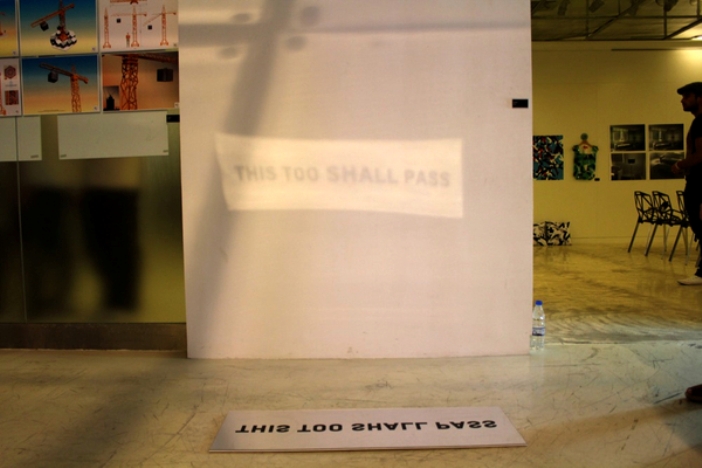
A young Dubai designer wants to install the world’s largest perpetual public art installation to send a message around the planet using the power of the sun.
Najila El Zein’s Beautiful Wind Portal is Made with 5,000 Paper Windmills
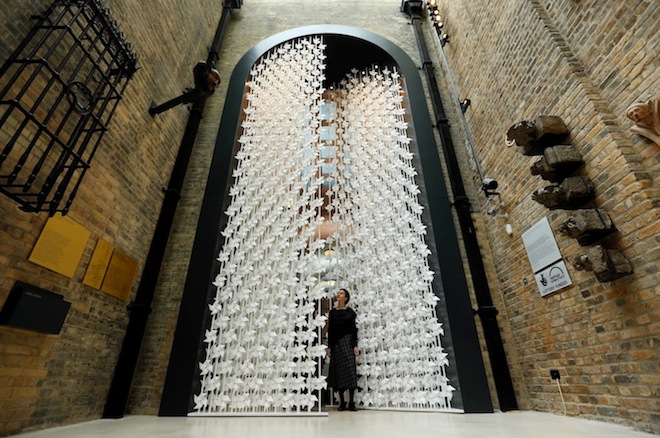
The London Design Festival is well underway with some exciting new projects on display – including an intriguing new installation from Beirut’s Najila El Zein: The Wind Portal.
Half of Tel Aviv’s Metropolitan Area Trash to be Used as Fuel

Hiriya just south of Tel Aviv went from being a teeming trash mountain to a renowned recycling center, and now it will also be the site of the Middle East’s largest Refuse Derived Fuel (RDF) plant.
Carcinogens Found in 98 Common Cosmetics and Soaps: Do Not Wash, Rinse nor Repeat!

 The American nonprofit Center for Environmental Health (CEH) has found a cancer-causing chemical in 98 shampoos, soaps, and other personal care products sold by Walmart, Target, Babies R Us, Trader Joe’s, Kohl’s and other national retailers. Their investigation focused on California, but these popular products are found everywhere.
Turkey’s Gentlest Protestor Paints Public Stairs in Joyous Color

Retired forestry engineer Huseyin Cetinel decided to brighten up a few Istanbul neighborhoods, slapping $800 bucks’ worth of rainbow-colored paint on public walkways over the course of four days.
His guerrilla artworks (which were probably inspired by the guerrilla painters in Beirut last year) were an instant hit with the local community.
Kopi Luwak “Cat Poop” Coffee is the World’s Costliest, and Cruel (VIDEO)
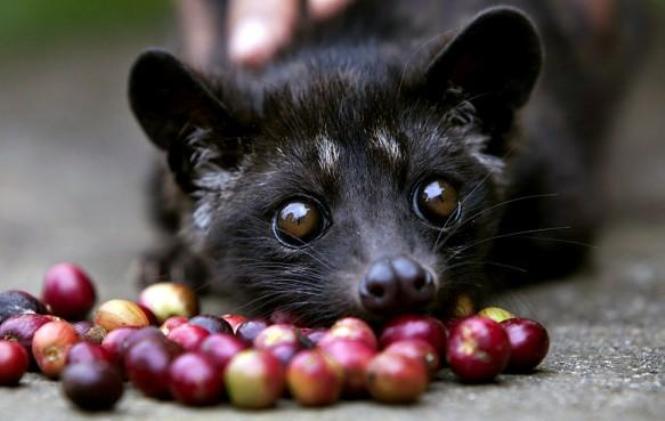
 Sweet tea is ubiquitous throughout the Middle East, but the go-to drink to fuel us through the workday is coffee. Here’s a stone-cold fact for you java freaks: the costliest coffee in the world is shit. We’re not talking Turkish-brewed or cardamom-laced Arabic. But kopi luwak, or cat poo coffee.
This is no swipe at a Seattle-based chain, either: Kopi Luwak coffee is the world’s most expensive, but its price is not its most startling quality. The beans for this brew come from animal poop. Turns out it is a cruel coffee too.
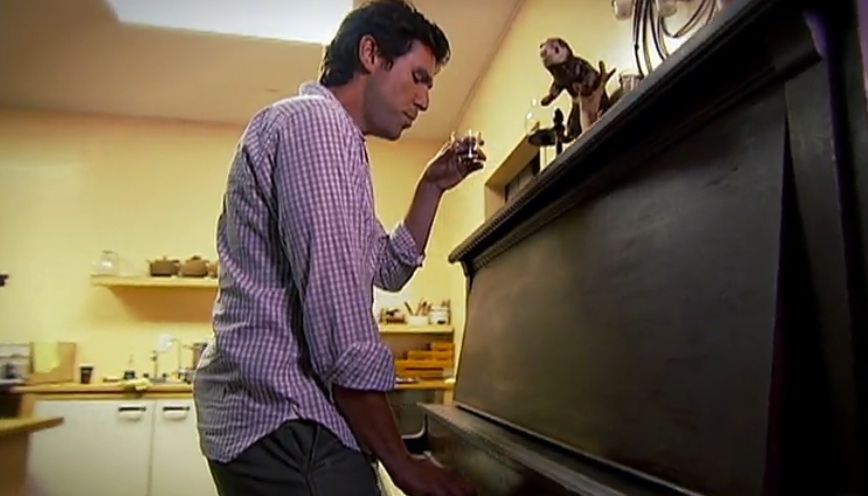
Watch the video below of the supposedly “wild” sourced civet coffee animal abuse. Above is a screenshot of the video where the host drinks a cup of kopi lewak coffee and sings its praises on the piano.
I ran across this stuff in a story in the Economist, it’s a bona fide commodity. Kopi Luwak starts with high-quality beans, which are fed to palm civets, cousins to the mongoose. The beans are digested and collected when they come out the other end. I kid you not.
“Processed” beans are then cleaned, fermented, dried, roasted, and finely ground. Once brewed, a cup can sell for $80 bucks.The appeal seems to be a unique flavor imbued to the beans by chemical reactions in a civet’s stomach. (Here’s where I decide to switch to tea.)
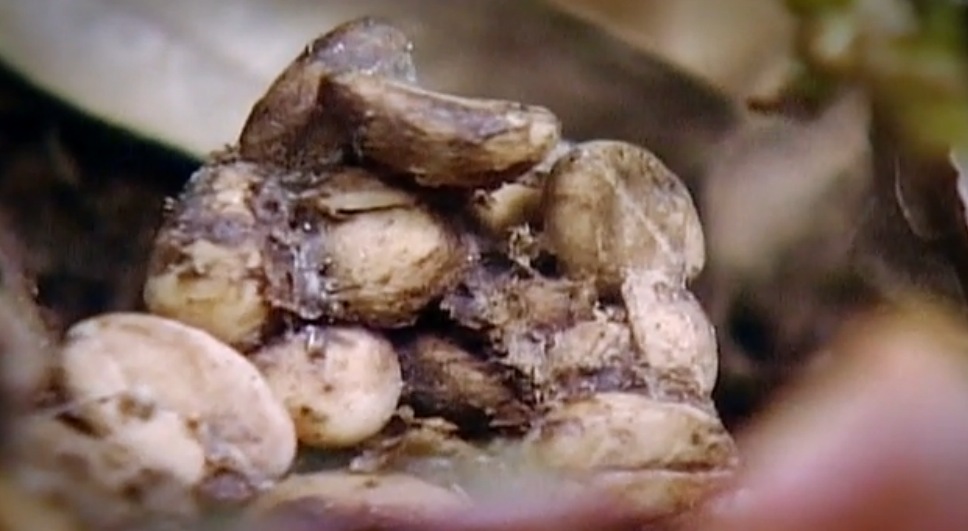
Screenshot above from Animal Planet video on kopi lewak coffee
Price fluctuates based on availability as only about 100 pounds are produced each year. Seems coffee connoisseurs will dig deep for their favorite brew, this link describes the planet’s most expensive coffees.
It’s gained extreme popularity, which invites a robust secondary market in counterfeit trade, especially since there’s no way for a consumer to reliably differentiate between real and fake Luwak.
Enter Japanese chemist Eiichiro Fukusaki.
Along with colleagues in Indonesia, he’s developed a chemical test that can detect “civet essence” in coffee. According to his study published in the Journal of Agricultural and Food Chemistry, the team tested batches of civet feces and undigested beans taken from plantations in Bali, Java and Sumatra.
They roasted and ground the beans, then mixed them with water, methanol and chloroform to extract those chemicals that give coffee its flavor. The extracts were then tested to see what they contained.
Here’s an animal “lover” from Animal Planet enjoying a cup of what he says is “most complex coffee that money can buy.”
$400 a pound for this coffee. “and it’s so natural.”
Kopi Luwak turns out to have chemical fingerprint composed of four substances: citric acid, malic acid, pyroglutamic acid and inositol in different ratios to traditional coffee. Those differences are so large that even a 50:50 blend of civet coffee to traditional could be identified, allowing detection of adulterated brews.
Interesting science, but it’s unlikely to find wide commercial application. The discovery may instead inspire counterfeiters to tweak their products with chemical additives, as if I needed another reason to avoid this drink.
I mentioned this story to a food-importer friend. “I’ve heard about shit beans before”, said Agnes, “Maybe they should start this business using the human digestive system. I’m sure many people in poor countries would sign up and eat coffee instead of a handful of rice each day. And be paid for their crap.”
I wonder if the Economist will run that story.
Meanwhile the office guy in Amman, Jordan where I live, boils grinds all day, serving up thick sludge in tiny cups or dissolving equal parts Nescafe and sugar for a faster kick.
Update 2024: this coffee is still being sold in Indonesia. The animals are still suffering, so who is buying?


Dressed to Kill: Vogue’s Profile of Asma al Assad
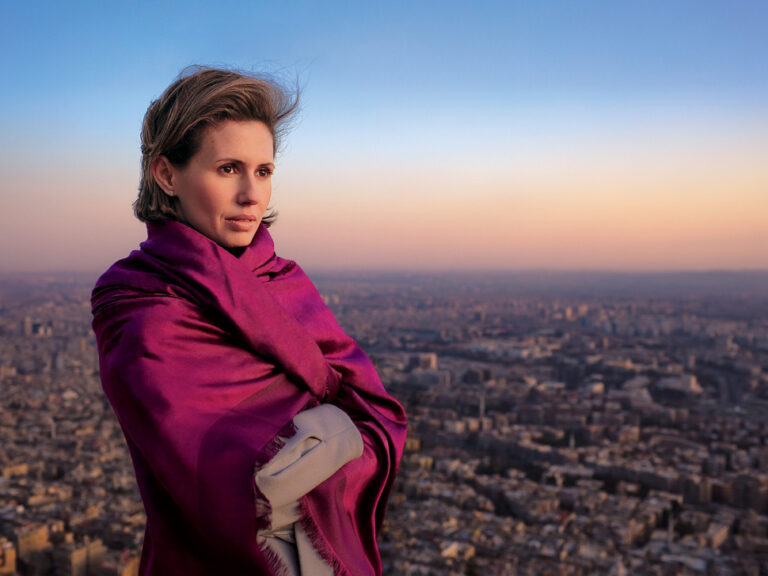
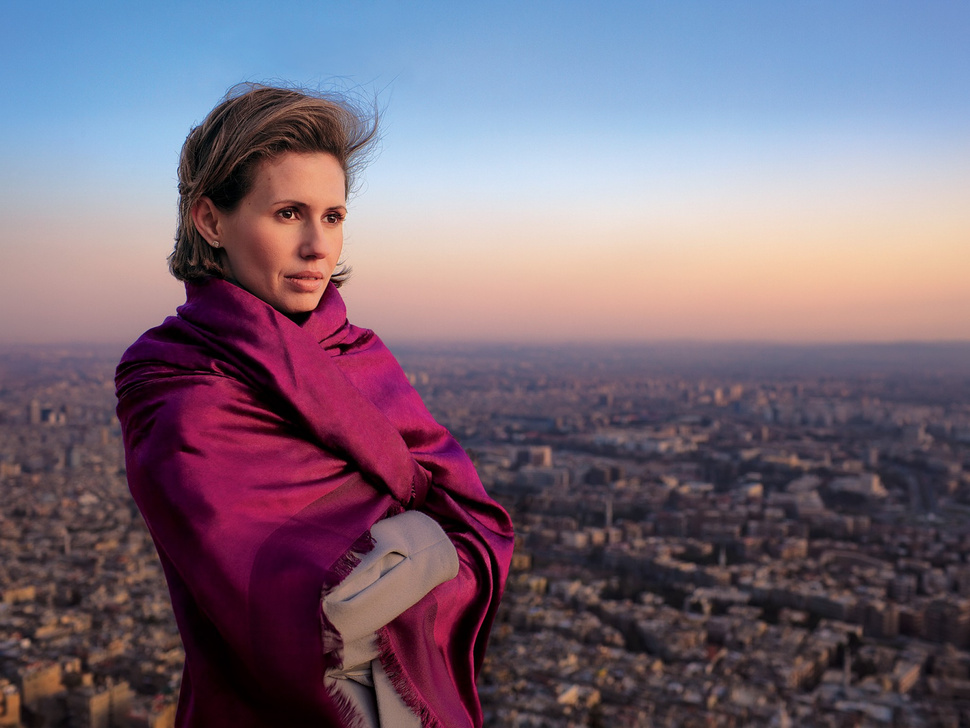
A glowing profile of the wife of Syrian president Bashar al-Assad written two years ago for a major fashion publication
Written by Joan Juliet Buck for Vogue magazine, the article entitled “A Rose in the Desert” serves as a litmus test for cynicism when considered against the backdrop of mass-murder, torture and imprisonment of tens of thousands of Syrians that has occurred since the story was first published.
In March, 2011, the 3,200-word story on Asma al-Assad praised the “wildly democratic” family-centric couple who vacation in Europe, nurture Christianity, and leave their security guards at home when cruising around Damascus with Brad and Angelina. Buck declared that “Syria is known as the safest country in the Middle East” and described the couple’s aim to give Syria a “brand essence.”
With catastrophic mistiming, the story was published online right before Syria’s Arab Spring erupted. It was later revealed to be the result of a coordinated public relations effort managed by Brown Lloyd James, the same firm that handled media spin for Libya’s Qaddafi regime.
The profile became a heated topic among journalists and activists, and Vogue quickly removed the article and all references to it from their website. The magazine, published by Condé Nast, boasts over 11 million readers. It later defended the story saying it was “a way of opening a window into this world a little bit,” with a qualifier that the nation under Assad was “not as secular as we might like.” The URL is still visible, but a click gets you this image:
 Last week, news and gossip website Gawker reprinted the full article, without author or Vogue approval. It then went down from Vogue. But we found the last copy online and filed it here. You can download the PDF here.
We have found the first paragraphs from the original Vogue article:
Asma al-Assad is glamorous, young, and very chic–the freshest and most magnetic of first ladies. Her style is not the couture-and-bling dazzle of Middle Eastern power but a deliberate lack of adornment. She’s a rare combination: a thin, long-limbed beauty with a trained analytic mind who dresses with cunning understatement. Paris Match calls her “the element of light in a country full of shadow zones.” She is the first lady of Syria.
Syria is known as the safest country in the Middle East, possibly because, as the State Department’s Web site says, “the Syrian government conducts intense physical and electronic surveillance of both Syrian citizens and foreign visitors.” It’s a secular country where women earn as much as men and the Muslim veil is forbidden in universities, a place without bombings, unrest, or kidnappings, but its shadow zones are deep and dark. Asma’s husband, Bashar al-Assad, was elected president in 2000, after the death of his father, Hafez al-Assad, with a startling 97 percent of the vote. In Syria, power is hereditary. The country’s alliances are murky. How close are they to Iran, Hamas, and Hezbollah? There are souvenir Hezbollah ashtrays in the souk, and you can spot the Hamas leadership racing through the bar of the Four Seasons. Its number-one enmity is clear: Israel. But that might not always be the case. The United States has just posted its first ambassador there since 2005, Robert Ford.
“It’s a tough neighborhood,” admits Asma al-Assad.
It’s also a neighborhood intoxicatingly close to the dawn of civilization, where agriculture began some 10,000 years ago, where the wheel, writing, and musical notation were invented. Out in the desert are the magical remains of Palmyra, Apamea, and Ebla. In the National Museum you see small 4,000-year-old panels inlaid with mother-of-pearl that is echoed in the new mother-of-pearl furniture for sale in the souk. Christian Louboutin comes to buy the damask silk brocade they’ve been making here since the Middle Ages for his shoes and bags, and has incidentally purchased a small palace in Aleppo, which, like Damascus, has been inhabited for more than 5,000 years.
The first lady works out of a small white building in a hilly, modern residential neighborhood called Muhajireen, where houses and apartments are crammed together and neighbors peer and wave from balconies. The first impression of Asma al-Assad is movement–a determined swath cut through space with a flash of red soles. Dark-brown eyes, wavy chin-length brown hair, long neck, an energetic grace. No watch, no jewelry apart from Chanel agates around her neck, not even a wedding ring, but fingernails lacquered a dark blue-green. She’s breezy, conspiratorial, and fun. Her accent is English but not plummy. Despite what must be a killer IQ, she sometimes uses urban shorthand: “I was, like. . . .”
“We did not ask permission beforehand,” Gawker editor John Cook told Mother Jones. “I think it’s important that people are aware of how Vogue and (Editor-in-chief Anna) Wintour…felt about the Assads, and characterized the Assads. It came out almost exactly as the regime embarked on its campaign of murdering women and children…And now in the context of the United States possibly going to war with Syria, it’s important for people to see how the magazine portrayed them…[Wintour] was pushing her people to give cover to a tyrant and murderer.”
Cook continued, “There’s a very important public interest behind publishing [the profile] in a vastly different context than the one it was originally presented in. Our goal was to make sure that the actual artifact is readily available.”
Bashar is not the only Arab leader with a comely, intelligent and media-savvy wife with Western public appeal (London-born Asma studied computer science at King’s College, worked as a banker for J.P. Morgan, and sports European designer clothes).
Spinning the similarities in west-leaning lifestyle and fashion makes for easy “Oprah-fying” of these women which also reflects positively on their men. It’s a tactic borrowed from American and European politics, and it flies both ways (recall Hilary Clinton’s damaging admission that she chose to not stay home and bake cookies, as example).
Was this a factual profile of a contemporary political figure or blatant propaganda to dress up the dictator and his wife into a sanitized, Middle East “lite”? Read the article yourself (link is here) and let us hear your view.
Chipotle Takes on Big Food in Haunting Commercial, The Scarecrow

 Eerie and beautiful, The Scarecrow is a powerful anti-factory-farming message served up in a new commercial that barely refers to what’s actually being pitched. But the intent is as subtle as a brick to the head: Chipotle Mexican Grill is taking on Big Food.
Tigris River Flotilla Puts Iraq Back in the News
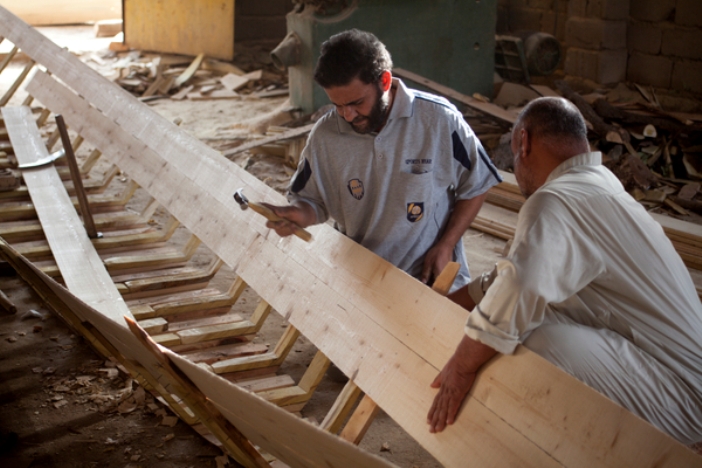
On Sunday, September 15, a fleet of traditional and modern Mesopotamian boats will sail down the Tigris River on an historic voyage of celebration and learning.
Cilantro can clean water
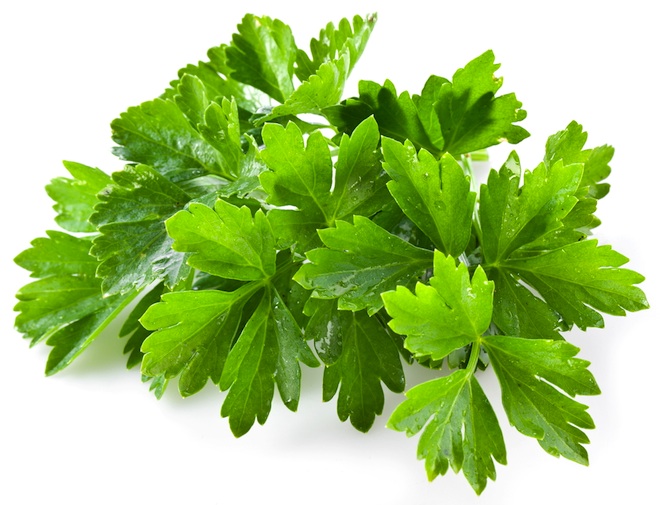
So addicted to technology, we have forgotten that nature has an answer to just about everything – including water purification. Douglas Schauer, a PhD has shown that cilantro – a leafy herb used in Middle East cooking – can clear toxins from contaminated water.
Eschewing the current activated carbon method of water purification, Schauer from Ivy Tech Community College has been working with what he calls biosorbents to clean contaminated water.
Less costly than typical water purification methods, biosorbents are low-cost alternatives such as microbes and plants that are readily available in nature.
While presenting his findings at the 246th National Meeting & Exposition of the American Chemical Society that closed yesterday, Schauer said that cilantro, which is also known as coriander, Chinese or Thai parsley, can remove toxic heavy metals with ease.
“Cilantro may seem too pricey for use in decontaminating large amounts of water for drinking and cooking,” Schauer said.
“However, cilantro grows wild in vast amounts in countries that have problems with heavy-metal water pollution. It is readily available, inexpensive and shows promise in removing certain metals, such as lead, copper and mercury, that can be harmful to human health.”
The structure of the other walls of Cilantro’s microscopic cells have the ideal architecture to absorb heavy metals, Physorg reports. Parsley and culantro have similar properties.
Schauer proposes to pack the cilantro into packets that are similar to tea-bags, or the herb can be packed into water filter cartridges.
With so many people without clean drinking water throughout the Middle East, a dedicated awareness campaign could go a long way to informing them of natural methods of purifying one of our planet’s most necessary and increasingly precious resources.
:: Physorg
Image of cilantro, Shutterstock
Israeli Parliament Plans to be Solar Secure by 2014

Years after the plan was first suggested, the Israeli Parliament building will finally boast a large rooftop solar array that will give the Knesset a sound measure of energy security by 2014.
World’s Biggest 100 MW Geothermal Plant Built by Israel’s Ormat in New Zealand


The New York Stock Exchange-traded company Ormat Technologies (NYSE:ORA) has built what’s being cited as the world’s largest geothermal plant.