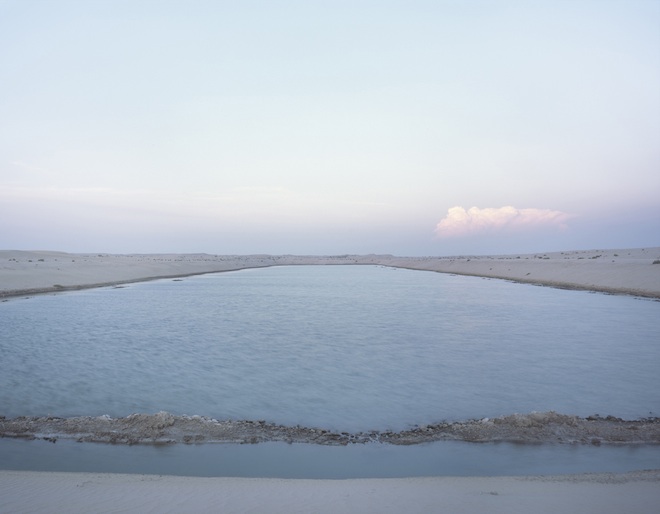
In my last post I described how I had discovered the remains of a defunct development known as the ‘Arabian Canal’ in the desert some 30km outside Dubai. This time I’m featuring one of these remaining waterways which is still, mysteriously, flooded, despite having been abandoned some 4 years ago.
Elephant Ivory Racket Linked to Westgate Mall Terrorists
We interviewed Karl Amman about illegal wildlife trafficking at the Westgate Mall in Nairobi about two years ago. Since then, increasingly violent poaching incidents have been linked to terrorist groups such as al-Shabaab, which recently claimed responsibility for an armed attack on the Israeli-built shopping center in Kenya.
Hong Kong Bans Shark Fin Soup and Bluefin Tuna
Sharks hauled from the Persian Gulf provide fodder for shark fin soup in Hong Kong, and the endangered bluefin tuna is popular there too. But now the government has instituted a new ban that could reduce consumption of both.
Joshua Tree Light Pollution Dims BrightSource Energy’s 500MW Palen Solar Project
Slated for a site 36 miles west of Blythe, California, the 500MW Palen Solar Plant – a collaborative project between BrightSource Energy and Abengoa Solar – is meeting resistance from critics concerned about its light pollution.
Sun’s Magnetic Field Will Soon Reverse – Be Prepared for the Flip

The sun’s magnetic north and south magnetic poles are expected to reverse over the next few months. We’ve witnessed only a few such reversals and are not entirely sure what effects they may cause. Read more for an explanation of what we do know about solar and terrestrial magnetic field reversals.
White label sustainable aerosols from cans
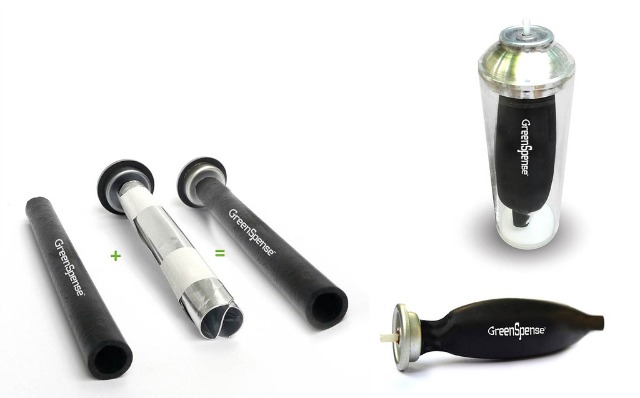
They squirt, spray and lather. Some even give lifesaving bursts of medicine. But truth be told, the aerosol spray container hasn’t changed much in the last 60 years, says Gadi Har-Shai, CEO of the Israeli startup GreenSpense. Traditional aerosols are polluting and dangerous. So he invented a new alternative, the eco-sleeve, using nanotechnology.
“This will definitely contribute to a better and safer world,” he says.
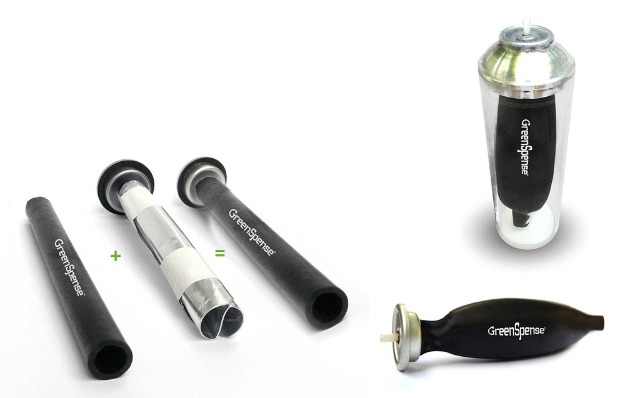
Instead of getting propelled by compressed air in a metal container, the product is air-forced from a sleeve that sits inside any kind of container, much the same way a bagpiper squeezes air from the bladder of the instrument through the pipes.
“Imagine a flexible bag inside the product. Over the bag we have mounted a special sleeve that presses the bag in order to push material out,” explains Har-Shair.
“The special elastic sleeve is based on nano-technology and it is very thin while generating high pressure. There is zero pressure on the external container and all the pressure is directed to the center. Now we can eliminate the traditional metal container,” says Har-Shai.
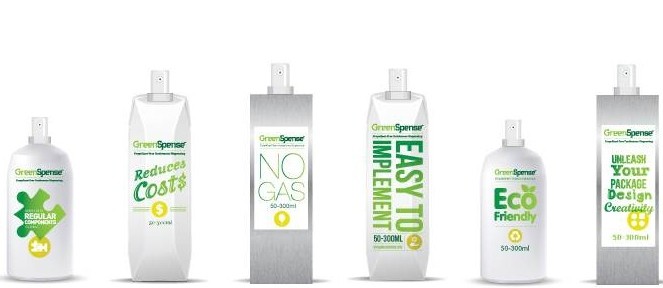
This solution is less costly than metal, and could eliminate the hundreds of thousands of tons of volatile organic compounds and carbon emissions coming from aerosol cans each year.
Because the GreenSense sleeve squeezes the product inward rather than outward, the packaging can be made from any kind of material, including biodegradable plastic or recycled cardboard. The shape can even be square – something not possible in the past due to the physics of compressed air.
“You can have a square, or just about any shape –– not just cylindrical,” says Har-Shai.
Banishing ubiquitous aerosols
More than three billion aerosol cans around the world use a standard cylindrical metal canister surrounding an inner compartment, or bag, under extreme pressure. They’re everywhere.
The eco-sleeve will be ready for market by the end of this year.
“They are used in personal care, household products, pharmaceuticals and for technical products, nasal sprays, veterinary products and so on,” Har-Shai says.
“For personal items, we’ve got shaving creams, sun care, deodorants –– some 12 billion products produced every year around the world. This is a big industry that started around World War II but the methods remain the same,” he explains.
“The eco-sleeve mounts over standard pouches used with current dispensers,” he says. “It generates high pressure to provide the usual consumer experience of continuous dispensing, replaces the gas, and as a result, eliminates the need for cylindrical, pressurized metal containers.”
Whereas aluminum aerosol cans cannot be recycled, Har-Shai says the eco-sleeve, made from rubber and other ingredients, can be downgraded to another use.
GreenSpense launched its eco-sleeve this year in Paris at the Aerosol & Dispensing Forum, while the company itself was founded in 2011 in the Misgav Trendlines incubator. Some $750,000 has gone into development so far, and the final product is expected to be ready by the fourth quarter of this year.
Dream clients include L’Oreal, Gillette and Beiersdorf, the company that owns Nivea. PepsiCo has expressed interest, says Bar-Hai.
“We got a lot of attention and have started discussions with major companies, and in parallel are continuing development,” says Har-Shai, an engineer with consulting and development experience at large Israeli companies including Iscar, Scitex and Objet.
The idea was his own. “I started asking myself questions about aerosols and eventually it rolled into a large project.”
Will Tesla’s New Model X Crack the Middle Eastern Market?

Tesla has received both critical acclaim and financial gain for its successful Model S sedan, and has followed this up with the development of the Model X SUV. At the same time, Tesla has planned to rapidly grow their supercharger network throughout North America and Europe and expand into the Asian market. Where does this leave Tesla in the Middle East?
Hundreds of Dead Cormorants Found Slaughtered Near Oman Border
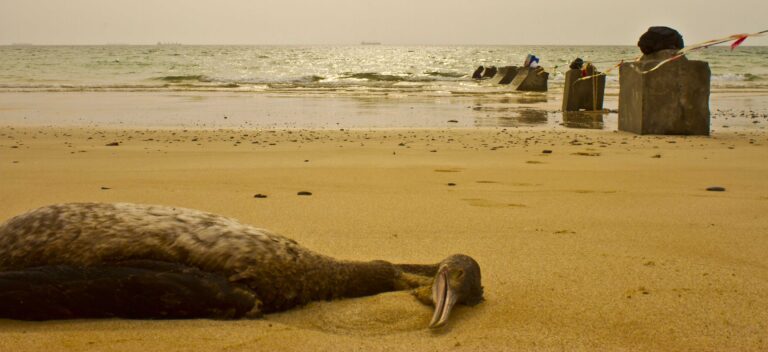
We were really troubled by this latest tip: hundreds of dead cormorants were found dead on a beach, about an hour from Dubai, according to a local photographer. A byproduct of fishermen’s nets? See the exclusive photos.
Make Simit, the Iraqi Bagel with Sesame Seeds
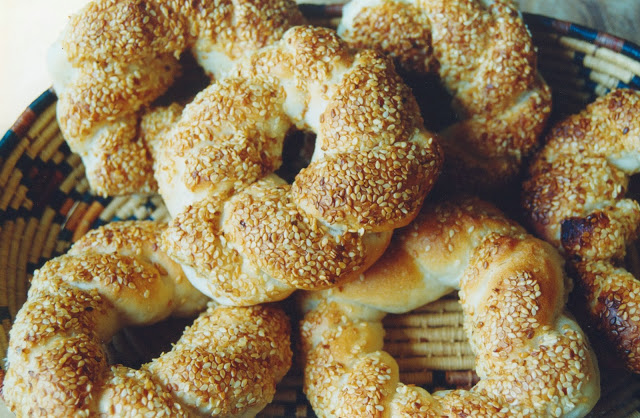
Simit (also spelled simeat) are well known throughout the eastern Mediterranean countries, especially Turkey. Despite some differences, they are all shaped as rings and are generously encrusted with sesame seeds. These could very well be the start of what is known today as the Jewish bagel.
The authentic varieties, like Iraqi simit, are closely related to bagels, in that they are poached in hot water before baking.

In fact, the name of these pastries originally came from this practice because the root verb samata (سمط) means ‘dip briefly in hot water.’ This is a baking technique deeply steeped in history. In one of the extant medieval Arab cookbooks, a recipe for ring cookies called ka’k instructs that the dough be shaped into rings, which are first carried by a rolling pin and dipped briefly in boiling water and then arranged on a tray and baked in the brick oven called a furn.
In Iraq, simeat are shaped into attractive small twisted rings, encrusted with lots of fragrant toasted sesame seeds, crispy in crust and chewy in texture. They are bought from wandering vendors who arrange the simits on baskets in tall piles and carry them on their
Recipe for simit:
Simit makes an excellent light snack. Here is an easy way to make them without having to parboil them before baking. (Makes 28 pieces)
[box style=”0″]
3 tablespoons dried yeast
2 tablespoons sugar
1 cup (250 ml) warm water
10 cups (2½ lb/ 1.25 kg) bread/strong flour
1 tablespoon salt
¼ cup (60 ml) oil
3 cups (715 ml) warm water
For glaze: 1 egg-white whisked in 1 tablespoon water
Sesame seeds, dry toasted, for sprinkling
[/box]
1. Oven heat 450°F/ 230°C/ gas mark 8.
2. Dissolve yeast and sugar in 1 cup (250 ml) warm water, and set aside for 5 minutes.
3. In a big bowl, combine flour and salt. Make a well in the middle, and then pour in yeast mixture, oil and 3 cups/715 ml warm water. Incorporate liquids into flour in a circular movement using a wooden spoon. With oiled hands, knead for 6 to 7 minutes until you get a smooth dough. Let rise in a warm draft-free place for about 1 hour.
4. Punch down dough, and divide it into 28 portions. Let it rest for about 10 minutes, covered.
5. On a slightly oiled surface, form into simit rings as follows. Divide each piece into two parts. Roll each part into a rope about 9 in/23 cm long (if dough feels elastic and springs back, let it rest for 5 minutes). Lay 2 ropes next to each other, and wind one rope around the other. Curve twist into a circle, matching ends to form a continuous ring. Make sure to seal the ends very well to prevent them from opening while rising and baking. Put shaped pieces aside on a flat surface. After making about five, brush them with the glaze, and dip each, face down, in the toasted sesame. Arrange rings on a greased baking sheet. Leave space between them to allow for expansion. Repeat with other batches.
6. Let rise in a warm place for 40 to 45 minutes, covered with a kitchen towel.
7. Bake in the middle of the preheated oven. To create a good crust, spray the simit and oven with water. Repeat about 2 to 3 times, for the first 5 minutes. Total time of baking is about 15 minutes or until golden brown. Serve immediately or let pieces cool off in a wicker basket or on a rack. Cooled ones can be kept in plastic bags in the refrigerator or freezer. Heat in the oven as needed.
I sometimes break away from tradition and make simit with cheese, olives and herbs. Quite tasty and aromatic.
Here is how to make them:
Herbed Simit with Cheese and Olives
Prepare dough as given above. After dough rises, punch it down, and add to half of it the following:
¾ cup (4 oz/115 g) pitted/stoned and chopped olives
½ cup (2 oz/60 g) crumbled feta cheese or shredded mozzarella cheese
¼ cup (½ oz/15 g) each chopped fresh mint, parsley, and dill
Knead the ingredients into the dough. Let it rest for 10 minutes, and then divide it into 14 portions. Shape and bake as described above.
This post is by Nawal Nasrallah, author of Delights from the Garden of Eden and more
For more treats from Iraq, try watermelon rind jam, and Iraqi stuffed grape leaves
Ottoman Palaces Converted into Gorgeous Boutique Efendi Hotel
Uri Jeremias peered over the roof of his restaurant back in 2001 and fell in love with a large abandoned building. It wasn’t for sale, but the restaurateur persevered, and eventually converted the Ottoman era palace into a resplendent boutique hotel.
Israeli Teenager Designs Mobile Pedi-Sukkah on a Tricycle
We love everything about Sukkot, especially the philosophy and process behind the inspiring sukkah (booth) that Jews build during this week-long Autumnal holiday. But we’ve never seen one on the back of a tricycle.
Iran Unveils Plans to Launch Persian Cat into Space, PETA’s Claws Out
Iran said it was going to send a monkey into space in 2011, but that didn’t happen. Now a top space official has told the state news agency IRNA that it’s sending a Persian cat instead.
Sukkah Design That’s Natural, Gorgeous and Kosher
Over here in the Cradle of Humanity Jews are ardently building their sukkahs. The serious ones are already finished. If you happen to be in Israel, or any other country with a sizeable Jewish population look out for small, fragile looking huts. Jews build these sukkah huts every year for Sukkot, or the Hebrew Holiday of Booths.
Tel Aviv Couple Find Horse Meat in their Paella
Although the international furor around horse meat has died down since it first escalated earlier this year, the shock is all too fresh for a Tel Aviv couple who recently discovered chunks of it in their paella.