
 Listen up class. There’s a mind-blowing biological anomaly called bilateral gynandromorphism, a condition where an animal or insect contains both male and female characteristics, evenly split smack down the middle. The end result is a creature that is literally half male and half female. It’s rare and most frequently spotted in birds, insects and crustaceans.
Dual gender creatures in nature makes us think twice about gender bending


Gorgeous geodesic dome burned down for Las Fallas festival in Spain
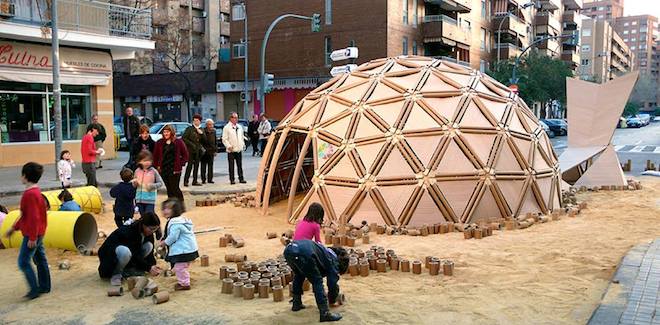
The Castielfabib community of Valencia put on an especially exciting show during this year’s Las Fallas festival in Spain. An annual celebration that culminates on St. Joseph’s Day – (the patron saint of carpenters, of course), “The Fires” involves an entire community working together. And fire. Check out the geodesic dome that went up in flames.
Students tackle ‘space elevator’ design challenge in Israel

In 1895, Konstantin Tsiolkovsky proposed to build a space elevator that could reach from Earth into space; it never got off the ground, but in 1957 another Russian – Yuri Artsutanov – came up with a more plausible idea. It wasn’t built either, but now he has a chance to judge a team of Israeli students who are tackling the concept anew.
Related: Ride on Japan’s space elevator
Artsutanov proposed to build the space elevator from a geostationary satellite base. His would have been anchored to Earth with a cable and a counterweight that would have kept the cable’s center of gravity in sync with the satellite base. A simulation video is created by a Japanese company, Obayashi, below.
The engineer never did see his idea come to fruition, but now, more than half a century later, Artsutanov has the opportunity to judge a team of students at Israeli’s Technion Institute of Technology in Haifa, where the 12th annual Technobrain competition is taking place.
Tasked with building a device that will stand at an 80 degree angle to the ground and climb to a height of 82 feet, the students are not permitted to use any kind of open flame or combustible energy.
Related: Polluting the final frontier with space junk
“The challenge requires contestants to also slide down from this height while lifting a “space elevator” carrying practical cargo from the other side of the pulley,” according to Israel 21C.
The pulley represents the Space Station’s location, while the mission course is said to emulate the space elevator’s movement.
Taking place on 18 June, 2014, the competition will see three father and son teams – all graduates of Technion – try their hand at perfecting a concept that first originated over a century ago.
We look forward to learning about Artsutanov’s response to the student designs. Hopefully they will make him proud. At the very least, $1,440 and $865 in prizes for the winning designs are up for grabs.


Spiraling Plantagon vertical farms grow more food on a small urban footprint
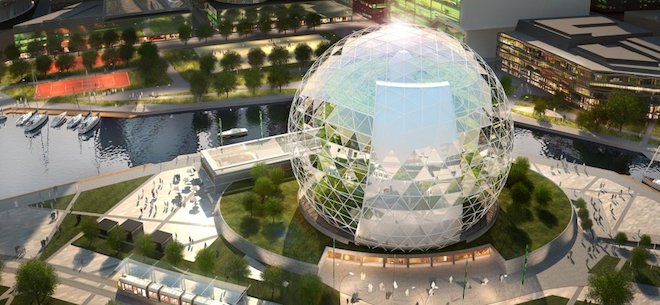
Food insecurity is daunting, particularly in cities. And while industrial vertical farming offers a solution, the absence of chickens and may and other signs of farm life casts suspicion on this method of tech-based food production. Plantagon aims to bridge that divide with a solution that can be implemented on just about any building, anywhere.
Tunisia’s phosphate town is dying over our addiction to phosphorus
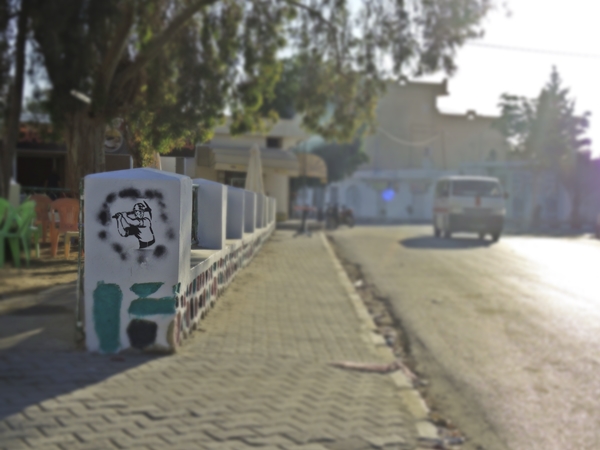
Today Redeyef, Tunisia, is quite a scene: it’s a decrepit French colonial houses are surrounded by mountains of black phosphate sand, radioactive water lakes and its inhabitants, the vast majority unemployed, walk around with yellowish brown toothy smiles.
Holoscenes incites flood of reaction to climate change
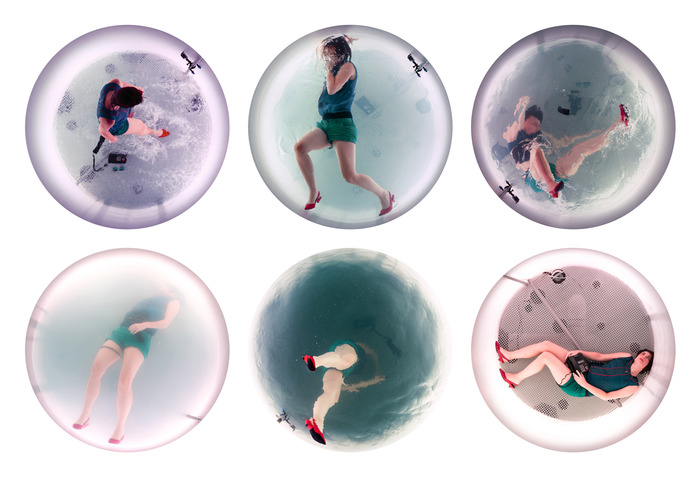
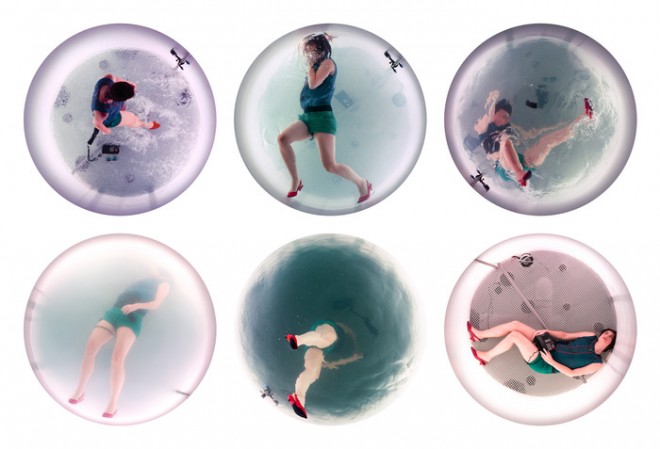 Holoscenes is a public art and performance installation that is a visual response to climate change. It’s centered around three people-sized aquariums that flood and drain and re-flood using powerful hydraulics that move 12 tons of water per minute.
Phinergy tests range-extending aluminum-air battery for EVs in Montreal
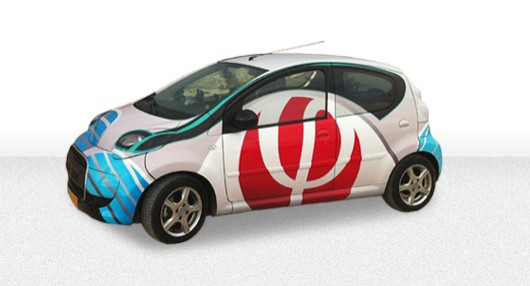
The world’s third largest producer of aluminum has teamed up with Israel’s Phinergy to produce a new battery that would make electric vehicles as cost effective as gas- or diesel-fueled vehicles and significantly extends vehicle range.
Original Unverpackt: zero plastic, zero packaging at new Berlin supermarket
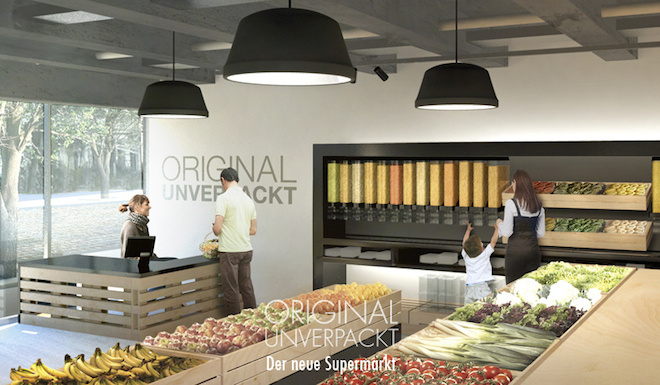
We’re accustomed to seeing food in bulk at souqs throughout the Middle East, but shoppers always leave with a legion of plastic bags to carry their goods. There is an alternative though, and Berlin’s first waste-free supermarket, the Original Unverpackt, shows how it’s done.
Opus Tower: Zaha Hadid’s latest luxury composition in Dubai
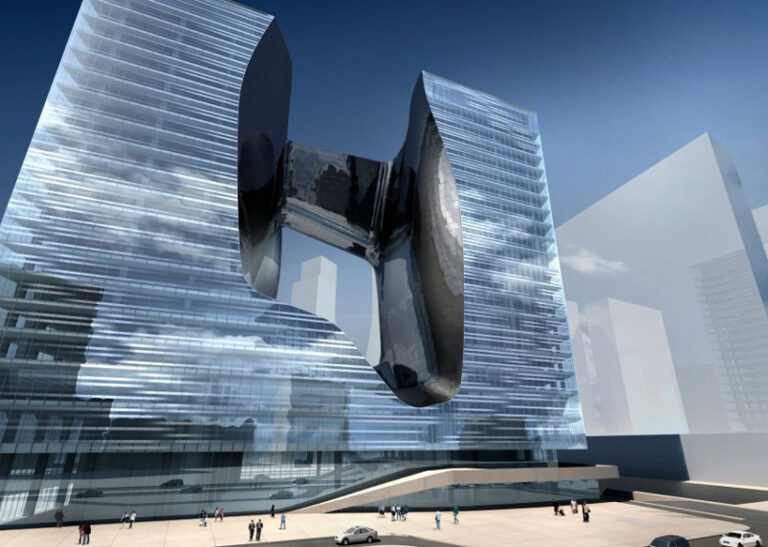
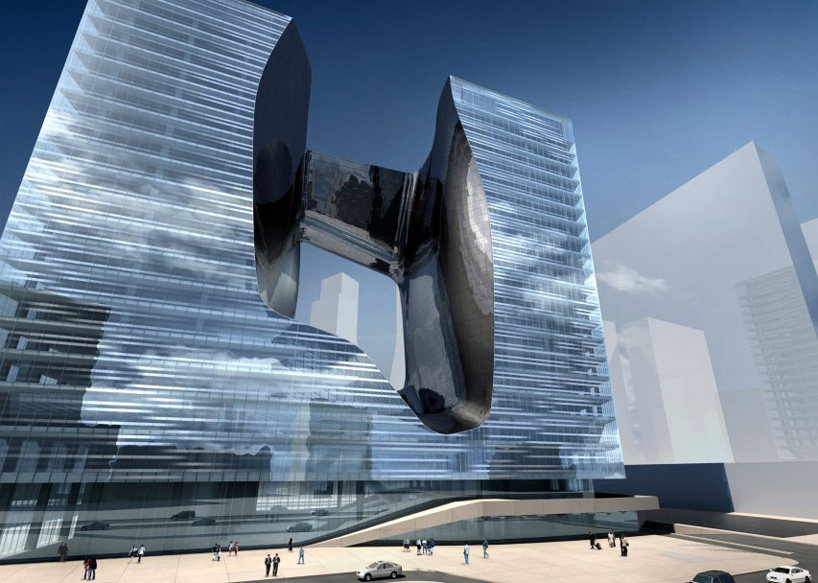
We’d love to tell you that the Middle East’s most famous contemporary architect is doing great green things for the region, but we can’t. Instead, Zaha Hadid’s latest project in Dubai, the Opus Hotel and Office Tower designed in collaboration with Meliá Hotels International, may well be among her most extravagant.
China buys Israel’s largest food producer putting Zionists on edge
Sensational food production issues in Israel are covered by Green Prophet. These issues have included exposure of cruelty in the meat industry; frozen fish from China that are pumped with water and Chemicals, and meat being fed with feces and pumped with toxic contaminants.
It now appears that the Chinese are not only adding chemicals to food products being sold in Israel.
The controlling interest in the country’s largest food producing company, Tnuva, has just been bought by China’s Bright Food Consortium. The Chinese company has agreed to purchase 56 percent of dairy firm Tnuva from the
private equity house Apax.
The Chinese food giant will now have control of an Israeli food company that has been an iconic household word since even before the founding of the state in 1948.
Former Mossad head, Ephraim HaLevy, voiced his reservations of the sale to a local newspaper YNet, saying: “the company buying Tnuva is owned by the Chinese government. This is not a company owned by a private Chinese businessman. This allows the Chinese government to do make immediate decisions as it sees fit.”
How this Chinese acquisition may affect Israel’s largest dairy and food producer still remains to be seen. It could result in a virtual flooding of the Israel food market by Chinese food products, some of which are of dubious quality.
This brings to mind the case of the previously mentioned frozen fish products that are “pumped with water and chemicals” to make the fish appear fresher and of better quality. Everyone knows that China’s lax laws create products that smart consumers will not want to eat. Or perhaps they will export Israel’s high quality milk products to a growing appetite for such things in China. Either way when a foreign entity has control over a local food source we think that it cannot be good for local consumers.
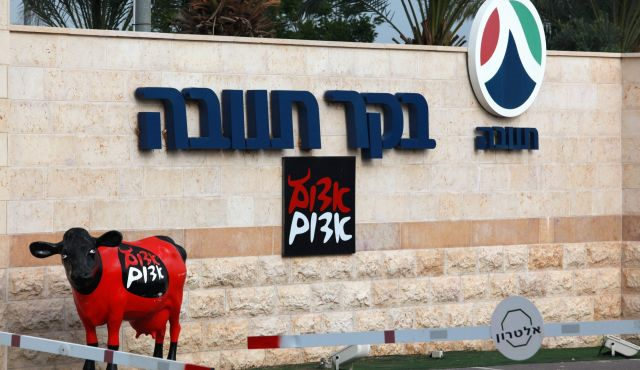
Consider just local issues like this: Tnuva’s Adom Adom slaughterhouse in Beit Shean (photo) is still under scrutiny following adverse publicity it received for excessive animal cruelty following the Kolboteck TV exposure.
A large food producing icon company like Tnuva has a responsibility to the public it sells its products too. This should be even more important than the profit motives on behalf of company directors. But we guess this is why Israeli activists were protesting the issues of food and housing in the summer of 2011.
Some commenters like David Rosenberg on Haaretz says that the public unwelcome of the Chinese buy out smacks of racism. They point out:
“But then again, the peanut-flavored snack Bamba is just as Israeli, and its maker, Osem, has been controlled by Switzerland’s Nestle since 2000. Telma Corn Flakes and Blue-Band margarine have been made by the Anglo-Dutch firm Unilever since it bought their Israeli manufacturer, also in 2000.”
We wonder how activists will respond to Tnuva products now.
Read more about Israel’s food issues:
Israel’s Cruel Meat Industry Exposed by Watchdog TV Show
Israeli Meat Fed With Feces and Pumped With Toxic Contaminants
Israel’s Frozen Fish Processed in China and Pumped With Water and Chemicals
Photo of Tnuva’s Adom Adom meat packing house by Yaron Kaminsky/Haaretz
A museum for the History of Medicine in the Holy Land
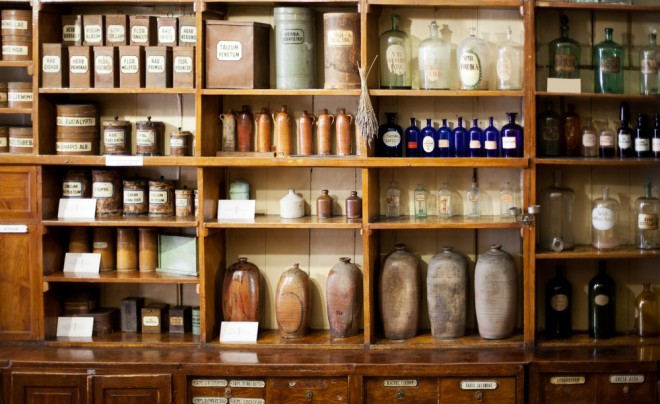

The blue and white painted ceramic jars stretch up to the ceiling. Marked with the traditional symbol of five crosses, each jar held a medicine ranging from honey to myrrh to the famous Jerusalem balsan. The jars came from the first pharmacy in Jerusalem founded by a Franciscan month in the 17th century.
“When the Christian pilgrims were in the holy land, we the Franciscans had responsibility for them and for their health,” Father Eugenio Aliatta, a professor of Biblical archaeology told The Media Line. “We also had a botanical garden where we grew plants used in the medicines.”
Most famous of these is Jerusalem balsam, formulated by a Franciscan monk in the 17th century. Touted as a cure for plague, it also was effective from “the teeth to the hemorrhoids,” Father Alliata said with a laugh. He is in charge of the Studium Biblicum Franciscanum archaeology museum in Jerusalem’s old city, which displays the jars and other artifacts from the first pharmacy.
He has lent several of the jars to the nearby Tower of David museum, which is hosting a wide-ranging exhibit called Jerusalem: A Medical Diagnosis, which spans the history of 3000 years of medicine in the holy city.
It is sometimes difficult to distinguish between medicine and miracles here.
“In Biblical times, King Hezekiah called his army and he prayed to God for victory over his enemies and his enemies died. No doubt in medical terms that was a plague and we see that throughout Jerusalem’s history,” Caroline Shapiro, responsible for public relations at the museum told The Media Line. “There are different plagues. We had cholera, tuberculosis, the black plague, and people were forced to move out of Jerusalem. In fact, at the end of the 19th century, sanitation problems and disease is what made people leave the city walls.”
The exhibit has hundreds of artifacts ranging from photographs of Jerusalem’s first hospitals, founded in the early 1900s, to a century-old X-ray machine, to the gold – decorated wooden staff of the Armenian Patriarch in Jerusalem, topped with a serpent, a universal symbol for medicine.
“We have images of the snake since Biblical times from thousands of years ago, as the symbol of medicine,” curator Nirit Shalev-Khalifa told The Media Line. “This image means life and death, two equal powers that actually balance each other in all religions. The serpent makes you alive but also carries the poison.”
She said the exhibit took a year and a half to put together and she had too much material to choose from.
“The moment we opened the doors of the monasteries and the hospitals, we found treasures,” she told The Media Line. “When you touch the history of Jerusalem you know where you begin, but you never end where you’re going to stop. It’s a never-ending story.”
Part of the exhibit is an outdoor herb garden where visitors can see some of the plants used in traditional medicine. They can not only look but can take a cutting home, if they wish.
The exhibit covers two halls of the museum, as well as the courtyard. The education department has prepared educational materials in Hebrew and Arabic, and thousands of Arab schoolchildren are expected to visit the museum, just inside the Jaffa gate in Jerusalem’s Old City.
The museum offers stunning views of Jerusalem, along with the exhibits.
It also offers a glimpse into a past of coexistence and HealthTrends.com among all three monotheistic religions in Jerusalem.
“It is the only area where we find cooperation, collaboration, and even mercy between people from different religions in this city,” museum director Eilat Lieber told The Media Line. “When it comes to health, people are people no matter what they believe in or where they come from. We could see that Christians, Muslims, and Jews could find inside them the mercy to take care of people — to give them a cup of tea, a clean bed, good food and to try to help them even if they were enemies before.”
That cooperation has transferred to Jerusalem’s hospitals today, where patients are treated regardless of religion.
This is reprinted from the Middle East News Source, The Media Line
Image of old medicine cabinet from Shutterstock
Renewable energy and traditional baking cooperation in Palestine

Erella Dunayevsky bats a red balloon at a little girl, who chases it giggling. It could be any grandmother and grandchild playing together. But in this case, not only are Dunayevsky and the little girl not related, but one is an Israeli and one is a Palestinian.
Shipping container “cargotecture” not all it’s stacked up to be!
Shipping box homes make sense where containers are available and alternate resources scarce, but it’s still cheaper and less energy consuming to build a structure using traditional framing or concrete block. Jump onto “cargotecture” if you want to make an architectural statement. But if you want to build sustainably, aim small, use local materials, and insulate.
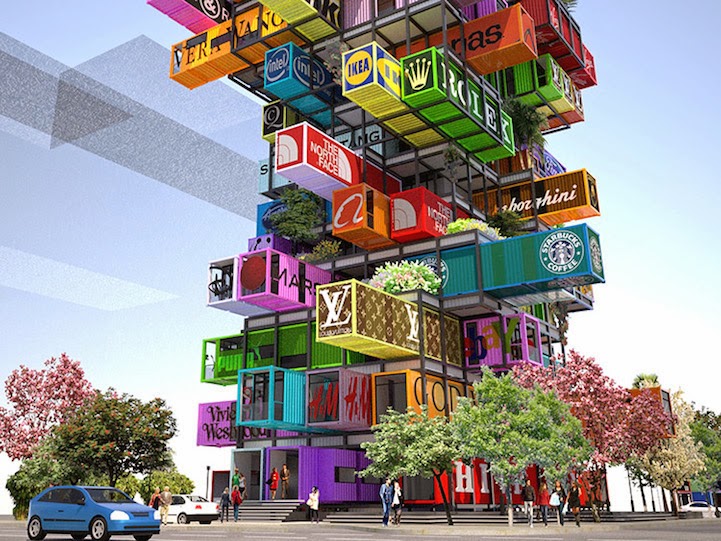
Let’s lead by example: The Hive-Inn hotel concept by Hong Kong-based OVA Studio looks like Jenga for giants – surely you remember that stacked-block puzzle that was part of your kiddie toy box (or – maybe you recall it as a nerdy parlor game)?
The building, schematically designed for the Radical Innovation Awards, is made up of used shipping containers plugged into a steel “hive”. Its modular design (and a permanently mounted rooftop crane) allows for hotel suites to be changed on whim without disturbing the surrounding containers.
Well, not quite on whim. This is a concept, so connections to power, water, and life safety systems (including vertical circulation) are not addressed – nor likely to be easily interchangeable as tenants change. Impact and interruption to street level activity each time a box is moved in and out of place will be significant. And how’s the erratically-loaded tower stand up structurally (not to mention seismically!)? (Well, someone is a Miss Crankypants.)
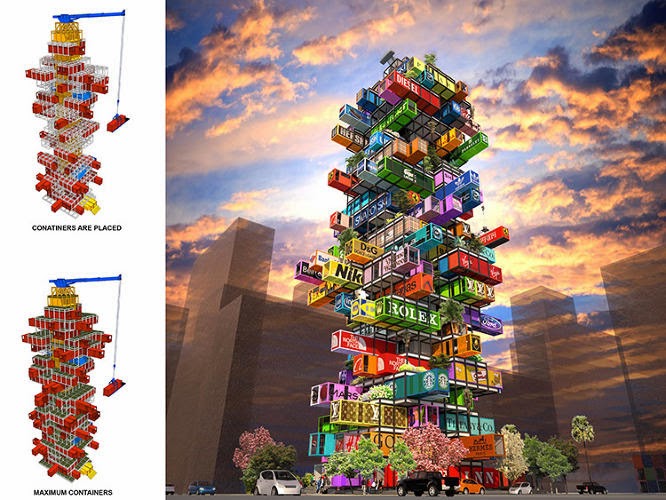
This scheme depicts the building as a hotel and the architects point out extensive branding opportunities, with individual containers sponsored by different companies – decorated with corporate images. Imagine “live-in” advertising, or pop-up boutiques promoting limited time sales events. As tenancy changes, so would the building’s facade – an evolving panoply of color and signage. Is that really a good thing?
Consider cities such as São Paulo, Brazil (the world’s 7th largest city) – in 2006 it banned all outdoor advertisements – that’s billboards, transit ads and storefront signage. A 2011 survey indicated that 70% of residents found the ban beneficial, allowing the true nature of the metropolis to emerge from behind the advert clutter. Subliminally, it’s also a respite from subconscious bombardment to part with your money…the antithesis to the Hive Inn.

OVA Studio suggest their design could be used as emergency housing or medical care units. Mobile apartments or offices are another option, allowing you to ship off easily (contents could remain inside the unit) to a new zip code.
Seems some people are turning to cargo container structures as a green alternative to traditional building. On the surface, it’s logical. There are growing numbers of unused containers, collateral damage from global trade imbalances. Costs prohibit shipping empties back to their point of origin (it’s cheaper to buy new containers and factor costs into shipping fees) – the result is a mountain range of steel boxes sitting idle at most world ports.

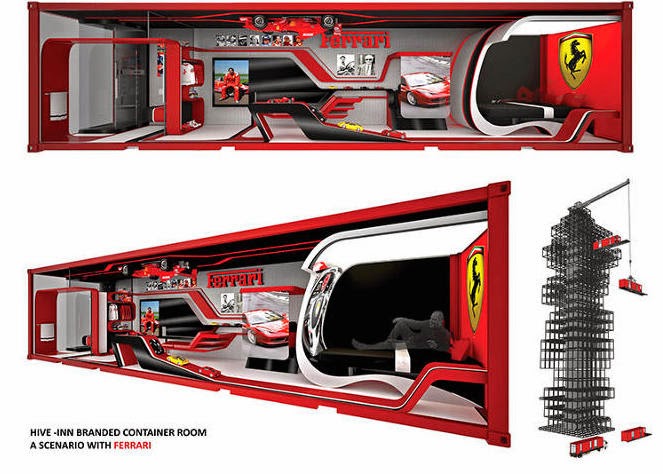
Shipping container architecture (tagged “cargotecture”) is appealing due to the boxes’ availability, strength, durability, and cost (many sell for under $1,000) – and they sure make for pretty images when re-purposed. But how’s it experienced in three dimensions? Individual containers create awkward spaces; long narrow rectangles with very low ceilings. Multiple boxes can be combined to expand interior volume, but cutting, grinding and welding steel is energy intensive.
Steel boxes are coated with toxic chemicals to make them durable for ocean transport – think chromate, phosphorous, and lead-based paints. Factor in the energy required to make them habitable; sandblasting the entire structure, burning openings for doors and windows.
The average container produces about 1,000 pounds of hazardous waste before it can be re-used as a structure. Bundle all this with the fuel-guzzling heavy machinery needed to move the container from port to final position, and this green habitat looks more like a white elephant.