Home Blog Page 246

Teaching children about the environment

1

syria-refugee-secret-garden-10
So, you care about the environment and ensuring that you play your part in preserving the beauty of nature but how do you go about imparting these lessons to your children? It can be challenging for parents to impart these important lessons to their little ones. As the saying goes, “charity begins at home… ” so it’s best to begin teaching them from an early age, before they head off to school or land their first engineering job to come up with the next innovation that reduces their carbon footprint.

Here are four basic lessons to start with before moving onto the complex topics.

1. Never leave the faucet running

It sounds like a little thing, but it can teach a lot: As your child learns the importance of personal hygiene, this is a good place to start, as they brush their teeth and wash their hands – you need to stress the importance of not leaving the facet running. Talk to them openly about water shortages across the world and the fact that you also pay for water so it’s a valuable commodity.

2. Explain How people contribute to global warming

Many people remain unaware of this scientifically proven fact and how humans and our high levels of consumption affect the environment. Never underestimate how much your child can actually understand, so be open with them about industrialization and urbanisation. Explain how they can change their own personal habits to help improve the state of the environment.

3. Make recycling fun so they understand faster

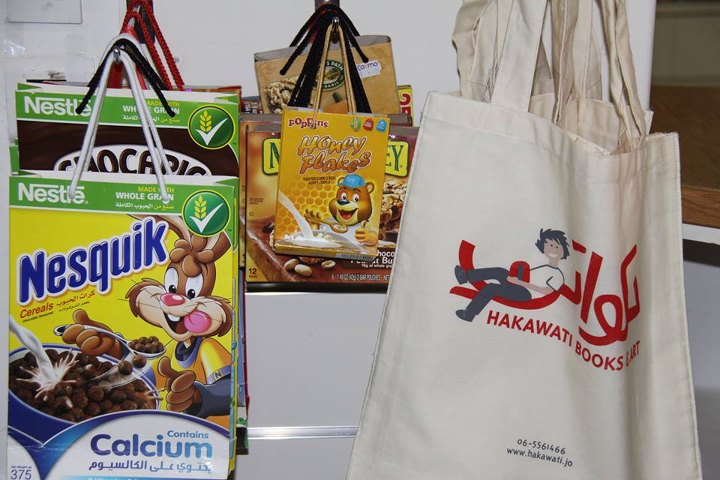
Landfills are becoming damaging to the environment so recycling can be an interesting way to have them actively assist you with recycling in the house. You can create arts and craft from plastic bottles, encourage them to reuse plastic bottles and save grocery bags for the next shopping trip. The best way kids learn is through participation as this increases their understanding and producing something from waste creates a sense of achievement for them.

4. Active lessons in reducing your carbon footprint

If you choose to walk instead of driving, explain how this impacts the environment. Teach them to look out for recyclable products and teach them to turn off lights, fans and other electrical appliances that are not in use.

Noor Complex in Morocco 160MG CSP solar power plant

2

Noor IMorocco has activated the Noor I concentrated solar power (CSP) plant, the first part of a three-phase development in the Sahara Desert intended to supply more than a million homes with electricity by 2018. The 500,000 crescent-shaped solar mirrors of Noor I, which sits on thousands of acres of desert terrain near Ouarzazate, will generate up to 160 MW of power. It’s the largest CSP plant to come online in the Middle East and North Africa region, and the African continent. When the full fit-out is complete, the 350 MW plant will be the single largest solar power production facility in the world.

When Morocco’s King Mohammed VI inaugurated the facility, he also officially launched Noor II and Noor III. According to Climate Investment Funds (CIF), the Noor I project cost nearly US$1 billion, exceeding an original estimate of US$820 million. Financing came from CIF, The World Bank, and the African Development Bank, and was also backed by Moroccan government guarantees. Undisclosed energy subsidies from the king will keep costs from being transferred to energy consumers.

“The returns on investment will be significant for the country and its people, by enhancing energy security, creating a cleaner environment, and encouraging new industries,” World Bank Country Director for the Maghreb, Marie Francoise Marie-Nelly said in a press release.

World's largest solar farmThe World Bank predicts that the plant will bring down the industry-wide CSP costs, but the future of the technology is uncertain given rapid price decline in solar photovoltaics (PV). The plant’s cost is around US$6 per watt, whereas utility-scale solar PV projects are coming in below US$2 per watt. The recent bankruptcy of the largest global CSP developer, Spain’s Abengoa, has further undermined interest in future CSP investments. That said, the technology is well-suited for harnessing the desert’s solar energy.

The Guardian wrote about the project last October, stating,””The potential for solar power from the desert has been known for decades. In the days after the Chernobyl nuclear accident in 1986 the German particle physicist Gerhard Knies, calculated that the world’s deserts receive enough energy in a few hours to provide for humanity’s power needs for a whole year. The challenge though, has been capturing that energy and transporting it to the population centers where it is required.”

World's largest solar farmUnlike PV systems, CSP output doesn’t dip when skies are momentarily overcast, and they do not need battery back-up to store energy for nighttime use. The technology works like this: concentrated sunlight hits the mirrors, which heat fluids in a system-wide pipeline, which create steam that, in turn, drives turbines which produce electricity. The Ouarzazate system uses 39-foot-tall parabolic mirrors to focus energy on that pipeline causing fluids to reach temperatures of 739 degrees Fahrenheit.  Surplus heat can be stored in a tank of molten salts for use during nighttime or on overcast days; Noor 1 is designed to keep three hours worth of such storage, which presently is a lower cost alternative to battery storage.

Morocco – similar to Jordan – is not an oil producer, and imports about 97 percent of its energy consumption, according to the World Bank. Investment in renewables reduces reliance on foreign suppliers, secures the nation’s long-term energy supply and reduces the nation’s long-term carbon emissions by millions of tons.

The project spearheads Morocco’s ambition to tap its expansive deserts to become a solar superpower, ultimately aiming to offer energy to the Mediterranean Basic and Europe. Solar energy will make up a thirty-three percent of Morocco’s renewable energy supply by 2020, with hydropower and wind power each providing similar shares.

Morocco’s environment minister, Hakima el-Haite, believes that solar energy could have the same impact on the region this century that oil production had in the last.

Brilliant IKEA dinner table outsmarts mealtime smartphone users!

0

ban smartphones at dinnerSit four people around the dinner table, and at see that least three are tethered to their smartphones (well, someone’s got to cook and serve). What’s a conversation-starved hostess to do? Head to IKEA Taiwan where designers have cooked up a table that encourages real-time relationships, eye contact and chat.  You remember those once-essential ingredients to a decent mealtime experience.

The “wearable habitat”: a refugee coat that turns into a tent

0

refugee shelterInterior Design & Textiles students from London’s Royal College of Art (RCA) have designed a piece of clothing with three distinct uses: it is a weather-proof coat, a sleeping bag, and a tent. Their prototype aims to meet the immediate needs of migrating people, with pockets specially designed to store passports, personal documents, and phones.

Neglected animals turn to cannibalism in Egyptian zoo

1

cannibalism egyptThings have gone terribly wrong in an Egyptian zoo where a group of baboons turned on one of their cage-mates, tearing at its legs and biting off its feet, according to eye-witness reports. Images of the African baboon, whose feet were cannibalized by his cage mates, have gone viral on Egyptian social media.

“Due to extreme hunger, some animals starved to death, and others have eaten each others,” social media user Miss Assnaa posted on Save an Innocent Animal Soul Facebook page Tuesday.

Zoo employees stand accused of feeding starved animals only when visitors offered money. The animals are believed to be lacking all medical care, and they are housed in filthy conditions. The zoo is located in the Sharqia governorate in the Nile Delta.

Zakazik Zoo director Ayman Lotfi denied such social media reports, adding that the 17-year-old baboon was injured after he went on the rampage because his pregnant wife abandoned him for his newly born baboon. Lotfi continued in remarks to Youm7 that the zoo decided to isolate the baboon, the father, to protect the baby, adding that the baboon suffered inflammation of the lymph glands.

Egyptian zoos have long been plagued by problems, with the most egregious offenses occurring in the aftermath of the  January 2011 revolution. Earlier in 2004, Giza Zoo lost its certification from the World Association of Zoos and Aquariums (WAZA), largely due to financial ability to maintain the zoo but also because of a spate of suspicious animal deaths.

Animal rights activists have long been concerned about conditions at Egyptian zoos, which echo the nation’s widespread poverty and bureaucratic failings. Zoo employees are underpaid, earning less than $60 a month, have little experience or training, and no incentives to protect the animals they care for. Instead, the employees often trail visitors, offering random commentary about the animals, and offering opportunities to hold them, feed them, or photograph them in attempt to incite tips.

Zoos are prone to bad publicity, especially when animals are injured. Cairo’s government-run Giza Zoo may be particularly susceptible, given Egypt’s floundering economy and an overall poor track record in animal care.

In 2013, a 3-year-old giraffe died after getting fatally tangled in wires dangling inside her enclosure. A media furor ensued when zoo officials asserted that the animal had committed suicide. That same year, three black bears died in a single night in what Zoo authorities called “a bear riot.”  In 2007 and in 2008, local media reported that zookeepers were slaughtering the park’s camels for meat for themselves, and to sell to others.

Mona Khalil, a founder of the Egyptian Society for Mercy to Animals, which runs two shelters and provides free veterinary care to poor farmers on Cairo’s outskirts, said at the time, “This is not a zoo, this is hell for animals.”

Image from Cairo Post


Dubai designer uses nano-tech to turn a traditional black abaya green!

1

solar powered abaya

A Dubai-based abaya fashion designer has come up with a way to take the traditional black cloak into the future by integrating nanotechnology into its sleeves, giving the garment the capability to charge a smartphone or tablet. Manaal Al Hammadi showcased her solar-powered abaya at the last month’s World Energy Summit 2016 at the Abu Dhabi National Exhibition Centre.

Syngenta Merger Must Be Blocked

2

chinachem mergerChina’s state-owned ChemChina tendered a $43 billion bid for Swiss seeds and pesticides group Syngenta today as part of a strategy to improve domestic food production. Remember the classic board game Monopoly? It’s being played by multi-national agri-businesses in attempt to control the world food supply chain. China is the largest agricultural market on the planet. Syngenta’s portfolio of chemicals and patented seeds will represent a major upgrade of its output potential.

Google gets hot for Wilbur Scoville!

0

world's hottest pepperGoogle did a doodle marking the 151st birthday of the pharmacist who helped us navigate the chili peppers, the tiny veggie with the power to drop diners to their knees. Wilbur Scoville was the first person to measure the heat of peppers. His heat scale is still in use today, scoring the piquancy of peppers. (What would Wilbur think about the heat scale of planet Earth?)

The real Paleo Diet included turtle meat

1

israel turtle flippers

It’s all the rage. Eating Paleo, or like Paleolithic man has benefits, adherents to the New Age diet claim (here are 5 steps to going on a Paleo Diet). But while Paleo people cite red meat as part of the mainstay of their diet (eating what ancient Paleolithic man was supposed to eat), I have never heard of turtle. But it may be time to update the diet.

While turtles and tortoises are rarely eaten today except in East Asia (and by Egyptians) where turtle soup is a delicacy, they were once a staple diet item, according to new research out of Israel.

Please don’t consider this an excuse to eat an endangered animal, but a new discovery at Qesem Cave near Tel Aviv, ancient man had a thing for tortoise- maybe as a starter or as a dessert. The 400,000-year-old site indicates that early man enjoyed eating turtles in addition to large game and vegetables, the researchers found. These early Paleolithic people even had the “modern” tools and skills employed to prepare it. See etchings on turtle bones below.

Israel-Qesem-Cave-tortoise

The study was led by Ruth Blasco of the Centro Nacional de Investigacion Sobre la Evolucion Humana (CENIEH), Spain, and Tel Aviv University’s Institute of Archaeology.

“Until now, it was believed that Paleolithic humans hunted and ate mostly large game and vegetal material,” said Prof. Ran Barkai from TAU. “Our discovery adds a really rich human dimension — a culinary and therefore cultural depth to what we already know about these people.”

The research team discovered tortoise specimens strewn all over the cave at different levels, indicating that they were consumed over the entire course of the early human 200,000-year inhabitation. Once exhumed, the bones revealed striking marks that reflected the methods the early humans used to process and eat the turtles.

ran-barkai-turtle

“We know by the dental evidence we discovered earlier that the Qesem inhabitants ate vegetal food,” said Barkai. “Now we can say they also ate tortoises, which were collected, butchered and roasted, even though they don’t provide as many calories as fallow deer, for example.”

According to the study, Qesem inhabitants (see the site below, along the highway for context) hunted mainly medium and large game such as wild horses, fallow deer and cattle. This diet provided large quantities of fat and meat, which supplied the calories necessary for human survival. Until recently, it was believed that only the later Homo sapiens enjoyed a broad diet of vegetables and large and small animals. But evidence found at the cave of the exploitation of small animals over time, this discovery included, suggests otherwise.

qesem-cave

“In some cases in history, we know that slow-moving animals like tortoises were used as a ‘preserved’ or ‘canned’ food,” said Dr. Blasco. “Maybe the inhabitants of Qesem were simply maximizing their local resources. In any case, this discovery adds an important new dimension to the knowhow, capabilities and perhaps taste preferences of these people.”

paleo-diet-turtles

According to Prof. Gopher, the new evidence also raises possibilities concerning the division of labor at Qesem Cave. “Which part of the group found and collected the tortoises?” Prof. Gopher said. “Maybe members who were not otherwise involved in hunting large game, who could manage the low effort required to collect these reptiles — perhaps the elderly or children.”

“According to the marks, most of the turtles were roasted in the shell,” Prof. Barkai added. “In other cases, their shells were broken and then butchered using flint tools. The humans clearly used fire to roast the turtles. Of course they were focused on larger game, but they also used supplementary sources of food — tortoises — which were in the vicinity.”

(Image of Ran Barkai, above NY Times)

Read more on Paleolithic-type eating:
Eat the Whole Animal: Lamb’s Testicles
Whole Animal Cooking
Making Smen the Old Fashioned Way

KarmSolar is first Egyptian company to sell solar power off-grid

2

KarmSolar-Egypt-solar power-renewable energy

In a region where the renewable energy market is still small, despite a natural and seemingly perpetual gas shortage, one startup is making big strides.

KarmSolar is an Egyptian company dedicated to bolstering solar energy use. It is now the first company in Egypt with official permission to sell solar power off-grid. The Egyptian Electricity Regulatory Agency granted the license in December 2015.

After receiving the nod of approval, KarmSolar finalized a 1-megawatt solar energy installation at a dairy farm in Egypt’s west.

The company was founded in 2011. Just two years later, it created MENA’s first high-capacity solar-powered water pumping station, able to lift water from record-breaking depths – an innovation designed for the desert.

KarmSolar’s company compound is itself in the Western Desert and fully powered from the sun. The company’s conscientiousness about the environment doesn’t stop at solar power. The buildings of the compound were constructed entirely from locally-sourced, environmentally-friendly materials.

A great video on the Climate Heroes website shows us KarmSolar in action and features three ambassadors from the company. Yumna Madi, head of the business department, reminds us that solar power is so refreshingly simple. It’s so direct – involving point A and point B, the sun and some sunbathing solar panels. Egypt’s location on the solar belt makes solar power an obvious winner.

Solar power provides cost-competitive energy solutions, helps to mitigate climate change, and encourages job creation (KarmSolar started with four people and grew to a team of about thirty.) With KarmSolar on the rise, Egypt – and the rest of the world, for that matter – will be brighter. And I’m not only talking about the sun.

Image of KarmSolar workers and solar panels from wamda.com.

Earth breaks its own world temperature record, again.

1

climate Council of AustraliaA new report from the Climate Council of Australia revealed that last year’s global average temperature was the highest since global records began in 1880, with 2015 experiencing its hottest year on record – again – besting the 2014 stats by a jaw-dropping 0.16°C. To paraphrase Paris Hilton, that’s hot.

Sharjah wins Arab Tourism Capital award 2015

1

man at sea in sharjah

According to a recent report, Sharjah – a city named after its state, one of the seven emirates of the United Arab Emirates criteria set forth by the Arab Council of Tourism Ministers. It must be actively attempting to: increase tourism exchange with other Arab countries, promote the region’s appeal on the international market, sustain natural attractions, uphold heritage sites and cultural values, etc.

Sharjah promises fun for the whole family, with beautiful white beaches and water sports, camping along the coast, a “cultural palace” and a history museum, and interminable shopping opportunities. The Blue Souk, or Central Souk, is where 600 merchants set up shop. Then there’s the Souk al Arsah, the oldest market place in the UAE, where one can find genuine pearls from the Gulf.

sharjah-uae-arab-tourism-capital-2015


The honor of being named Arab Tourism Capital is showcased in the brightly colored logo shown above. There’s something special about the skyline that forms the bottom border…did you see it?

If you read Arabic, look closer: the buildings spell out “Sharjah.” This graphic design is the perfect pictorial representation of what Sharjah is proud to be: a modern city that embraces its Arabic roots.

Kuwaitis drive social change with new fund. N-mu?

0

n-mu training program-kuwait-community-awareness-sustainability

A few years ago, Jordan launched an initiative called BADIR to support budding young entrepreneurs, eager to contribute to positive change in their communities. Now Kuwait is following suit: the “n-mu” program endows participants with the skills and resources necessary to create real social change.

N-mu? That’s a funny name, you might be thinking. But it’s not a typo. It’s “أنمو” – the Arabic word for “I develop,” written in phonetic English. Through the program, participants will develop a solid grasp on what it means to be an active citizen, and they’ll also be encouraged to develop their own projects as social entrepreneurs.

This is one of several programs developed by a Kuwaiti organization called en.v, which advocates for the trifecta of education, environment and capacity-building. Created as a way to engage youth, n-mu promotes active citizenship through critical reflection, discussion, and action.

The third and final training session of the current n-mu program begins on January 31, and the commitment is meeting twice a week for four weeks. It’s time to apply, if you’re eligible! In order to participate, one must:

  • Live in Kuwait
  • Be under the age of 30
  • Speak Arabic (as this session will be conducted in Arabic)
  • Genuinely care about community issues and want to address them!

Even if you’re aware of the issues, addressing them is easier said than done. Luckily, the n-mu program doesn’t merely provide training; it also allocates funding! The grants will kickstart approved community projects proposed by ambitious and inspired participants.

The latest news on En.v’s twitter page is of GreenBagQ8, an “n-mu initiative” advocating for reusable shopping bags, which is slated to be featured in a documentary that will be broadcast by Kuwait’s Al-Arabi TV.

This kind of offer doesn’t surface every day…if you’re eligible, go for it! You can not only be the change you wish to see in the world, but also make it happen.

And if you’re not eligible, like me, you can just smile because you know that programs like this exist!

Photo of seminar from n-mu training session #1 from the En.v website.

3 Arab architects worthy of being called sustainable builders

1

Kourosh Hajizadeh middle east eco arab architectGreen is sort of a buzzword nowadays. People will say they are going green (like Zaha Hadid), but are they as good as their word? Usually not.

In the world of Middle Eastern architecture and engineering, rest assured that there are several who are fighting for green choices. Clients often see lots of green – dollar bills, that is. But the builders can bring environmental considerations to the forefront. Sustainable building is the way of the future, and they know it. Here are a carefully curated list  of 3 Arab architects or engineers who champion sustainability in their work, and who need recognition.

1. Raya Ani 

Raya ani, award winners, MEA, jumeriah beach hotel, 2014, dubai, United Arab Emirates, October 19, 2014 (Photo by Danny Allison/ITP Images)Raya Ani was born in Washington, D.C. but spent most of her life in Iraq near her family. She operates out of the studio she founded in 2012: RAW-NYC, based both in New York City and Dubai. For the Aspire Sports Complex in Doha, Qatar, her company won Leisure Project of the Year at the 2014 Middle East Architect Awards.

The arena is still under construction, but it will include two soccer fields, a private entertainment venue, sports store, café, and more. It’s an enclosed space, but it evokes the feeling of being outside, with its light-filtering roofs, stretches of lush green, and landscaping techniques to promote fresh air.

The aesthetics of the facility were inspired by the makeup of a tree – its interwoven branches being the main motif. In the desert heat, evaporative cooling will chill the indoor air, and the Solar Ivy on the exterior will conserve energy.

More of Ani’s architectural genius can be found in plans for the Mesopotamian marshes of southern Iraq, which Green Prophet covered here, and for Bawadi Park in Dubai. To top it off, this savvy designer does more than just architecture. Visit her page to see all her fascinating projects.

aspire sports complex-qatar-raya ani-sustainable designaspire sports complex-qatar-raya ani-sustainable design-soccer

2. Kourosh Hajizadeh Kourosh Hajizadeh-architect-Middle East-sustainability

Named Architect of the Year at the Middle East Architect Awards in 2013, Mr. Hajizadeh proved his merit even further when he laid down plans for Jordan Tower. It’s his work featured at the very top of this article.

As Principal Architect of Hajizadeh & Associates, he places much emphasis on sustainability, and the goal for Jordan Tower was to create the tallest green spot in Tehran – a city lacking in green spaces. High-rise construction is maximized land usage in urban centers – capital cities, especially.

This sky-high beauty will display what appear to be hanging gardens in interlocking cages suspended from the exterior. This design is remarkably similar to “The Terraces” set up for Beirut, except it provisions more greenery. Furthermore, mirrors will be placed on the building close to street level in order to multiply the green vision to passersby.

Jordan tower-Tehran-Hajizadeh-sustainable design

3. Ammar Khammash Ammar Khammash-Middle East-sustainability-architect

This Jordanian superstar architect has improved his home country – with more projects than one. The repertoire of Khammash Architects includes Wild Jordan, a restaurant and market; Darat al Funun, an arts and cultural center; and, most notably, Feynan Eco Lodge, the unbeatable retreat in the Dana Biosphere Reserve (which I visited while travelling in Jordan!).

With degrees in architecture and ethnoarchaeology, Mr. Khammash is Jordan’s leader in designing or renovating spaces so that they include uber modern amenities and style but are historically relevant.

Environmental preservation is very important to him, as well; he advocates preserving the nature in and around which he works. Wild Jordan is nestled in the hills of Jabal Amman. Darat al Funun displays a restored archaeological site in its garden with pride. Feynan Eco Lodge uses the blazing desert sun for energy and refuses to antagonize the already limited water availability with aerators installed on faucets.

Mr. Khammash clearly knows how to make the best use of what he is given, and even to make those elements from the land and sky the star of his projects. He’s even done the same thing with his own home. He opted to live on the edge – literally. By building his home on a cliff overlooking Amman, he made use of what would be otherwise unused space and gets breathtaking views as a reward.

Feynan-eco lodge-amman-sustainable-architecture

Electroad to electric the bus systems in Israel, then the world

4

electroad_bus_dynamic_wireless_power_transfer“Roads? Where we’re going we don’t need roads!” Fans of the 1985 film “Back to the Future” watched the year 2015 slip from a promising future into a disappointing past with no sign of time travel, Mr. Fusion or flying cars.

And while hoverboards came surprisingly close to reality, even these require roads (of solid copper.) But rather than waiting for a roadless future, the inventors at Israel’s Electroad are working on the biggest road improvement since the Romans paved an empire. (Update Sept. 2020 and the website is out of business)

Electroad’s visionaries ask us to imagine a pioneer in the old American west with a horse-drawn wagon stacked high with the hay necessary to feed the horses pulling the wagon. It sounds ridiculous, archaic, inefficient and… well, that’s exactly how our automobile transportation system works today.

RELATED: Elon Musk’s hyperloop steps toward reality

hyperloop-elon-muskCars carry the fuel that propels them. We don’t notice this with gasoline and diesel engines because these fuels can store a tremendous amount of energy per kilogram, more than 45 million Joules (10,000 kilocalories) per kilogram. While this isn’t the 1.21 Gigawatts necessary for time-travel in Doc Brown’s fictional DeLorean, it is about 50 times the amount of energy that can be stored in a kilogram of our best Lithium-Ion rechargeable batteries.

So while electric cars have advantages in efficiency, reliability and environmental impact– up to one third of the weight of a typical electric car is the battery.

This explains why electric vehicle range tends to be lower than that of gasoline and diesel powered vehicles. Do away with that heavy battery and imagine the acceleration, performance and efficiency of a powerful car with a light powerful motor. If you live in parts of the world served by trams and buses with overhead wires, you’ve seen one method for reducing the need for a battery.

Simply run high voltage wires along the road, over the road, just like the slot-cars we might have played with as children. But maintaining an electrical connection often requires unwieldy spring loaded devices, precise alignment and high voltage wires and rails that can be dangerous for pedestrians and cyclists!

Electroad has a unique technological approach that they call a Dynamic Wireless Power Transfer (DWPT) system. They envision electric vehicles without the need for a large battery, long charge cycles. The energy needed will be minimal due to the low vehicle weight.charging_lane

Recent Apple and Android phones, toothbrushes, electric razors, flashlights and even Skylanders light core toys, send electricity through the air by magnetic induction. The idea comes from a couple of basic laws of physics, change an electric current and that creates a changing magnetic field. Put that changing magnetic field near a wire and it will induce an electric current in the wire. So electricity moving through a coil of wire can induce a current in a nearby coil even without a physical connection.

Rather than relying on big batteries necessary to take you to the next charging station, Electroad intends to embed charging stations in the road so that you’re car is charging even while you drive it!

Powered coils beneath the road would accomplish this by inducing a current in coils attached to the bottom of the car. There are several challenges with this approach. One is an efficient way to embed and power the coils beneath the road, the other is alignment with the coils on the cars for maximum efficiency.

Another is the amount of energy that must be transferred during the brief moments the car passes over the coils. Electroad explains that the coils are switched on and off dynamically so that they don’t waste energy when cars aren’t nearby. While these challenges require some creative engineering, this is certainly a problem worth exploring. Electroad are looking for electrical engineers and a city whose visionaries are ready to test drive the future.

And if those induction coils are copper… who wants to be the first to skitch behind an electric car on a hoverboard? Great Scott!